Cat Dandruff: Causes, Treatment & When to Worry
Cat dandruff is one of those small things that catches your eye while you're petting your cat and suddenly makes you wonder whether something is wrong. The good news is that most of the time it isn't — but knowing why does my cat have dandruff matters, because the right cat dandruff treatment depends entirely on the cause. A few pale flakes near the base of the tail can be simple dry skin; the same flakes with redness, itch, or hair loss can point to mites, allergies, or an underlying condition. This guide walks through what cat dandruff actually is, what causes it, how to tell the harmless kind from the kind that needs a vet, and what real home care looks like.
Key takeaways
- Cat dandruff is common and usually minor — in most cats it reflects dry skin, low humidity, or a grooming gap rather than illness.
- The three causes worth taking seriously are obesity (which blocks grooming reach), a diet low in fatty acids, and parasites such as cheyletiella mites.
- "Walking dandruff" — flakes that seem to move on their own — is caused by cheyletiella mites, is contagious, and needs a vet to diagnose and treat rather than home shampoo.
Cat Dandruff — Quick Reference
| Cause | Signs | Home care or vet |
|---|---|---|
| Dry skin / low humidity | Fine, scattered white flakes; no redness; full coat | Home: humidifier, hydration, brushing |
| Diet low in fatty acids | Dry, dull coat; widespread fine flakes | Home: omega-3 supplement (vet-guided dosing) |
| Obesity / grooming gaps | Flakes concentrated on lower back & tail base | Home: weight management + help with grooming |
| Cheyletiella mites ("walking dandruff") | Flakes that appear to move; itching; scabs | Vet — needs diagnosis + antiparasitic Rx |
| Allergies (food or environmental) | Itching, over-grooming, flakes + irritated skin | Vet, then home management of triggers |
| Underlying disease (diabetes, kidney, thyroid) | Poor coat, widespread flakes, appetite or energy changes | Vet — investigate the systemic cause |
What Is Cat Dandruff?
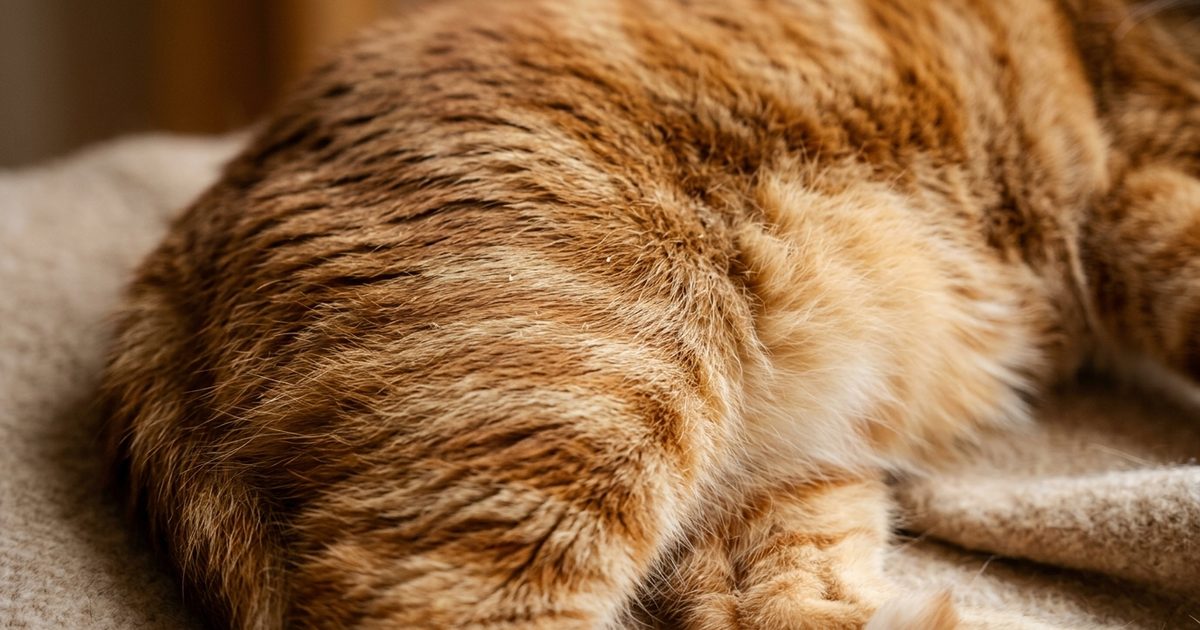
Cat dandruff is the flaking of dead skin cells from your cat's skin, most often seen along the back and near the base of the tail as small white or yellowish flakes. It is common, usually minor, and in most cats reflects dry skin rather than illness.
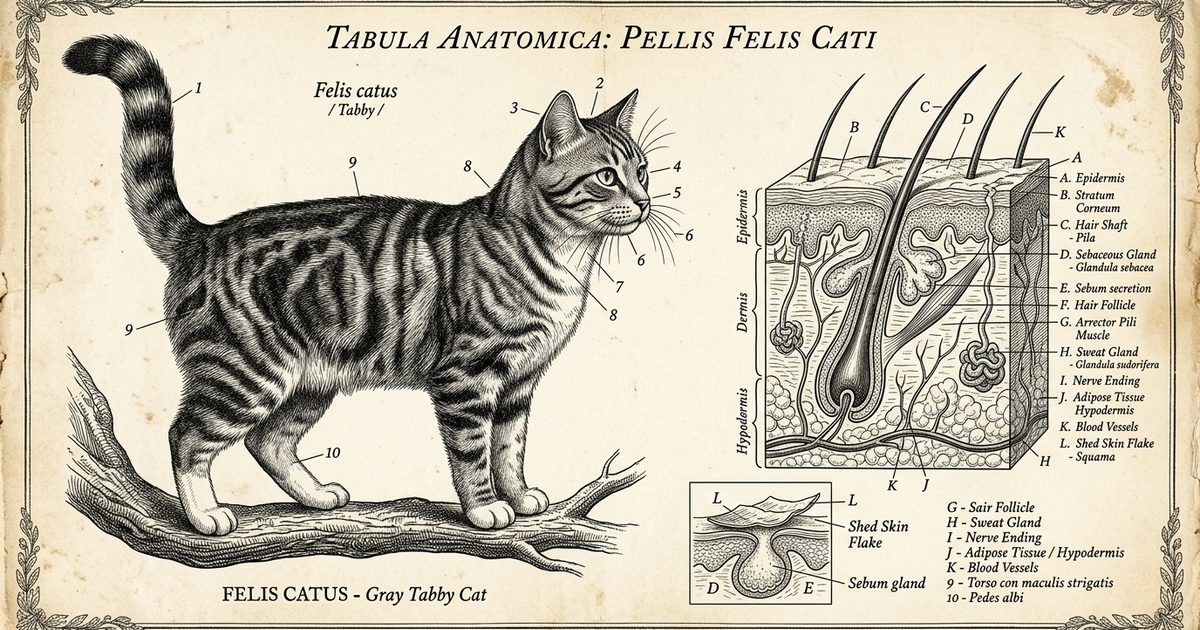
To understand dandruff, it helps to picture what your cat's skin is doing all the time, even when there are no flakes in sight. A cat's skin is a living, constantly renewing organ. Cells form in the deeper layers, travel outward as they mature, and eventually become the thin, tough outer layer — the stratum corneum — that seals moisture inside and keeps irritants out. Those surface cells are supposed to shed invisibly, one by one, as new ones move up behind them. Dandruff is simply what happens when that orderly shedding becomes visible.
A healthy coat hides this process almost completely. The skin's sebaceous glands produce sebum — a light oil — that conditions the fur and helps those loose cells slip away quietly. Your cat's tongue then combs through the coat several times a day, distributing the oil and clearing whatever is left. So under normal conditions, dead skin cells never get a chance to accumulate. Flakes only become noticeable when one of three things shifts: the skin gets too dry, sebum production or cell turnover speeds up, or grooming can no longer keep pace. The Cornell Feline Health Center covers the broader picture of feline skin and coat health, and it's a good anchor if you want the veterinary overview.
None of this is alarming on its own. A few flakes on a bright-coated cat in the middle of a dry winter are usually exactly what they look like: ordinary skin doing its job in less-than-ideal air. The question is always what changed — and that's what the rest of this guide unpacks.
The skin cycle that produces flakes
Every cat's skin runs on a continuous cycle called keratinization: new cells form at the base, harden as they rise, and shed from the surface roughly every few weeks. Sebum from the sebaceous glands keeps that outer layer flexible and helps shed cells fall away invisibly. When the skin dries out — from low humidity, dehydration, or a weak diet — those cells cling longer and clump into visible flakes. When sebum production or cell turnover speeds up, the same thing happens for a different reason: the coat simply can't clear the extra material fast enough. And because a cat's own grooming is the main cleanup crew, any flakes you can see usually mean grooming isn't fully keeping up — whether from dryness, weight, age, or irritation.
Where you usually see it
Dandruff in cats almost always shows up in the same few spots: the lower back, right above the base of the tail, and sometimes the chin. That's not random. Those are the areas cats groom last and least effectively — the lower back in particular is hard for a cat to reach, especially in older, arthritic, or overweight cats. They're also where sebaceous glands are densest, so sebum and the loose cells it carries tend to collect there even when the rest of the coat looks fine. The combination — hard to reach, plus naturally oilier — is exactly why a few flakes at the tail base are the classic first sign of cat dandruff. International Cat Care has a useful primer on feline skin conditions and coat care if you want to read further on how coat location reflects skin biology.
What Causes Cat Dandruff?
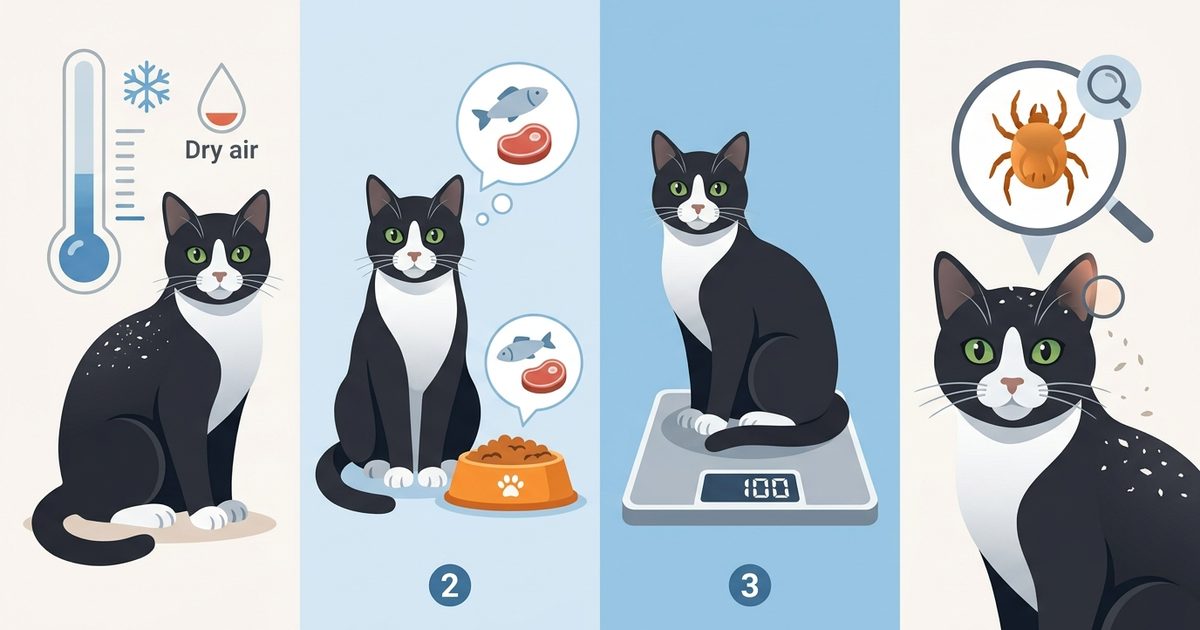
The main causes of cat dandruff are dry skin, low humidity, a diet low in fatty acids, obesity that limits grooming, parasites such as cheyletiella mites, allergies, over-grooming, sunburn, and underlying conditions like diabetes or kidney disease. Diet and grooming gaps are the most common fixable causes.
Most of the time, cat dandruff traces back to something straightforward: the skin has lost moisture, the diet is missing the oils that keep the skin barrier supple, or the cat simply cannot reach part of its own back to groom. Pinpointing which of these is at play is what turns "flaky cat" into a solvable problem.
Dry skin and dehydration
Dry skin is the single most common driver of cat dandruff. Indoor heating in winter and air conditioning in summer both pull moisture out of the air, and a cat's thin skin feels it first. Cats fed only dry food are also chronically under-hydrated — felines have a famously weak thirst drive and normally get most of their water from prey. The result is generalized, fine white flakes scattered evenly across the coat, with no redness, no scabs, and an otherwise relaxed cat.
Poor diet and low fatty acids
The skin barrier depends on fatty acids — particularly omega-3 and omega-6 — to hold moisture inside the cells and keep the surface supple. A diet that is low in these oils, or simply unbalanced, weakens that barrier; the skin dries, flakes more readily, and the coat often looks dull at the same time. You don't need a specific brand to fix this — a complete, fatty-acid-inclusive cat food, sometimes topped with a vet-approved omega supplement, is the general remedy. The principle matters more than the label.
Obesity and grooming gaps
Obesity is a top cause of tail-base dandruff for a mechanical reason: an overweight cat physically cannot twist far enough to groom its lower back and the base of its tail. (Why those exact spots accumulate flakes is covered above, under "Where you usually see it.") The genuinely useful next step is weight loss. If your cat is carrying extra weight, our guide to healthy cat weight walks through the why and the fix. The same grooming gap appears in older cats with arthritis: the will to groom is there, but the joints will not cooperate, and the same patchy lower-back flaking shows up.
Parasites: fleas, mites, and cheyletiella
Fleas are the everyday parasite culprit: they drive itching, the cat scratches and over-grooms, and secondary flaking follows. Mites are subtler, and several kinds can affect cats — most notably cheyletiella, the "walking dandruff" mite that gets its own deep-dive below. The key point here is that mites cannot be diagnosed by eye. They mimic plain dry skin, and the only reliable confirmation is a vet examining a skin scraping under a microscope. Guessing and self-treating with over-the-counter antiparasitics "just in case" is not a safe shortcut.
Allergies and over-grooming
When cat dandruff comes with itch, allergies are often upstream. Environmental triggers (pollen, dust mites, mould) and food sensitivities create low-grade inflammation that makes the skin prickle; the cat responds by grooming obsessively, and that relentless licking breaks hairs and stirs up flakes together. The flaking, in other words, is downstream of the itch. If your cat is both flaky and over-grooming, read our pieces on cat allergies and cat bald spots — they cover the itch-scratch cycle that produces exactly this combination.
Sunburn and underlying conditions
A few causes sit further from the everyday. Light-coated cats, especially those with white ears and pink skin, can sunburn along the ear tips and nose; the damaged skin peels and flakes. More broadly, systemic illness can surface in the coat before it shows anywhere else — diabetes, hyperthyroidism, and kidney disease can all present as a poor, dry, flaky coat alongside other subtle changes. These are flags, not diagnoses; if the coat has gone downhill and your cat seems "off," International Cat Care maintains reliable guidance on feline skin conditions and when they signal something deeper. A vet connects the dots.
When Is It Just Dry Skin vs a Problem?
Fine, scattered flakes on an otherwise healthy, non-itchy cat with a full coat is usually dry skin and often clears with humidity, hydration, and grooming. Redness, itching, hair loss, scabs, or a cat that grooms obsessively are signs to see the vet rather than treat at home.
Telling ordinary dry skin from something that needs a vet comes down to pattern. A calm cat with a few flakes is almost always fine; a cat whose skin is angry, itchy, or changing fast is sending a different signal. Here's how to sort the two.
Mild flakes — usually safe to manage at home
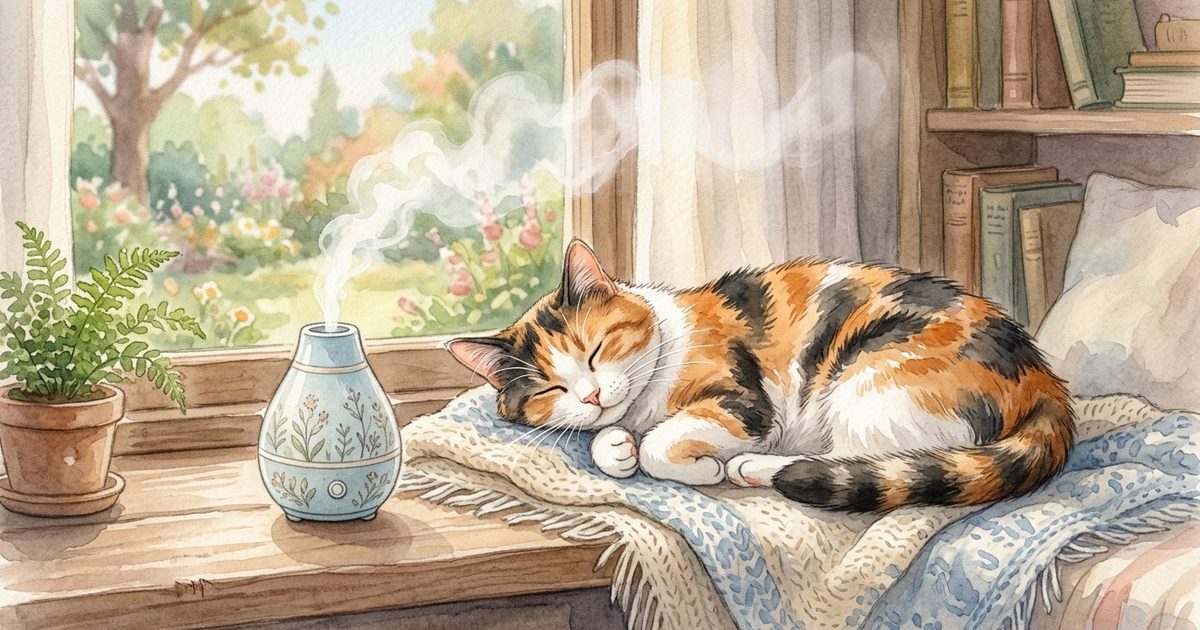
The reassuring picture is a cat who is eating normally, energetic, relaxed, and wearing a full, glossy coat — but happens to have a scatter of fine white flakes at the base of the tail or along the lower back. No redness, no scratching, no hair thinning. In a cat like this, the flakes almost always reflect dry air, mild under-hydration, or a grooming gap, and they tend to improve with simple home care:
- Raise indoor humidity to around 40–50%, especially in heating and air-conditioning seasons.
- Offer several fresh water sources, or shift some meals to wet food to lift fluid intake.
- Brush gently two to three times a week to redistribute natural oils and clear loose flakes.
- Make sure the diet includes fatty acids; add an omega-3 supplement with vet guidance if needed.
- Check your cat's weight — if the lower back is hard for them to reach, that alone explains the flakes.
Give these changes a few weeks. If the flakes thin out and nothing else changes, dry skin was the answer.
Red flags that mean a vet visit
Some signs shift the picture from "manage at home" to "call the vet." Watch for:
- Redness, scabs, or raw patches in the skin beneath the flakes.
- Hair loss, thinning, or over-grooming down to bare skin.
- A sudden, large jump in the amount of flaking.
- Flakes that appear to move or crawl on their own.
- Lethargy, appetite change, increased drinking or urination, or weight loss alongside the coat change.
Any one of these means the flaking is likely a symptom of something else — parasites, allergy, infection, or an underlying illness — rather than simple dryness. The Cornell Feline Health Center is a trusted reference for the signs that warrant a veterinary visit; when in doubt, a phone call to your clinic costs nothing and settles the question.
Cheyletiella vs dry skin — quick check
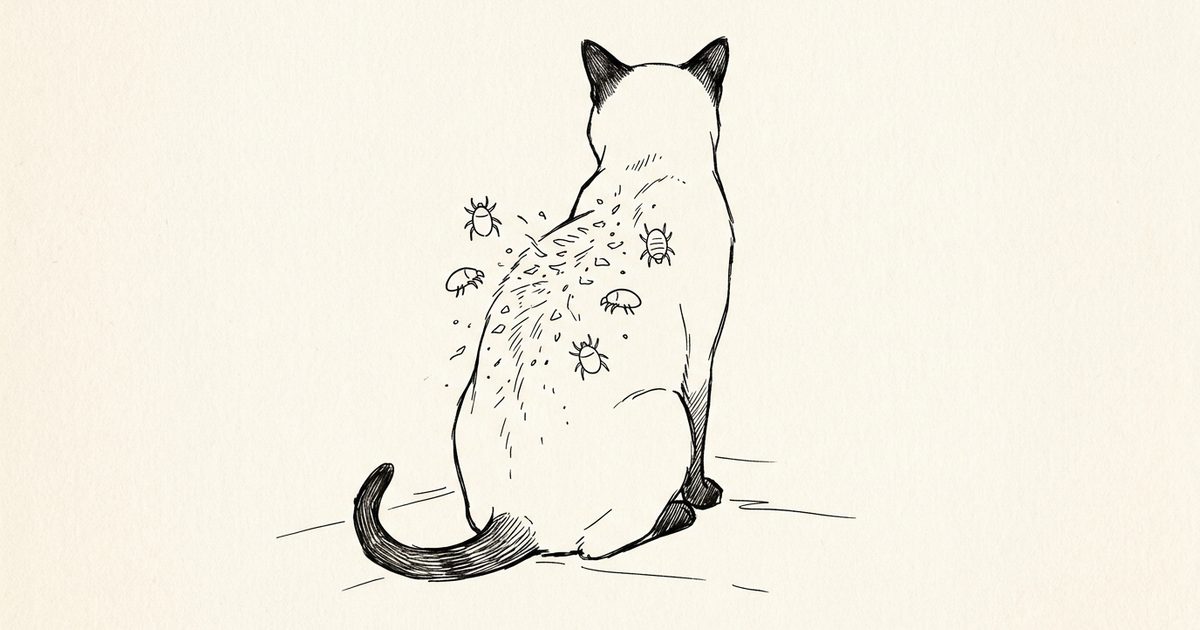
One specific pattern deserves a closer look. If the flakes seem to drift or crawl across the fur, or if the cat is clearly itchy and flaky around the back and rump, cheyletiella mites — "walking dandruff" — move up the list of suspects. The name comes from the mites riding along under the scales, giving the illusion that the flakes themselves are moving. But this is exactly the case where owners should not self-diagnose: cheyletiella mimics ordinary dry skin closely, it is contagious to other pets and sometimes humans, and only a vet can confirm it with a skin scraping and prescribe the correct antiparasitic. If you suspect it, isolate the cat from other pets and book the visit rather than reaching for a shampoo.
What Is Walking Dandruff in Cats?
Walking dandruff is the common name for cheyletiella mites — surface-dwelling parasites that live in the outer layer of skin and make flakes appear to move. It is contagious to other cats, dogs, and sometimes humans, and it needs a vet to diagnose and prescribe the right antiparasitic treatment.
Most cat dandruff is just dead skin flakes that have nowhere to go. "Walking dandruff" is different. The name describes a real parasite — Cheyletiella, a mite large enough to be seen with the naked eye under the right conditions. Unlike the mites that burrow deep, cheyletiella rides on the skin surface, where it irritates the outermost layer and produces the heavy, scaly flakes owners notice along the back and rump. It looks almost identical to ordinary dry-skin dandruff, which is why it's so often misread at home.
How cheyletiella mites cause "moving" flakes
The "walking" in the name comes from an illusion. The mites are light-colored and tend to move around under — and sometimes clinging to — loose skin scales. When several of them shift at once, the flakes themselves appear to crawl across the fur. The flakes aren't moving on their own; the mites underneath them are. In a quiet, well-lit moment an owner can sometimes catch this faint shimmer of motion, which is one of the few signs that distinguish cheyletiella from plain dry skin before a vet confirms it. The Cornell Feline Health Center covers this mite as one of the surface parasites owners can mistake for simple flaking.
Contagious and zoonotic risk
Cheyletiella spreads easily between animals through close contact and shared bedding, so it shows up most in multi-pet households, recently rescued cats, and kittens from crowded environments. The good news is that it's very treatable. The mild caveat: the mite can occasionally cause a mildly itchy rash on human skin, which clears up once the pet is treated and the environment is cleaned. It's not a reason to fear your cat — it's a reason to take the flakes seriously and have a vet confirm the cause rather than guessing.
Why vet diagnosis matters
This is the one cause of cat dandruff that genuinely needs the vet, not home care. Dry-skin dandruff, allergy flaking, and cheyletiella can all look the same from across the room, and over-the-counter cat dandruff shampoo does not kill mites — so it can't fix this. A vet confirms cheyletiella with a skin scrape or tape preparation examined under a microscope, then prescribes the correct antiparasitic, which usually also needs to treat every pet in the home and the environment they share. If you suspect something contagious, the same logic applies to ringworm, another skin condition where flakes come with broken hairs or patchy lesions — and which similarly needs a vet, not a shampoo, to resolve. International Cat Care describes cheyletiella and its diagnosis in more detail for owners who want to understand the process.
How Do I Treat Cat Dandruff at Home?
For ordinary dry-skin dandruff, home care works: raise hydration with wet food and fresh water, add an omega-3 fatty-acid supplement, run a humidifier, brush regularly to distribute natural oils, and address any obesity that blocks grooming. Skip human dandruff shampoo — it is not formulated for cats.
If a vet has ruled out mites, allergies, and underlying disease, most cat dandruff comes down to dryness, diet, and grooming gaps — all of which you can improve at home. The goal isn't a dramatic overhaul; it's a few steady habits that rebuild the skin barrier and let your cat's own grooming do its job again.
Hydration and wet food
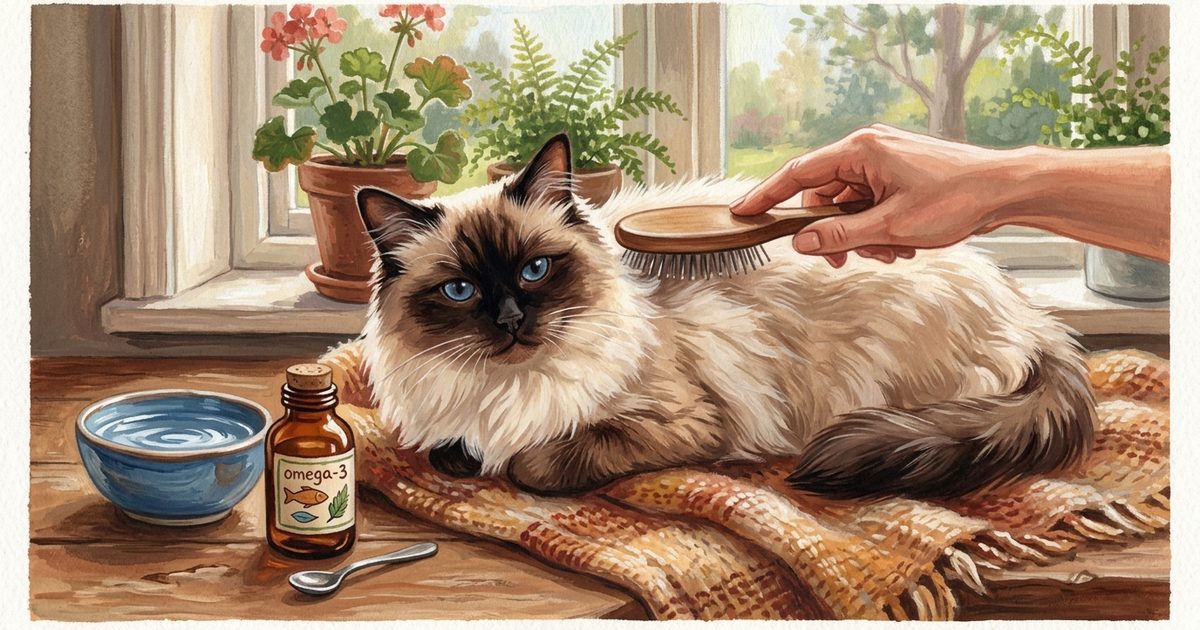
Cats evolved as low-thirst drinkers, getting most of their moisture from prey. A cat fed only dry food often runs slightly under-hydrated, and one of the first places that shows up is the skin. Shifting one or two meals a week toward wet food, and offering several water sources around the home (a bowl away from the food dish, a cat fountain, a second bowl upstairs), meaningfully raises the moisture the skin has to work with. You won't see flakes vanish overnight, but over a few weeks the coat usually softens.
Omega-3 and fatty-acid supplements
The skin barrier runs on lipids, and fatty acids — particularly the omega-3s found in fish oil — help the skin hold moisture and reduce flaking. For cats with stubborn dry-skin dandruff, a fish-oil-derived omega-3 supplement added to food can make a visible difference over a month or two. This is a case where veterinary guidance matters: the right dose depends on your cat's weight, diet, and health, and too much of a fat supplement can upset the digestive balance. Ask your vet for a dose rather than guessing from a label.
Humidifier and grooming routine
Indoor air — especially winter heating and summer air conditioning — pulls moisture out of the skin the same way it dries out your own. Aiming for roughly 40–50% indoor humidity with a room humidifier helps more than people expect. On top of that, a soft-bristle brush two or three times a week does two things at once: it redistributes the natural oils (sebum) down the coat toward the dry tail base, and it lifts the loose flakes the cat hasn't cleared yet. Brushing is almost always gentler and more effective than bathing — cats tolerate it better, and frequent bathing can actually dry the skin further. Because a cat's own grooming is what normally clears flakes, it's worth understanding why cats groom and what happens when that habit falters.
Address obesity and mobility
The fix here is weight loss, not shampoo. When dandruff clusters along the lower back and base of the tail, the cause is often mechanical rather than medical — overweight and arthritic cats physically cannot bend around to groom the rear, so flakes accumulate there no matter how good the diet is. (That grooming-gap mechanism is explained in full above, under "Where you usually see it.") Gradual weight loss is the long-term answer for heavier cats, and for arthritic seniors the joint support your vet recommends does the same work. Once the cat can reach its own back again, the flakes usually follow the coat back into balance. We cover the weight side of this in detail in our guide to cat weight.
How Can I Prevent Cat Dandruff?
Prevent cat dandruff with a balanced diet that includes fatty acids, reliable hydration, a regular grooming routine, a healthy weight, and moderate indoor humidity. Senior, obese, and long-haired cats need extra grooming support because they groom themselves less effectively.
Prevention is rarely about one dramatic fix — it is a set of small habits that keep the skin barrier quietly doing its job. The good news is that most of what prevents cat dandruff also keeps your cat's coat glossy, their weight healthy, and their skin comfortable in every season.
Diet, hydration, and weight as the foundation
The skin is one of the first organs to show when nutrition is thin. A complete diet with adequate omega-3 and omega-6 fatty acids supports the lipid layer that holds moisture in the skin, and steady hydration keeps that barrier supple rather than brittle. You don't need a specific brand — look for a food labeled complete and balanced for your cat's life stage, keep multiple water sources available, and consider working some wet food into the rotation, since cats are notoriously low-thirst drinkers. Weight matters here too: a cat at a healthy weight grooms itself fully and distributes its own oils, while an overweight cat leaves the lower back under-groomed and prone to flaking.
Grooming and humidity habits
Brushing two to three times a week does more than remove loose fur — it redistributes the natural oils (sebum) across the coat and clears away the dead skin flakes a cat would normally swallow during self-grooming. Pay extra attention to the lower back and the base of the tail, the spots cats reach last and where sebum tends to pool. In winter, when heating dries indoor air, a humidifier holding the room around 40–50% humidity takes pressure off the skin; the Cornell Feline Health Center notes that environmental moisture is an underrated factor in feline coat health.
Cats who need extra help
The prevention framing for these cats is proactive grooming, not a new mechanism. (Why the lower back and tail base accumulate flakes in cats that groom poorly is covered above, under "Where you usually see it.") Long-haired breeds trap loose flakes in their fur before they ever reach the surface, senior cats groom less thoroughly as mobility and flexibility decline, and overweight cats physically cannot reach the rear half of their bodies. For all three, a regular brushing routine keeps flakes from building up, clumping, and becoming visible — prevention here is really just helping the cat do what it can no longer do alone.
Cat Dandruff at a Glance — Summary
| Question | Short answer |
|---|---|
| What is cat dandruff? | Flaking of dead skin cells, usually along the back and tail base; common and mostly minor |
| What causes it most often? | Dry skin, low humidity, diet low in fatty acids, obesity, and grooming gaps |
| When is it a problem? | Redness, itching, hair loss, scabs, or flakes that seem to move — see a vet |
| What is walking dandruff? | Cheyletiella mites living on the skin surface; contagious and needs vet treatment |
| Can I treat it at home? | Yes for dry-skin cases — hydration, omega-3, humidifier, brushing, weight management |
| Should I use human dandruff shampoo? | No — not formulated for feline skin and can be toxic if ingested during grooming |
| How do I prevent it? | Balanced diet, steady hydration, regular grooming, healthy weight, moderate humidity |
Curious What Your Cat Would Say?
Upload a photo and get a warm, personalized reading from your cat's perspective.
Start Your Free ReadingFrequently Asked Questions
Can cats get dandruff?
Yes — cat dandruff is common and usually minor. It's simply dead skin cells shedding visibly along the back and tail base, most often reflecting dry skin, low humidity, or a grooming gap rather than illness. A few scattered flakes on an otherwise healthy cat are rarely a concern.
Why does my cat have dandruff all of a sudden?
A sudden flare often traces to a change in humidity (winter heating or air conditioning), a diet low in fatty acids, dehydration from dry-only food, or a grooming gap in an overweight or arthritic cat. If flakes appeared with redness, itching, or moving scales, parasites like cheyletiella mites are worth a vet check.
Is cat dandruff contagious to humans?
Most cat dandruff is not contagious at all — it's dry skin or a grooming issue. The one exception is cheyletiella mites ('walking dandruff'), which can occasionally cause a mildly itchy rash on human skin. It clears up once the cat is treated by a vet and the shared environment is cleaned.
Can I use human dandruff shampoo on my cat?
No. Human dandruff shampoos contain ingredients like zinc pyrithione, salicylic acid, or ketoconazole at strengths not formulated for feline skin pH, and they can be toxic if ingested when the cat grooms itself afterward. Use only cat-safe products, and follow veterinary guidance for any medicated shampoo.
How do I get rid of cat dandruff at home?
For ordinary dry-skin dandruff, raise hydration by shifting some meals to wet food and offering several water sources, add a vet-approved omega-3 supplement, run a humidifier near 40–50%, brush two to three times a week to redistribute natural oils, and address any obesity that blocks grooming. Flakes usually thin out over a few weeks.
What does walking dandruff look like in cats?
Walking dandruff looks almost identical to ordinary dry-skin flakes — heavy, scaly dandruff along the back and rump — but the scales may appear to drift or crawl as the cheyletiella mites underneath them move. The cat is often noticeably itchy. Only a vet can confirm it with a skin scraping under a microscope.
When should I take my cat to the vet for dandruff?
See a vet if the flakes come with redness, scabs, raw patches, hair loss, over-grooming down to bare skin, a sudden large jump in flaking, or flakes that seem to move. Lethargy, appetite change, increased drinking or urination, or weight loss alongside the coat change also warrant a visit, as they can signal an underlying illness.
Does cat food cause dandruff?
It can. A diet low in omega-3 and omega-6 fatty acids weakens the skin's lipid barrier, so it dries out and flakes more readily, and the coat often looks dull at the same time. A complete, fatty-acid-inclusive cat food — sometimes topped with a vet-approved omega supplement — is the general remedy.
Is cat dandruff always cheyletiella mites?
No. Cheyletiella is only one of many causes, and most cat dandruff reflects dry skin, diet, or a grooming gap instead. Mites need a vet to confirm via skin scraping — never self-treat with over-the-counter antiparasitics 'just in case,' since the same flakes can have a far simpler explanation.
Sources & References
You Might Also Like
Kitten Teething: Timeline, Symptoms & How to Help
Kitten teething runs from 3 to 7 months as baby teeth fall out. Learn the timeline, signs to watch for, and how to soothe a teething kitten safely.
15 min readWhen Do Cats Stop Growing? A Complete Timeline
When do cats stop growing? Most cats reach adult size by 12-18 months, but large breeds like Maine Coons keep growing until 3-4 years. Full timeline inside.
14 min readCan Cats Eat Cherries? Flesh, Pit & Toxicity Facts
Can cats eat cherries? Pitted flesh is safe in tiny amounts — but the pit, stem, and leaves are toxic (cyanide precursors). Learn what's safe and what isn't.
15 min read