
Can Cats Eat Cherries? Flesh, Pit & Toxicity Facts
Can Cats Eat Cherries? Flesh, Pit & Toxicity Facts
Wondering whether can cats eat cherries safely is a fair question, because this fruit splits right down the middle: the ripe flesh is harmless in tiny amounts, while the pit, stem, and leaves are genuinely toxic to cats. So if you're also asking are cherries toxic to cats, the honest answer is "partly — the stone and the rest of the plant are, the flesh is not." Here's how to tell the safe from the dangerous.
Key takeaways
- The flesh of a ripe cherry is safe for cats in tiny amounts, but the pit, stem, and leaves contain cyanogenic glycosides (cyanide precursors) and must always be removed.
- Cherries are high in sugar, so even the flesh is a rare treat — 1–2 pitted cherries at most, never a meal.
- A swallowed pit is also a choking and intestinal-blockage hazard, so pit removal is non-negotiable.
Cherries for Cats — Quick Reference
| Cherry part | Safe for cats? | Notes |
|---|---|---|
| A small piece of pitted flesh | Yes, rarely | Non-toxic, but high sugar — a treat, never a meal |
| Cherry pit | No | Contains cyanide precursors; also a choking/blockage hazard |
| Cherry stem and leaves | No | Same toxic compounds as the pit; never let a cat chew them |
| Fresh whole unpitted cherry | No | Pit, stem, and leaf still attached — must be fully prepped first |
| Maraschino cherries | No | Sugar-soaked, often with preservatives and alcohol flavoring |
| Glacé / candied cherries | No | Concentrated sugar; not a safe treat |
| Dried sweetened cherries | No | Sugar-dense; a cat's system doesn't need it |
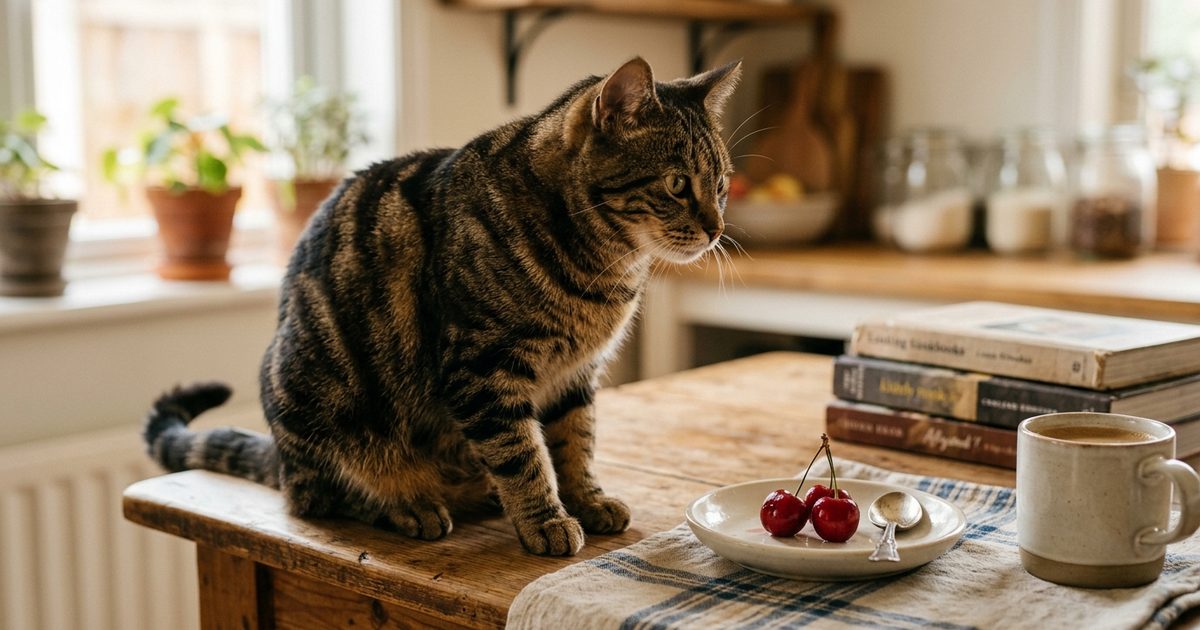
Can Cats Eat Cherries?
Yes — cats can eat the flesh of a ripe cherry in tiny amounts, but only after the pit is fully removed, and only rarely. The pit, stem, and leaves are toxic to cats. Cherries are a treat, never a regular food, and a swallowed pit is also a blockage hazard.
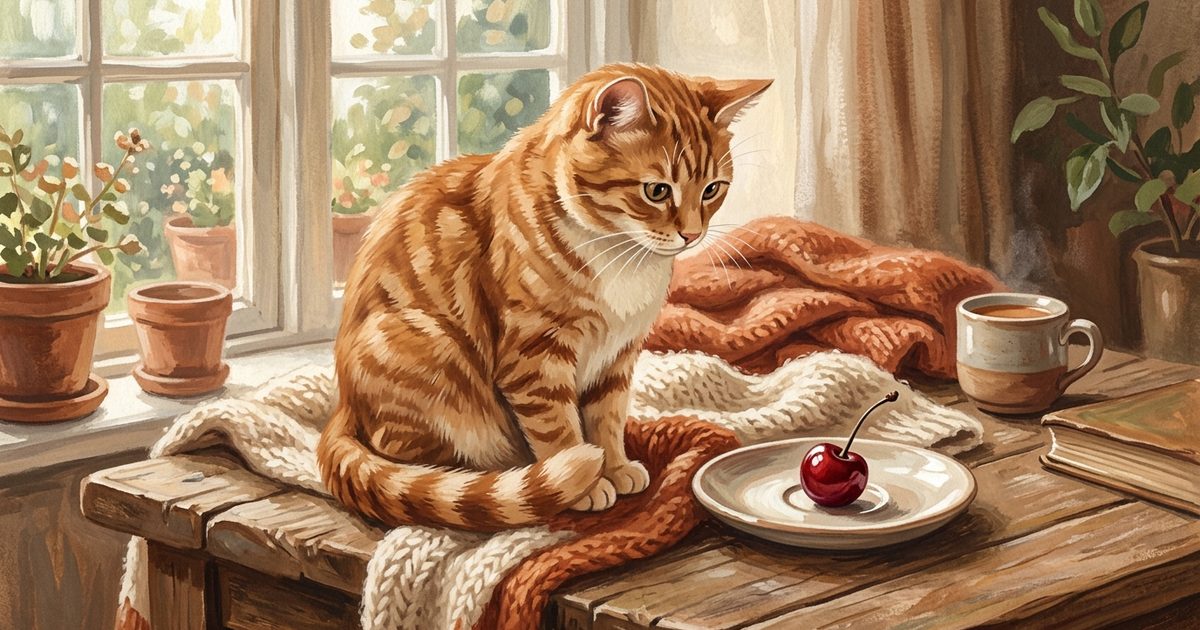
The short answer
The verdict, plainly: a cat can have a small piece of pitted cherry flesh as an occasional treat. The pit, the stem, and the leaves are toxic to cats and must never be fed — which is why "remove the pit completely" comes before anything else. Think of a cherry the way a thoughtful vet would: a treat, not a food. Your cat's nutrition should come from complete cat food; a cherry is a few calories of curiosity, not a meal.
That raises two questions worth answering in full below. If you're wondering are cherries toxic to cats, we cover the pit, stem, and leaves in detail in Are Cherry Pits Toxic to Cats? And if you're asking specifically can cats eat cherry flesh, the edible-portion verdict sits in Can Cats Eat Cherry Flesh?
Why cherries are unusual as a cat food
A cherry is a sugary stone fruit, and cats are obligate carnivores — their metabolism runs on protein and fat, not on sugar or plant matter. Your cat's body doesn't need what a cherry offers, and the sugar load is the reason the treat ceiling is tight. On top of that, unlike a uniformly safe fruit such as a strawberry or a blueberry, a cherry carries a genuinely toxic part: the pit, stem, and leaves must be removed before the flesh is even safe to consider. That combination — high sugar plus a toxic core — is what makes cherries a careful, prep-required treat rather than a grab-and-share one.
Are Cherry Pits Toxic to Cats?
Yes — cherry pits, stems, and leaves contain cyanogenic glycosides, compounds that release cyanide when crushed or chewed. A few intact pits swallowed may pass, but they are genuinely toxic and must always be removed. The stem and leaves carry the same hazard and should never be fed.
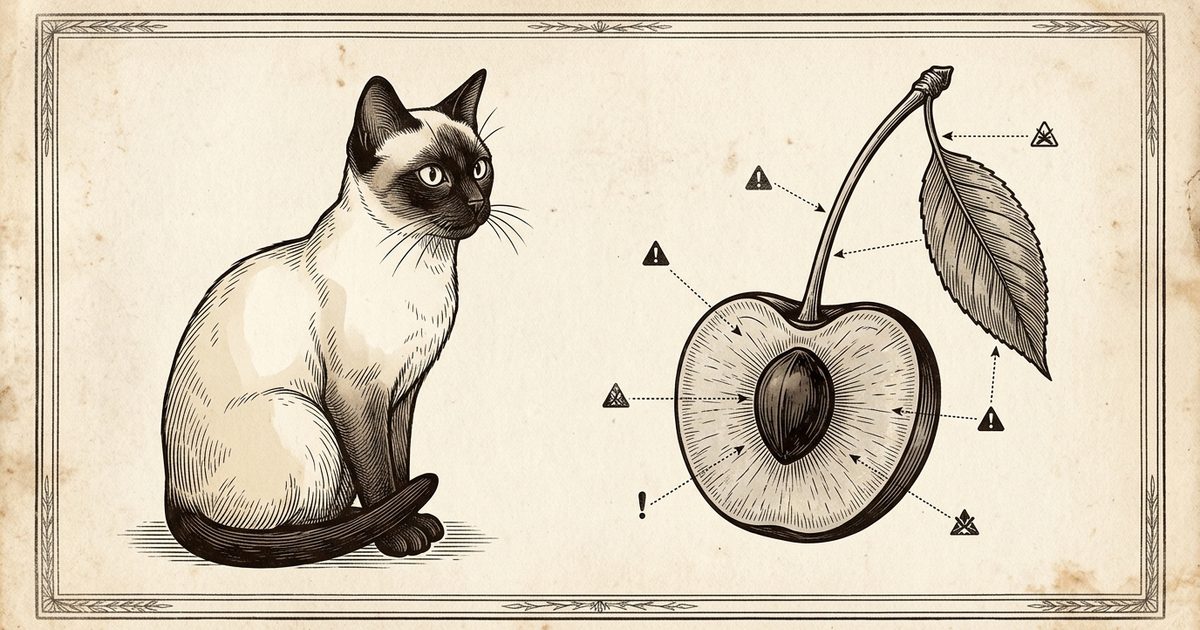
Cyanogenic glycosides and cyanide
The pit (stone), stem, and leaves of a cherry all contain cyanogenic glycosides — compounds that release hydrogen cyanide when the plant tissue is crushed, chewed, or broken down by enzymes in the gut. This is the same class of hazard as the amygdalin in apple seeds, which is why cherries and apples sit on the same caution shelf for cats. The reason it matters: cyanide interferes with the body's ability to use oxygen at the cellular level, which is exactly the kind of failure a small animal cannot afford. So when someone asks can cats eat cherry pits, the answer is no — and the broader are cherries toxic to cats question resolves right here, in the stone and the rest of the plant. The Cornell Feline Health Center's guidance on foods and plants toxic to cats is a reliable reference for this whole category of hazard.
How much pit is dangerous
Dose matters. A single intact pit swallowed whole may pass through without releasing enough cyanide to poison a cat — but a pit that is crushed or chewed, or several pits at once, raises the risk sharply. And because a cat is far smaller than a person, the margin for error is tighter than it would be for us. The honest way to read that is not "one pit is probably fine, so don't worry." The safe rule is zero pit — never feed the stone, never let a cat chew one, and treat any swallowed pit as a reason to watch closely. International Cat Care's overview of toxic plants and foods for cats is worth bookmarking for the wider list.
The pit is also a choking and blockage hazard
Beyond the chemistry, a cherry pit is hard, round, and just small enough to be swallowed whole by a cat — which makes it both a choking risk and an intestinal-obstruction risk. This is the part that puts cherries one caution-tier above apples: an apple seed is smaller and softer and far more likely to pass quietly, whereas a cherry stone can lodge or block. It's the closest parallel in the fruit-treat family, so if you're weighing the two, our guide to can cats eat apples lays out the same seed-cyanide logic with a less severe physical profile. And because obstruction often shows up first as repeated vomiting, our cat vomiting guide covers when those signs after a new food warrant a vet call.
Can Cats Eat Cherry Flesh?
Yes — the pitted flesh of a ripe cherry is non-toxic to cats and safe in tiny amounts. But it is high in sugar, so it is a rare treat, not a regular food. Offer a small piece, fully pitted, to a healthy adult cat, and never more than one or two cherries' worth.
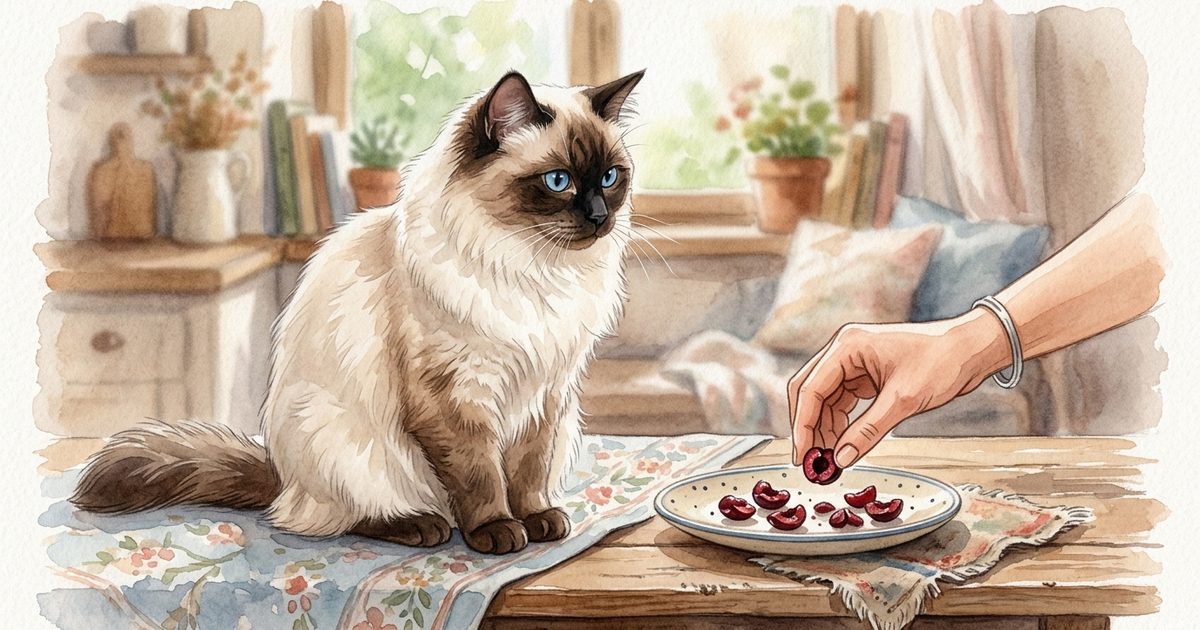
Flesh is non-toxic, but high in sugar
If you've already worked through whether cats can eat cherries overall, the next logical question is about the flesh specifically — and here the news is reassuring. The flesh itself contains none of the cyanogenic compounds that make the pit, stem, and leaves hazardous. So once the pit and stem are completely gone, what's left is just soft, sweet fruit, and that part won't poison your cat. But "non-toxic" and "healthy" are not the same thing. Cherry flesh carries meaningfully more sugar per 100g than strawberries or blueberries, so the treat ceiling is tighter here than for those lower-sugar fruits. Frame it as "safe but sugar-capped" — permissible, not beneficial. A cat's body runs on protein and fat, not on fruit sugars, so a piece of cherry is a few calories of novelty, not nutrition. If you want a lower-sugar fruit alternative, those two are better daily candidates; the cherry is the occasional one.
The bottom line on the edible portion
Strip away the hazard and this is the verdict: the pitted flesh is the only part of a cherry that is genuinely safe, it is non-toxic, and its only real cost is sugar. A complete, balanced cat food already supplies everything your cat actually needs, so a cherry is never a nutritional addition — it's a small, rare treat that exists for the moment of sharing, not for health. International Cat Care makes the same point about treats and titbits generally: they should be exactly that — occasional, small, and never a substitute for a complete diet.
How Should I Serve Cherries to My Cat?
Serve only fresh, fully ripe cherries. Remove the pit completely, wash the fruit, and cut or mash the flesh into small pieces — never offer a whole cherry. Skip maraschino and glacé cherries entirely: they are sugar-soaked and not safe as a treat.
Pit completely, then wash
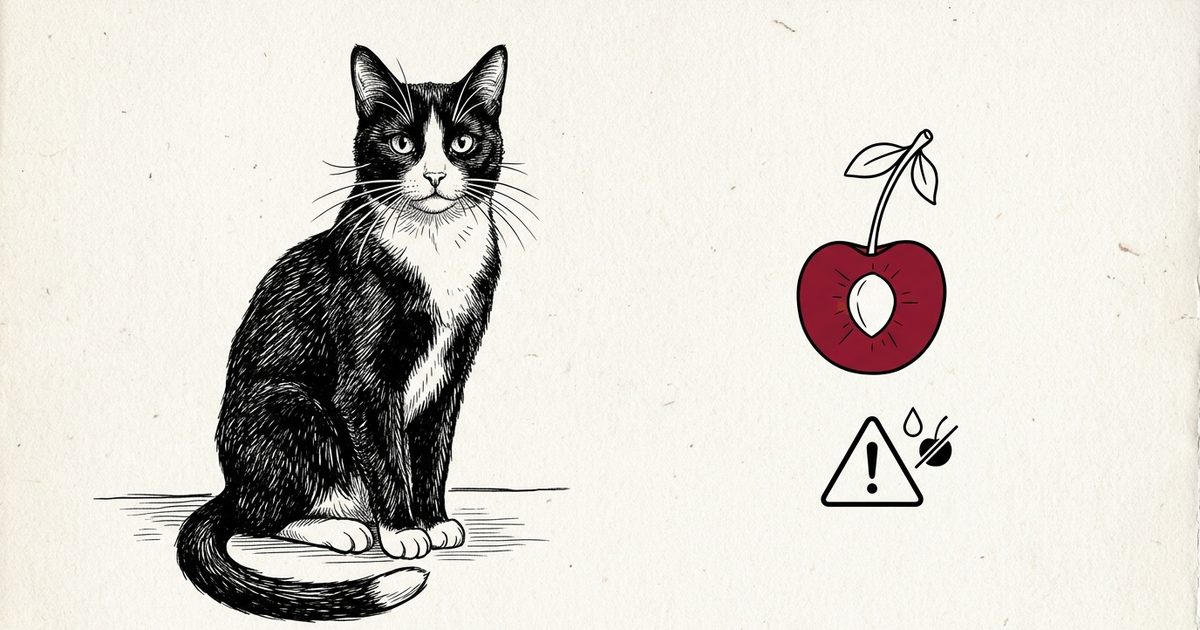
This is the non-negotiable step: remove the entire pit before the cherry comes anywhere near your cat. Not "mostly out," not "cracked open" — fully removed. A partially-pitted cherry is not an acceptable middle ground, because the pit is both toxic and a choking hazard, and a cat chewing to find it is exactly what you don't want. Once the pit and stem are out, rinse the fresh cherry under running water to clear pesticide residue and surface dirt, the same as you would for yourself. Discard the stem, and never let a cat chew on a cherry branch or leaves — those parts carry the same cyanogenic hazard as the pit. Use only fresh, fully ripe fruit; nothing processed.
Cut or mash the flesh
Cherry flesh is soft, but the whole fruit is small and round, which makes it awkward for a cat to manage. Cut the flesh into small pieces, or mash it lightly for small cats, kittens, or cats that tend to gulp their food. This keeps the treat about taste and texture, not a choking risk from the flesh itself.
Forms to avoid
Not every cherry-shaped thing in the kitchen counts as a cherry. Maraschino cherries are sugar-soaked, often packed with preservatives, and sometimes carry alcohol-based flavorings — the missing pit does not make them safe. Glacé and candied cherries are concentrated sugar and belong to baking, not your cat. Cherry pie filling, cherry jam, cherry-flavored yogurt, and cherry baked goods all layer on sugar and additives that turn a borderline treat into a bad idea. The same sweet-treat rule applies more broadly to bananas and watermelon: if a fruit arrives sweetened, processed, or dressed up, it's off the menu for your cat, however innocent it looks.
How Many Cherries Can a Cat Eat?
About one to two pitted cherries, as an occasional treat — not daily, and no more than once or twice a week for a healthy adult cat. All treats combined should stay under roughly 10% of daily calories. Smaller, overweight, or diabetic cats should have fewer, or none.
The 10% treat rule
A single pitted cherry is only a few calories, and a typical adult cat's daily budget sits around 200 kcal — so the math seems generous at first glance. The widely cited guideline veterinarians use is that all treats combined should make up no more than about 10% of a cat's daily calories, which for most cats means roughly 20 kcal of treats. One cherry barely dents that.
But the ceiling isn't the whole story. Because cherry flesh is comparatively high in sugar, cherries belong at the rare end of the treat spectrum, not the generous end. A small piece is permissible; it is not beneficial. Your cat's complete food already supplies what she needs, so the cherry earns its place through the moment of sharing, not the nutrition it delivers. If you've ever wondered why a cat would want fruit at all, it's worth knowing cats can't taste sweetness — the treat is for your bond with her, not a craving she is built to feel.
Frequency and which cats should skip them
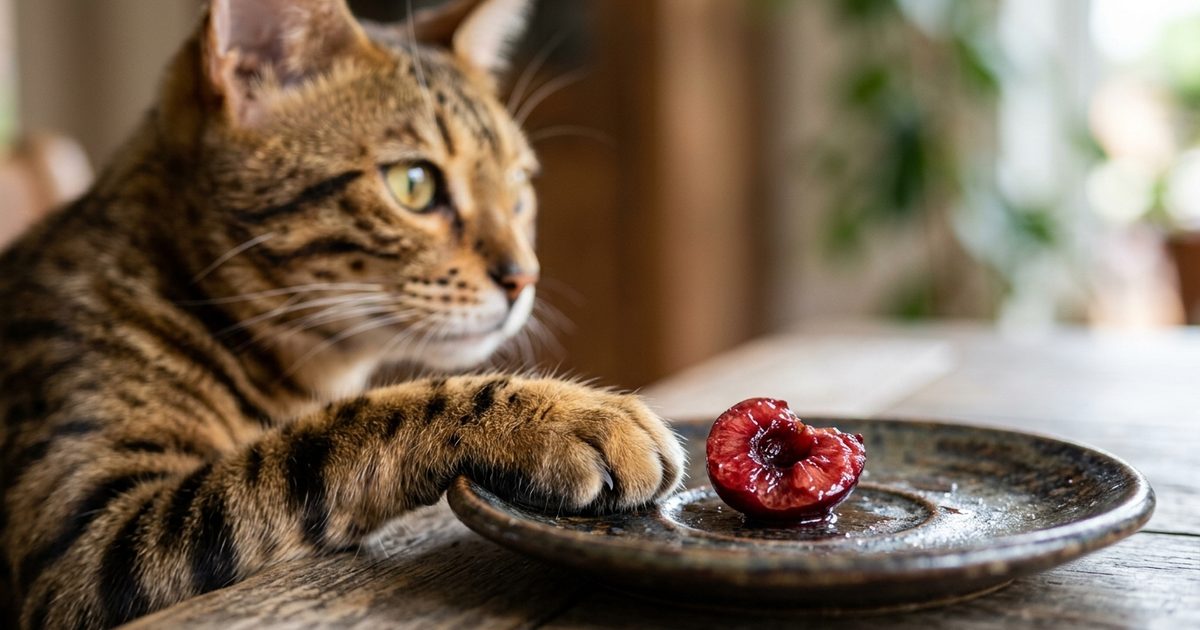
For a healthy adult cat, the practical ceiling is one to two pitted cherries, no more than once or twice a week. That is plenty to share the moment without crowding out the complete food that actually feeds her. Smaller cats and kittens should have even less — their calorie budgets are tighter and their GI tracts more easily unsettled by anything novel.
Some cats should skip cherries entirely. Overweight cats don't need the extra sugar; diabetic cats should avoid sugary fruits altogether; and cats with a sensitive stomach or a history of food intolerance can react to even a small piece of new fruit. For these cats, a treat that offers no nutritional upside isn't worth even a small downside. Remembering what cats actually eat keeps the picture clear: they are obligate carnivores, and fruit is a visitor in their diet, never a resident. If your cat does vomit or have loose stool after a new food, our cat vomiting guide walks through when that warrants a vet visit.
What Are the Signs of Cherry Trouble in Cats?
If a cat eats a cherry pit, stem, or leaves, watch for drooling, vomiting, diarrhea, lethargy, difficulty breathing, or pale gums. Cyanide exposure and intestinal blockage are emergencies — call your vet or a pet poison line immediately, and do not wait.
If the pit, stem, or leaves are eaten
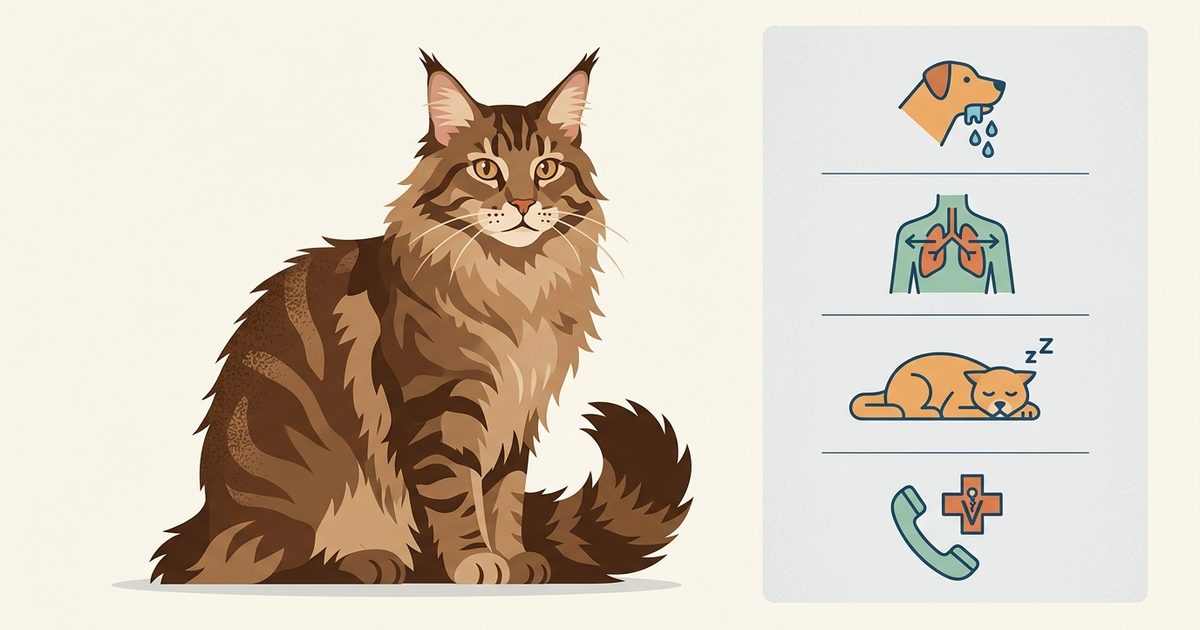
The dangerous parts of the cherry — the pit, stem, and leaves — carry cyanogenic glycosides that can release cyanide when crushed or chewed. Signs of cyanogenic exposure in a cat can include drooling, rapid or labored breathing, bright-red or unusually pale gums, dilated pupils, weakness, and in serious cases collapse. These are emergency signs, not "wait and see" symptoms — a cat showing any of them needs veterinary attention right away. The Cornell Feline Health Center is a reliable reference for what to do in a suspected poisoning.
A swallowed pit brings a second, separate problem: obstruction. A hard pit that doesn't pass can cause gagging, repeated vomiting, refusal to eat, signs of abdominal pain, or constipation. Because every cat's size and gut differ, there is no exact dose that's "safe" to swallow — act on the signs, and call your vet or ASPCA Animal Poison Control rather than guessing.
If the flesh causes GI upset
Even the safe pitted flesh can disagree with a sensitive stomach. Mild vomiting or a little loose stool after a small piece usually passes on its own within a day. But persistent vomiting, lethargy, a refusal to eat, or any worsening of signs is the threshold for a vet call — don't keep watching if things aren't improving. Our full guide to cat vomiting walks through how to read the severity of GI signs after a new food.
When to call the vet or poison line
When in doubt, call — that's the rule. Keep your vet's after-hours number and a pet poison helpline (the ASPCA Animal Poison Control number or your local equivalent) saved before you ever offer a new food. And do not induce vomiting unless a veterinarian specifically tells you to; in some cases it can do more harm than good.
Cherries for Cats at a Glance — Summary
| Question | Short answer |
|---|---|
| Can cats eat cherries? | Yes, the pitted flesh in tiny amounts — but the pit, stem, and leaves are toxic |
| Are cherry pits toxic to cats? | Yes — they contain cyanide precursors and are also a blockage hazard |
| Can cats eat cherry flesh? | Yes, pitted and ripe, in small amounts — it's non-toxic but high in sugar |
| How should I serve them? | Pit fully removed, washed, cut or mashed — never whole, never maraschino |
| How many can a cat eat? | One to two pitted cherries, no more than once or twice a week |
| What are the signs of trouble? | Drooling, vomiting, breathing difficulty, lethargy, pale gums — call the vet |
| Which cats should skip them? | Kittens, overweight, diabetic, and GI-sensitive cats should avoid them |
Curious What Your Cat Would Say?
Upload a photo and get a warm, personalized reading from your cat's perspective.
Start Your Free ReadingFrequently Asked Questions
Can cats eat cherries?
Yes, cats can eat the flesh of a ripe cherry in tiny amounts, but only after the pit is fully removed and only rarely. The pit, stem, and leaves are toxic to cats, and cherries are a treat — never a regular food or a meal replacement.
Are cherry pits toxic to cats?
Yes. Cherry pits, stems, and leaves contain cyanogenic glycosides, which release cyanide when crushed or chewed. A single intact pit may pass, but a crushed pit or several pits raises the risk sharply — and a pit is also a choking and blockage hazard.
Can cats eat cherry flesh?
Yes, the pitted flesh of a ripe cherry is non-toxic to cats and safe in tiny amounts. But cherry flesh is high in sugar, so it is a rare treat, not a healthy addition — a small piece, fully pitted, never more than one or two cherries' worth.
What happens if a cat eats a cherry pit?
Watch for drooling, vomiting, diarrhea, difficulty breathing, pale or bright-red gums, weakness, or collapse — these are emergency signs, not wait-and-see symptoms. A swallowed pit can also cause gagging or blockage, so call your vet or a pet poison line right away.
Can cats eat maraschino cherries?
No. Maraschino cherries are sugar-soaked, often packed with preservatives, and sometimes carry alcohol-based flavorings. The missing pit does not make them safe — they belong to cocktails, not your cat's treat list.
How many cherries can I give my cat?
About one to two pitted cherries, no more than once or twice a week for a healthy adult cat, and never as a daily treat. All treats combined should stay under roughly 10% of daily calories, and cherry's sugar keeps it at the rare end of the spectrum.
Can kittens eat cherries?
It's best to skip them. Kittens have tighter calorie budgets and more easily unsettled digestive tracts, so a novel sugary fruit is more downside than upside. Stick to complete kitten food and save fruit treats for healthy adult cats.
Can diabetic cats eat cherries?
No. Cherries are comparatively high in sugar, and diabetic cats should avoid sugary fruits altogether. A treat that offers no nutritional upside isn't worth even a small blood-sugar downside — check with your vet before offering any fruit.
Are cherry stems and leaves safe for cats?
No. Cherry stems and leaves carry the same cyanogenic glycosides as the pit and can release cyanide when chewed or broken down. Never let a cat chew on a cherry stem, branch, or leaves — discard them when you prep the fruit.
Sources & References
You Might Also Like
Kitten Teething: Timeline, Symptoms & How to Help
Kitten teething runs from 3 to 7 months as baby teeth fall out. Learn the timeline, signs to watch for, and how to soothe a teething kitten safely.
15 min readWhen Do Cats Stop Growing? A Complete Timeline
When do cats stop growing? Most cats reach adult size by 12-18 months, but large breeds like Maine Coons keep growing until 3-4 years. Full timeline inside.
14 min readCan Cats Eat Green Beans? Vet-Approved Veggie Treat Guide
Can cats eat green beans? Yes — plain cooked or raw, they're a safe, low-calorie, high-fiber treat and weight-loss filler. Serving sizes and risks.
17 min read