
Can Cats Eat Watermelon? Safety, Seeds, and How to Serve It
If you're wondering can cats eat watermelon on a hot summer afternoon, the short answer is yes — with real limits. The red flesh is non-toxic to cats and, because watermelon is almost all water, a tiny seedless piece can be a fun, hydrating nibble. The catch is that cats can't taste sweetness (a quirk we dig into below), so if you've noticed your cat sniffing your slice, do cats like watermelon for the sugar? Not really — what hooks them is the water, the cool soft texture, and plain curiosity. Either way, watermelon is a treat, never a regular food, and only the red flesh counts.
Key takeaways
- The red flesh of watermelon is non-toxic to cats and safe in small, seedless pieces as an occasional summer treat.
- Always remove every seed (intestinal-blockage risk) and never feed the rind — it's tough, fibrous, and hard to digest.
- Cats cannot taste sweetness, so any interest in watermelon is about water, texture, or curiosity, not a sweet craving.
Watermelon for Cats — Quick Reference
| Watermelon part | Safe for cats? | Notes |
|---|---|---|
| A small piece of ripe seedless red flesh | Yes — as a treat | Non-toxic, hydrating; keep portions tiny and infrequent |
| Watermelon seeds | No | Black and white seeds can obstruct a cat's intestine, especially in small cats |
| Watermelon rind | No | Tough, fibrous, hard to digest; choking and obstruction hazard |
| Chilled cubed watermelon | Yes — as a treat | Only the red flesh, cut small; chilling is optional, some cats enjoy it cool |
| Watermelon juice | No (if plain) / Never (if sweetened) | Plain juice offers no benefit; store-bought juice often has added sugar |
| Watermelon with added sugar or in baked goods | No | Added sugar, syrups, and baked-goods ingredients are unsafe for cats |
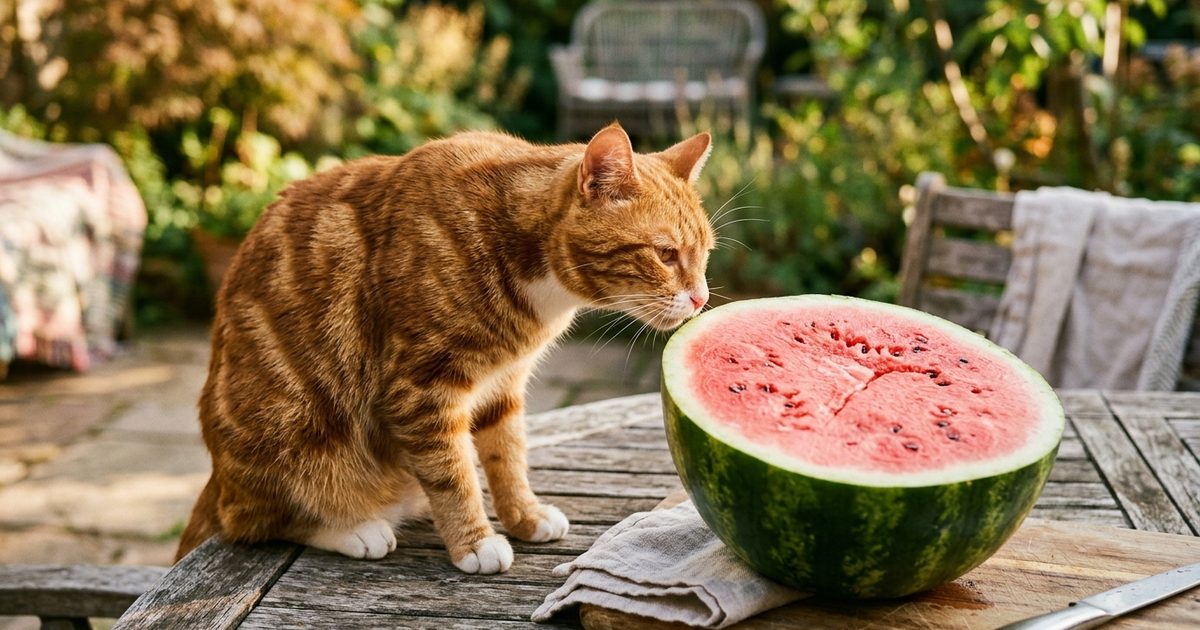
Can Cats Eat Watermelon?
Yes — cats can eat the red flesh of watermelon in small, seedless pieces as an occasional treat. The flesh is non-toxic, and because watermelon is mostly water, a small piece can even be a fun, hydrating snack on a hot day. It is a treat, never a part of a cat's regular diet.
The short answer
The verdict, up front: the red flesh of a ripe watermelon is non-toxic to cats, so a small piece will not harm a healthy cat. That makes watermelon one of the more cat-tolerable fruits — its real draw is the water, which can feel pleasant on a warm day, and a bite-sized piece can nudge fluid intake. But the word "treat" matters here. Cats have no dietary need for fruit, and the sugar and calories in watermelon are extras their bodies don't ask for, so it stays occasional and tiny. Only the red flesh counts — seeds and rind are off the table entirely, as we cover below. If you want the broader picture of where fruit sits in a cat's diet, see our guide on what cats eat.
Why watermelon is an unusual cat food
Here's the honest framing: a cat is an obligate carnivore, which means its metabolism is built to run on protein and fat from animal tissue, not on sugar or plant matter. Cats have very little of the biology that handles regular carbohydrate loads well — no real dietary need for sugar, and a digestive tract tuned for meat. So watermelon sits outside a cat's natural diet by definition. When a cat shows interest in a piece, it isn't chasing nutrition; it's drawn to the water, the cool soft texture, the novel smell, or simply copying you eating it. That's the real answer behind do cats like watermelon — the pull is sensory curiosity, not a craving the diet must satisfy.
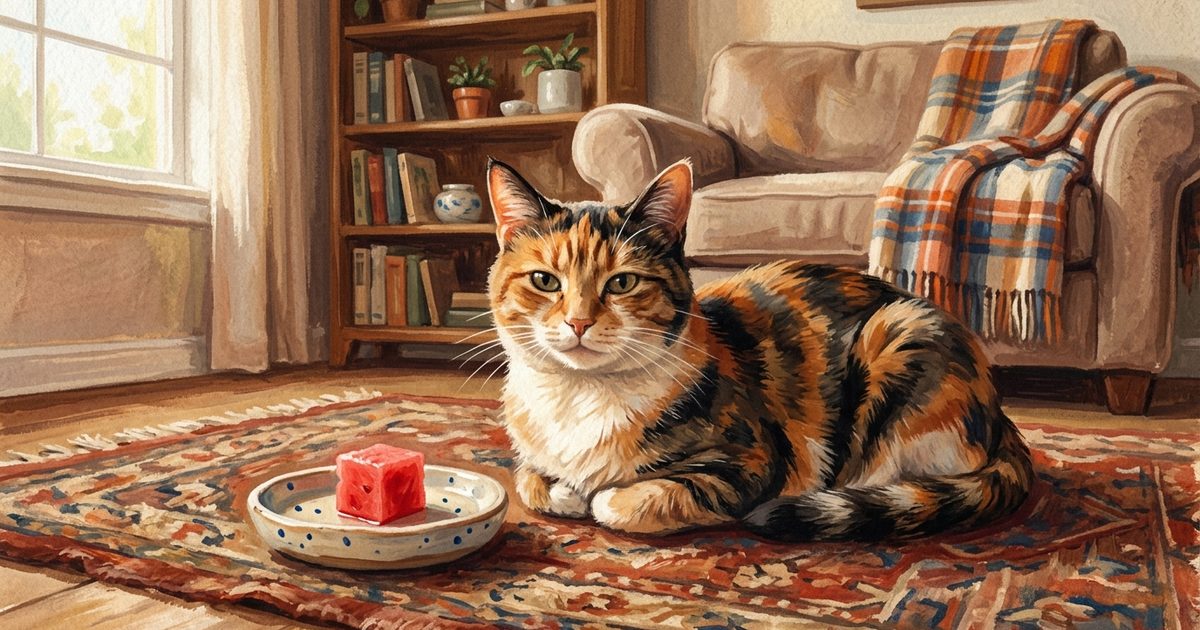
Is Watermelon Good for Cats Because It Is So Watery?
Watermelon is about 92% water, so a small piece can add a little hydration — genuinely helpful for cats in hot weather or cats that drink little. But it is a supplement to the water bowl, never a replacement, and the sugar content caps the amount you can safely offer.
The hydration upside
Cats are notoriously low-water drinkers. Their ancestors got most of their moisture from prey, so the modern house cat's thirst drive is famously weak — especially for cats on a dry-food diet, who take in far less water than cats eating wet food. On a hot summer day, or for a cat that has never been an enthusiastic drinker, a moisture-rich treat can quietly nudge fluid intake upward in a way a refill of the bowl sometimes cannot.
That is the real, modest benefit of watermelon for cats: it is mostly water, cool, and easy to lap at. For a cat prone to urinary issues, where steady fluid intake matters, a small piece now and then can be a pleasant little top-up. The Cornell Feline Health Center is a reliable reference for understanding feline hydration and how water intake fits into a cat's overall health.
A fair caveat, though: watermelon is not a treatment for dehydration or urinary disease. If your cat is genuinely dehydrated or straining in the litter box, that is a veterinary problem, not a fruit problem.
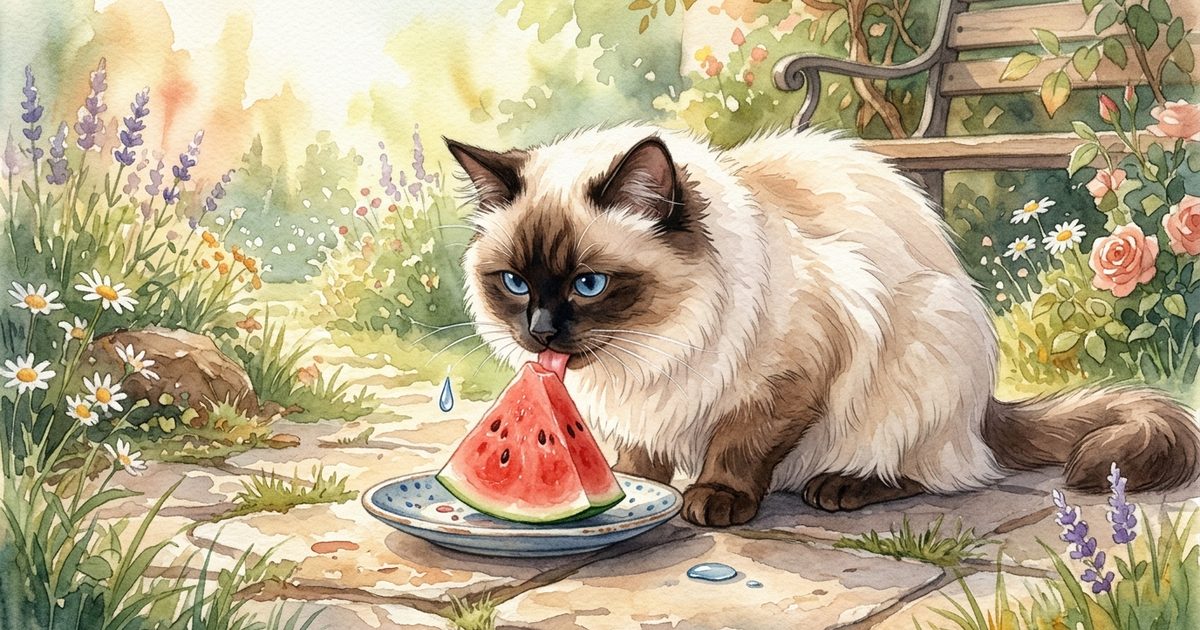
Why it is not a substitute for water
Here is the catch that matters most: a cat's daily water need far exceeds what a treat-sized piece of watermelon can deliver. An average adult cat needs roughly 50 milliliters of water per kilogram of body weight each day — a volume no sensible portion of watermelon could ever match. And because watermelon carries moderate sugar, you cannot simply scale the portion up to "hydrate" your cat; the sugar load rises right alongside the water, which is exactly the wrong trade-off.
The genuine hydration tools are the boring, proven ones: clean, fresh water (ideally in a fountain, which many cats prefer), and a diet that includes wet cat food, which is itself around 75-80% water. International Cat Care offers sound guidance on feline nutrition and how water and wet food together meet a cat's hydration needs. Watermelon is at best a small, occasional bonus on top of those foundations.
Cats that may benefit — and cats that should skip
A healthy, well-hydrated cat on a balanced diet does not need watermelon at all — it is purely a fun extra, not a nutritional gap-filler. A cat that drinks little, lives in a hot climate, or eats mostly dry food might enjoy a tiny piece as a seasonal hydration nudge.
Cats that should skip it: those carrying extra weight, cats with diabetes, and cats with kidney disease all have reasons to avoid sugary treats, and any of these conditions warrant your vet's okay before offering watermelon.
Can Cats Eat Watermelon Seeds and Rind?
No. Remove every seed before feeding watermelon to a cat — the small black and white seeds can cause an intestinal blockage, especially in small cats. Never feed the rind: it is tough, fibrous, and a documented choking and obstruction hazard. Serve only the red flesh, seedless.
Why seeds are a real hazard
If you're wondering whether cats can eat watermelon seeds, the safe answer is no — and the reason is mechanical, not chemical. Watermelon seeds aren't toxic, but they're small, smooth, and hard, and a cat's intestine is narrow. A swallowed seed can lodge in the intestinal tract and cause a blockage, with kittens and small breeds at the highest risk because their GI passages are that much finer. White seeds carry the same concern, just in a smaller package.
The signs to watch for are repeated vomiting, lethargy, refusing food, abdominal pain or a painful belly, and constipation or straining with nothing passing. Intestinal blockage in cats is a genuine veterinary emergency, not a wait-and-see situation — Cornell Feline Health Center describes GI obstruction as an urgent condition that needs prompt attention. The practical rule: pick out or cut around every seed, and when you have the choice, buy seedless watermelon in the first place.
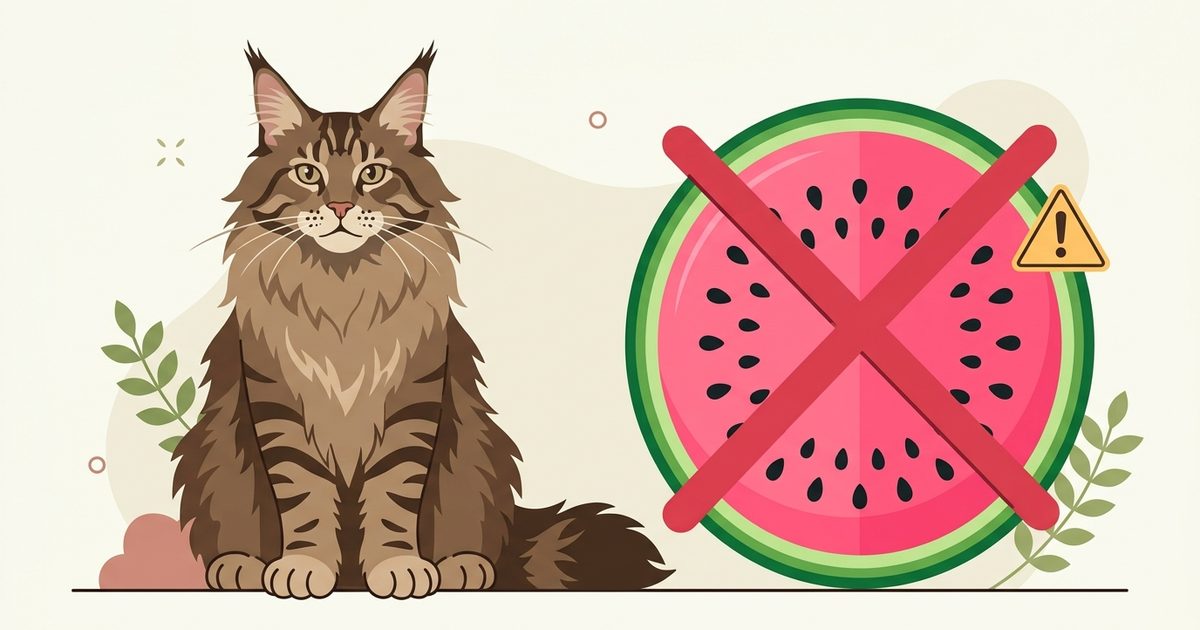
Why the rind is off-limits
The same question applies to the green outer rind — can cats eat watermelon rind? No, and again the problem is structure, not poison. The rind is dense, fibrous, and extremely tough. A cat's digestive tract is short and built for breaking down meat, not plant fiber, so the rind doesn't soften or digest the way it does for us. A cat that bites off a chunk can choke on it, or the piece can pass through partially intact and create an intestinal obstruction. On top of the physical hazard, the rind is the part of the fruit most likely to carry pesticide residue unless you've grown it yourself. International Cat Care treats tough, fibrous plant material as a known choking and blockage risk for cats. Discard the rind — it does not belong in the bowl.
What to do if a cat ate a seed or rind
Don't panic, but do pay attention. A single small seed will often pass on its own, so watch your cat closely over the next 24 hours — eating normally, no vomiting, normal energy is a good sign. The situations that warrant a prompt call to your vet are a chunk of rind, several seeds at once, or any GI warning sign: repeated vomiting, diarrhea, drooling, hiding, or a cat that suddenly goes quiet and refuses food. When GI signs appear after a new food, it's worth knowing when vomiting crosses the line from "upset stomach" to "see the vet now" — our guide to cat vomiting walks through exactly which signs are urgent and which can wait a little longer.
How Much Sugar Is in Watermelon — Does It Matter for Cats?
Watermelon carries moderate sugar — roughly 6g per 100g of flesh. For a cat, that is a treat, never a staple: regular sugary treats nudge up obesity risk and can contribute to diabetes over time. Keep watermelon rare and tiny, and skip it entirely for diabetic or overweight cats without your vet's okay.
The sugar and calorie math
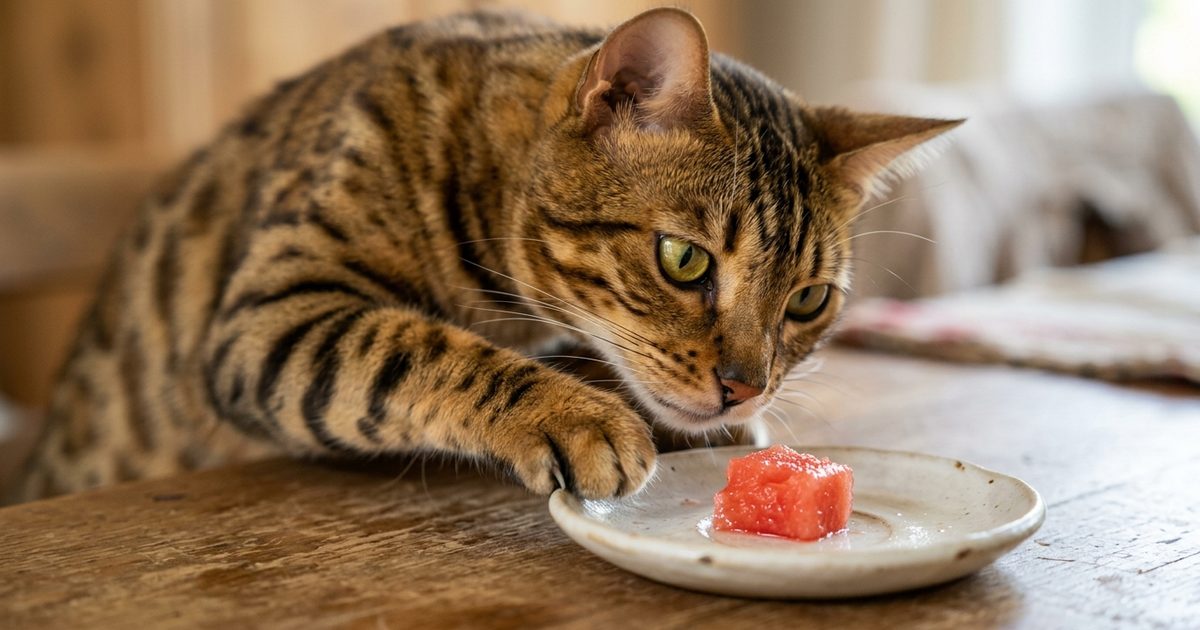
A 100g chunk of watermelon flesh holds about 6g of sugar and 30 calories — numbers that sound small to a human but loom large against a cat's metabolism. An average adult cat needs only roughly 200 calories a day, so even a thumb-sized piece of watermelon is a measurable slice of that daily budget. Cats also have no dietary need for sugar at all: as obligate carnivores, their bodies are built to run on protein and fat, and they have limited capacity for sustained sugar loads. That doesn't make a one-off piece dangerous, but it's why the portion has to stay small. For authoritative guidance on feline nutrition and how treats fit into a cat's daily intake, the Cornell Feline Health Center is a reliable reference.
Why frequency is the protection
A single small piece of watermelon is genuinely low-risk — most healthy cats process it without trouble. The real danger is watermelon quietly becoming a daily summer habit, handed off whenever you cut a slice for yourself. Cumulative sugar and extra calories are what drive weight gain and gradually strain insulin regulation, not one treat on a hot afternoon. The safeguard is the standard treat rule that feline nutrition experts including International Cat Care endorse: keep all treats and titbits combined under roughly 10% of your cat's daily calories. Within that ceiling, a sliver of watermelon is fine; outside it, the math starts working against your cat.
Diabetic and overweight cats
For cats with diabetes or obesity, watermelon is not an appropriate treat without explicit veterinary guidance. The sugar spike is precisely what those cats are being managed to avoid, and even a small piece can disrupt that balance. If you're looking for a fruit treat with a lighter sugar load, strawberries are a gentler alternative worth reading about.
How Should I Serve Watermelon to My Cat?
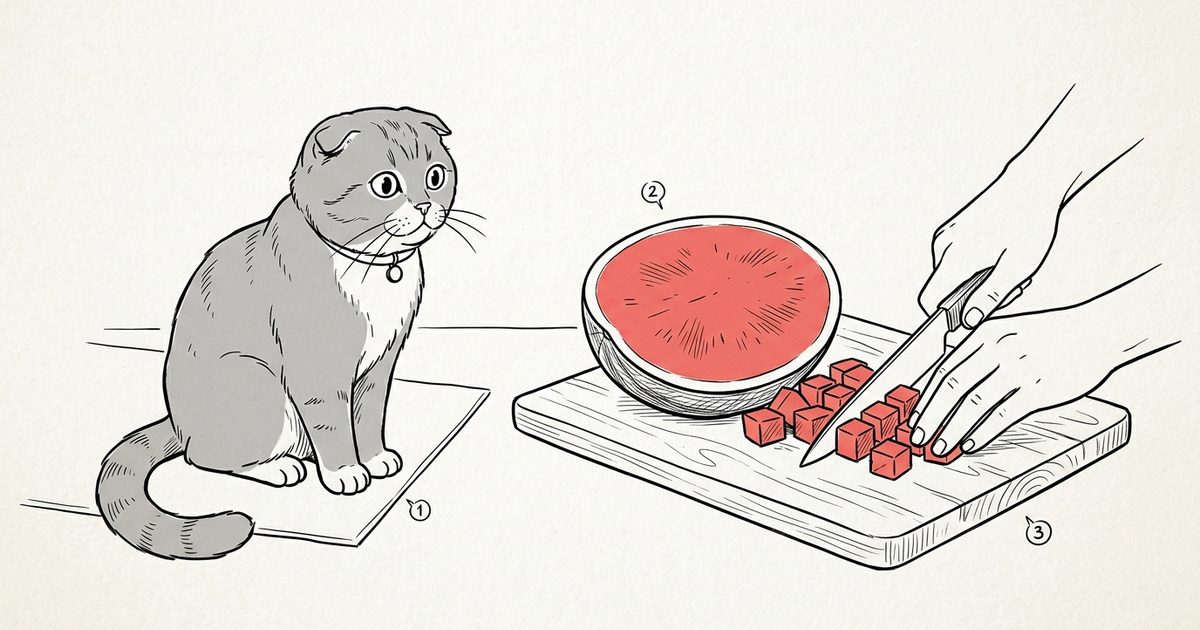
Serve only seedless red watermelon flesh — cut into small, bite-sized pieces, chilled if your cat enjoys it cool, with every seed removed and no rind attached. Never add sugar, syrup, or seasoning. Offer a pea-sized piece first and watch for stomach upset before giving any more.
Preparation rules
Start with seedless watermelon whenever you can — it removes the fiddliest and most dangerous step entirely. If only seeded watermelon is available, pick out or cut around every single seed, including the pale white ones, before any flesh reaches your cat. Cut the red flesh into small, bite-sized pieces small enough to swallow without working at them, which prevents choking. Chilling is optional, but some cats genuinely enjoy the cool, juicy texture on a warm day. What never reaches the bowl: watermelon juice with added sugar, watermelon-flavored candy, or baked watermelon goods — these concentrate sugar, add ingredients cats shouldn't have, and lose the one real upside (water).
Never the rind, never the seeds
Treat the rind and the seeds as prep-time discard, full stop. Only the red flesh goes into the bowl. This restates the hard rule from our seeds-and-rind section, but it matters here because serving is the moment the hazard actually reaches your cat — a single missed seed or a thin strip of rind left attached is all it takes. Cut the flesh cleanly away from both before serving.
Introduce slowly
Even with a healthy cat, offer a pea-sized test piece first and then wait. Watch for vomiting or diarrhea over the next 24 hours; if either appears, skip watermelon going forward and read our guide on cat vomiting for when GI signs warrant a vet visit. Cats with sensitive stomachs, diabetes, or obesity should skip watermelon entirely — there's no nutritional gap it fills, and the potential downside isn't worth it.
Why Do Some Cats Like Watermelon?
Some cats are drawn to watermelon, but it is almost never about sweetness — cats cannot taste sweet. The attraction is the high water content, the cool soft texture, the novel smell, or mimicking you. It is curiosity and hydration, not a craving the diet must satisfy.
Cats can't taste sweet
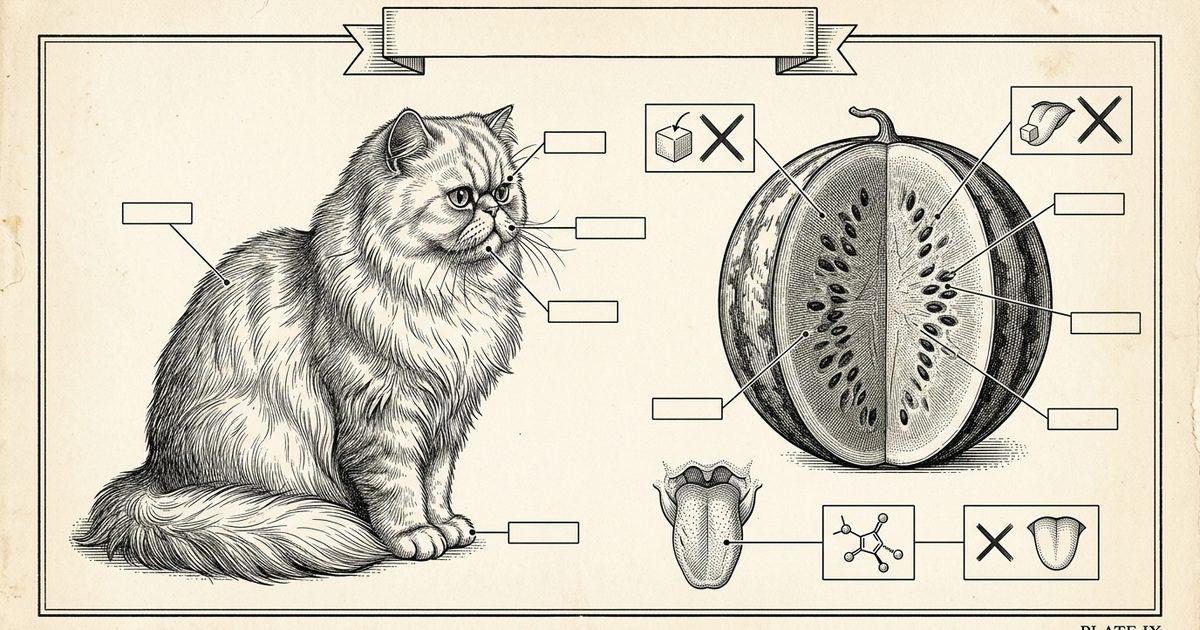
A cat that noses at a slice of watermelon is not chasing sugar — it literally cannot register sweetness. Cats carry a broken copy of the Tas1r2 gene, so the sweet taste receptor on the tongue never assembles. To a cat, a ripe strawberry and a plain ice cube sit in the same sensory category. So when an owner assumes their cat "loves" watermelon the way a person does, that reading is understandable but off the mark. We go deeper into the sensory biology — the receptor, the pseudogene, why it broke over evolutionary time — in our piece on whether cats can taste sugar. Here the takeaway is simpler: whatever your cat is responding to, it isn't sweet.
What the interest really is
If not sweetness, then what pulls a cat toward the fruit? Usually it is the same set of things that pull a cat toward any unfamiliar object: novelty, the cool juicy mouth-feel, the faint fruity smell, or simply watching you eat it and wanting in on the ritual. Cats are curious eaters and social mimics — a sniff, a lick, a paw-bat at a chunk is the feline equivalent of investigating something interesting, not flagging a dietary gap. That moment is harmless and often charming, but it does not justify turning watermelon into a regular offering. The Cornell Feline Health Center is clear that a cat's nutritional needs come from complete cat food, not from curiosity-driven snacks. A lick now and then is fine; a habit is not earned by it.
Watermelon for Cats at a Glance — Summary
| Question | Short answer |
|---|---|
| Can cats eat watermelon? | Yes — small seedless pieces of red flesh, as an occasional treat |
| Are the seeds safe? | No — remove every seed; they can cause intestinal blockage |
| Is the rind okay? | No — it is tough, fibrous, and a choking and obstruction hazard |
| Does the water help? | A little, on a hot day — but never a substitute for the water bowl |
| How much sugar is too much? | Moderate sugar, so keep it rare and tiny; skip it for diabetic cats |
| Why does my cat like it? | Water, cool texture, novelty — not sweetness, which cats cannot taste |
Curious What Your Cat Would Say?
Upload a photo and get a warm, personalized reading from your cat's perspective.
Start Your Free ReadingFrequently Asked Questions
Can cats eat watermelon every day?
No. Watermelon is a treat, not a regular food — its sugar and calories add up fast against a cat's small daily budget. Save it for occasional summer moments, and never let it become a daily habit.
Can cats eat watermelon seeds?
No. Watermelon seeds are small, hard, and smooth, and they can lodge in a cat's narrow intestine, especially in kittens and small breeds. Always pick out or cut around every black and white seed before serving.
Can cats eat watermelon rind?
No. The rind is dense, fibrous, and very tough — a cat's short digestive tract cannot break it down. It is a documented choking and obstruction hazard, so discard it and serve only the red flesh.
How much watermelon can I give my cat?
Only a small, seedless piece of red flesh as an occasional treat — think a thumb-sized cube at most. Keep all treats and titbits combined under roughly 10% of your cat's daily calories.
Can kittens eat watermelon?
Kittens are the highest-risk group for seed-related blockage because their GI passages are so fine. If you offer any, give only a pea-sized piece of seedless red flesh — and a kitten's growing body is better served by complete kitten food.
Why is my cat obsessed with watermelon?
It is almost never about sweetness — cats cannot taste sweet. The pull is the high water content, the cool soft texture, the novel smell, or simply copying you eating it. It is curiosity, not a craving.
Can diabetic cats eat watermelon?
Not without explicit veterinary guidance. The sugar spike is exactly what diabetic cats are managed to avoid, so even a small piece can disrupt that balance. Skip it for diabetic and overweight cats.
Is watermelon good for hydrating cats?
A little, on a hot day. Watermelon is about 92% water, so a small piece can add a hydration nudge — but it is a supplement to the water bowl, never a replacement, and the sugar load caps the amount.
What happens if my cat eats a watermelon seed?
A single small seed often passes on its own, so watch your cat closely for 24 hours. If you see repeated vomiting, lethargy, refusal to eat, or several seeds at once, call your vet promptly — intestinal blockage is an emergency.
Can cats taste the sweetness in watermelon?
No. Cats carry a broken copy of the Tas1r2 gene, so their sweet taste receptor never assembles. Whatever draws a cat to watermelon, it is the water, texture, and novelty — not sweetness.
Sources & References
You Might Also Like
Kitten Teething: Timeline, Symptoms & How to Help
Kitten teething runs from 3 to 7 months as baby teeth fall out. Learn the timeline, signs to watch for, and how to soothe a teething kitten safely.
15 min readWhen Do Cats Stop Growing? A Complete Timeline
When do cats stop growing? Most cats reach adult size by 12-18 months, but large breeds like Maine Coons keep growing until 3-4 years. Full timeline inside.
14 min readCan Cats Eat Cherries? Flesh, Pit & Toxicity Facts
Can cats eat cherries? Pitted flesh is safe in tiny amounts — but the pit, stem, and leaves are toxic (cyanide precursors). Learn what's safe and what isn't.
15 min read