
Kitten Teething: Timeline, Symptoms & How to Help
Kitten teething is the process every kitten goes through as 26 tiny baby teeth give way to a full adult set of 30, and kitten age by teeth is one of the simplest ways to track how far along that process is. Teething typically begins around 3 to 4 months, when a kitten's incisors start to loosen and fall out, and wraps up by about 6 months once the canines, premolars, and molars have all come in. Along the way, most kittens show a few classic signs — extra drooling, a sudden urge to chew on absolutely everything, and maybe a day or two of picking at their food, all completely normal parts of growing up. Below, you'll find the full teething timeline stage by stage, what's normal versus what needs a vet's attention, and simple ways to make the process easier on your kitten (and your furniture).
Key takeaways
- Kittens start losing their baby teeth around 3 to 4 months old and have a full set of 30 adult teeth by about 6 months.
- Drooling, chewing on everything, and a mild dip in appetite are all normal signs of teething — not something to worry about.
- A baby tooth that doesn't fall out before its adult replacement erupts (a retained tooth) needs a vet's attention.
Kitten Age by Teeth — Quick Reference
| Age | What's Happening | Tooth Count |
|---|---|---|
| Birth – 3 weeks | No teeth yet | 0 |
| 3 – 6 weeks | Baby teeth erupt | Full set of 26 baby teeth |
| 3.5 – 4 months | Incisors fall out first | Adult incisors start replacing baby teeth |
| 4 – 6 months | Canines and premolars fall out | Adult teeth continue filling in |
| ~6 months | Teething complete | Full adult set of 30 teeth |
When Do Kittens Start Teething?
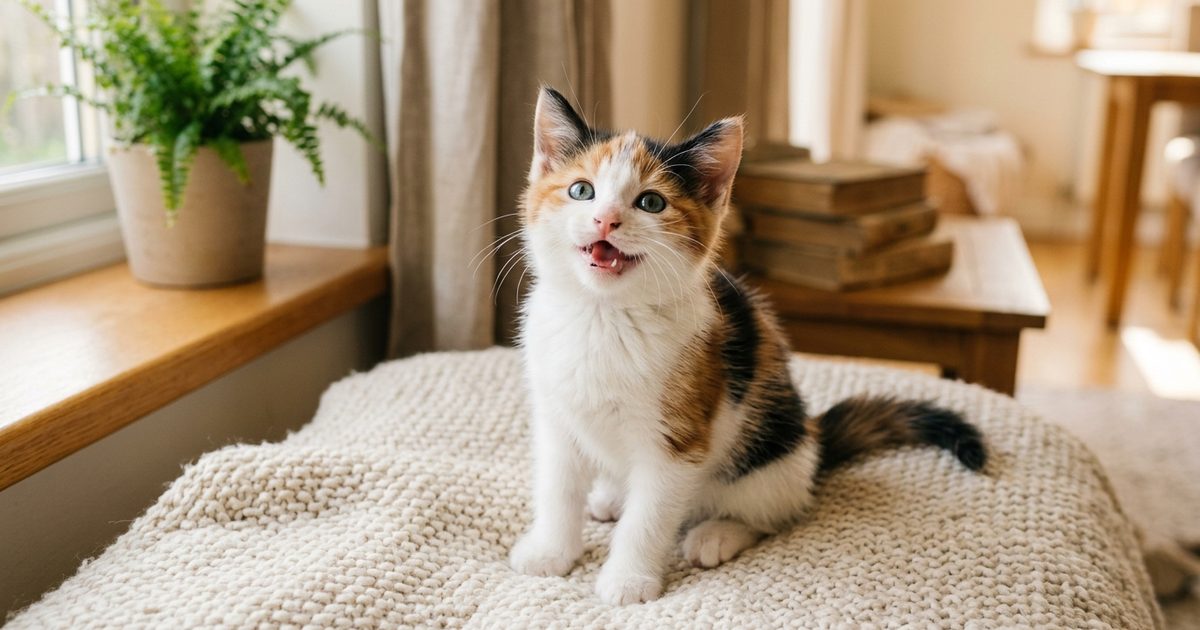
Kittens are born without teeth. Baby (deciduous) teeth start erupting around 3 to 4 weeks, and by 8 weeks a kitten has a full set of 26 baby teeth. Teething — when those baby teeth fall out and adult teeth replace them — begins around 3 to 4 months.
Getting baby teeth first
Newborn kittens have no teeth at all — their mouths are entirely gums, which is exactly what they need for nursing. The first baby (deciduous) teeth, tiny incisors at the front, usually break through around 3 to 4 weeks of age, followed quickly by the canines (the pointy "fangs") and then the premolars. By 6 to 8 weeks, most kittens have their complete baby set: 26 teeth in total — 12 incisors, 4 canines, and 10 premolars, but no molars (those come later, with the adult teeth). This timing lines up almost exactly with weaning: as sharp little teeth appear, nursing becomes uncomfortable for the mother, and kittens naturally start exploring solid food. For a broader look at kitten developmental milestones in the first few months, see the Cornell Feline Health Center's guide to caring for a new cat.
When teething actually starts
The word "teething" specifically refers to what happens next: the process of losing those baby teeth as permanent adult teeth push them out. That stage doesn't start until several months later — typically around 3.5 to 4 months of age — so there's a real gap between "getting teeth" (weeks 3–8) and "teething" (months 3.5 onward). As with the baby set, the incisors are first to go, loosening at the root as the adult tooth erupts beneath them. You may notice slightly red or puffy gums, a bit more drooling, or a stronger urge to chew right around this age — all normal signs that the adult teeth are on their way in.
The Kitten Teething Timeline, Stage by Stage
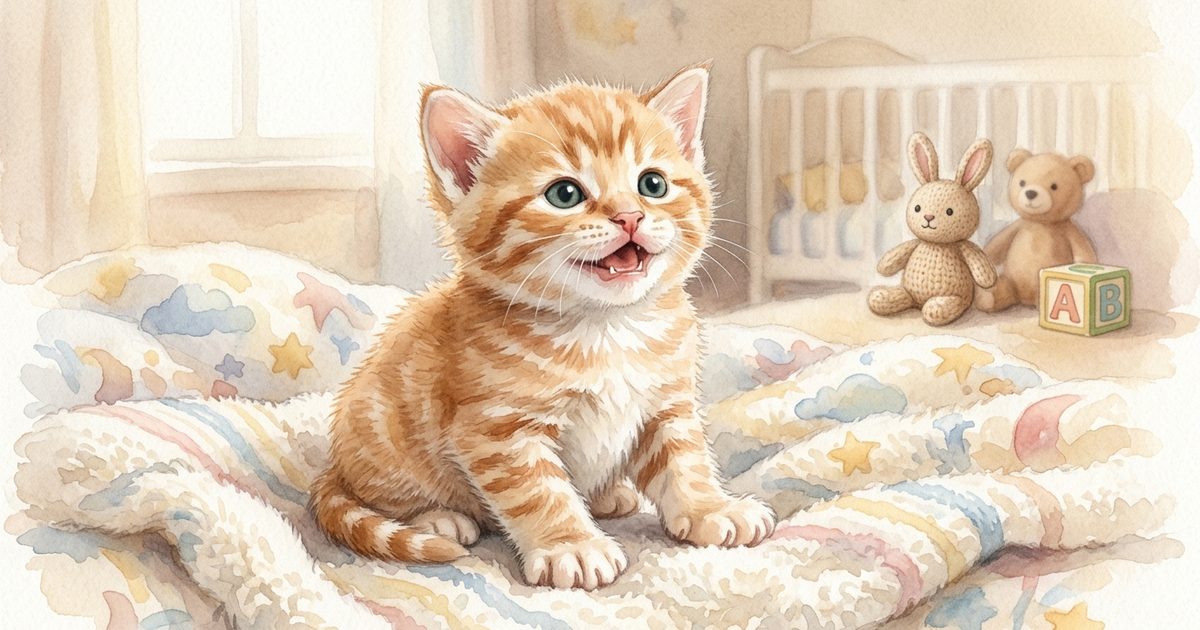
Teething follows a predictable order: incisors loosen and fall out first around 3.5 to 4 months, followed by canines and premolars at 4 to 5 months. By about 6 months, most kittens have their full set of 30 adult teeth, though a few take until 9 months to finish.
3.5–4 months: incisors
Right on schedule with the "teething actually starts" window above, the incisors — the small front teeth used for nibbling and grooming — are the first to loosen and fall out, typically between 3.5 and 4 months. Because these teeth are so tiny, most owners never actually see one; kittens often swallow them without any trouble while eating or playing, and it passes through harmlessly. Occasionally you might spot a speck of a tooth on the floor, in a food bowl, or caught in a toy — a genuinely interesting find, not a cause for concern. A little pink-tinged saliva or mild gum tenderness around this time is normal too. Unless you notice heavy bleeding, a swollen face, or a kitten that stops eating altogether, this stage doesn't need any veterinary intervention.
4–5 months: canines and premolars
Next come the canines — the long, pointed "fangs" on either side of the upper and lower jaw — along with the premolars further back, usually between 4 and 5 months. This stage tends to bring the most noticeable chewing behavior, since the canines sit right where a kitten grips toys, fingers, and furniture edges. You may see slightly more drooling than during the incisor stage, along with a stronger preference for chewing over other play. It's also common for kittens to briefly favor one side of the mouth while eating if a tooth on the other side feels tender. As with the incisors, the shed baby canines and premolars are small enough that they're rarely found intact — most simply come out while your kitten is eating, playing, or grooming, and go unnoticed.
By 6 months: full adult set
By around 6 months of age, most kittens have finished teething and settled into their permanent set of 30 adult teeth — four more than the 26 baby teeth they started with, since cats gain molars only in adulthood (12 incisors, 4 canines, 10 premolars, and 4 molars). A small number of kittens run a bit behind schedule and don't finish until closer to 9 months, which is still within the normal range. This full adult set is also one of the fastest ways vets estimate kitten age by teeth — a complete, unworn set of 30 teeth is a strong sign a cat is at least 6 months old. Interestingly, teething usually wraps up well before a kitten finishes growing physically — full-body growth continues for several more months after the last adult tooth comes in.
What Are the Signs My Kitten Is Teething?
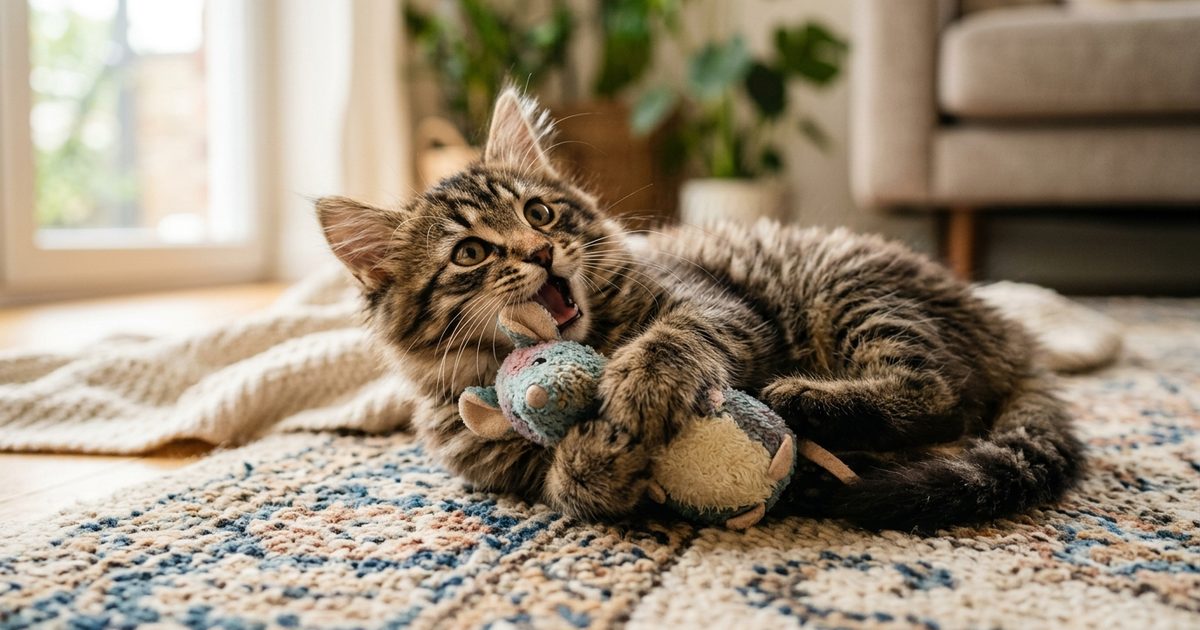
Common teething signs include excessive drooling, chewing on furniture, toys, or fingers, mild bad breath ("kitten breath"), slightly reduced interest in hard food, and finding small teeth around the house. Most kittens show only mild discomfort and don't need intervention beyond safe chew options.
Drooling and chewing
The most noticeable sign is chewing — on toys, shoelaces, cardboard, your fingers, and anything else within reach. As baby teeth loosen and adult teeth push up underneath, the gums get tender and slightly inflamed, and gnawing on something firm relieves that pressure the same way it does for a human toddler. Some kittens drool more than usual during this stretch, especially right after a chewing session, though the amount varies a lot from kitten to kitten.
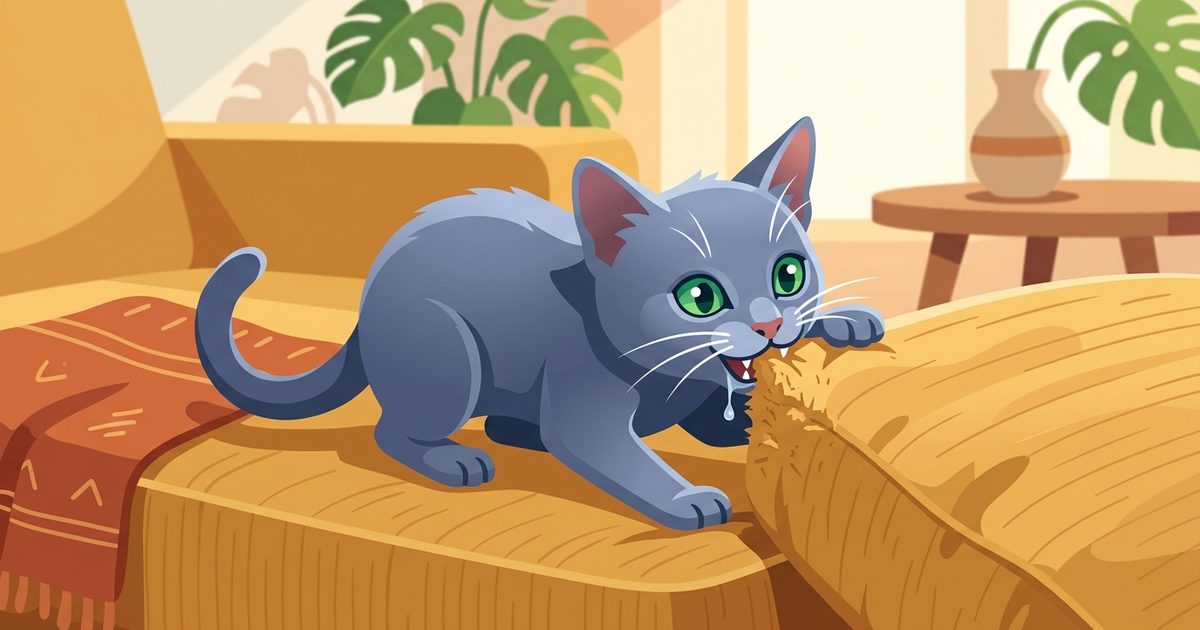
None of this means your kitten is in serious pain — most cats handle teething with only mild discomfort. But an itchy, tender mouth does mean your kitten needs something appropriate to chew, or it will happily settle for a couch corner, a phone cable, or a houseplant instead. Offering the right outlets early (more on that below) heads off some of the destructive chewing habits that are much harder to unlearn once a kitten is grown. It's also worth keeping an eye on general gum health as your cat matures — healthy gums should stay pink and firm long after teething ends.
Eating changes and bad breath
Tender gums can also make crunchy kibble briefly less appealing. Some kittens temporarily favor softer food, eat a little more slowly, or take smaller bites while their mouth adjusts — a mild dip in enthusiasm, not a refusal to eat. It's usually short-lived and resolves on its own as new teeth settle in.
You may also notice a faint, slightly unpleasant smell often nicknamed "kitten breath." It's linked to the normal turnover happening in the mouth — loosening teeth, minor gum irritation, and the general disruption of a mouth mid-renovation — and it typically fades once teething finishes. Persistent or unusually strong odor, on the other hand, is worth mentioning to your vet, since it can point to something beyond ordinary teething.
Finding teeth (or not)
Occasionally you'll spot a tiny, rice-grain-sized tooth on the floor, in a food bowl, or tangled in bedding — unmistakable proof teething is underway. But don't worry if you never find one. Most kittens simply swallow their baby teeth while eating or chewing, and passing a tooth this small causes no harm whatsoever. Whether you find one or not tells you nothing about how smoothly teething is going; it's just a matter of timing and luck.
How Can I Help My Teething Kitten?
Give your teething kitten safe things to chew — soft silicone teething toys, a damp washcloth (chilled, not frozen), or kitten-safe chew treats. Softening dry food with water can help if they're eating less. Avoid giving human items like rubber bands or small objects that could be swallowed.
Safe chew options
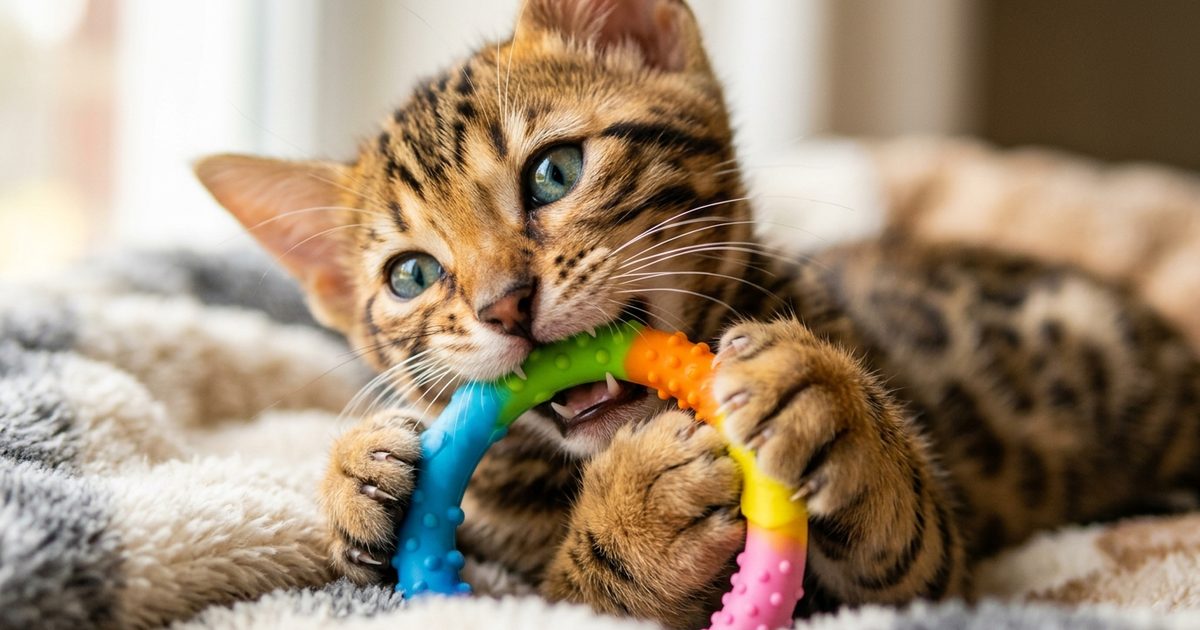
The best way to support a teething kitten is to give tender gums something appropriate to work on. Soft, flexible silicone teething toys designed for kittens are an easy first choice, and many kittens also love gnawing on a clean, damp washcloth — chilled in the fridge for a few minutes, which can feel soothing against inflamed gums. Kitten-safe dental chews or treats made for the teething stage work well too.
A couple of things to avoid: don't freeze the washcloth solid. Frozen fabric is too hard and can actually bruise sensitive, already-tender gums instead of soothing them — chilled, not frozen, is the rule. And keep small chewable household items out of reach altogether — rubber bands, hair ties, bottle caps, and similar objects are choking or swallowing hazards, and a teething kitten looking for relief won't distinguish a safe toy from a dangerous one.
Softening meals if needed
If your kitten seems less interested in dry kibble, try softening it with a splash of warm water for a few minutes until it's slightly mushy, or offer wet food temporarily instead. This takes the pressure off tender gums without changing your kitten's overall diet. Once teething passes, most kittens go right back to crunching kibble normally, and general age-and-weight feeding guidelines can help you calibrate portions if you're ever unsure how much to offer.
What to redirect away from
A teething kitten chewing on furniture legs, cords, or shoes isn't being naughty — it's chasing gum relief, and anything firm and reachable will do. Rather than scolding, redirect: swap the forbidden object for an approved chew toy right away, and keep a few toys scattered in the rooms where your kitten spends the most time. Covering exposed cords and moving tempting objects out of reach works better than correction, and it keeps the experience positive for both of you while those new teeth settle in.
What Is a Retained Baby Tooth, and Is It a Problem?
A retained (persistent) baby tooth happens when a deciduous tooth doesn't fall out before the adult tooth erupts beside it. This can crowd teeth, trap food and bacteria, and raise the risk of gum disease. See a vet if two teeth share one spot past 7-8 months.
Why it happens
Normally, an erupting adult tooth resorbs the root of the baby tooth sitting above it, which loosens the deciduous tooth until it wiggles free on its own. A retained tooth happens when that hand-off doesn't go as planned — the adult tooth pushes up along a slightly different path and never puts enough pressure on the baby root to dissolve it. Both teeth end up locked in place side by side instead of one replacing the other. It shows up most often in the canines ("fangs"), since their long, curved roots leave less margin for the adult tooth to land exactly where the baby tooth used to be.
Why it matters
Two teeth crowded into one small space leaves a tight seam that's hard to keep clean, especially in a kitten whose owner isn't yet brushing daily. Food and bacteria collect in that seam, and over months, the buildup can contribute to plaque and, in some cats, gum irritation earlier than it would otherwise appear. That said, a retained tooth is rarely a crisis — many kittens have one removed during a routine visit with no lasting issues. Left alone for a long stretch, though, it can also crowd or tilt the neighboring adult teeth out of their proper alignment, which is the main reason vets prefer to catch it early rather than wait and see.
When to see a vet
Get it checked if you notice two teeth occupying the same spot past 7 to 8 months of age — a retained tooth almost never resolves on its own once the adult tooth is fully in, and it's usually a straightforward extraction, sometimes scheduled alongside spay or neuter surgery. Call sooner rather than later if you see excessive bleeding from the gums, your kitten stops eating entirely, or you notice an unusual, persistent mouth odor beyond ordinary "kitten breath" — those signs point to possible infection or pain that shouldn't wait for a routine checkup. For a broader view of what to expect at each stage of your kitten's first year, International Cat Care's life-stage guide is a solid companion resource.
How Can I Tell a Kitten's Age From Its Teeth?
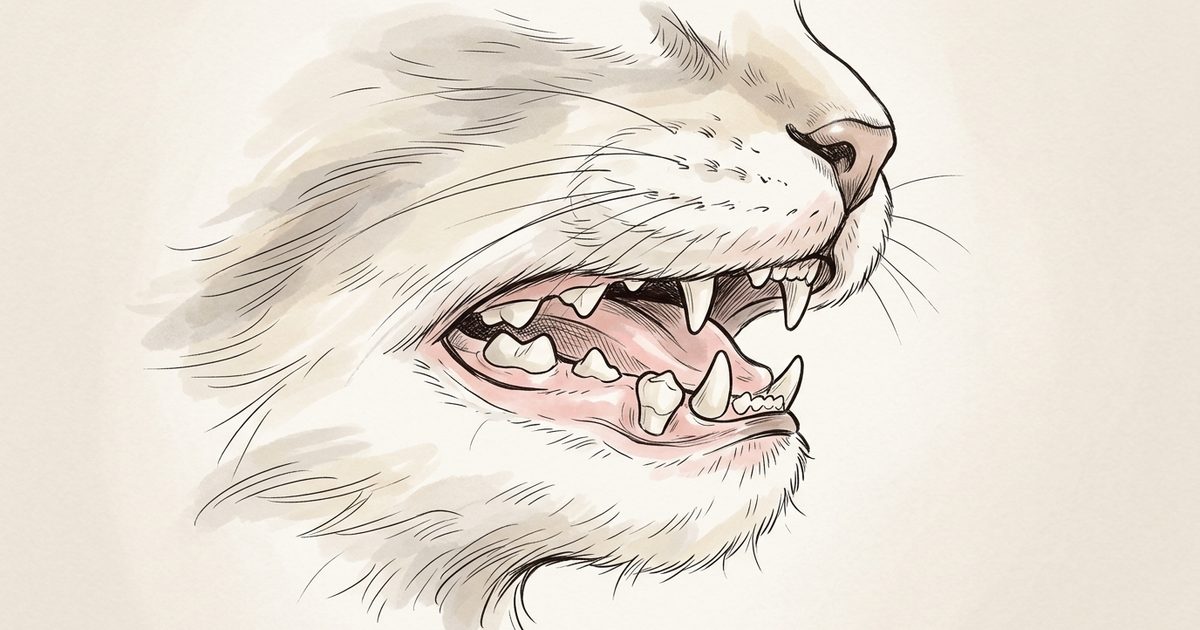
Teeth are one of the most reliable ways to estimate a young cat's age: no incisors yet means under 3 weeks, a full baby set means around 8 weeks, and a complete adult set of 30 teeth means roughly 6 months or older. See our cat age guide for the full method.
Quick tooth-age markers
Estimating a kitten's age by teeth is really just reading the timeline above in reverse — match what you see in the mouth (no teeth yet, a complete baby set, loose incisors, missing canines) to the stage it belongs to, and the quick-reference table at the top of this guide does the mapping for you. The one real limitation kicks in once teething is over: tooth count stops changing, so teeth can confirm a cat has finished kittenhood but can't separate a young adult from a middle-aged cat. From that point, age estimates lean on tooth wear, eye changes, and coat texture instead — see our full guide on how to tell a cat's age for the complete method.
Kitten Teething Timeline — Summary
| Age | Milestone | What to Expect |
|---|---|---|
| 0–3 weeks | No teeth yet | Kitten nurses without any teeth at all |
| 3–8 weeks | Baby teeth erupt | Full set of 26 baby teeth in place by 8 weeks |
| 3.5–4 months | Incisors fall out | Teething begins — drooling and chewing pick up |
| 4–5 months | Canines & premolars fall out | The "fangs" and back teeth are replaced |
| 6–9 months | Full adult set | 30 permanent teeth; teething is complete |
Curious What Your Cat Would Say?
Upload a photo and get a warm, personalized reading from your cat's perspective.
Start Your Free ReadingFrequently Asked Questions
When do kittens start teething?
Kittens start teething around 3 to 4 months old, when their baby incisors begin loosening and falling out to make way for adult teeth. This comes after an earlier stage where baby teeth first erupt around 3 to 4 weeks — teething specifically means losing those baby teeth, not gaining them.
How long does kitten teething last?
Kitten teething typically runs from about 3.5 months to 6 months old, though some kittens don't finish until closer to 9 months. Incisors go first, then canines and premolars, ending with a full adult set of 30 teeth — still within the normal range even if it takes a bit longer.
Do kittens lose all their baby teeth?
Yes. All 26 baby teeth are eventually replaced by permanent ones. Adult cats end up with 30 teeth — four more than the baby set, because molars only appear in adulthood — so every baby tooth is lost and none carry over into the adult set.
What are the signs of kitten teething?
Common signs include excessive drooling, a strong urge to chew on furniture, toys, or fingers, mild bad breath, and a temporary dip in interest in dry food. You may also spot a tiny tooth on the floor, though most kittens simply swallow them unnoticed while eating or playing.
Is it normal for a teething kitten to have bad breath?
Yes, mild 'kitten breath' during teething is normal — it's linked to loosening teeth and minor gum irritation, and usually fades once teething finishes around 6 months. Persistent or unusually strong odor beyond that window is worth mentioning to your vet, since it can point to something else.
What can I give my kitten to chew on while teething?
Soft silicone teething toys, a damp washcloth chilled (not frozen) in the fridge, and kitten-safe dental chews all work well. Avoid freezing the washcloth, since it becomes too hard for tender gums, and keep small household items like rubber bands or hair ties out of reach as choking hazards.
What is a retained baby tooth in kittens?
A retained baby tooth happens when a deciduous tooth doesn't fall out before its adult replacement erupts, leaving two teeth crowded into one spot — most often the canines. It can trap food and bacteria and raise the risk of gum problems, and it usually needs a simple vet extraction.
Can I tell my kitten's age by counting its teeth?
Yes, teeth are one of the most reliable ways to estimate a young cat's age. No teeth at all means under 3 weeks old, a full baby set of 26 means around 6 to 8 weeks, and a complete adult set of 30 with no baby teeth left means at least 6 months old.
How many teeth do kittens have?
Kittens have 26 baby teeth by around 8 weeks old — 12 incisors, 4 canines, and 10 premolars, but no molars. Adult cats have 30 teeth total, since 4 molars only come in with the permanent set once teething finishes, around 6 months.
Does teething hurt kittens?
Teething usually causes only mild discomfort for most kittens, not significant pain. Tender, slightly inflamed gums drive the urge to chew, which is why offering safe chew toys helps. Watch for heavy bleeding, facial swelling, or a total refusal to eat — those need a vet, not typical teething.
Sources & References
You Might Also Like
When Do Cats Stop Growing? A Complete Timeline
When do cats stop growing? Most cats reach adult size by 12-18 months, but large breeds like Maine Coons keep growing until 3-4 years. Full timeline inside.
14 min readCan Cats Eat Cherries? Flesh, Pit & Toxicity Facts
Can cats eat cherries? Pitted flesh is safe in tiny amounts — but the pit, stem, and leaves are toxic (cyanide precursors). Learn what's safe and what isn't.
15 min readCan Cats Eat Green Beans? Vet-Approved Veggie Treat Guide
Can cats eat green beans? Yes — plain cooked or raw, they're a safe, low-calorie, high-fiber treat and weight-loss filler. Serving sizes and risks.
17 min readA message, in your cat's voice
Upload a photo, get a warm note written from your cat's perspective — just for fun. Plus 121 vet-cited articles, offline.