
How to Tell a Cat's Age: Teeth, Eyes, Coat & Behavior Guide
Most rescue and adopted cats come without a birthday, so a cat age chart built from physical clues — teeth, eyes, coat, and behavior — is the fastest way to learn how to tell how old a cat is. This guide walks through every reliable signal, from a kitten age chart of baby-to-adult teeth to the subtle cloudiness of a senior's eyes, so you can estimate your cat's age within a year or two even with no history at all.
If you brought home a shelter cat or a found stray, you've probably already asked yourself "how old is my cat?" The honest answer is that no single sign pins down an exact birthday — but read the mouth, the eyes, the fur, and the energy together, and a clear life-stage picture emerges. A vet can sharpen that estimate further during a checkup. What follows is a practical, body-based toolkit you can use at home, followed by a full six-stage reference table you can match your cat against.
Key takeaways
- Teeth are the single most reliable physical clue — baby teeth, clean adult teeth, and senior tartar each map to a distinct age window.
- No indicator works alone; reading teeth, eyes, coat, and behavior together narrows the estimate far better than any one sign.
- Physical signs give a 1–2 year bracket, not an exact age — wider for rescue cats with unknown history, and a vet visit confirms the guess.
Cat Age at a Glance — Quick Reference
| Indicator | Kitten (0–1 yr) | Adult (1–7 yr) | Senior (11+ yr) |
|---|---|---|---|
| Teeth | Tiny sharp baby teeth, swapping to adult set by ~6–7 months | Clean, white permanent teeth with minimal wear | Yellowing, tartar buildup, worn tips, possible tooth loss |
| Eyes | Blue eyes that shift to adult color around 6–8 weeks | Stable midlife color — green, gold, or copper | Cloudy bluish haze (nuclear sclerosis), sometimes opacity |
| Coat | Soft, downy, slightly fuzzy; gangly frame growing into its paws | Sleek, glossy, and full; muscular, well-filled build | Thinner, coarser fur; bony spine and hips as muscle fades |
| Behavior | Relentless play, climbing and pouncing for hours | Steady, predictable play routines and long naps | Longer sleep, shorter play bursts, hesitation before jumping |
Why Does Knowing Your Cat's Age Matter?
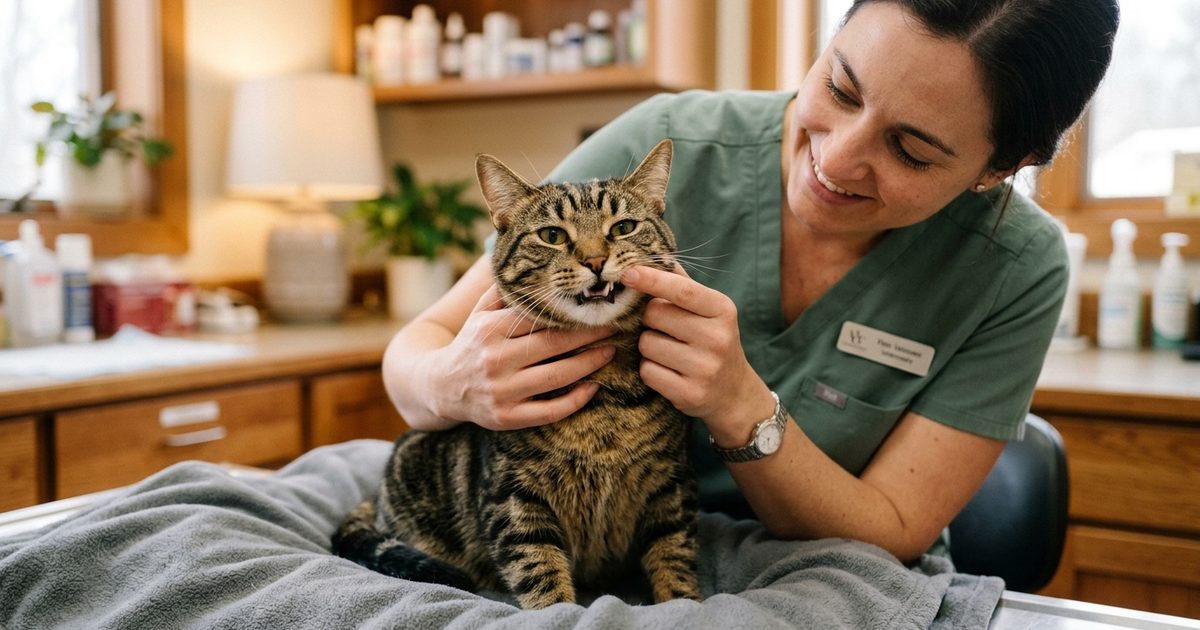
A cat's age shapes feeding, vet visits, and what counts as normal behavior — kittens need growth-formula food and frequent checkups, while seniors need bloodwork and joint support. An estimate within a year or two is usually enough to get care right.
Plenty of cats arrive in our lives without a birthday attached — a rescue, a found kitten, a neighbor's cat who moved in and never left. The instinct is to want an exact number, but the truth is that precision matters far less than the bracket. A vet who estimates "roughly four years old" has unlocked almost everything that matters: which food to pour, which vaccines are due, and which changes in behavior should prompt a phone call. The age itself isn't the goal — the right care is.
This is why the question "how old is my cat" is worth answering well. It feeds directly into a handful of decisions that shift across the lifespan, and small mismatches — kitten food for an adult, or a missed senior bloodwork panel — quietly compound over years. If you want the longer view of what those years add up to, our guide on cat years to human years walks through the conversion, and how long cats live covers the lifespan context stage by stage.

Care shifts by life stage
The single biggest reason to pin down an age estimate is that feline care is stage-dependent, not one-size-fits-all. A growing kitten under about a year needs calorie-dense growth-formula food to fuel rapid development — the same bowl an adult thrives on would leave a kitten undernourished. A healthy adult from roughly one to seven years does well on a maintenance diet, while a senior often benefits from food formulated for kidney support, joint health, or weight management. Vaccination and sterilization timing track the same curve: core kitten vaccines and spay/neuter surgery cluster in the first six months, then taper to boosters. Vet cadence shifts too — once-yearly checkups suit most healthy adults, but most vets recommend twice-yearly visits for seniors, when age-related changes like kidney decline and arthritis are easier to catch early. Knowing the life stage tells you which calendar to follow.
Teeth: The Most Reliable Age Indicator
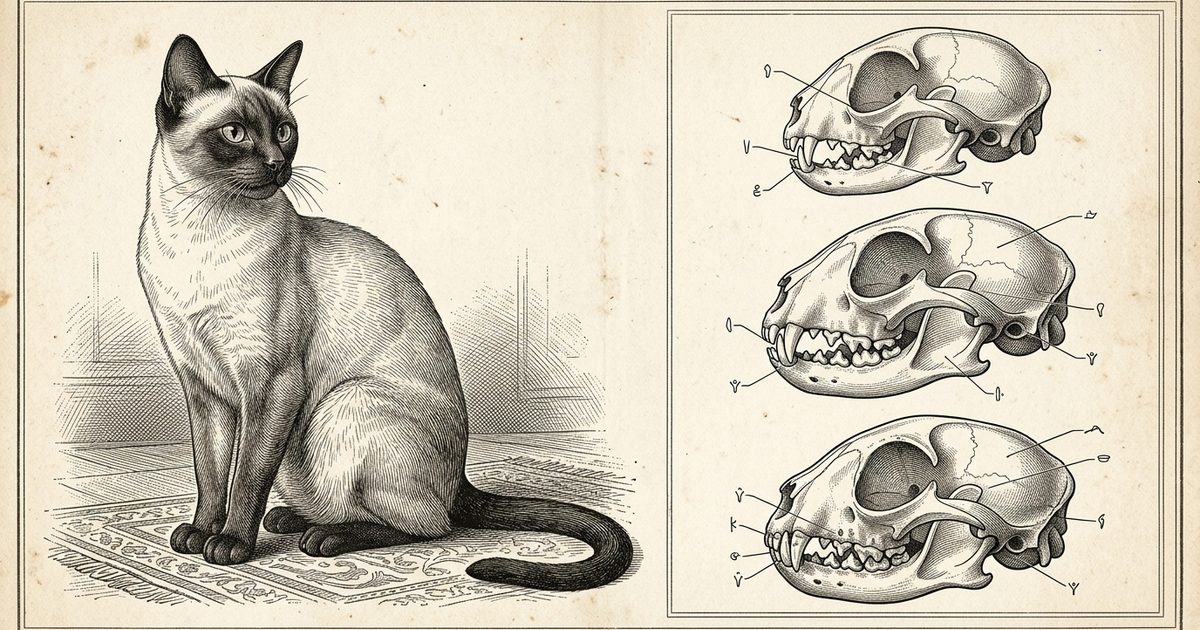
Teeth are the single best physical clue: kittens have tiny sharp baby teeth that swap to adult ones by about 6-7 months, adults under 3 years have clean white permanent teeth, and older cats show yellowing, tartar buildup, and visible wear. A vet can narrow it within a year or two from the mouth alone.
Of all the signs a cat carries on its body, the mouth is the most readable. A kitten's teeth tell a story measured in weeks, an adult's in years, and a senior's in decades of use — and unlike coat or behavior, dental changes follow a fairly predictable timeline that doesn't depend much on environment. That's why vets routinely start an age estimate by lifting the lip. The teeth won't hand you a birthday, but they will place a cat into a narrow band where feeding, vaccination, and monitoring decisions all line up correctly.
Below is how that timeline unfolds. For any cat of unknown history, reading the teeth alongside the other clues — eyes, coat, behavior — is how an estimate tightens from "somewhere between two and ten" to "probably around five or six."
Kittens (0–6 months): baby teeth and the permanent swap
A kitten's mouth changes fast, which makes this the easiest age to read precisely. Deciduous (baby) incisors begin erupting at around 2–3 weeks of age, followed by the tiny sharp canines — the needles every kitten owner feels during the biting phase. By about four weeks a kitten has a full set of 26 baby teeth. Then, between roughly 3 and 4 months, those begin falling out and being replaced by the permanent set. You may even find a tiny tooth on the floor or notice a gap. The adult incisors come first, then the canines, and the full adult dentition of 30 teeth is usually in place by 6–7 months. A cat with a mixture of baby and adult teeth is almost certainly between 3 and 6 months old. For the detailed week-by-week timeline, see our guide to kitten teething, and for when that growth-spurt phase finally ends, when cats stop growing.
Young adults (1–3 years): clean, white, minimal wear
Once the adult teeth are fully in, they stay remarkably pristine for a while. A cat between roughly one and three years old typically shows bright, white permanent teeth with minimal tartar and little wear on the tips of the canines. The gums are pink and healthy, and there's little to no yellowing along the gumline. This is the "new adult" baseline — the cleanest the mouth will ever look — and it's a useful reference point for comparison later. If you're estimating the age of a cat whose teeth still look this fresh, you're usually safe placing it in the young-adult bracket.
Mature and senior (4+ years): tartar, wear, and tooth loss
As the years add up, the mouth records them. By around four to six years, most cats show some yellowing and the first visible tartar (calculus) building up along the gumline, often heaviest on the back teeth. The tips of the canines may begin to show slight wear, losing that needle-sharp point. Moving into the senior years — roughly ten and beyond — tartar becomes more pronounced, the teeth can take on a darker yellow or brownish cast, and you may see worn, flattened canine tips or, in geriatric cats, missing teeth entirely. Vets read these as age brackets rather than exact dates: heavy calculus plus worn canines and a missing premolar places a cat solidly in the senior-to-geriatric range. The Cornell Feline Health Center is a reliable reference for how dental health and aging intersect, and for the day-to-day care side, our cat dental guide covers what owners can do at home.
The teeth caveat
Teeth are the best single indicator, but they're not a clock. Diet, dental care, and genetics all shift the timeline — a cat fed hard kibble and given regular cleanings may show far less tartar than its age would suggest, while a cat with poor dental history can look older than it is. Rescue cats with unknown backgrounds are especially approximate: their teeth may reflect hardship more than years. Read the mouth as a bracket, not a birthday, and a vet's hands-on estimate will always be more reliable than a guess from a photo.
Eyes: Kitten Blue, Adult Color, Senior Cloudiness
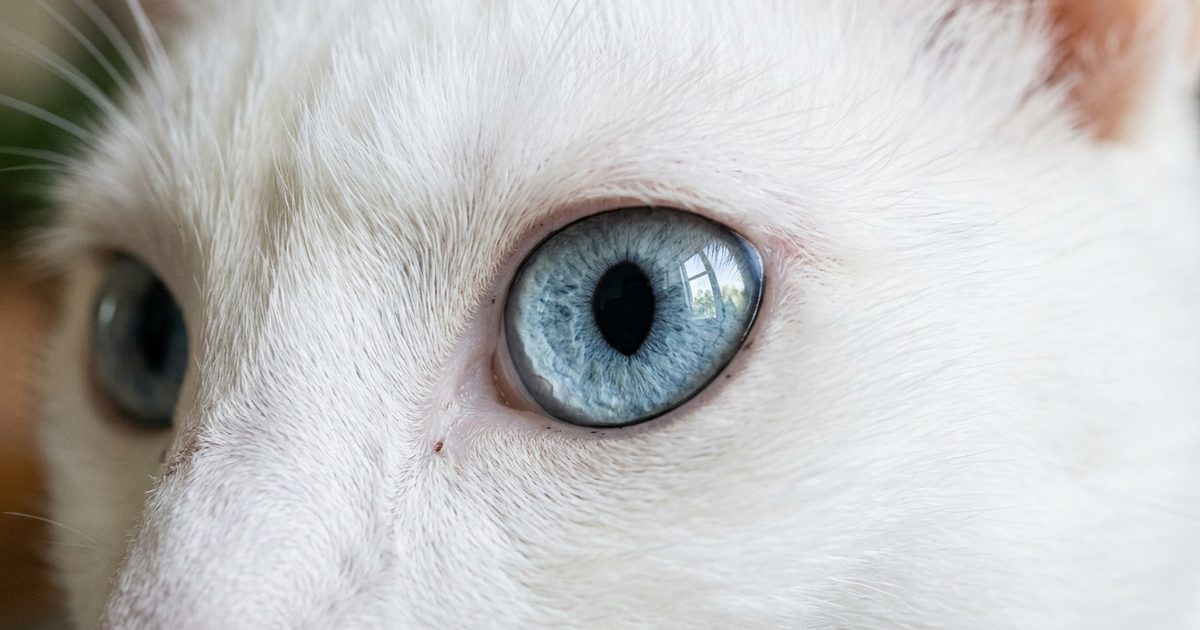
Most kittens are born with blue eyes that transition to their adult color around 6–8 weeks, so a blue-eyed kitten under two months is entirely normal. In older cats, a cloudy, bluish haze in the pupil called nuclear sclerosis commonly appears around age 9–10 and is usually benign, unlike cataracts.
Eyes are a softer age signal than teeth — they shift at a few predictable moments rather than wearing steadily — but they fill in useful context. Pair the eye story with the teeth clues and you narrow an estimate considerably.
The kitten blue-eye window
A newborn kitten's blue eyes aren't really blue — the color is structural. The iris holds very little melanin in the first weeks, so light scatters through it the same way it does through the sky, and we read that scattering as blue. As melanin builds up over the first month or two, the true adult pigment emerges, typically settling by 6–8 weeks. A few breeds carry a genetic quirk that keeps that low-melanin state for life — Ragdolls and Siamese stay blue as adults, so blue eyes in those cats tell you nothing about age.
Adult iris color
Through the adult years — roughly 1 to 9 — iris color stays stable. Green, gold, copper, and amber are the common shades, and once set they barely move. A sudden color change in an adult eye is a veterinary signal, not an age signal: it can point to inflammation (uveitis) or other disease, so treat any obvious shift as a reason to call your vet rather than a sign of getting older.
Senior cloudiness: nuclear sclerosis vs. cataracts
Around age 9–10, many cats develop a subtle, cloudy, bluish-gray haze inside the pupil. This is nuclear sclerosis — the lens simply hardening and compressing with age, the same change that happens in older dogs and humans. It usually has only a minor effect on vision and needs no treatment. True cataracts are different: they look white or distinctly opaque, can seriously impair sight, and sometimes need surgical care. Telling them apart by eye is genuinely hard, which is why International Cat Care recommends a vet confirm any cloudiness rather than assuming it's "just aging."
Coat and Body Condition
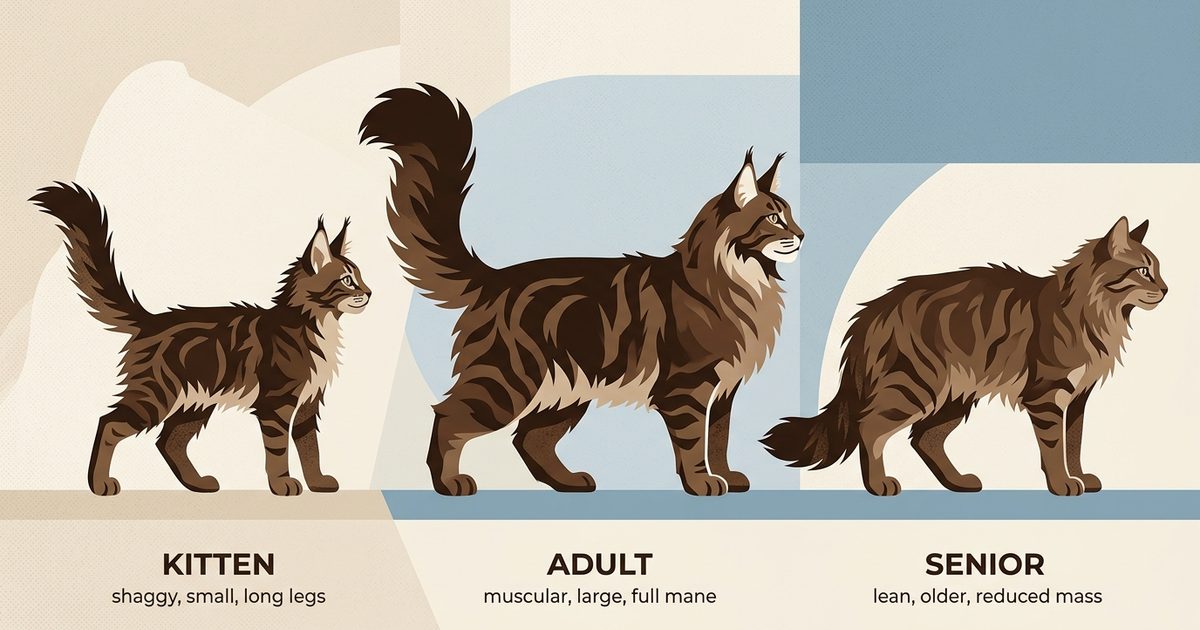
A kitten's coat is soft and slightly fuzzy over a gangly, long-legged body; young adults are sleek, muscular, and well-filled; and seniors often show thinner, coarser fur, bony prominences, and reduced muscle mass along the spine and hips.
Coat and body condition are a gentle, whole-life indicator: they don't pin down a birthday, but they reliably sort a cat into the right third of a cat age chart — young, middle, or senior.
Kitten: soft, fuzzy, growing into the frame
Kittens wear a downy, slightly fuzzy coat that feels softer and less defined than an adult's. Their bodies are unmistakably unfinished — long legs, big paws, and oversized ears they look like they're still growing into, because they are. This lanky phase is most pronounced from around 3 to 8 months, the same window the permanent teeth are coming in.
Adult: sleek and muscular
A young adult cat — roughly 1 to 7 years — carries a full, glossy coat and a filled-out, athletic build. The fur lies smooth and clean, muscle fills the hindquarters and shoulders, and the body reads as balanced rather than gangly. This is the baseline of feline condition, the reference point against which kitten softness and senior thinning are judged.
Senior: thinning, coarse, muscle loss
As cats move into their senior years — around 11 and older — the coat often thins and turns coarser, sometimes growing dull or slightly greasy because grooming becomes harder and less thorough. Muscle mass quietly slips away, especially over the spine and hips, so the backbone and hip bones may become prominent even at a healthy weight. Some seniors lose weight overall; the body simply isn't the sleek, muscular thing it was. These changes track with the broader story of feline aging — how long cats live and how their needs shift stage by stage.
Behavior and Activity Level
Kittens under a year are relentlessly playful, climbing and pouncing for hours; adults 1-7 settle into steady play and long naps; seniors sleep more, play in shorter bursts, and may stiffen or hesitate before jumping — a behavior shift that often flags aging joints.
Watch a cat move for an afternoon and you can usually place it in a life stage before you ever look at its teeth. Energy is one of the most readable age signals because it changes in a predictable arc — explosive, then steady, then slow. Here's how to read it.
Kitten: high energy, nonstop play
A kitten under twelve months is essentially a small predator in training. Every waking hour is a rehearsal — stalking, pouncing, climbing your curtains, ambushing your ankles. This is the learning curve where a kitten practices the hunting sequence it would need in the wild, and the play drive behind it is enormous. The famous 3 AM zoomies — sudden tear-ass laps around the house — are peak kitten energy, not misbehavior. A cat that still does relentless, hours-long play sessions is almost certainly under a year. Pair this with the teeth clues and the age estimate narrows fast.
Adult: settled but engaged
Somewhere around one to seven years, the engine downshifts. An adult cat still plays — often enthusiastically — but the marathons become scheduled sessions rather than constant motion. You'll notice predictable routines: a burst of play at dawn or dusk, then long confident naps in a favorite spot. Adults also show territorial ease, moving through their home with a calm, owning presence rather than a kitten's frantic exploring. This settled-but-engaged phase is the long middle stretch of a cat's life, and it's when a cat age chart maps most cleanly onto stable behavior.
Senior: quieter, slower, stiffer
Past roughly ten or eleven, the changes get gentler but clearer. Sleep stretches longer. Play still happens, but in shorter, less athletic bursts — the soaring countertop leap becomes a hesitant hop, and a cat that once bounded up the stairs now takes them slowly or avoids them. Crucially, this is usually joint change, not laziness. According to International Cat Care, reduced jump height and reluctance to climb are common signs of age-related joint stiffness, and Cornell Feline Health Center notes that many senior cats mask discomfort until it shows up as activity loss. A behavior shift like this — less height, slower stairs — is worth a vet check rather than writing it off as "just getting old."
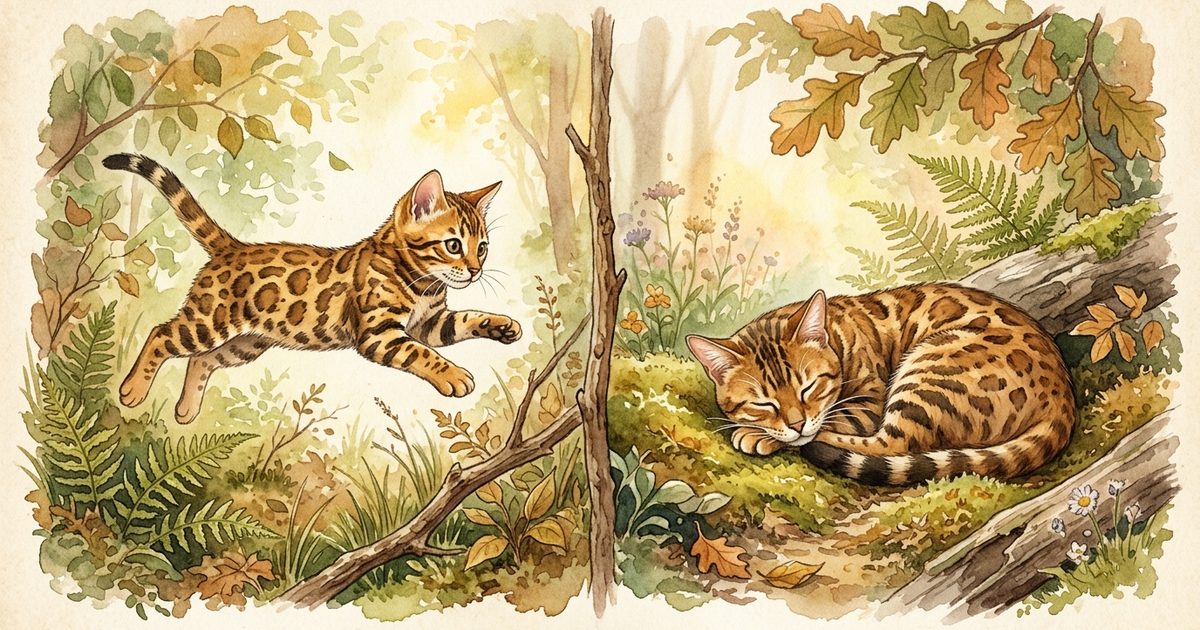
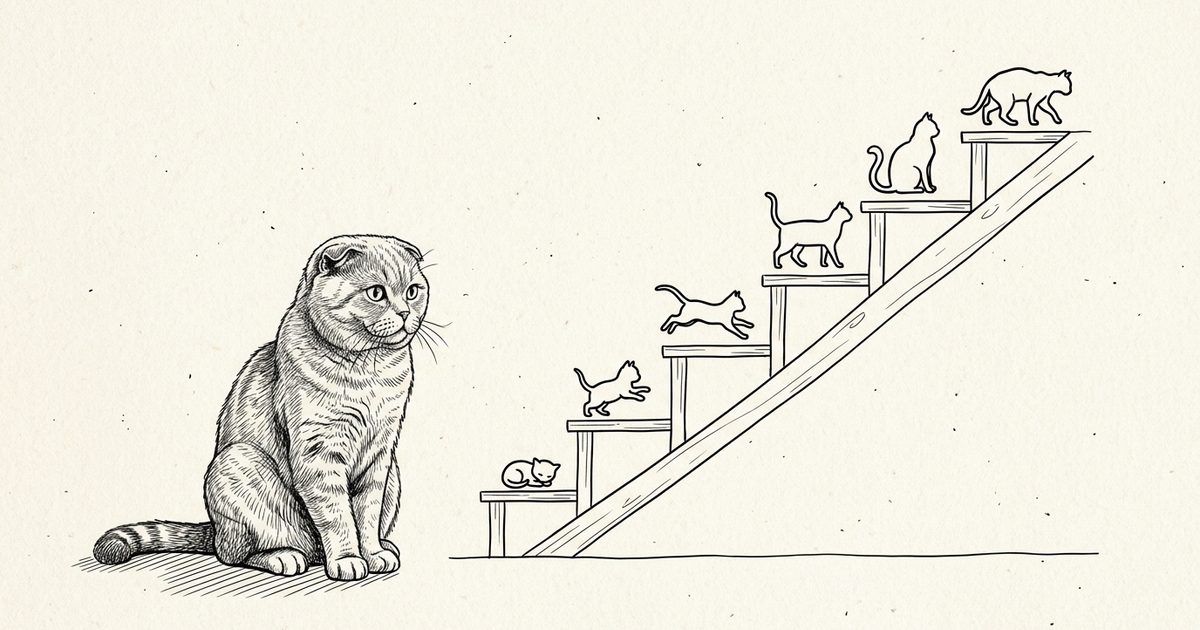
Cat Age Chart: The Six Life Stages
Cats move through six recognized life stages — kitten (0-1), junior (1-2), adult (3-6), mature (7-10), senior (11-14), and geriatric (15+). Each stage pairs typical teeth, eye, coat, and behavior clues into a bracket a vet can estimate, even without a known birthday.
This is the cat age chart most owners are looking for: a single place to match everything you've just observed — the teeth, the eyes, the coat, the way your cat moves — onto a recognized life stage. It's also the closest thing to a cat age calculator a static article can offer. Rather than plugging a number into a tool, you read across the row and see which stage your cat's signs cluster around.
If you already know your cat's age in years and want the human-equivalent, that's a different question — see our cat years to human years conversion. Here we're working the other direction: from physical signs back to an age estimate.
The six-stage reference table
The six-stage framework is widely used by vets and by the International Cat Care "Cat Friendly" programme; it groups cats not just by years but by what those years usually mean for care.
| Life stage | Age range | Key clues | Typical care focus |
|---|---|---|---|
| Kitten | 0-1 year | Sharp baby teeth, blue eyes (under ~8 weeks), fuzzy coat, high play drive | Growth-formula food, vaccination course, sterilization timing |
| Junior | 1-2 years | Full bright adult teeth, stable eye color, sleek muscular build, very active | Transition to adult diet, establish play routines, territory confidence |
| Adult | 3-6 years | Clean white teeth with minimal wear, glossy coat, steady energy | Annual vet check, weight monitoring, dental home care |
| Mature | 7-10 years | Slight tartar, early coat coarsening, beginning to slow down | Twice-yearly checkups, watch for early kidney/dental changes |
| Senior | 11-14 years | Tartar and wear, possible iris cloudiness, thinner fur, longer sleep | Senior wellness bloodwork, joint support, soft bedding |
| Geriatric | 15+ years | Worn or missing teeth, cloudy eyes, muscle loss, reduced mobility | Comfort-focused care, frequent monitoring, gentle grooming help |
Think of each row as a cluster of signs that tend to appear together, not a checklist every cat ticks off identically. A well-cared-for indoor adult can look younger than its years; a rescue cat with unknown history may read older from dental wear alone. The table is the starting point — your vet refines it. Cornell Feline Health Center covers feline life-stage care in more depth if you want to match a stage to a wellness plan.
How to combine the clues
No single indicator gives you a reliable age — that's why this guide walks through four of them. Teeth are the strongest, but they're strongest when you read them alongside the eyes, the coat, and how the cat actually moves. A cat with moderately worn teeth but a glossy muscular coat and lively play is more likely a mature adult than a senior; the same teeth on a thin, stiff, cloud-eyed cat point older.
Lay your observations side by side, look for where most of them converge, and treat the result as a bracket — usually within a year or two for a healthy cat, sometimes wider for a rescue with no history. A vet visit confirms it, and it's also the moment to map that life stage onto care. For how each stage relates to expected lifespan, see our guide on how long cats live.
Curious What Your Cat Would Say?
Upload a photo and get a warm, personalized reading from your cat's perspective.
Start Your Free ReadingCat Age Estimation — Summary
| Question | Short answer |
|---|---|
| How can I tell how old my cat is? | Combine teeth, eyes, coat, and behavior — together they narrow age to a 1-2 year bracket |
| At what age do kittens' eyes change from blue? | Usually around 6-8 weeks, as melanin builds in the iris |
| Are teeth the most accurate age indicator? | Yes — teeth are the best single physical clue, but they give a range, not an exact age |
| What are the six life stages of a cat? | Kitten, junior, adult, mature, senior, and geriatric |
| How accurate is a cat age estimate from physical signs? | Typically within 1-2 years for a healthy cat; wider for rescues with unknown history |
| Do indoor cats age differently from outdoor cats? | Indoors tends to mean less wear and longer life, but the indicators read the same way |
| How can I tell if my cat is a senior? | Look for tartar, coat thinning, longer sleep, and reduced jump height — usually around age 11+ |
Frequently Asked Questions
How can I tell how old my cat is?
Combine four physical clues — teeth, eyes, coat, and behavior — and read them together rather than relying on any single one. Teeth are the strongest signal, but cross-checking them against eye color, coat condition, and activity level is what narrows an estimate to a one-to-two-year bracket.
At what age do kittens' eyes change from blue?
Most kittens are born with blue eyes that begin shifting to their adult color around six to eight weeks, as melanin builds up in the iris. A blue-eyed kitten under two months old is entirely normal, though breeds like Ragdolls and Siamese keep blue eyes for life.
Are teeth the most accurate way to tell a cat's age?
Yes — teeth are the single best physical clue because dental changes follow a fairly predictable timeline. But teeth give an age bracket, not a birthday: diet, dental care, and genetics all shift the timeline, so a vet's hands-on estimate is always more reliable than a guess from a photo.
What are the six life stages of a cat?
Vets and the International Cat Care framework recognize six stages: kitten (0–1 year), junior (1–2), adult (3–6), mature (7–10), senior (11–14), and geriatric (15+). Each stage pairs typical teeth, eye, coat, and behavior clues with a matching care focus.
How accurate is a cat age estimate from physical signs?
Typically within one to two years for a healthy cat with a known history, and wider for rescues with unknown backgrounds. Physical signs narrow the estimate to a bracket rather than an exact age, and a vet visit confirms and refines that guess.
Do indoor cats age differently from outdoor cats?
Not in how the indicators read — teeth, eyes, coat, and behavior follow the same timeline. But indoor cats tend to show less wear and live longer on average, because they face fewer risks, so an indoor cat of a given age can look slightly younger than an outdoor peer.
How can I tell if my cat is a senior?
Look for the cluster of senior signs: tartar buildup and worn teeth, possible eye cloudiness, a thinner or coarser coat, longer sleep, and reduced jump height or reluctance on stairs. These usually appear around age eleven and beyond, often signaling joint change rather than laziness.
Can a vet tell the exact age of a rescue cat?
A vet can estimate a rescue cat's age closely, usually within a year or two, but cannot pin down an exact birthday from physical signs alone. Rescue cats with unknown histories are especially approximate, since hardship can make teeth and coat look older than the cat's true age.
Sources & References
You Might Also Like
Kitten Teething: Timeline, Symptoms & How to Help
Kitten teething runs from 3 to 7 months as baby teeth fall out. Learn the timeline, signs to watch for, and how to soothe a teething kitten safely.
15 min readWhen Do Cats Stop Growing? A Complete Timeline
When do cats stop growing? Most cats reach adult size by 12-18 months, but large breeds like Maine Coons keep growing until 3-4 years. Full timeline inside.
14 min readCan Cats Eat Cherries? Flesh, Pit & Toxicity Facts
Can cats eat cherries? Pitted flesh is safe in tiny amounts — but the pit, stem, and leaves are toxic (cyanide precursors). Learn what's safe and what isn't.
15 min readA message, in your cat's voice
Upload a photo, get a warm note written from your cat's perspective — just for fun. Plus 121 vet-cited articles, offline.