
Cat Dental Disease: Signs, Causes & How to Protect Your Cat
Cat dental disease is one of the most underrecognized health problems in pet cats — and feline dental disease often goes unnoticed because cats hide mouth pain so well. By the time most owners see a sign, the disease has usually been progressing silently for months or years. The good news is that the two things that matter most — daily brushing and annual vet dental checks — are well within reach for any cat owner, and they dramatically change the trajectory.
Key takeaways
- Roughly 70–80% of cats show some degree of dental disease by age three, making it one of the most common feline health conditions a vet sees.
- Because cats hide mouth pain, bad breath, drooling, and subtle eating changes are often the only visible signs — waiting for obvious distress means catching it late.
- Daily tooth brushing with cat-safe toothpaste plus at least annual veterinary dental checks are the two highest-impact preventions available.
Cat Dental Disease — Quick Reference
| Sign | What it can mean | How urgent |
|---|---|---|
| Bad breath (halitosis) | Bacterial activity from plaque, tartar, or gum infection | Book a dental check |
| Drooling | Mouth pain, gum inflammation, or nausea | Book a check soon |
| Dropping food or chewing on one side | Discomfort while eating, possible tooth or gum problem | Book a check soon |
| Pawing at the mouth | Oral pain or a foreign body lodged in the mouth | Prompt vet visit |
| Red or swollen gums | Gingivitis or progressing periodontal disease | Book a dental check |
| Eating less or weight loss | Painful mouth reducing intake — downstream effect on body condition | Prompt vet visit |

How Common Is Dental Disease in Cats?
Feline dental disease is one of the most common health problems in domestic cats — by age three, roughly 70–80% show some degree of it. Periodontal disease, the gum-and-bone form, is the leading type and progresses silently unless a vet examines the mouth.
That figure surprises most owners, and it's worth pausing on. Dental disease in cats isn't a fringe condition that affects an unlucky few — it's close to the default outcome of a domestic cat's mouth left to its own devices. The Cornell Feline Health Center places periodontal disease among the most prevalent conditions veterinarians diagnose in cats, and the numbers are consistent across clinical surveys: by the time a cat reaches early adulthood, the majority already have measurable gum or tooth changes.
The reason it's so widespread isn't neglect — it's biology. A cat's mouth is a near-perfect environment for the process that drives dental disease, and unlike humans, cats can't tell us when something feels off and they can't brush their own teeth. Understanding why it's so common is the first step toward staying ahead of it.
Why almost every cat is affected
The cascade that leads to dental disease is remarkably consistent, and it starts within hours of a tooth being clean. A thin, sticky film of bacteria called plaque biofilm begins coating the tooth surface almost immediately after eating. If that plaque isn't disrupted — by chewing, by diet, or most effectively by brushing — it mineralizes within a day or two into tartar (also called calculus), a hard, yellow-brown crust that bonds to the tooth and can no longer be brushed off.
Once tartar is established at the gumline, the bacteria it shelters inflame the gums — this is gingivitis, the earliest, fully reversible stage. Left untreated, the inflammation creeps beneath the gumline and begins destroying the ligament and bone that anchor the tooth, a stage called periodontitis that cannot be reversed. The Cornell Feline Health Center's overview of feline dental disease walks through this progression in detail. Two features of the feline mouth speed the whole process up: the jaw is short, which crowds the teeth, and the teeth themselves are sharp and conical, giving plaque more surface to cling to at the gum margin. The result is a mouth where accumulation happens fast and cleaning is difficult without help.
When it starts
The first visible tartar typically appears between two and three years of age, and from there the pace accelerates with every passing year — a seven-year-old cat is far more likely to have significant disease than a three-year-old. This is also why teeth are one of the most reliable clues when you're trying to tell a cat's age: the degree of wear, tartar buildup, and gum recession track age more closely than almost any other external feature.
Kittens, by contrast, are essentially exempt from this timeline — not because their mouths are cleaner, but because their baby (deciduous) teeth shed on schedule between roughly three and seven months and are replaced by a fresh adult set. That natural reset means a kitten's mouth usually looks pristine right up until her adult teeth come in. The developmental stage those kittens are moving through is a different, normal process entirely — see our guide to kitten teething for what's happening during that transition. The point worth holding onto: dental disease is an adult-onset problem, and the clock effectively starts the day the adult teeth arrive.
Why owners underestimate it
Here's the part that trips up even attentive cat people. A cat with a genuinely painful tooth will usually still eat, still groom, and still behave like herself — because hiding pain is a deep feline instinct, not a choice. We unpack exactly why that is, and what subtle shifts it produces, in the section on why cats hide dental pain below.
The other common blind spot is breath. Many owners assume that a strong smell is just "cat breath" — a normal, if unpleasant, feature of the species. In reality, a strong or persistent bad smell reflects the bacterial activity of dental disease, not the cat itself; we cover the full spectrum of when breath is normal versus a warning in the bad breath (halitosis) section below.
What Are the Signs of Dental Disease in Cats?
Bad breath, drooling, dropping food, pawing at the mouth, eating less, yellow-brown tartar on the teeth, and red or swollen gums are the most common signs of dental disease in cats. Any one of them warrants a vet dental check rather than waiting for several to appear together.
Cats are remarkably good at hiding mouth pain, so the visible signs tend to arrive late and one at a time. Knowing what each one looks like — and what it usually points to — helps you catch disease before it advances. The Cornell Feline Health Center lists these same signals as the ones most likely to prompt an owner to book a dental visit.
Bad breath (halitosis)
Bad breath is the single sign owners report most often, and it's also the one most often dismissed. There's a real spectrum: healthy cat breath carries a mild, faintly food-like odor that's perfectly normal. A strong, persistent, sour or rotten smell is not — it reflects bacterial activity breaking down food debris and gum tissue along the gumline. The old idea that "fishy breath is just part of being a cat" doesn't hold up; a healthy mouth, even after a fish meal, shouldn't smell offensive for long. Halitosis often travels with drooling as a paired symptom, and the two together are a strong hint that something in the mouth needs a vet's eye.
Drooling and pawing at the mouth
Excess saliva — hypersalivation — shows up when the mouth is irritated, inflamed, or painful. A cat that suddenly drools, especially from one side, or that lifts a paw to its face repeatedly, is often trying to soothe a sore tooth or inflamed gum. Unilateral pawing (one paw only) is a particularly meaningful clue, because cats tend to gesture toward the side that hurts. Drooling has many possible causes beyond dental disease — nausea, heat, even toxins — so for the full differential, see our guide on why cats drool; here, the key point is that persistent new drooling paired with any other sign on this page points back to the mouth.
Changes in eating
Dental pain changes how a cat eats before it changes how much. Watch for food dropped from the mouth mid-chew, chewing on only one side of the jaw, or a sudden preference for soft pâté over dry kibble — all of which suggest it hurts to bite down. As discomfort mounts, the cat may eat less overall, and over weeks that can tip into noticeable weight loss. A drop in appetite that traces back to a sore mouth is one of the clearest links between dental disease and weight loss in cats, which is why vets weigh cats at every visit.
Visible tartar and red gums
The signs you can see at home are yellow-brown tartar (calculus) — most often on the back molars and the long canine ("fang") teeth — and redness along the gum margin where the gum meets the tooth. That redness is gingivitis, the earliest, still-reversible stage of periodontal disease. To do a gentle home check, wait until your cat is relaxed on your lap, lift just the corner of the lip with a finger (never force the mouth open), and glance at the back teeth and gumline for a few seconds. A cat that resists or pulls away sharply may be guarding a painful tooth — see our overview of signs a cat is in pain for the broader pattern.
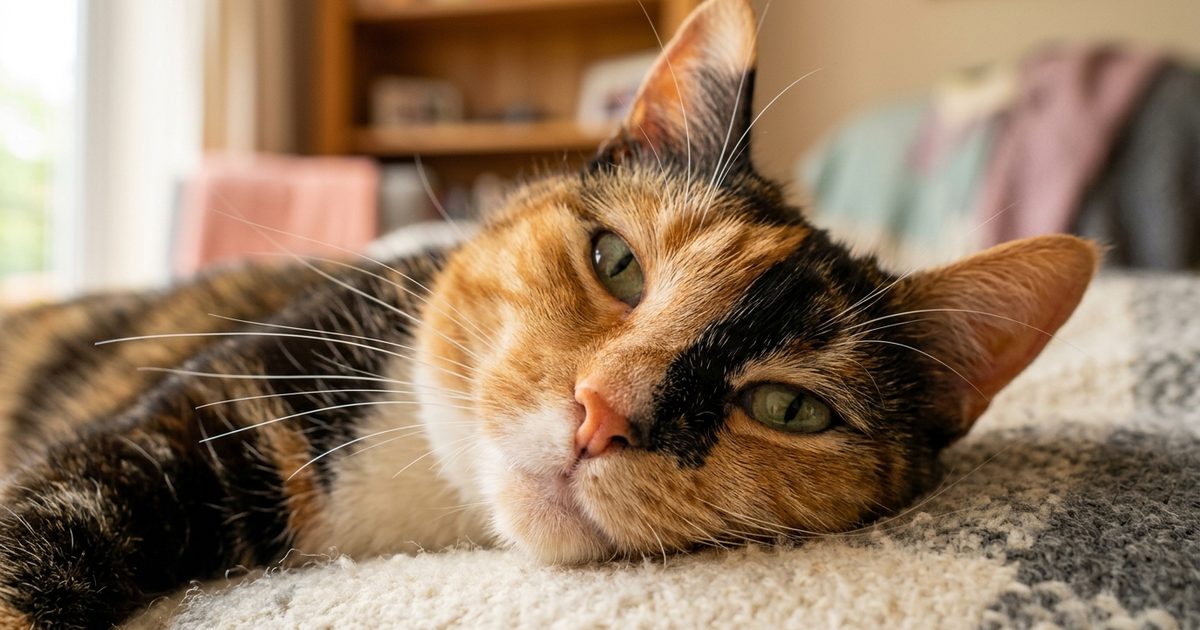
What Types of Dental Disease Affect Cats?
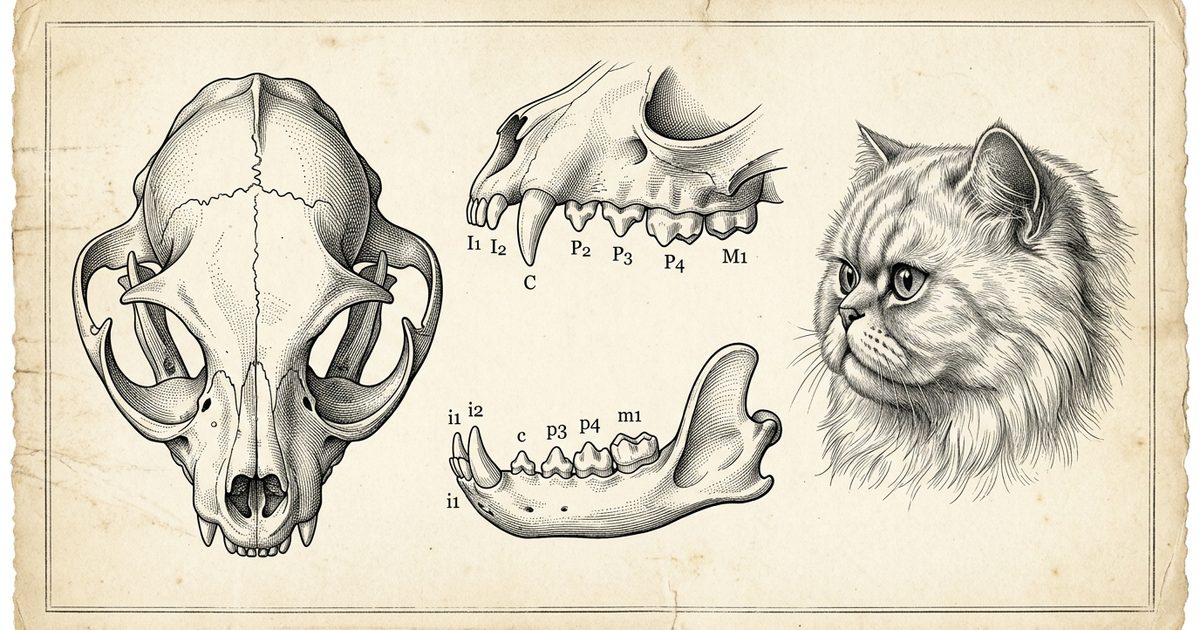
The three main types are periodontal (gum) disease, tooth resorption — a uniquely feline and intensely painful condition where the tooth is broken down from within — and stomatitis, severe inflammation of the mouth lining. Periodontal disease is by far the most common; resorption affects a large share of adult cats.
When a vet looks inside a cat's mouth, most of what they find falls into one of these three categories. They overlap, progress differently, and demand different treatments — which is why a guess from the kitchen table is no substitute for an exam. Here's what each one actually is.
Periodontal (gum) disease
Periodontitis is the leading form of cat dental disease, and the one most owners have half-heard of. It's the irreversible endpoint of the plaque-to-tartar-to-bone cascade described above — where tartar-driven inflammation advances past reversible gingivitis and begins destroying the ligament and bone that anchor the tooth, causing permanent bone loss. Early cleaning matters precisely because it interrupts that cascade before it reaches this stage. International Cat Care describes periodontal disease as the most common clinical condition affecting adult cats.
Tooth resorption (FORLs)
Tooth resorption is something cats get that humans largely don't. Cells called odontoclasts — normally involved in healthy tooth remodeling — become overactive and begin dissolving the tooth enamel and root from the inside out, creating what are technically known as feline odontoclastic resorptive lesions (FORLs). The eroded tooth becomes intensely painful, often with the crown snapping off and leaving the root behind. Unlike a human cavity, a resorbing tooth can't simply be "filled," because the destruction is coming from within the tooth structure itself; extraction is the standard treatment. Estimates vary by study, but resorption is thought to affect somewhere in the range of 20–60% of adult cats — making it one of the most common causes of feline mouth pain.
Feline stomatitis
Stomatitis is severe inflammation of the mouth's lining, and in its most stubborn form it extends to the back of the mouth where the upper and lower jaws meet — so-called caudal stomatitis. It's often immune-mediated, meaning the cat's own defenses overreact to plaque bacteria, and it can be genuinely hard to treat; some cats only reach remission after full or partial-mouth extractions. Because stomatitis is a deep, specific condition rather than a single bout of gum redness, we cover its causes, diagnosis, and treatment options in full in our dedicated cat stomatitis guide. For now, know it as the third major category — and the one most likely to send a cat to the specialist. The Cornell Feline Health Center is a reliable starting point for owner-facing information on it.
Why Do Cats Hide Dental Pain?
Cats evolved as both predator and prey, so hiding pain is a deep instinct — a visibly sick cat in the wild becomes a target. As a result, a cat with a painful tooth often still eats, grooms, and acts normal, which is why owners miss it and annual vet dental exams are critical.
This single fact — that cats conceal what they feel — is the reason feline dental disease advances as far as it does before anyone notices. It's not that your cat is tough or unbothered. It's that evolution wrote a very specific rule into feline biology, and every cat, however pampered, is still running that software.
An evolutionary instinct, not stoicism
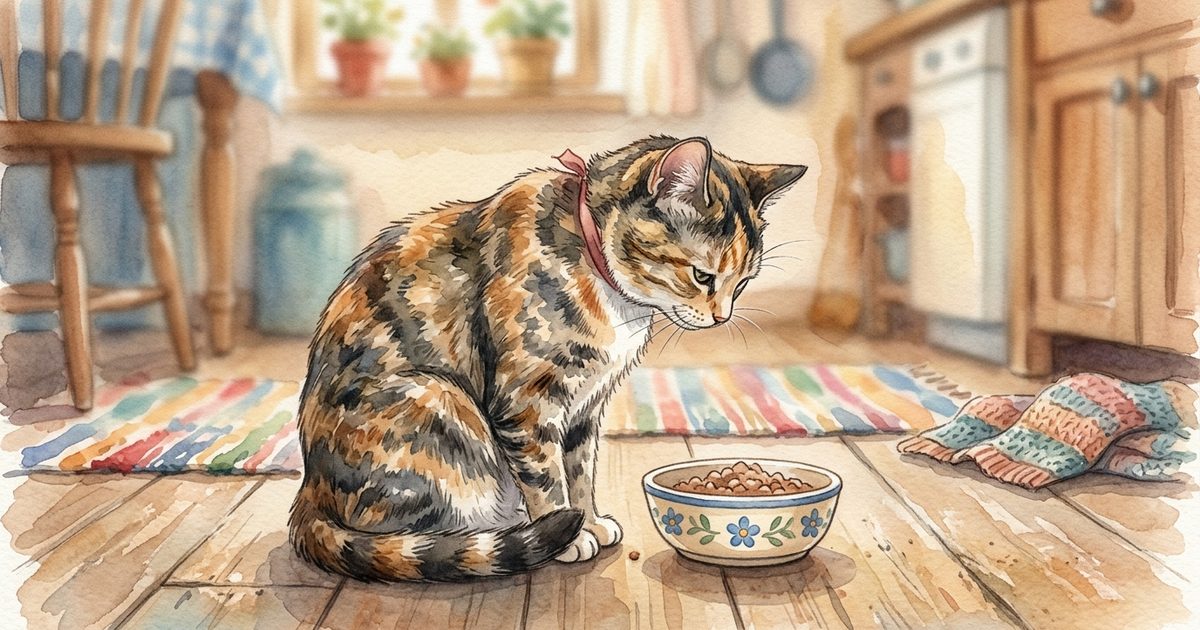
In the wild, a cat is a small predator that is also, crucially, prey. Showing weakness — limping, drooling, refusing food — invites attention from larger animals looking for an easy target. So cats evolved to mask pain almost reflexively, continuing to hunt, eat, and groom even when something hurts. The distinction worth holding onto is between felt pain and shown pain: a cat can be in considerable discomfort and still present a perfectly composed face to the world. That's instinct doing its job, not a sign the cat is "fine." Generalize it this way rather than reading human stoicism into the behavior — your cat isn't being brave, it's being a cat. For a broader look at how this masking shows up across the body, our guide to the signs a cat is in pain walks through the patterns.
What owners actually notice
What this means in practice is that the early signals of dental pain are whispered, not shouted. A cat that always demolished kibble starts eating a little more slowly. She begins favoring one side of her mouth, or drops the occasional piece of food. She develops a new preference for pâté over dry food — not because her tastes refined, but because chewing hurts less. Maybe she turns her head while eating, or a bit of food falls out. None of these look like emergencies, and all of them are easy to rationalize away as quirks. That's the trap: by the time the signs become obvious, the disease underneath has usually been progressing for a long time. Weight loss can follow as eating drops off — a downstream effect we explore in our article on cat weight — but the first clues are almost always subtle.
Why annual vet dental checks matter
Because cats hide mouth pain so effectively, a vet's trained eye is often the only thing that catches disease early. A conscious oral exam — lifting the lips, checking the gums and tooth surfaces as far as the cat will tolerate — is part of a routine wellness visit, and it can reveal tartar, redness, or a fractured crown that an owner would never see at home. When something looks off, the next step is a full dental examination under anesthesia: dental X-rays to find disease below the gumline, probing of each tooth's attachment, and cleaning or extraction as needed. A conscious cat simply can't hold still for sub-gumline work, which is why anesthesia is part of a thorough exam rather than an add-on. As a general cadence, aim for a dental check at least once a year for adult cats, and more often for seniors, whose dental disease tends to accelerate with age — a timeline that ties into how to tell a cat's age by its teeth.
Can You Prevent Cat Dental Disease?
Yes — daily tooth brushing with cat-safe toothpaste is the single most effective prevention, followed by Veterinary Oral Health Council-accepted dental diets and treats, and regular professional cleanings under anesthesia. Starting early, even in kittens, and keeping it routine matters more than perfection.
Because dental disease is driven by plaque that hardens into tartar within days, prevention is really about interrupting that buildup before it becomes disease. Nothing does that as reliably as mechanical brushing, which physically disrupts the bacterial film the way nature doesn't. The goal isn't a flawless routine you abandon after a week — it's a sustainable habit, even an imperfect one, that you keep up over a cat's whole life.
Yes, you can brush a cat's teeth
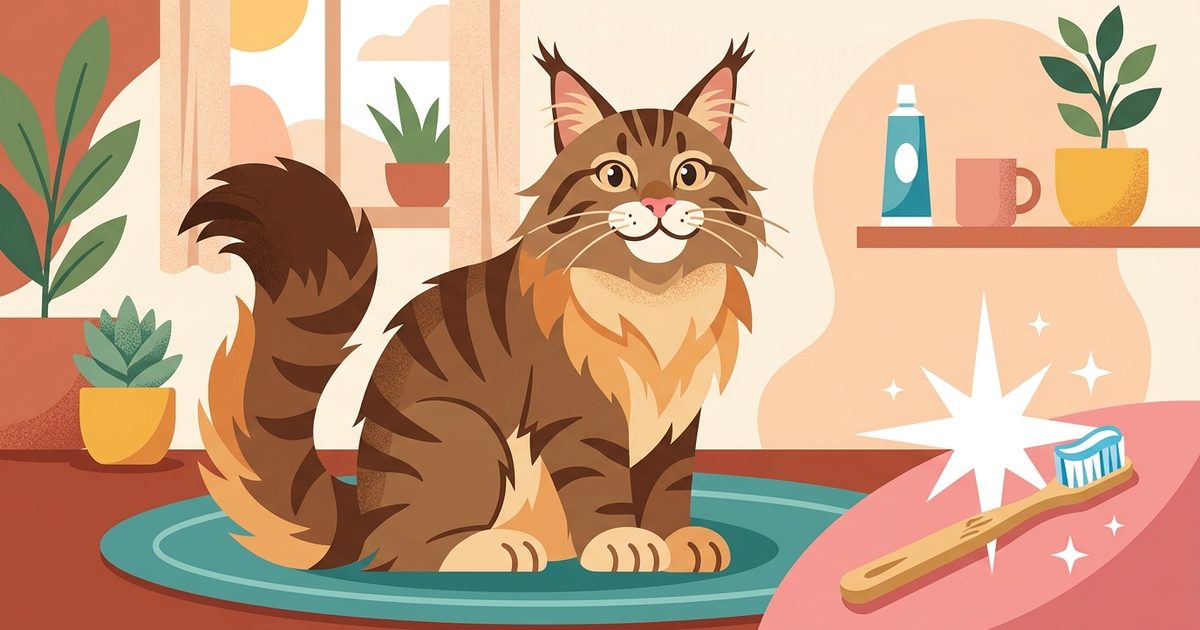
Most owners assume brushing a cat's teeth is impossible, but it's surprisingly doable once the cat learns the routine. Use only toothpaste formulated for cats — human toothpaste contains fluoride and xylitol, both toxic to cats, and the mint flavoring will make the whole experience a fight. A soft pediatric brush or a silicone finger-brush works well; start with a flavor the cat likes (poultry and seafood pastes are the usual winners).
Acclimate gradually: let the cat taste the paste off your finger first, then lift the lip for a second, then touch one tooth, always ending on a positive note and never forcing the mouth open. Daily brushing is the target because plaque mineralizes into tartar in roughly 24 to 48 hours, but any frequency genuinely beats none — three times a week is vastly better than never. The best window to start is kittenhood, when the mouth is a fresh slate and tolerance is easiest to build — we cover that early acclimation window in our guide to kitten teething.
Dental diets and treats
Dental kibble and treats earn their place when they carry the Veterinary Oral Health Council (VOHC) Seal of Acceptance — the closest thing to a vetting standard in this category. The seal means a product has met evidence-based criteria for actually reducing plaque or tartar in controlled trials. VOHC-accepted diets work through a combination of mechanical action (a larger, fibrous kibble that forces the tooth to sink in and get scrubbed) and chemical agents that slow mineralization.
It's worth being clear about what they are and aren't. Dental treats are an adjunct — a useful layer that helps between brushings — not a replacement for brushing or professional care. A cat that eats dental kibble but never gets brushed will still develop disease, just a little more slowly. Treats alone rarely move the needle enough for a cat already prone to buildup.
Regular professional cleanings
Even a perfectly brushed cat needs professional cleanings, because home care can't reach below the gumline where the most damaging disease hides. A proper veterinary dental cleaning involves scaling above and below the gumline, polishing the enamel so plaque can't cling to a roughened surface, and full-mouth X-rays to catch disease invisible to the eye. Frequency is guided by the vet's assessment of that individual cat's mouth — often annually for healthy adults, sometimes more often for breeds predisposed to severe disease, and adjusted up for seniors.
The recurring worry owners raise is anesthesia: isn't putting a cat under risky? It's a fair question, and we address it directly below in the treatment section — the short version is that modern anesthetic protocols with monitoring are genuinely low-risk, while leaving dental disease untreated carries the larger, more certain risk of pain, infection, and tooth loss.
What doesn't work
A few approaches sound plausible but don't hold up as standalone strategies. Water additives are widely marketed, but evidence for them as a sole defense is thin — they may help marginally and are unlikely to cause harm, yet they can't substitute for mechanical plaque disruption. "Dental toys" that lack the VOHC seal often do little more than entertain; without proven texture or chemistry, they're just chew toys. And bones — cooked or raw — are firmly off the table: they fracture teeth, splinter, and can seed serious infections. The reliable prevention stack stays the same: daily brushing, VOHC-accepted adjuncts, and regular professional care.
How Is Feline Dental Disease Treated?
Treatment centers on a professional cleaning under anesthesia, with dental X-rays to find disease below the gumline. Damaged or resorbing teeth are extracted — and cats adapt remarkably well, often eating normally within days, even with few or no teeth left.
Once disease is established, home care alone can't reverse it — gingivitis may be treatable, but tartar and bone loss require a veterinarian's tools. The standard of care is a comprehensive cleaning performed under general anesthesia, combined with X-rays and, when needed, extraction of teeth that can't be saved. The reassuring part owners rarely hear: cats recover and adapt far better than people expect.

Professional cleaning under anesthesia
Anesthesia isn't a convenience — it's a necessity. A conscious cat cannot tolerate the probing, the sub-gumline scaling where the worst disease lives, or the X-rays needed to see the tooth roots and bone. "Anesthesia-free" cleanings only address the visible crown and give a false sense of a clean mouth while disease advances unseen below the gums.
This brings up the most common and understandable concern: anesthesia feels dangerous. It's worth taking seriously. The honest both-sides view is that anesthesia always carries some risk, as it does for any procedure, in any species — including the very small risk of an adverse reaction. Modern protocols have substantially reduced that risk: pre-anesthetic bloodwork, IV catheters, tailored drug plans, and continuous monitoring of heart rate, oxygen, blood pressure, and temperature. For most cats, the procedure is uneventful. What's not equivalent is the alternative: untreated dental disease means chronic pain, persistent infection, tooth loss, and bacteria entering the bloodstream with potential strain on the heart, liver, and kidneys. One risk is small and managed; the other is certain and cumulative. The International Cat Care dental guidance walks through what a feline dental procedure involves and how anesthetic safety is managed.
Extractions for resorption and stomatitis
Some teeth simply cannot be saved. With tooth resorption — the uniquely feline condition where odontoclasts erode the tooth from within — the damage is irreversible and intensely painful, so extraction is the standard and humane treatment; there is no effective filling or repair. With feline stomatitis, the severe inflammation that can extend across the back of the mouth, the disease is frequently driven by an overactive immune response and often resists medication alone. In many cases, partial or full-mouth extraction is what finally brings remission — removing the surfaces the immune system is reacting against.
These are vet-led decisions, made from X-rays and the cat's full clinical picture, not something to defer out of fear of how the cat will cope afterward. For the deeper look at why stomatitis is so stubborn and how extractions fit its management, see our dedicated guide on cat stomatitis. The part that surprises and relieves most owners comes next: life after extractions.
Life after extractions
This is the part that worries owners most — and it's the part cats handle best. Cats adapt remarkably well to losing teeth, often better than they handled keeping painful ones. Once the source of the pain is gone, appetite frequently returns within days, and many cats eat more than they did before the procedure. Even fully toothless cats manage: they gum kibble into something workable, and they take to wet food readily. The idea that a cat can't eat after extractions is one of the most persistent myths in feline dentistry — clinically, the opposite is far more common. Recovery typically runs 7–14 days of soft food and pain management, after which most cats are back to their normal routine, minus the teeth that were hurting them.
Cat Dental Disease at a Glance — Summary
| Question | Short answer |
|---|---|
| How common is it? | Very — roughly 70–80% of cats show some dental disease by age three |
| What are the signs? | Bad breath, drooling, dropping food, pawing at the mouth, tartar, and red or swollen gums |
| Can you prevent it? | Yes — daily brushing, VOHC-accepted dental diets, and regular professional cleanings |
| What types affect cats? | Periodontal (gum) disease, tooth resorption, and feline stomatitis |
| Is anesthesia safe? | Modern monitored protocols are low-risk; untreated disease is the greater danger |
| Can cats eat after extractions? | Yes — cats adapt well, often eating better once painful teeth are removed |
Curious What Your Cat Would Say?
Upload a photo and get a warm, personalized reading from your cat's perspective.
Start Your Free ReadingFrequently Asked Questions
How common is dental disease in cats?
Very common. Roughly 70–80% of cats show some degree of dental disease by age three, making it one of the most prevalent health conditions a vet sees. Periodontal disease is the leading form and progresses silently without a proper exam.
What are the first signs of dental disease in a cat?
The earliest visible signs are usually bad breath, drooling, dropping food while eating, pawing at the mouth, yellow-brown tartar on the teeth, and red or swollen gums. Any single sign warrants a vet dental check rather than waiting for several to appear.
Why does my cat's breath smell so bad?
Persistent foul breath is not normal 'cat breath' — it reflects bacterial activity breaking down food debris and gum tissue along the gumline. A healthy mouth has only a mild odor, so a strong or sour smell is a sign of dental disease that a vet should examine.
Can I really brush my cat's teeth?
Yes. Use toothpaste formulated only for cats — human toothpaste is toxic — and a soft finger-brush or pediatric brush. Acclimate gradually, starting with the cat tasting the paste, and aim for daily brushing, though any frequency is far better than none.
What is tooth resorption in cats?
Tooth resorption is a uniquely feline condition where cells called odontoclasts erode the tooth enamel and root from within, causing intense pain. Unlike a human cavity it cannot be filled, so extraction is the standard treatment. It is thought to affect 20–60% of adult cats.
Is anesthesia safe for cat dental cleaning?
Modern anesthetic protocols — with pre-anesthetic bloodwork, IV catheters, and continuous monitoring — are genuinely low-risk. Anesthesia is necessary for sub-gumline cleaning and X-rays, and the greater danger is leaving dental disease untreated, which causes pain, infection, and tooth loss.
Can a cat eat normally after tooth extraction?
Yes. Cats adapt remarkably well, often eating better once the painful teeth are gone. Even fully toothless cats gum kibble and take to wet food readily. Recovery typically runs 7–14 days of soft food and pain management before a return to normal.
How often should my cat have a dental check?
Aim for a dental check at least once a year for adult cats, and more often for seniors, whose dental disease tends to accelerate with age. The vet assesses the mouth and adjusts the cadence based on that individual cat's condition.
Can dental disease be prevented in cats?
Yes. Daily brushing with cat-safe toothpaste is the single most effective prevention, supported by Veterinary Oral Health Council-accepted dental diets and treats, plus regular professional cleanings under anesthesia. Starting early and keeping it routine matters more than perfection.
Sources & References
You Might Also Like
Kitten Teething: Timeline, Symptoms & How to Help
Kitten teething runs from 3 to 7 months as baby teeth fall out. Learn the timeline, signs to watch for, and how to soothe a teething kitten safely.
15 min readWhen Do Cats Stop Growing? A Complete Timeline
When do cats stop growing? Most cats reach adult size by 12-18 months, but large breeds like Maine Coons keep growing until 3-4 years. Full timeline inside.
14 min readCan Cats Eat Cherries? Flesh, Pit & Toxicity Facts
Can cats eat cherries? Pitted flesh is safe in tiny amounts — but the pit, stem, and leaves are toxic (cyanide precursors). Learn what's safe and what isn't.
15 min readA message, in your cat's voice
Upload a photo, get a warm note written from your cat's perspective — just for fun. Plus 121 vet-cited articles, offline.