
When Do Cats Stop Growing? A Complete Timeline
When do cats stop growing? For most cats, the answer falls somewhere between 12 and 18 months of age — the point when they reach their adult height and length — though true physical maturity, including the last of their muscle fill-out, can stretch to 18 or even 24 months. Vets' estimates for that finish line actually range from about 9 months to 2 years, since individual genetics play a real role. That timeline isn't universal, either: large breeds like Maine Coons and Ragdolls are famous for staying kittenish on the outside long after other cats have settled into their adult shape, sometimes growing for three to five years. If you're watching a kitten's growth spurts slow down, wondering why your one-year-old still looks lanky, or trying to spot the moment your cat's weight finally levels off, this guide walks through the full timeline — month-by-month growth stages, how breed and sex change the math, and the clearest signs that your cat has stopped growing for good.
Key takeaways
- Most cats reach their adult size by 12 to 18 months old, with full physical maturity — including muscle fill-out — arriving around 18 to 24 months.
- Large breeds like Maine Coons and Ragdolls are the exception, often continuing to grow for three to five years.
- A stable weight and size across several consecutive months is the clearest sign that your cat has finished growing.
Cat Growth Timeline — Quick Reference
| Life Stage | Age Range | What's Happening |
|---|---|---|
| Rapid growth | 0–6 months | Kittens grow fastest here, often doubling or tripling in size within weeks |
| Slowing down | 6–12 months | Growth rate drops, and adult body proportions start to take shape |
| Reaching adult size | 12–18 months | Most cats hit their adult height and length by this point |
| Full maturity | 18–24 months | Final muscle mass and weight finish settling into place |
| Large-breed exception | 3–5 years | Maine Coons, Ragdolls, and similar giant breeds keep growing well past two years |
When Do Cats Stop Growing?
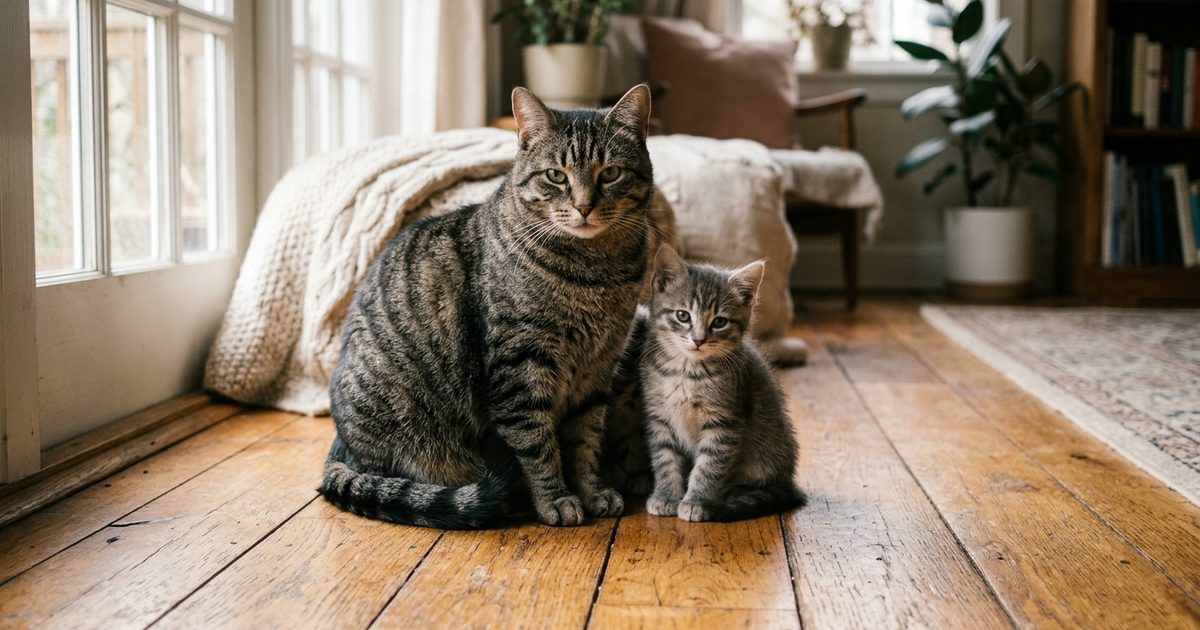
Most cats reach their adult size by 12 to 18 months of age, though full maturity — including muscle fill-out — can take until 18 to 24 months. Vets' estimates range from 9 months to 2 years depending on the individual cat, with large breeds taking considerably longer.
The short answer
Ask five veterinarians when do cats stop growing and you'll get five slightly different answers — and all of them are probably right. The most common answer is 12 to 18 months: by then, most domestic cats have reached their adult size and settled into mature proportions. Other vets place the window a bit wider, anywhere from 9 months to 2 years, because growth speed varies by individual, sex, and especially breed. A petite Singapura might be essentially done by her first birthday, while a Maine Coon kitten the same age still has years of growing left — more on that breed gap ahead. For a typical mixed-breed shorthair, though, 12 to 18 months is a safe rule of thumb. Where exactly "kitten" ends and "adult" begins varies even among formal veterinary frameworks — International Cat Care's life-stage guide is a good overview of how vets divide a cat's first years.
Height vs weight vs "filling out"
"Stopped growing" isn't really one finish line — it's three separate curves that finish at different times. Skeletal growth (height and body length) closes out first, when the long bones' growth plates seal. Weight and muscle mass run on a slower schedule, and behavioral maturity — the shift from kitten chaos to settled adult habits — lags behind both. So when someone asks whether a cat is "done growing," the honest answer depends on which curve they mean; the month-by-month timeline below tracks how each one plays out.
The Kitten Growth Timeline, Month by Month
Kittens grow fastest in their first six months, often doubling or tripling in size and reaching about 75% of adult size by six months. Growth then slows: most cats hit adult height by 12 months, with muscle and proportion filling out gradually through 18 to 24 months.
0-6 months: rapid growth
The first six months are when the real transformation happens. A newborn kitten typically weighs around 100 grams and can barely lift its head; by six months, most kittens have grown to several times their birth weight and reached roughly 75% of their eventual adult size. This is the fastest, most visible stretch of a cat's life — weeks apart can mean a noticeably longer body, longer legs, and a completely different face shape as kitten fluff gives way to adult fur. Baby teeth erupt and are gradually replaced by permanent teeth during this same window (we cover the tooth-by-tooth timing separately in our kitten teething guide). Nutritionally, this is also the highest-demand period of a cat's life: kittens need calorie- and nutrient-dense kitten food to fuel all that rapid bone, muscle, and organ development.
6-12 months: slowing down
Growth doesn't stop abruptly at six months, but it does downshift noticeably. Between 6 and 12 months, kittens transition from the frantic, gangly growth of early kittenhood into something closer to their adult proportions — legs and body start to look balanced rather than oversized, and the face fills out into more recognizably adult features. Muscle development accelerates during this stretch as activity levels shift from constant play-fighting to more purposeful movement. By the time most cats reach their first birthday, they've reached — or come very close to — their adult height and body length, even if they still look a little lean. This is also the stage many owners start asking whether their cat is "done," which is why the 12-month mark shows up so often as the go-to answer.
12-24 months: filling out
By the time a cat turns 1, the skeleton has largely finished its work — but the body hasn't. This final stretch, roughly 12 to 24 months, is about filling out rather than growing up: chest and shoulders broaden, muscle mass settles in, and the slightly gangly, teenage look of a yearling gives way to a solid, mature build. Weight often keeps shifting subtly even after height and length are locked in, which is why a 2-year-old and a 1-year-old cat of the same breed can look like different life stages. Most cats reach full physical maturity somewhere between 18 and 24 months. Not sure how old your cat actually is? Our guide on how to tell a cat's age can help you estimate it from teeth, eyes, and coat condition.
Does Breed Change How Long a Cat Grows?
Yes — breed matters a lot. Small breeds like the Singapura may finish growing by 9 months, while large breeds mature much more slowly: Maine Coons and Ragdolls can keep growing until 3 to 4 years old, and Norwegian Forest cats and Manx cats may take up to 5 years.
The general timeline of 12 to 18 months only holds for an average-sized cat. For the giant breeds, the honest answer stretches out by years — genetics set a much longer growth curve for some cats than others.
Large, slow-maturing breeds
Giant and semi-giant breeds grow on a completely different schedule than the typical house cat. Their skeletons, joints, and muscle mass simply take longer to finish developing, and owners who expect an adult-sized cat by their first birthday are often surprised their kitten is still visibly filling out well into its third year.
These breeds weren't just slow to grow by accident — many were shaped, in part, for size. Maine Coons and Norwegian Forest cats descend from working farm cats built for cold climates, and Ragdolls were developed specifically for a large, substantial frame. A longer growth window is the tradeoff for reaching that bigger adult body.
| Breed | Typical time to full growth |
|---|---|
| Maine Coon | 3 to 4 years |
| Ragdoll | About 3 years |
| Norwegian Forest Cat | Up to 5 years |
| Manx | Up to 5 years |
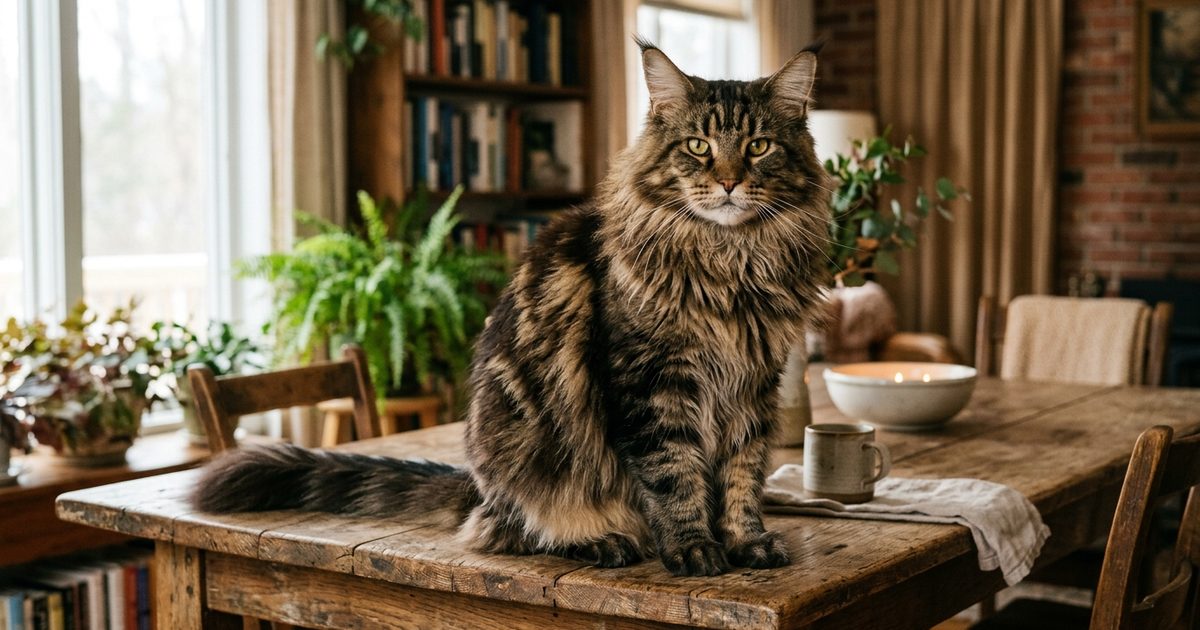
Even within this group, growth isn't perfectly linear — most of these breeds hit their adult height in the first year or two, then spend the remaining time gradually adding muscle, bone density, and chest depth rather than height or length. Oversized paws or ears on a young kitten are often an early clue that more growing is still ahead.
Small and average breeds
At the other end of the spectrum, the Singapura — one of the smallest recognized cat breeds — often reaches full size by around 9 months old, several months ahead of the typical cat. Most ordinary domestic shorthairs and mixed-breed cats fall in between, generally reaching their adult weight and proportions somewhere between 12 and 18 months.
Breed size and growth speed tend to track together: smaller adult body types finish growing sooner, while larger frames simply need more time to build. If you don't know your cat's breed or mix, their adult size and growth window is harder to predict — but body proportions after 18 months are usually a reliable clue either way.
Male vs Female: Do They Stop Growing at the Same Time?
Female cats typically finish growing by 10 to 12 months, while males often keep growing until closer to 18 months and tend to reach a larger final size. Spaying or neutering can also delay growth-plate closure slightly, which is why altered cats sometimes grow a bit longer than intact ones.
Why males take longer
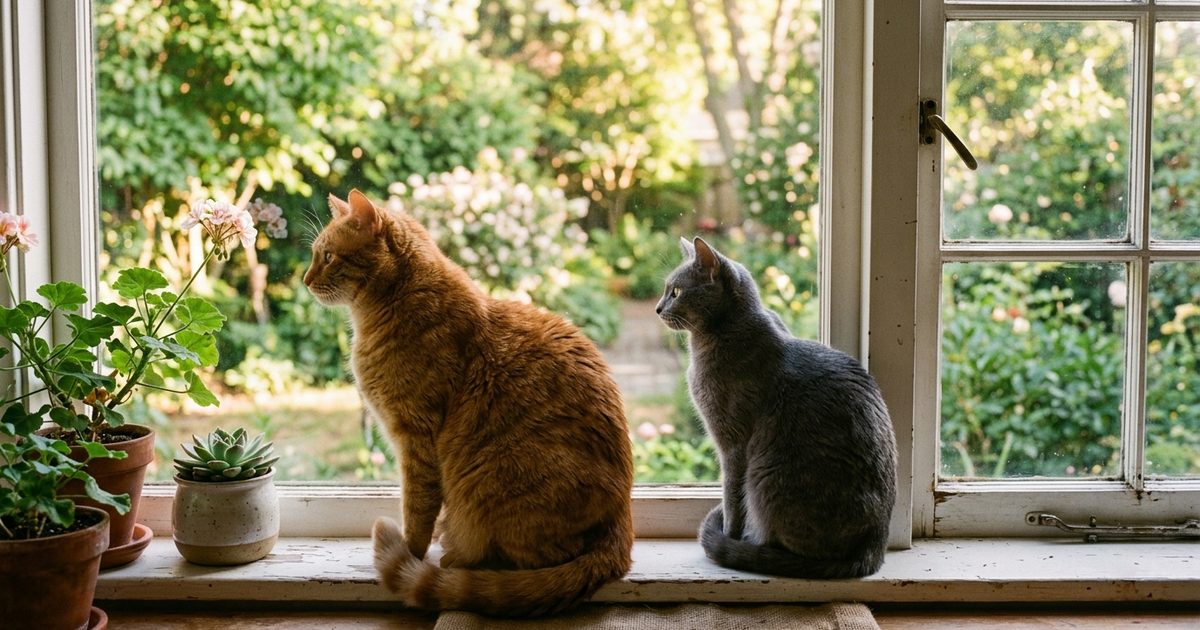
Sex hormones set the pace of skeletal growth. Growth plates — the soft cartilage zones near the ends of long bones where new bone is built — eventually harden into solid bone and stop lengthening, and testosterone and estrogen both help trigger that closure. Female cats tend to hit hormonal maturity earlier, so their growth plates typically seal by around 10 to 12 months. Males usually take a bit longer, with growth plates commonly staying active until somewhere near 18 months.
That extra runway is a big part of why adult male cats are, on average, noticeably larger than females of the same breed — more skeletal length, more muscle mass, and a heavier overall frame. It's a general pattern, not a rule: an individual female can still outgrow a particular male, especially when comparing across different breeds or body types.
Does spay/neuter affect growth?
Sex hormones don't just drive growth — they also help end it, which is why removing them can shift the timeline. Spaying or neutering removes the main source of estrogen or testosterone, and without that signal telling growth plates to close on schedule, altered cats sometimes keep growing a little longer than intact cats of the same sex. Some owners notice a spayed or neutered cat ending up slightly taller or longer-legged than expected.
How much this actually matters is debated — vets and studies don't fully agree on the size of the effect, and breed, diet, and age at alteration likely play a role too. The safest summary: spay/neuter timing can nudge growth duration slightly, not dramatically reshape how big your cat becomes. For the procedure itself and when vets recommend it, see our guide to spaying a cat.
How Can I Tell If My Cat Is Done Growing?
Your cat is likely done growing once their weight, height, and body length stay consistent for several months on a stable diet. Calmer behavior and settled body proportions are supporting signs. A vet can confirm by examining growth plates, sometimes with an X-ray, if you want certainty.
Signs your cat has stopped growing
The clearest sign is consistency: if you weigh your cat monthly and the number holds steady for three or four consecutive months on the same amount of food, your cat has very likely reached adult size. The same logic applies to height and body length — once a cat stops needing a bigger bed, a taller scratching post, or a wider carrier, growth has probably plateaued. Proportions settle too. A growing kitten often looks slightly "unfinished" — legs or ears that seem a touch too big for the body — and that gawky phase smooths out once growth is complete. Activity level shifts as well: the frantic, wall-climbing energy of a young kitten typically mellows into calmer, more deliberate play as a cat reaches physical maturity, though personality still plays a role in how much any individual cat settles.
How a vet confirms it
If you want a more definitive answer than watching the scale, a vet visit can help. During a routine exam, a vet can assess joint development and general body condition by hand, and in cases where precision matters — before a spay/neuter procedure, for example, or if a cat's growth seems unusually slow — an X-ray can show whether the growth plates near the ends of the long bones have closed. Closed growth plates are a reliable sign that skeletal growth has finished. This isn't something most owners need to check routinely, but it's available if you'd like certainty rather than an estimate. The Cornell Feline Health Center also has practical owner guidance on what to expect through a kitten's early development.
Why Does It Matter When My Cat Stops Growing?
Knowing when your cat stops growing matters most for nutrition — kitten food is calorie- and nutrient-dense to fuel rapid growth, while adult food is balanced for maintenance. Switching too early can shortchange a still-growing kitten; switching too late can lead to excess weight gain.
Kitten food to adult food transition
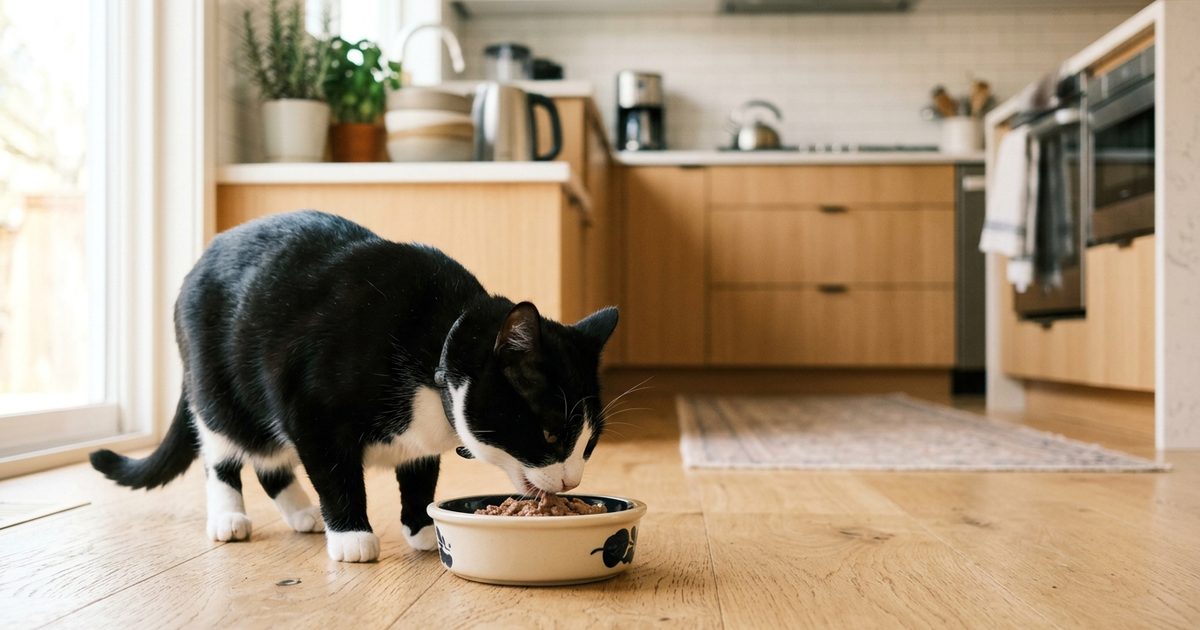
Kitten food is formulated with more calories, protein, and specific nutrients like DHA to support rapid growth, brain development, and — on a similar timeline — the tooth eruption that comes with early development. Most owners can plan to transition to adult food somewhere around the 12-18 month mark, once growth has largely leveled off, though large-breed cats who keep growing past age one may benefit from staying on kitten or large-breed-specific food for longer under a vet's guidance. Switching too early can leave a still-growing kitten short on the calories and nutrients it needs to finish developing properly. Switching too late — continuing calorie-dense kitten food well past the point your cat stopped growing — is the more common mistake, and it's a straightforward path to unwanted weight gain, since the extra calories no longer have anywhere productive to go.
Weight watching either way
Whichever side of the transition you're on, "done growing" is really the starting line for a new phase: weight maintenance rather than weight gain. Once a cat's frame stops changing, its calorie needs drop to match a stable adult body, and it's worth keeping an eye on the scale every few months from then on — since maintaining a healthy weight is a lifelong project, not a one-time milestone tied to growth.
Cat Growth Timeline — Summary
| Life Stage | Age Range | Key Sign |
|---|---|---|
| Rapid growth | 0–6 months | Doubling or tripling in size, reaching about 75% of adult size |
| Slowing down | 6–12 months | Adult proportions forming, most cats reach adult height |
| Most reach adult size | 12–18 months | Height and length mostly finished, weight still settling |
| Full maturity | 18–24 months | Muscle fully filled out, weight stable |
| Large-breed exception | 3–5 years | Maine Coons, Ragdolls, Norwegian Forest cats, and Manx cats keep growing |
Curious What Your Cat Would Say?
Upload a photo and get a warm, personalized reading from your cat's perspective.
Start Your Free ReadingFrequently Asked Questions
When do cats stop growing?
Most cats reach their adult size by 12 to 18 months old, with full physical maturity — including muscle fill-out — arriving around 18 to 24 months. Large breeds like Maine Coons and Ragdolls are the exception, often continuing to grow for three to five years before reaching their final adult size.
Do male cats grow longer than female cats?
Yes, generally. Female cats tend to finish growing by around 10 to 12 months, while males often keep growing until closer to 18 months and typically end up larger. It's a general pattern rather than a strict rule — some females outgrow individual males, especially across different breeds.
What breed of cat grows the longest?
Norwegian Forest cats and Manx cats can take up to 5 years to reach full physical maturity, making them among the slowest-growing domestic breeds. Maine Coons (3 to 4 years) and Ragdolls (about 3 years) aren't far behind — all four are large, semi-giant breeds bred in part for size.
How can I tell if my kitten has stopped growing?
Watch for consistency: if your cat's weight and body length hold steady for three or four months in a row on the same diet, growth has likely finished. Settled body proportions and calmer, less frantic play are supporting signs. A vet can confirm with a physical exam or, if needed, an X-ray of the growth plates.
Do cats gain weight after they stop growing in height?
Often, yes. Skeletal growth — height and body length — usually finishes first, around 12 months, but muscle mass and overall weight can keep filling out for months afterward, often into a cat's second year. A cat can look nearly full height at a year old while still visibly leaner than its eventual adult build.
Does spaying or neutering affect how long a cat grows?
It can, slightly. Removing the hormones that normally trigger growth-plate closure sometimes means altered cats keep growing a little longer than intact cats of the same sex, occasionally ending up marginally taller or longer-legged. The size of this effect is debated among vets and researchers, so treat it as a minor nudge, not a dramatic change.
When should I switch my kitten to adult cat food?
Most kittens can transition to adult food around 12 to 18 months old, once growth has largely leveled off. Large-breed cats who keep growing past their first birthday may benefit from staying on kitten or large-breed food longer — ask your vet. Switching too early can shortchange a still-growing kitten; switching too late often leads to excess weight gain.
Why is my cat still small at 1 year old?
That's usually completely normal. Skeletal growth often finishes around 12 months, but muscle mass and final weight can keep filling out through 18 to 24 months, so a 1-year-old cat can look leaner or smaller than its eventual adult build. Small breeds like the Singapura may already be done; large breeds like Maine Coons are just getting started.
Is it normal for a kitten's growth to happen in spurts rather than steadily?
Yes — kitten growth is rarely a smooth, steady line. Most of the dramatic size change happens fast in the first six months, then slows noticeably between 6 and 12 months, and finally shifts to gradual muscle fill-out through 18 to 24 months. Uneven growth spurts, rather than steady daily change, are completely typical.
Sources & References
You Might Also Like
Kitten Teething: Timeline, Symptoms & How to Help
Kitten teething runs from 3 to 7 months as baby teeth fall out. Learn the timeline, signs to watch for, and how to soothe a teething kitten safely.
15 min readCan Cats Eat Cherries? Flesh, Pit & Toxicity Facts
Can cats eat cherries? Pitted flesh is safe in tiny amounts — but the pit, stem, and leaves are toxic (cyanide precursors). Learn what's safe and what isn't.
15 min readCan Cats Eat Green Beans? Vet-Approved Veggie Treat Guide
Can cats eat green beans? Yes — plain cooked or raw, they're a safe, low-calorie, high-fiber treat and weight-loss filler. Serving sizes and risks.
17 min readA message, in your cat's voice
Upload a photo, get a warm note written from your cat's perspective — just for fun. Plus 121 vet-cited articles, offline.