
Spaying a Cat: What It Is, When, Benefits & Recovery
Spaying a cat is the single most important health decision most owners will ever make for their female feline — a routine cat neuter procedure that stops heat cycles entirely, prevents life-threatening infections, and is tied to a longer, healthier life. Whether you are researching a first cat spay or wondering how much to spay a cat in your area, the basics matter: it is safe, common, and far less costly than treating the diseases it prevents.
Key takeaways
- Spaying (ovariohysterectomy) removes the ovaries and uterus, permanently ending heat cycles and pregnancy.
- Done before the first heat, it drops mammary cancer risk to near zero and eliminates pyometra.
- Recovery is short — about 10 to 14 days — and the one-time cost is far lower than treating avoidable disease.
Spaying a Cat — Quick Reference
| Question | Short answer |
|---|---|
| What is it? | Surgical removal of the ovaries and uterus (ovariohysterectomy) |
| When to spay? | Traditionally 4–6 months, before the first heat |
| How long is recovery? | About 10–14 days of calm, restricted activity |
| Does it change personality? | No — it settles hormonal behaviors, not who she is |
| Cost range? | Varies widely; low-cost clinics and vouchers exist |
| Does it extend lifespan? | Yes — spayed cats live longer on average |
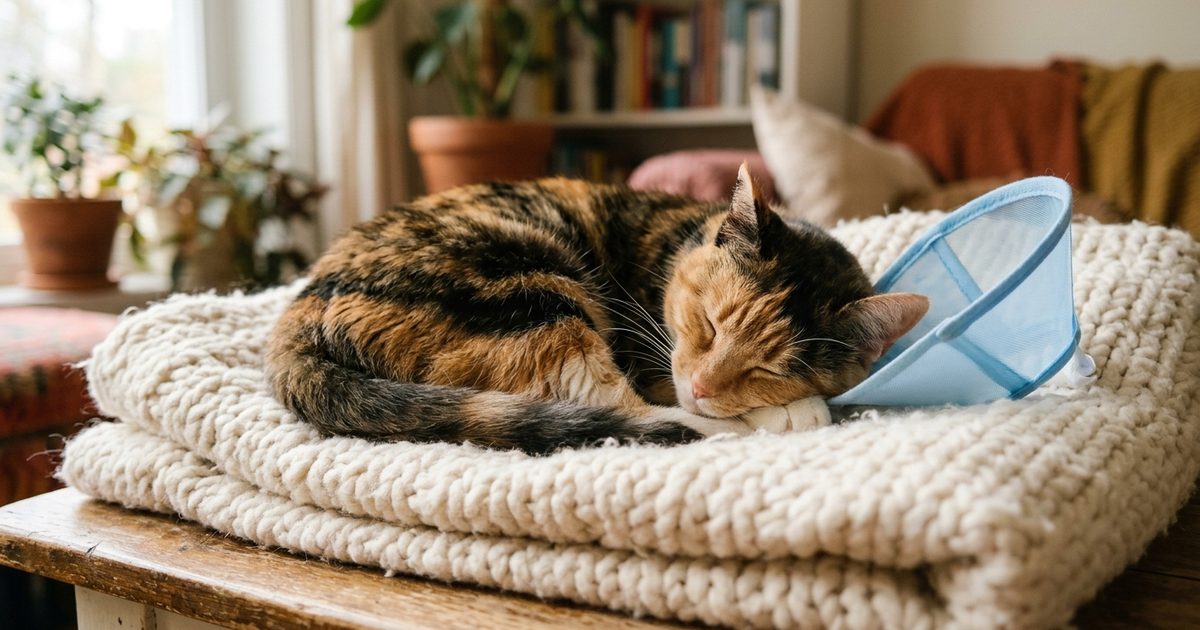
What Does Spaying a Cat Mean?
Spaying a female cat — officially an ovariohysterectomy — is the surgical removal of both ovaries and the uterus through a small abdominal incision. Once those organs are gone, she can no longer go into heat or become pregnant. It is permanent sterilization, performed under general anesthesia by a veterinarian.
In everyday language, "spaying" is the word owners use; in the clinic it is an ovariohysterectomy, a term that simply names exactly what the procedure does. The vet makes a small incision on the cat's belly, locates the reproductive tract, and removes both ovaries along with the entire uterus. Once those organs are out, the hormonal signals that drive heat disappear, and the physical structures that allow pregnancy and certain serious infections are gone for good.
It is one of the most common and routinely performed surgeries in veterinary medicine — so routine that for a healthy cat it is considered a day procedure, with most patients going home the same afternoon. The surgery is done under general anesthesia, with monitoring throughout, and the incision is closed in layers. There is no need for the dramatic framing some people fear: it is a short, well-practiced operation, not an emergency or a last resort.
What makes spaying distinct from simply preventing mating is that it works at the source. A cat who is kept indoors and away from intact males will still cycle through heat — yowling, restless, spraying, and stressed — every few weeks during breeding season. Spaying removes the cycle itself. That is why it is described as permanent: not a temporary pause, but an end to the hormonal and reproductive machinery that drives it. The Cornell Feline Health Center treats spaying as a foundational preventive measure, not an optional convenience.
Spay vs neuter: the difference
The two words get used almost interchangeably in conversation, but they point at different procedures. "Spaying" refers to the female surgery — removal of the ovaries and uterus. "Neutering" or "castrating" refers to the male surgery — removal of the testicles. Informally, owners often say "getting the cat fixed" to cover either one.
This is worth clarifying because the search term cat neuter captures both: people typing it may be looking for information on either sex. This article centers on the female procedure, but the same logic of population control, calmer behavior, and disease prevention applies broadly — male cats benefit from neutering too, and the decision framework is similar. The terms diverge only in which organs come out.
Why the ovaries and uterus both come out
A common question is why both organs are removed rather than just the ovaries. The answer is that each organ carries its own risk, and removing both delivers both benefits.
The ovaries produce the hormones that drive the heat cycle. Take them out, and the cycle stops — no more yowling, no more roaming urges, no more repeated estrus. The uterus, though, is the organ where a life-threatening infection called pyometra develops in unspayed females, often in older cats and often with little warning. By removing the uterus as well, that risk is eliminated entirely. Removing only the ovaries would stop the heat but leave the uterus vulnerable; removing both closes off both problems in one surgery. You can read more about pyometra and spay timing from International Cat Care, which treats the condition as a leading reason to spay even adult cats.
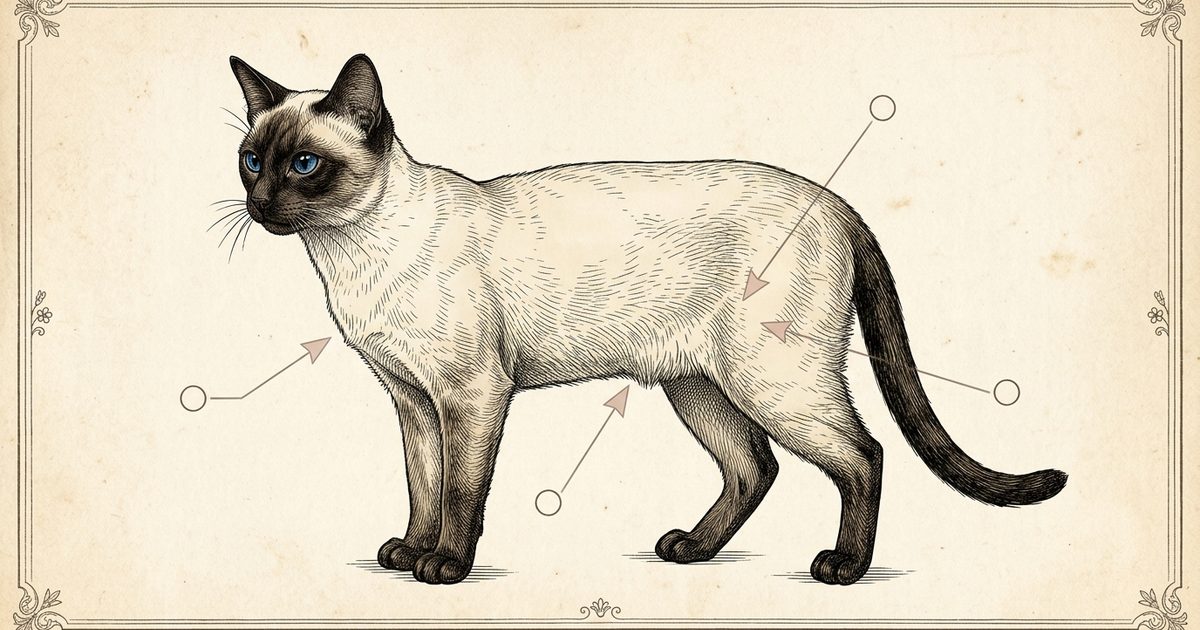
When Should You Spay a Cat?
The traditional recommendation is to spay around 4 to 6 months of age, before a female kitten reaches her first heat. Spaying before the first heat dramatically lowers the risk of mammary cancer later in life. Some shelters perform early-age (pediatric) spay as young as 8 weeks — debated but widely done safely.
The short answer is "before her first heat," and for most kittens that window lands between four and six months old. The deeper reason timing matters so much isn't just convenience — it's that spaying before the first heat transforms her long-term cancer risk, and the gain shrinks sharply with each cycle she goes through. There's also a genuine, ongoing debate about how young is too young, which we'll lay out fairly below.
The traditional 4-to-6-month window
The four-to-six-month guideline became standard because it sits in a sweet spot. By that age a kitten is generally big enough and metabolically stable enough to handle general anesthesia well, yet young enough that — in most cases — she hasn't yet entered her first heat. That means the surgery is lower-risk than doing it later, and the owner usually beats the cycle that would otherwise begin at five to ten months. It's also early enough that the mammary cancer benefit is at its maximum. For most pet cats, this window remains the default a vet will suggest at the first or second kitten visit.
Spaying before the first heat
Here's the part that genuinely changes the math. Mammary cancer in cats is aggressive and most cases are malignant, and a cat's risk rises with every heat cycle she experiences. Spaying before her first heat drops that risk to near zero compared to an intact cat. After one heat the protection is already meaningfully smaller, and after two or three it shrinks further — which is why vets push for early timing rather than "whenever."
This is also the cycle that how long cats are in heat explains in detail: the yowling, the restlessness, the repeating frequency that would otherwise become your household's reality every few weeks. Spaying doesn't interrupt that cycle — it prevents it from starting.
Early-age (pediatric) spay: both sides
Many shelters and rescue organizations spay kittens at eight to twelve weeks, before they're ever adopted. The reasoning is practical: doing it before adoption guarantees the cat can't reproduce, which matters enormously for population control. Long-term studies have generally found pediatric spay to be safe in most cats, with no major differences in health or behavior compared to cats spayed later.
On the other side, some veterinarians prefer to wait until five or six months — particularly for large-breed cats or individuals where there may be a reason to let growth and development proceed further before surgery. Both positions have real support, and neither camp has settled the question for every cat. The Cornell Feline Health Center and AAHA both recognize early-age spay as an acceptable practice while leaving the final timing to the individual vet and cat. For large breeds in particular, when cats stop growing adds useful growth-stage context to that decision.
Adult and older cats
Adult and even senior cats can be spayed safely — there's no upper age cutoff, and the protection against pyometra (a life-threatening uterine infection) remains valuable at any age. For an older cat the vet will do a more careful pre-op assessment, since anesthesia risk rises slightly with age or underlying illness, but a healthy senior cat is typically still a good candidate. The timing decision is really a kitten question; for an adult, the better question is simply "why not now?"

What Are the Benefits of Spaying a Cat?
Spaying eliminates heat cycles and the yowling, restlessness, and spraying that go with them; prevents unwanted litters and the pregnancy risks that come with them; sharply reduces mammary cancer and completely prevents pyometra; and is associated with a longer, healthier lifespan in pet cats.
Spaying's benefits fall into two kinds: what it stops (the relentless heat cycles and the pregnancies) and what it prevents (some of the most common, serious diseases that strike intact females). Together they add up to a meaningfully calmer household and, on average, a longer, healthier life for your cat. Let's take each one in turn.
No more heat cycles
Once she's spayed, the heat cycle ends permanently — and with it the behaviors that make estrus so disruptive. The yowling that sounds like distress, the pacing, the excessive clinginess, the urine spraying that marks territory: all of it stops, because the hormonal drive behind it is gone. Your household simply returns to calm.
If you've ever lived through a heat cycle, you know how relentless it is — it repeats every two to three weeks during breeding season. How long cats are in heat walks through that cycle in detail, and it's worth knowing that despite appearances, cats don't bleed during heat — cats do not have periods the way humans do. The signs are behavioral, not bloody, but they are exhausting for cat and owner alike.
No unwanted pregnancies
A single unspayed female can produce multiple litters in a year, and cats are remarkably efficient breeders — a single escape outside or an unneutered male in the home is enough. Each litter also carries real risk: birth complications, mastitis, and the demands of caring for kittens. Spaying removes all of that in one decision.
This is what how long cats are pregnant describes from the other side — the gestation timeline and the demands of pregnancy that spaying simply prevents from ever happening. Beyond your own cat, every prevented litter is one less contribution to the shelter population, which we come back to later.
Lower cancer and infection risk
This is the medical core of the benefit. Mammary cancer risk drops dramatically when a cat is spayed before her first heat — to near zero — and the protection, while still real, shrinks with each cycle she goes through first. Mammary tumors in cats are also overwhelmingly malignant, so prevention carries outsized weight.
Pyometra is the other major one: a life-threatening infection of the uterus that can strike any intact female, often as she ages, and that frequently becomes an emergency. Because spaying removes the uterus entirely, pyometra becomes impossible afterward. Both of these conditions are common, serious, and often fatal in intact females — which is why vets frame spaying as preventive medicine, not just behavior management.
A longer lifespan
Spayed cats live longer on average than intact ones. The reasons stack up: less disease (the cancers and infections above), fewer roaming injuries (no hormonal drive to escape and seek mates), and fewer reproductive emergencies like dystocia. None of this guarantees a long life for any individual cat, but across populations the difference is real and consistent.
You can read more about the spay-related longevity findings from the Cornell Feline Health Center, and for the broader picture of what shapes a cat's lifespan, how long cats live places spaying alongside the other major factors.
Calmer, more settled behavior
Without the hormonal surges of the heat cycle, many cats become steadier, more even-tempered, and often more consistently affectionate. This is a generalization rather than a promise — temperament is individual, and we address the "spaying changes personality" myth later in the article — but for most cats the day-to-day is simply calmer.

What Happens During the Spay and Recovery?
A spay is a routine surgery done under general anesthesia. The vet makes a small incision on the belly, removes the ovaries and uterus, then closes the layers. Most cats go home the same day. Full recovery takes about 10 to 14 days, during which she must stay calm, indoors, and not lick the incision.
Like any responsible cat neuter, a spay follows a predictable, well-practiced path — from drop-off to a calm recovery at home. Knowing each step in advance takes the mystery out of the day, which is the part most owners find hardest.
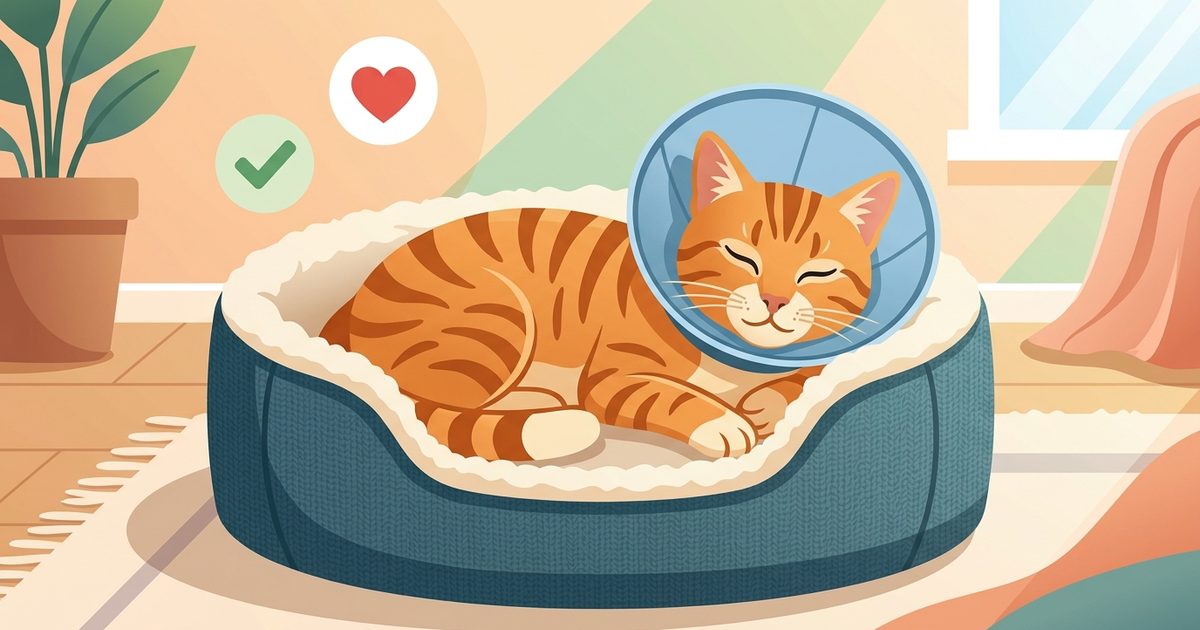
Before the surgery
The day before, your vet will ask you to fast your cat overnight — no food after a certain hour, though water is usually fine. On the morning of the procedure, you'll bring her in for a pre-operative exam. The vet checks her temperature, heart, and overall fitness for anesthesia, and for older cats or those with known conditions, a small blood panel helps confirm her organs can clear the drugs safely. At drop-off, you'll confirm a contact number, sign the consent form, and leave a calm, sleeping cat in trained hands.
During the procedure
Once she's settled, your cat receives a mild sedative, then general anesthesia so she is fully unconscious and feels nothing. A technician monitors her heart rate, breathing, oxygen, and temperature throughout. The surgeon makes a small incision — usually along the midline of the belly, sometimes on the flank — and carefully locates the ovaries and uterus. Both are removed in full, and the blood vessels are sealed. The layers are then closed in stages: the abdominal wall with internal sutures (often dissolvable), and the skin with either removable stitches, dissolvable sutures, or surgical glue. The procedure itself typically takes 20 to 45 minutes. There is no need to picture anything graphic — for your cat, it is simply a deep, unremembered sleep, followed by waking up tucked into warm bedding.
Recovery at home
Most cats go home the same afternoon, still a little groggy. The first 24 hours are for quiet and warmth — offer a small, light meal (a quarter of her usual portion is plenty), keep her away from stairs and other pets, and let her sleep off the anesthesia in a confined, cozy room. By days two and three her energy returns, sometimes faster than her incision is ready for, so jumping and play must be gently restrained.
Over the 10 to 14 day healing window, two rules matter most: no licking at the incision (a cone or soft recovery suit stops her from introducing bacteria or pulling stitches), and restricted activity — no leaping onto counters or wrestling with housemates. Check the site once or twice daily: it should look clean, dry, and quietly sealed. This is also the moment to revisit her portions, since spaying slows metabolism slightly — our guide on how much to feed a kitten covers the portion-control and play routine that keeps recovering cats at a healthy weight. For a fuller checklist on post-operative care, International Cat Care offers clear, vet-reviewed guidance on what to expect day by day.
When to call the vet during recovery
Complications after a routine spay are uncommon, and most cats heal without a single hiccup. Still, it's worth knowing the warning signs so you can act quickly rather than worry quietly. Call your vet if you notice increasing swelling, redness, or warmth at the incision; any discharge or foul smell; a gap or opening in the wound; persistent lethargy; or if she hasn't eaten anything by 24 hours after coming home. Vomiting more than once, straining without urinating, or a sudden spike in hiding or distress also warrant a call. None of these are likely — but naming them means you'll recognize them if they ever appear, and that's exactly the kind of vigilance a smooth recovery rewards.
What Are the Risks and Costs of Spaying?
Spaying is one of the most common and safest surgeries in veterinary medicine, with a low complication rate. Risks include those of any surgery and anesthesia — bleeding, infection, and anesthetic reaction — and these are uncommon in healthy cats. Cost varies widely by region and clinic type, and low-cost options exist.
Surgical and anesthesia risks
The risks of a spay are real but genuinely low. They are the same ones that come with any surgery requiring general anesthesia: bleeding, infection at the incision site, and an adverse reaction to the anesthetic itself. In a healthy young cat, these complications are uncommon.
Risk rises in three groups: very young kittens, elderly cats, and cats with an underlying illness such as kidney disease or a heart condition. This is exactly why a veterinarian performs a pre-operative exam, and why bloodwork is recommended before anesthesia — it flags hidden issues the eye can't see. With modern anesthetic protocols, warmed surgical tables, and continuous monitoring of heart rate and oxygen, a spay is treated as routine by International Cat Care precisely because the safeguards around it are so well established.
How much does it cost to spay a cat?
If you are wondering how much to spay a cat, the honest answer is that it depends on where you go. A private veterinary clinic typically charges more, reflecting the full pre-op exam, monitoring, and aftercare. Nonprofit and shelter clinics charge less, often substantially, because their mission is to make sterilization accessible.
The figure also shifts with geography, the cat's size and age, and whether bloodwork is included. If cost is the barrier, it is worth searching for low-cost spay/neuter programs in your area: humane societies and animal welfare charities frequently offer vouchers, and mobile clinics travel to underserved neighborhoods. Even if you are asking how much is it to neuter a cat for a male, the same low-cost network usually applies. The one-time expense is almost always far smaller than the cost of raising an unplanned litter — or treating pyometra later.
Does spaying change a cat's personality?
This is one of the most common worries, and the evidence is reassuring: spaying does not change who your cat is. It does not dull her, break her spirit, or turn her into a different animal.
What it does is settle the hormonally driven behaviors tied to the reproductive cycle — the yowling, pacing, and restlessness of heat, the urge to roam, and some forms of hormonal aggression. Those fade because the hormones driving them are gone. The things that actually make up her personality — her affection for you, her playfulness, her quirks, whether she is bold or shy — remain entirely intact. She will still be the same cat, simply without the hormonal storms. For more on how behavior is shaped by instincts rather than "mood," the Cornell Feline Health Center is a trusted starting point.

Should You Spay Your Cat?
For the vast majority of pet cats, spaying is the responsible choice: it prevents suffering from disease and overpopulation, extends lifespan, and ends the stress of repeated heat cycles. The main exceptions are registered breeding cats and cats for whom anesthesia is medically contraindicated.
Population control and the shelter crisis
Every year, millions of cats enter shelters, and many are euthanized simply because there are not enough homes for them. A single unspayed female, given access to intact males, can produce several litters in a year — and her daughters can do the same within months of being born. The mathematics of overpopulation is relentless.
This is not about guilt; it is about scale. Spaying one cat prevents not just her kittens, but the exponential generations that would have followed. It is the single most effective action an individual owner can take to reduce the number of cats who suffer without a home. If you have ever wondered about the gestation timeline you would be interrupting, our piece on how long cats are pregnant lays it out.
When spaying might not be right
There are narrow exceptions where spaying is not the right call. A registered breeder with a deliberate, health-tested breeding plan may keep a female intact for planned litters — that is a considered decision, not an oversight. The other exception is medical: a cat with severe anesthesia risk, such as advanced heart disease or a senior cat with multiple serious illnesses, may be a poor surgical candidate. That judgment belongs to your veterinarian, who weighs the risk of the surgery against the risk of leaving her intact. Because how to tell a cat's age often factors into that risk assessment, age is genuinely part of the decision.
The bottom line
For a typical pet cat, the calculus is clear: the benefits of spaying — disease prevention, longer life, calmer days, and no unwanted litters — far outweigh the small, one-time risks and cost. It is one of the most consequential acts of care you can offer her.

Spaying a Cat at a Glance — Summary
| Question | Short answer |
|---|---|
| What is spaying? | Surgical removal of the ovaries and uterus — permanent sterilization |
| When to spay? | Typically 4–6 months, before her first heat; adult and senior cats too |
| Does it hurt? | Done under general anesthesia; pain medication keeps her comfortable |
| How long is recovery? | About 10–14 days of calm, indoor rest and incision protection |
| Does it change personality? | No — it settles hormonal behaviors; her temperament stays intact |
| Cost range? | Varies widely by clinic; low-cost spay/neuter programs are available |
| Health benefits? | Prevents pyometra, sharply lowers mammary cancer risk |
| Lifespan effect? | Spayed cats live longer on average — fewer diseases and emergencies |
Curious What Your Cat Would Say?
Upload a photo and get a warm, personalized reading from your cat's perspective.
Start Your Free ReadingFrequently Asked Questions
What does spaying a cat mean?
Spaying, officially called an ovariohysterectomy, is the surgical removal of a female cat's ovaries and uterus through a small abdominal incision. Once those organs are gone she can no longer go into heat or become pregnant. It is permanent sterilization performed under general anesthesia by a veterinarian.
When should I spay my cat?
The traditional recommendation is around 4 to 6 months of age, before her first heat. Spaying before the first heat drops mammary cancer risk to near zero. Some shelters perform pediatric spay as young as 8 weeks, while some vets prefer waiting until 5 to 6 months for large breeds — both are reasonable.
How long does it take for a cat to recover from being spayed?
Most cats go home the same day and recover over 10 to 14 days. The first 24 hours are for quiet rest, and energy usually returns within a few days. Keep her calm, indoors, and unable to lick the incision until it is fully healed.
Does spaying change a cat's personality?
No — spaying does not change who your cat is. It settles hormonally driven behaviors like yowling, roaming, and heat-cycle restlessness. Her affection, playfulness, and individual temperament remain intact. She will be the same cat, simply without the hormonal storms.
How much does it cost to spay a cat?
Cost varies widely by region and clinic type. Private clinics charge more for the full exam, monitoring, and aftercare, while nonprofit and shelter clinics charge less. Low-cost spay/neuter programs, humane society vouchers, and mobile clinics make it accessible if cost is a barrier.
Can you spay a cat in heat?
Yes, a cat can be spayed while in heat, though the surgery is slightly more complex because the reproductive tissue is engorged and more delicate. Many vets will still perform it, while some prefer to wait a week or two. If your cat is already cycling, ask your vet rather than delaying indefinitely.
Is spaying dangerous for older cats?
Spaying is generally safe for healthy adult and senior cats, and the protection against pyometra remains valuable at any age. For older cats the vet does a more careful pre-op assessment and may recommend bloodwork, since anesthesia risk rises slightly with age or underlying illness.
Will my cat gain weight after being spayed?
Spaying slows metabolism slightly, so weight gain is possible but not inevitable. With portion control and regular play, most spayed cats stay at a healthy weight. It is something to manage, not a consequence you have to accept.
Sources & References
You Might Also Like
Kitten Teething: Timeline, Symptoms & How to Help
Kitten teething runs from 3 to 7 months as baby teeth fall out. Learn the timeline, signs to watch for, and how to soothe a teething kitten safely.
15 min readWhen Do Cats Stop Growing? A Complete Timeline
When do cats stop growing? Most cats reach adult size by 12-18 months, but large breeds like Maine Coons keep growing until 3-4 years. Full timeline inside.
14 min readCan Cats Eat Cherries? Flesh, Pit & Toxicity Facts
Can cats eat cherries? Pitted flesh is safe in tiny amounts — but the pit, stem, and leaves are toxic (cyanide precursors). Learn what's safe and what isn't.
15 min readA message, in your cat's voice
Upload a photo, get a warm note written from your cat's perspective — just for fun. Plus 121 vet-cited articles, offline.