
Do Cats Have Periods? The Surprising Truth About Feline Heat
Do cats have periods? It's one of the most common — and most confused — questions new cat owners ask, especially those who grew up with dogs. The short answer is no, cats do not get periods the way humans or dogs do, but they do have their own reproductive cycle, called the heat cycle (estrus), that can be just as dramatic to live through. Understanding the difference matters: it tells you what's normal, what's a mating behavior, and when blood is a genuine reason to call the vet. This guide breaks down what's actually happening inside an intact female cat, how to recognize the signs of heat, and why a healthy cat in heat almost never bleeds.
Key takeaways
- Cats do not have menstrual periods like humans or dogs — they don't shed their uterine lining monthly.
- Intact female cats instead go into estrus (heat), a recurring cycle of reproductive readiness, not bleeding.
- Any bloody discharge from a cat's vulva is unusual and usually warrants a vet check.
Do Cats Have Periods? — Quick Reference
| Question | Short answer | Read more |
|---|---|---|
| Do cats have periods like humans? | No — cats have an estrus (heat) cycle, not a menstrual cycle | Do Cats Have Periods? |
| Do cats bleed when in heat? | Rarely — healthy heat doesn't involve bleeding; blood is usually a vet issue | Do Cats Bleed in Heat? |
| What is the feline heat cycle? | A recurring cycle of reproductive readiness, driven by hormones and daylight | What Is the Heat Cycle? |
| When does a cat's first heat start? | Typically around 4–10 months of age, depending on breed and season | How Long Are Cats in Heat |
| How do I stop heat cycles? | Spaying ends the cycle permanently and reduces certain health risks | Spaying a Cat |
Do Cats Have Periods?
No — cats do not have menstrual periods the way humans do. Female cats do not shed their uterine lining monthly, so routine bleeding is not part of a healthy reproductive cycle. Instead, intact females go into heat (estrus) — a recurring cycle signaling readiness to mate, not menstruation.
The confusion is understandable, because at first glance a cat in heat can look like a creature in the middle of a cycle. She's hormonal, restless, vocal, and clearly under the sway of something physiological. But the underlying biology is genuinely different from a human period, and the distinction matters for how you read her behavior and when you worry.
A human menstrual cycle builds up a thick uterine lining each month in preparation for pregnancy. If no pregnancy occurs, that lining is shed — and the shedding is what produces the bleeding we call a period. Dogs follow a similar pattern in their own way; an intact female dog typically shows a noticeable bloody discharge during her proestrus and estrus phases, which is why dog owners in particular arrive at the cat question with vivid expectations of blood.
Cats take a different route. Their reproductive cycle, called estrus — or more casually, "heat" — is a cycle of readiness, not a cycle of shedding. When an intact female cat comes into heat, her body is signaling that she is receptive to mating and could become pregnant. Hormones rise, behaviors shift dramatically, and she may yowl, roll, rub, and assume a distinctive mating posture. But the uterus does not shed its lining in the process; instead the lining is reabsorbed, which is why bleeding is not a feature of a normal heat. The Cornell Feline Health Center, one of the leading authorities on feline medicine, explains feline reproduction in terms of this cyclic readiness rather than menstruation — the whole system is built around attracting a mate and releasing eggs, not around disposing of an unused lining.
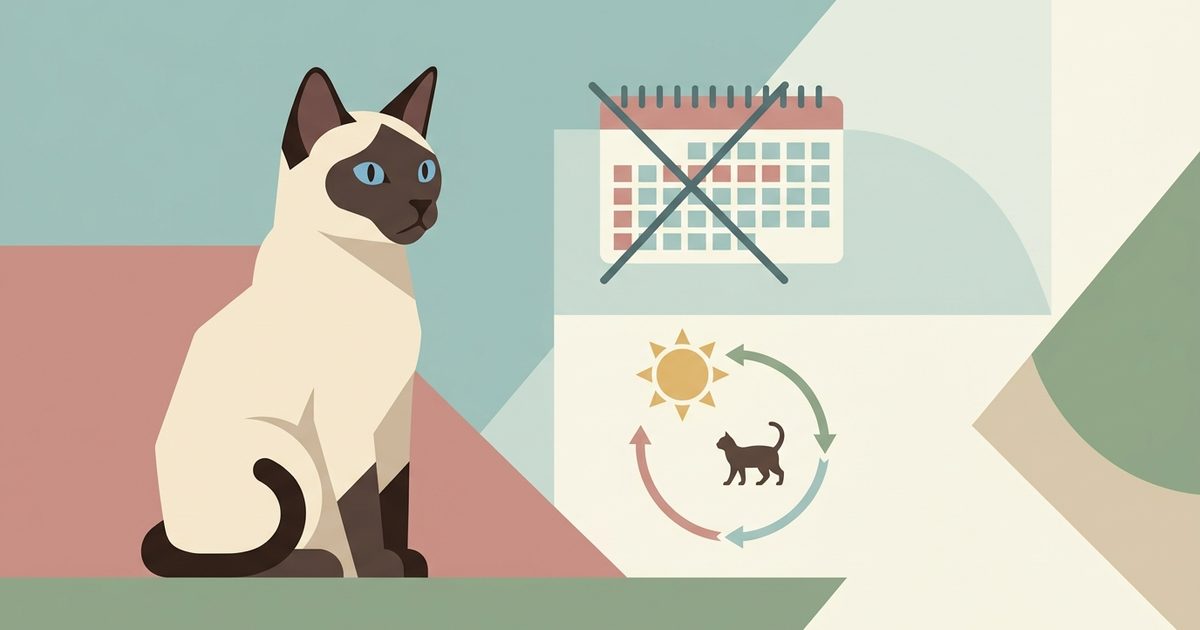
So when someone asks "do cats have periods?", the most accurate answer is: cats have an estrus cycle that replaces the menstrual cycle, not a version of it. The word "period" is really a misnomer here — it describes a process (shedding a lining) that simply doesn't happen in cats.
Why the confusion exists
Two things drive the mix-up. First, both the human menstrual cycle and the feline estrus cycle are hormonal female reproductive cycles — they rise and fall with the same broad class of hormones (estrogen and friends), and they both circle around fertility. From the outside, that's enough overlap to make "period" feel like the right word. Second, many cat owners had dogs first, and dogs do show obvious bleeding during their heat, which sets an expectation that any female pet in a cycle will bleed.
The crucial difference is what the body does with the uterine lining at the end of a non-pregnant cycle. Humans and dogs shed it; cats reabsorb it. No shedding means no bleeding, which is why "period" — a word built around the shedding of a lining — is a misnomer for what a cat goes through. She's experiencing estrus, and estrus is about readiness, not discharge.
The short answer, plainly
If you're skimming, here's the clean version: cats have an estrus cycle, not a menstrual cycle. They don't bleed as part of a normal heat, and routine monthly bleeding is not a normal feline event. If what you're actually wondering is "is what I'm seeing right now a period?" — the answer almost certainly depends on whether you're seeing signs of heat (yowling, rolling, the raised-rear mating posture) or whether you're seeing actual blood. Those two questions point in different directions, and we cover each in detail below: the signs a cat is in heat section covers the behavioral picture, and the "Do cats bleed when they're in heat?" section covers what bleeding does (and doesn't) mean.
What Is the Feline Estrus (Heat) Cycle?
Cats are seasonally polyestrous, meaning a female cycles in and out of heat repeatedly through the breeding season (roughly spring to fall). Each heat lasts several days, and if she doesn't mate, she returns to heat every two to three weeks until the season ends or she's spayed.
The key insight is that "do cats have periods" — the question that probably brought you here — points to a completely different reproductive rhythm than the monthly one humans and dogs follow. A cat doesn't menstruate; she cycles. Understanding that cycle is the foundation for everything from recognizing the signs to making sense of the yowling at three in the morning.
Seasonally polyestrous — what it means
"Seasonally polyestrous" is the veterinary term for a cat who has multiple heat cycles within a single breeding season, not one cycle per year. In the northern hemisphere, that season typically spans spring through early fall, when longer daylight hours trigger the hormonal changes that bring a female into estrus. If she doesn't mate during one heat, she'll cycle back into another after a short gap — and then another, repeating roughly every two to three weeks until daylight wanes or she's spayed.
There's an important caveat: indoor cats live under artificial lighting and stable warmth year-round, so the seasonal signal gets blurred. Many indoor females cycle through winter as well, with no clear off-season. For the precise timing of how long each heat lasts and how often they recur, our how long cats are in heat reference breaks the numbers down.
Induced ovulators — the biology that matters
Here's the piece of biology that makes cats unlike humans in a way that matters: cats are induced ovulators. A female cat doesn't release eggs on a fixed schedule. Her ovaries release eggs in response to mating. Until that trigger happens, she can stay in heat for days, and if no mating occurs, her body resets and prepares for the next cycle.
This is why heat can feel relentless to an owner — the cat is hormonally ready, but nothing resolves it. And because cats reabsorb rather than shed the uterine lining (as explained under "Do Cats Have Periods?" above), that same mechanism is why there is no "period" in the menstrual sense, even though the hormonal cycling is very real. The Cornell Feline Health Center is an excellent authority on feline reproductive biology if you want to go deeper.
When does the first heat start?
A female cat typically reaches sexual maturity somewhere around four to ten months of age, with the exact onset depending on breed, body condition, and the season she was born in — kittens born in early spring often come into their first heat sooner. This catches many owners off guard: a kitten that still looks small to you is, biologically, already capable of cycling. If you're unsure how old your cat is, our guide to telling a cat's age can help you estimate where she is developmentally. Surgical timing decisions — whether and when to spay — belong in a conversation with your vet, and we cover the procedure itself in our spaying a cat article.
Do male cats have heat?
No — male cats don't have a heat cycle. Once a male reaches sexual maturity, he's essentially responsive year-round, not on a seasonal schedule. So when people ask "do male cats go into heat," the answer is that they don't cycle at all; they simply react to females who are. A mature intact male may spray, roam, vocalize, and become restless whenever a female in heat is nearby — behaviors driven by her cycle, not his own.
What Are the Signs a Cat Is in Heat?
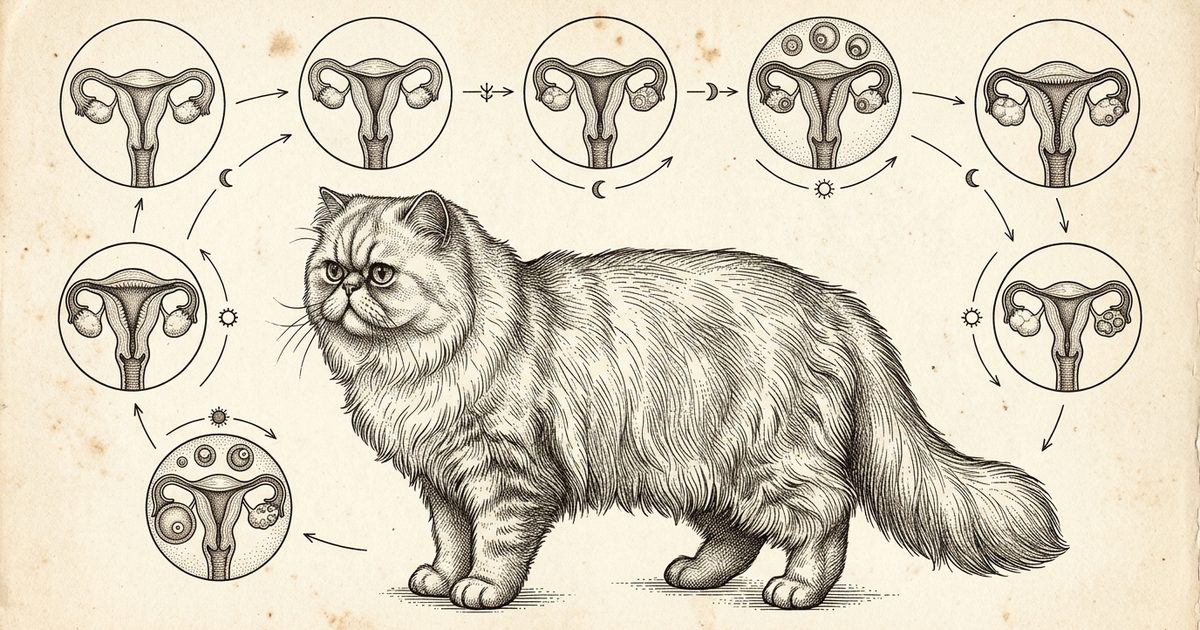
A cat in heat is hard to miss: she vocalizes loudly, becomes restless and unusually affectionate, rolls on the floor, assumes a low-front, raised-rear mating posture when touched, and may spray urine. These behaviors recur with each cycle until she mates or is spayed.
Once you understand what the estrus cycle is, the natural next question is what it looks like — and the signs are dramatic enough that most owners notice them before they know the word "estrus." None of these behaviors are random; each is a hormonally driven signal meant to advertise her readiness to mate.
Vocalizing and yowling
The signature sound of a cat in heat is a loud, persistent, often mournful yowl — sometimes called caterwauling. It can go on day and night, and to an owner hearing it for the first time, it often sounds alarming, as if the cat is in distress or pain. She isn't. It's a normal, hormonally driven mating call, and it's loud for a reason: she's broadcasting. Vocalizing is one of the primary ways cats communicate, and the mating yowl is one specific meaning among many — our why cats meow guide covers the full range. Knowing the yowl is normal heat behavior can help you resist the urge to panic or assume she's hurt.
Restlessness and extra affection
A cat in heat is rarely still. She paces the room, rubs against furniture, walls, and your legs with unusual intensity, and frequently drops to the floor to roll and expose her belly. Many owners describe a sudden spike in clinginess and physical affection — she'll press against you, head-bunt repeatedly, and seem unable to settle. This restlessness isn't distress; it's the outward face of the hormonal drive telling her body to seek a mate.
The mating posture (lordosis)
One of the most recognizable signs is the lordosis posture: the cat lowers her forequarters to the ground, raises her hindquarters, and holds her tail to the side, often treading her back legs in place. This stance is frequently triggered when you stroke her lower back — a near-definitive signal that she's in estrus. It's the body's readiness position for mating, and it's so consistent that experienced owners and vets use it as a reliable tell.
Urine spraying
Both intact females in heat and intact males drawn to them may spray small amounts of strong-smelling urine on vertical surfaces — walls, doorframes, furniture. This isn't a litter-box failure or behavioral spite; it's scent-marking, a chemical advertisement that carries hormonal information to potential mates. It can be one of the more frustrating signs to live with, but reframing it as a biological signal rather than misbehavior helps. For recognizing the pattern cycle by cycle, our how long cats are in heat guide covers what to expect as the season progresses.
Do Cats Bleed When They're in Heat?
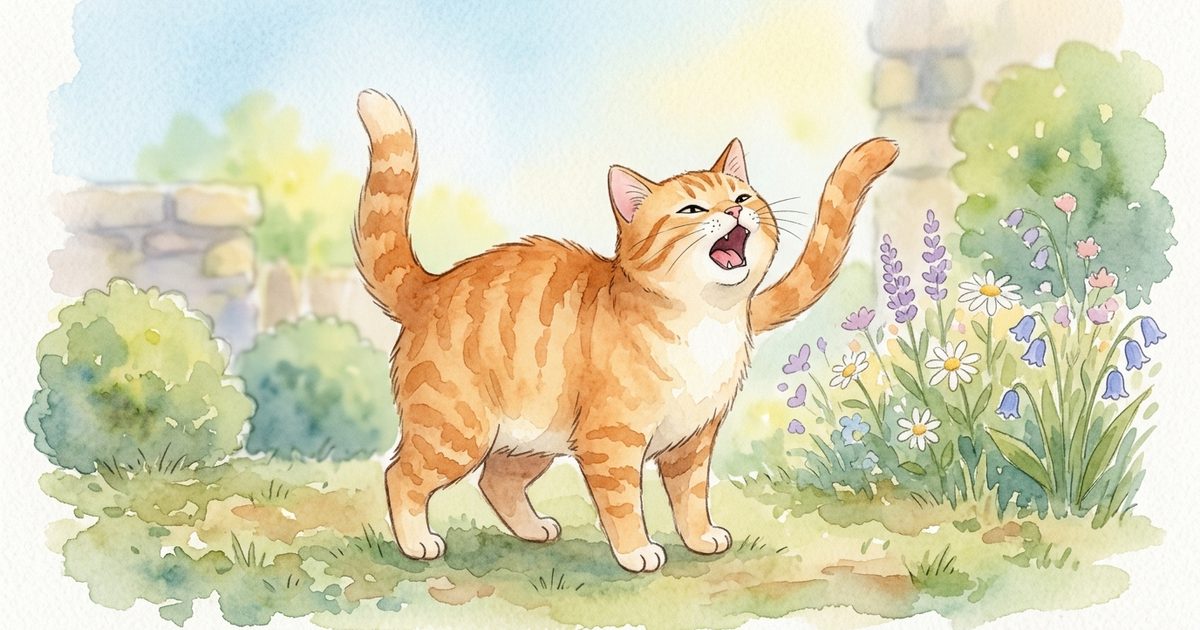
Usually no — a healthy cat in heat does not bleed from her vulva. If you notice spotting, blood in the urine, or genital licking, treat it as a reason to call the vet rather than assume it is heat.
This is one of the most searched — and most misunderstood — corners of the "do cats have periods" question. The instinct to connect "blood" with "reproductive cycle" is reasonable, because that's exactly how it works in people and in dogs. In cats, the wiring is different, and reaching for the same conclusion can delay a vet visit that matters.
Why cats don't bleed in heat
As explained under "Do Cats Have Periods?" above, cats reabsorb the uterine lining rather than shed it — so there is no monthly sloughing-off and no bloody discharge during a normal heat. The one genuinely new wrinkle worth adding here is the dog comparison: during proestrus and into estrus, an intact female dog sheds a visible bloody discharge. That split between the two species is exactly why owners who have had a dog first arrive at the cat question expecting blood — they share the label "heat," but the underlying physiology is not the same.
When bleeding IS a red flag
If you do see blood — on your cat's fur, in the litter box, on her bedding, or in her urine — heat is one of the least likely explanations. Far more common culprits include a urinary tract infection or cystitis (often accompanied by straining or frequent trips to the box), pyometra (a life-threatening uterine infection that strikes unspayed females, especially older ones, and can be open, with visible discharge, or closed, with none visible at all), miscarriage or abortion if she mated, trauma, and occasionally clotting disorders.
The point is not to diagnose at home — it's to recognize that bloody discharge in an intact female cat is unusual enough that the right move is a phone call, not a wait-and-see. International Cat Care is clear that abnormal vaginal discharge in an unspayed cat warrants prompt veterinary attention, because conditions like pyometra can progress quickly. So the message is "call the vet," not "panic."
How to tell heat-licking from a problem
A cat in heat often grooms her genital area more than usual — that uptick in licking, on its own, can be a normal part of estrus. The line is crossed when grooming comes with blood, straining to urinate, crying in the litter box, or making many small, frequent trips. Genital licking plus any of those signs stops being "heat behavior" and starts being a reason to see your vet the same day.
Why Spaying Stops Heat Cycles
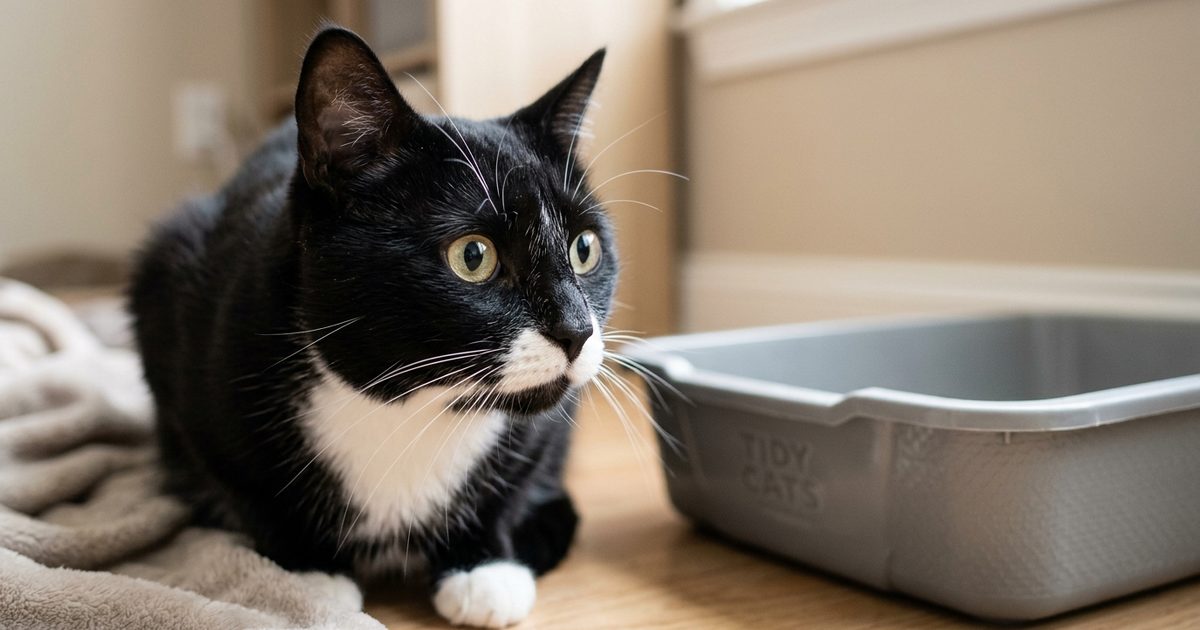
Spaying removes the ovaries and uterus, which ends the hormonal cycle behind heat — no more yowling, restlessness, or spraying. It also sharply lowers mammary cancer risk and eliminates pyometra. Timing matters, so talk to your vet about the right window.
If you've lived through even one heat cycle — the sleepless yowling, the persistent spraying, the restless pacing — you already understand the appeal of a permanent off-switch. Spaying is that switch, and it works not by changing your cat's personality but by removing the organs that drive the cycle.
What spaying actually does
In plain terms, spaying (an ovariohysterectomy) surgically removes both ovaries and, in the standard procedure, the uterus. Without ovaries, the body no longer produces the surging estrogen that triggers estrus — so heat simply stops, and doesn't return. The yowling, the lordosis posture, the urine-marking, the roaming urge: all of it falls away because the hormonal signal behind it is gone. It's a routine, well-established surgery, and if you want the full picture on the procedure itself — what happens on the day, how recovery works, what it typically costs — we walk through all of it in our guide to spaying a cat.
Health benefits beyond stopping heat
Ending heat is only half the story. Spaying markedly reduces the risk of mammary tumors — and the reduction is greatest when a cat is spayed before her first heat, because each subsequent cycle exposes the mammary tissue to more hormonal stimulation. (The exact percentage benefit is genuinely debated in the veterinary literature, so we'll say "markedly" rather than cite a contested figure; your vet can put a number on it for your cat.) It also eliminates pyometra entirely, because the uterus is no longer there to become infected. And, of course, it prevents unwanted pregnancies — which, if one slips through during an unspayed heat, leads straight into newborn kitten care and a much larger commitment than a planned surgery.
When to spay
There's no single universal age. The traditional guideline is around six months, before the first heat in many cats. Many shelters and rescue organizations practice early-age spaying (at 8–16 weeks), which is well-supported for population control and is standard in high-volume shelter medicine. Breed, body condition, and individual health all factor in — large-breed cats, for example, are sometimes spayed slightly later to allow for growth. Because the timing genuinely depends on your cat and your circumstances, the right move is to have the conversation with your vet and make the call together; the considerations around timing, recovery, and cost are covered in depth over in the spaying a cat article.
One thing worth stating plainly: spaying at any age does not carry the same protective benefit as spaying before the first heat — the mammary-cancer reduction is largest early and shrinks with each cycle that passes. So while "it's never too late to prevent pyometra and future heats" is true, "earlier is better for mammary protection" is also true, and your vet is the right person to weigh both against each other for your cat.
Heat vs. Pregnancy — What's the Difference?
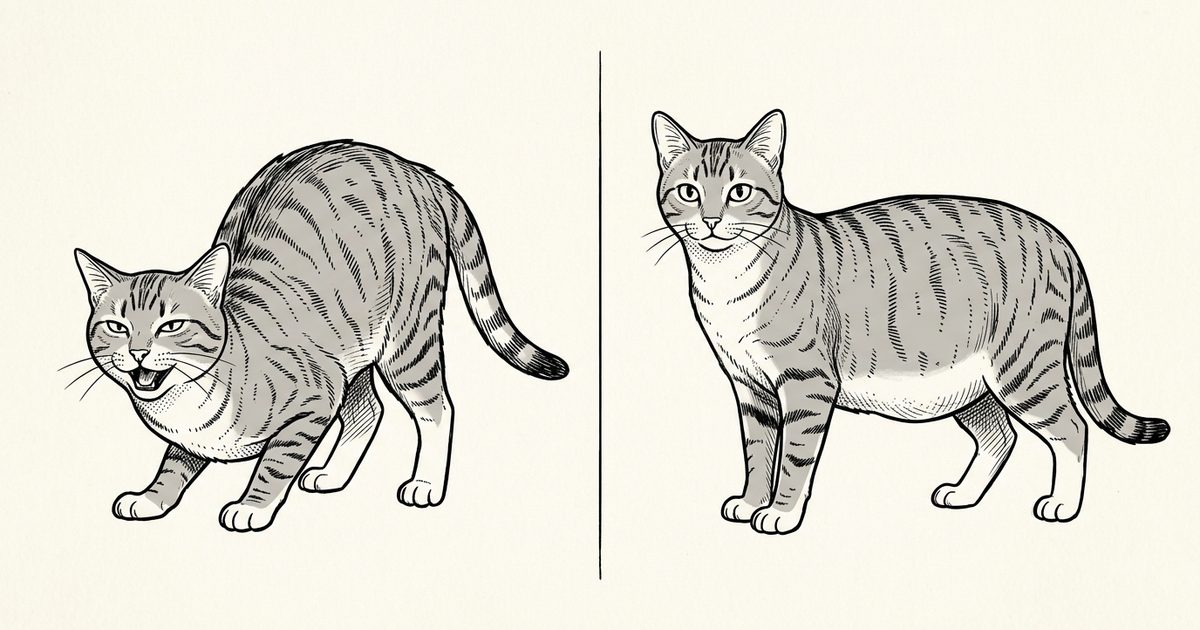
Heat and pregnancy are different stages of the same reproductive path. Heat means a cat is ready to mate; pregnancy is what follows a successful mating, lasting about 63–65 days. A cat cannot be "in heat" and visibly pregnant at the same time.
This is one of the most common points of confusion for first-time cat owners, and it's worth drawing clearly. Heat is the invitation — the hormonal state that says a cat is receptive to mating. Pregnancy is the result — what unfolds over roughly nine weeks if mating succeeds. They're sequential, not simultaneous. A cat who is visibly round-bellied and pregnant is no longer cycling through heat; her body has moved on to gestation.
The sequence: heat → mating → pregnancy
The order is fixed. An intact female enters heat, during which she is receptive and actively advertises for a mate. If she mates — and cats are induced ovulators, meaning the act of mating triggers the release of eggs — one of those heat cycles can lead to pregnancy. From there, heat pauses and gestation takes over for about 63 to 65 days. If she does not mate, she simply cycles back into heat every two to three weeks until the breeding season ends or she is spayed. For the full week-by-week timeline, see our guide on how long cats are pregnant.
If you searched "cat gestation period"
If you arrived here by searching for the gestation period for cats, you're looking for the answer to a different question than "do cats have periods." Gestation is pregnancy length — about 63 to 65 days from conception to birth — and it has nothing to do with menstruation. That topic is covered in full in our pregnancy article, where we walk through the week-by-week stages, the signs your cat is expecting, and what to prepare for the birth. Cats do not have periods; they have an estrus cycle, and only if that cycle leads to mating does gestation follow.
Feline Reproduction at a Glance — Summary
| Question | Short answer |
|---|---|
| Do cats have periods? | No — cats have an estrus (heat) cycle, not a menstrual period |
| Do cats bleed in heat? | Rarely; bleeding is unusual and usually warrants a vet check |
| What is the heat cycle? | A recurring cycle of reproductive readiness, not bleeding |
| How often do cats go into heat? | Every 2–3 weeks through the breeding season (spring to fall) |
| When does heat start? | Typically around 4–10 months of age |
| Do male cats go into heat? | No — males are responsive year-round once mature |
| How is heat different from pregnancy? | Heat is readiness to mate; pregnancy follows if mating succeeds |
| How do I stop heat cycles? | Spaying ends the hormonal cycle behind heat |
Curious What Your Cat Would Say?
Upload a photo and get a warm, personalized reading from your cat's perspective.
Start Your Free ReadingFrequently Asked Questions
Do cats have periods like humans?
No. Cats do not menstruate. Instead of shedding a uterine lining, they reabsorb it, so there is no monthly bleeding. Female cats have an estrus (heat) cycle, which signals readiness to mate rather than a period.
Do cats bleed when they are in heat?
Rarely. A healthy cat in heat does not bleed from her vulva. If you see spotting, blood in the urine, or excessive genital licking, it is more likely a urinary tract infection, pyometra, or another issue — call your vet rather than assume it is heat.
How often do cats go into heat?
Through the breeding season — roughly spring to fall in the northern hemisphere — an intact female cycles back into heat every two to three weeks if she does not mate. Indoor cats under artificial lighting may cycle year-round.
At what age do cats first go into heat?
Typically between four and ten months of age, depending on breed, body condition, and the season she was born into. Many owners are surprised that a kitten who still looks small is already biologically capable of cycling.
How can I tell if my cat is in heat?
The signs are loud and persistent yowling, restlessness, extra affection and rolling, the raised-rear mating posture (lordosis) when her lower back is stroked, and sometimes urine spraying on vertical surfaces. The behaviors recur with each cycle.
Do male cats go into heat?
No. Male cats do not have a heat cycle. Once a male reaches sexual maturity he is responsive year-round, reacting to nearby females in heat rather than cycling himself. His spraying, roaming, and vocalizing are driven by her cycle, not his own.
How long does a cat stay in heat?
Each individual heat lasts several days. Because cats are induced ovulators and release eggs only in response to mating, a heat can stretch on if she does not mate, after which she cycles back in two to three weeks through the breeding season.
Does spaying stop heat cycles for good?
Yes. Spaying removes the ovaries and usually the uterus, which ends the hormonal cycle behind heat — no more yowling, spraying, or restlessness, and no risk of pyometra. Spaying before the first heat also markedly reduces mammary tumor risk.
Is my cat in pain when she is in heat?
Usually no. Yowling and restlessness look distressing but are hormonally driven mating behaviors, not pain. However, persistent distress, lethargy, or signs of illness are separate from heat and warrant a vet visit.
Sources & References
You Might Also Like
How Long Are Cats in Heat? Duration, Signs & What to Do
How long are cats in heat? A heat cycle lasts 2–19 days (average ~7) and recurs every 2–3 weeks in breeding season. Learn the signs and how to help your cat.
18 min readKitten Teething: Timeline, Symptoms & How to Help
Kitten teething runs from 3 to 7 months as baby teeth fall out. Learn the timeline, signs to watch for, and how to soothe a teething kitten safely.
15 min readWhen Do Cats Stop Growing? A Complete Timeline
When do cats stop growing? Most cats reach adult size by 12-18 months, but large breeds like Maine Coons keep growing until 3-4 years. Full timeline inside.
14 min read