How Long Are Cats in Heat? Duration, Signs & What to Do
If you are wondering how long do cats stay in season, the honest answer is that it is rarely a quick, one-time event — and understanding how long are cats in heat can save you a lot of sleep. A heat cycle is the window when an unspayed female cat is receptive to mating, and recognizing cats in heat early helps you plan for spaying, prevent surprise litters, and keep her safe indoors.
Key takeaways
- A single heat cycle lasts roughly 2–19 days, averaging about 7 — so "a few days and done" is usually wishful thinking.
- If she does not mate or get spayed, heat recurs every 2–3 weeks through the breeding season, not just once.
- The only durable way to stop heat cycles is spaying — there is no medical benefit to "one litter first."
Cats in Heat — Quick Reference
| Question | Short answer | Read more |
|---|---|---|
| How long does one heat last? | About 2–19 days, average ~7 | Duration explained |
| How often does heat return? | Every 2–3 weeks if unmated | Recurrence |
| When do cats first go into heat? | Around 4–10 months of age | Breeding season |
| Do cats bleed in heat? | Rarely — bleeding is not typical | Do cats have periods? |
| Can I stop it without spaying? | No reliable way | Spaying |
| How do I help her right now? | Keep her indoors, play, distract | Managing a cat in heat |
How Long Does a Cat Stay in Heat?
A single heat cycle lasts about 2 to 19 days, with an average of around 7 days. If your cat does not mate, the cycle ends on its own and then returns every 2 to 3 weeks during breeding season — it does not happen just once.
The typical range
If you ask five vets how long a heat lasts, you will hear five slightly different answers — and they are all defensible, because the honest range is wide. Individual heat cycles run roughly 2 to 19 days, and the useful headline number is an average of about 7 days. That average is what sticks because it is the single figure most owners can actually plan around, but it papers over real individual variation: some cats consistently cycle through in three or four days, while others carry the behavioral signs for two weeks.
So when you read "about a week," treat it as a center point, not a ceiling. A heat that runs nine or ten days is not abnormal, and one that ends in four is not abnormally short. The better mental model is a bell curve — most cats cluster near the middle, with tails stretching out at both ends. We avoid over-specifying a single hard number because cats do not agree on one; the International Cat Care guidance reflects exactly this spread rather than a fixed count.
Each phase within a heat
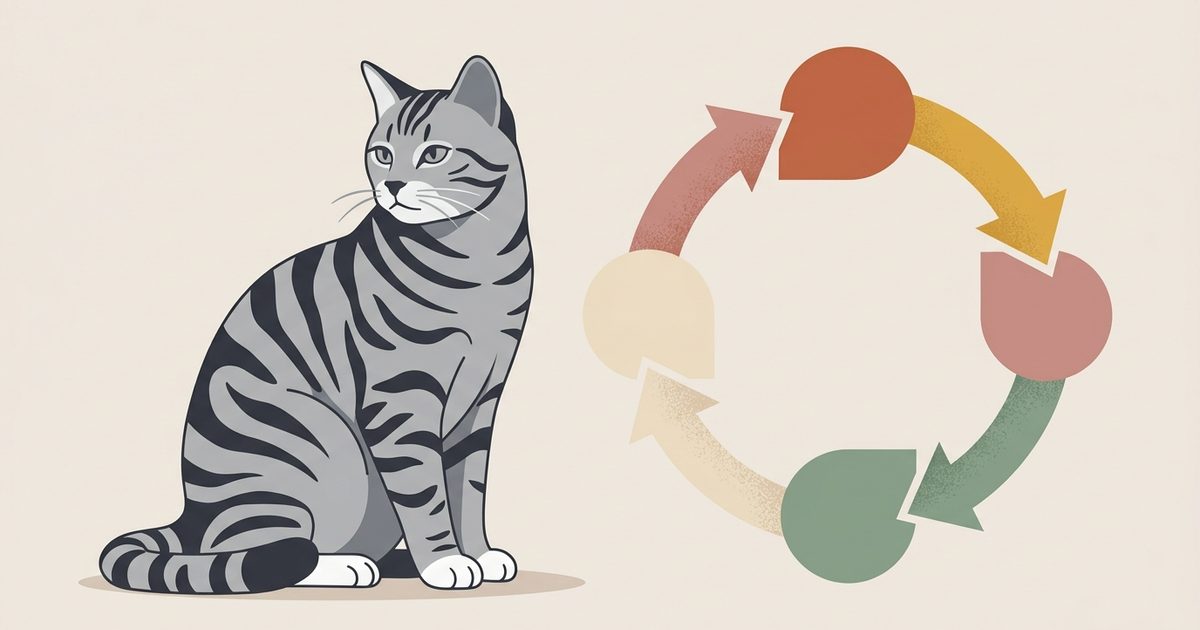
A heat is not one flat stretch of behavior — it moves through phases, even if owners only notice the loud middle. In plain terms:
- Proestrus — a short 1–2 day warm-up. The queen is not yet receptive to mating, but hormonal changes have started. You may see early restlessness.
- Estrus — the active, behavioral portion most owners actually recognize. This is the 3–14 day window of yowling, rolling, and receptivity to a male. It is the heart of "how long she stays in heat" as you experience it.
- Interestrus (metestrus) — if she does not mate, the cycle winds down into a quiet gap before the next one begins.
The detail that matters for you: the estrus phase is what you are timing when you wonder how long your cat will stay in season. Proestrus and interestrus are real biology, but they are mostly invisible from the living room.
How often cycles return
This is the part that genuinely surprises owners. A cat does not have one heat, finish, and move on. If she does not mate, cycles return every 2 to 3 weeks through the breeding season — meaning a restless, yowling week can come back barely two weeks after it ended. The expectation that it is "a few days then done" is the single most common misconception we hear.
The reason is biological: cats are induced ovulators, which means ovulation is triggered by mating. Without that trigger, the body simply resets and tries again, on a roughly two-to-three-week loop, as long as the seasonal light cues continue. If you have been conflating this with menstruation, the distinction matters — cats do not have periods the way humans do, and we unpack that fully in do cats have periods. Heat is a fertility cycle, not a shedding one.
What Are the Signs a Cat Is in Heat?
A cat in heat vocalizes loudly (yowling), becomes restless, extra affectionate and clingy, may roll or rub against everything, and often holds her hindquarters up with the tail to the side. These signs, not bleeding, are how you tell.
Vocalizing and yowling
The first sign most owners clock is the sound. A cat in heat calls — loudly, persistently, and often mournfully. It is a deep, drawn-out yowl that can carry through walls and through the small hours of the night, and it tends to repeat in bursts rather than as a single meow. This is a mating call, not a distress signal: her body is broadcasting availability, and the volume is the point. It is one specific flavor of feline vocalization, distinct from the conversational meow or the demand-meow at the food bowl — we break down the full range in why do cats meow. What distinguishes a heat yowl is its relentlessness and its low, wailing tone. She is not in pain; she is advertising.
Restlessness and roaming
Alongside the calling comes motion. A cat in heat paces, patrols windows and doors, and tries to dart outside at any gap. The drive to seek a mate is powerful, and an intact cat in heat will bolt through an unlatched door or push at a loose screen with surprising determination. This is exactly why keeping her safely indoors matters so much — an escaped cat in heat is how most accidental litters begin. We cover the practical side of this in the managing section below, but the short version: treat every door and window as a potential exit, and double-check screens and latches for the duration of the cycle.
Extra affectionate, rolling, rubbing
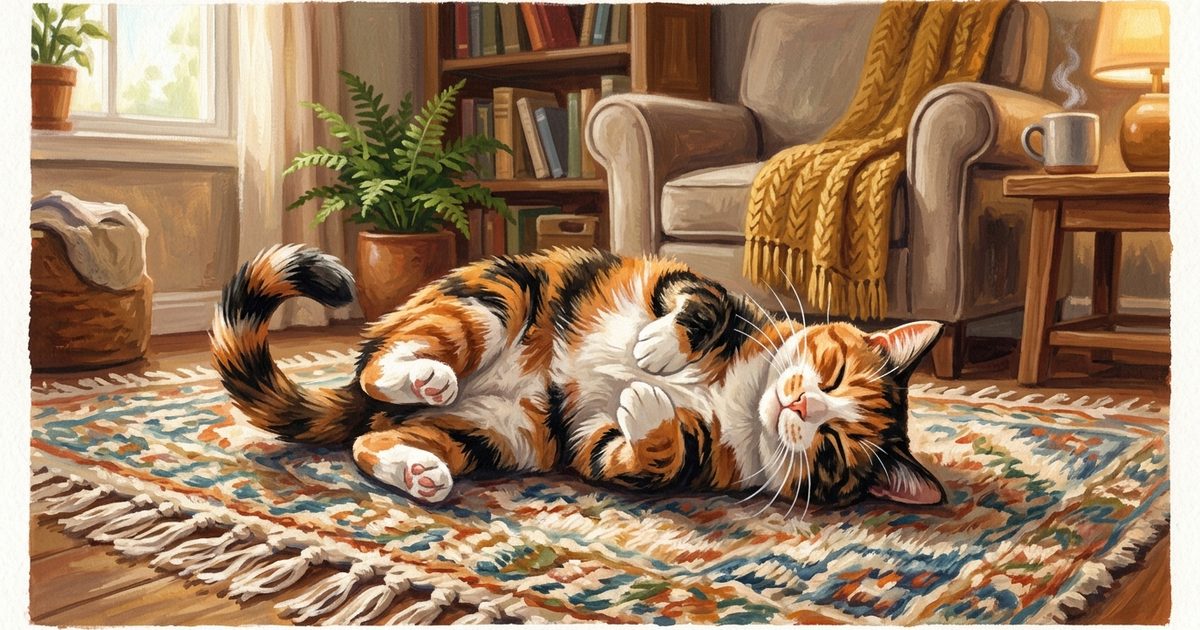
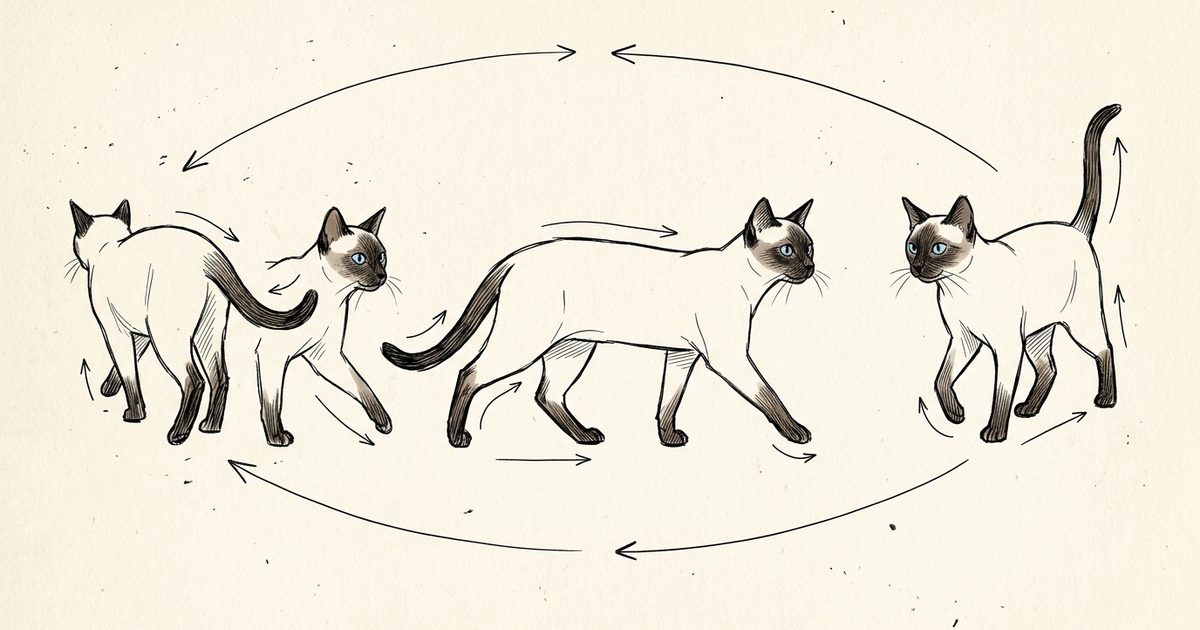
Many cats in heat become dramatically more affectionate — head-butting your legs, rubbing against furniture, and rolling on the floor in long, sinuous stretches. Rubbing ramps up because it deposits scent and marks her space; rolling is part display, part instinctive positioning. The classic, unmistakable sign is the lordosis posture: she lowers her front end, raises her hindquarters high, and holds her tail stiffly to one side, often treading her back legs. If you stroke her back during this posture, she will often press down further into it. This stance is as clear a signal of estrus as you will see, and it is what a vet looks for to confirm a heat is active. The Cornell Feline Health Center describes lordosis and vocalizing as the two hallmark outward signs of estrus in the queen.
Spraying and other subtle signs
A few signs are quieter but worth knowing. Some unspayed females begin urine marking — spraying vertical surfaces with small amounts of strong-smelling urine to advertise their receptive state to any nearby tom. You may also notice slight swelling of the vulva, though this is easy to miss in a long-haired cat. What you should not expect is bleeding. Routine bleeding is not a normal part of a healthy feline heat — cats reabsorb the uterine lining rather than shed it, which is the core reason heat is not a period. If you do see blood, treat it as a reason for a vet check rather than a heat symptom, and read our fuller explanation in do cats have periods, where we separate the estrus cycle from menstruation in detail.
When Do Cats Go Into Heat — the Breeding Season
Cats are seasonally polyestrous: in the northern hemisphere they cycle repeatedly from roughly spring through fall, with each heat lasting days and recurring every 2 to 3 weeks. Indoor cats in warm, artificially lit homes may cycle year-round.
If you've noticed your cat seems to come into heat on a schedule rather than once and done, you're reading the pattern correctly. How long do cats stay in season is really two questions rolled together — the length of one heat, and the wider window during which those heats keep happening. That wider window is the breeding season, and it's governed mostly by light.
Seasonally polyestrous — what it means
"Seasonally polyestrous" is the technical term, but the idea is simple: instead of cycling once a year, an unspayed female cat comes into heat multiple times within a single breeding season. Each heat lasts several days, and after a quiet gap the next one follows. The engine behind this rhythm is daylight. As days lengthen in spring, a cat's reproductive system wakes up; as they shorten again toward winter, it winds back down. This is why the season tends to sit across the warmer, brighter months of the year, broadly spring through fall — but exact start and stop dates vary by latitude, climate, and the individual cat. The Cornell Feline Health Center describes the cat as a long-day breeder whose cycles are tightly tied to hours of light.
When the first heat happens
Most female cats reach sexual maturity somewhere around 4 to 10 months of age, with the first heat typically arriving in that window. Smaller breeds often mature earlier — a dainty Siamese or similarly light-bodied cat may surprise an owner by cycling at four or five months, while a larger, slower-growing breed may take longer. This is exactly why "she's too young" can be a real risk: a kitten who looks like a kitten can already be fertile. If you're unsure where your kitten stands developmentally, our guide on how to tell a cat's age gives a practical reading. Because early spaying carries clear health and litter-prevention benefits, the timing is worth discussing with your vet — see our article on spaying a cat for what early spay involves.
Indoor and tropical cats
The daylight rule has a catch: artificial light and steady indoor warmth can blur or even erase the seasonal boundary. Indoor-only cats often live under electric lighting well into the evening, which their bodies may read as a long day regardless of the season. Owners of indoor cats sometimes report seeing heat signs in the depths of winter and assume something is wrong — usually it isn't. In genuinely tropical climates, where day length and temperature stay fairly constant year-round, cats may cycle continuously with little seasonal pause. International Cat Care notes that the seasonal pattern is strongest in temperate regions and weakest where light and temperature barely change.
How Long Until It Ends — and How Often It Comes Back
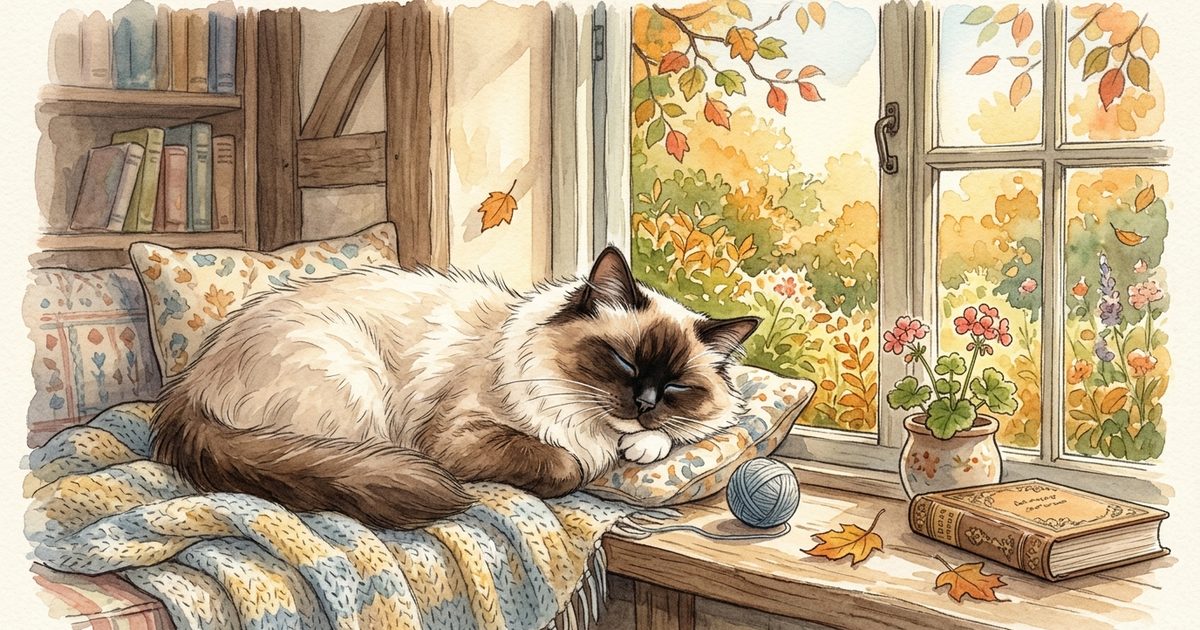
An unmated cat does not just have one heat and stop — cycles return every 2 to 3 weeks through the breeding season. The only ways a heat cycle truly ends are mating (leading to pregnancy or a false pregnancy) or spaying.
This is the part that catches many owners off guard. A cat in heat looks intense, almost frantic, and it's natural to assume that once it passes, she's finished with the whole business for a while. For an unmated cat, that assumption is the misconception. The cycling doesn't resolve on its own — it keeps coming back, on a remarkably regular beat.
Why heat recurs
Cats are induced ovulators — as we saw above, ovulation is triggered by mating, so without it the cycle simply resets and repeats every 2 to 3 weeks. The contrast worth noting is with humans and dogs, who release an egg on a fixed internal clock regardless of mating. That difference is the whole reason a cat's heat keeps returning rather than running one self-contained cycle, she isn't malfunctioning, she's following a design that assumes mating will eventually happen. If you'd like the deeper biology of how this differs from menstruation, our article on whether cats have periods covers the distinction.
Mating, pregnancy, and false pregnancy
If mating does occur, the physical stimulation triggers ovulation, and from there two outcomes are possible. The common one is pregnancy — cats are famously fertile, and a single mating is often enough. The less obvious one is pseudopregnancy, or false pregnancy, where the body goes through some of the hormonal motions of being pregnant even when no kittens are on the way; it typically resolves on its own. Either way, the cycling pauses. For the gestation timeline itself — the 63 to 65 days that follow a successful mating — we walk through that in full in our guide on how long cats are pregnant, so we won't re-derive it here.
When the season itself ends
For outdoor and free-ranging cats, the breeding season winds down as the days shorten and temperatures drop in late autumn and winter. The reduced daylight signals the body to pause cycling, and heats may stop almost entirely until spring returns. Indoor cats, as we saw above, often miss that signal — the household lights stay on, the thermostat holds steady, and the hormonal "off switch" never quite flips. For these cats, the season can feel endless, which is one of the clearest practical arguments for spaying: it ends the cycle permanently rather than waiting for a winter that may never come.
Why Spaying Matters
Spaying is the only durable way to stop heat cycles and the yowling, roaming, and spraying that come with them — it also prevents unwanted litters and lowers the risk of mammary tumors and pyometra. There is no medical benefit to letting a cat have one litter first.
What spaying stops
Spaying (ovariohysterectomy) removes the ovaries and uterus, which switches off the hormonal engine driving the whole cycle. Once she is spayed, the heat behavior stops at its source rather than being managed one cycle at a time: no more persistent yowling at three in the morning, no more frantic attempts to bolt through an open door, and far less urine marking. It also removes any chance of an accidental litter — even a single unsupervised moment outdoors during heat can be enough. If you want the full procedure, timing, and recovery detail, our spaying a cat guide walks through what to expect.
Health benefits and timing
Beyond the behavior, spaying measurably protects long-term health. Done before her first heat, it dramatically lowers the lifetime risk of mammary (breast) tumors — the protection is strongest the earlier she is spayed, so most vets advise not waiting through repeated cycles. It also eliminates pyometra, a serious and sometimes life-threatening uterine infection that unspayed older cats are prone to. Exactly when to schedule the surgery depends on her age, breed, and health, so the surgical and cost specifics are best discussed with your vet — the spaying a cat article breaks those down.
The "let her have one litter first" myth
There is an old idea that a cat benefits — medically or emotionally — from having one litter before being spayed. This is a myth. Veterinary consensus is clear: there is no health or behavioral benefit to a first litter, and each heat cycle she goes through slightly raises her mammary-cancer risk. Some owners feel it is "more natural" to let her experience motherhood, and that feeling is real, but it does not translate into a medical advantage — and it contributes to the already overwhelming number of homeless kittens. International Cat Care is unequivocal that spaying before the first season is the healthier choice.
How to Care for a Cat in Heat Right Now
Keep her indoors, do not let her outside unsupervised, distract her with play and puzzles, and book a spay when the cycle passes. Never punish the vocalizing — she cannot help it — and do not try home remedies to stop heat.
Keep her safely indoors
This is the single most important point while she is in heat. An intact cat in estrus is driven by a powerful instinct to find a mate, and she will take risks she never normally would — slipping through a barely-open door, pushing past a loose screen, or bolting from a lap on a balcony. Check that windows are closed or securely screened, keep doors shut, and warn everyone in the household. One escaped mating can lead to pregnancy in minutes; there is more on what follows in our how long are cats pregnant guide.
Distract, play, and soothe
You cannot switch the cycle off, but you can redirect some of that restless energy. Short, vigorous play sessions with a wand toy help burn off the pacing and frustration. Food puzzles and puzzle feeders give her brain something to do besides call. A warm lap, a heated bed, or gentle stroking can settle her for a while. This is coping, not a cure — the heat will still run its course — but it makes the days pass more peacefully for both of you.
What NOT to do
A few things make things worse, not better. Do not punish or scold the yowling — she is not being naughty, she is responding to hormones she has no control over, and punishment only adds fear on top of distress. Avoid the cotton-bud or Q-tip "simulation" tricks sometimes shared online; they carry real risk of infection and can trigger a false pregnancy, and there is no clinical basis for them. Do not let her outside "just this once," and do not reach for herbal or home "remedies" that claim to stop heat — none are proven, and some are unsafe. The kindest path is patience plus a spay consult, which International Cat Care outlines as the recommended approach for managing a cat in heat.
Cats in Heat at a Glance — Summary
If you've read this far, you already know the essentials about how long cats stay in season — one heat lasts roughly a week, the cycles keep coming back, and spaying is the only thing that truly ends them. Here is the whole picture in a single glance.
| Question | Short answer |
|---|---|
| How long does one heat last? | About 2–19 days, averaging around 7 days |
| How often do cycles return? | Every 2–3 weeks through the breeding season if she is unmated |
| When does the breeding season run? | Roughly spring through fall; indoor cats may cycle year-round |
| When does the first heat happen? | Typically around 4–10 months of age, with smaller breeds often earlier |
| Do cats bleed when in heat? | Rarely — routine bleeding is not part of a healthy heat, so a vet check is wise if seen |
| Do male cats go into heat? | No — intact males respond to females in heat but do not cycle themselves |
| What is the only durable stop? | Spaying — there is no medical benefit to letting her have one litter first |
| What should I not do right now? | Do not punish the yowling, do not let her outside, and do not try home remedies to "stop" heat |
Curious What Your Cat Would Say?
Upload a photo and get a warm, personalized reading from your cat's perspective.
Start Your Free ReadingFrequently Asked Questions
How long does a cat stay in heat?
A single heat cycle lasts about 2 to 19 days, with an average of around 7. If she does not mate, the cycle ends on its own and then returns every 2 to 3 weeks through the breeding season — so it rarely happens just once.
How often do cats go into heat?
An unmated cat cycles every 2 to 3 weeks through the breeding season, roughly spring through fall. Indoor cats living under artificial light can cycle year-round with little seasonal pause.
At what age do cats first go into heat?
Most female cats reach sexual maturity around 4 to 10 months of age. Smaller breeds like Siamese often mature earlier and can have a first heat at four or five months, so a kitten that still looks young can already be fertile.
Do cats bleed when they are in heat?
Rarely. Routine bleeding is not part of a healthy feline heat — cats reabsorb the uterine lining rather than shed it. If you do see blood, treat it as a reason for a vet check rather than a normal heat symptom.
Do male cats go into heat?
No. Intact males do not cycle themselves, but they respond strongly to a female in heat — roaming, spraying, and fighting to reach her. Only unspayed females experience the heat cycle.
How long does a heat cycle last if she does not mate?
If she does not mate, a single heat still ends on its own after about 2 to 19 days. Because cats are induced ovulators, the body then resets and the next heat returns in roughly 2 to 3 weeks.
Can I stop my cat's heat without spaying her?
There is no reliable way to stop heat cycles without spaying. Home remedies and herbal mixtures are unproven and some are unsafe, so the only durable fix is a spay consult with your vet.
Will my cat calm down after being spayed?
In almost all cases yes. Spaying switches off the hormones driving the yowling, restlessness, and roaming, so those behaviors fade. Her underlying personality stays the same — she simply stops cycling.
Sources & References
You Might Also Like
Do Cats Have Periods? The Surprising Truth About Feline Heat
Do cats have periods? Not like humans. Learn the facts about feline estrus, heat cycles, signs your cat is in heat, and when spotting means call the vet.
19 min readKitten Teething: Timeline, Symptoms & How to Help
Kitten teething runs from 3 to 7 months as baby teeth fall out. Learn the timeline, signs to watch for, and how to soothe a teething kitten safely.
15 min readWhen Do Cats Stop Growing? A Complete Timeline
When do cats stop growing? Most cats reach adult size by 12-18 months, but large breeds like Maine Coons keep growing until 3-4 years. Full timeline inside.
14 min read