
How Long Are Cats Pregnant? The Full Feline Timeline
If you are wondering how long are cats pregnant, the short answer is about 63 to 65 days, or roughly nine weeks. A cat pregnancy moves quickly, and the cat gestation period is short enough that by the time you notice a rounded belly, the due date may be only weeks away. Recognizing the timeline early helps you feed her right, prepare a safe nest, and know when to call your vet. Most cats carry their kittens smoothly and deliver on their own, but a few signs along the way tell you what is happening and when to step in. This guide walks through the full feline pregnancy from mating to birth so you can support your cat at every stage.
Key takeaways
- Cats are pregnant for about 63–65 days (roughly nine weeks); anything under 61 or over 70 days warrants a vet call.
- Early signs like pink swollen nipples and a firmer belly appear around weeks 2–3; a vet can confirm pregnancy by ultrasound from about day 21.
- Feed a high-quality kitten-formula food from early pregnancy, set up a quiet nesting box by week 8, and schedule a vet check early.
Cat Pregnancy — Quick Reference
| Stage / Sign | When | What it means |
|---|---|---|
| Mating & fertilization | Week 1 | Pregnancy begins; no visible signs yet |
| "Pinking up" (pink, swollen nipples) | Weeks 2–3 | Earliest reliable sign of pregnancy |
| Belly becomes round and firm | Weeks 4–6 | Kittens' organs and skeleton are forming |
| Vet ultrasound confirms kittens | Around day 21 | Heartbeats detectable; viability confirmed |
| Nesting, milk comes in, kittens move | Weeks 7–9 | Birth is approaching within days |
| Labor and delivery | Around day 63–65 | Kittens are born, usually unaided |
How Long Are Cats Pregnant?
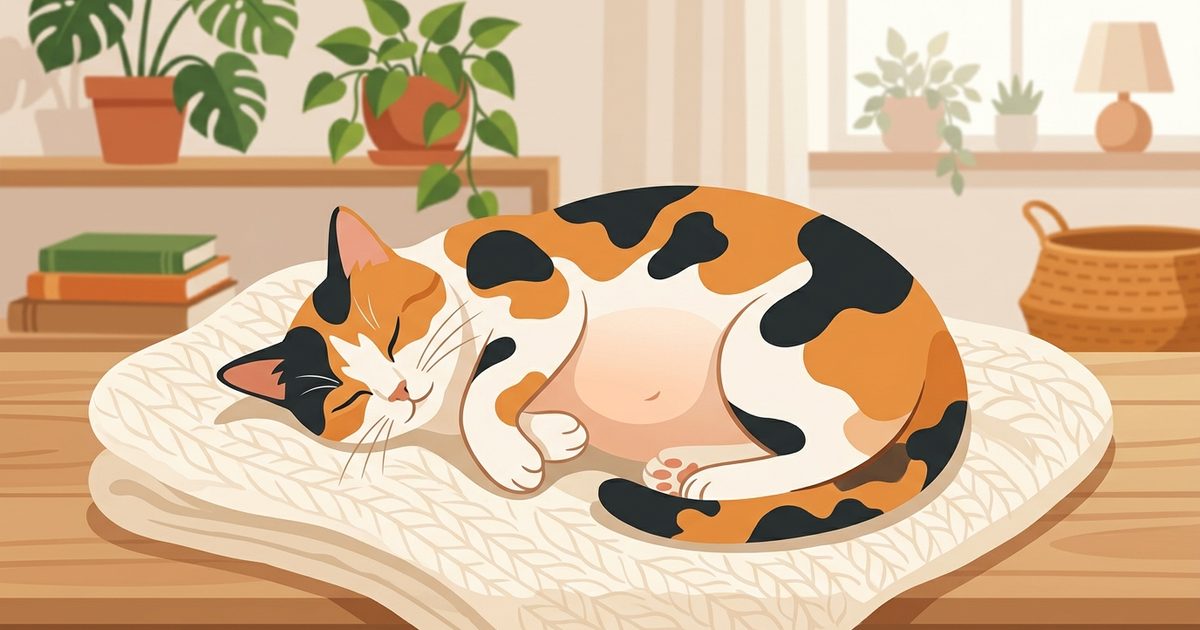
Cats are pregnant for about 63 to 65 days, or roughly nine weeks, counted from the day of mating. The typical range is 63–67 days; anything under 61 or over 70 days is a reason to call your vet. Breed and litter size can shift the number by a few days.
This time range is exactly what your vet will reference when you bring a queen in for an early check, and it's the foundation for understanding the whole cat pregnancy journey. Most owners are surprised by how short the span from mating to birth really is — the arc is quick, but each week brings clearly defined changes.
Why the range varies
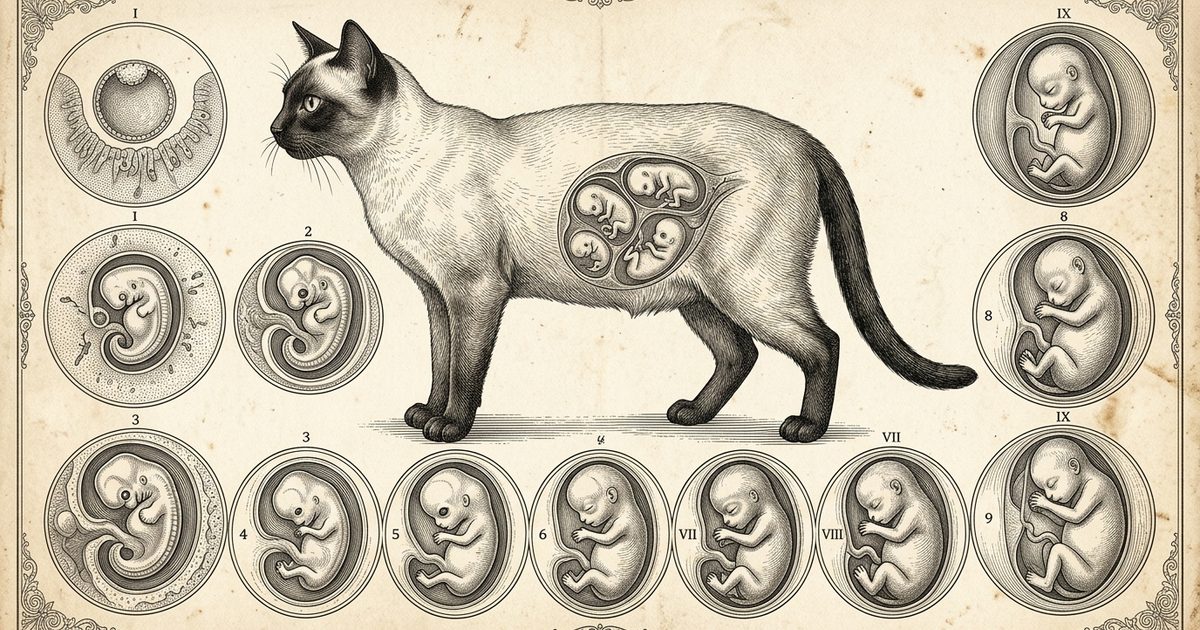
The 63 to 65 day figure is a midpoint, not a precise clock. Several factors can shift a given queen's number. The mother's size and breed play a role: larger or heavier-boned cats sometimes carry a little longer, while Oriental lines (such as Siamese and related breeds) are often reported by breeders to run slightly longer pregnancies — though this rests mainly on breeder experience rather than hard data, so treat it as a general tendency, not a fixed rule. Litter size matters too: larger litters (five or more kittens) sometimes arrive a little early, while a queen carrying only one or two may carry longer. First-time mothers, especially young or maiden queens, often need more time than experienced ones. The Cornell Feline Health Center regards these variations as normal as long as the delivery proceeds smoothly.
Counting the days correctly
Where you start counting depends on whether you actually saw mating happen. If you did, count from that day — this is the most accurate method for indoor cats whose heat cycles are monitored. But many owners only realize the cat is pregnant after her body has already changed, which means the real mating was likely weeks earlier and the due date estimate is skewed later than reality. That's why an early vet visit matters: a vet can confirm pregnancy by palpation (around week 4) and, more importantly, detect heartbeats via ultrasound around week 3, which gives an independent, objective time reference to refine the due date. International Cat Care recommends a mid-pregnancy vet check as the best way to confirm both the mother's health and the expected delivery window, since appearance and behavior alone are easy to misread.
What Are the Signs Your Cat Is Pregnant?
Early pregnancy signs appear around two to three weeks in: pink, swollen nipples ("pinking up"), a growing, firmer belly, increased appetite, and quieter, more affectionate behavior. By weeks four to five a vet can confirm pregnancy by palpation or ultrasound — do not try to feel for kittens yourself.
Pregnancy in cats is easy to miss in the first couple of weeks because the outward changes are subtle. Most owners first notice something is different not from a single dramatic sign, but from a cluster of small shifts — a cat who suddenly eats more, seeks you out, and looks a little rounder through the middle. The signs build in three clear waves, and the Cornell Feline Health Center stresses that a veterinary exam is the only reliable confirmation — home guessing, including pressing on the belly yourself, can harm the kittens.

Early signs (weeks 1–3)
The first reliable physical sign is "pinking up" — the nipples become rosier, slightly swollen, and more visible, often as early as day 15 to 18. Around the same time you may notice a bigger appetite and a quieter, more clingy mood. This is the window where pregnancy is easiest to mistake for something else, so it helps to know how it differs from a cat in heat: a cat in heat tends to be loud, restless, and posture with her hindquarters raised, while a pregnant cat is usually calmer, food-focused, and seeks warmth and stillness.
Mid-pregnancy signs (weeks 4–6)
By the second month the belly is visibly rounder, weight climbs steadily, and some cats start stirring bedding or choosing quiet corners — early nesting instinct. This is also when bleeding matters: a pregnant cat should not bleed. Cats don't menstruate, so any vaginal bleeding during pregnancy is abnormal — see our explainer on whether cats have periods for why, and call your vet promptly if you see it. At this stage your vet can often feel the kittens by careful palpation and confirm viability on ultrasound.
Late signs (weeks 7–9)
In the final stretch the belly is large and may sway as the kittens move. The mammary glands enlarge and milk may come in a day or two before birth. Most queens become noticeably restless, alternate between following you and hiding, and start arranging a nest in earnest. When you see a settled, milk-producing cat devoted to one quiet spot, birth is usually within days.
The Week-by-Week Cat Pregnancy Timeline
Across nine weeks, kitten development moves from cell clusters to fully formed kittens. Weeks 1–2 are fertilization and implantation; week 3 brings detectable heartbeats; by week 5 organs have formed; by week 7 kittens are furred and moving; week 9 is birth. The mother's belly, appetite, and behavior track this same curve.
A cat pregnancy is short, and it is fast — the entire journey from a single fertilized cell to a litter of independent kittens happens in about two months. Understanding the week-by-week arc helps you anticipate what your cat needs and recognize when something is off. The timeline below follows the developmental milestones outlined by International Cat Care, the leading feline welfare charity.
Weeks 1–3: fertilization to embryos
After mating, fertilization happens in the oviduct and the tiny embryos migrate to the uterus, implanting in the uterine wall around day 12 to 14. Outwardly your cat looks normal, though "pinking up" of the nipples often appears toward the end of this window. The developmental pace here is remarkable: by around day 21 a vet can detect fetal heartbeats on ultrasound. That speed is consistent with how rapidly kittens mature after birth — the early-life growth curve is steep throughout, which is why knowing how to tell a cat's age matters for understanding feline development as a whole.
Weeks 4–6: organs and skeleton
This is the middle growth spurt. Organogenesis completes — organs, limbs, and facial features take shape — and the skeleton begins to mineralize. Late in this window, an X-ray can reveal the number of kittens because the skulls and spines show up clearly, which is the most accurate way to predict litter size. Your cat's belly becomes obviously rounded, her appetite climbs, and her energy needs rise sharply as the kittens build bone and tissue. This is the stage where switching to a nutrient-dense kitten-formula food earns its keep, since the kittens are drawing heavily on her reserves.
Weeks 7–9: fur, movement, birth
In the home stretch the kittens grow fur, open into their final positions, and become active — you may see and feel movement through the abdominal wall. The queen's milk comes in, she seeks out and arranges a nest, and her appetite may dip slightly as the kittens crowd her stomach. Labor typically begins around day 63 to 65. Once the kittens arrive, the next milestones come quickly: the basics of newborn kitten care take over, and within about a week to ten days you'll be watching for the moment kittens open their eyes — the first real sign these tiny new lives are taking in the world.
How Many Kittens Do Cats Have in a Litter?
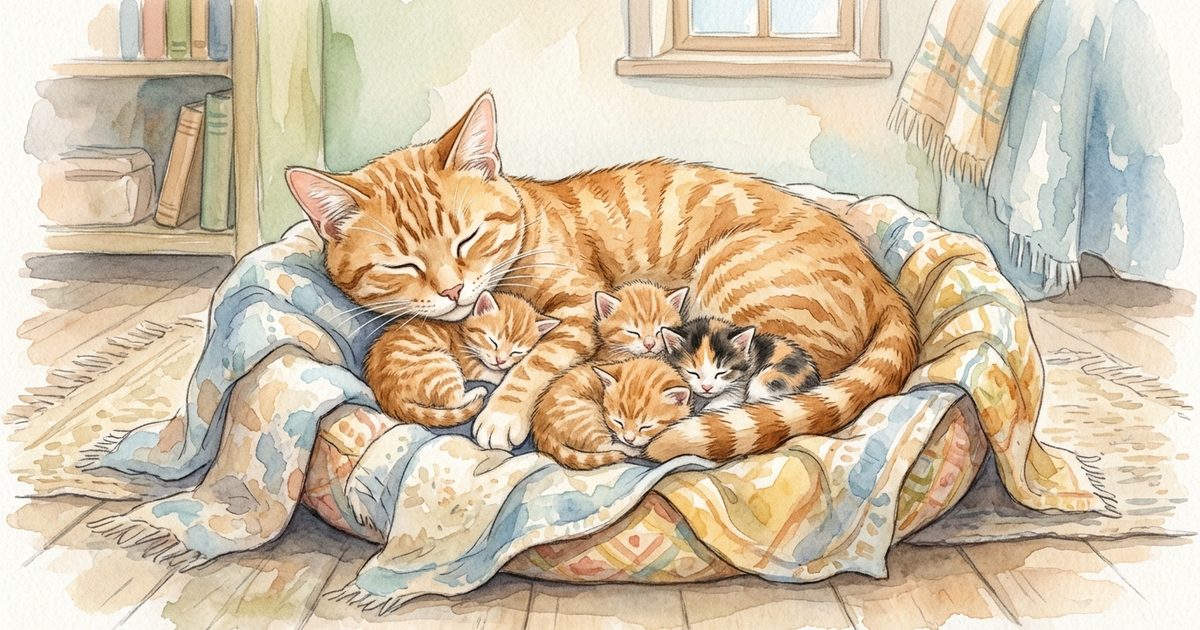
Most cats have litters of 4 to 6 kittens, but the normal range runs from 1 to 9. First-time mothers and older cats tend to have smaller litters, while healthy prime-age queens often have larger ones. A late-pregnancy X-ray gives the most accurate count of how many to expect.
Predicting the exact number is hard, but the general shape is fairly consistent. The classic middle-of-the-road litter lands around four to six kittens, with some cats delivering as few as one and others — especially certain breeds — routinely producing seven or more. If you've been wondering how the count breaks down, the biggest drivers are age, overall health, and genetics.
What affects litter size
Litter size is shaped by several overlapping factors rather than any single rule:
- Age — first-time mothers and very young cats usually have smaller litters; healthy prime-age queens in their second or third pregnancies often peak.
- Health and nutrition — a well-nourished, parasite-free queen is more likely to carry a full litter than one who arrived at pregnancy underweight or unwell.
- Breed — certain breeds, such as Siamese and other Oriental lines, are widely reported by breeders to have larger litters on average. The evidence is largely anecdotal rather than rigorously studied, so treat it as a tendency, not a guarantee.
- Number of previous litters — experienced queens sometimes carry more kittens than a first-timer, though this tapers off as a cat ages.
Nutrition carries over into the post-birth feeding surge, when a nursing queen's calorie needs jump sharply — our guide on how much to feed a kitten covers what that ramp-up looks like once the kittens arrive.
Can you predict the count?
You can get close, but only late in pregnancy. Palpation — feeling the belly for kitten "bumps" — is unreliable and should only be done by a vet, not an owner, because pressing too firmly can harm the developing kittens. Ultrasound is useful for confirming pregnancy and checking that the kittens' heartbeats are strong, but it's not a dependable counting tool. The most accurate method is an X-ray taken after day 45, when the kittens' skulls and spines have mineralized enough to show up clearly on the film — that's the point at which your vet can usually give you a real number.
How to Care for a Pregnant Cat
Feed a high-quality kitten-formula food from early pregnancy through weaning — it has the extra calories, protein, and calcium a pregnant cat needs. Schedule a vet check early, provide a quiet nesting box by week 8, keep her indoors, and avoid any medication or vaccine unless your vet approves it.
Caring for a pregnant cat is mostly about removing stress and stepping up nutrition. The heavy lifting is done by the mother; your job is to give her safe, high-quality fuel, a calm environment, and a good place to give birth. The Cornell Feline Health Center is an excellent authority on feline reproductive health, and a quick conversation with your own vet early on sets the baseline for a smooth pregnancy.

Nutrition
The single most important change you can make is switching her onto a high-quality kitten-formula food from early pregnancy and keeping her on it through weaning. Kitten food is more calorie-dense and higher in protein and calcium than adult maintenance food, which lines up with what a pregnant and then nursing queen actually needs. Because her energy demand rises steadily and then spikes after birth, it's reasonable to let her free-feed rather than stick to strict meal portions — she'll typically self-regulate. Keep fresh water available at all times.
One thing to resist is supplementing on your own. Extra calcium or vitamins can sound helpful, but oversupplementation can genuinely harm — for example, excessive calcium can actually trigger the very problems owners are trying to prevent. Talk to your vet before adding anything. For a broader look at what cats should and shouldn't eat as a baseline, our what do cats eat guide covers the everyday diet.
Vet care and safety
Book a vet visit early in pregnancy to confirm she's expecting and establish a baseline. Core vaccines are generally not given during pregnancy — the Cornell Feline Health Center advises that most vaccines be administered well before or after pregnancy, not during. The same caution applies to parasite treatments: use only products your vet has explicitly approved for a pregnant cat, as some common flea and worm medications are not safe in gestation. Keep her indoors, and separate her from rough playmates or any aggressive cats in the home to reduce stress and the risk of injury.
Setting up a nest
By about week 8, give her a nesting box in a quiet, warm, low-traffic part of the house — away from other pets, kids, and daily household bustle. A cardboard box lined with clean towels or fleece, with sides high enough to keep newborn kittens contained but low enough for the mother to step in and out, works well. Introduce it early so she has time to accept it as her spot.
Here's the part that surprises many owners: some cats ignore the beautiful box you prepared and choose their own location — a closet, under a bed, behind a sofa. If she's picked a spot she feels safe in, respect it. Trying to relocate a queen who has made up her mind usually just adds stress at exactly the wrong moment. Your best move is to make her chosen spot as warm and protected as you can, and let her lead.
What to Expect When Your Cat Goes Into Labor
Cat labor unfolds in three stages and typically lasts 4 to 24 hours: the cervix dilates, kittens arrive one by one (often 10–60 minutes apart), and placentas follow each kitten. Most cats manage the whole birth unaided. Call your vet if a kitten gets stuck, labor exceeds 24 hours, or bleeding is heavy.
Most queens handle delivery with calm, quiet competence — your job is mostly to watch from a respectful distance and step in only if something goes off track. Knowing how the stages flow (and how long are cats pregnant before this moment) helps you recognize normal progress from a problem.
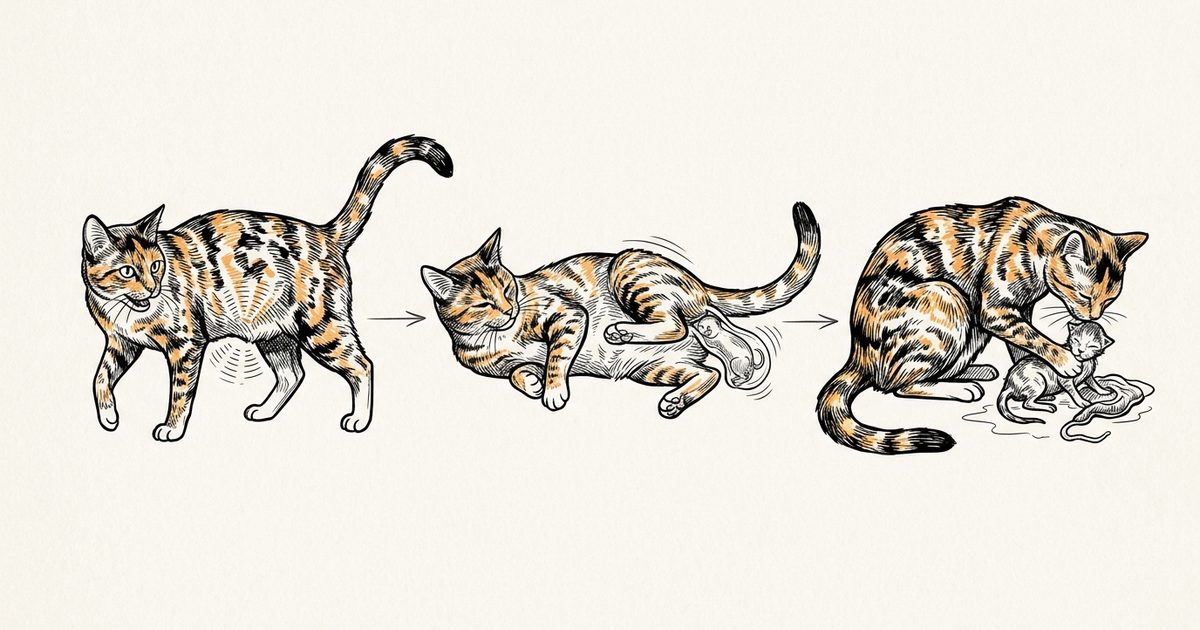
The three stages of labor
Stage 1 — Preparation (often missed). The cervix dilates and the uterus begins contracting, but the signs are subtle: restlessness, pacing, panting, repeated trips to the nesting box, and sometimes a drop in body temperature. Many owners sleep right through this phase, which can last anywhere from a few hours up to 24 hours in a first-time mother. You may notice your cat grooming her belly and vulva obsessively and growing increasingly vocal or withdrawn.
Stage 2 — Kitten delivery. This is the active pushing stage. Each kitten is born enclosed in its amniotic sac, and the mother typically tears it open and cleans the kitten within seconds. Kittens usually arrive 10 to 60 minutes apart, though a pause of up to an hour or so between kittens can still be normal — labor often slows midway through a large litter as the queen rests.
Stage 3 — Placenta delivery. Each kitten is followed by its own placenta, and the mother will usually eat it (normal feline behavior that recycles nutrients). Count the placentas against the kittens — one placenta per kitten. A retained placenta can cause a life-threatening uterine infection within hours, so if the numbers don't match, call your vet. International Cat Care is a reliable authority for the detailed labor protocol if you want to read further before the big day.
When to call the vet
Most births run smoothly, but a small percentage run into dystocia — difficult labor. Contact your vet immediately if you see any of these red flags:
- Straining hard for 20–30 minutes with no kitten produced
- Green, brown, or bloody discharge before the first kitten appears (a small amount of bloody fluid after the first kitten is normal)
- More than 2–3 hours between kittens when you know more are coming
- Lethargy, fever, or a foul smell from the vulva
- A kitten visibly stuck halfway out
Certain cats face higher dystocia risk: older queens, obese cats, those carrying a single large kitten, and flat-faced (brachycephalic) breeds whose wider heads and narrower pelvises can complicate delivery. If your cat fits any of these, talk to your vet before her due date so you have a plan.
If you weren't planning a litter, this is also the moment to start thinking ahead. Spaying prevents future pregnancies — and the next heat can resume within weeks of giving birth. Read our guide to spaying a cat for the timing, benefits, and how it lowers the risk of mammary and uterine disease. Watching your cat bring new life into the world is one of the most remarkable things you'll witness as a cat owner — and a little preparation turns anxiety into quiet confidence.
What Happens After Birth?
Most cats clean and nurse their kittens within minutes of birth, with no help needed. Give the mother privacy, keep the nest warm and quiet, make sure she's eating and nursing, and watch that every kitten latches on. Schedule a vet check for mother and kittens within 24–48 hours of delivery.
The hard part — labor — is over, and in most cases a mother cat takes over from there with remarkable competence. She'll tear away each kitten's sac, sever the cord, and lick her newborns clean and dry, which also stimulates their breathing and circulation. Within the first hour, kittens should be nursing. Your job in these early hours is mostly to stay out of the way and keep the environment calm. Too much handling or noise can stress a new mother, and a stressed queen is more likely to move her kittens or, in rare cases, reject them.

The first 24 hours
The first day is about two things: warmth and colostrum. Newborn kittens can't regulate their own body temperature, so they depend on their mother's body and a draft-free nest kept around 85°F (29°C) in the first week. Colostrum — the first milk — is packed with antibodies that protect kittens in their fragile early days, so every kitten needs to nurse within the first few hours. Most mothers handle this instinctively. You only need to step in if something is clearly wrong: a mother refusing a kitten, a kitten that isn't latching or keeps getting pushed aside, or constant crying that suggests a kitten isn't feeding. Any of those signals it's time to call your vet and begin hands-on care — our newborn kitten care guide walks through the specifics.
Thinking about the next step: spay
Here's something that catches a lot of owners off guard: a nursing cat can come back into heat within weeks of giving birth. Cats are induced ovulators and remarkably fertile, so the window between one litter and the next can be surprisingly short. Spaying after this litter prevents another pregnancy and meaningfully lowers the risk of mammary and uterine disease, especially if done before a cat's first or second heat. Talk to your vet about the right timing — usually after the kittens are weaned. You can read more about the procedure and recovery in our spaying a cat guide, and learn about the heat cycle that resumes in the background.
Kitten milestones ahead
Once the first nervous days pass, the kittens change fast. Eyes typically begin to open around 7 to 10 days (see when kittens open their eyes for what's normal and what isn't), they start wobbling around by three weeks, and weaning usually begins around four weeks. From there it's a steady climb toward independence — the full arc is in our when do cats stop growing timeline. The pregnancy chapter is closing, but the real adventure is just starting.
Curious What Your Cat Would Say?
Upload a photo and get a warm, personalized reading from your cat's perspective.
Start Your Free ReadingCat Pregnancy at a Glance — Summary
| Question | Short answer |
|---|---|
| How long are cats pregnant? | About 63–65 days (roughly nine weeks); normal range is 63–67 days |
| What are the first signs? | Pink swollen nipples, firmer belly, bigger appetite — from around week 3 |
| How many kittens in a litter? | Usually 4 to 6; the normal range runs from 1 to 9 |
| How should I feed her? | Switch to high-quality kitten food from early pregnancy through weaning |
| How long does labor last? | Typically 4 to 24 hours across three stages, mostly unaided |
| When do I call the vet? | Straining over 20–30 minutes with no kitten, heavy bleeding, or labor past 24 hours |
| What happens after birth? | Keep the nest warm and quiet, confirm every kitten latches, and book a vet check within 24–48 hours |
Frequently Asked Questions
How long are cats pregnant for?
Cats are pregnant for about 63 to 65 days, or roughly nine weeks, counted from the day of mating. The typical range runs from 63 to 67 days. Anything under 61 or over 70 days is a reason to call your vet, as it can signal a problem.
How can I tell if my cat is pregnant without going to the vet?
Watch for pink, swollen nipples (pinking up) from around week 3, a growing firmer belly, a bigger appetite, and quieter, more affectionate behavior. These are strong hints, but a vet exam is the only reliable confirmation, since home guessing can be wrong and pressing the belly can harm the kittens.
How many kittens will my pregnant cat have?
Most cats have litters of 4 to 6 kittens, though the normal range runs from 1 to 9. First-time mothers and older cats tend to have smaller litters, while healthy prime-age queens often have larger ones. An X-ray after day 45 gives the most accurate count.
Can a cat get pregnant while she is already nursing kittens?
Yes. Cats are induced ovulators and remarkably fertile, so a nursing queen can come back into heat within weeks of giving birth. The window between one litter and the next can be surprisingly short, which is why spaying after weaning is so important.
When should I take my pregnant cat to the vet?
Schedule a vet visit early in pregnancy to confirm she is expecting and set a baseline. An ultrasound around day 21 can detect heartbeats and help pin down the due date. Book another check after birth for mother and kittens within 24 to 48 hours of delivery.
How do I know when my pregnant cat is going into labor?
Early labor signs include restlessness, pacing, panting, repeated trips to the nesting box, and obsessive grooming of the belly and vulva. Active pushing follows, with kittens usually arriving 10 to 60 minutes apart. Call your vet if she strains hard for 20 to 30 minutes with no kitten.
Is it normal for a pregnant cat's belly to move?
Yes, in late pregnancy (weeks 7 to 9) you can often see and feel the kittens moving through the abdominal wall as they grow fur, shift into position, and become active. Movement is a healthy sign that the kittens are developing normally and birth is approaching.
What should I feed my pregnant cat?
Switch her to a high-quality kitten-formula food from early pregnancy and keep her on it through weaning. Kitten food is higher in calories, protein, and calcium, which matches what a pregnant and nursing queen needs. Let her free-feed, keep fresh water available, and avoid supplements unless your vet approves them.
Can I hold or pick up my pregnant cat?
Yes, gently and briefly, as long as she is comfortable with it. Support her hindquarters well and avoid squeezing the belly. As she gets close to her due date she may prefer to be left alone, so let her lead and keep handling calm and minimal.
Sources & References
You Might Also Like
Kitten Teething: Timeline, Symptoms & How to Help
Kitten teething runs from 3 to 7 months as baby teeth fall out. Learn the timeline, signs to watch for, and how to soothe a teething kitten safely.
15 min readWhen Do Cats Stop Growing? A Complete Timeline
When do cats stop growing? Most cats reach adult size by 12-18 months, but large breeds like Maine Coons keep growing until 3-4 years. Full timeline inside.
14 min readCan Cats Eat Cherries? Flesh, Pit & Toxicity Facts
Can cats eat cherries? Pitted flesh is safe in tiny amounts — but the pit, stem, and leaves are toxic (cyanide precursors). Learn what's safe and what isn't.
15 min read