
Cat Years to Human Years: The Accurate Conversion Chart
Converting cat years to human years is one of the first questions most cat owners ask — and the answer you grew up with is almost certainly wrong. The old "multiply by seven" rule badly misleads, because cats do not age on a steady, predictable line. They sprint through their early development, then settle into a slower rhythm for the rest of their lives. Understanding your cat's age in human terms — the real cat years, not the myth — changes how you feed, play with, and care for them at every stage.
Here is the quick, accurate picture so you can stop guessing and start matching care to where your cat actually is in life.
Key takeaways
- A cat's first year equals roughly 15 human years; the second adds about 9 (reaching ~24); each year after adds about 4 — so a 5-year-old cat is near 36.
- The "multiply by 7" rule is a myth. Cats mature extremely fast in their first two years, then slow dramatically — the opposite of a straight line.
- The life stage (kitten, prime, senior, geriatric) matters more than any single number, because it drives nutrition, vet screening, and activity expectations.
Cat Years to Human Years — Quick Reference
| Cat age | Human-equivalent age | Life stage |
|---|---|---|
| 1 year | ~15 | Junior |
| 2 years | ~24 | Prime |
| 5 years | ~36 | Prime |
| 8 years | ~48 | Mature |
| 12 years | ~64 | Senior |
| 15 years | ~76 | Geriatric |
| 18+ years | ~88+ | Geriatric |

How Do You Convert Cat Years to Human Years?
The widely-used modern rule: a cat's first year equals about 15 human years, the second adds about 9 (reaching ~24), and each year after adds about 4. So a 5-year-old cat is roughly 36 in human years, and a 10-year-old cat is about 56.
This three-step framework is the conversion most veterinarians and major feline health bodies use today, and it works because it follows the actual shape of a cat's maturation curve: steep at the start, flattening later. Let's walk through why each piece works the way it does.
Year 1: the rapid kitten-to-toddler leap
A kitten's first twelve months are extraordinary. By the time a cat reaches its first birthday, it has already passed through developmental milestones that take a human child roughly fifteen years to reach — sexual maturity, near-adult body size, and a stable set of adult teeth. That is why year one maps to about 15 human years rather than seven.
If you have watched a kitten grow, the speed is visible week by week. Most kittens reach sexual maturity between four and six months and arrive at close to their adult frame by their first birthday, though some large breeds keep filling out longer — read more about when cats stop growing. The teething timeline also finishes inside this year, with the last baby teeth giving way to the adult set.
Year 2: slowing toward a young adult
The second year adds about 9 human years, landing your cat around 24 in human-equivalent terms. The frantic growth of year one eases off — bone growth is mostly complete, muscle fills in, and the cat's personality settles into something more recognizably "adult." A two-year-old cat has the energy and physical capability of a human in their early twenties, which is exactly what the math suggests.
This is also the window where you can start to see the individual cat emerge. Play style, social tolerance, food preferences, and daily rhythms stabilize, and the care routine you build here tends to stick for years.
Year 3 and beyond: the +4-per-year rule
From year three onward, the rule is simple: add roughly 4 human years for each additional cat year. This is a smoothed average — individual cats vary, and some sources use numbers between 3.5 and 4.5 — but 4 is the common simplification that keeps the chart easy to use.
A few worked examples:
- 3-year-old cat: 24 + 4 = ~28 human years (prime of life)
- 5-year-old cat: 24 + (3 × 4) = ~36 human years
- 7-year-old cat: 24 + (5 × 4) = ~44 human years (entering mature)
- 10-year-old cat: 24 + (8 × 4) = ~56 human years
- 15-year-old cat: 24 + (13 × 4) = ~76 human years
The key word is "smoothed." Cats do not have a biological clock that ticks exactly four human years every twelve months — the real curve wobbles a little — but this approximation is close enough to guide care decisions, and it is the one most vets reach for in practice.
Why this rule replaced older ones
For a long time, pet aging was explained with simple linear rules, and the "multiply by seven" shortcut became the default for both dogs and cats. The modern three-step rule grew out of feline-specific life-stage guidelines published by the American Animal Hospital Association (AAHA) and the American Association of Feline Practitioners (AAFP), which group cats into developmental stages rather than treating each year as identical.
The reason the older rules failed is simple: cats are not small dogs, and neither species ages on a straight line. The Cornell Feline Health Center and International Cat Care both publish feline life-stage frameworks that reflect the non-linear reality — fast early maturation, a long prime, and a gradual senior decline. The modern conversion rule is the translation of that biology into numbers an owner can use.
Is the "Multiply by 7" Rule True?
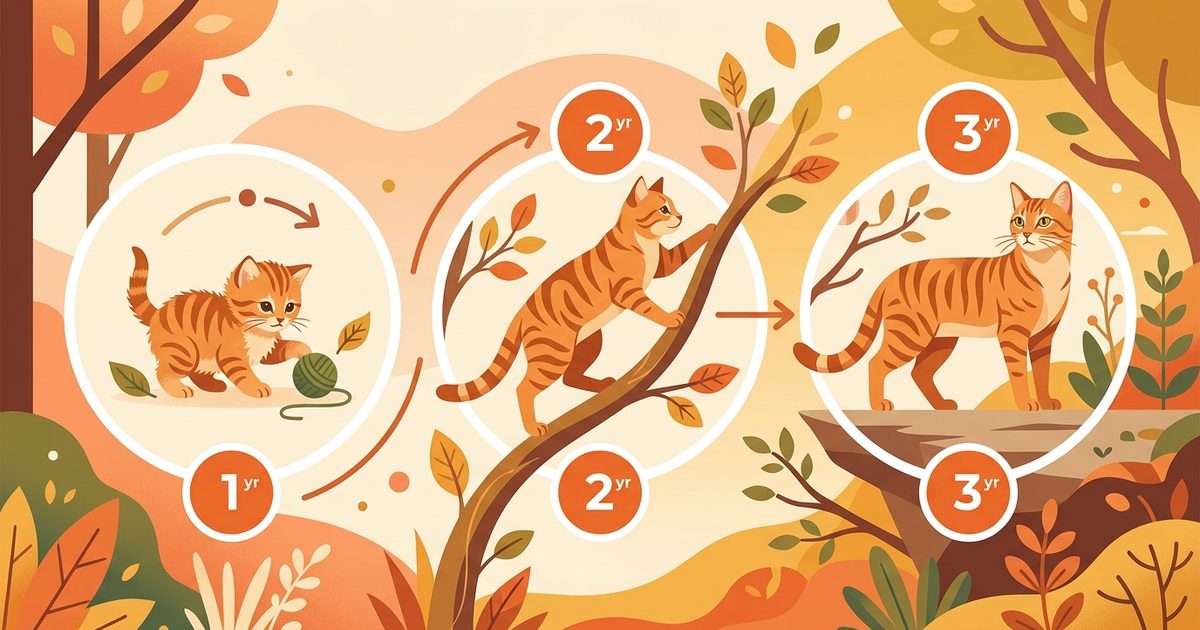
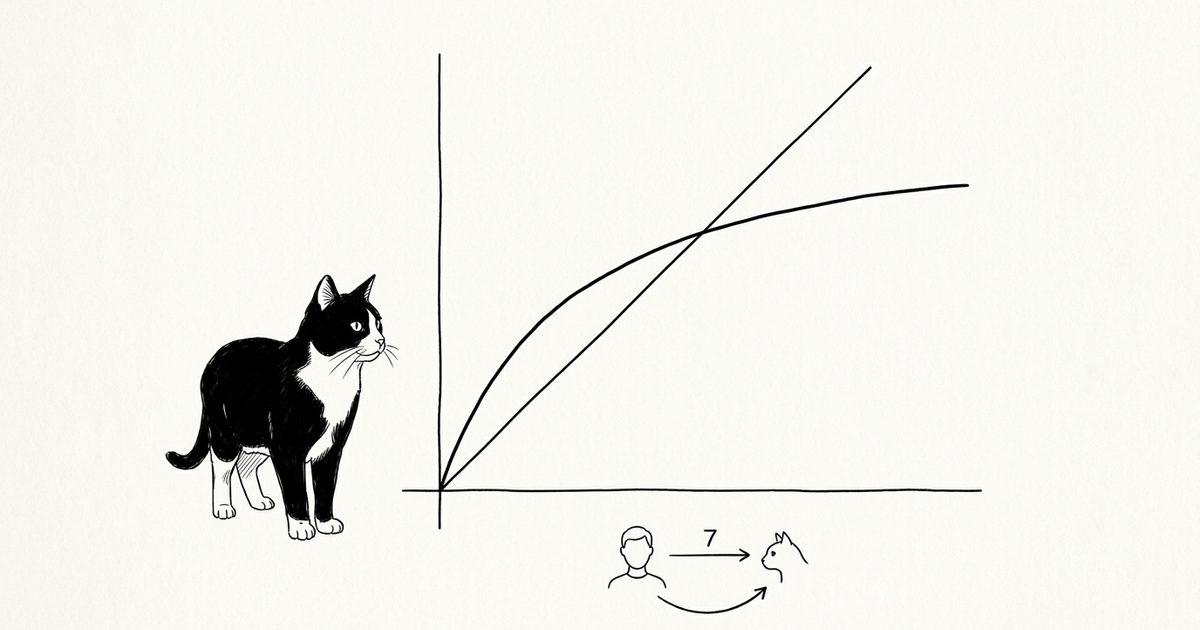
No. Multiplying a cat's age by 7 is a popular myth — cats do not age on a steady line. They mature extremely fast in their first two years (reaching roughly 24 human years by age 2), then slow to about 4 human years per cat year.
It is worth understanding why this rule is wrong, because the mistake is not random — it fails in a predictable direction, and that direction matters for how you care for your cat.
Where the ×7 myth came from
The multiply-by-seven rule is a folk simplification that has been passed around for decades, usually grouped together with the same rule applied to dogs. Its origin is murky — it likely started as a back-of-the-envelope way to make pet aging relatable to owners, by mapping a pet's life roughly onto the then-average human lifespan.
It stuck because it was easy to remember and easy to teach. One number, one multiplication, done. The problem is that "easy to remember" and "accurate" are not the same thing, and the rule was never grounded in how cats actually develop.
Why linear rules fail for cats
Cats mature on a curve, not a line. The clearest evidence is reproductive maturity: a typical kitten can reproduce by about six months of age. The human equivalent — puberty — arrives around 12 to 13 years. If six cat months mapped to 13 human years, a full first cat year would land somewhere near 26, not 7. The early slope is steep, then it flattens dramatically for the rest of the cat's life.
Any rule that assumes a constant rate of aging — the same number of human years per cat year, every year — will inevitably misread both ends of that curve. It will under-estimate how mature a young cat is, and it will over-estimate how "old" an older cat is. The modern rule works precisely because it bends with the real biology.
How wrong is ×7 in practice?
The divergence shows up clearly when you put the two rules side by side. The table below is illustrative — the human-equivalent numbers are the widely-used approximations described above, not precise measurements — but the gap is real and consistent.
| Cat age | ×7 rule | Modern rule |
|---|---|---|
| 1 year | 7 | ~15 |
| 2 years | 14 | ~24 |
| 5 years | 35 | ~36 |
| 10 years | 70 | ~56 |
| 15 years | 105 | ~76 |
Look at the extremes. At one year, the ×7 rule tells you a kitten is a seven-year-old child — when biologically that cat is closer to a teenager. At fifteen, it calls a cat 105 in human terms, well past where the modern rule places it. Both errors point the same way: the linear rule flattens a curve that is anything but flat, and that distortion reaches into every care decision you make. For the full picture of what those later years look like, how long cats live on average is the natural companion to this conversion.
What Are the Cat Life Stages in Human Years?
Vets group cats into six life stages — kitten (0–1), junior (1–2 ≈ 15–24), prime (3–6 ≈ 28–40), mature (7–10 ≈ 44–56), senior (11–14 ≈ 60–72), and geriatric (15+ ≈ 76+). The stage matters more than the raw number, because it tells you what care and nutrition your cat needs.
Converting cat years to human years is only half the picture. The other half is knowing which stage your cat is in, because two cats with the same calendar age can sit at very different points in their development depending on breed, health, and lifestyle. The six-stage framework comes from the feline life-stage guidelines developed jointly by the American Animal Hospital Association (AAHA) and the American Association of Feline Practitioners (AAFP), and it is the structure most vets use when they talk about preventive care. International Cat Care lays these stages out in a way owners can use directly — they map cleanly onto the human-year numbers, and each one carries its own care priorities.
Kitten (0–12 months)
The first year is the steepest part of a cat's entire life curve — birth to roughly 15 human years compressed into 12 months. Kittens multiply their birth weight thirtyfold, open their eyes, learn to walk, hunt, and socialize, and reach sexual maturity well before the year is out. This is the stage where nutrition and socialization leave a permanent mark: underfeeding or under-stimulating a kitten has consequences that show up for the rest of its life. If you are raising one, our newborn kitten care guide covers the early weeks, and the feeding benchmarks in how much to feed a kitten matter far more here than in any later stage.
Junior and Prime (1–6 years)
A cat between 1 and 6 covers the human equivalent of about 15 to 40 — the long, energetic stretch from teenager through full adulthood. By the end of year 2 most cats have reached their adult skeleton and their personality has largely stabilized, though some of the larger breeds keep filling out a little longer. This is peak energy: they jump higher, play harder, and burn more calories than they ever will again. For when that growth actually finishes, and why breeds differ, see when do cats stop growing. Care-wise, the priorities here are weight management, dental health, and keeping that sharp young mind stimulated — boredom and obesity are the two things that quietly shorten this stage.
Mature (7–10 years)
Mature cats sit at roughly 44 to 56 in human years — the "middle-aged" band where nothing is obviously wrong yet, but the body has started to shift. You may notice slightly less interest in high-speed play, longer naps, or a preference for warmer sleeping spots. This is also the window where Cornell Feline Health Center recommends establishing baseline senior bloodwork. The value of a baseline is comparison: you cannot tell whether a kidney value is creeping up unless you have an earlier, healthy number to measure it against. Most cats in this stage look and act completely normal — which is exactly why a routine check now pays off later.
Senior (11–14 years)
From about 11 to 14, a cat reaches the human equivalent of 60 to 72, and the care conversation changes. Kidney function, thyroid activity, blood pressure, and dental disease become the big four to screen for — chronic kidney disease in particular is one of the most common conditions vets manage in older cats, and early intervention genuinely changes outcomes. You might also see subtler shifts: a cat that thins out despite eating normally, drinks more water, or vocalizes at night. None of these are emergencies on their own, but together they are worth a vet visit. For how a cat's age fits into the bigger picture of feline longevity, see how long do cats live.
Geriatric (15+ years)
Past 15, a cat is roughly 76 or older in human terms — a geriatric patient by any veterinary definition. Care here becomes comfort-focused: easy access to food, water, and litter; soft, warm bedding; gentler play that protects aging joints; and more frequent vet monitoring, typically twice a year. Many geriatric cats live with at least one managed chronic condition and still enjoy years of good quality of life. The record-holders go much further — the oldest verified cat reached an age most owners find hard to imagine, and you can read about that in our piece on the oldest cat. The goal at this stage is not extension at any cost; it is matching care to what an elderly cat actually needs, day by day.
Cat Years to Human Years Chart
Use this chart to convert cat age to human years: 1 = 15, 2 = 24, 3 = 28, 5 = 36, 7 = 44, 10 = 56, 15 = 76, 20 = 96. For years not listed, add 4 human years per cat year after year 2.
This is the year-by-year lookup table veterinarians and owners rely on most — copy-paste ready, built on the same modern conversion rule described above.
| Cat age | Human-equivalent age |
|---|---|
| 1 year | 15 |
| 2 years | 24 |
| 3 years | 28 |
| 4 years | 32 |
| 5 years | 36 |
| 6 years | 40 |
| 7 years | 44 |
| 8 years | 48 |
| 9 years | 52 |
| 10 years | 56 |
| 11 years | 60 |
| 12 years | 64 |
| 13 years | 68 |
| 14 years | 72 |
| 15 years | 76 |
| 16 years | 80 |
| 17 years | 84 |
| 18 years | 88 |
| 19 years | 92 |
| 20 years | 96 |
For any age beyond the table, add 4 human years for each additional cat year. So an 11-year-old cat is 60, a 13-year-old cat is 68, and a 19-year-old cat is 92. The numbers in this chart follow the same "+4" smoothed average as the modern conversion rule, which International Cat Care describes as a practical communication tool rather than a precise measurement.
Reading the chart by life stage
You can make these numbers more meaningful by overlaying the six recognized life stages. Years 0–1 are the kitten stage, equivalent to 0–15 human years; 1–6 years are junior to prime, mapping to 15–40; 7–10 years are mature, at 44–56; 11–14 years are senior, at 60–72; and 15+ years are geriatric, at 76 and above. Reading the chart through these bands helps you focus on what actually matters — which biological stage your cat is in, not just the converted number. An 8-year-old cat (48 in human years), for instance, sits firmly in the mature band rather than at peak prime, and that reframe changes your expectations around care and vitality more than the number alone.
Using the chart for vet and care decisions
The converted human age is a shortcut to understanding what your cat may need in terms of activity, diet, and health screening. A cat in the 44–56 band is expected to slow down slightly and may be due for its first baseline senior bloodwork; a cat in the 60+ band needs closer attention — kidney and thyroid screening, softer food options, and gentler play. This is also a good moment to check how long cats live on average, to see whether your cat's breed has a typical lifespan, because large breeds (such as Maine Coons) often take an extra year or two to fully mature. The Cornell Feline Health Center recommends using life stage, rather than a single calendar age, as the real guide to the cadence of preventive care.
How Can I Estimate My Cat's Age If I Don't Know It?
If you have no birthdate, estimate a cat's age from physical clues: teeth (tartar and wear suggest older adults), eyes (clear in young cats, cloudier in seniors), coat (soft in juniors, coarser or thinning in seniors), and muscle tone. A vet's estimate is most reliable.
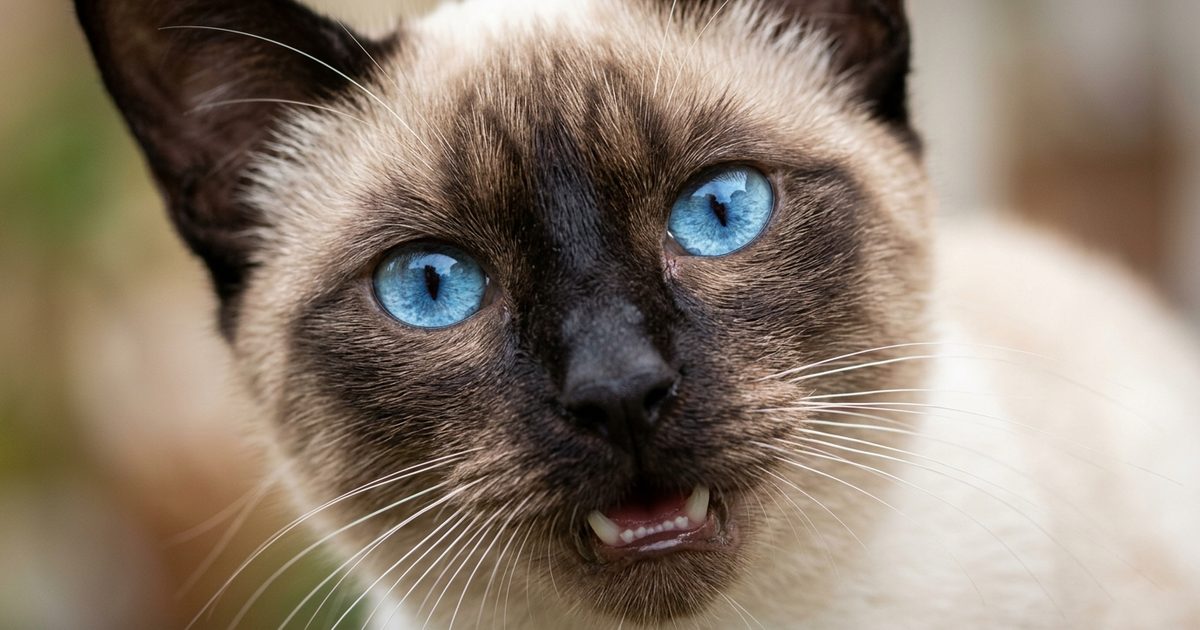
Unless your cat has been documented since kittenhood or came from a rescue with records, you probably do not have an exact birthdate. Many adopted cats arrive from shelters, the street, or a friend's handoff, and in every one of those cases age information gets lost. The good news is that physical clues give a reasonably good estimate — you just need to know what to look for.
Teeth as the strongest clue
A cat's mouth is the most reliable clock on its body. Kittens go through the same teething process as human children: baby teeth (also called deciduous teeth) erupt between 2 and 4 weeks, then are gradually replaced by permanent teeth between 3 and 6 months. So a cat that still has tiny sharp baby teeth is usually under 4 months old, while a cat with a full set of smooth white permanent teeth is likely between 6 and 8 months.
Once the adult teeth are in, tooth wear and tartar buildup become the main guide. Mild tartar can start to appear by 1 or 2 years, noticeable yellow calculus usually suggests a cat is 3 or 4 years or older, and missing teeth or exposed roots often indicate a senior cat (10+). This is a rough but useful yardstick, not a precise instrument — diet and genetics play a large role — but combined with the other clues it usually narrows the age range to within a few years. You can read the full teething timeline in our kitten teething guide.
Eyes, coat, and body condition
Beyond teeth, three signals work together: lens clarity, coat texture, and muscle tone. Young adult cats have crystal-clear eyes with smooth irises, while many older cats develop a faintly cloudy look in the lens known as nuclear sclerosis (this is distinct from cataracts, though the two look similar, which is why a vet exam is ultimately needed to tell them apart).
Coat also changes with age. Kittens and young adults have soft, dense, healthy-looking fur; older cats often have coarser coats that lose their luster or develop thinning patches. Muscle tone drops too: young cats feel firm and agile, while older cats typically have a more slack belly and are visibly slower to rise. The key is to combine these clues — any single signal (say, a 3-year-old cat with tartar buildup from dental disease) can mislead, but the overall picture across teeth, eyes, coat, and body condition usually points to the right life stage.
When to ask a vet
Shelters usually do a quick exam on intake, and a vet's age estimate made in a few minutes is typically far more accurate than what an owner can work out alone at home, because vets see cats of every age every day. If you are taking your new cat in for a wellness check shortly after adoption, asking the vet for an age judgement is well worth it.
This section is meant to help you estimate roughly, not to reproduce the full clinical method. If you want the complete step-by-step — including dental charts, iris changes, and body condition scoring — our how to tell a cat's age guide walks through the entire exam. Once you have an estimate, simply drop it into the conversion rule to know roughly which life stage your cat is in.
Why Does Knowing Your Cat's Age in Human Years Matter?
Converting cat years to human years reframes how you care for your cat: a 12-year-old cat is roughly 64 in human terms and needs senior screening and softer food. The number is a translation tool for matching nutrition, vet visits, and enrichment to your cat's actual life stage.

Reading the conversion chart is not just curiosity. These human-year numbers are shortcuts for the care decisions you make for your cat: they turn an abstract "14-year-old" label into a frame of reference you can directly understand — the needs of a 72-year-old animal. That reframe changes how you feed, play, and schedule vet visits at every stage.
Care shifts by life stage
Each stage comes with its own care requirements. Kittens (under 1 year, human-equivalent under 15) are still building their body structure and need high-calorie, protein-rich food to support that growth — fed in small frequent meals, not on the adult-cat schedule. You can see the full feeding plan in our guide on how much to feed a kitten. Young adult and prime cats (1 to 6 years, human-equivalent 15 to 40) are at peak activity and need plenty of interactive play and environmental enrichment.
From around age 7 (human-equivalent mid-40s), things begin to shift. A mature cat may slow slightly, eat less, or start showing early signs of disease — this is the stage where many vets recommend baseline bloodwork, so there is a reference point to compare against later. Senior cats (11+ years, human-equivalent 60s) need a different toolkit entirely: regular senior screening, softer food, and gentler play. If you want to know where your cat sits relative to its breed's typical lifespan, our cat lifespan guide breaks down breed-by-breed averages.
Setting realistic expectations
Knowing the human-equivalent age also helps prevent misjudging behavior changes. A 13-year-old cat (human-equivalent 68) that becomes less playful, starts sleeping more, or seems a bit irritable about being touched is often showing age-related change, not a behavior problem. In a young adult, the same signs would look like stress or illness; in a senior cat, it is a normal slowing of pace.
Likewise, an 8-year-old cat gaining weight may simply be less active, while a senior cat losing weight can be a signal that needs veterinary attention rather than "just getting old." The general rule: map your cat's current age onto its life stage, compare what you are seeing to what is normal for that stage, and call the vet when something does not fit the expected pattern. The conversion chart does not diagnose for you, but it tells you what is expected and what is worth looking into more closely.
Curious What Your Cat Would Say?
Upload a photo and get a warm, personalized reading from your cat's perspective.
Start Your Free ReadingCat Years at a Glance — Summary
| Question | Short answer |
|---|---|
| How many human years is 1 cat year? | The first year equals about 15 human years — kittens reach near-adult size by 12 months. |
| What about the second year? | The second year adds about 9, landing your cat at roughly 24 human years. |
| How much is each year after that? | Each year beyond the second adds about 4 human years — a smoothed average, not an exact constant. |
| Is the "multiply by 7" rule correct? | No. Cats mature non-linearly: fast in the first two years, then slower. The ×7 rule under-counts young cats and over-counts older ones. |
| How many life stages do cats have? | Six — kitten, junior, prime, mature, senior, and geriatric. The stage, more than the number, guides care. |
| What is the oldest recorded cat in human years? | The verified record holder reached 38 cat years — roughly 168 human years by the modern rule. |
| Do indoor and outdoor cats age at different rates? | Calendar years are identical. What differs is expected lifespan and health risk profile — outdoor cats face more hazards, shortening average lifespan rather than speeding aging. See how long cats live for the full picture. |
Frequently Asked Questions
How many human years is one cat year?
There is no single number, because cats age non-linearly. The first cat year equals about 15 human years, the second adds about 9 (reaching ~24), and each year after that adds about 4. So 'one cat year' means anywhere from 4 to 15 human years depending on where the cat is in its life.
Is the 1 cat year equals 7 human years rule true?
No, the multiply-by-7 rule is a popular myth that badly misleads. It under-counts young cats (a 1-year-old cat is closer to 15, not 7) and over-counts older ones. Cats mature extremely fast in their first two years, then slow to roughly 4 human years per cat year.
How old is a 10-year-old cat in human years?
A 10-year-old cat is roughly 56 in human years, using the modern rule: year one is ~15, year two reaches ~24, then add 4 for each of the next eight years (24 + 32 = 56). At this point a cat is firmly in the mature life stage and due for baseline senior screening.
How old is a 15-year-old cat in human years?
A 15-year-old cat is about 76 in human years (24 + 13 × 4 = 76). This places the cat in the geriatric life stage, where care shifts toward comfort: easier access to food and litter, softer bedding, gentler play, and typically twice-yearly vet visits.
At what age is a cat considered a senior?
Cats are generally considered senior from about 11 to 14 years old, the human equivalent of roughly 60 to 72. Before that, from 7 to 10, they sit in the mature band (~44–56) where the body starts shifting but nothing is obviously wrong yet.
Do indoor and outdoor cats age at different rates?
Calendar years pass identically — aging speed is the same. What differs is expected lifespan and health risk: outdoor cats face more hazards (traffic, predators, disease), which shortens their average lifespan rather than speeding up how fast they age.
How accurate is the cat years to human years conversion?
It is a widely-used approximation, not an exact biological constant. The 1=15, 2=24, +4 rule is endorsed by major veterinary bodies and is close enough to guide care decisions, but individual cats vary and some sources use numbers between 3.5 and 4.5 for later years.
Why do cats age faster than humans in their first year?
Because cats compress enormous development into twelve months — sexual maturity, near-adult body size, and a full set of adult teeth all finish within year one. A kitten reaches by 12 months what takes a human child roughly 15 years, which is why the first year maps to about 15 human years.
How can I tell how old my cat is if I don't know?
Use physical clues: teeth (kittens lose baby teeth by about 6 months; tartar and wear suggest older adults), eyes (clear in young cats, sometimes cloudy in seniors), coat (soft and plush in juniors, coarser or thinning in seniors), and muscle tone. A vet's estimate is the most reliable.
What is the oldest age a cat has reached in human years?
The verified record holder lived to 38 cat years, which translates to roughly 168 human years by the modern rule (24 + 36 × 4 = 168). Most cats do not approach this — it is an extreme outlier rather than a realistic expectation for an average pet.
Sources & References
You Might Also Like
Kitten Teething: Timeline, Symptoms & How to Help
Kitten teething runs from 3 to 7 months as baby teeth fall out. Learn the timeline, signs to watch for, and how to soothe a teething kitten safely.
15 min readWhen Do Cats Stop Growing? A Complete Timeline
When do cats stop growing? Most cats reach adult size by 12-18 months, but large breeds like Maine Coons keep growing until 3-4 years. Full timeline inside.
14 min readCan Cats Eat Cherries? Flesh, Pit & Toxicity Facts
Can cats eat cherries? Pitted flesh is safe in tiny amounts — but the pit, stem, and leaves are toxic (cyanide precursors). Learn what's safe and what isn't.
15 min readA message, in your cat's voice
Upload a photo, get a warm note written from your cat's perspective — just for fun. Plus 121 vet-cited articles, offline.