Can Cats Eat Green Beans? Vet-Approved Veggie Treat Guide
Yes, cats can eat green beans — plain cooked, steamed, or raw chopped beans are non-toxic and one of the more commonly vet-recommended vegetable treats. But before you wonder are green beans good for cats, the honest answer is that their real value isn't nutrition: cats are obligate carnivores whose bodies run on animal protein, not plant matter. What green beans offer is very few calories alongside a generous dose of fiber, which is exactly why vets reach for them as a low-calorie treat and a clever weight-loss filler rather than a health supplement. They are a treat or occasional filler only — never a replacement for the complete cat food that supplies the protein, taurine, and fat your cat actually needs. Serve them plain, in small pieces, and they slot neatly into a healthy adult cat's routine without costing much against the daily calorie budget.
Key takeaways
- Green beans are safe and non-toxic for cats — plain cooked, steamed, or raw chopped beans are a commonly vet-recommended low-calorie, high-fiber treat for healthy adult cats.
- Their real claim to fame is the weight-loss filler use — substituting a few chopped beans for higher-calorie treats can help an overweight cat feel full on a calorie deficit, alongside a vet-supervised plan.
- Serve them plain only (no salt, oil, seasoning, butter, or casserole), and treat them as a treat or filler — never a meal substitute for complete cat food.
Green Beans for Cats — Quick Reference
| Green bean form | Safe for cats? | Notes |
|---|---|---|
| Plain cooked or steamed green beans | Yes | Best all-round form; soft, easy to digest, no added anything |
| Raw green beans chopped small | Yes | Safe if chopped bite-sized; some cats enjoy the crunch |
| Canned unsalted or low-sodium, rinsed | Yes (with care) | Rinse thoroughly; check the label for added salt or broth |
| Canned green beans with added salt | No | Sodium stresses a cat's kidneys over time — choose unsalted |
| Seasoned, buttered, or oiled green beans | No | Adds calories and can upset the stomach; many seasonings are unsafe |
| Green bean casserole | No | Often contains onions or garlic (toxic to cats), plus dairy and fried toppings |
Can Cats Eat Green Beans?
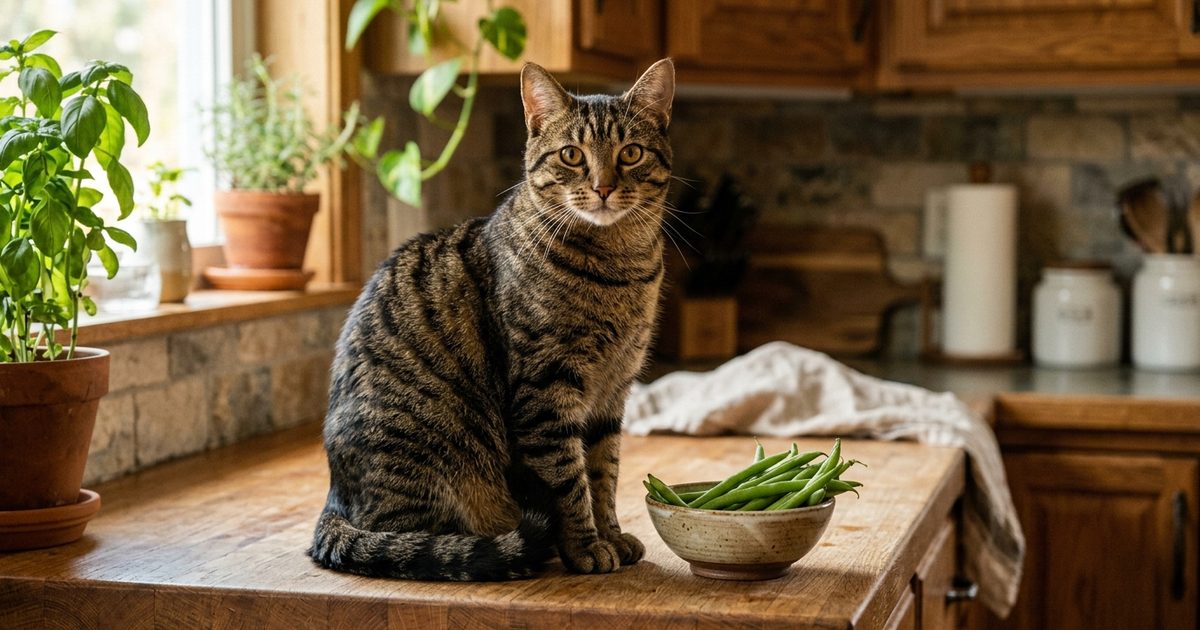
Yes — cats can eat green beans. Plain cooked, steamed, or raw chopped green beans are non-toxic and one of the more commonly vet-recommended vegetable treats, thanks to their very low calorie and high fiber content. They are a treat or filler, never a substitute for complete cat food.
The short answer
If you've caught your cat sniffing at a green bean on the kitchen counter and wondered whether it's safe — the answer is yes, with the usual plain-prep caveats. Green beans are non-toxic to cats, very low in calories, and notably high in fiber, which is exactly why veterinarians so often name them when owners ask about safe vegetable treats. They sit comfortably in the same "occasionally fine" category as plain-cooked broccoli or chopped celery. The one rule that never bends: green beans are a treat or filler, not food. A healthy adult cat gets everything nutritionally essential from a complete cat food, and a green bean is just a small, safe side note — not a replacement for it. So can cats have green beans? Yes, plain and in small amounts.
Why green beans are unusual as a cat food
Here's the honest tension. Cats are obligate carnivores — their metabolism is built to run on animal protein and fat, not on plant matter, and a cat's body does not need anything a green bean provides nutritionally. In that strict sense, a green bean is an odd thing to offer a cat. Yet among vegetables, green beans stand out for one reason vets keep coming back to: their calorie cost is about as low as it gets, paired with a meaningful dose of fiber. That combination is precisely why green beans get used as a weight-management filler — a way to let a cat feel full without the energy — rather than as any kind of nutrient source. So are green beans good for cats? Not in the nourishing sense a complete food is; good in the narrow, practical sense of "safe, low-calorie, and useful as bulk." A cat's diet still belongs to animal protein — green beans just visit, occasionally.
Are Green Beans Good for Cats?
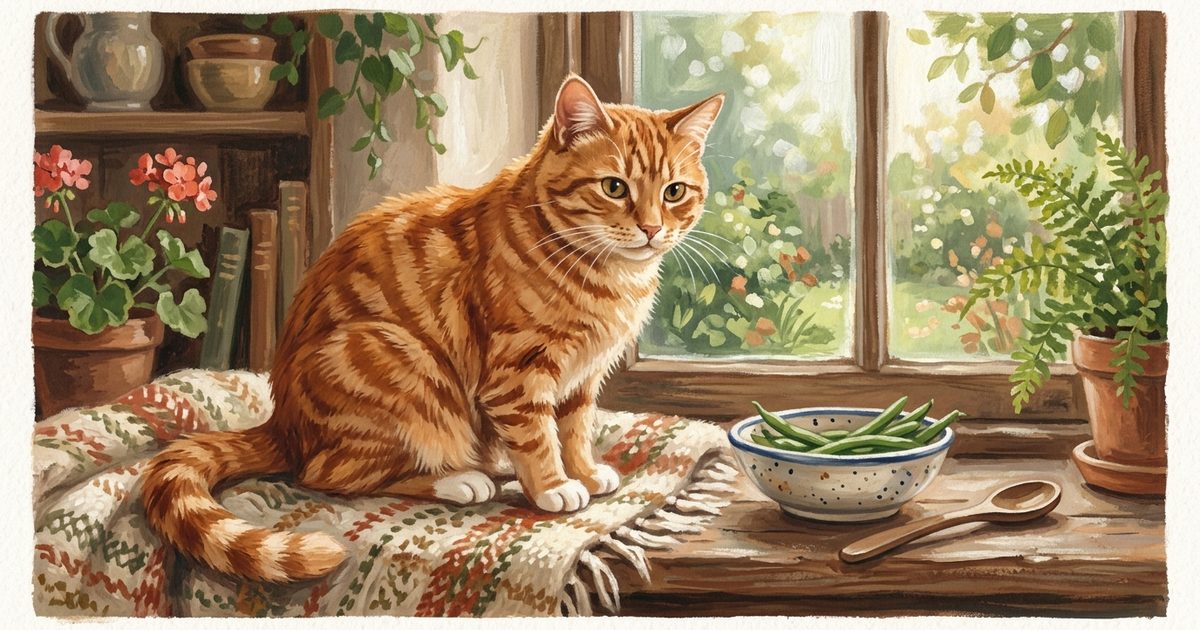
Green beans offer real fiber and a little vitamin K, vitamin C, and manganese, but a cat on complete food already gets these. The genuine upside is not nutrition — it's that green beans are extremely low in calories, so offering them costs almost nothing against a cat's daily budget. Safe, not necessary.
Fiber — the genuine payoff
Of everything in a green bean, fiber is the one thing that genuinely does something for your cat. Green beans are notably high in it, and for cats that translates into two practical effects: a sense of fullness (satiety), and some help with digestive regularity. Fiber adds bulk without adding much energy, which is the entire reason green beans earn their place in the conversation at all — not as a vitamin source, but as a tool, especially for weight management, which we cover in the next section. The Cornell Feline Health Center is a reliable starting point for understanding how a complete, protein-centered feline diet works, and where things like fiber play a supporting rather than a starring role. Think of fiber from green beans the way you'd think of a glass of water before a meal: it helps you feel full, but it isn't the meal itself.
Vitamins and minerals — real but not needed
Green beans do contain small amounts of vitamin K, vitamin C, and manganese, and these are real, recognized nutrients. The catch is that a cat eating a complete commercial food is already meeting every one of those needs — the diet is formulated to cover them. Offering green beans on top doesn't meaningfully supplement anything, and it would be a mistake to frame them as a vitamin boost for cats. As International Cat Care makes clear in its guidance on treats and titbits, the role of any treat in a cat's life is enjoyment and variety within strict limits, not nutritional coverage. The protein, taurine, and fat your cat actually runs on still come from animal-based food — a green bean is just a very low-stakes visitor alongside it.
Low calorie — the real advantage
This is where green beans actually shine. They carry only around 30 to 35 calories per 100 grams raw — far below starchy vegetables like peas or corn, and a small fraction of what a commercial treat delivers. That extremely low energy density is the real reason green beans earn the treat category and keep showing up in weight-loss plans: offering one costs almost nothing against your cat's daily calorie budget, while still giving her something to chew. "Safe, low-calorie, not necessary" is the honest summary — and it's the calorie floor, more than any nutrient, that makes them worth knowing about.
Can Green Beans Help a Cat Lose Weight?
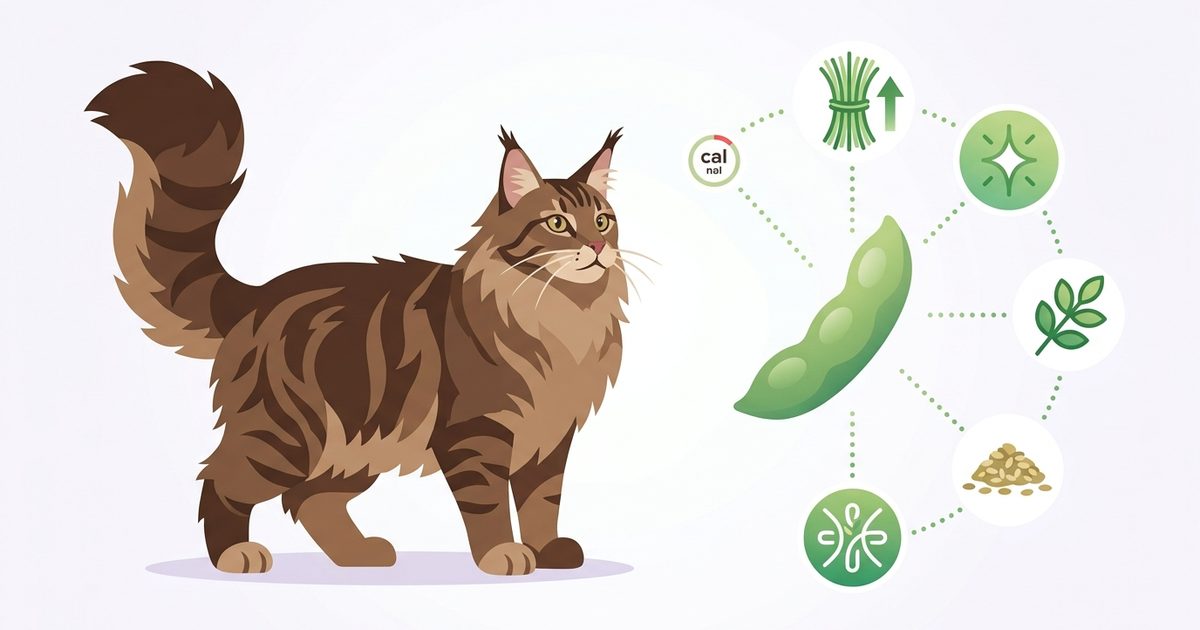
Green beans can help an overweight cat feel full on a calorie deficit. Vets sometimes suggest substituting a few chopped plain green beans for higher-calorie treats or as low-calorie bulk, so the cat eats less energy while still feeling satisfied. It is one tool inside a vet-supervised weight plan — not a standalone fix.
The satiety-filler logic
This is the one use case where green beans genuinely earn their keep for cats. A green bean is mostly water and fiber wrapped in a firm pod, which means it delivers a lot of volume and a real sense of fullness for almost no calories. When you substitute a few chopped plain green beans for part of a meal or for a richer commercial treat, your cat takes in less energy while the stomach still registers "full" — that is the same logic behind the high-fiber prescription weight-management diets your vet may already have mentioned. The catch is that the trick only works inside an overall calorie deficit, and a cat's deficit — how steep, how fast the weight should come off — has to be set by a vet, because cats that lose weight too quickly can develop serious liver trouble. If you are working through this with an overweight cat, our guide on feline weight management walks through the deficit math and a safe rate of loss in more detail.
How it's actually used
In practice, owners usually stir a small spoonful of chopped, plain cooked green beans into a slightly reduced portion of regular food, or swap them in for a higher-calorie treat a couple of times a week. Introduce them gradually — a cat that has never eaten much fiber can get gassy or loose stools if you start with too much — and weigh your cat weekly so you know the plan is actually moving. The beans are filler, not food: your cat still needs complete cat food for the protein, taurine, and fat an obligate carnivore runs on. For the broader picture of what a cat's diet should actually be built around, see our overview on what cats eat.
What green beans are NOT for weight loss
Green beans will not cause weight loss on their own — they only help a cat eat less while feeling full. They are not a substitute for the vet's weight-loss plan, not a license to free-feed beans, and not a fix if there is no real calorie deficit in place. And more is not better: overfeeding green beans can tip a cat into loose stools from too much fiber, which is the opposite of helpful.
How Should I Serve Green Beans to My Cat?
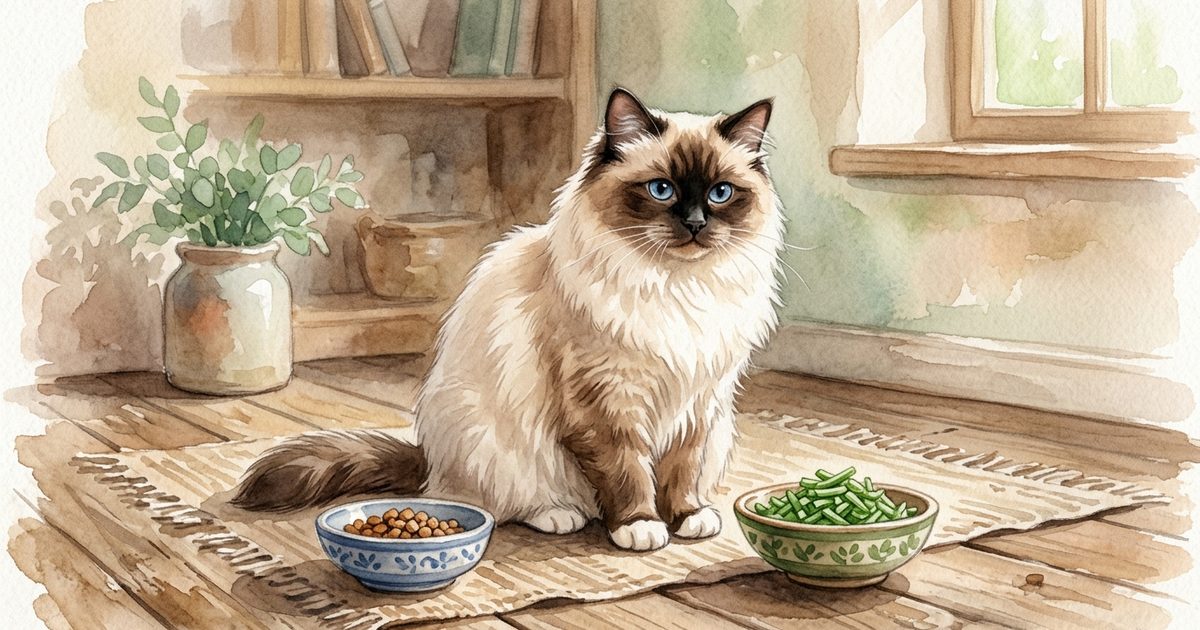
Serve green beans plain — cooked or steamed, or raw chopped small. Cut them into bite-sized pieces to avoid choking. Skip salt, oil, butter, seasoning, and any casserole; if using canned, choose unsalted or low-sodium and rinse well. Never give a cat a whole long bean.
Cooked or raw — both work if chopped
Steamed, boiled, or raw green beans are all safe for a cat — there is nothing inherently dangerous about the raw pod. Cooking softens the fibrous pod, which makes it easier for a cat to chew and to digest, while raw beans keep a crisp crunch that some cats find interesting. Either way, the non-negotiable step is chopping: cut the beans into small, bite-sized pieces before offering them. A whole or half green bean is the wrong shape and texture for a cat's mouth, and the firm pod can become a choking hazard — especially for small cats, kittens, or any cat that tends to gulp its food rather than chew.
Canned green beans — read the label
Canned green beans are convenient, and they are fine to use, but the label matters. Many regular canned brands add a meaningful amount of salt, and the sodium in everyday canned vegetables can be harmful to a cat over time because cats are far less equipped to handle excess salt than we are. If you use canned, choose unsalted or low-sodium and rinse the beans thoroughly under water first. Never reach for canned green beans that come with seasoning, broth, or flavor packets — those added ingredients are the part that causes trouble.
Forms to avoid
Skip any green beans that have been salted, buttered, oiled, or seasoned — all of those add calories and ingredients that can upset a cat's stomach, and salt specifically is the one to be strictest about. The big one to refuse outright is green bean casserole: the classic recipe is built on onions and garlic (both toxic to cats), plus a dairy-heavy sauce and fried toppings. The same plain-veggie-treat rule applies whether you are offering green beans, broccoli, or celery — keep it unseasoned — and the contrast with carrots, which must be cooked, is a useful reminder that "safe" still depends on the right prep.
How Many Green Beans Can a Cat Eat?
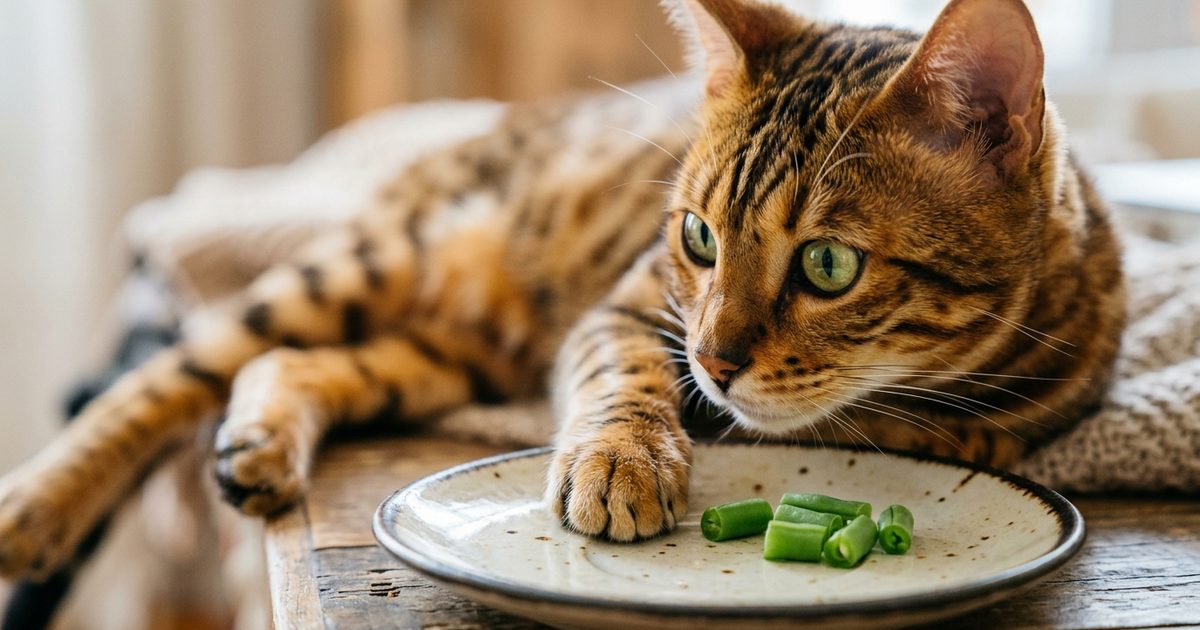
A few chopped bite-sized pieces, as an occasional treat — roughly a tablespoon for an average adult cat. All treats combined should stay under about 10% of daily calories. Green beans are low in calories, so the ceiling is generous, but they are still a treat or filler, not a meal.
Portioning green beans is genuinely the easy part, because their low calorie count gives you a wide margin of safety. Still, the number matters — a cat's digestive system handles plant fiber best in small, infrequent amounts, and even a safe food becomes a problem if it crowds out what your cat actually needs.
The 10% treat rule
Veterinarians generally recommend that all treats combined stay under roughly 10% of a cat's daily calories. For a typical adult cat eating around 200 kcal per day, that 10% ceiling is about 20 kcal — and a tablespoon of chopped green beans contributes only a handful of kcal. That math is exactly why green beans are one of the most generous treats you can offer by volume: you can let your cat feel like she's getting a sizable snack while spending almost none of her daily calorie budget.
This is the same logic that makes green beans the filler of choice in weight-management plans — maximum fullness, minimum energy. The Cornell Feline Health Center is a reliable reference for the balance of treats within a complete feline diet. For the broader obligate-carnivore context that frames why a treat is only ever a treat, see what cats eat — a cat's metabolism runs on animal protein and fat, and no vegetable changes that.
Frequency and portion size
For a healthy adult cat, a few chopped pieces, a few times a week, is a reasonable rhythm. Introduce them slowly the first time — a cat unaccustomed to fiber can react with gas or loose stools, so start small and see how she tolerates it before making it a regular treat.
Smaller cats, seniors, diabetic cats, and those with sensitive stomachs should have fewer, or none at all without your vet's okay. For a comparable safe-fiber alternative that sits in the same occasional-treat category, see can cats eat peas. And if green beans are part of a deliberate weight-loss plan, the exact portion belongs inside that plan — cat weight covers the deficit math and the safe rate of loss under veterinary supervision.
What Are the Risks and Cautions of Feeding Green Beans to Cats?
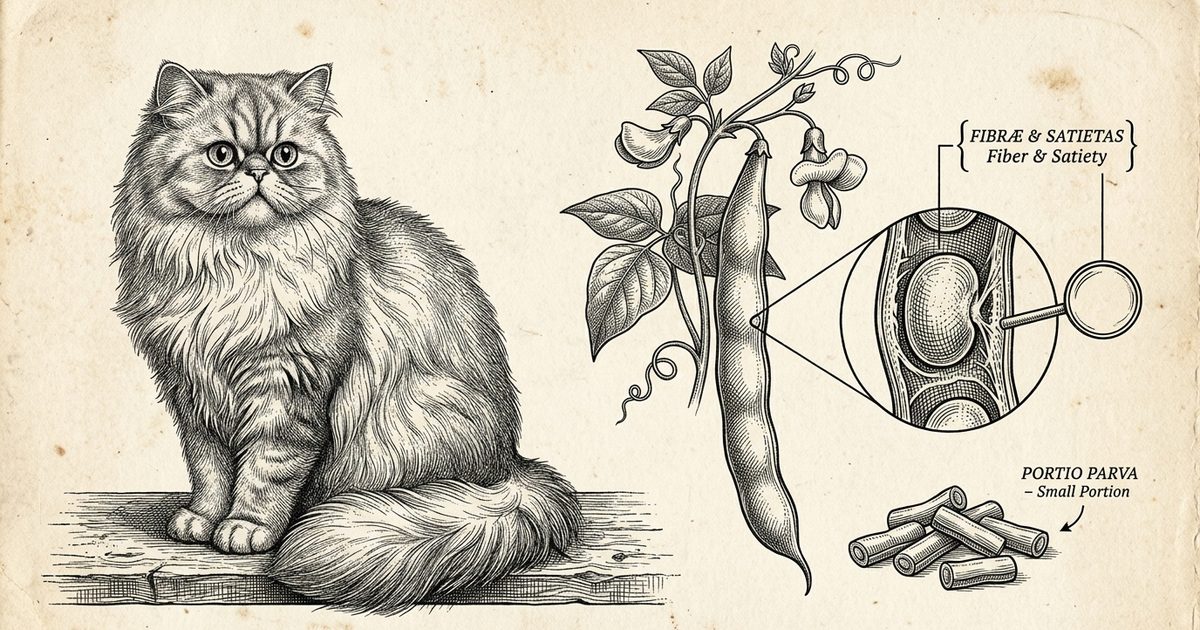
Green beans are low-risk for a healthy cat, but they are not risk-free: salted or seasoned preparations (and casserole with onions) are unsafe, whole beans can choke small cats (so chop), and excess fiber can cause loose stools. Diabetic cats need a vet's okay. Green beans never replace complete cat food.
The bean itself is gentle. Almost every real problem with green beans comes from how they're prepared, how much is offered, or how they're sized — all of which are in your control.
Salt, seasoning, and casserole
This is the single biggest avoidable risk. Added salt — especially in regular canned green beans — places a slow, cumulative load on a cat's kidneys, and cats are far less equipped to handle dietary sodium than we are. Butter, oil, and seasonings pile on unnecessary calories and can upset the stomach on their own.
Green bean casserole is outright unsafe. Onions and garlic are toxic to cats, damaging red blood cells, and the dish is typically high-fat and dairy-heavy on top of that. International Cat Care is a sound reference on foods to keep off a cat's menu. If your cat shows gastrointestinal signs after any new food, cat vomiting covers when those signs cross the line from passing upset into something that warrants a vet visit.
Choking — chop for small cats
The firm, fibrous pod and the bean's curved shape are a genuine choking hazard for small cats, kittens, or cats that gulp their food. The fix is simple: always chop into small bite-sized pieces before offering. If you see gagging, drooling, or pawing at the mouth after a treat, treat it as an emergency and call your vet immediately.
Too much fiber and sensitive stomachs
A cat not used to fiber can develop gas, bloating, or loose stools from a large portion all at once. Start with a tiny amount and let her gut adjust. And remember the ceiling that matters most: green beans must never displace complete cat food, which supplies the protein, taurine, and fat your cat actually needs to stay healthy. They're a treat, or a filler — never the meal.
Green Beans for Cats at a Glance — Summary
| Question | Short answer |
|---|---|
| Are green beans safe for cats? | Yes — plain cooked, steamed, or raw-chopped green beans are non-toxic and a commonly vet-recommended low-calorie, high-fiber treat for healthy adult cats. |
| Are green beans good for cats nutritionally? | Fiber is the genuine payoff; the small vitamins and minerals aren't needed on complete food. Low calorie — not a vitamin boost — is the real advantage. |
| Can green beans help weight loss? | Yes, but only as a satiety filler inside a vet-supervised calorie deficit — swapping a few plain beans for higher-cal treats. Not a standalone fix. |
| How should I serve them? | Plain only: cooked/steamed or raw chopped small, no salt, oil, butter, or seasoning. Canned must be unsalted/low-sodium and rinsed well. Never whole. |
| How many can a cat eat? | A few chopped pieces — roughly a tablespoon. All treats combined stay under ~10% of daily calories, a few times a week. |
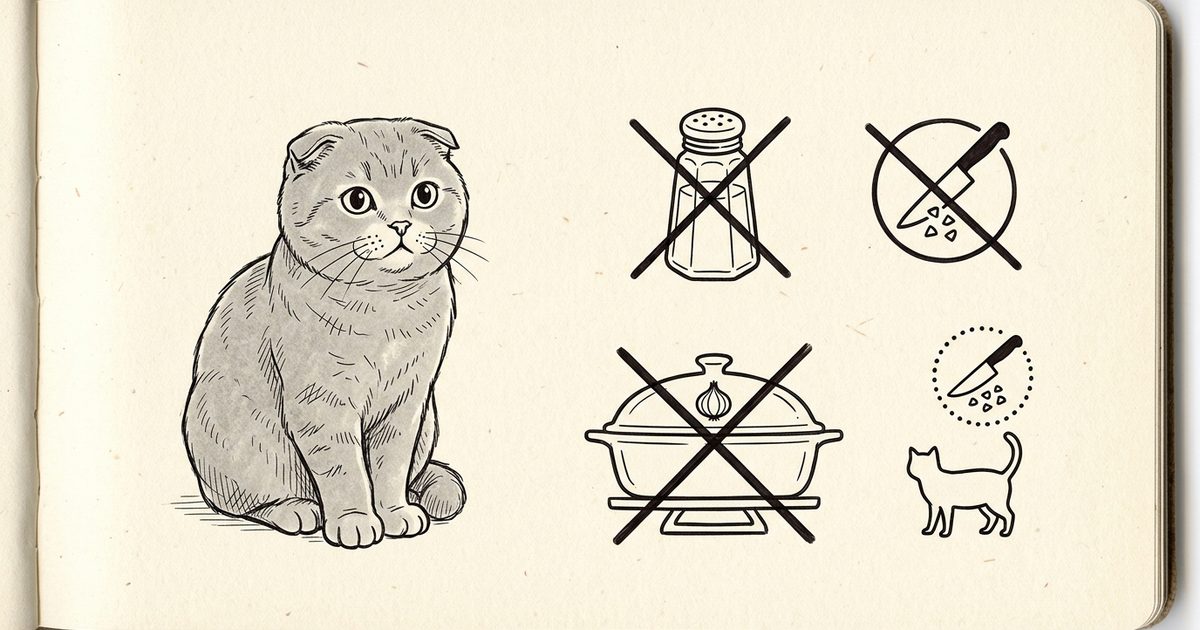
| What are the risks? | Salted or seasoned prep, green bean casserole (onions are toxic), choking if served whole, and loose stools from excess fiber. Never a meal substitute. |
Green beans are one of the friendlier vegetables you can share with a cat — low in calories, rich in fiber, and useful as a weight-management filler when a vet says a deficit is in order. Keep them plain, chop them small, and they stay a safe, occasional treat alongside the complete food your cat actually runs on. Green beans never replace a meal — they just make one feel a little fuller.
Curious What Your Cat Would Say?
Upload a photo and get a warm, personalized reading from your cat's perspective.
Start Your Free ReadingFrequently Asked Questions
Can cats eat green beans every day?
Not every day. Green beans are a treat or occasional filler, and all treats combined should stay under about 10% of your cat's daily calories. For most healthy adult cats, a few chopped pieces a few times a week is the sensible rhythm — daily risks crowding out the complete food your cat actually needs.
Are green beans good for cats?
Good in a narrow, practical sense — not a health boost. The genuine payoff is fiber, which helps with fullness and regularity, plus the fact that green beans are extremely low in calories. A cat on complete food already gets all the vitamins and minerals it needs, so green beans are safe and useful rather than necessary.
Can green beans help my cat lose weight?
They can help, but only as one tool inside a vet-supervised calorie deficit. Substituting a few chopped plain green beans for higher-calorie treats lets your cat feel full while eating less energy. Green beans don't cause weight loss on their own — and a cat's safe rate of loss must be set by a vet.
How many green beans can I give my cat?
A few chopped bite-sized pieces — roughly a tablespoon for an average adult cat, a few times a week. Because green beans are very low in calories, the ceiling is generous, but they remain a treat or filler and should never replace a meal of complete cat food.
Can cats eat raw green beans?
Yes, raw green beans are safe for cats when chopped small. The real risk isn't toxicity — it's the firm fibrous pod, which is a choking hazard if served whole. Cooking softens the pod for easier digestion, but raw chopped beans are a legitimate option some cats enjoy for the crunch.
Can cats eat canned green beans?
Only if they are unsalted or low-sodium, and rinsed thoroughly. Many regular canned brands add a meaningful amount of salt, which places a slow, harmful load on a cat's kidneys. Never use canned green beans packed with seasoning, broth, or flavor packets.
Can kittens eat green beans?
It's best to wait. Kittens have small mouths and developing digestive systems, so the choking risk from a firm pod is higher and excess fiber can upset a young gut. If you want to offer any, give only a tiny, well-cooked, finely chopped piece — but check with your vet first.
Can diabetic cats eat green beans?
Only with your vet's explicit okay. Green beans are low in calories and sugar, which sounds suitable, but any addition to a diabetic cat's diet has to fit the feeding plan that controls blood glucose. Never offer new foods to a diabetic cat without clearing them with your vet first.
Can cats eat green bean casserole?
No — green bean casserole is unsafe for cats. The classic recipe is built on onions and garlic, which are toxic to cats and damage red blood cells, plus a high-fat dairy sauce and fried toppings. Only plain, unseasoned green beans are safe.
Why is my cat interested in green beans?
Cats are obligate carnivores and can't taste sweet, so it's never about flavor. The interest, when it appears, is the crunch, the novel smell, the texture, or simply mimicking what you're eating. Some cats are curious about new objects on a plate — it's texture and novelty, not a vegetable craving.
Sources & References
You Might Also Like
Kitten Teething: Timeline, Symptoms & How to Help
Kitten teething runs from 3 to 7 months as baby teeth fall out. Learn the timeline, signs to watch for, and how to soothe a teething kitten safely.
15 min readWhen Do Cats Stop Growing? A Complete Timeline
When do cats stop growing? Most cats reach adult size by 12-18 months, but large breeds like Maine Coons keep growing until 3-4 years. Full timeline inside.
14 min readCan Cats Eat Cherries? Flesh, Pit & Toxicity Facts
Can cats eat cherries? Pitted flesh is safe in tiny amounts — but the pit, stem, and leaves are toxic (cyanide precursors). Learn what's safe and what isn't.
15 min read