
Can Cats Eat Raspberries? The Tiny-Treat Rule
So you're wondering whether you can share a raspberry with your cat. The short answer to can cats eat raspberries is yes — they're non-toxic, low in sugar, and safe for most healthy adult cats in tiny amounts, and on the question of whether are raspberries safe for cats, the consensus is a cautious yes when the portion stays at one or two berries as an occasional treat. Raspberries differ from firmer fruits like blueberries in one specific way: they carry a trace of natural xylitol, which is why the dose is smaller than you might expect. This guide walks through the verdict, the xylitol nuance, the nutrition, how to serve them safely, and the small set of risks worth knowing before you offer the first berry.
Key takeaways
- Raspberries are non-toxic to cats and low in sugar, and are safe for most healthy adult cats in tiny amounts — one or two berries as an occasional treat, never a regular snack.
- Raspberries contain a trace amount of natural xylitol — the sweetener that is highly toxic to dogs. At the level in one or two berries this is not considered toxic to cats, but it is the reason to keep the dose to a berry or two and never a handful.
- Serve fresh, washed, and whole for most cats or mashed for small cats — never jam, yogurt, or baked goods, and never as a meal substitute for complete cat food.
Raspberries for Cats — Quick Reference
| Raspberry form | Safe for cats? | Notes |
|---|---|---|
| 1–2 fresh washed raspberries | Yes, as a treat | The safe baseline — one or two berries, occasionally |
| Mashed raspberry | Yes, for small cats | Easier to eat and less of a choking risk for kittens or fast eaters |
| Frozen raspberry | Yes, if thawed slightly | Safe; thaw so the icy flesh doesn't crumble into a gulp hazard |
| Raspberry jam or syrup | No | Concentrated sugar, and possible added xylitol |
| Raspberry yogurt or baked goods | No | Added sugar, dairy many cats can't digest, and unknown sweeteners |
| Wild raspberries or unknown berries | No | Cannot confirm the plant or rule out pesticides and look-alikes |
Can Cats Eat Raspberries?
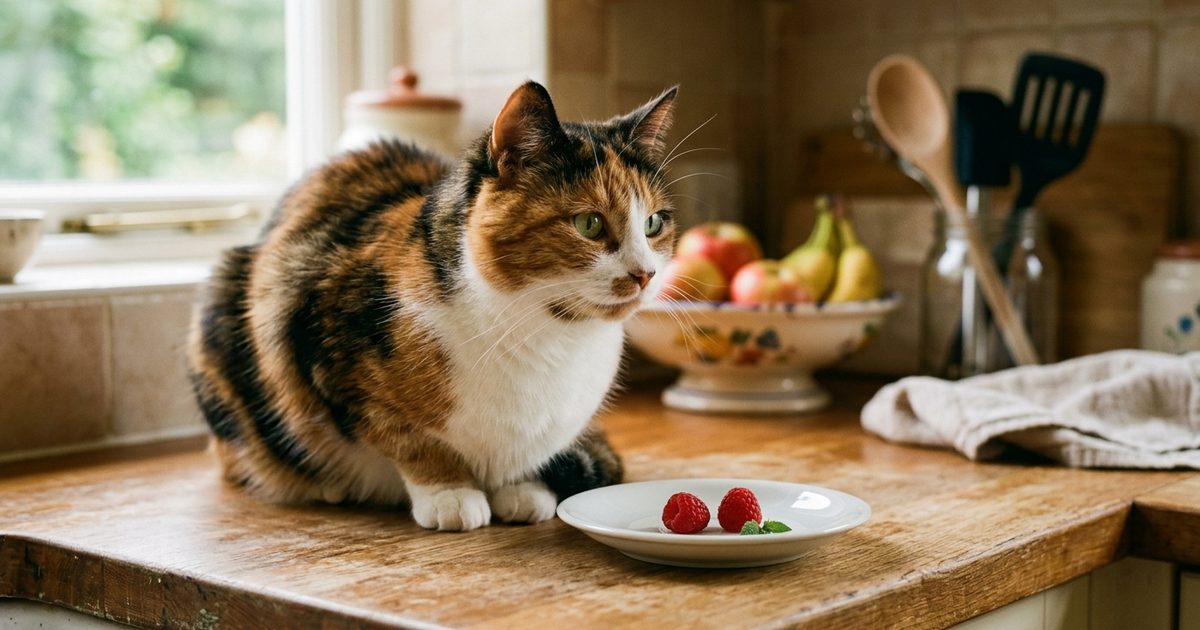
Yes — cats can eat raspberries. They are non-toxic, low in sugar, and low in calories, which makes them a reasonable fruit treat in tiny amounts. The catch is the size of the treat: one or two berries, occasionally. Raspberries are never a substitute for complete cat food.
The short answer
The headline is reassuring: raspberries are non-toxic to cats, low in sugar, and low in calories, which places them among the softer fruit options you can share with a healthy adult cat. The qualifier — and there is always a qualifier with fruit — is "treat, not food." A raspberry is a small, water-rich nibble, not nutrition. If you are wondering can cats have raspberries, the honest answer is yes, in a portion that is deliberately small: one or two berries, on occasion. Note that this is a smaller dose than the two-to-three rule we use for blueberries or strawberries, and the next section explains exactly why.

Where raspberries sit among cat-safe fruits
Raspberries are a fruit, and that fact alone sets a ceiling on their role. Cats are obligate carnivores — their metabolism runs on protein and fat, not on sugar or plant matter, and a complete cat food already supplies everything they need. Among the fruits people sometimes share, raspberries are non-toxic and low in sugar, comparable to blueberries and strawberries. But two things make the raspberry portion tighter: the soft, hollow, seedy flesh (which fragments when bitten) and a trace-xylitol nuance we cover next. So if you are asking are raspberries safe for cats, the answer is yes — but with a lower ceiling than their firmer berry cousins. You can read more about feline nutrition from the Cornell Feline Health Center.
What About the Xylitol in Raspberries?
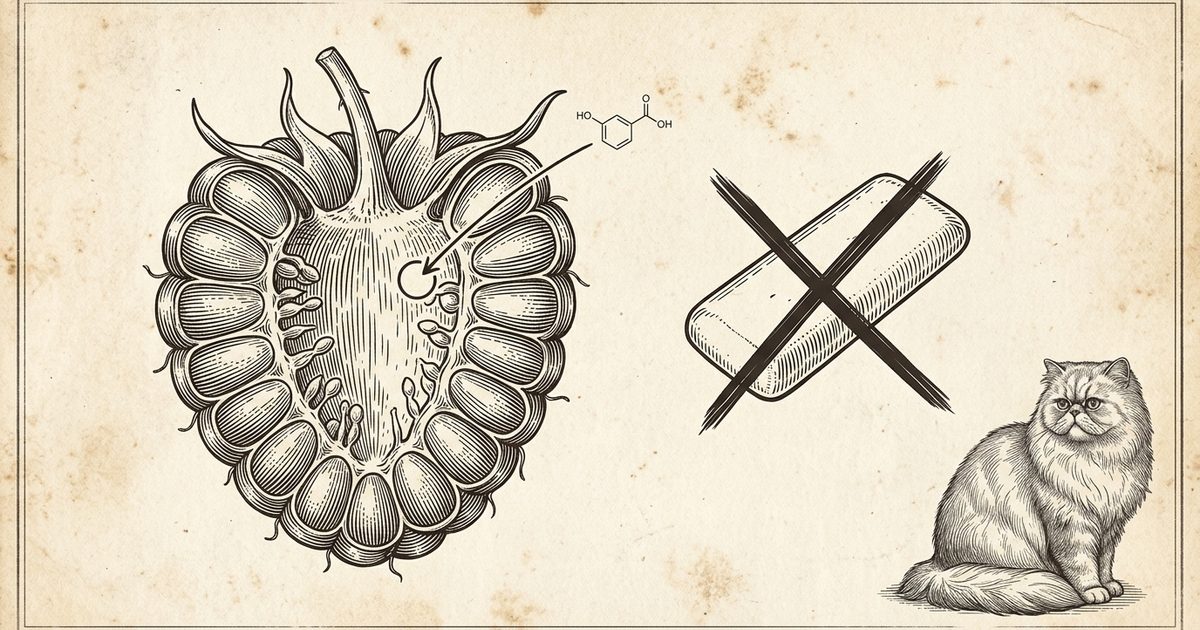
Raspberries contain a trace amount of natural xylitol — the same sweetener that is highly toxic to dogs. At the level found in one or two berries, this is not considered toxic to cats. It is, however, the main reason to keep raspberries to a treat of one or two berries and never a handful.
What the trace xylitol actually means
Xylitol is a sugar alcohol that occurs naturally in small amounts in several fruits, raspberries among them. In dogs, xylitol is genuinely dangerous — it triggers a rapid insulin spike and can cause liver damage, which is why xylitol panic is so widespread among pet owners. Here the honest move is to state both sides plainly. On one hand, the canine data does not cleanly transfer to cats: cats appear far less sensitive to xylitol than dogs, and the ASPCA's list of people foods to avoid feeding pets does not include raspberries. On the other hand, that does not mean the compound is irrelevant. The accurate frame is this: the trace amount inside one or two berries is not the concern — it is the reason a handful is the wrong idea. Cat-specific toxic thresholds for xylitol are not established, so we generalize rather than quote a number that does not exist. Do not extrapolate dog-xylitol fear onto your cat, and do not dismiss the compound either.
The added-xylitol trap — not the berry
The genuine, well-documented xylitol danger to pets comes from sugar-free gums, candies, and some peanut butters, where xylitol is an added, concentrated sweetener — not from the trace inside a fresh berry. That is a different exposure by orders of magnitude. This is also why raspberry jam, syrup, and any "sugar-free" raspberry-flavored product must be skipped entirely: they may carry added xylitol or heavy added sugar, neither of which belongs near a cat. For the berry-cluster contrast on portions and prep, see our guides on whether cats can eat strawberries and whether cats can eat blueberries.
Why the dose is "a berry or two"
Pull the threads together and the ceiling writes itself. The trace xylitol is one reason to keep raspberries small. The modest sugar load is a second. And the soft, seedy texture — which fragments and can move a sensitive gut faster than a firm berry — is a third. Stacked, those three set the raspberry rule at one to two berries, a tighter portion than the two-to-three we allow for the firmer, lower-margin berries. Treat the raspberry as a rare, tiny curiosity, and the math stays on your cat's side.
Are Raspberries Good for Cats?
Raspberries offer fiber, vitamin C, and manganese, plus antioxidants, but a cat on complete food already gets what it needs. The real upside is that they are low in sugar for a fruit — so the cost of offering one is small. Safe, not necessary.
Fiber, vitamin C, and antioxidants
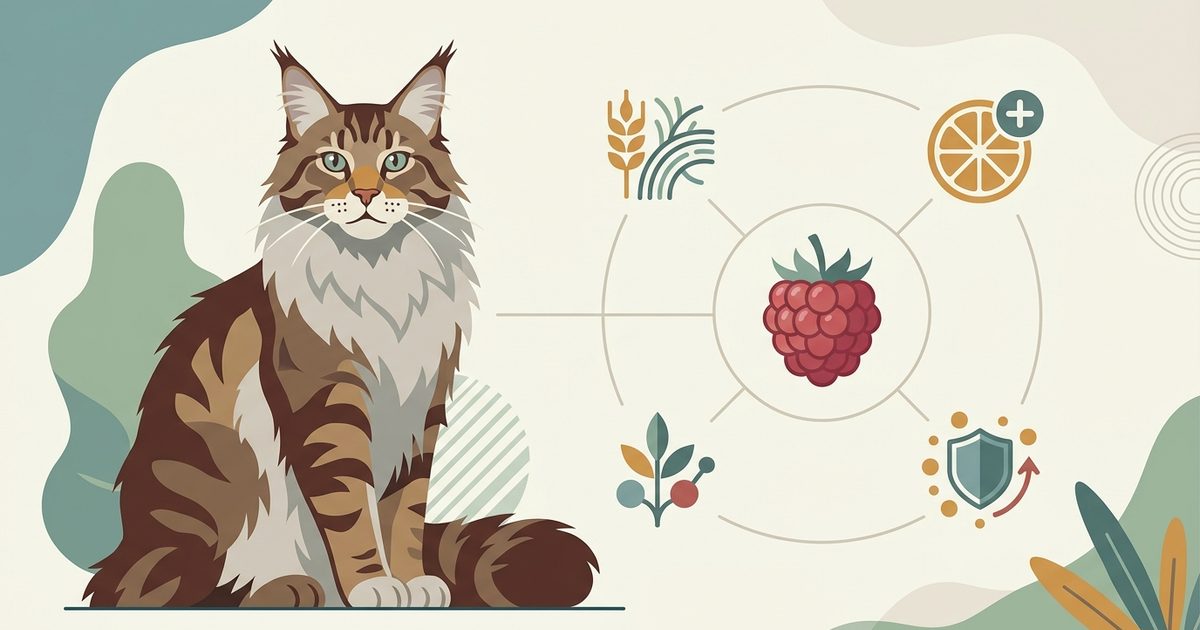
Raspberries are genuinely rich in dietary fiber, vitamin C, manganese, and antioxidants like anthocyanins and ellagic acid — compounds that have been well-studied in humans for their role in cellular repair and inflammation. The catch is that your cat's metabolism is built for prey, not produce. Cats are obligate carnivores whose bodies run on protein and fat, and a complete commercial diet already supplies every nutrient they need in the right form and balance. So while the nutrient list on a raspberry looks impressive, a cat does not derive the same benefit from fruit-borne vitamins that a human does. Think of raspberries as a harmless snack, not a health supplement — the Cornell Feline Health Center is clear that a complete and balanced cat food, not fruit, is what keeps a cat healthy.
Low sugar — the genuine advantage
Where raspberries actually earn their place is sugar. They carry roughly 4–5g of sugar per 100g — among the lowest of common fruits, even lower than blueberries or strawberries. Combined with their tiny size, that makes raspberries unusually well-positioned in the treat category: a single berry is a negligible load of sugar and calories, so the cost of offering one is genuinely small. The honest caveat is that it is the trace xylitol nuance, not the sugar, that caps the dose at one or two berries rather than a small handful. International Cat Care notes that treats and titbits should stay occasional precisely because sugary extras add up quickly across a week.
The bottom line on nutrition
Non-toxic and low-cost, but not necessary. A raspberry is a couple of calories without a real payoff for your cat — but the low payoff comes with a low price, as long as the dose stays at one or two berries. There is no health reason to feed raspberries, and no health reason not to.
How Should I Serve Raspberries to My Cat?
Serve raspberries fresh and washed, whole for most adult cats or mashed for small cats and kittens. Offer one or two berries as a treat. Never add sugar, syrup, or seasoning, and skip raspberry jam, yogurt, and baked goods entirely.
Fresh, washed, ripe
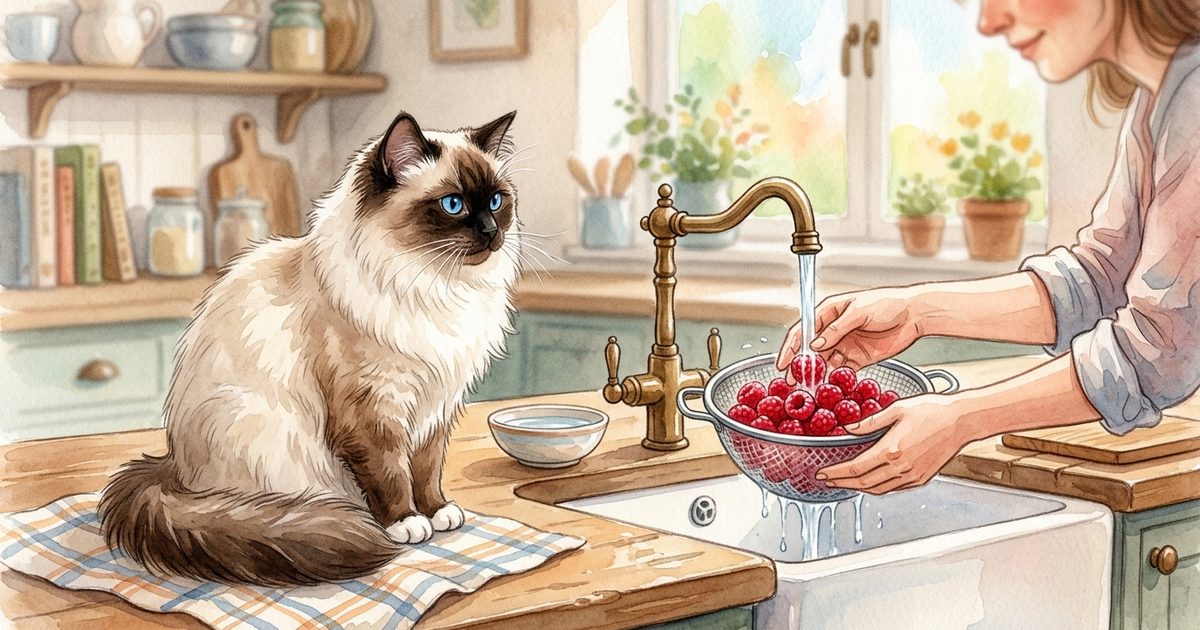
Start with fresh, fully ripe, plain berries — nothing moldy, sweetened, coated, or processed. Rinse them gently under cool water to remove pesticide residue and surface dirt; a raspberry's soft, hollow flesh holds grit more stubbornly than a firm berry like a blueberry, so a quick swirl under the tap matters more than you might expect. Frozen raspberries are equally safe, but let them thaw slightly first — that soft flesh turns icy and crumbly when frozen solid, which makes the berry fall apart into messy, sharp-edged fragments before your cat ever gets to it.
Whole or mashed
Most healthy adult cats can manage a whole raspberry without trouble. The catch is the berry itself: soft, hollow, and seedy throughout, it fragments easily when bitten, which is a mild choking and gulp risk for small cats, kittens, or cats that tend to inhale their food. For any of those cats, mash the raspberry into a paste on a plate before offering it, and always pull off any stem or leaf first. A cat with a delicate mouth or a fast eater will do better with mash than with a whole berry handed over casually — texture is the part of serving most owners overlook.
Forms to avoid
Some raspberry products are off the table entirely. No raspberry jam or syrup — concentrated sugar, and possible added xylitol. No raspberry yogurt, which piles on added sugar plus dairy that many cats cannot digest comfortably. No raspberry muffins or baked goods. And absolutely no "sugar-free" raspberry-flavored anything, where xylitol may be an added concentrated sweetener and a genuine hazard. If you are exploring other fruits, our guides on can cats eat bananas and can cats eat cherries cover the broader sweet-treat and fruit-prep rules — the same "plain, fresh, unsweetened" principle applies across all of them.
How Many Raspberries Can a Cat Eat?
About one to two raspberries, as an occasional treat rather than a daily habit, for a healthy adult cat. All treats combined should stay under roughly 10% of daily calories. The raspberry ceiling is smaller than for blueberries or strawberries — and the trace xylitol is one reason.
The 10% treat rule
Veterinary nutrition guidance puts a simple ceiling on all treats combined: no more than about 10% of a cat's daily calories. For a typical adult cat eating around 200 kcal a day, that's roughly 20 treat-calories to spend across everything — the lick of tuna water, the corner of a treat, the berry.
A single raspberry carries only about 1 kcal, so on calories alone, a cat could theoretically have several before hitting that 10% line. This is exactly the point where the raspberry rule parts ways from the blueberry rule: the calorie math would allow more, but two other factors — the trace natural xylitol and the soft, seedy, fragile texture — cap raspberries at a berry or two. The Cornell Feline Health Center treats the 10% rule as a ceiling on the treat category, not a target, and for raspberries the real limit sits well below it.
Frequency and portion size
So, how many raspberries can a cat eat in practice? One to two berries, occasionally — think a couple of times a month rather than every day — for a healthy adult cat. A single berry is often enough for a curious cat who just wants to investigate what you're eating.
The dose gets smaller from there. Kittens, small cats, overweight cats, diabetic cats, and cats with sensitive stomachs should have fewer, or none. The same logic that makes a cat's sense of taste indifferent to sweetness means the berry is curiosity, not a craving — so there's no need to keep them coming. And remember raspberries sit entirely outside what a cat's diet is actually built on — see what do cats eat for the obligate-carnivore context these treats hang off of.
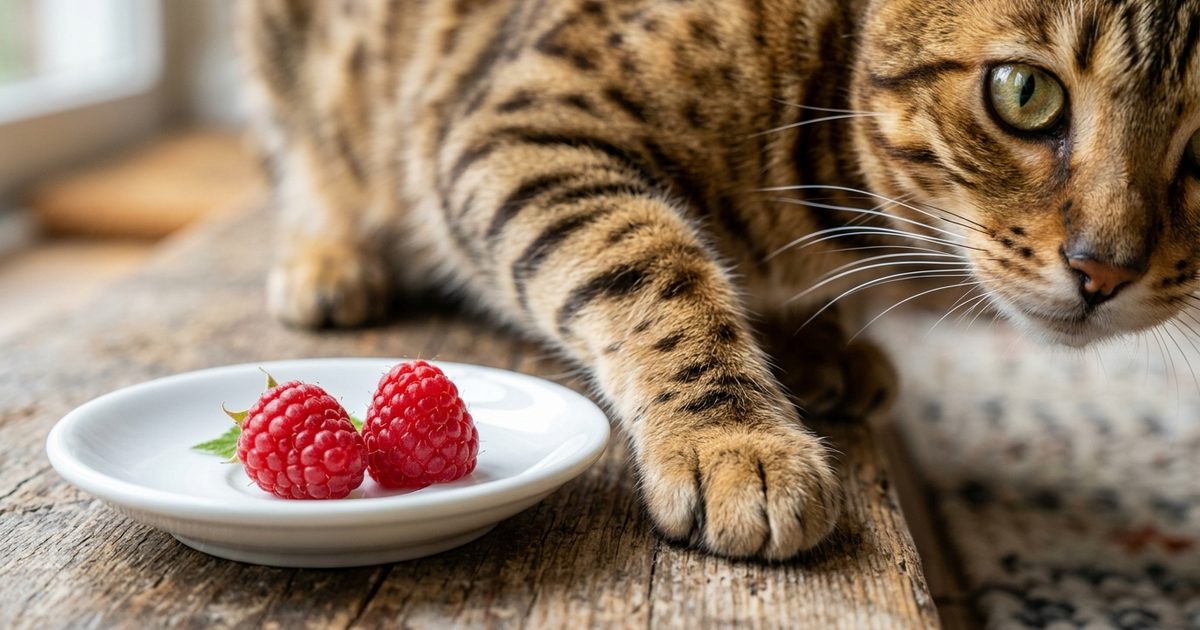
What Are the Risks and Cautions of Feeding Raspberries to Cats?
Raspberries are low-risk in tiny amounts, but they are not risk-free: the trace xylitol caps the dose at a berry or two, the soft seedy flesh can choke small cats or upset a sensitive gut (so mash), and raspberries must never replace complete cat food. Diabetic and overweight cats should skip them.
Sugar load, frequency, and the xylitol ceiling
Even a low-sugar fruit adds up if it becomes a daily habit, and raspberries carry a second, more specific reason to stay rare: the trace natural xylitol inside the berry. The canine data doesn't transfer cleanly to cats, and raspberries aren't on toxic-food lists — but the honest takeaway is that this trace is the second reason to treat raspberries as an occasional item, not a regular one. The protection comes from the one-to-two-berry, occasional rule as a whole, not from any single berry being risk-free on its own.
Soft, seedy texture — mash for small cats
A raspberry is a soft, hollow berry seeded throughout, and it fragments easily the moment a cat bites down. That makes it a mild choking and gulp risk for small cats, kittens, or cats that eat fast — and the seedy flesh can move a sensitive gut faster than a firm berry would. For those cats, mash the berry into a paste on a plate before offering, and start with a single berry rather than two. If you see gagging, drooling, or repeated vomiting, stop and call your vet.
Never a meal substitute
Raspberries don't supply the protein, taurine, fat, or complete nutrition a cat actually runs on. They're a treat, full stop — and a treat that displaces real food causes malnutrition over time, not better health. International Cat Care is blunt about this: titbits are a small bonus on top of a complete diet, never a substitute for one. If a new food brings on gastrointestinal signs, our guide to cat vomiting walks through when that warrants a vet visit.
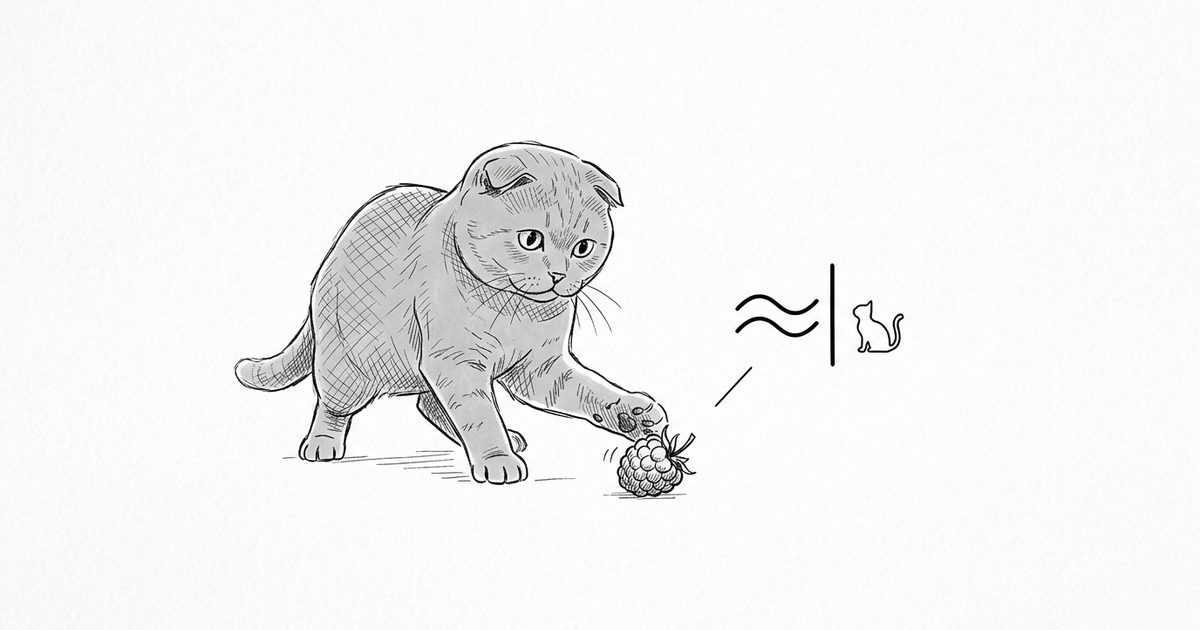
Raspberries for Cats at a Glance — Summary
| Question | Short answer |
|---|---|
| Can cats eat raspberries? | Yes — non-toxic and low in sugar; one to two berries as a rare treat. |
| Is the xylitol dangerous? | The trace in a berry or two isn't considered toxic to cats; it's why the dose stays small. |
| Are raspberries good for cats? | Safe and low-sugar, but not necessary; complete food gives a cat everything it needs. |
| How should I serve them? | Fresh, washed, whole for most cats or mashed for small cats; never jam, yogurt, or baked goods. |
| How many can a cat eat? | One to two, occasionally, staying under roughly 10% of daily calories. |
| Who should skip them? | Diabetic, overweight, and sensitive-stomach cats. |
In short, raspberries sit at the tighter end of the cat-safe fruit scale — fine in a berry or two, never a handful, and never a stand-in for real food. A healthy adult cat on complete food doesn't need them, but as a tiny, occasional curiosity treat, they're one of the safer options on the list.
Curious What Your Cat Would Say?
Upload a photo and get a warm, personalized reading from your cat's perspective.
Start Your Free ReadingFrequently Asked Questions
Can cats eat raspberries every day?
No. Raspberries are a one-to-two-berry occasional treat — think a couple of times a month, not daily. Daily fruit adds sugar across the week, and the trace natural xylitol inside the berry is a second reason to keep them rare, not a habit.
Are raspberries safe for cats?
Yes, for most healthy adult cats in tiny amounts. Raspberries are non-toxic and low in sugar, comparable to blueberries and strawberries. They are safe with a tighter ceiling — one to two berries, occasionally — because of the soft seedy texture and a trace-xylitol nuance.
Why do raspberries have a smaller portion than blueberries for cats?
Blueberries are firm and sit at a two-to-three-berry rule; raspberries sit at one to two. The raspberry carries a trace of natural xylitol, and its soft hollow seedy flesh fragments when bitten. Stacked together, those factors set a tighter ceiling than blueberries despite similar sugar.
Is the xylitol in raspberries dangerous for cats?
The trace inside one or two berries is not considered toxic to cats. Xylitol is highly dangerous to dogs, but the canine data does not cleanly transfer to cats, and raspberries are not on the ASPCA's avoid list. The real hazard is added xylitol in sugar-free products, not the fresh berry.
How many raspberries can I give my cat?
One to two berries, occasionally, for a healthy adult cat — staying under roughly 10% of daily calories across all treats combined. A single berry is often enough for a curious cat. Smaller, overweight, diabetic, or sensitive-stomach cats should have fewer or none.
Can kittens eat raspberries?
Only in a much smaller portion, and mashed. A kitten's mouth and gut are more delicate, and the soft hollow berry fragments easily into a choking and gulp risk. Mash a raspberry into a paste on a plate, start with a single berry, and treat it as a rare curiosity.
Can cats eat frozen raspberries?
Yes, if thawed slightly first. Frozen raspberries are nutritionally the same, but their soft flesh turns icy and crumbly when solid, which makes the berry fall apart into sharp-edged fragments. Let it thaw so the flesh softens before offering it to your cat.
Can diabetic cats eat raspberries?
Best to skip them. Although raspberries are low-sugar for a fruit, any sugar can affect a diabetic cat's blood glucose, and a veterinary team manages their diet tightly. If you want to offer a treat, clear it with your vet first rather than guessing at the dose.
Can cats eat raspberry yogurt or jam?
No. Raspberry jam and syrup carry concentrated sugar and may contain added xylitol. Raspberry yogurt adds sugar plus dairy that many cats cannot digest. And any sugar-free raspberry-flavored product is off the table entirely because of the added-xylitol hazard.
Sources & References
You Might Also Like
Can Cats Eat Cherries? Flesh, Pit & Toxicity Facts
Can cats eat cherries? Pitted flesh is safe in tiny amounts — but the pit, stem, and leaves are toxic (cyanide precursors). Learn what's safe and what isn't.
15 min readCan Cats Eat Green Beans? Vet-Approved Veggie Treat Guide
Can cats eat green beans? Yes — plain cooked or raw, they're a safe, low-calorie, high-fiber treat and weight-loss filler. Serving sizes and risks.
17 min readCan Cats Eat Pepperoni? No — Why It's Not a Safe Treat
Can cats eat pepperoni? No — not recommended. It's high in sodium and fat, and often spiced with garlic and onion powder that are toxic to cats.
16 min read