
Why Is My Cat Vomiting? Causes, Colors & When to Worry
If you live with cats that puke, you already know the sound — that sudden, heaving retch that drags you straight to the floor with a paper towel. A cat throwing up is one of the most common reasons owners call the vet, and if you're wondering "why is my cat vomiting?" or what that color means, you're asking the right question. The good news: occasional vomiting is extremely common, and most single episodes pass without anything serious behind them. What separates a non-event from a warning sign is the pattern — how often it happens, what the vomit looks like, and whether anything else has changed.
Key takeaways
- Occasional vomiting is common in cats and usually harmless, but repeated vomiting — or a sudden change in frequency — points to a cause worth investigating with your vet.
- The look of the vomit (foam, bile, undigested food, blood) is a fast clue to the most likely cause and how urgently you should act.
- Some red flags always warrant a vet call right away: blood, repeated vomiting, lethargy, refusing food, or known toxin ingestion.
Cat Vomiting — Quick Reference
| Vomit type | Most likely cause | Urgency |
|---|---|---|
| Hairball (cigar of fur) | Normal grooming, swallowed fur | Low — normal if occasional |
| White foam / clear liquid | Empty stomach, bile and mucus mixing with air | Low if occasional; moderate if repeated |
| Yellow bile | Empty stomach, food intolerance | Low to moderate — watch for repeat episodes |
| Undigested food | Eating too fast, regurgitation | Low — slow the meal down |
| Green | Bile reflux, or plant/toxin ingestion | Moderate to high — rule out toxins |
| Brown / coffee-grounds | Digested blood, possible GI bleeding | High — see the vet promptly |
| With blood (red streaks) | Irritation, ulcers, injury, or toxin | High — call the vet now |
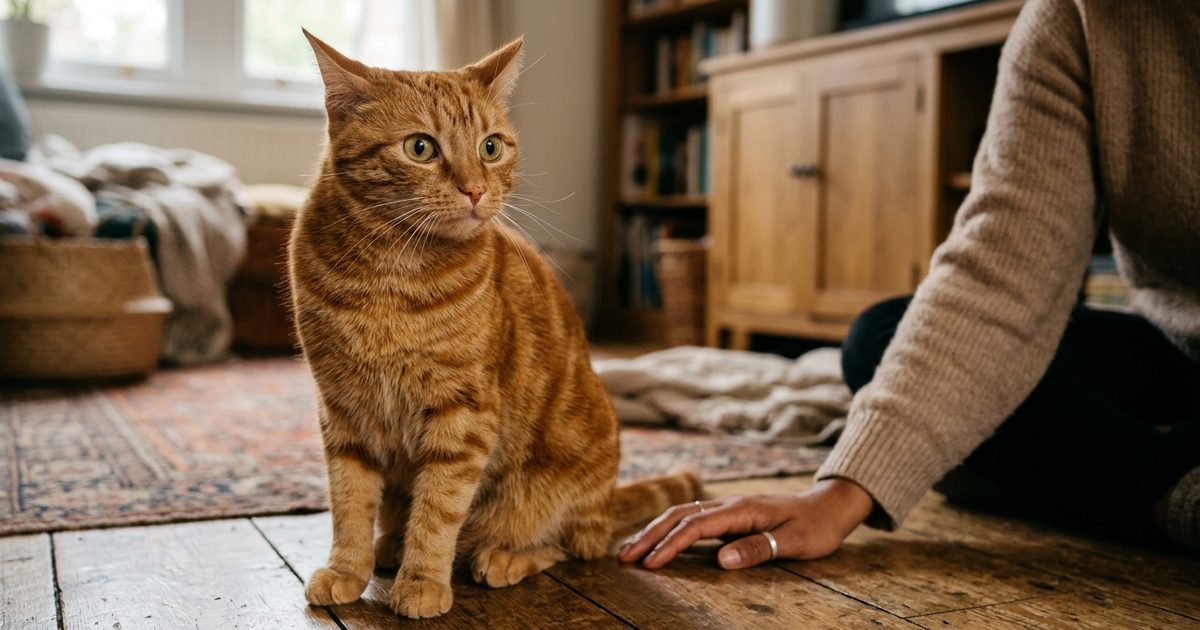
Why Is My Cat Vomiting?
Cats vomit for many reasons — most often hairballs, eating too fast, a food change, or mild stomach upset, but also parasites, infections, toxic plants, swallowed objects, and diseases like kidney or thyroid illness. A single episode is usually harmless; repeated vomiting points to a cause that needs a vet.
Common, lower-risk causes
Most cats that puke now and then are dealing with something simple and self-limiting — annoying for you and the rug, but not dangerous. The usual suspects:
- Hairballs. As cats groom, they swallow fur; most passes through, but some collects in the stomach and comes back up as a damp cigar-shaped wad. Occasional hairballs are normal, especially in longhaired breeds. Our cat hairball guide covers when they tip from routine into excessive.
- Eating too fast. A cat that scarfs a meal may bring it back up minutes later, largely undigested — the classic "scarf-and-barf." Smaller portions or a slow feeder usually fixes it.
- Sudden diet change. Cats have sensitive, habit-bound digestive systems. Switching food cold-turkey often triggers a day or two of vomiting; transition gradually over a week.
- Grass eating. Many cats nibble grass, and some vomit afterward. Whether they eat grass to vomit is genuinely debated — the intent isn't fully understood, and not every grass-eater throws up. We unpack the behavior in why cats eat grass.
- Mild gastritis. A brief bout of stomach inflammation from a dietary indiscretion or minor irritation usually resolves on its own within a day.
These causes share a pattern: one or two episodes, then a quick bounce-back to normal eating and energy — the reassuring signal.
Higher-risk causes
When vomiting is frequent, persistent, or paired with other symptoms, the cause is more likely to sit in a higher-risk category. None of these are home-diagnosis territory:
- Intestinal parasites. Roundworms, hookworms, and other parasites can cause chronic vomiting, often alongside weight loss or a dull coat. Our cat worms article covers detection and treatment.
- Infections. Bacterial or viral gastrointestinal infections can trigger acute vomiting, sometimes with fever or diarrhea.
- Inflammatory bowel disease (IBD). Chronic, low-grade gut inflammation often shows up as recurring vomiting over weeks or months.
- Foreign body or obstruction. A swallowed string, toy piece, or hair tie can block the intestine — a true emergency, often with repeated unproductive vomiting and abdominal pain.
- Pancreatitis. Inflammation of the pancreas causes vomiting, lethargy, and refusal to eat; it can come on suddenly.
- Kidney disease. Especially common in older cats, chronic kidney disease produces vomiting along with increased thirst and weight loss. Vomiting paired with refusing food is a dangerous combination — see our guide on how long cats can go without food for the anorexia timeline.
- Hyperthyroidism. Overactive thyroid (mostly in seniors) drives vomiting, weight loss despite a big appetite, and restlessness.
- Toxin ingestion. Certain plants, human foods, medications, and chemicals are toxic to cats, and vomiting is often the first sign. Lilies are the classic example — even a small exposure is life-threatening, as we explain in our lily toxicity article. Suspected ingestion is an immediate vet visit.
The Cornell Feline Health Center provides a trusted overview of vomiting as a clinical sign and when it warrants professional care.
Kittens vs. senior cats
Age changes both the risk profile and the urgency. Kittens dehydrate far faster than adults — their small bodies hold less fluid, so a bout of vomiting that an adult cat shrugs off can become serious in a kitten within hours. Parasites are also more common and more consequential in young cats. If a kitten vomits more than once or twice, or stops eating, call the vet promptly.
Senior cats trend toward chronic, disease-driven causes — kidney disease, hyperthyroidism, and IBD all become more likely with age. Vomiting in an older cat is less often "just a hairball" and more often a signal worth investigating, especially when it becomes a pattern. International Cat Care emphasizes that recurring vomiting in any adult cat — and particularly seniors — should be evaluated rather than dismissed as normal.
At every age, the vomit itself is information — we decode what it looks like next.
Why Is My Cat Throwing Up White Foam or Clear Liquid?
White foam or clear liquid usually means your cat's stomach is empty — bile and stomach juices mix with air to form foam. On an empty stomach it's often harmless, especially if your cat then eats normally. But white foam that happens repeatedly, with lethargy or refusing food, needs a vet visit.
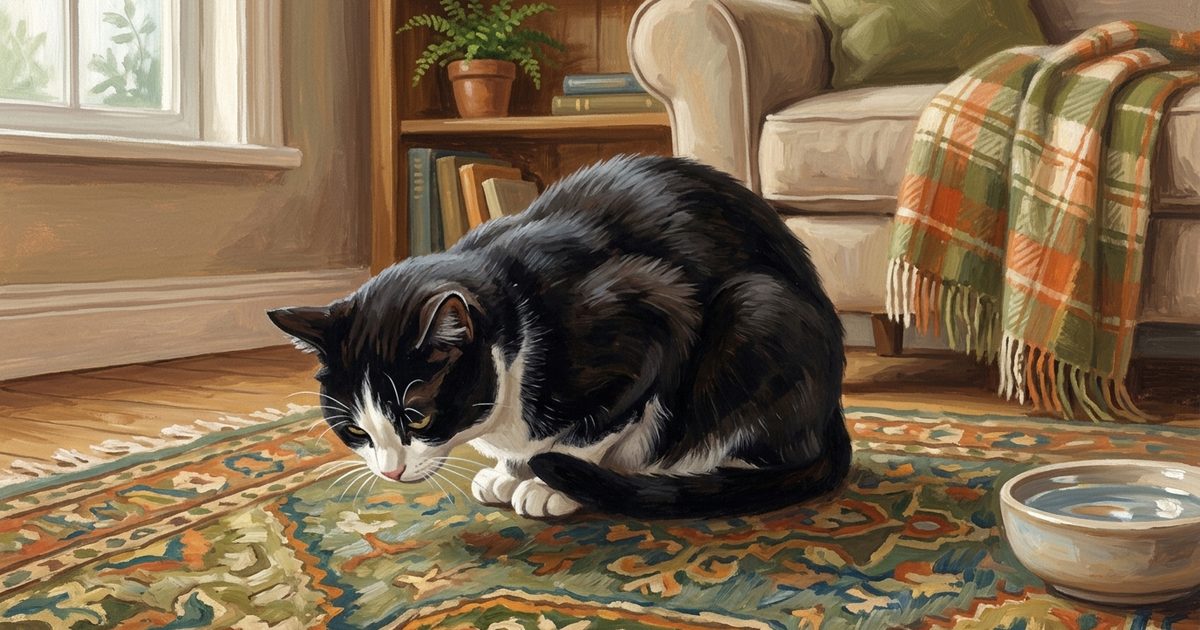
What the foam actually is
Seeing a puddle of white foam or clear liquid makes most owners nervous, but it usually has the simplest explanation: an empty stomach. When the stomach has been empty for a while, small amounts of lingering bile, protective mucus, and swallowed air mix together, and when the stomach contracts to expel them, the liquid whips into foam — that yellow-white froth on the floor.
That's why white foam often shows up in the morning, after a delayed meal, or in cats that have already thrown up once. A single episode before a normal meal is rarely cause for alarm — once food enters the stomach, the irritation stops. The Cornell Feline Health Center notes that this kind of occasional bile vomiting is common in cats and needs no intervention as long as the cat eats normally afterward.
When white foam is a red flag
Whether white foam is harmless or vet-worthy comes down to frequency and the symptoms that travel with it. Foam that recurs several times in a day, or persists across several days, has moved past "empty-stomach irritation" and points to an underlying cause — stomach inflammation, food intolerance, inflammatory bowel disease, or even an obstruction. The same warning signs that apply to vomiting generally (refusing food, lethargy, diarrhea, blood) apply here too — we list them in full under Red-flag symptoms below. When white foam recurs with any of them, don't wait and watch — International Cat Care advises having recurring vomiting checked early.
Why Does My Cat Keep Throwing Up?
When a cat keeps throwing up over days or weeks, it usually points to an ongoing cause — chronic hairballs, food intolerance, inflammatory bowel disease, parasites, or an underlying disease such as hyperthyroidism or kidney problems. Repeated vomiting always warrants a vet visit, because cats dehydrate quickly and the pattern matters more than any single episode.
Acute vs. chronic vomiting
Veterinarians split vomiting into acute and chronic. Acute means a burst over a short window — a few times in a day or two — usually with an identifiable trigger (a diet change, a swallowed string). Chronic vomiting is ongoing — episodes that recur over weeks, sometimes quietly, so a cat that vomits once or twice a week for a month is chronic even if each episode looks mild. The danger is that it hides in plain sight: owners get used to it, assume it's "just hairballs," and the cause goes untreated. International Cat Care is explicit that chronic or repeated vomiting is not normal and should always be investigated rather than dismissed as a quirk.
Chronic causes worth investigating
The conditions listed under Higher-risk causes above are the usual drivers when vomiting becomes a pattern. One point is unique to the chronic case: food allergy or intolerance is manageable at home with a vet-supervised elimination trial — there's no single "vomiting-safe" food, since what suits one cat can upset another. If your cat is also dropping pounds, read our guide on cat weight changes.
Chronic vomiting is a symptom, not a diagnosis. A vet workup — bloodwork, fecal exam, sometimes imaging or biopsy — finds which cause is driving the pattern, because home remedies can't distinguish IBD from early kidney disease. If your cat has vomited regularly for more than a week or two, book a visit; sooner if it's also lethargic, losing weight, or refusing food (as we noted under When white foam is a red flag).
Why Is My Cat Throwing Up After Eating?
Vomiting right after eating is most often from eating too fast, gobbling large kibble, or a food that doesn't agree with your cat. Slowing the meal with a puzzle feeder or smaller portions often fixes it. But vomiting that happens every meal, or brings up food hours later, needs a vet to rule out obstruction or disease.
Fast eaters and scarf-and-barf
There's a reason "scarf-and-barf" is a real phrase among cat people. When a cat gobbles kibble whole with barely a chew, the stomach receives a sudden, oversized load, and the fastest exit is back the way it came. What comes up looks like undigested food in a soft tube shape — and technically this is often regurgitation, not true vomiting (we unpack that distinction in full below). For cats that inhale their food, the fix is mechanical: a slow-feeder bowl, a puzzle mat, or splitting the daily ration into four or five small portions usually resolves it within days. A Maine Coon — big-jawed, fast, and enthusiastic — is a classic scarf-and-barf candidate, but the habit shows up in any breed that eats competitively or shares a bowl.
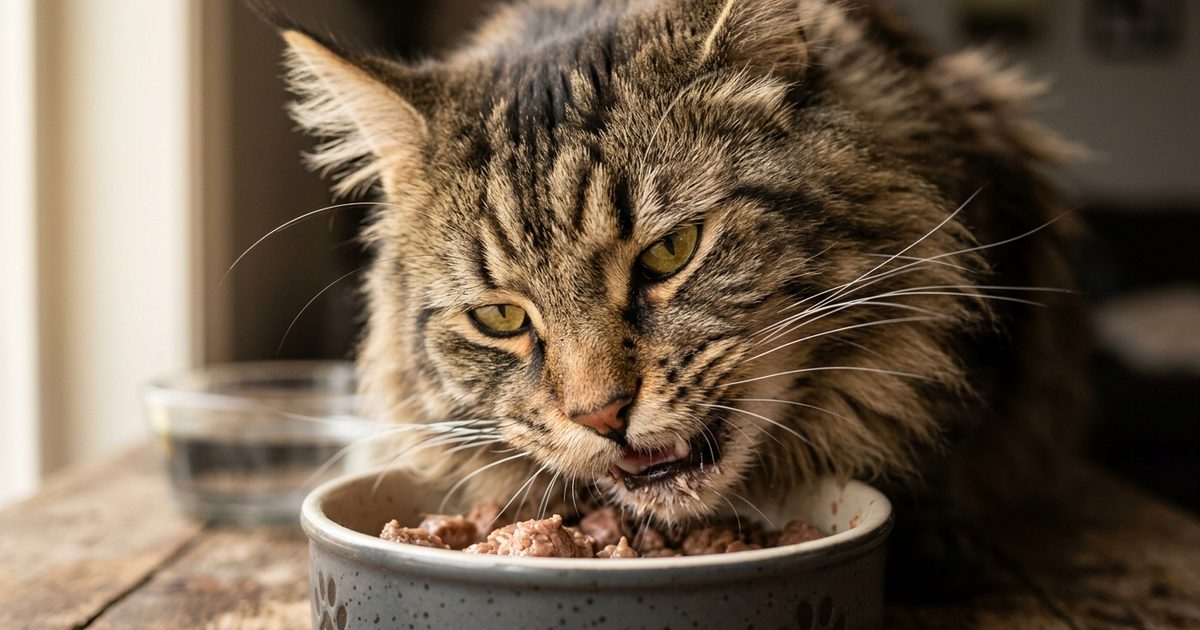
Food intolerance and diet
When vomiting after eating keeps happening even after you slow the meal down, the food itself becomes the likely suspect. Cats develop intolerances to specific proteins just like people do, and a sudden diet change is a frequent trigger (as noted under Common, lower-risk causes, transition gradually over a week). Two other mistakes matter: feeding the wrong food entirely — cats eating dog food lack the taurine and protein density they need, and the GI upset that follows can include vomiting — and plain overfeeding, where large meals stretch the stomach past comfort. If you're unsure where your cat sits, our guide on healthy cat weight walks through portion sizes and body-condition scoring. Persistent vomiting that doesn't respond to these changes — especially with weight loss or diarrhea — points toward food allergy or inflammatory bowel disease, a diagnosis your vet makes, not a guess you make at home. Cornell's Feline Health Center covers diet-related GI signs in more depth if you want the clinical side.
How Can I Tell Vomiting From Regurgitation or a Hairball?
Vomiting is an active, whole-body effort — abdominal heaving, retching, and digested or partially digested food. Regurgitation is passive, with no effort, and brings up undigested food in a tube shape. A hairball is a hacking, coughing spell that produces a damp cigar of fur. Telling them apart helps you judge urgency.
Most owners lump all three under "my cat threw up," but vomiting, regurgitation, and bringing up a hairball are different actions from different parts of the body — and telling them apart decides whether you call the vet now, book for tomorrow, or reach for a brush.
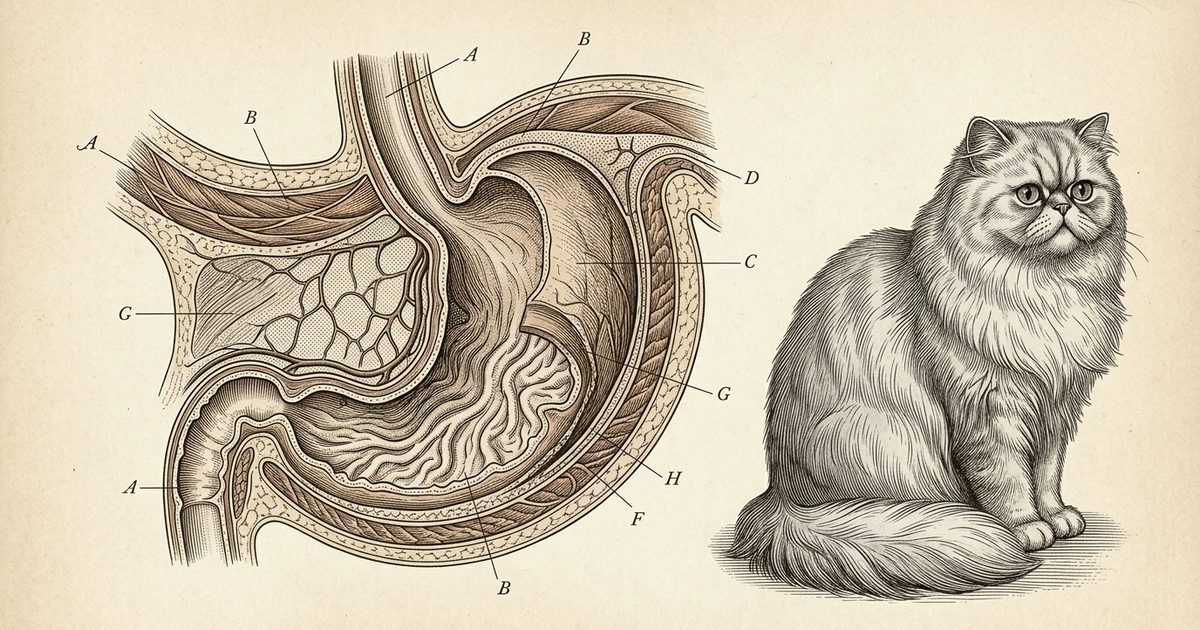
The three patterns side by side
The easiest way to tell them apart is to watch what happens before anything comes up. True vomiting is a vigorous, whole-body event: your cat lowers her body, her abdomen visibly contracts several times, and you usually hear retching or gagging before anything appears. Regurgitation has almost no warning — the food simply drops out in a tube shape (it took the shape of the esophagus), and the cat often looks calm throughout. A hairball sounds like a sustained, dry hacking cough that ends with a small damp wad of fur.
| Vomiting | Regurgitation | Hairball | |
|---|---|---|---|
| Effort | Active — abdominal heaving, retching, whole-body involvement | Passive — no abdominal effort, food just drops out | Coughing/hacking, chest effort |
| Timing | Any time after eating, minutes to hours | Usually immediately after eating | Any time, often grooming-related |
| Contents | Digested or partially digested food, may mix with bile or foam | Undigested food, tube-shaped, often coated in mucus | A compacted damp wad of fur |
| What it means | The broadest signal — causes range from diet to disease | Esophageal issue, eating too fast, or food not staying down | Mostly benign, but frequent episodes need attention |
The Cornell Feline Health Center treats vomiting and regurgitation as distinct clinical signs because they point to different body systems — vomiting originates in the stomach and beyond, while regurgitation means food never made it through the esophagus into the stomach.
Why the difference matters
This distinction changes your next move: regurgitation usually points to an esophageal or eating-too-fast problem (a slow-feeder bowl or a vet check), while true vomiting ranges from harmless dietary indiscretion to serious disease. Telling your vet clearly "this was regurgitation" or "this was abdominal-heaving vomiting" gives them a faster path to the cause. For a hairball habit, it's worth understanding what hairballs are and how to manage them, because many owners mistake a long-running hairball pattern for true vomiting.
What Should I Do When My Cat Throws Up — and When to Call the Vet?
After a single vomit, watch your cat, offer small amounts of water, and withhold food for a few hours before reintroducing a bland meal. Call your vet immediately if your cat vomits repeatedly, brings up blood, seems lethargic or painful, refuses food, or the vomit is green or brown — these are red flags that can't wait.
Most cats that puke once and then act completely normal need nothing more than observation. It's what comes with the vomiting that tells you whether this is a blip or a vet visit.
Immediate home care steps
Stay calm — your cat picks up on your energy. Here's the simple sequence:
- Clean up the vomit, but look at it first. Note the color (white foam, yellow bile, clear, undigested food, green, brown, or blood) and whether there's a hairball, grass, or a foreign object in it. This is the single most useful thing you can tell your vet later.
- Give the stomach a short rest. Withhold food for two to four hours, but leave water available in small amounts — don't let a nauseous cat gulp a full bowl, which can trigger another round.
- Offer a small bland meal. After the rest period, offer a teaspoon or two of your cat's regular food or a plain, vet-friendly option. If she keeps it down, gradually return to normal portions over the next day.

If she vomits again right away, stop feeding and move to the next section — that's no longer a "wait and see" situation.
Red-flag symptoms — call the vet now
Some signs mean now, not morning. Call your vet or the nearest emergency clinic if you see any of these:
- Blood in the vomit — bright red streaks or dark, coffee-ground appearance.
- Repeated vomiting — several episodes in a few hours, or inability to keep even water down. As we noted under Why does my cat keep throwing up?, cats dehydrate quickly and can go downhill fast.
- Lethargy, hiding, or collapse — your cat is withdrawn, non-responsive, or noticeably weaker than usual.
- A painful or swollen abdomen — crying when touched, guarding the belly, or assuming a hunched "praying" position.
- Vomiting plus refusing food — the combination of not eating and not keeping anything down is one of the most reliable warning signs; see our guide on how long cats can go without food for why this matters.
- Known or suspected toxin ingestion — lilies, household cleaners, human medication, or any plant toxic to cats eaten recently.
The Cornell Feline Health Center is clear on this point: when vomiting is paired with these signs, waiting is riskier than calling.
When to book a non-emergency visit
Not every worrying pattern is a midnight emergency. Book a regular appointment within a few days if your cat is vomiting occasionally but increasingly often, if the episodes are becoming a weekly habit, or if you've noticed gradual weight loss alongside the vomiting. Chronic, low-grade vomiting is worth investigating early — it's easier to treat the sooner you catch it, and as International Cat Care puts it, the pattern over time is more diagnostic than any single episode.
Not sure if what you're seeing is urgent? Get a MeowMind reading to tune into what she may be feeling — and when in real doubt, call your vet.
Cat Vomiting at a Glance — Summary
| Question | Short answer |
|---|---|
| Why is my cat vomiting? | Usually hairballs, eating too fast, or mild stomach upset — but also parasites, toxins, or disease. A single episode is often harmless. |
| What does white foam or clear liquid mean? | Most often an empty stomach — bile and juices form foam. Harmless if your cat then eats normally; a vet visit if it repeats. |
| Why does my cat keep throwing up? | An ongoing cause like food intolerance, inflammatory bowel disease, parasites, or organ disease. Repeated vomiting always needs a vet. |
| Why does my cat throw up right after eating? | Usually eating too fast or a food that disagrees with them. A slow feeder often fixes it; vomiting every meal needs a vet. |
| How is vomiting different from regurgitation or a hairball? | Vomiting is active whole-body heaving; regurgitation is passive; a hairball is a hacking cough that brings up a damp cigar of fur. |
| What should I do right after my cat throws up? | Check the vomit, offer small sips of water, withhold food briefly, then reintroduce a bland meal. Watch for red flags. |
| When is vomiting an emergency? | Blood in the vomit, repeated vomiting, lethargy, refusing food, or green/brown vomit — call your vet immediately. |
| When can I handle it at home? | A single episode with an otherwise normal, bright cat — monitor, rest the stomach, and watch the pattern over the next day. |
Curious What Your Cat Would Say?
Upload a photo and get a warm, personalized reading from your cat's perspective.
Start Your Free ReadingFrequently Asked Questions
Why is my cat throwing up white foam?
White foam usually means your cat's stomach is empty — leftover bile and mucus mix with swallowed air and get whipped into foam as the stomach contracts. A single episode before a normal meal is usually harmless. If it keeps happening, or comes with lethargy or refusing food, call your vet.
Why is my cat vomiting clear liquid?
Clear liquid is most often stomach juices and saliva brought up on an empty stomach, similar to white foam. Occasional clear vomit in an otherwise normal cat is usually benign. Repeated clear vomiting, especially with not eating or hiding, points to irritation or disease and needs a vet visit.
Why does my cat keep throwing up every day?
Daily vomiting is chronic and not normal. Common drivers include food intolerance, inflammatory bowel disease, parasites, or organ disease like kidney or thyroid issues. Because cats dehydrate quickly, daily vomiting always warrants a vet workup rather than home management.
Why is my cat throwing up undigested food hours after eating?
Food coming up hours later, still undigested, is usually regurgitation rather than true vomiting — often from eating too fast or a food that doesn't sit well. If it happens repeatedly or with lethargy, it can signal an esophageal issue or obstruction, so a vet check is safest.
When should I take my cat to the vet for vomiting?
Call your vet immediately if you see blood, repeated vomiting, lethargy, a painful abdomen, refusing food, or green or brown vomit. Book a non-emergency visit if vomiting becomes a weekly pattern or comes with gradual weight loss — chronic vomiting is worth investigating early.
Is it normal for cats to throw up hairballs?
Yes — occasional hairballs are a normal part of grooming, especially in longhaired cats. The concern starts when they happen frequently, your cat strains without producing anything, or they're paired with other symptoms. Frequent hairballs can be mistaken for true vomiting.
Why is my cat throwing up yellow bile?
Yellow or greenish-yellow vomit is bile, usually brought up on an empty stomach or with mild food intolerance. A one-off episode after a long gap between meals is typically fine. Repeated bile vomiting, especially with weight loss or refusing food, should be checked by your vet.
What can I feed my cat after vomiting?
After a short fast of a few hours, offer a small portion of your cat's regular food or a plain, vet-friendly bland meal — about a teaspoon to start. If she keeps it down, gradually return to normal portions over the next day. If she vomits again, stop feeding and call your vet.
Can cats throw up from stress?
Stress can contribute to vomiting in some cats, though it's less common than physical causes like hairballs or diet. Sudden changes in routine, new pets, or travel can trigger an upset stomach. If stress is the likely cause, vomiting should be occasional and pass once the stressor eases — repeated vomiting still needs a vet.
Sources & References
You Might Also Like
Kitten Teething: Timeline, Symptoms & How to Help
Kitten teething runs from 3 to 7 months as baby teeth fall out. Learn the timeline, signs to watch for, and how to soothe a teething kitten safely.
15 min readWhen Do Cats Stop Growing? A Complete Timeline
When do cats stop growing? Most cats reach adult size by 12-18 months, but large breeds like Maine Coons keep growing until 3-4 years. Full timeline inside.
14 min readCan Cats Eat Cherries? Flesh, Pit & Toxicity Facts
Can cats eat cherries? Pitted flesh is safe in tiny amounts — but the pit, stem, and leaves are toxic (cyanide precursors). Learn what's safe and what isn't.
15 min readA message, in your cat's voice
Upload a photo, get a warm note written from your cat's perspective — just for fun. Plus 121 vet-cited articles, offline.