Cat Hairball Remedy: What's Normal & How to Help
Finding the right cat hairball remedy starts with understanding what a hairball actually is, why cats get them, and how often is normal. The occasional cat hairball is part of living with a grooming-obsessed animal; frequent, unproductive retching is not. This guide covers practical hairball treatment for cats — what's harmless, what signals a vet visit, and how grooming, diet, and hydration prevent most of them.
Key takeaways
- A hairball is a compacted cylinder of swallowed fur the stomach can't digest — technically a trichobezoar, not a true "ball."
- An occasional hairball (monthly or less) is normal; long-haired cats may produce one every week or two during shedding season.
- Repeated unproductive retching, lethargy, loss of appetite, or constipation alongside hairballs can mean a blockage — call your vet.
Cat Hairballs — Quick Reference
| Situation | Is it normal? | What to do |
|---|---|---|
| Occasional hairball (every few weeks/months) | Yes | Groom regularly; observe |
| Long-haired cat, one or two a month | Yes | Daily brushing; hairball-control diet |
| Daily retching with nothing coming up | No | Vet within 24–48 hours |
| Hairball plus lethargy and not eating | No | Vet promptly — possible obstruction |
| Constipation plus vomiting | No | Vet — possible GI blockage |
| Hairball with some grass in it | Usually yes | Grass is a fiber source; observe |
What Is a Cat Hairball?
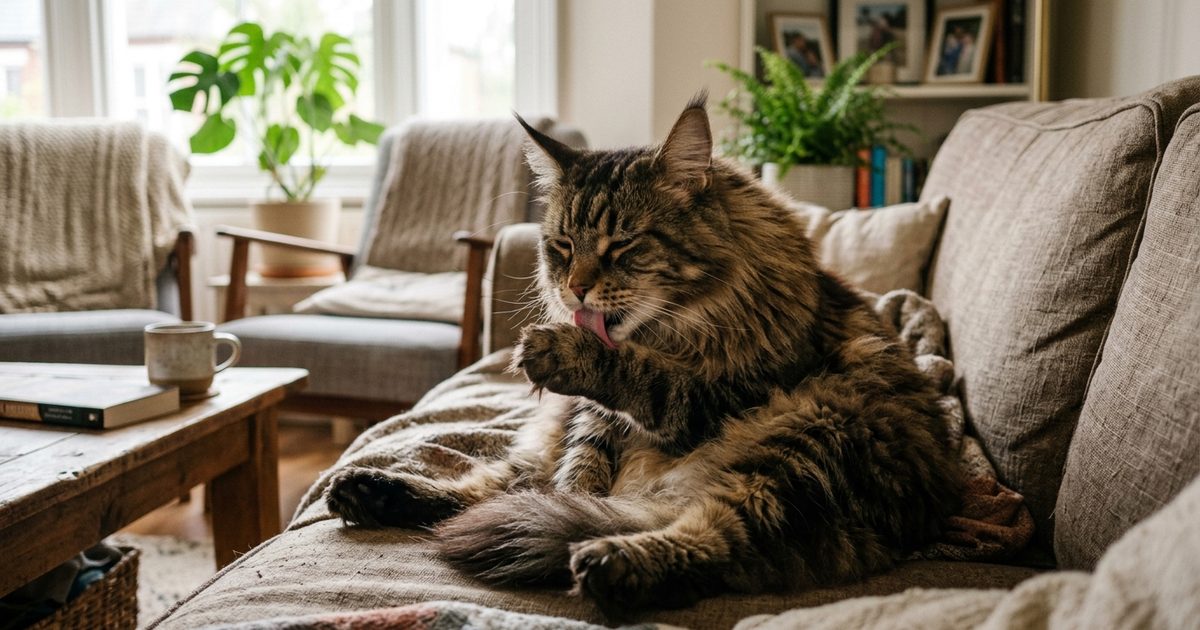
A cat hairball is a tight cylinder of swallowed fur the stomach can't digest or pass. As fur builds up, the cat retches it back up, producing the tubular mass owners find on the floor. It is mostly fur, sometimes mixed with bile.
Despite the name, a hairball is rarely round. It's a dense, elongated wad of fur that forms in the stomach and comes back up the esophagus — one of the messier byproducts of the fact that cats groom themselves constantly with a tongue built to catch loose hair. Understanding what the trichobezoar actually is makes it easier to tell a normal hairball from something that needs attention.
The trichobezoar explained
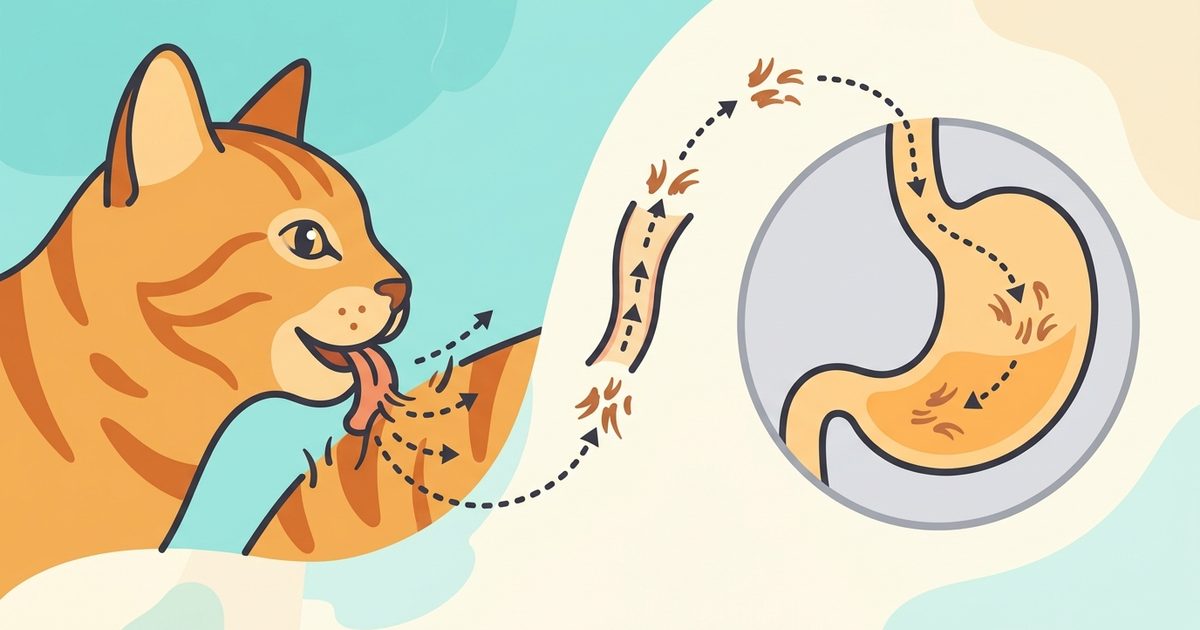
When your cat grooms, the tiny backward-facing spines on its tongue pull loose fur free, and most of that fur gets swallowed. In the stomach, the fur strands tangle and compact into a dense mass. Gastric juices soak and coat the wad, but they can't break it down — fur is made of keratin, the same tough protein as human hair and nails, and stomach acid simply isn't built to digest keratin. Unable to move forward through the digestive tract, the compacted fur eventually comes back up. The characteristic tubular, cigar shape comes from the mass being squeezed through the narrow esophagus on its way out, which is why a hairball looks the way it does rather than like a soggy ball.
What a hairball actually looks like
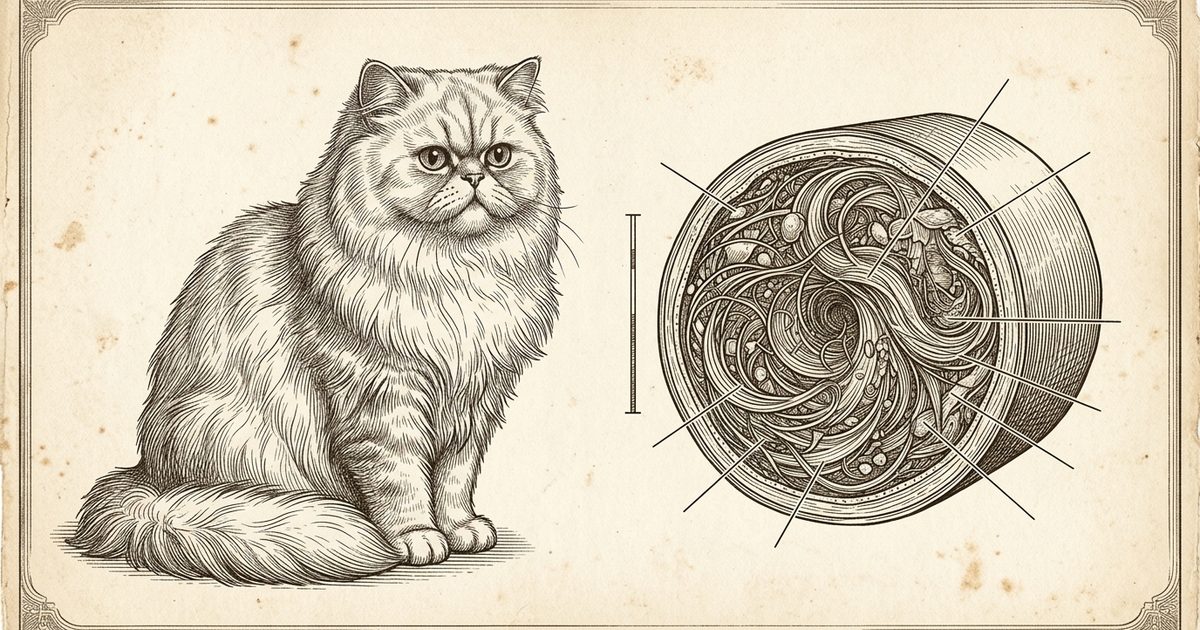
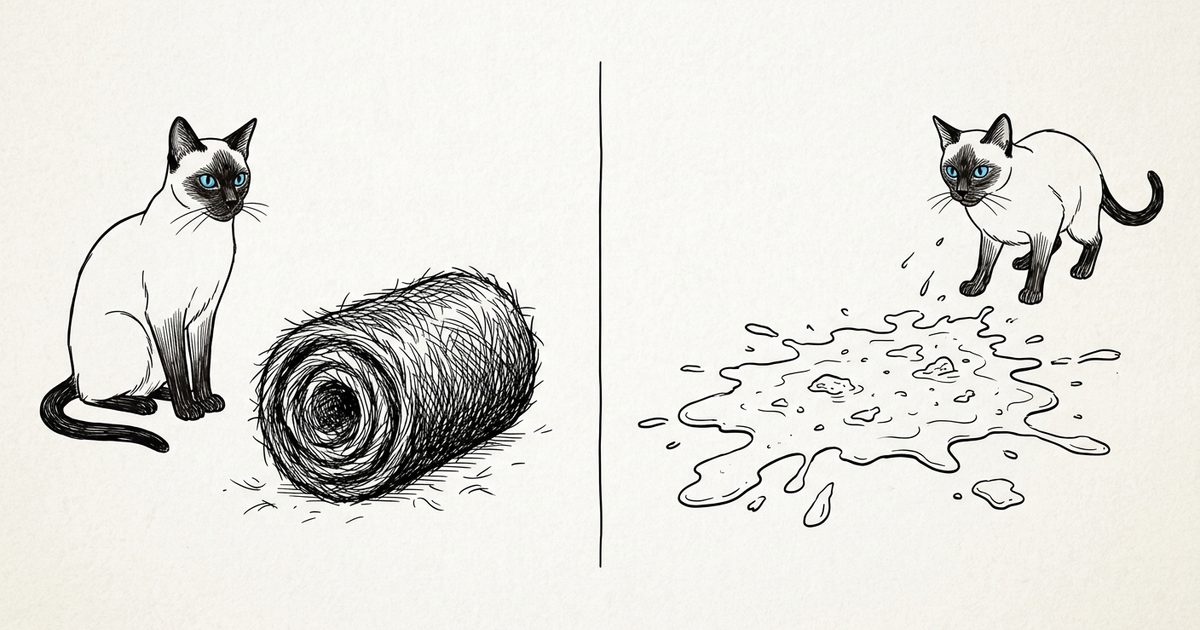
A real hairball is elongated and cylindrical, not spherical. It's usually wet, coated in bile or yellowish mucus, and colored by the cat's own coat — brown, gray, or even near-black in dark-furred cats. The texture is unmistakable once you've seen one: a firm, matted plug of fur. Many owners mistake the first hairball they find for a piece of feces the cat has dragged or deposited; the shape and color can be surprisingly similar. It's quite distinct from vomited food, which retains recognizably chunky, undigested kibble or stomach contents.
Why "hairball" is a slight misnomer
The word "hairball" suggests something round, but a "fur cylinder" or "fur plug" is a more accurate description of what cats actually produce. The shape is a clue, too: a true hairball comes up with a distinctive, prolonged hacking retch and arrives as a compact, tubular mass, whereas regurgitated food or vomited bile is faster, more abdominal, and liquid in form. Hairballs are technically closer to regurgitation than to true vomiting — if what's coming up is food, bile, or foam rather than a fur wad, that's a different process, and we cover the distinction in our guide to cat vomiting.
Why Do Cats Get Hairballs?
Cats get hairballs because they groom with a barbed tongue that catches loose fur — and they swallow most of it. Some fur passes through the gut harmlessly, but when more accumulates than the digestive tract can move, it backs up in the stomach and comes back up as a hairball.
A hairball is the downstream cost of one of the cat's most defining behaviors: meticulous, near-constant grooming. The same tongue that keeps a cat's coat immaculate is also, mechanically, a fur-collection device. Every grooming session sends a certain amount of dead hair down the throat, and the digestive system has to deal with it somehow. When the input exceeds what the gut can handle, a hairball is the result.
The barbed tongue and grooming
A cat's tongue is covered in hundreds of tiny papillae — backward-facing, U-shaped spines made of keratin, the same material as claws. These spines act like a built-in comb: as the cat licks its coat, they hook and lift loose fur, dead undercoat, and debris, drawing it toward the back of the mouth to be swallowed. It's an elegant piece of natural engineering, and it's also why cats are such effective self-groomers. Long-haired breeds ingest more fur per grooming session simply because there's more loose hair to catch. The grooming instinct itself is a deep, healthy behavior, and we cover why cats devote so much of their day to it in our guide on why cats groom.
What happens to the fur inside
Not all swallowed fur becomes a hairball. In small amounts, the fur passes from the stomach into the intestines and exits in the feces, often visible as dark strands if you look closely — a sign the system is working as it should. The gut has a limited capacity to move bulky, indigestible material, and when the rate of fur intake exceeds that transit capacity, the surplus accumulates in the stomach rather than moving through. Two things help keep that transit working: fiber, which adds bulk and helps sweep material along the intestinal tract, and hydration, which keeps the digestive contents moist enough to move. This is part of why cat grass and adequate water intake can reduce hairballs — and why cats sometimes seek out grass to eat on their own.
Which cats are most prone
Some cats live with hairballs as a near-constant background fact, while others rarely produce one. Long-haired breeds carry more coat and shed more volume, so the math of "more fur in, more hairballs out" holds (we cover how often is normal for long-haired breeds below). Heavy seasonal shedders spike during spring and fall coat blows. Compulsive over-groomers, whether driven by stress, fleas, allergies, or pain, swallow disproportionately more fur. Cats with slower gastrointestinal motility move fur through the gut less efficiently, so even normal intake can back up. Older cats face a double effect: many groom less thoroughly with age, leaving more loose coat to be shed — and then swallowed in their next session — while also processing what they do swallow less efficiently. According to International Cat Care, frequent hairballs in any cat warrant a closer look rather than being dismissed as normal.
How Often Do Cats Get Hairballs?
An occasional hairball — roughly once a month or less — is normal for most cats, and long-haired cats may produce one every week or two during shedding season. Daily or multiple-times-a-week retching is not normal and points to over-grooming, a skin issue, or a gut-motility problem worth checking.
Normal frequency
For most short-haired adult cats, a hairball every few weeks to once a month is a reasonable baseline, and many cats go months between them. You might also notice small clusters — two or three in a single week, then nothing for ten weeks — and that pattern alone isn't alarming. Cats don't produce hairballs on a schedule; fur accumulates in the stomach over time, and once enough has gathered, the body clears it. A first-time hairball on the rug tends to send new owners into a panic, but for a healthy adult cat an isolated one is exactly what grooming is supposed to produce.
Long-haired cats and shedding seasons
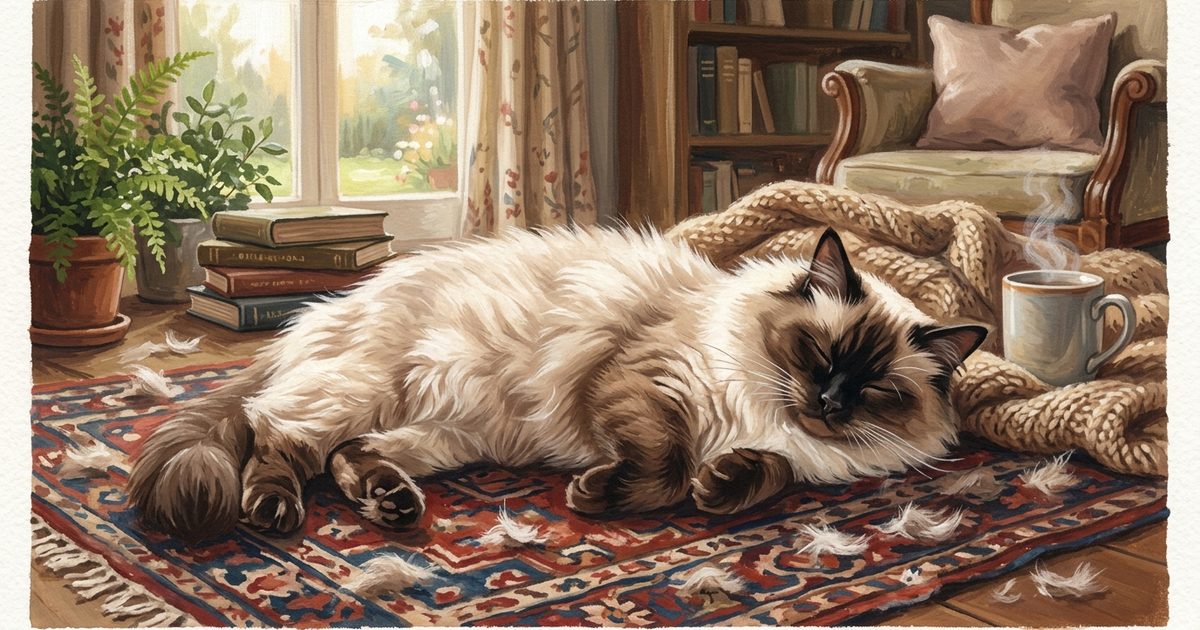
Long-haired breeds — Maine Coons, Persians, Ragdolls — swallow more fur per grooming session simply because there's more of it, so the "normal" ceiling is higher for them. A Ragdoll producing a hairball every week or two during a spring or fall coat blow is still within ordinary range. Twice a year, these cats shed their undercoat in a surge, and that fur has to go somewhere — out through brushing, or back up as a hairball. International Cat Care notes that long-haired cats and heavy shedders naturally produce more hairballs, and that a higher frequency for these cats isn't by itself a sign of disease.
When frequency climbs, pay attention
The trend matters more than any single event. A cat that has always produced one hairball a month and now brings up three a week has changed — and change is the signal, not the number itself. Sudden jumps usually trace to one of three causes: the cat is over-grooming (stress, fleas, allergies, pain), the coat is blowing heavily and brushing hasn't kept up, or gut motility has slowed. A short-haired indoor cat with no history of hairballs suddenly producing them weekly is more concerning than a long-haired cat doing the same during a seasonal shed.
When Is a Hairball a Problem?
Repeated unproductive retching — hacking for days with nothing coming up — loss of appetite, lethargy, or constipation alongside hairballs can mean a fur mass has blocked the stomach or intestine. A GI obstruction is a vet emergency: do not wait, and do not try home remedies if the cat is sick.
Red-flag patterns
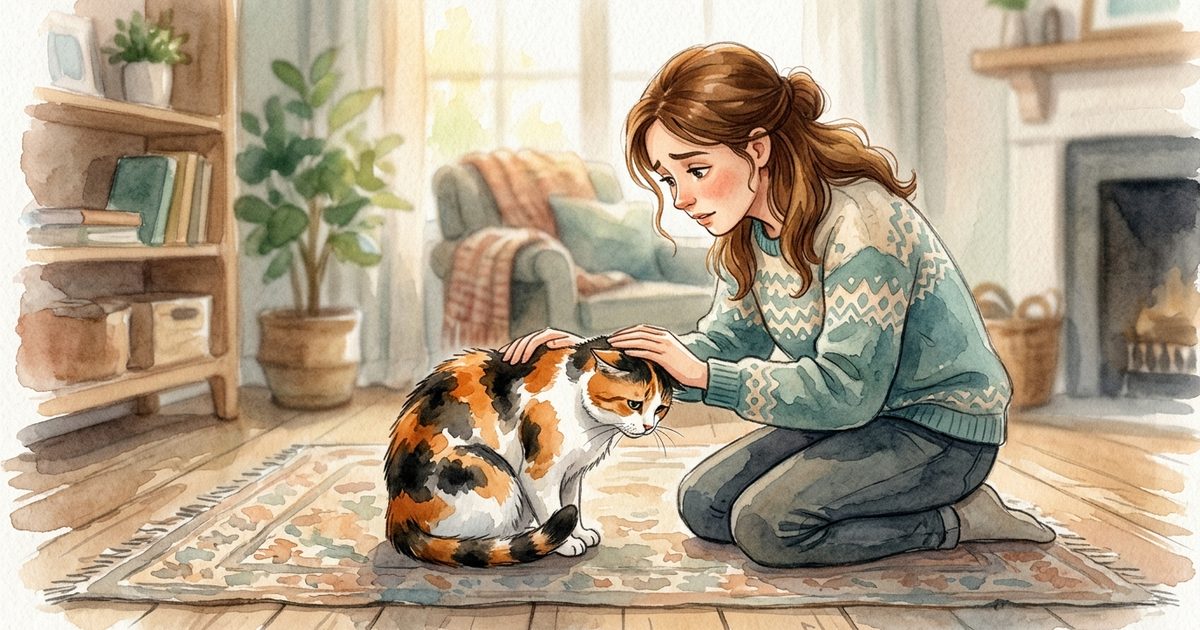
The concern is less "my cat had a hairball" and more "my cat is trying and failing to have one." Patterns that warrant attention include persistent retching that produces nothing over more than 24 to 48 hours, repeated attempts with only bile or saliva coming up, vomiting food or water shortly after eating, a hunched or rigid posture, crying or tensing when the belly is touched, refusing food, marked lethargy, and constipation or an absence of feces. None of these alone is a diagnosis — cats retch for many reasons — but several together, especially with the cat clearly feeling unwell, shift the picture from "waiting it out" to "calling the vet."
Hairball obstruction (trichobezoar blockage)
In rare cases a large or especially dense hairball can wedge at the pylorus — the stomach's exit — or further down the intestine, creating a physical blockage. This is the serious end of the hairball spectrum and the one that genuinely warrants urgency: the gut can't move anything past the fur mass, so food, water, and stool all back up. Constipation appearing alongside repeated unproductive retching is one of the clearest overlaps, and it's worth reading our guide on cat constipation because the two symptoms often show up together when something in the GI tract is stalled. The Cornell Feline Health Center advises that persistent retching, abdominal pain, or a cat that stops eating and passing stool should be treated as a potential emergency rather than a routine hairball.
When to call the vet — a simple rule
A workable decision rule: if retching is unproductive for more than a day or two, if the cat is off food or water, or if there's lethargy or clear pain, call your vet — don't wait for the hairball to resolve on its own, and don't reach for a cat hairball remedy when the cat is already sick. On the other side, if a single hairball comes up and the cat immediately goes back to eating, grooming, and acting like itself, observation is the right move; there's no need to rush in. The dividing line is how the cat looks between episodes — normal and comfortable versus hunched, quiet, and off food. When in doubt, a quick call to the clinic costs nothing and rules out the obstruction that is rare but time-sensitive.
How Do You Prevent Cat Hairballs?
The best cat hairball remedy is prevention: brush your cat daily to remove loose fur before they swallow it, feed a hairball-control diet higher in fiber, and use a hairball paste or gel to lubricate the fur so it passes through the gut instead of backing up. Regular grooming does most of the work.
Preventing hairballs is almost always more effective — and gentler on your cat — than waiting for one to form and dealing with the retching afterwards. The logic is straightforward: a hairball is swallowed fur that the stomach cannot move through. So the levers you have are removing the fur before it is swallowed, moving whatever fur does get swallowed through the gut faster, and lubricating the mass so it slips along. Below are the four measures that genuinely shift the numbers, in roughly the order they pay off.
Grooming and brushing
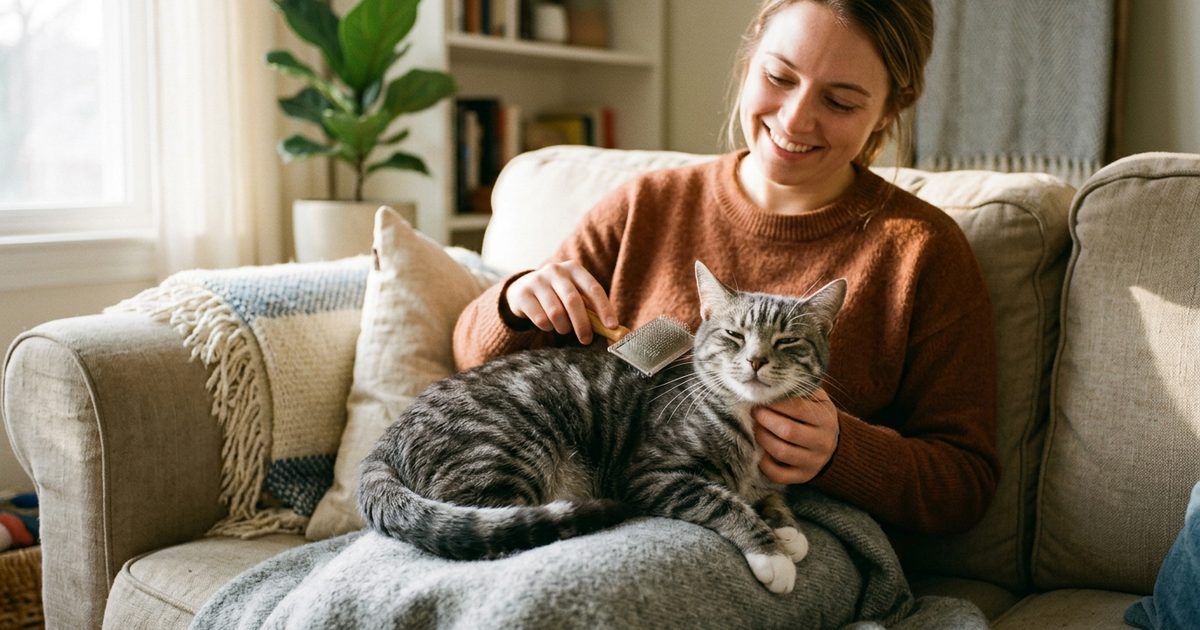
Brushing is the single most effective thing you can do, because it removes the loose fur your cat would otherwise pull out and swallow during its own grooming sessions. For a long-haired cat — a Maine Coon, Persian, or Ragdoll — a daily session of a few minutes keeps the dead undercoat from building up. Short-haired cats do well with brushing two to three times a week. The right tools matter: a slicker brush lifts the top coat, and a steel comb reaches down into the undercoat where the bulk of shed fur hides. Heavy shedders, especially during a seasonal coat blow, may benefit from an occasional bath to flush loose fur out in one go. This is the downstream consequence of the grooming instinct — if you want the deeper picture of why cats groom so obsessively, see our article on why cats groom.
Hairball-control food and fiber
Cat hairball control food is a real, established product category rather than a marketing label. These formulas are built around higher fiber — typically cellulose and beet pulp — which binds to swallowed fur in the gut and helps carry it through into the feces rather than letting it accumulate in the stomach. Many also add omega-3 and omega-6 fatty acids to support coat health, on the reasoning that a healthier coat sheds less, so less fur is ingested in the first place. If you switch to one, do it gradually over a week to avoid stomach upset, and treat it as a complement to brushing rather than a replacement for it. Extra fiber can also come from cat grass or a small amount of psyllium husk; we cover the grass angle in more detail in why cats eat grass. International Cat Care lists dietary fiber as one of the core prevention strategies for cats prone to hairballs.
Hairball paste, gel, and laxatives
Hairball treatment for cats covers the petroleum-based gels and pastes — the Laxatone-style products — that work by coating the fur in a thin layer of mineral lubricant so it slides through the digestive tract instead of clumping. These are mild and generally safe when used as directed on the label. Some cats will lick the gel straight off your finger or off a front paw; others need it smeared on a paw so they clean it off involuntarily. To address the "it's a gimmick" myth head-on: cheap petroleum-jelly-only products marketed loosely can feel gimmicky, and no gel is a substitute for brushing and diet. But legitimate veterinary lubricant gels genuinely aid transit, and they are a useful adjunct rather than a standalone fix. They are not meant for daily, indefinite use without your vet's input — if you find yourself reaching for the tube constantly, the underlying fur intake is the thing to solve.
Hydration and gut motility
Hydration underpins the whole diet-and-fiber angle, because a dry gut is a slow gut. Cats on primarily dry food take in surprisingly little water, and that low intake slows everything downstream, giving swallowed fur more time to settle and compact. Feeding more wet food is the simplest way to raise water intake, and a running water fountain often encourages cats to drink more than a still bowl does. Well-hydrated intestinal contents move steadily, which is exactly what you want for fur that needs to pass through rather than back up.
What about cats that over-groom?
Sometimes the problem is not the coat but the grooming itself. A cat that grooms far beyond what its coat requires — pulling out fur in clumps, barbering itself bald in patches — is swallowing a disproportionate amount of fur and will produce hairballs no matter how diligently you brush. Over-grooming is almost always a symptom rather than a habit: common drivers are stress, fleas, allergies (food or environmental), and pain. Solving the root cause — treating fleas, working with your vet on an allergy or anxiety plan, or addressing the source of pain — reduces the grooming drive, and the hairballs fall as a consequence. Generalize this rather than chasing the hairball in isolation.
Is It a Hairball or Vomit? How to Tell
A hairball is a compact cylinder of fur, usually tubular and bile-stained, brought up with a distinct hacking sound. Vomited food is recognizably food; vomited bile or foam is liquid, yellow, or white. If what comes up is food, bile, or foam rather than a fur wad, it's vomiting.
Owners use "throwing up" as a catch-all, but a hairball and a true vomit are produced by different mechanisms and look distinctly different at the end. Telling them apart matters because the two have different causes, different red flags, and different next steps.
The hairball retch vs the vomit
The hairball sequence is distinctive. The cat drops its head low, extends its neck, and produces a slow, rhythmic, gagging or hacking sound — almost a dry cough — that can stretch over several minutes before anything comes up. It looks uncomfortable but methodical. True vomiting is faster and more abdominal: you will usually see the abdominal muscles contract sharply, and the whole episode is over in seconds. The shape of what lands on the floor is the clearest tell of all.
What the contents tell you
Read what comes up and you can usually tell what happened. A compact, tubular, fur cylinder — wet with bile or mucus, brown, grey, or black depending on the cat's coat — is a hairball, full stop. Undigested kibble appearing shortly after a meal, often in a tubular shape, is regurgitation or simply eating too fast, not a hairball. Yellow or orange liquid is bile, pointing to stomach irritation on an empty stomach. White or yellowish foam suggests gastrointestinal inflammation. Each of these points to a different underlying issue, which is why we keep the full breakdown in our cat vomiting guide rather than duplicating it here.
When both happen together
A cat bringing up a hairball will sometimes vomit a little food or bile around it in the same episode — that is common and usually not alarming on its own, because the hacking and retching can irritate the stomach lining and bring other contents up with the fur. What separates a non-issue from a concern is the pattern. If your cat occasionally produces a hairball with a little bile around it and then returns to normal, observe. Persistent non-fur vomiting — food, bile, or foam coming up repeatedly on its own, especially with lethargy or loss of appetite — is a separate problem that points back to GI irritation or disease, and that is the moment to stop reading it as "just a hairball" and call your vet. The Cornell Feline Health Center is a reliable reference for when digestive signs cross the line into something that warrants a veterinary visit.
Common Myths About Cat Hairballs
Hairballs aren't "healthy" just because they're common — frequent ones signal too much fur intake or a gut problem. Hairball paste isn't a gimmick; legitimate lubricants help fur pass. And indoor cats don't automatically get more hairballs — coat length and grooming volume matter more than being indoors.
Hairballs are widely misunderstood. Let's separate the common myths from the facts.
Myth: "It's normal and healthy for cats to throw up hairballs frequently." Fact: An occasional hairball (less than once a month) is normal. Frequent hairballs, however, are a warning sign that the cat may be over-grooming, have parasites, or be dealing with a gastrointestinal issue — not a marker of a healthy cat.
Myth: "Hairball paste is just a scam." Fact: While quality varies between brands, petroleum-based or natural lubricant gels genuinely help fur slide through the digestive tract. Look for veterinary-recommended formulas rather than relying on marketing claims — and treat them as an adjunct to brushing and diet, never a standalone fix.
Myth: "Indoor cats always get more hairballs than outdoor cats." Fact: The decisive factors are coat length and grooming intensity, not whether the cat lives indoors. A short-haired indoor cat may produce far fewer hairballs than a long-haired outdoor cat. Indoor cats may shed at a steadier year-round level versus an outdoor cat's seasonal spikes, but shedding volume and grooming drive the outcome.
Myth: "Long-haired cats just have to live with daily hairballs." Fact: With diligent daily brushing and a hairball-control diet, hairballs can be dramatically reduced even in long-haired breeds. For Maine Coons, Persians, and Ragdolls, consistent preventive care is highly effective — daily hairballs are not an inevitable sentence.

Cat Hairballs at a Glance — Summary
| Question | Short answer |
|---|---|
| What is a hairball? | A compacted cylinder of swallowed fur that builds up in the stomach — technically a trichobezoar, not a true ball. |
| Why do cats get them? | The backward-facing spines on a cat's tongue catch loose fur during grooming, and most of it gets swallowed. |
| How often is normal? | Less than once a month for most cats; weekly or more is a sign something has changed. |
| When should I call the vet? | Repeated unproductive retching, loss of appetite, lethargy, or constipation alongside hairballs. |
| How do I prevent them? | Regular brushing, a hairball-control diet, hydration, and a veterinary hairball gel when needed. |
| Hairball or vomit — what's the difference? | A hairball is a tubular fur cylinder; vomit is undigested food, bile, or foam in liquid form. |
| Do indoor cats get more hairballs? | Not necessarily — coat length, shedding volume, and grooming intensity matter more than being indoors. |
Curious What Your Cat Would Say?
Upload a photo and get a warm, personalized reading from your cat's perspective.
Start Your Free ReadingFrequently Asked Questions
Is it normal for my cat to throw up hairballs every day?
No — daily hairballs are not normal. An occasional hairball (monthly or less) is expected for most cats, but producing one every day points to over-grooming, a skin issue, parasites, or slowed gut motility. Daily frequency is a clear signal to call your vet rather than wait it out.
How do I get rid of my cat's hairballs?
The most effective approach is prevention: brush your cat daily to remove loose fur before it's swallowed, feed a hairball-control diet higher in fiber, and use a veterinary hairball gel to lubricate fur through the gut. Increasing water intake with wet food or a fountain also helps fur pass instead of backing up.
What does a real cat hairball look like?
A real hairball is an elongated, cylindrical plug of compacted fur — not round. It's usually wet, coated in yellowish bile or mucus, and colored by the cat's coat (brown, grey, or near-black). Many owners mistake the first one for a piece of feces because the shape and color are surprisingly similar.
Do long-haired cats always get hairballs?
Not always, but they're more prone to them. Maine Coons, Persians, and Ragdolls swallow more fur per grooming session, so their normal ceiling is higher — a hairball every week or two during shedding season is within ordinary range. Daily brushing and a hairball-control diet dramatically reduce the frequency.
When should I take my cat to the vet for a hairball?
Call your vet if retching is unproductive for more than a day or two, if your cat refuses food or water, or if there's lethargy, abdominal pain, or constipation alongside the retching. These can signal a fur mass blocking the stomach or intestine — a GI obstruction is time-sensitive, so don't wait for it to resolve on its own.
Does hairball-control cat food actually work?
Yes — hairball-control food is a legitimate product category, not a marketing label. These formulas use higher fiber (typically cellulose and beet pulp) to bind swallowed fur and carry it through into the feces, and many add omega fatty acids to support coat health and reduce shedding. It works best as a complement to brushing, not a replacement.
Can a hairball kill a cat?
It's rare, but yes — a large or very dense hairball can wedge at the stomach's exit (the pylorus) or further down the intestine and create a physical blockage. A true obstruction prevents food, water, and stool from passing and is a vet emergency. Persistent unproductive retching with lethargy or constipation is the warning pattern to act on.
Why is my cat retching but nothing comes up?
Unproductive retching — hacking for a day or more with nothing coming up — usually means the cat is trying and failing to bring up a hairball, or that something else is irritating the stomach. If it lasts more than 24–48 hours, comes with not eating, lethargy, or constipation, treat it as a possible obstruction and call your vet rather than reaching for a home remedy.
Is a hairball paste or gel just a gimmick?
Cheap petroleum-jelly-only products marketed loosely can feel gimmicky, but legitimate veterinary hairball gels genuinely work. They coat swallowed fur in a thin layer of mineral lubricant so it slides through the digestive tract instead of clumping. They're a useful adjunct to brushing and diet, not a standalone fix, and aren't meant for daily long-term use without your vet's input.
Sources & References
You Might Also Like
Kitten Teething: Timeline, Symptoms & How to Help
Kitten teething runs from 3 to 7 months as baby teeth fall out. Learn the timeline, signs to watch for, and how to soothe a teething kitten safely.
15 min readWhen Do Cats Stop Growing? A Complete Timeline
When do cats stop growing? Most cats reach adult size by 12-18 months, but large breeds like Maine Coons keep growing until 3-4 years. Full timeline inside.
14 min readCan Cats Eat Cherries? Flesh, Pit & Toxicity Facts
Can cats eat cherries? Pitted flesh is safe in tiny amounts — but the pit, stem, and leaves are toxic (cyanide precursors). Learn what's safe and what isn't.
15 min readA message, in your cat's voice
Upload a photo, get a warm note written from your cat's perspective — just for fun. Plus 121 vet-cited articles, offline.