
Are Lilies Toxic to Cats? What Every Owner Must Know
Yes — the question of whether are lilies toxic to cats has one answer, and it is an unambiguous, urgent YES. Every part of a true lily is poisonous to a cat, and even a trace of pollen, a chewed leaf, or a sip of vase water can trigger fatal kidney failure within hours. The relationship between lilies and cats is uniquely dangerous: no other common garden or bouquet flower is as reliably lethal, and lily poisoning in cats moves faster than almost any plant ingestion a vet will treat. This is a genuine emergency, not a wait-and-see situation.
Key takeaways
- Every part of a true lily is deadly to cats — petals, leaves, stems, pollen, the bulb, and even the water a lily has been standing in.
- Symptoms of lily poisoning usually begin within two to six hours (vomiting, drooling, lethargy), and acute kidney failure follows within 12 to 24 hours.
- If you suspect any exposure, call a veterinarian or animal poison control now. Minutes, not hours, change the outcome.
Are Lilies Toxic to Cats? — Quick Reference
| Question | Short answer | Action |
|---|---|---|
| Are lilies toxic to cats? | Yes — extremely. True lilies cause fatal kidney failure. | Remove all lilies from the home. |
| Are all parts of the plant toxic? | Yes — petals, leaves, stems, pollen, bulb, and vase water. | Treat the entire plant as hazardous. |
| How much exposure is dangerous? | A single leaf, a lick of pollen, or a sip of vase water. | Any contact = emergency. |
| What are the symptoms? | Vomiting, drooling, lethargy, then kidney failure signs. | Call the vet at the first sign. |
| What is the timeline? | Symptoms in 2–6 hours; kidney failure in 12–24 hours. | Do not wait — act within hours. |
| What should I do? | Call a vet or poison control immediately. | Bring the plant or a photo with you. |
If you think your cat has had any contact with a lily — even brushing against one or drinking the vase water — call your veterinarian or the ASPCA Animal Poison Control Center at (888) 426-4435 right now. Do not wait for symptoms. Speed decides survival.
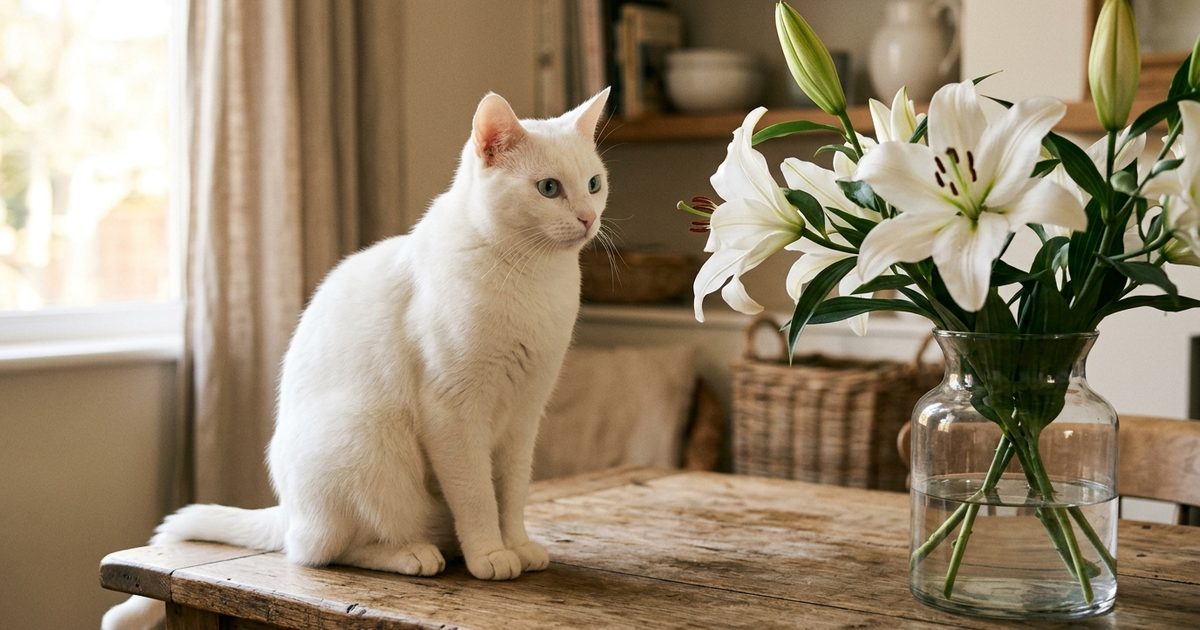
Are Lilies Toxic to Cats? The Short Answer
Yes — extremely. True lilies (Lilium and Hemerocallis species) are among the most poisonous plants a cat can encounter. Every part is toxic, including pollen, leaves, stems, and vase water. A single leaf or a lick of pollen can cause fatal kidney failure, so any exposure is a veterinary emergency.
Yes — extremely toxic
There is no ambiguity here, and that matters. Lilies are not "mildly toxic" or "best avoided" — for a cat, a true lily is one of the most dangerous plants in any home or garden. Cats are uniquely sensitive to the lily toxin in a way that other animals simply are not, and there is no documented safe amount of exposure. A small bite, a brushed petal, a grooming session after walking through pollen: each one is enough to set the same catastrophic chain in motion.
This is why veterinarians and poison-control centers treat any known lily contact as an emergency rather than a watch-and-wait situation. If you want the inverse — a real catalog of plants that are genuinely safe to share your home with a cat — see our cat-safe plants guide. But for lilies specifically, the rule is simple: assume danger, act fast, ask questions later.
Every part of the plant, including pollen and water
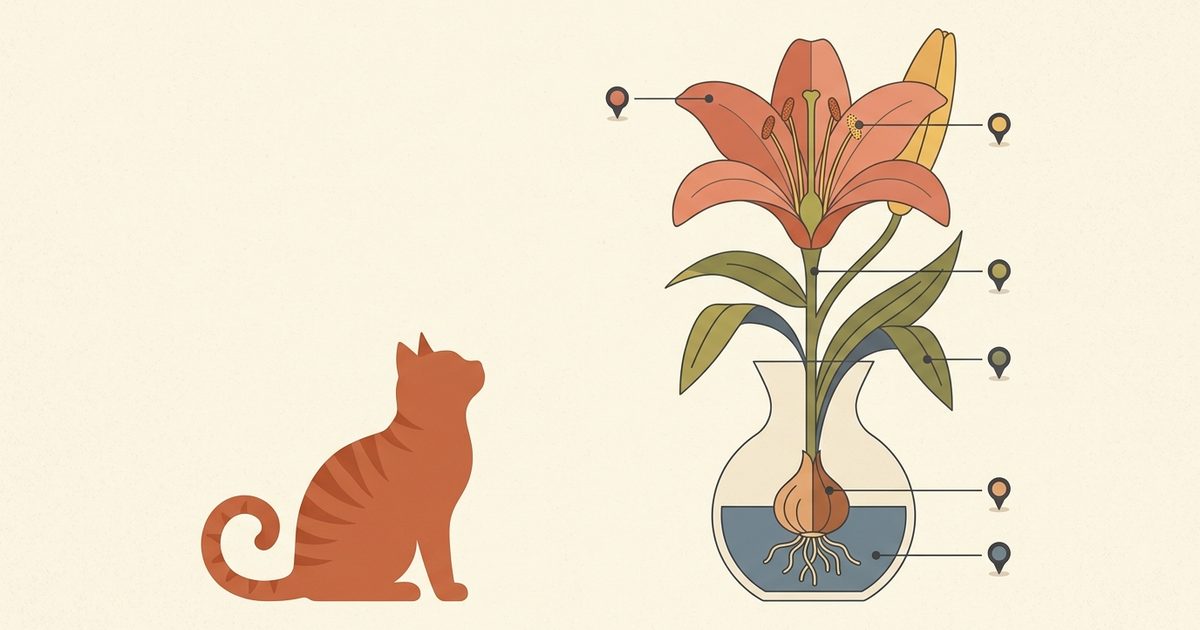
The reason lilies are so hard to manage safely is that the toxin isn't concentrated in one part. Every piece of the plant carries it — the showy petals, the leaves, the stem, the bulb buried in soil, the dust-like pollen that sheds onto every surface nearby, and even the water sitting in the vase.
That last point catches many owners off guard. A cat that drinks from a vase where lilies have been standing is drinking water the toxin has leached into; the bloom doesn't need to be chewed for the water to become dangerous. Pollen works just as indirectly — it drifts onto a cat's fur, is swallowed during grooming, and never requires the cat to bite the plant. We break down the exposure routes below in How Much Lily Exposure Is Dangerous. An indifferent cat walking past a bouquet is still a cat at risk.
Why Are Lilies So Dangerous to Cats?
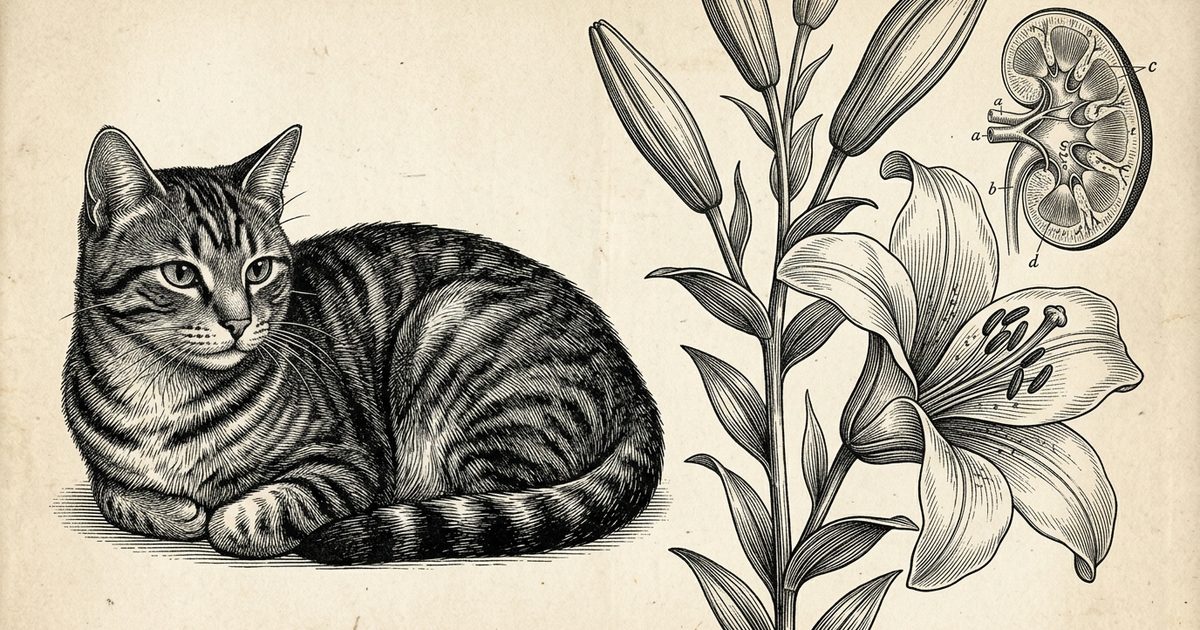
Lilies contain a toxin that destroys the tubular cells of a cat's kidneys, and cats are exquisitely sensitive to it. Within hours the kidneys begin shutting down, progressing to acute, often irreversible failure if treatment is delayed past the first day.
The kidney-failure mechanism
What lilies do to a cat is, biologically, a targeted attack on the kidneys. The toxin — concentrated in all parts of the plant — damages the renal tubules, the tiny structures that filter waste and balance fluids in the kidney. As those tubular cells die, the kidney loses its ability to produce urine and clear toxins from the blood. Veterinarians call this acute tubular necrosis, and in a cat exposed to a lily it can unfold over a matter of hours.
What makes this so devastating is how species-specific the damage is. Dogs and humans can ingest the same plant with comparatively minor effects, which is part of why lily toxicity went underrecognized for so long. Cats appear to lack whatever metabolic pathway lets other mammals clear the toxin before it reaches the kidneys. The precise molecule responsible has never been definitively identified, so researchers frame the danger around the clinical fact rather than a named compound: in cats, lily exposure reliably causes kidney failure in a way it does not in other species.
Why cats are uniquely vulnerable
The short answer science currently offers is that cats metabolize certain substances differently from dogs and humans — their liver enzymes handle some compounds more slowly, and over millions of years of evolution as strict carnivores, cats lost certain detoxification pathways that omnivores rely on. This is the same underlying reason cats are sensitive to many medications and chemicals that other pets tolerate. With lilies, the gap is extreme: a dose that a dog might shrug off can kill a cat.
Because the exact toxin hasn't been isolated, no one can yet say precisely which metabolic step fails in the cat. What is well established is the outcome: rapid, severe kidney injury following even tiny exposure. For a deeper, vet-reviewed explanation of feline kidney function and how lily toxicity specifically affects cats, the Cornell Feline Health Center is an authoritative source, and International Cat Care offers clear owner-facing guidance on lily poisoning and what to do.
Which Lilies Are Toxic to Cats?
The deadly lilies are the true lilies — the Lilium genus (Easter, Tiger, Asiatic, Oriental, and stargazer) — and daylilies (Hemerocallis). Plants that merely share the name, like peace lily, calla lily, and Peruvian lily, are different species with milder toxins — but none are truly safe for a cat.
The naming is where most of the danger hides. "Lily" gets attached loosely to dozens of unrelated plants, and owners who hear "lilies are toxic" sometimes relax because the bouquet contained a peace lily rather than a true lily — or panic unduly because they didn't realize the two are biologically unrelated. The distinction matters for how fast you act, but the bottom line is the same: treat any plant bearing that name as a risk until you've confirmed exactly what it is.
True lilies (Lilium) — the deadly ones
These are the genuinely lethal ones, and they cause the kidney-failure pattern unique to this genus. The common culprits are the Easter lily (Lilium longiflorum, everywhere in spring bouquets), the Tiger lily (Lilium lancifolium, a hardy garden favorite), Asiatic and Oriental hybrids, and the stargazer lily — that fragrant, pink-spotted bloom in almost every florist arrangement. Every part of these plants is toxic to a cat, and even the pollen that drifts onto a coat or the water standing in the vase can deliver a fatal dose. If a true lily is in your home or arrives in a gift bouquet, assume your cat is in danger by proximity alone — not only if you witness a bite.
Daylilies (Hemerocallis) — equally deadly
Daylilies look almost identical to true lilies at a glance, which is exactly why they belong on the same avoid-entirely list. They belong to a completely different genus (Hemerocallis, not Lilium), but the outcome for a cat is the same: the same rapid kidney failure, the same tiny lethal dose, the same unforgiving timeline. Daylilies are extremely common in gardens because they're hardy and low-maintenance, so a cat with outdoor access or a freshly picked garden bouquet is just as exposed. Treat daylilies and true lilies as one category — both deadly, no exceptions.
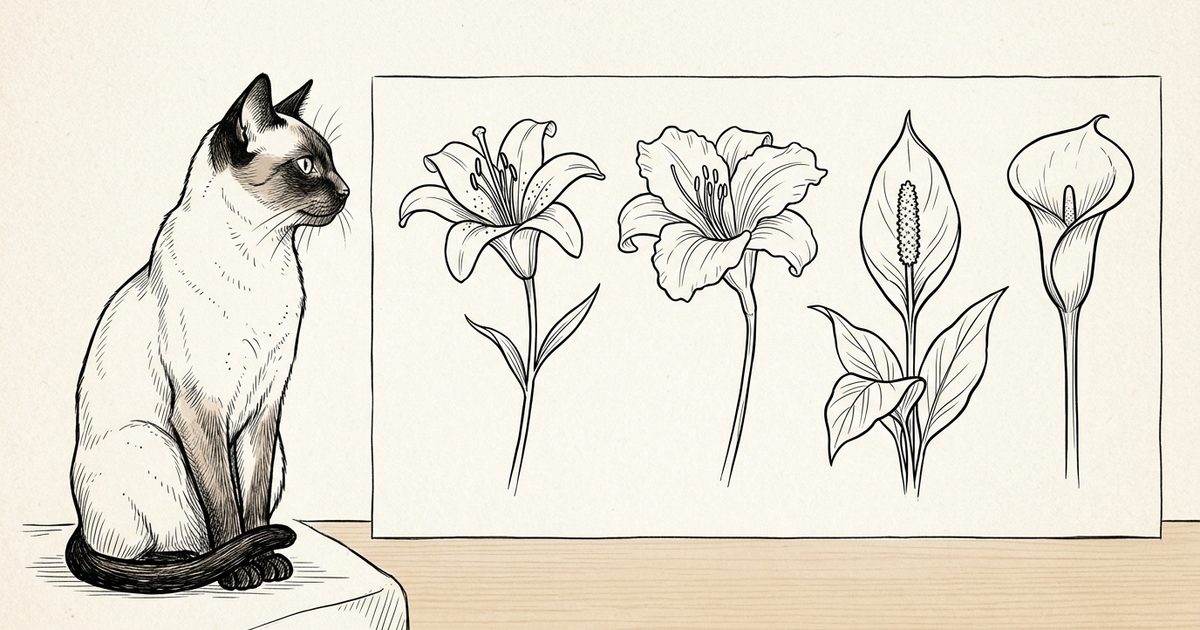
Lily look-alikes — different plants, still not safe
Here's where the naming gets genuinely confusing, and where the "is it the same thing?" question matters most. A common misconception is that peace lilies are the same as true lilies — they are not. The peace lily (Spathiphyllum) is an unrelated plant that causes painful oral irritation, drooling, and gastrointestinal upset through insoluble oxalate crystals, not the kidney failure triggered by Lilium. That's a real difference in both urgency and mechanism, and you can see the contrast with another GI-driven toxic bloom in our guide on whether tulips are toxic to cats — tulips also harm primarily through gastrointestinal irritation rather than renal destruction.
But "different" should never be read as "safe." Lily-of-the-valley contains cardiac glycosides that can disrupt the heart. Calla lilies carry the same oxalate crystals as peace lilies, with the same oral and GI effects. Peruvian lilies (alstroemeria) tend to cause only mild stomach upset, which is the mildest in this group — yet even they are not recommended around cats. The reason to distinguish the mechanism is so you can give your vet accurate information and they can calibrate treatment; the reason to generalize is that none of these belong where a curious cat can reach them. The Cornell Feline Health Center and the ASPCA's toxic-plant database both list these species clearly, and International Cat Care offers a reliable owner-facing guide to telling the dangerous genera apart.
How Much Lily Exposure Is Dangerous?
A terrifyingly small amount. Licking pollen off their fur, drinking the vase water, or chewing a single leaf can all cause fatal poisoning. There is no documented safe dose of true lily exposure for a cat — treat any contact as a veterinary emergency.
Most toxic-plant questions have a reassuring "small amount is fine" answer. Lilies don't. The dose that harms a cat is so low that it's effectively invisible — you won't see it happen, and you can't measure it by eye.
Pollen, water, and a single leaf
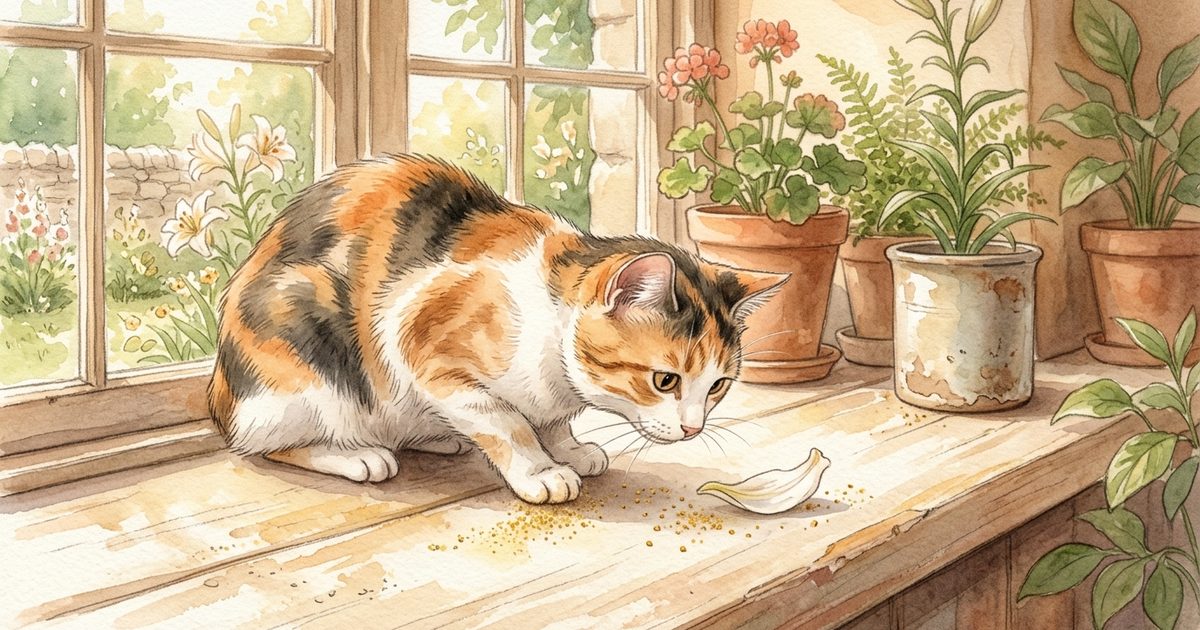
The exposure routes that catch owners off guard are the indirect ones. A cat brushes past a blooming lily and orange pollen dusts onto its coat; over the next hour it grooms itself thoroughly, as cats do, and swallows the toxin directly. Or the lily has been standing in a vase for two days, the water has turned slightly cloudy as plant tissue leaches into it, and the cat takes a sip from the freshest-looking water in the house. A single chewed leaf, one fallen petal on the floor, even pollen licked off a paw — each of these is a documented route to poisoning.
This is why the reassuring thought "my cat ignored the lily, so it's fine" is one of the most dangerous assumptions in feline medicine. Proximity alone is the risk: pollen drifts, water sits, cats groom. A cat that never once touched the plant with its mouth can still be exposed, and a cat that seems uninterested is not a cat that's safe. The presence of true lilies in a home with a cat is itself the hazard, not merely the moment of chewing.
There is no safe amount
Veterinary toxicology has not established a threshold below which true lily exposure is harmless to cats — and that's not for lack of cases, it's because the lethal dose is so small it can't be meaningfully bounded in a real-world home. Individual susceptibility varies too: a cat's size, age, kidney health, and hydration all shift the outcome, which means you cannot predict from another cat's experience whether yours will be fine. The only defensible rule is to treat any known or suspected exposure as urgent — call a vet or animal poison control immediately, and never adopt a wait-and-see posture with a true lily. When the stakes are irreversible kidney failure, "abundant caution" is not overreaction; it's the correct calibration.
What Are the Symptoms of Lily Poisoning in Cats?
Symptoms usually start within two to six hours: vomiting, drooling, lethargy, and loss of appetite. The danger is that cats often seem to recover, then go into acute kidney failure 12 to 24 hours later — with increased or no urination, dehydration, collapse, and, untreated, death.
Lily poisoning unfolds in stages, and the timeline is what catches owners off guard. The early signs look like ordinary stomach upset — easy to dismiss, easy to rationalize. The real damage is happening silently inside the kidneys at the same moment your cat seems to be bouncing back. Knowing the sequence is what lets you act before the window closes.
First hours: vomiting, drooling, lethargy
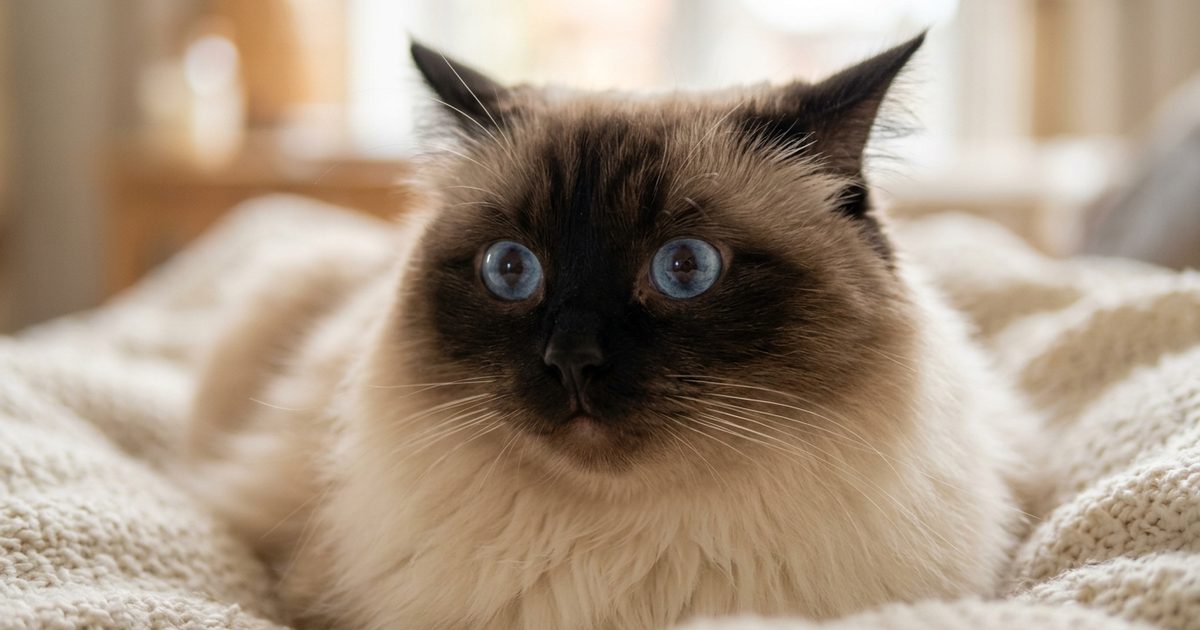
Within roughly two to six hours of exposure, most cats begin vomiting, drooling more than usual, and going quiet. Appetite drops away. These are the body's first attempts to reject the toxin, and they look mundane — the same picture as a cat that ate something mildly off. That ordinariness is exactly the danger. If you know your cat has been near a lily, these are not "wait and see" signs; they are the opening of a clock that runs regardless of how your cat looks. Vomiting has many causes in cats, and we cover the full picture of why cats vomit elsewhere — but with a known lily in the home, the cause is already decided, and the response must be too.
12–24 hours: kidney failure
The cruel twist of lily poisoning is the deceptive bounce-back. Somewhere between a few and twelve hours in, many cats stop vomiting and seem brighter — eating again, moving around. Owners exhale. This is not recovery. It is the calm before the kidneys begin to fail. Over the next 12 to 24 hours, the toxin destroys the tubular cells of the kidneys, and the clinical picture flips: urine output often climbs first (polyuria), then falls to almost nothing (anuria). Dehydration follows, along with a cat that is visibly sicker than before. Once urination stops, the damage becomes very hard to reverse. This is acute kidney injury, not the slow chronic kidney disease cats develop with age — we discuss chronic kidney disease and its long-term management separately — but the lesson here is that waiting through the "recovery" window is the single worst decision an owner can make.
Beyond 24 hours: collapse and fatal outcome
Left untreated, the trajectory steepens. By the second day, a cat in renal failure may collapse, seizure, and slip into a coma. The kidneys can no longer filter waste, toxins accumulate in the blood, and without aggressive intervention death follows — often within three to seven days of the original exposure. Prognosis at this stage is poor, and it is tied almost entirely to one variable: how quickly treatment began. A cat that reached a vet within hours of exposure has a strong chance; a cat that arrived after kidney values had already climbed has a guarded to bleak one. The symptoms are a countdown, and the only thing that stops it is speed.
What Should I Do If My Cat Ate a Lily?
Call a veterinarian or animal poison control immediately — do not wait for symptoms, do not try home treatment, and do not induce vomiting unless a vet tells you to. Bring the plant or a photo. Treatment within hours has a strong prognosis; delayed past kidney failure is often fatal.
If there is one moment in a cat's life where every minute matters, this is it. Lily toxicity is a veterinary emergency that rewards speed and punishes hesitation. The steps are simple precisely because there is no room for improvisation.
Act in minutes, not hours
As soon as you know or even suspect your cat has had contact with a true lily — chewing a leaf, brushing pollen onto its fur, drinking the vase water — pick up the phone. Call your veterinarian or, if it is after hours, the ASPCA Animal Poison Control Center at (888) 426-4435, which runs a 24/7 hotline staffed by veterinary toxicologists. Call ahead to your clinic rather than just showing up, so they can prepare decontamination and IV fluids before you arrive. Then bring the plant itself, or a clear photo of it — identifying the exact species changes the treatment plan.
What not to do matters as much as what to do. Do not give milk, do not attempt home remedies, and do not induce vomiting unless a veterinarian specifically instructs you to. The common advice to make a cat vomit at home is a contested one for good reason: wrong timing or the wrong method can cause more harm than the exposure itself, especially if the cat is already lethargic or breathing irregularly. Let the vet decide. Your job is to get the cat there fast and hand over accurate information.
What the vet will do
Treatment follows a clear protocol. If the cat arrives early enough, the vet induces vomiting to remove whatever plant material is still in the stomach, then gives activated charcoal to bind any toxin that has moved into the intestines. If there is pollen on the coat, they will bathe the cat thoroughly — cats continue to re-expose themselves by grooming until every grain is gone. The cornerstone of treatment is aggressive intravenous fluids, run for 48 to 72 hours, to flush the kidneys and protect the tubular cells from further damage. Blood work tracks kidney values across those days, and the team watches urine output closely for the polyuria-to-anuria shift.
The prognosis hangs on timing. Cats treated within roughly six hours of exposure generally do well; once kidney values have begun to climb, the outlook becomes guarded to poor, and some cats do not survive even with intensive care. For cats that pull through the acute crisis, the kidneys may carry lasting damage — and the longer-term outlook, including follow-up monitoring and diet, is covered in our guide to managing chronic kidney disease. But the outcome is decided long before that point, in the first hours, by how fast you moved.
What Are Cat-Safe Alternatives to Lilies?
If you love the lily look, choose genuinely cat-safe flowers and plants instead: roses, snapdragons, sunflowers, freesia, and zinnias for bouquets; spider plants, parlor palms, calathea, and Boston ferns for the home. The simplest rule is to keep true lilies out of any home a cat lives in.
You don't have to give up greenery or fresh flowers to keep your cat safe — you just have to be selective. The same lush, full look a bouquet of lilies gives can come from flowers that pose no threat, and many of the most popular houseplants happen to be completely non-toxic to cats. Once you swap the risky species for safe ones, you can relax entirely instead of watching your cat's every move near a vase.
Safe cut flowers
For bouquets and cut stems, stick to roses, snapdragons, sunflowers, freesia, zinnias, and orchids — all considered non-toxic to cats by veterinary poison-control references. They deliver the same height, color, and texture a lily would, without any of the kidney-failure risk. Orchids in particular are a reassuring choice: many owners avoid them out of misplaced fear, so if you've wondered are orchids toxic to cats, the short answer is no — they're safe. For a fuller list of cat-friendly options, our cat-safe plants guide catalogs the complete range.
Safe houseplants
For year-round greenery indoors, the most reliable cat-safe choices are the spider plant, parlor palm, calathea, Boston fern, and peperomia. These are all confirmed non-toxic and they also tend to be forgiving, attractive, and easy to keep alive — which is why they show up on nearly every cat-friendly plant list. The parlor palm in particular gives you that tall, arching, tropical silhouette that fills the visual role a lily might have played, but without any danger if your cat takes a curious bite. Browse the full cat-safe plants catalog for more options suited to your light and space.

Lilies and Cats — Quick Summary
| Question | Short answer |
|---|---|
| Are lilies toxic to cats? | Yes — extremely. True lilies are among the most dangerous plants a cat can encounter. |
| Are all parts of the plant toxic? | Every part — petals, leaves, stems, pollen, and even the water from the vase. |
| How much exposure is dangerous? | A terrifyingly small amount: a lick of pollen, a sip of vase water, or one chewed leaf. |
| What is the main symptom? | Early vomiting and lethargy, followed by acute kidney failure within 12–24 hours. |
| What is the timeline? | Symptoms begin within hours; kidney failure develops over 12–24 hours; death can follow without treatment. |
| What should I do if my cat ate a lily? | Call a vet or animal poison control immediately — minutes change the outcome. Do not wait for symptoms. |
| What is a safe alternative? | Roses, snapdragons, sunflowers, orchids, spider plants, parlor palms, and Boston ferns. |
Curious What Your Cat Would Say?
Upload a photo and get a warm, personalized reading from your cat's perspective.
Start Your Free ReadingFrequently Asked Questions
Are all lilies toxic to cats?
All true lilies (the Lilium genus — Easter, Tiger, Asiatic, Oriental, stargazer) and daylilies (Hemerocallis) are extremely toxic to cats. Every part is poisonous, including the pollen, leaves, stems, bulb, and even the water from the vase. Plants that merely share the name, like peace lily or calla lily, are different species with different but still harmful effects.
How much lily does it take to poison a cat?
A terrifyingly small amount. A single chewed leaf, one fallen petal, a lick of pollen, or a sip of vase water from a lily arrangement can all cause fatal poisoning. There is no documented safe dose of true lily exposure for a cat, so treat any known contact as a veterinary emergency.
Can a cat be poisoned by lily pollen alone?
Yes. Pollen drifts onto a cat's fur as it brushes past a bloom, and because cats groom themselves constantly, the toxin is swallowed during grooming. A cat that never bit the plant can still be poisoned from pollen licked off its coat or paws, which is why mere proximity to a lily is a risk.
Is lily vase water dangerous to cats?
Yes. The lily toxin leaches into the water a lily stands in, so a cat that drinks from the vase ingests the toxin directly. The bloom does not need to be chewed for the water to become dangerous. Empty and rinse vases, and keep them well out of a cat's reach.
What are the first symptoms of lily poisoning in cats?
Early signs usually appear within two to six hours and include vomiting, drooling, lethargy, and loss of appetite. These look like ordinary stomach upset and are easy to dismiss, which is what makes them so dangerous. With any known lily exposure, treat these signs as the opening of a medical countdown, not a wait-and-see situation.
How quickly does lily poisoning kill a cat?
Symptoms begin within hours of exposure, and acute kidney failure follows within 12 to 24 hours. Without treatment, a cat can collapse, seize, and die within three to seven days. The outcome depends almost entirely on how fast treatment begins — cats treated within hours often survive, while delayed care is frequently fatal.
Are peace lilies toxic to cats?
Peace lilies are harmful to cats, but they are not the same as true lilies. They cause painful oral irritation, drooling, and gastrointestinal upset through insoluble oxalate crystals rather than kidney failure. They are still not recommended around cats, but the urgency and treatment differ from true lily (Lilium) poisoning.
What should I do if my cat ate part of a lily?
Call a veterinarian or the ASPCA Animal Poison Control Center at (888) 426-4435 immediately. Do not wait for symptoms, do not try home remedies, and do not induce vomiting unless a vet instructs you to. Bring the plant or a clear photo so the species can be confirmed — minutes, not hours, decide the outcome.
Can a cat survive lily poisoning?
Yes, many cats survive when treatment begins within hours of exposure. Vets use induced vomiting, activated charcoal, thorough bathing to remove pollen, and 48 to 72 hours of aggressive IV fluids to protect the kidneys. Once kidney values have climbed, the prognosis becomes guarded to poor, so speed is the single biggest factor in survival.
What flowers are safe instead of lilies for a cat home?
Cat-safe cut flowers include roses, snapdragons, sunflowers, freesia, zinnias, and orchids. For houseplants, spider plants, parlor palms, calathea, Boston ferns, and peperomia are all non-toxic. The simplest rule is to keep true lilies out of any home a cat lives in — full stop.
Sources & References
You Might Also Like
Kitten Teething: Timeline, Symptoms & How to Help
Kitten teething runs from 3 to 7 months as baby teeth fall out. Learn the timeline, signs to watch for, and how to soothe a teething kitten safely.
15 min readWhen Do Cats Stop Growing? A Complete Timeline
When do cats stop growing? Most cats reach adult size by 12-18 months, but large breeds like Maine Coons keep growing until 3-4 years. Full timeline inside.
14 min readCan Cats Eat Cherries? Flesh, Pit & Toxicity Facts
Can cats eat cherries? Pitted flesh is safe in tiny amounts — but the pit, stem, and leaves are toxic (cyanide precursors). Learn what's safe and what isn't.
15 min read