
Are Tulips Toxic to Cats? What Every Owner Should Know

If you've ever wondered whether tulips are toxic to cats, you're asking exactly the right question — and the answer is yes. Tulips and cats are an uneasy combination in spring bouquets, garden beds, and forcing bowls, and tulip toxicity in cats is one of the most common plant-safety risks of the season. Every part of the plant contains irritant glycosides, and the bulb holds the highest concentration. Growing tulips in a cat-owning home isn't impossible, but it does demand real vigilance.
Key takeaways
- Tulips are genuinely toxic to cats — every part (bulb, stem, leaf, flower) contains harmful irritant glycosides.
- The bulb holds the highest concentration of toxin and is the most dangerous part to expose; a nibble of leaves or petals usually causes milder but still real symptoms.
- If your cat chews any part of a tulip, call your vet or a pet poison helpline — even a small amount is worth seeking advice over rather than guessing.
Tulips and Cats — Quick Reference
| Question | Short answer |
|---|---|
| Are tulips toxic to cats? | Yes — every part of the plant is poisonous |
| Which part is most dangerous? | The bulb, by a wide margin |
| Main toxin | Tulipalin A and B (irritant glycosides) |
| Common symptoms | Drooling, vomiting, diarrhea, depression |
| First action | Call your vet or a pet poison helpline right away |
| Safer alternatives | Roses, orchids, sunflowers, snapdragons |
For the frequently searched question of just how dangerous tulips are, the short answer is that they are not tiny-dose-deadly the way true lilies are, but they are genuinely poisonous and typically cause real discomfort when eaten. The ASPCA's toxic plant database lists tulips as toxic to cats, and both the Cornell Feline Health Center and International Cat Care flag spring flowers as common household ingestion risks worth watching. Here's how to read the risk clearly — and what to do when your cat decides to taste a bloom.
Are Tulips Toxic to Cats?
Yes — tulips are toxic to cats. All parts contain irritant compounds, and the bulb holds the highest concentration. Chewing even a leaf or petal can cause vomiting and drooling, and the bulb can produce more serious signs. Tulips are not as rapidly lethal as lilies, but they are genuinely poisonous.
A common spring flower, a real risk
Tulips arrive in homes the same way every year — in bouquet deliveries, in garden borders waking up after winter, and in shallow forcing bowls set on windowsills for an early burst of color. That makes them one of the most common plants a curious cat can reach. Veterinarians consistently see a spike in tulip-related calls during the spring blooming season, when fresh bouquets and indoor bulb bowls are suddenly everywhere at once.
Cats notice tulips for predictable reasons. The stems sway in a draft, the petals have an unfamiliar papery texture, and a novel plant on a table is an irresistible investigation target for an animal that explores the world with its mouth. Kittens and bored indoor cats are especially drawn to the movement. The risk isn't that tulips are uniquely tempting — it's that they're abundant, accessible, and present during exactly the season cats are most active.
How toxic compared to other flowers?
Tulips sit in the middle of the houseplant risk spectrum. They are more dangerous than generally non-toxic blooms like roses or orchids, which typically cause only mild stomach upset if eaten. But they are far less lethal than true lilies, where even pollen on the fur or sipping the vase water can trigger fatal kidney failure.
The ASPCA's Toxic and Non-Toxic Plants list classifies tulips as toxic to cats, and International Cat Care echoes that tulips cause significant gastrointestinal and central-nervous-system effects. The honest framing is: tulips won't kill a cat as swiftly or as often as a lily will, but they are genuinely poisonous — serious enough to warrant a vet call, not a wait-and-see.
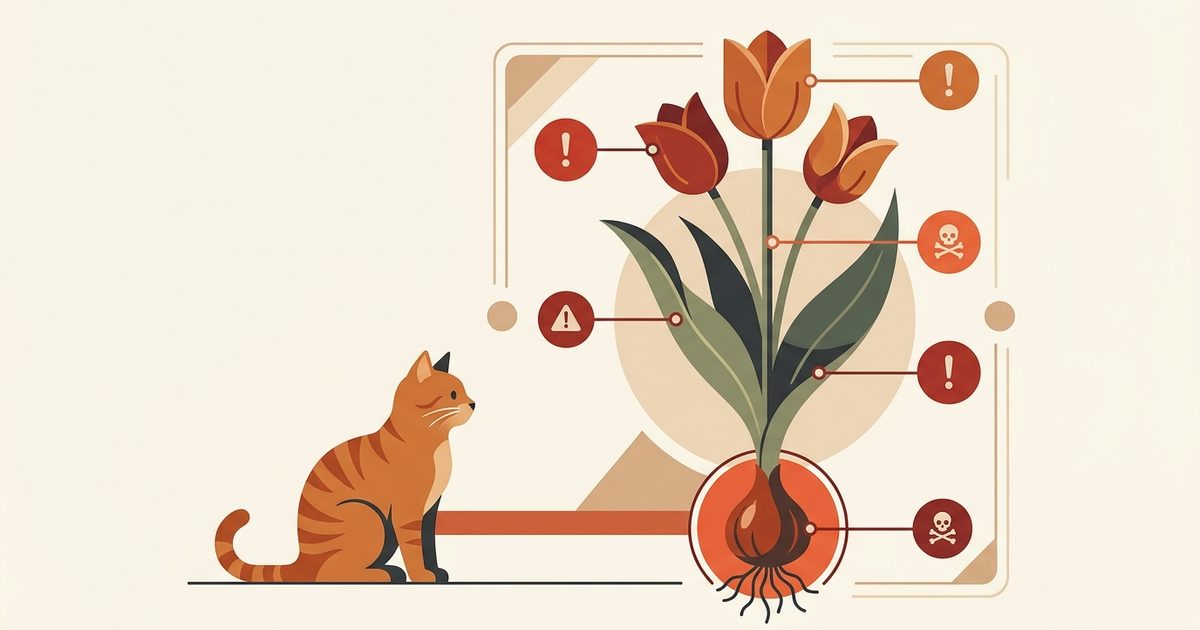
What Makes Tulips Toxic to Cats?
Tulips contain tulipalin A and tulipalin B, glycosides that irritate a cat's mouth, throat, stomach, and intestines. These compounds also affect the central nervous system and heart at higher doses. Cats are particularly sensitive because they lack some of the liver enzymes that break these compounds down efficiently.
Tulipalin A and B — the irritant glycosides
The two compounds that do the damage are tulipalin A and tulipalin B — bitter-tasting glycosides concentrated throughout the plant, with the highest levels packed into the bulb. When a cat chews a tulip, these glycosides contact the moist tissues of the mouth, throat, and gums almost immediately, which is why drooling, pawing at the mouth, and vocal discomfort are often the very first signs — sometimes before any plant material has even been swallowed.
Once ingested, the same irritants pass into the stomach and intestines, provoking vomiting and diarrhea as the body tries to expel them. That direct-contact irritation is why gastrointestinal upset is the dominant early symptom of tulip toxicity in cats, and why even a small chew can produce obvious distress.
There's a useful human parallel. Florists and bulb handlers who work with tulips bare-handed can develop "tulip finger" — cracked, peeling skin at the fingertips caused by prolonged contact with tulipalin. If the compound can damage tough human skin with enough exposure, it's no surprise it irritates the delicate lining of a cat's mouth. At higher doses, tulipalin also affects the central nervous system and the heart, which is where mild cases can escalate — particularly when the bulb, the most concentrated store, is what gets eaten.
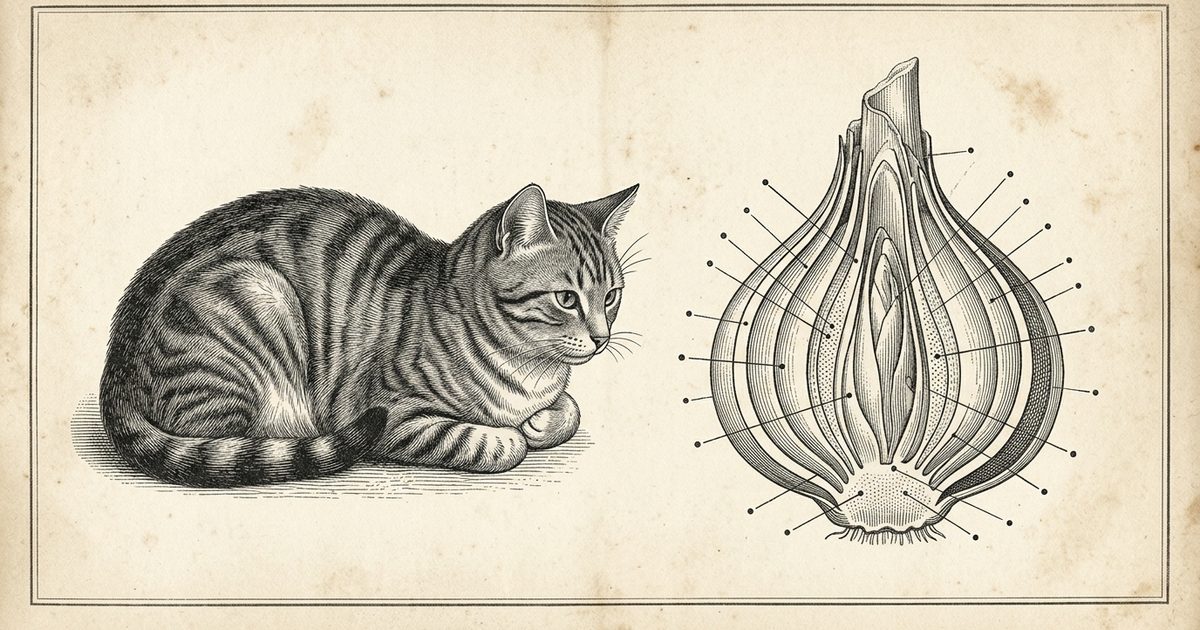
Why cats are extra vulnerable
Cats process many toxins more poorly than dogs or humans, and tulipalin is no exception. The reason sits in the liver. Cats have a well-documented deficiency in a family of enzymes called glucuronyl transferases — the same metabolic pathway that makes them famously sensitive to compounds like acetaminophen, certain essential oils, and many household chemicals. Because they can't efficiently attach a glucuronic acid molecule to break these substances down, the irritants linger in the body longer and at higher effective levels.
Small body size compounds the problem. A toxin's effect depends on dose per kilogram of body weight, so the same chewed tulip that barely bothers a large dog delivers a proportionally larger hit to a 4 kg cat. Cornell Feline Health Center guidance reflects this: cats are uniquely vulnerable to many common plants precisely because of this combination of liver enzyme gaps and low body mass. That's why a bloom rated merely "mildly toxic" for a dog can produce genuine illness in a cat — and why tulips, even mid-spectrum on the plant risk scale, deserve real caution.
Which Part of the Tulip Is Most Dangerous?
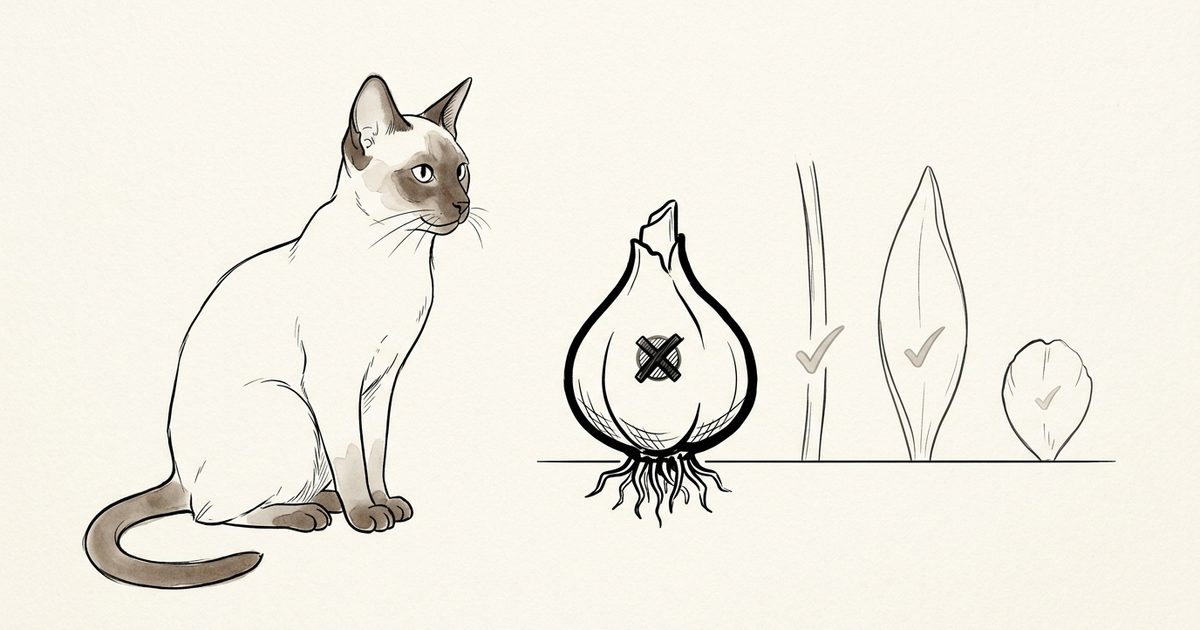
The bulb is the most dangerous part of a tulip — it holds the highest concentration of tulipalin, by some estimates ten to fifteen times that of the stem. The stem, leaves, and flower are milder but still harmful, so a cat chewing greenery or petals can still show symptoms.
A tulip does not carry its toxins evenly. The compounds that make the plant poisonous concentrate in the tissues a cat is least likely to chew — and that mismatch is the crux of why tulip risk is so easy to underestimate.
Bulb — concentrated risk
The bulb is essentially the plant's storage organ, and it is where tulipalin A and B accumulate most heavily. Because the bulb holds the toxin at such high density, even a small bite of one can deliver a dose far larger than a whole stem. The hazard extends beyond the garden bed: indoor forcing bowls of tulip bulbs, paper bags of stored bulbs in a shed or garage, and half-planted bulbs sitting out during spring gardening season are all common, easily overlooked exposures. A curious cat that digs in a basket of bulbs or noses through a potting tray can ingest concentrated toxin without ever touching a flower.
Stem, leaves, and flower — milder, not safe
The green parts and petals carry far less tulipalin than the bulb, but "less" is not the same as "none." A cat that chews on a cut-flower arrangement, nibbles a fallen petal, or mouths a stem in a vase is still taking in the same irritant compounds — just at a lower dose. Symptoms tend to be milder, but drooling, vomiting, and oral discomfort can absolutely follow.
There is a persistent myth that only the bulb matters and the rest of the plant is harmless. The safer, more accurate way to think about it is bulb worst, all parts harmful. The dose-versus-part relationship is real — a chunk of bulb is far more dangerous than a petal nibble — but it does not turn the leaves and flowers into something safe. Part eaten and amount eaten both shape severity, and a cat's individual sensitivity adds another variable you cannot predict in advance.
What Are the Symptoms of Tulip Poisoning in Cats?
Mild tulip poisoning causes drooling, vomiting, diarrhea, and depression, usually within hours of chewing. Severe cases — more likely after eating the bulb — can include breathing difficulty, a fast or irregular heartbeat, tremors, and collapse. Breathing or heart signs are a veterinary emergency.
Symptoms fall into two tiers, and which tier a cat lands in depends heavily on which part of the plant — and how much — was eaten. Most exposures stay in the mild tier, but the severe tier is real and worth knowing in advance.
Mild signs (most cases)
The earliest and most common signs come from the tulipalins irritating the mouth, throat, and stomach. You may see drooling or hypersalivation, pawing at the mouth, lip smacking, vomiting, diarrhea, and a generally quiet or depressed demeanor. These signs usually appear within a few hours of chewing as the irritant compounds hit the oral and gastrointestinal lining. The cat may go off food and hide. For the broader picture of what vomiting can mean in cats — tulip ingestion is just one of many possible triggers — see our guide on cat vomiting. Mild cases are uncomfortable but usually recover with supportive care, and the Cornell Feline Health Center is a sound starting point for understanding when home monitoring is reasonable versus when to call.
Severe signs — when to rush to the vet
Severe symptoms are far more likely after bulb ingestion, because the concentrated dose reaches the central nervous system and heart at levels the green parts rarely produce. Watch for labored or rapid breathing, a fast or irregular heartbeat, weakness, tremors, loss of coordination, and in the worst cases collapse. These are not "wait and see" signs — respiratory and cardiac involvement can escalate quickly, and a cat showing them needs immediate veterinary care. Do not observe at home at this tier hoping it passes.
How much is too much?
A rough guide: a small nibble of a petal or leaf most often produces mild, self-limiting signs, while a bite of bulb can push a cat into the severe tier even at modest amounts. But dose alone does not tell the whole story. Individual sensitivity varies — some cats react strongly to very little, others tolerate more — and you cannot know in advance which kind of cat yours is. The reliable rule is that any confirmed ingestion warrants a vet call, not panic, but not assumption either.
What Should I Do If My Cat Eats a Tulip?
Call your vet or a pet poison helpline right away — even before symptoms appear. Remove any plant material from your cat's mouth and fur, keep a sample and note how much was eaten, and do not induce vomiting unless the vet says so. Serious cases need clinic care.
Tulip toxicity moves faster than worry does. The single most useful thing you can do in the first few minutes is act calmly and deliberately — get the plant out of reach, gather evidence, and put a professional on the phone. The decisions that protect a cat are made in the window before vomiting even starts.
Immediate first steps
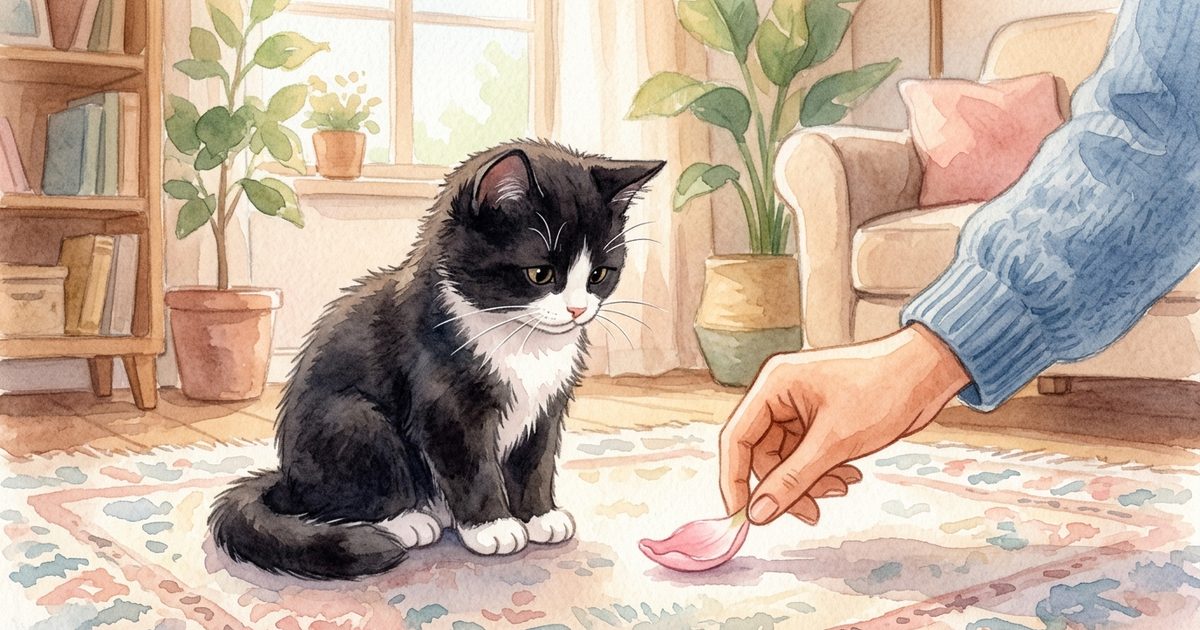
Start by moving the cat away from the plant and the bouquet or pot out of reach — close a door, move the vase to a high shelf, or relocate the cat to another room. If your cat has plant material in its mouth or on its fur, gently clear what you can see: pick out petals or leaf bits, and wipe the mouth and face with a damp cloth so it doesn't swallow more while grooming. Don't rinse aggressively or force anything — you don't want to push fragments further back or stress a cat that may already be nauseous.
Then gather a sample. Snip a piece of the flower, leaf, or bulb that was chewed, and jot down roughly how much is missing and when you think it happened. Photos help. With that in hand, call your vet, the nearest emergency clinic, or a pet poison helpline. The Cornell Feline Health Center is a trusted starting point for feline health guidance, and the ASPCA Animal Poison Control line is staffed for exactly this kind of call. Reach out before symptoms develop — early calls shape better decisions than panicked ones later.
What the vet may do
Once you're speaking with a vet, their plan depends on how much was eaten and which part. For recent exposure they may guide decontamination — rinsing the mouth, or in some cases directing you to induce emesis under their supervision. Never induce vomiting on your own initiative: in a small, already-nauseous cat it can do more harm than good. For ingestion within the last hour or two, they may ask you to bring the cat in for activated charcoal, supportive intravenous fluids to protect the kidneys and flush the toxins, anti-nausea medication, and monitoring of heart rate and breathing. Bringing the plant sample you collected speeds identification — a tulip is unmistakable, but confirming the part and freshness helps the vet calibrate the dose of care.
When home monitoring might be enough
Home monitoring is an option only after a vet confirms it — never something you decide alone. In the narrow case of a tiny petal nibble with no drooling, vomiting, or change in demeanor, a vet may advise watching your cat closely for a set number of hours and reporting back if anything shifts. That guidance is specific to your cat's size, health, and exactly what was chewed, so the same nibble that's a non-event for one cat might warrant a clinic visit for another. The safe default is the vet call; "she seems fine" isn't a substitute for it.
Cat-Safe Alternatives to Tulips (and How to Cat-Proof Bouquets)
Cat-safe spring blooms include roses, orchids, snapdragons, sunflowers, and freesia — all far less risky than tulips. If you keep tulips in the home, place them out of reach, discard fallen petals and pollen promptly, and never leave bulb bowls accessible. A dedicated cat-safe plant list is the simplest fix.
You don't have to give up flowers to keep a curious cat safe — you just swap toward blooms that don't carry the same irritant risk and apply a few containment habits to the ones that do. The simplest, most reliable path is building a go-to list of genuinely safe plants so the default choice is already a good one.
Safer flowers to grow or bring home
A handful of popular cut flowers are widely considered non-toxic to cats and make excellent substitutes. True roses (Rosa) are a safe classic — see our full guide on whether roses are toxic to cats for the nuances, including the thorn and pesticide angles. Most orchids, especially the common Phalaenopsis moth orchid, are also non-toxic — our are orchids toxic to cats breakdown covers which to trust. Sunflowers, snapdragons, zinnias, and freesia round out a bright, spring-appropriate palette that carries tulips' seasonal cheer without the same exposure risk.
For a broader reference, our cat-safe plants catalog lists many more options grouped by room and purpose. The International Cat Care guide to poisonous plants is also worth bookmarking as a quick check before bringing anything new home. Building the habit of a five-second lookup turns the flower aisle from a hazard scan into an easy choice.

Cat-proofing if you must keep tulips
If tulips are already in the house — a gift, a seasonal tradition — containment is the work. Place vases well out of a cat's jump range or in a room the cat can't access; a tall shelf isn't always enough, since cats are agile vertical thinkers, so a closed room is the safer bet. Sweep up fallen petals and pollen daily, because those are the parts a curious cat is most likely to bat off a table and chew. Keep any bulb-forcing bowls or storage baskets sealed and out of reach — as we covered earlier, the bulb holds the highest concentration of toxin and is the most dangerous single piece to leave exposed.
For gardeners, store bulbs in a lidded container and clean up potting debris rather than leaving tulip bits where a cat can find them. And if the appeal is purely seasonal decor, high-quality artificial tulips carry none of the risk and let you enjoy the look year after year. The goal isn't to ban tulips from your life — it's to make sure the only things your cat can reach are things that won't hurt it.
Tulips and Cats at a Glance — Summary
| Question | Short answer |
|---|---|
| Are tulips toxic to cats? | Yes — every part of the plant is poisonous, though rarely as deadly as lilies |
| Which part is most dangerous? | The bulb — it holds the highest concentration of tulipalin, by far |
| What toxin is responsible? | Tulipalin A and B, irritant glycosides that affect the gut, heart, and nerves |
| What are the main symptoms? | Drooling, vomiting, diarrhea, and depression; severe cases add breathing or heart signs |
| What should I do first? | Call your vet or a pet poison helpline right away, and keep a plant sample |
| What can I plant instead? | Roses, orchids, sunflowers, snapdragons, and freesia are far safer choices |
The simplest version: yes, tulips are toxic to cats, the bulb is the worst part, and any chewing is worth a prompt vet call. If you'd like to keep flowers in the home without the worry, cat-safe plants are the cleanest swap. For the rest of what your cat might be telling you through her behavior, a MeowMind reading can help you hear it from her side.
Curious What Your Cat Would Say?
Upload a photo and get a warm, personalized reading from your cat's perspective.
Start Your Free ReadingFrequently Asked Questions
Are tulips toxic to cats if they just smell or brush against them?
No — simply smelling or brushing against a tulip won't poison a cat. Tulip toxicity requires ingestion; the irritant compounds must be chewed or swallowed to cause symptoms. Contact with pollen on the fur is only a concern because a grooming cat may then ingest it.
How much tulip does a cat need to eat to get sick?
Even a small nibble of a leaf or petal can trigger drooling or mild vomiting, because tulipalin irritates on contact. A bite of the bulb is far more dangerous at a much smaller quantity. Individual sensitivity varies, so there is no truly safe amount.
Are tulip bulbs more poisonous than the flowers?
Yes — the bulb holds the highest concentration of tulipalin, by some estimates ten to fifteen times that of the stem. The flowers, leaves, and stem are milder but still harmful, so a cat chewing greenery can still show real symptoms.
What should I do right away if my cat chews a tulip?
Call your vet or a pet poison helpline immediately, even before symptoms appear. Remove any plant material from the mouth and fur, keep a sample of what was chewed, and note how much is missing. Do not induce vomiting unless the vet instructs you to.
How long until symptoms appear after a cat eats a tulip?
Mild signs like drooling, pawing at the mouth, and vomiting usually appear within a few hours as the irritant compounds hit the oral and gastrointestinal lining. Severe signs from bulb ingestion can follow more quickly and escalate fast.
Can a cat die from eating tulips?
Death is rare with prompt care, but serious cases — usually from eating the bulb — can involve breathing difficulty, irregular heartbeat, tremors, or collapse and can become life-threatening. Tulips are not as swiftly lethal as lilies, but they are genuinely poisonous.
What flowers are safe to have around cats instead of tulips?
Cat-safe spring blooms include roses, orchids, snapdragons, sunflowers, zinnias, and freesia. These carry far less irritant risk than tulips. A quick five-second lookup before bringing flowers home turns the aisle into an easy choice.
Are dried tulips or tulip petals still toxic to cats?
Yes — drying does not neutralize tulipalin, so dried tulips and fallen petals remain irritating if chewed or swallowed. Swept-up petals on the floor are a common, easily overlooked exposure for a curious cat.
Sources & References
You Might Also Like
Kitten Teething: Timeline, Symptoms & How to Help
Kitten teething runs from 3 to 7 months as baby teeth fall out. Learn the timeline, signs to watch for, and how to soothe a teething kitten safely.
15 min readWhen Do Cats Stop Growing? A Complete Timeline
When do cats stop growing? Most cats reach adult size by 12-18 months, but large breeds like Maine Coons keep growing until 3-4 years. Full timeline inside.
14 min readCan Cats Eat Cherries? Flesh, Pit & Toxicity Facts
Can cats eat cherries? Pitted flesh is safe in tiny amounts — but the pit, stem, and leaves are toxic (cyanide precursors). Learn what's safe and what isn't.
15 min read