
Cat Safe Plants: The Complete List of Non-Toxic Houseplants
Finding the right cat safe plants means you can fill your home with greenery without turning every leaf into a vet emergency — and many gorgeous houseplants, from spider plants to parlour palms, are genuinely plants safe for cats. This is your positive reference: a curated catalog of non toxic plants for cats that actually thrive indoors, plus the short list of dangerous ones to leave at the shop.
Cats chew greens by nature — it's instinct, not mischief — and they don't reliably tell toxic foliage from safe. So the smart move isn't trusting your cat's judgment; it's curating what's within reach. The good news: some of the easiest, most rewarding houseplants happen to be completely non-toxic to cats, and there's even a category of greenery grown specifically for them to eat.
Key takeaways
- Many popular houseplants — spider plants, Boston ferns, parlour palms, African violets, orchids — are fully non-toxic to cats and easy to grow indoors.
- Cat grass and catnip are safe plants grown for cats to eat and enjoy, redirecting the chewing instinct away from your decor.
- A short list of common plants (lilies, sago palm, tulips) is genuinely dangerous; knowing which to avoid is as important as knowing which are safe.
Cat Safe Plants — Quick Reference
| Plant | Safe for cats? | Notes |
|---|---|---|
| Spider plant | ✅ Yes | Arching striped leaves; forgiving even if nibbled |
| Boston fern | ✅ Yes | Lush fronds; loves humidity, great for bathrooms |
| Parlour palm | ✅ Yes | Low-light tolerant; the safe alternative to sago palm |
| African violet | ✅ Yes | Compact flowering plant; safe blooms |
| Lily | ❌ No | Every part, even pollen, can cause fatal kidney failure |
| Sago palm | ❌ No | Cycad toxin; high risk of liver damage |
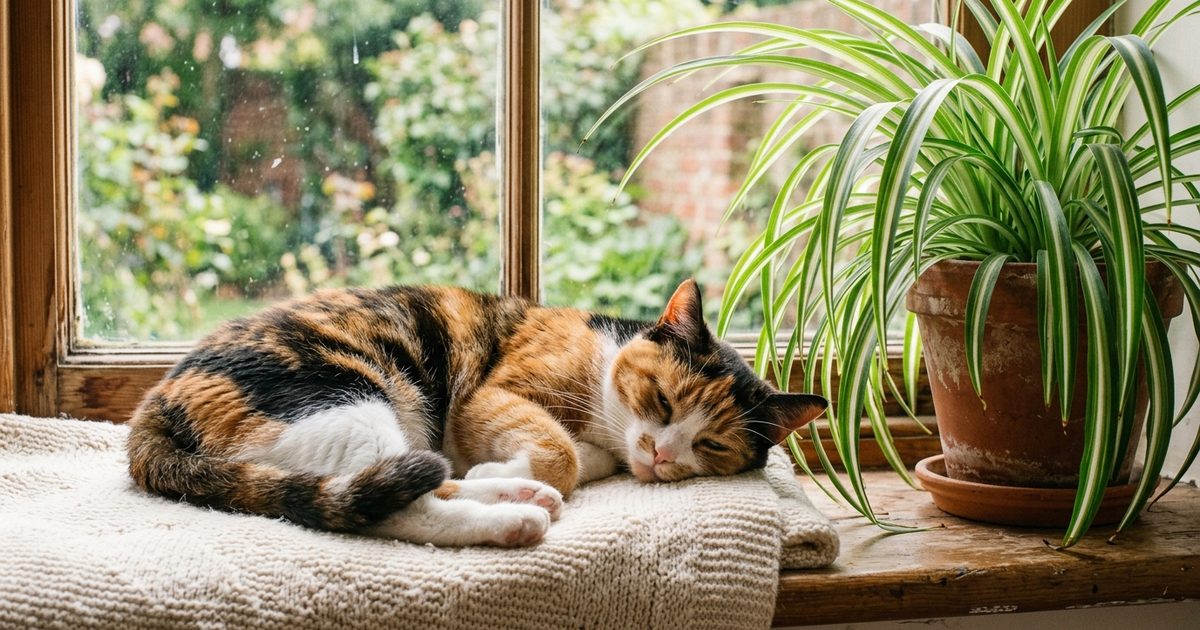
Why Knowing Which Plants Are Safe for Cats Matters
Cats naturally chew on greens — it is instinct, not malice — and many popular houseplants are toxic when chewed or swallowed. Knowing the cat safe plants lets you fill your home with greenery without turning every leaf into a vet emergency, and it points you toward plants that actually enrich your cat's life.
Cats chew greens by nature
Plant-eating is a normal part of being a cat. Domestic cats, like their wild ancestors, ingest small amounts of grass and foliage as a matter of course, and small quantities of vegetation appear to aid digestion and provide gentle enrichment through texture, scent, and the simple act of foraging. It is not a sign of deficiency or boredom gone wrong — it is everyday feline behavior. If you want the full picture of why your cat seeks out greens, see our explainer on why cats eat grass. The important reframe is this: assume curiosity is the default, not "cats know what to avoid." They do not reliably distinguish toxic from safe foliage, so the responsibility for what's within reach is ours.
Many common houseplants are toxic
The reason this matters is that several of the most popular houseplants are genuinely dangerous to cats. Lilies are the most acute threat — every part of a true lily, including the pollen and the water in the vase, can cause fatal kidney failure, and we cover that in depth in are lilies toxic to cats. Tulips and daffodils concentrate toxins in their bulbs, as we explain in are tulips toxic to cats. Dieffenbachia (dumb cane), pothos, and philodendron carry insoluble calcium oxalates that cause painful oral irritation, drooling, and swelling. Sago palm can cause liver failure. These are not exotic plants — they are the staples you'll find in any garden center. The danger is plant-specific rather than universal, and that is exactly why a positive safe-list is so valuable: it tells you what you can grow, not only what to fear.
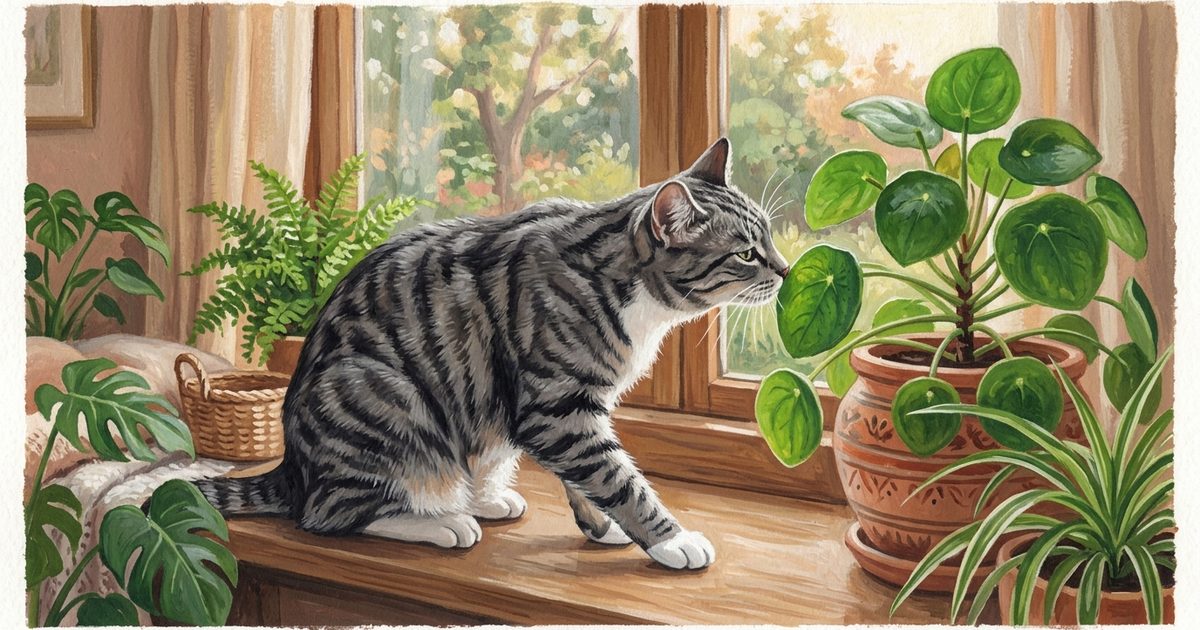
The safe list is your positive reference
Trying to memorize every toxic plant is a losing game — there are hundreds, and the list shifts by region and by what's in season. The more useful habit is to anchor on a curated safe list and treat it as your default. When you know the species that are genuinely non-toxic to cats, you can green your home confidently and only check the exceptions. The ASPCA Toxic and Non-Toxic Plants database is the authoritative reference most veterinarians rely on; for when to call your vet after suspected exposure, the Cornell Feline Health Center offers sound preventive guidance. Verify any new plant before it comes home, and the rest of your plant choices become easy.
The Best Cat-Safe Houseplants (The Complete List)
The best cat safe plants include spider plants, Boston ferns, parlour palms, calatheas, peperomias, African violets, phalaenopsis orchids, and areca palms. All are non-toxic to cats according to the ASPCA, easy to grow indoors, and forgiving if a curious cat takes a nibble.
These eight are the backbone of a cat-friendly plant collection — chosen because the ASPCA Toxic and Non-Toxic Plants list confirms their safety, and because they actually thrive in ordinary homes. None will cause poisoning if your cat chews a leaf, though any plant material eaten in volume can still upset a sensitive stomach. Think of this list as your positive reference: instead of memorizing everything that's dangerous, you anchor on what you can confidently grow.
Cat-Safe Houseplants — Quick Reference
| Plant | Light | Care difficulty | Cat-safe note |
|---|---|---|---|
| Spider plant | Bright indirect to medium | Very easy | Fully non-toxic; harmless even if chewed |
| Boston fern | Bright indirect | Moderate (needs humidity) | Non-toxic; safe for bathroom or kitchen |
| Parlour palm | Low to medium indirect | Easy | Non-toxic; the safe alternative to sago palm |
| Calathea | Medium indirect | Moderate (needs humidity) | Non-toxic; striking patterned foliage |
| Peperomia | Bright to medium indirect | Very easy | Very cat-safe; compact and low maintenance |
| African violet | Bright indirect | Easy (avoid water on leaves) | Non-toxic; a safe flowering alternative |
| Phalaenopsis orchid | Bright indirect | Moderate | Non-toxic; long-lasting blooms |
| Areca palm | Bright indirect | Easy | Fully cat-safe; larger statement palm |
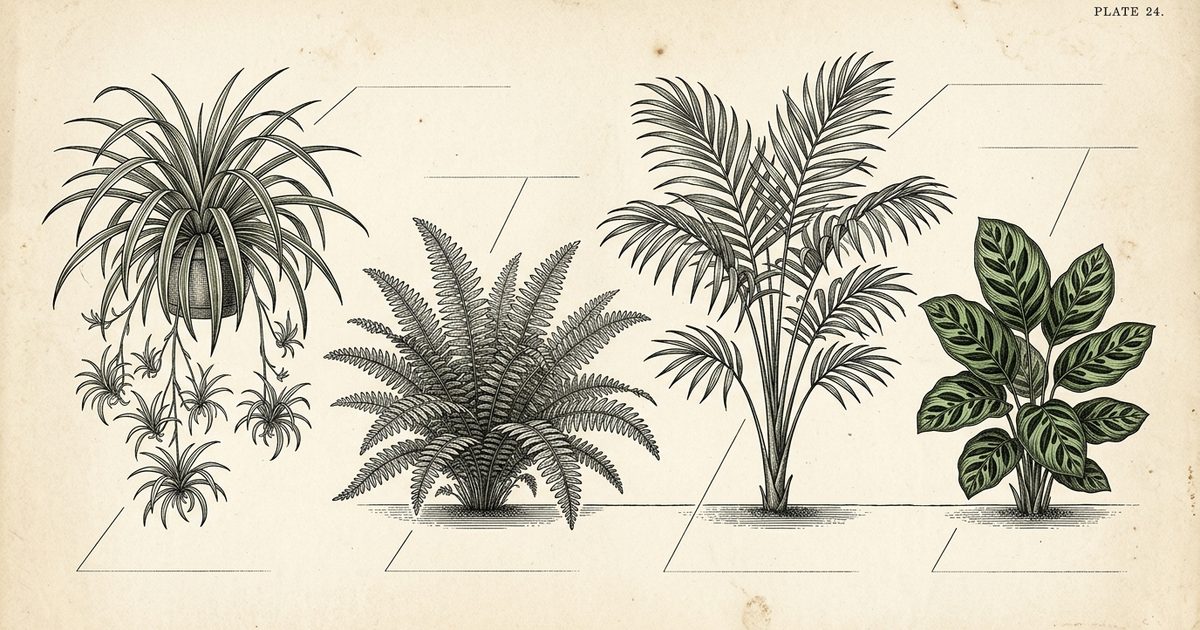
Spider plant (Chlorophytum comosum)
If there's one plant that defines "cat safe," it's the spider plant. Its arching, striped leaves cascade from a central crown, and mature plants send out long stems bearing tiny plantlets — which cats love to bat at like living toys. Spider plants tolerate a wide range of light, bounce back from missed waterings, and grow fast enough to feel rewarding. They are fully non-toxic: even if your cat chews the grass-like leaves, the worst you'll usually see is mild stomach upset from the fiber alone, not poisoning. It's the safest, most forgiving place to start.
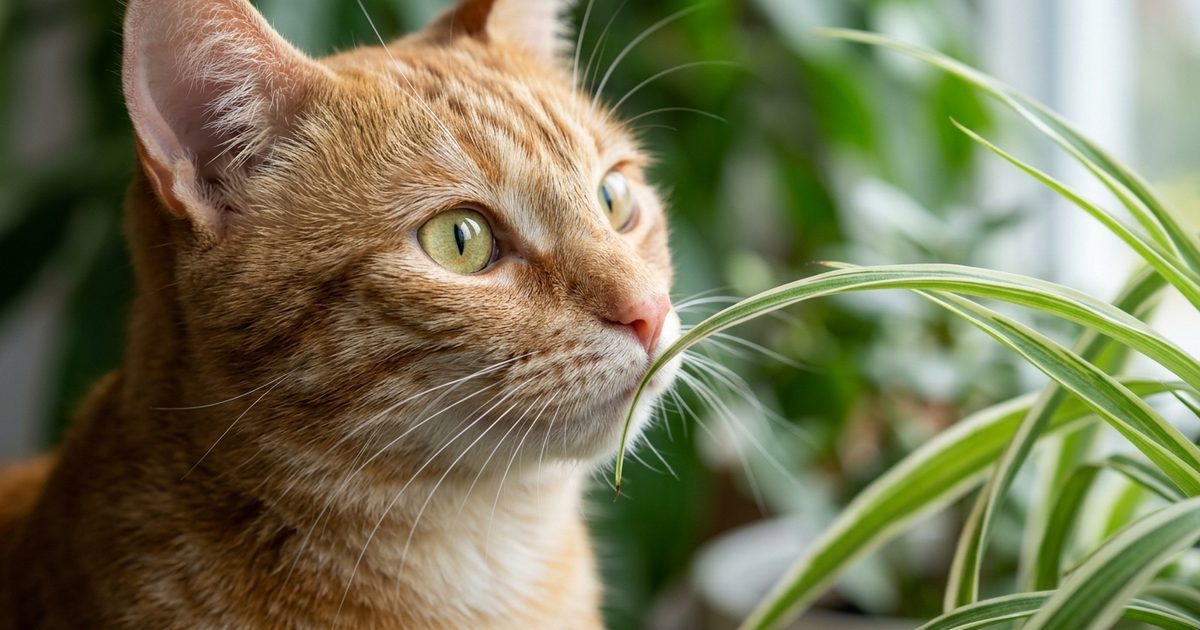
Boston fern (Nephrolepis exaltata)
Boston ferns bring a full, feathery cascade of green fronds that soften any shelf — and they're entirely non-toxic to cats. The catch is humidity: they love a steamy bathroom or kitchen and sulk in dry air, where their fronds brown at the tips. Give them bright indirect light, keep the soil lightly moist, and they'll reward you with lush growth that a curious cat can brush against or nibble without harm. They're a particularly good choice if you've avoided plants assuming all that lush foliage must be dangerous — it isn't.
Parlour palm (Chamaedorea elegans)
The parlour palm is a small, slow-growing palm that tolerates lower light better than almost any other houseplant — and it's completely safe for cats. Its feathery fronds stay compact, making it ideal for tabletops or floor pots in dim corners. Crucially, it's the cat-friendly alternative to the sago palm, which looks superficially similar but is one of the most toxic plants you can bring home (sago can cause liver failure). If you want a palm and you have a cat, choose parlour — never sago.
Calathea (Calathea spp.)
Calatheas are grown for their foliage, and it's spectacular — oval leaves patterned in silver, deep green, purple undersides, and painterly brushstrokes that look almost artificial. They're fully non-toxic to cats, and they add a "prayer plant" quirk: leaves fold upward at night and relax flat by day. The trade-off is humidity and consistent moisture; they dislike dry air and hard water, which can crisp their edges. In a humid spot with filtered light, a calathea is a striking, cat-safe centerpiece that earns its drama.
Peperomia (Peperomia spp.)
Peperomias are the quiet workhorses of the cat-safe plant world. They stay compact, come in a huge range of leaf shapes — rippled, heart-shaped, striped, succulent-like — and ask for very little: bright to medium indirect light and occasional water when the top inch of soil dries. They're among the most cat-safe plants you can grow, with no toxicity concerns reported, and their small size makes them easy to place anywhere, including out of a persistent chewer's reach. Low effort, high reward, zero worry.
African violet (Saintpaulia)
If you want flowers without the danger, African violets are the answer. They bloom almost year-round in shades of purple, pink, and white, stay compact enough for a windowsill, and are completely non-toxic to cats. This makes them the safe flowering counterpart to lilies — which are among the most lethal plants for cats. For more cat-safe flowering options beyond the houseplant staples here, see our wider guide to flowers that are safe for cats. African violets just need bright indirect light and water at the soil level (keep it off the fuzzy leaves).
Phalaenopsis orchid
Moth orchids (Phalaenopsis) are non-toxic to cats and surprisingly easy: a bright indirect windowsill, weekly watering, and they reward you with blooms that last for months. Their elegant arching flower spikes tempt curious cats to swat, but even if a bloom or leaf gets chewed, there's no toxicity — only possible mild stomach upset from the plant material itself. If you've hesitated over orchids assuming their exotic looks must mean danger, they don't; for the full breakdown of orchid safety, see are orchids toxic to cats.
Areca palm (Dypsis lutescens)
The areca palm is the cat-safe choice when you want a larger, statement plant — a floor-level specimen with feathery, arching fronds that can reach six feet. It's fully non-toxic to cats, so there's no risk if your cat brushes past or takes an exploratory bite, and it carries a long-standing reputation as an air-purifying plant (the NASA studies are often cited, though the real-world effect in a home is modest — enjoy the greenery, don't expect a filter). Give it bright indirect light and regular water, and it becomes a lush, safe focal point in any room a cat shares.
Cat Grass: The Safe Plant Your Cat Can Actually Eat
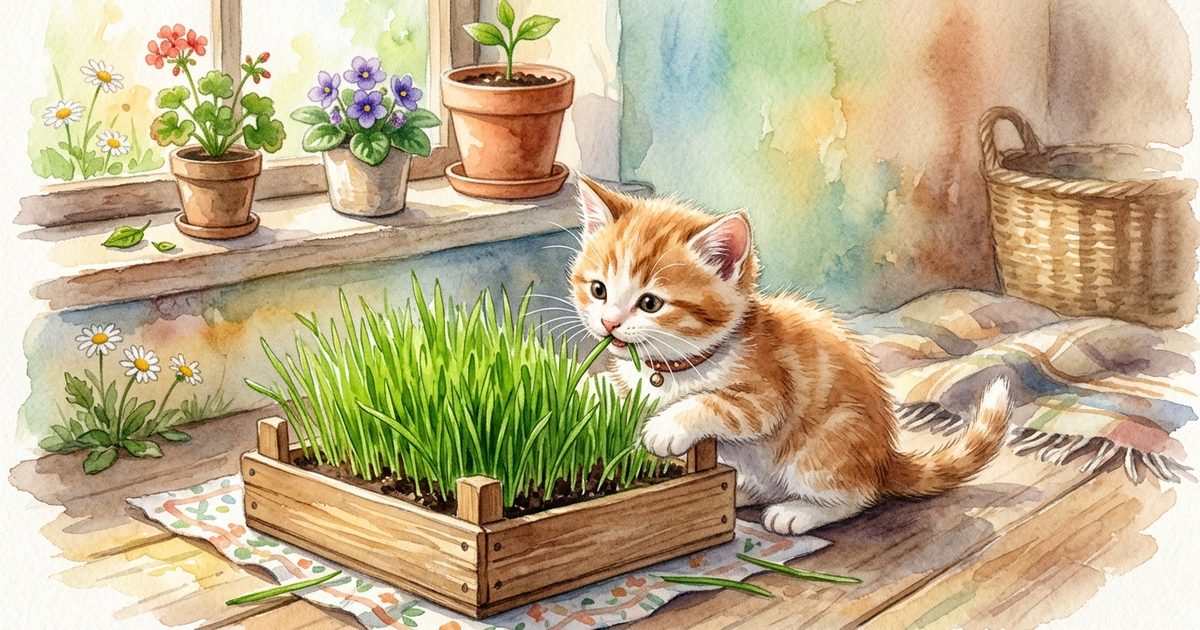
Cat grass — usually wheatgrass, oat grass, or barley — is the one plant grown specifically for cats to eat. It is fully safe, provides fiber and enrichment, and gives cats a sanctioned outlet for the plant-chewing instinct that might otherwise target your houseplants.
Decorative houseplants are lovely to look at, but most cats want to do something with a leaf — bite it, bat it, chew it. Cat grass flips that dynamic: instead of hoping your cat ignores your greenery, you offer a plant built to be eaten. It is one of the simplest, most reliable additions to a cat-friendly home, and it earns its place in any shortlist of cat safe plants.
What is cat grass?
"Cat grass" is not a single species — it is a catch-all for several fast-growing cereal grasses sold as seed mixes, most commonly wheatgrass (Triticum aestivum), oat grass (Avena sativa), and barley grass (Hordeum vulgare). All three are non-toxic to cats and sprout within days. It is not the same as the grass outdoors: lawns and parks are often treated with pesticides or fertilizers, and outdoor grass can carry fleas, parasites, and residue from passing animals. Cat grass is grown deliberately indoors, in clean soil, in small shallow trays — a controlled, safe alternative to whatever your cat might nibble on a balcony or windowsill stroll. For the deeper "why do cats eat grass at all?" question, see our why cats eat grass explainer on the chewing behavior itself.
Why cats benefit from cat grass
Cat grass earns its spot for two reasons. First, it provides fiber and roughage that supports normal digestion; cats are obligate carnivores, but small amounts of plant matter still pass through their system and may help with hairball passage. Second, it is an enrichment and foraging outlet — a cat that has a dedicated tray of grass to chew is less likely to investigate your spider plant, your fern, or whatever toxic foliage caught its eye. Redirecting the chewing instinct toward something safe is genuinely easier than training a cat to stop chewing plants altogether. The Cornell Feline Health Center notes that plant-eating is a normal feline behavior, and offering a sanctioned option is the practical response.
Growing and offering cat grass
Growing cat grass is genuinely beginner-friendly. Most seed kits come with a tray, soil disc, and seeds: soak the seeds for a few hours, scatter them on damp soil, keep them moist, and you will have sprouts within a week and a chewable tray within two. Place it where your cat can reach it, offer it fresh, and replace the tray when the grass bolts (sends up a tall seed stalk) or wilts — usually every two to three weeks. One honest caveat: if a cat overeats cat grass in a single sitting, the sheer fiber volume can trigger mild vomiting or loose stool. This is not poisoning — it is the same thing that happens when any of us eat too much roughage too fast. Moderate it by offering smaller trays and letting the cat self-regulate; there is no need to ration it anxiously.
Catnip and Cat Mint: Safe and Enriching
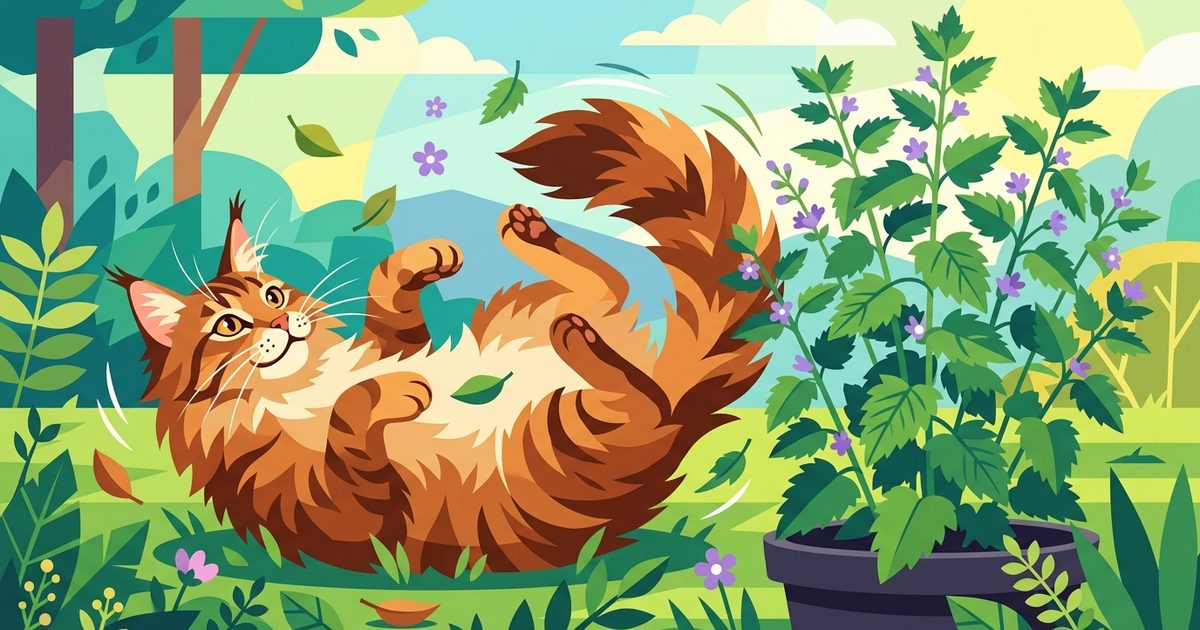
Catnip (Nepeta cataria) and cat mint are fully non-toxic to cats and offer enrichment — most cats react with playful excitement, rolling, and rubbing. Whether fresh, dried, or as a live plant, catnip is safe to grow at home and doubles as a boredom-buster for indoor cats.
Where cat grass is for eating, catnip is for feeling. It is the other must-know plant in any guide to cat safe plants — not because it feeds your cat, but because it enriches an indoor cat's day in a way few other safe plants can.
Is catnip safe?
Yes. Catnip is listed as non-toxic to cats by the ASPCA, and the response it triggers — rolling, rubbing, drooling, bounding playfulness — is a short-lived, harmless reaction, not intoxication in any harmful sense. One important nuance: the reaction is genetic. Roughly half to seventy percent of cats carry the gene that makes them sensitive to nepetalactone, the active compound in catnip. Cats without the gene simply feel nothing — and that non-reaction causes no harm either. Kittens under about three to six months old usually do not respond yet, and the sensitivity often emerges as they mature. For the full breakdown of the mechanism and what the reaction actually is, see what catnip does to cats.
Growing catnip and cat mint indoors
Catnip and cat mint are easy, sun-loving herbs that grow happily on a bright windowsill. A live plant gives your cat two things at once: scent enrichment from the leaves, and safe foliage to chew on. One practical heads-up — a live catnip plant can attract cats aggressively. A cat that loves catnip may flatten, sit on, or uproot the entire plant within an afternoon. If you want the plant to survive, place it out of reach and offer clipped sprigs, or grow a dedicated "sacrificial" plant the cat is allowed to demolish while a second one recovers. International Cat Care treats catnip as a routine, low-risk form of environmental enrichment for indoor cats.
Other safe herbs
Catnip is the famous one, but it is not the only plant-based enrichment option. Valerian (Valeriana officinalis) produces a similar excited reaction in many cats, including some that do not respond to catnip. Silver vine (Actinidia polygama, also called matatabi) is the traditional cat-stimulant plant of East Asia and is effective in a higher percentage of cats than catnip. A few common culinary herbs are also non-toxic to cats in small amounts — rosemary, thyme, and basil can sit on a kitchen windowsill without risk, though they are occasional-nibble plants rather than enrichment herbs. None of these replace cat grass for fiber, and none are meant to be eaten in volume — but as a rotation of safe, stimulating greenery, they round out a cat-friendly plant collection nicely.
Plants to Avoid: The Short Toxic List
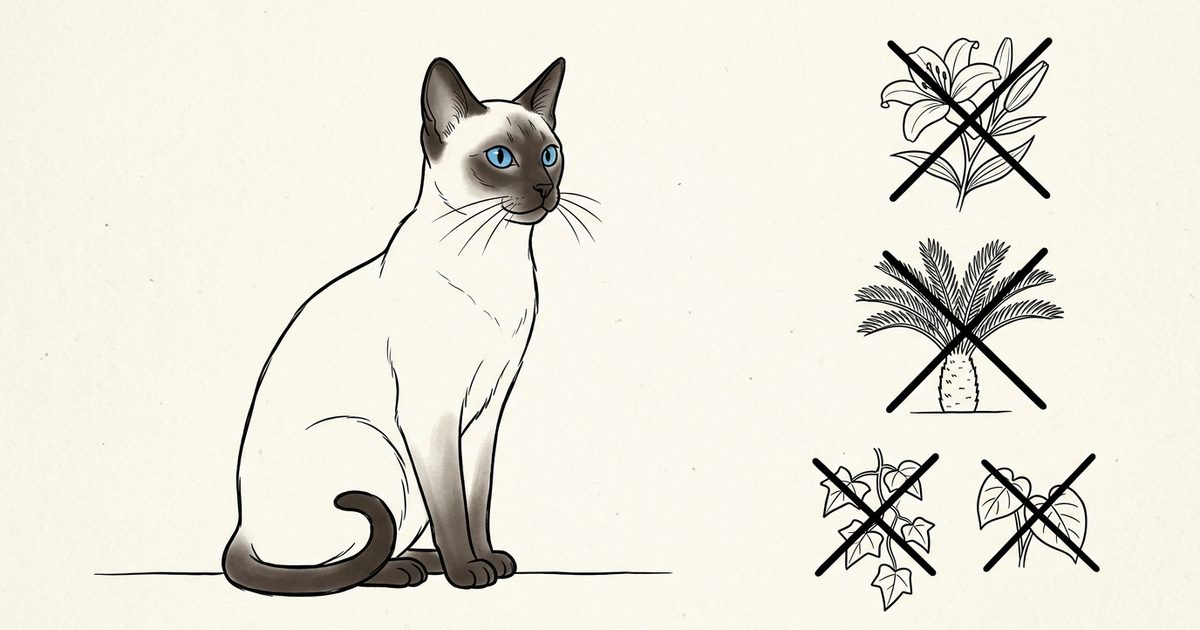
The most dangerous plants for cats include lilies (every part, even the pollen, can cause fatal kidney failure), tulip and daffodil bulbs, dieffenbachia, pothos, and sago palm. If you have cats, treat these as do-not-bring-home — and if any exposure happens, call your vet or poison control immediately.
The companion to a list of cat safe plants is a short list of the plants most likely to send a cat to the emergency vet. The species below are the ones worth knowing by name, because the line between a mild stomach upset and a life-threatening event runs right through them. The Cornell Feline Health Center is a reliable starting point for understanding plant toxicity in cats and when a vet call is urgent.
As we saw above, cats don't reliably distinguish toxic from safe foliage, so the move is to keep high-risk species out entirely.
Lilies — the most dangerous
True lilies (Lilium species, like Easter and Asiatic lilies) and daylilies (Hemerocallis) are in a category of their own. Every part of the plant is toxic to cats — petals, leaves, stem, pollen, and even the water in the vase. A cat that brushes against pollen and then grooms its fur, or takes a single bite, can develop acute kidney failure within hours. There is no safe amount. If you live with cats, the cleanest rule is to keep lilies out of the house and the garden entirely — we cover the full mechanism in our explainer on whether lilies are toxic to cats.
Tulips and daffodils
Tulips and daffodils concentrate their toxins in the bulb, which is the most dangerous part if a cat digs one up and chews it. The stem and flowers are less potent but still irritating, causing drooling, vomiting, and diarrhea. These popular spring bulbs are easy to overlook because they feel so cheerful and familiar — see our guide on whether tulips are toxic to cats for the full breakdown.
Dieffenbachia, pothos, philodendron
These three common foliage plants contain insoluble calcium oxalates — tiny, needle-shaped crystals that fire when the plant tissue is crushed or chewed. The result is immediate, intense oral irritation: drooling, pawing at the mouth, swelling of the tongue and throat, and difficulty swallowing. The effects are painful and alarming but usually not fatal with prompt care; still, they are best kept out of a cat's reach or out of the home.
Sago palm and other high-risk plants
Sago palm (actually a cycad, not a true palm) is one of the most lethal houseplants a cat can encounter — ingestion can cause severe liver failure, often within days. It is the toxic mirror image of the cat-safe parlour palm and areca palm covered earlier in this list, so the distinction matters at the garden center. Outdoors, the high-risk list extends to azaleas, oleander, and yew, all of which can be dangerous even in small amounts. For the full reference, the ASPCA Toxic and Non-Toxic Plants list is the authoritative database to check any plant against.
General Safety Rules for Plants and Cats
Even cat safe plants can cause problems if they carry fertilizer, pesticide residue, or are eaten in large volume — so rinse new plants, skip chemical treatments, introduce new greenery gradually, and watch for vomiting or diarrhea. When in doubt, check the ASPCA plant database before bringing any plant home.
A non-toxic species is not automatically a worry-free plant. Most plant-related problems in cats come not from the plant itself but from what is on it, how much of it a cat eats, and how it is introduced. A few simple habits keep a home full of cat safe plants genuinely safe.
Fertilizers and pesticides
The real risk on an otherwise safe plant is often chemical. Slow-release fertilizer spikes in the soil, foliar pest sprays, and systemic insecticides can all leave residues that a grooming cat ingests after brushing past a leaf. Choose pet-safe soil amendments and avoid chemical sprays on any plant a cat can reach. When you bring a new plant home, rinse the soil surface and the foliage to wash off any greenhouse treatments, and consider a brief quarantine away from your cat for the first few days while you observe.
Volume and GI upset
Even fully non-toxic foliage can upset a cat's stomach when eaten in volume. Cats are obligate carnivores, and a large amount of any plant material — safe or not — can trigger vomiting or diarrhea simply from the sheer load of indigestible fiber. A nibble is fine; a whole plant is not. This is not a reason to fear houseplants, but it is a reason to keep an eye on volume and redirect persistent grazers toward something meant to be eaten.
Introduce plants gradually
Give a new plant the same patience you would a new piece of furniture a cat is curious about. Let the cat investigate, sniff, and lose interest on its own terms, and observe over the first few days whether chewing develops. If your cat takes a strong interest in a houseplant, redirect that energy to a tray of cat grass — a sanctioned, safe outlet for the plant-chewing instinct that satisfies the same drive without putting your greenery at risk.
The ASPCA database as your reference
The single most reliable habit is to verify any new plant before it comes through the door. The ASPCA Toxic and Non-Toxic Plants list covers thousands of species by botanical and common name and is the reference veterinarians themselves use. It takes thirty seconds to search, and it removes the guesswork — which is exactly the point of building your home around a curated list of cat safe plants rather than hoping for the best.

Curious What Your Cat Would Say?
Upload a photo and get a warm, personalized reading from your cat's perspective.
Start Your Free ReadingCat Safe Plants at a Glance — Summary
| Question | Short answer |
|---|---|
| What houseplants are safe for cats? | Spider plants, Boston ferns, parlour palms, calatheas, peperomias, African violets, phalaenopsis orchids, and areca palms — all ASPCA-listed non-toxic and forgiving indoors. |
| Is the spider plant safe for cats? | Yes. Spider plants are non-toxic, easy to grow, and harmless even if your cat takes a nibble or bats at the plantlets. |
| Are orchids safe for cats? | Yes. Phalaenopsis (moth) orchids are non-toxic to cats and produce long-lasting blooms — a safe flowering alternative to lilies. |
| Can cats eat cat grass? | Yes. Cat grass (wheatgrass, oat, or barley) is grown specifically for cats to eat, providing fiber, aiding digestion, and redirecting the chewing instinct away from houseplants. |
| Is catnip safe for cats? | Yes. Catnip and cat mint are fully non-toxic; about 50-70% of cats react with playful excitement, and non-reactors are unaffected. |
| Are succulents safe for cats? | It depends on the species — many common succulents (like Haworthia and Echeveria) are safe, but others (like jade plant and aloe) are not. Always verify each species against the ASPCA list before bringing one home. |
| What plants are most toxic to cats? | Lilies (every part, even pollen, can cause fatal kidney failure), tulip and daffodil bulbs, dieffenbachia, pothos, and sago palm — treat these as do-not-bring-home. |
| How do I know if a plant is safe for my cat? | Check the plant's exact species name against the ASPCA Toxic and Non-Toxic Plants list before bringing it home — it is the authoritative reference, and any ingestion of a known toxic plant warrants a vet call. |
Frequently Asked Questions
What houseplants are safe for cats?
Spider plants, Boston ferns, parlour palms, calatheas, peperomias, African violets, phalaenopsis orchids, and areca palms are all ASPCA-listed as non-toxic to cats. They're also forgiving indoors, so they make an excellent default collection for a cat-friendly home.
Is the spider plant safe for cats?
Yes. Spider plants are fully non-toxic to cats and among the easiest houseplants to grow. Even if your cat chews the grass-like leaves or bats at the dangling plantlets, the worst you'll usually see is mild stomach upset from the fiber — not poisoning.
Are orchids safe for cats?
Yes. Phalaenopsis (moth) orchids are non-toxic to cats and produce long-lasting blooms, making them a safe flowering alternative to lilies. Even if a cat chews a bloom or leaf, there's no toxicity — only possible mild stomach upset from the plant material itself.
Can cats eat cat grass?
Yes. Cat grass — usually wheatgrass, oat grass, or barley — is grown specifically for cats to eat. It's fully safe, provides fiber that supports digestion, may help with hairballs, and redirects the plant-chewing instinct away from your houseplants.
Is catnip safe for cats to eat?
Yes. Catnip and cat mint are fully non-toxic to cats, listed as safe by the ASPCA. About 50–70% of cats carry the gene that makes them react with playful excitement; cats without the gene feel nothing, and that non-reaction causes no harm either.
Are succulents safe for cats?
It depends on the species. Many common succulents like Haworthia and Echeveria are safe, but others like jade plant and aloe are not. Always verify each exact species against the ASPCA Toxic and Non-Toxic Plants list before bringing one home.
What plants are most toxic to cats?
Lilies are the most dangerous — every part, including pollen and vase water, can cause fatal kidney failure. Tulip and daffodil bulbs, dieffenbachia, pothos, philodendron, and sago palm are also high-risk. Treat these as do-not-bring-home if you have cats.
How do I know if a plant is safe for my cat?
Check the plant's exact species name against the ASPCA Toxic and Non-Toxic Plants list before bringing it home. It's the authoritative reference veterinarians use, takes seconds to search, and any ingestion of a known toxic plant warrants a vet call.
Do cats instinctively avoid toxic plants?
No. Cats chew greens out of curiosity and instinct, and they do not reliably distinguish toxic from safe foliage. The responsible approach is to curate what's within reach — keep cat safe plants at home and remove the dangerous ones — rather than trusting your cat's judgment.
Sources & References
You Might Also Like
Why Do Cats Eat Grass? The Science (and When to Worry)
Why do cats eat grass? It's normal and safe — most cats eat grass to aid digestion, not to vomit. Learn which grasses are safe, which are dangerous, and why.
19 min readKitten Teething: Timeline, Symptoms & How to Help
Kitten teething runs from 3 to 7 months as baby teeth fall out. Learn the timeline, signs to watch for, and how to soothe a teething kitten safely.
15 min readWhen Do Cats Stop Growing? A Complete Timeline
When do cats stop growing? Most cats reach adult size by 12-18 months, but large breeds like Maine Coons keep growing until 3-4 years. Full timeline inside.
14 min read