
Can Cats Eat Bananas? Safety, Risks, and How Much Is Safe
So, can cats eat bananas? Yes — they are non-toxic, so a bite won't poison your cat. But the honest answer is that bananas sit in an awkward spot: they are safe in tiny amounts, yet they are not a natural or necessary food for a cat, and they pack far more sugar than a cat's body is built to handle. That is the short version of are bananas good for cats — non-toxic does not mean beneficial. Below, we walk through what is safe to share, what to avoid (like the peel), and why your cat's interest in this fruit probably has nothing to do with sweetness.
Key takeaways
- Bananas are non-toxic to cats but high in sugar and offer no real nutritional benefit a complete cat food does not already provide.
- A tiny piece of ripe, peeled banana once in a while is safe — but never feed the peel, which is a choking and blockage hazard.
- Cats cannot taste sweetness, so any interest in bananas is curiosity, smell, or texture — not a sweet craving.
Can Cats Eat Bananas? — Quick Reference
| Banana form | Safe for cats? | Notes |
|---|---|---|
| A tiny piece of ripe peeled banana | Yes, occasionally | A pea- to half-inch slice; treat, not food |
| Banana peel | No | Choking and blockage hazard; may carry pesticide residue |
| Mashed banana | Yes, in tiny amounts | Mash a small peeled piece; no added sugar |
| Green / unripe banana | Not recommended | Harder to digest, starchy; offer ripe only |
| Banana with added sugar or in baked goods | No | Sugar overload; baked goods often add toxic ingredients |
| Dried banana chips | Not recommended | Concentrated sugar; many are fried, sweetened, or salted |
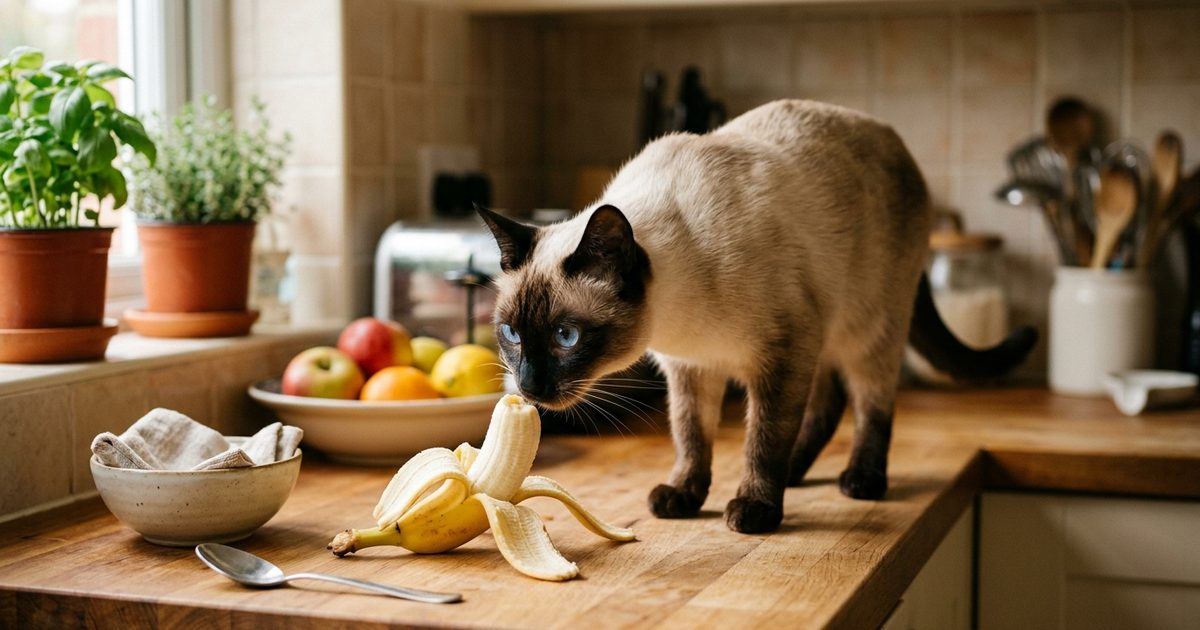
Can Cats Eat Bananas?
Yes — cats can eat bananas in tiny amounts as an occasional treat. They are non-toxic but not a natural part of a feline diet. A small piece of ripe, peeled banana now and then is safe; it should never become a regular snack.
The short answer
Bananas are not on any list of foods poisonous to cats, so a nibble will not send your cat to the vet. That is reassuring, but it is not the whole story. A banana is a treat, not a food — your cat gets nothing from it that a complete cat food does not already supply, and the sugar it brings is something a cat's metabolism is not designed to process in quantity. So if your cat steals a lick, there is no need to panic; just do not make it a habit. Keep the portion small, keep the peel out of reach, and treat banana as the occasional novelty it is. For the broader context of how bananas fit (or do not) into a cat's natural diet, see our guide on what cats eat.
Why bananas are unusual as a cat food
Bananas are a sugary fruit built for human energy needs, not a cat's. As we unpack in Are Bananas Good for Cats? below, a cat's metabolism runs on protein and fat and has little use for the dense carbohydrate hit a banana delivers — so the fruit offers no nutritional upside a complete diet does not already provide, and the sugar brings only downside.
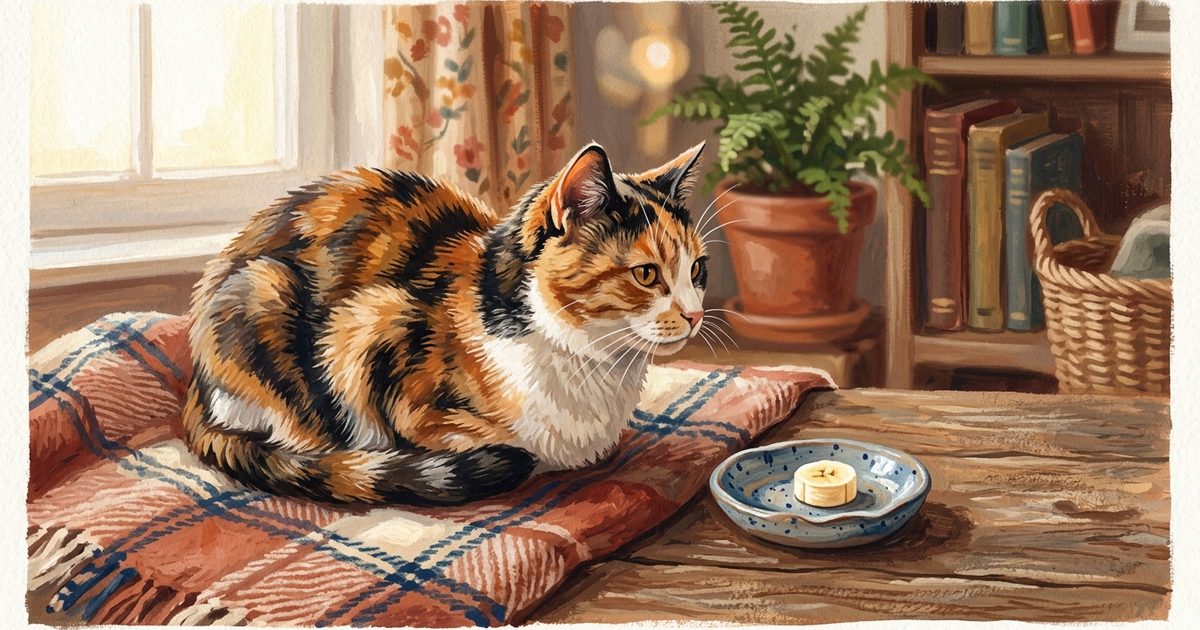
Are Bananas Good for Cats?
Not really. Bananas are high in sugar and carbohydrates a cat does not need, and while they contain potassium and vitamin B6, a complete commercial cat food already supplies these in the right balance. For a cat, the sugar brings only downside — no meaningful nutritional upside.
When people hear "banana," they think "healthy" — and for a human, that instinct is right. The same fruit does not carry the same value for a cat. The nutrition bananas offer is mostly nutrition a cat's body is not built to use, and what's left over is sugar and calories it doesn't need.
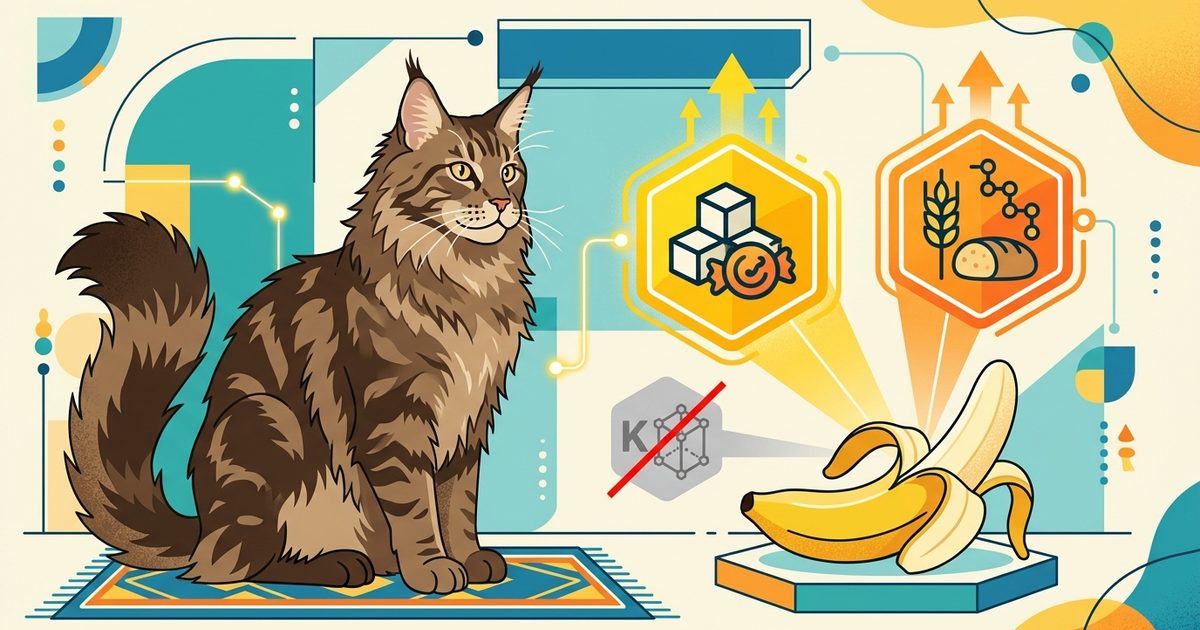
Sugar and carbohydrates
A medium banana packs roughly 14 grams of sugar and around 27 grams of carbohydrates. That's a sensible energy source for a human, but a cat's metabolism runs on a different fuel. Cats are obligate carnivores — their bodies are designed to extract energy from protein and fat, not from carbohydrates. They have no dietary requirement for carbohydrates at all, and only a limited ability to handle sustained sugar loads.
This matters because every gram of sugar your cat eats from a banana is a gram its body has no use for. The system that processes it is not the system a banana was meant to feed. The Cornell Feline Health Center is clear that a cat's nutritional needs are best met by complete and balanced cat food formulated around animal protein — not fruit, not grains, and not sweet snacks.
Potassium and vitamins — real but redundant
It's true that bananas contain real nutrients: potassium, vitamin B6, vitamin C, and some fiber. None of that is false. The catch is that a cat eating a complete commercial diet is already getting every one of these in the amounts and proportions its body actually needs.
So the potassium in a banana is not filling a gap — there is no gap to fill. Presenting banana as a supplement, or a "health boost," overstates what it does. The reality is that a cat's daily food already covers these bases, and the sugar the banana brings along with them costs far more than any fringe benefit they offer. International Cat Care makes the same point about treats in general: the bulk of a cat's nutrition should come from balanced cat food, and anything else is an occasional extra, not a contribution.
The bottom line on nutrition
Non-toxic does not mean beneficial. As covered in Sugar and carbohydrates and Potassium and vitamins — real but redundant, a banana is essentially sugar and calories with no payoff for a cat — nutritionally dense for a human, nutritionally empty for the cat beside you.
How Should I Serve Bananas to My Cat?
Serve only ripe, peeled banana — cut or mashed into a small, bite-sized piece, with no added sugar and no seasoning. Never give a cat the peel, which is a choking hazard and can carry pesticide residue. Offer a pea-sized amount first to check for upset.
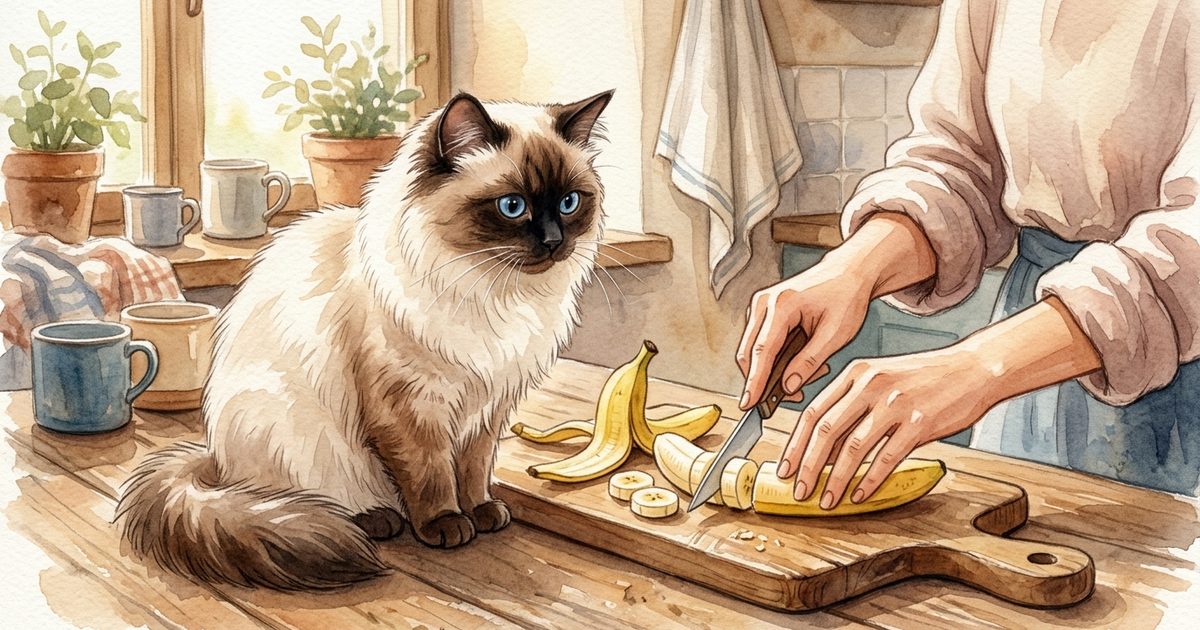
Preparation rules
Always peel the banana first — the flesh is the only part you offer. Cut or mash it small enough that choking is impossible: a thin slice or a smear is safer than a chunk. A ripe banana is softer and easier for a cat to mouth and swallow than a firm, underripe one, so choose ripe fruit. Keep it plain — no banana bread, no sweetened or flavored banana products, and nothing from the kitchen that has been baked, sugared, or spiced. Anything with added sugar or fat pushes a borderline treat firmly into unhealthy territory. Stick to plain ripe flesh, unadorned.
Never the peel
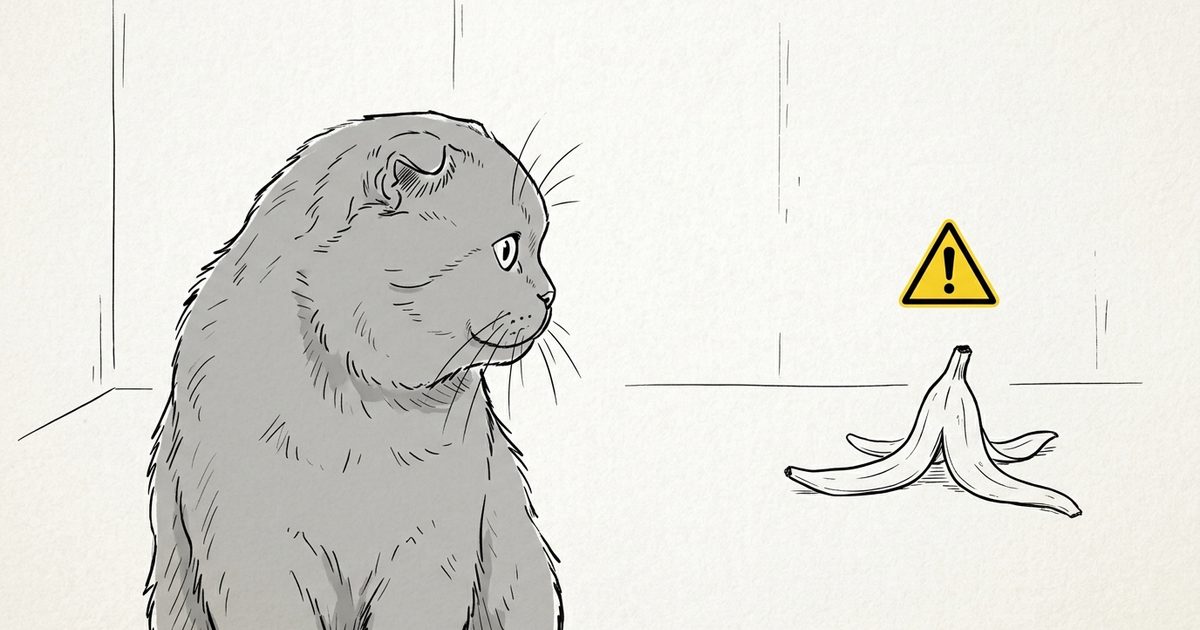
So, can cats eat banana peel? No — discard the peel, do not feed it. The peel is tough and highly fibrous, and a cat's digestive tract is not built to break it down. Peels are a documented choking and intestinal-blockage hazard, and because conventionally grown bananas are often sprayed, the peel can also carry pesticide residue you do not want your cat ingesting. The flesh of a ripe banana is the only safe part. Compost the peel, and keep it out of reach.
Introduce slowly
Give a pea-sized test portion first, then wait and watch. Over the next 24 hours, look for vomiting, diarrhea, or obvious discomfort. If your cat has diabetes, is overweight, or has a history of sensitive stomach upsets, skip banana entirely — the sugar and fiber load are not worth the risk for a cat whose health is already on a knife-edge. When in doubt, ask your vet before offering any new food.
How Much Banana Can a Cat Eat?
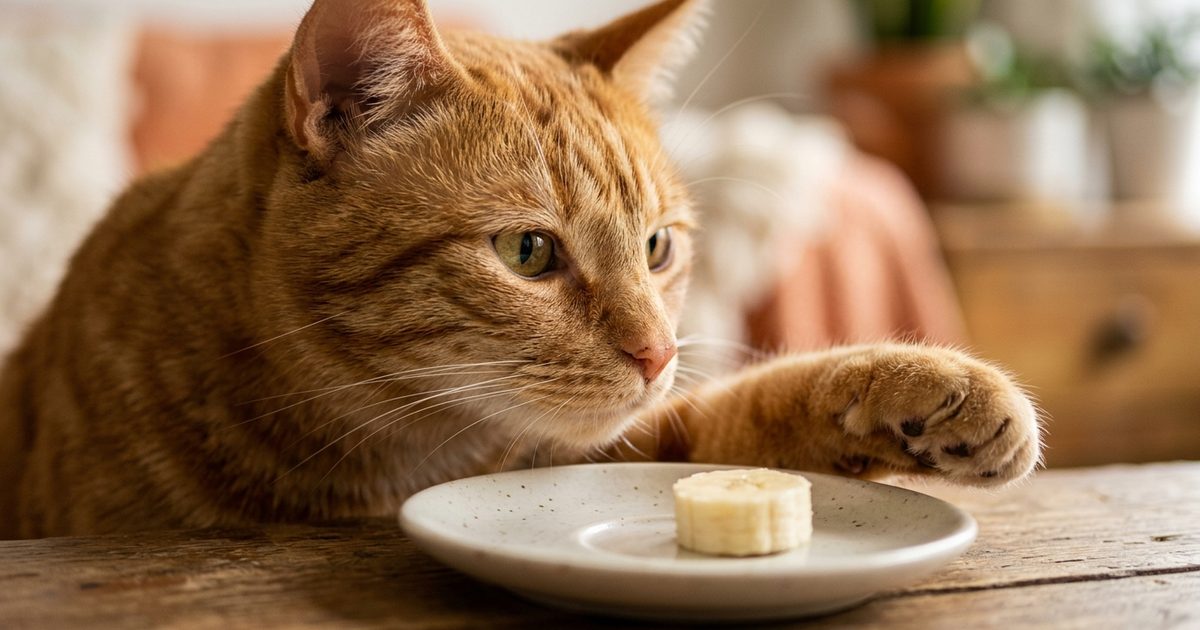
A cat can have roughly a half-inch slice of peeled banana as an occasional treat — at most once a week, and never more than about 10% of daily calories. Because of the sugar content, regular feeding raises the risk of obesity and diabetes, so keep it rare and tiny.
The 10% treat rule
The standard veterinary guideline is that all treats combined should make up no more than roughly 10% of a cat's daily calories — the other 90% should come from complete and balanced cat food. International Cat Care frames treats as a small bonus, never a substitute for a nutritionally complete diet.
That cap is smaller than it sounds. An average adult cat eats around 200–250 calories a day, which means the entire treat budget is roughly 20–25 calories. A half-inch slice of banana is only about 10–15 calories, so one slice eats up most of a day's treat allowance at a stroke. This is also why "just half a banana" is far too much — half a medium banana is close to 50 calories and several grams of sugar, swamping a cat's small metabolic capacity. If you want the math to stay friendly, think in slices and licks, not halves.
Frequency and portion size
For a healthy adult cat, a half-inch slice of peeled banana, at most once a week, is the sensible ceiling. Smaller cats, senior cats, and any cat that is overweight or diabetic should have less — or none at all, since the sugar load carries real consequences for them. Honestly, a single lick is often enough for a curious cat that just wants a taste of what you are eating; you do not need to reach for the slice every time. If you want to offer a fruit treat more often, a lower-sugar option like strawberries gives you a more generous frequency ceiling than bananas can. And if you are weighing fruit against the bigger picture of what your cat actually needs nutritionally, the obligate-carnivore diet context is worth keeping in mind — bananas sit well outside it.
Do Cats Like Bananas?
Some cats show interest, but it's almost never about sweetness — cats cannot taste sweet at all. The attraction, when it exists, is novelty, smell, or the soft texture. If a cat seems to enjoy banana, it's curiosity, not a craving the diet should satisfy.
When a cat leans in to sniff your banana, it's tempting to read it the way a person would — "she loves sweet fruit." That's almost certainly not what's happening. Cats experience food very differently than we do, and a piece of banana is interesting to a cat for reasons that have nothing to do with dessert. So when you wonder do cats like bananas, the honest answer is: a few are curious about them, but not in the way humans "like" a food.
Cats can't taste sweet
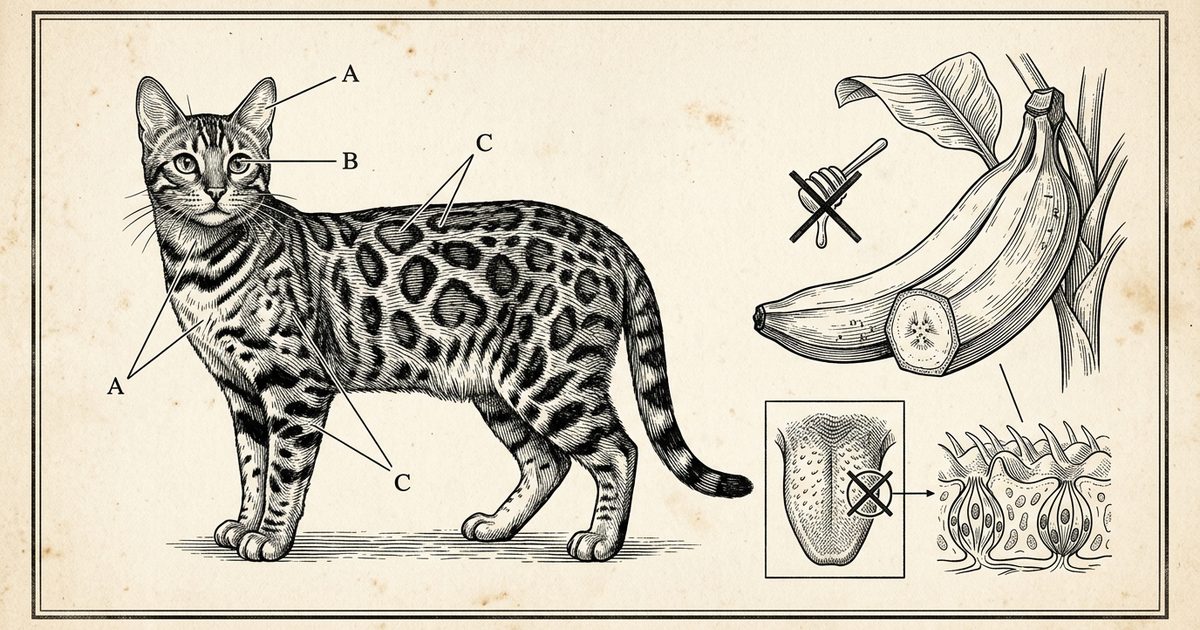
Here is the part that reframes everything: cats lack a working sweet taste receptor. The gene responsible, called Tas1r2, is non-functional in felines — they are, in effect, sweet-blind. A banana tastes every bit as un-sweet to your cat as a piece of cardboard would. So if your cat seems drawn to fruit, it cannot be the sugar calling to her. For the full sensory-biology explanation of why cats can't taste sugar, that's a deeper story — but for our purposes, the takeaway is simple: don't assume a cat "loves" fruit the way a human does, because the entire sweet dimension of the experience is missing for her.
What the interest really is
So what is the interest, when there is one? Usually it's one of three things: novelty (a new object on your plate is worth investigating), smell (bananas have a distinct aroma cats can pick up), or mouth-feel — that soft, yielding texture is unlike anything in a cat's normal diet. Some cats also simply mirror their owners: if you're eating it with obvious enjoyment, your cat may want in on the ritual. None of this justifies feeding banana regularly. A sniff, a lick, a moment of curiosity — that's the whole story, and it is not a nutritional need your cat's diet is failing to meet.
What Are the Risks of Feeding Bananas to Cats?
The main risks are the sugar load (weight gain, and a diabetes risk if fed often), choking or blockage from the peel, and stomach upset from the fiber and sugar. Diabetic and overweight cats should not eat banana at all, and any vomiting or diarrhea after a first taste warrants stopping and a vet call.
Even though banana is non-toxic, it isn't risk-free — and the risks come less from a single bite than from the habits that form around it. A one-off taste is usually fine; the trouble begins when "just a little banana" becomes a regular thing, or when the wrong part of the fruit ends up in front of the cat. Cornell's Feline Health Center and International Cat Care both emphasize that cats do best on a consistent, species-appropriate diet, and that treats outside that diet should stay genuinely occasional.
Sugar, obesity, and diabetes
The sugar in bananas isn't dangerous in a single slice — it becomes dangerous through repetition. As noted above, a cat's metabolism has little capacity for sustained sugar loads, so recurring banana treats are exactly the pattern that quietly adds weight. Cats that regularly receive sugary treats are more prone to obesity, and obesity is a well-established driver of feline diabetes. The protection here is frequency, not the size of one piece: a tiny taste now and then is fine for a healthy cat, but banana as a recurring snack raises metabolic risk over months.
Choking on the peel
The peel is the most serious physical hazard. It's tough, fibrous, and difficult for a cat to chew or digest — and a swallowed chunk can lodge in the throat or intestine. Signs of an obstruction include repeated vomiting, lethargy, and refusing food, and any of these after a cat has had access to a peel warrants an emergency vet visit rather than a wait-and-see.
Digestive upset
Even the edible flesh can disagree with a sensitive cat. The combination of fiber and sugar can trigger vomiting or diarrhea, particularly on a first exposure or with a larger piece than the cat can handle. If your cat vomits or has loose stool after trying banana, stop offering it — and if the signs persist or seem severe, our guide on cat vomiting covers when GI upset after a new food is worth a vet call.
Here is everything about bananas and cats, condensed into one quick-reference table.
Bananas for Cats at a Glance — Summary
| Question | Short answer |
|---|---|
| Can cats eat bananas? | Yes — non-toxic in tiny amounts, but never a necessary or natural part of a cat's diet. |
| Are bananas good for cats? | Not really. High sugar and carbs a cat doesn't need, and no nutrient a complete cat food lacks. |
| How should I serve them? | Ripe and peeled, cut or mashed into a pea-sized piece — never the peel, never sweetened or baked forms. |
| How much is safe? | A half-inch slice, at most weekly, staying under 10% of daily calories — a single lick is often enough. |
| Do cats like bananas? | Some show curiosity, but cats can't taste sweet, so any interest is novelty, smell, or texture. |
| What are the risks? | Sugar-driven weight gain and diabetes, choking or blockage from the peel, and digestive upset in sensitive cats. |
Curious What Your Cat Would Say?
Upload a photo and get a warm, personalized reading from your cat's perspective.
Start Your Free ReadingFrequently Asked Questions
Can cats eat bananas every day?
No. Bananas are non-toxic but high in sugar, so feeding them daily adds empty calories and raises the risk of obesity and diabetes over time. Keep banana to a rare, tiny treat — at most a half-inch slice once a week for a healthy cat.
Are bananas good for cats?
Not really. Bananas do contain potassium and vitamin B6, but a complete cat food already supplies these in the right balance, so the fruit offers no real nutritional upside. For a cat, a banana is mostly sugar and carbohydrates its metabolism was not built to use.
Can cats eat banana peel?
No. The peel is tough, fibrous, and hard for a cat to digest, making it a documented choking and intestinal-blockage hazard. Conventionally grown peels can also carry pesticide residue, so always peel the banana and discard the peel.
How much banana can I give my cat?
A cat can have roughly a half-inch slice of ripe, peeled banana as an occasional treat — at most once a week, and never more than about 10% of daily calories. A single lick is often enough for a curious cat that just wants a taste.
Can kittens eat bananas?
It's best to wait. Kittens have sensitive, developing digestive systems and their calories should come almost entirely from complete kitten food. If you do offer a taste, make it a pea-sized smear of ripe peeled banana, and only after checking with your vet.
Why is my cat obsessed with bananas?
Probably novelty, smell, or the soft texture — not sweetness. Cats cannot taste sweet at all because their Tas1r2 receptor is non-functional, so any interest in bananas is curiosity rather than a craving. A sniff or a lick is a moment of exploration, not a nutritional need.
Can diabetic cats eat bananas?
No. The sugar load in a banana is exactly what a diabetic cat's body struggles to regulate, so even a small piece is not worth the risk. If your cat has diabetes, skip banana entirely and ask your vet before offering any fruit.
Can cats eat banana chips?
Not recommended. Dried banana chips concentrate the sugar into a much smaller, denser form, and many commercial chips are fried, sweetened, or salted — all of which make them worse for a cat than a fresh slice of plain ripe banana.
Sources & References
You Might Also Like
Kitten Teething: Timeline, Symptoms & How to Help
Kitten teething runs from 3 to 7 months as baby teeth fall out. Learn the timeline, signs to watch for, and how to soothe a teething kitten safely.
15 min readWhen Do Cats Stop Growing? A Complete Timeline
When do cats stop growing? Most cats reach adult size by 12-18 months, but large breeds like Maine Coons keep growing until 3-4 years. Full timeline inside.
14 min readCan Cats Eat Cherries? Flesh, Pit & Toxicity Facts
Can cats eat cherries? Pitted flesh is safe in tiny amounts — but the pit, stem, and leaves are toxic (cyanide precursors). Learn what's safe and what isn't.
15 min read