Can Cats Eat Pepperoni? No — Why It's Not a Safe Treat
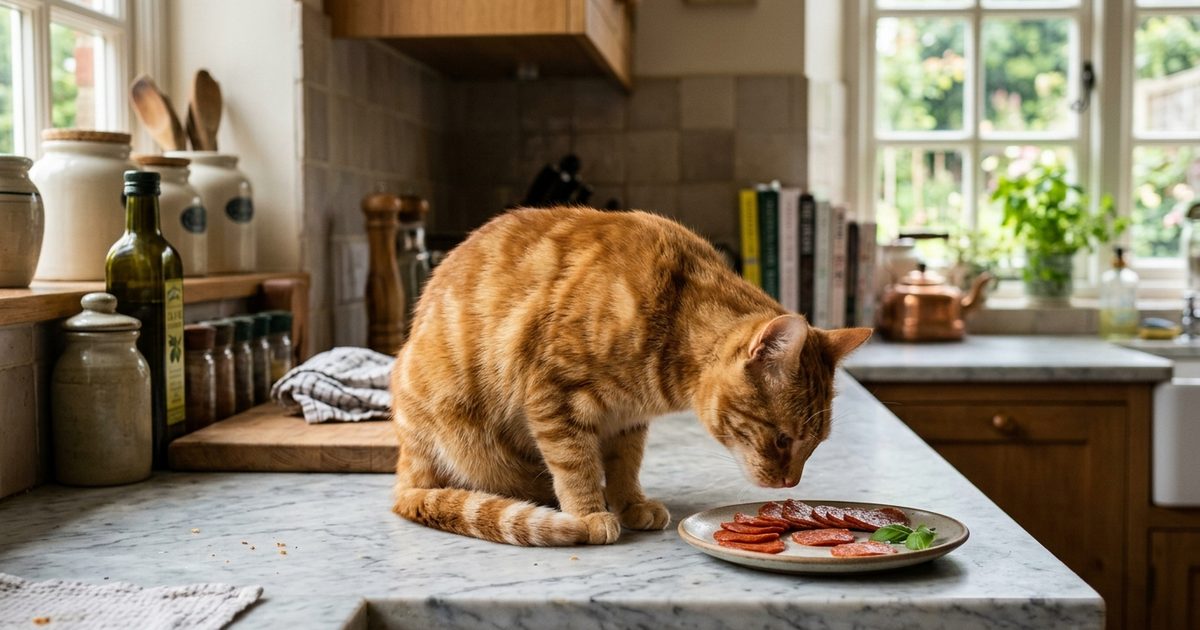
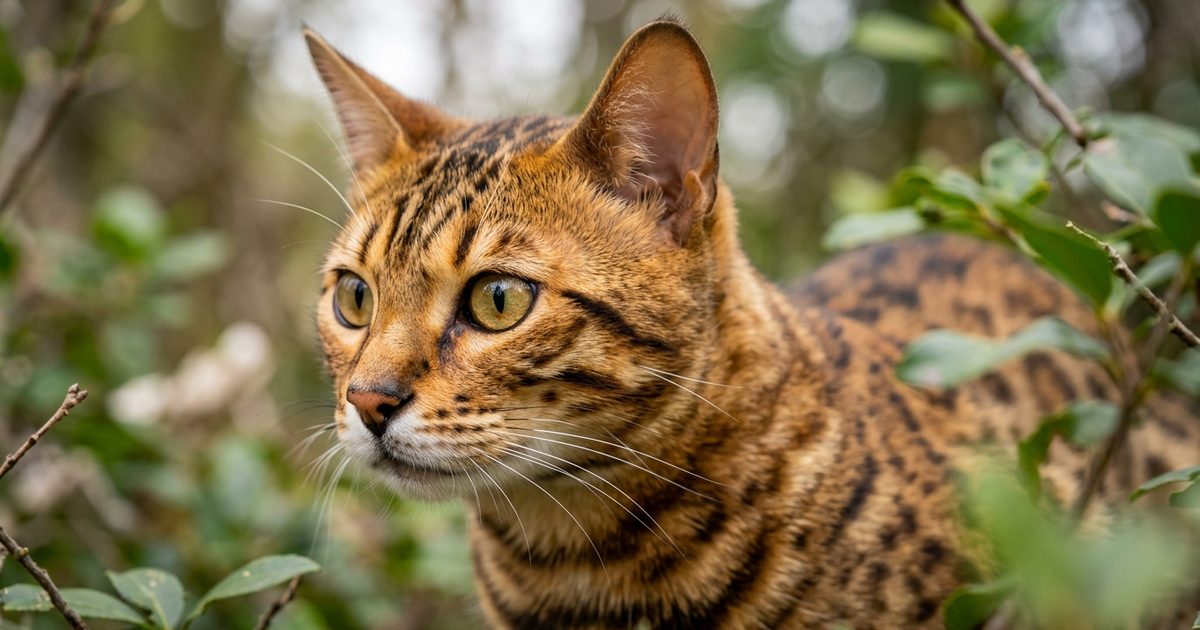
Cats are obligate carnivores built for plain animal protein — which is exactly why the question "can cats eat pepperoni" deserves a clear, careful answer. Pepperoni is a cured, fatty, heavily salted sausage, often seasoned with garlic or onion powder, so it's reasonable to ask whether is pepperoni bad for cats — and in most cases, the honest verdict is no, not as a treat. A tiny stolen nibble from a dropped slice is unlikely to harm a healthy adult cat like the curious orange tabby on your counter, but there is no good reason to hand it over on purpose. The real concern sits in the combination: very high sodium, a heavy fat load, and spices that can be genuinely toxic to a small feline body.
That said, a whisker of context matters. Cats are small, their sodium tolerance is far lower than ours, and what registers as a tasty salty snack to you is a large chemical load relative to your cat's body weight. So while a lick or a crumb is rarely an emergency, pepperoni sits firmly in the "human food, not cat food" category — alongside other salty processed meats like bacon and ham.
Key takeaways
- Pepperoni is not recommended for cats — it is very high in sodium (salt poisoning risk), high in fat (GI upset and pancreatitis risk), and frequently seasoned with garlic or onion powder, which are toxic to cats.
- A tiny stolen nibble of plain pepperoni is unlikely to be fatal for a healthy adult cat, but there is no good reason to offer it; the salt, fat, and allium combination is the concern.
- If your cat eats some, watch for vomiting, diarrhea, or lethargy and call your vet for a large amount, a garlic-heavy piece, or any sign of allium toxicity.
Pepperoni and Cats — Quick Reference
| Pepperoni form | Safe for cats? | Notes |
|---|---|---|
| A thin slice of plain pepperoni | Not recommended | High sodium and fat; a tiny nibble rarely harmful, but not a treat |
| Pepperoni with visible spices or garlic/onion | No | Allium seasonings are toxic to cats — avoid entirely |
| Turkey pepperoni | Not recommended | Leaner, but still salted, cured, and often spiced the same way |
| Vegan or plant-based pepperoni | Not recommended | Often contains onion/garlic powder; plant base isn't part of a cat's diet |
| Pepperoni-flavored snacks (crisps, pizza toppings) | No | Concentrated seasoning, high salt, artificial flavorings |
| Cooked pepperoni from a pizza | No | Greasy, salty, and cooked alongside garlic, onion, and cheese |
Can Cats Eat Pepperoni?
No — pepperoni is not recommended for cats. It is very high in sodium, high in fat, and often seasoned with garlic or onion powder, which are toxic to cats. A tiny stolen nibble is unlikely to be fatal, but there is no good reason to offer it as a treat.
The short answer
Pepperoni is not a safe treat for cats — the honest frame is "mildly harmful," not "safe in moderation." It sits in the same category as other processed, salt-cured meats that are best kept off the cat bowl: high in sodium, dense in fat, and frequently spiced with garlic or onion powder that are genuinely toxic to cats. For an otherwise healthy adult cat, a tiny lick or a stolen crumb of plain pepperoni is unlikely to do real damage — the body can usually clear a modest load. But the food itself is not appropriate, and offering it deliberately just isn't worth the risk. If you're wondering can cats have pepperoni as an occasional snack, the answer is the same: no, not as a treat.
Why pepperoni is a human food, not a cat food
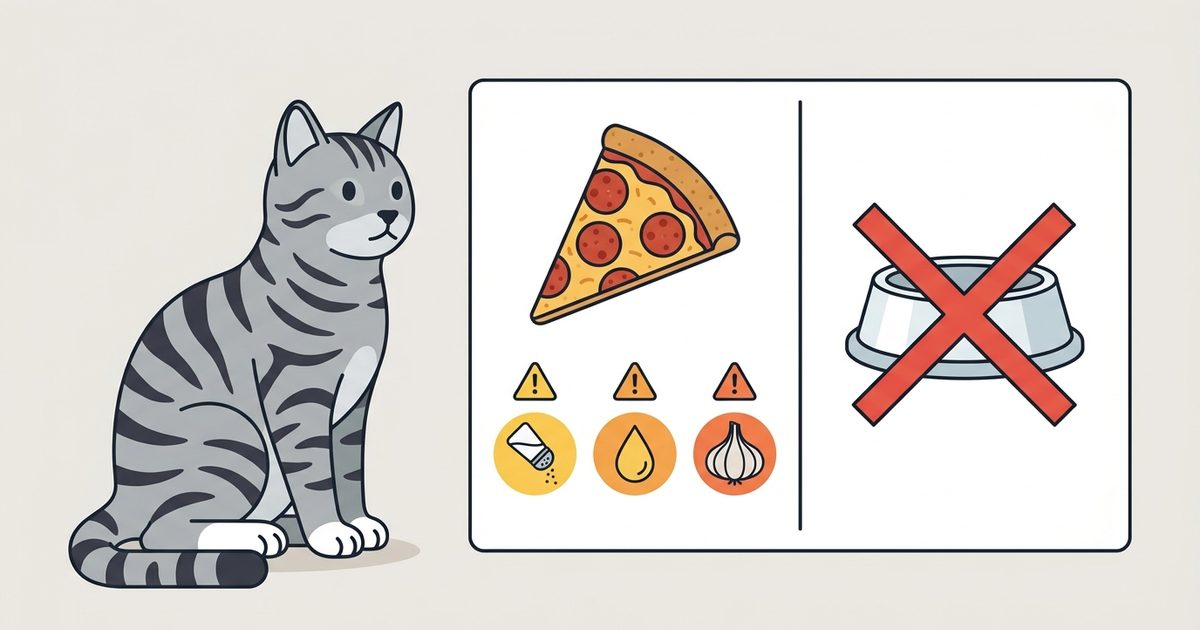
Pepperoni is a cured, fermented, spiced pork-and-beef sausage built for human palates — salty, fatty, smoky, and seasoned to taste good on a pizza. Your cat, by contrast, is a small obligate carnivore whose sodium tolerance and digestive system evolved for whole prey, not for salt-cured, spice-laden meat. What makes a slice appealing to you is precisely what makes it unsuitable for a 4 kg animal. So if you're asking is pepperoni bad for cats, the answer leans yes: it's a product designed around human tastes, then handed to a body never built to process it. You can read more about household and food hazards toxic to cats from the Cornell Feline Health Center.
Is Pepperoni Bad for Cats?
Yes. Pepperoni is bad for cats for three reasons: its very high sodium can cause salt poisoning, its high fat triggers GI upset and pancreatitis risk, and it is frequently seasoned with garlic or onion powder — alliums that are toxic to cats and damage red blood cells.
High sodium — salt poisoning risk
Pepperoni is heavily salt-cured, so a single slice can carry a meaningful fraction of a small cat's daily sodium ceiling — a load sized for a human mouth, not a feline one. Excess sodium causes vomiting, diarrhea, and excessive thirst and urination, and in more serious cases neurological signs like appearing "walking drunk," tremors, or even seizures. Cats are far smaller than people, so a salty snack that feels modest to you is a large sodium dose relative to body weight. A cat with kidney or heart disease is especially poorly placed to handle that spike. This is one reason the Cornell Feline Health Center lists salty foods among the everyday hazards worth keeping away from cats.
High fat — GI upset and pancreatitis
Pepperoni is a high-fat cured meat, and a sudden fatty meal commonly causes vomiting and diarrhea in cats. In susceptible animals it can also trigger pancreatitis — a painful inflammation of the pancreas that ranges from a mild upset to something genuinely serious and costly to treat. Fat also adds empty calories that quietly drive obesity, especially in indoor cats whose energy needs are already low. International Cat Care is clear that fatty human foods and rich titbits are a poor fit for a cat's nutrition, and that treats should sit inside a sensible calorie budget rather than smuggled in as table scraps.
Garlic and onion powder — the allium hazard
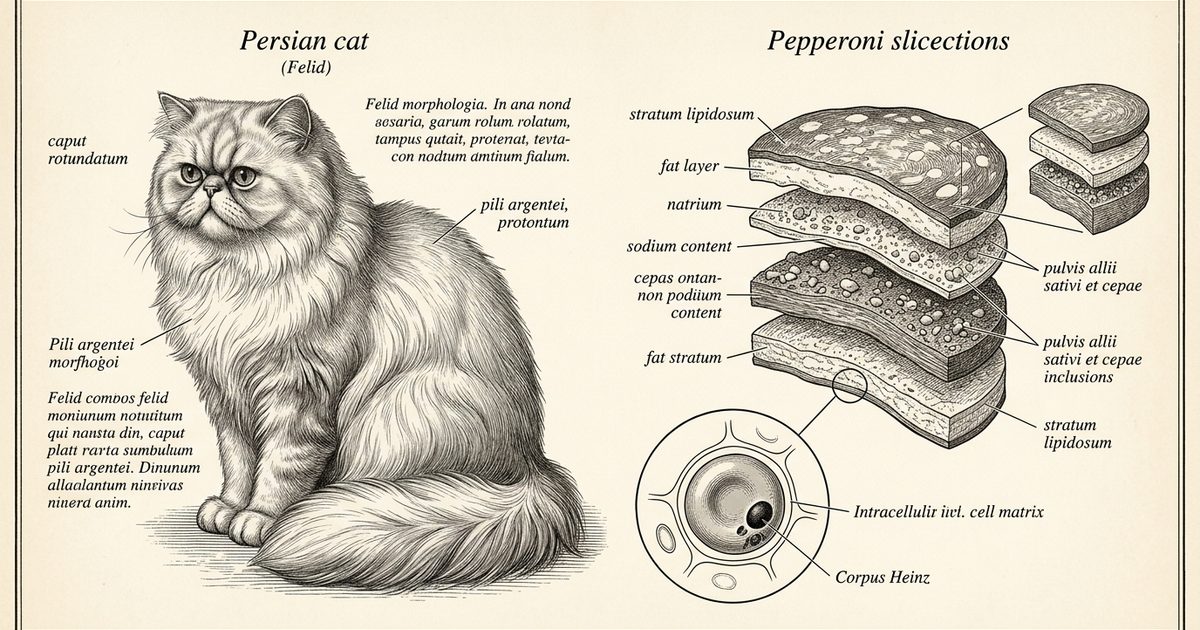
Most commercial pepperoni is seasoned with garlic and/or onion powder, and all alliums — onion, garlic, leeks, and chives, whether fresh, cooked, dried, or powdered — are toxic to cats. The compounds involved (organosulphoxides) cause oxidative damage to red blood cells, producing Heinz bodies and leading to hemolytic anemia. Powdered forms are more concentrated than fresh, and cats are notably more sensitive to alliums than dogs. The exact dose that tips a nibble into poisoning varies with body weight, the form eaten, and cumulative intake — so rather than chase a "safe" amount, the sound rule is that even small amounts of alliums are best avoided. If you want the mechanism in depth, our articles on whether cats can eat garlic and whether cats can eat onion walk through the red-blood-cell damage in detail.
What About Turkey or Vegan Pepperoni?
Turkey pepperoni is lower in fat but usually just as salty and just as likely to carry garlic or onion powder. Vegan or plant-based pepperoni is a different product entirely and is not designed for cats either. Neither is a good treat — the sodium and the spices remain.
If the original isn't suitable, it's natural to wonder whether a lighter version changes the verdict. The honest answer is that the substitution mostly moves the risk around rather than removing it.
Turkey pepperoni
Marketed as a leaner alternative, turkey pepperoni does carry less fat than the pork-and-beef original — and that part of the claim is fair. The problem is that "leaner" only addresses one of the three concerns. Turkey pepperoni is still a cured, salted, spiced processed meat, so the sodium load is essentially unchanged and the allium-seasoning risk (garlic or onion powder) is just as likely to be present. Less fat does not mean safe for a cat; it means a different balance of the same problems.
Vegan and plant-based pepperoni
Plant-based pepperoni is a genuinely different product — made from soy, wheat protein (seitan), pea protein, or legumes, with added oils, salt, smoke flavor, and spices. It's a human food, not cat food. Many versions still contain onion or garlic powder, and the wheat, soy, or legume base is not part of an obligate carnivore's diet. The assumption that "plant-based" equals "safe" doesn't hold here — the sodium and the spices remain, and a couple of the ingredients are ones a cat has no nutritional use for. For the broader picture of what a cat's diet is actually built around, see our guide on what cats eat.
The honest summary on variations
No commercial pepperoni variant — pork, turkey, beef, or plant-based — is a good treat for a cat. If the goal is to give your cat something, reach for a food actually made for cats rather than switching to a lighter version of one that wasn't.
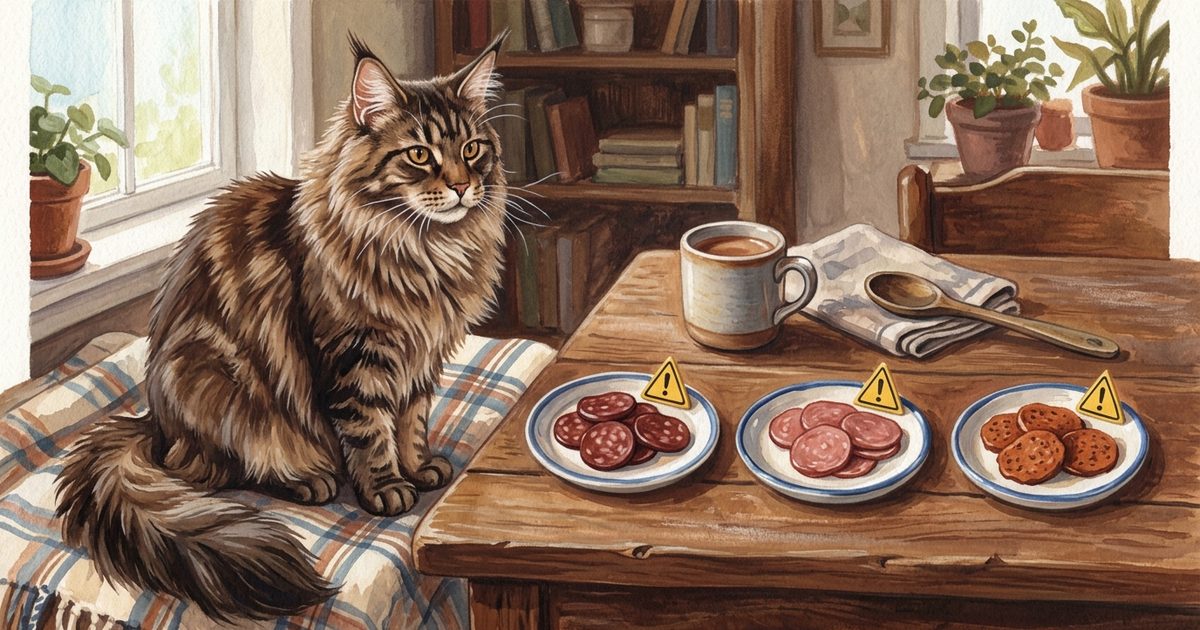
What Happens If My Cat Eats a Little Pepperoni?
A tiny stolen nibble of plain pepperoni is unlikely to harm a healthy adult cat. Watch for vomiting, diarrhea, drooling, or lethargy over the next 12-24 hours. Call your vet if the amount was large, the pepperoni was garlic-heavy, or you see pale gums, weakness, or ongoing vomiting.
Cats are quick, and a slice left unguarded on a plate can vanish before you notice. The good news is that a small accidental taste is rarely an emergency — but it's worth knowing what to watch for and when to pick up the phone.
A small nibble — usually fine
For an otherwise healthy adult cat, a lick or a small piece of plain pepperoni is rarely dangerous. A cat's body can usually clear a modest load of sodium and fat over the following hours, and most cases resolve with no more than mild, brief stomach upset. The main thing is not to panic — and not to induce vomiting unless a vet specifically tells you to, since doing it wrong can cause more harm than the pepperoni itself.
Signs to watch for
Over the next 12 to 24 hours, keep an eye out for vomiting, diarrhea, drooling, loss of appetite, or excessive thirst and urination (the sodium at work). Belly pain or a hunched, reluctant-to-move posture can point to pancreatitis — painful inflammation of the pancreas that a fatty meal can trigger in susceptible cats. If the piece was seasoned with garlic or onion powder, the more serious signs can appear over the following days rather than immediately: lethargy, pale gums, weakness, or rapid breathing, which can signal red-blood-cell damage. Those later signs warrant a prompt vet visit. For more on reading these symptoms, see our guides on cat vomiting and cat diarrhea.
When to call the vet or a poison line
Call your vet promptly if the amount was large, the piece was clearly garlic- or onion-heavy, or your cat is small, a kitten, a senior, or has kidney or heart disease that makes sodium harder to handle. Any worrying sign — persistent vomiting, weakness, pale gums, or just a gut feeling that something is off — is also reason to call. Outside vet hours, the ASPCA Animal Poison Control Center (888-426-4435) is a reliable option for guidance. Have the wrapper or ingredient list ready when you call; knowing exactly what was in the pepperoni helps them give you the right advice quickly.
What Are Safe Treat Alternatives to Pepperoni?
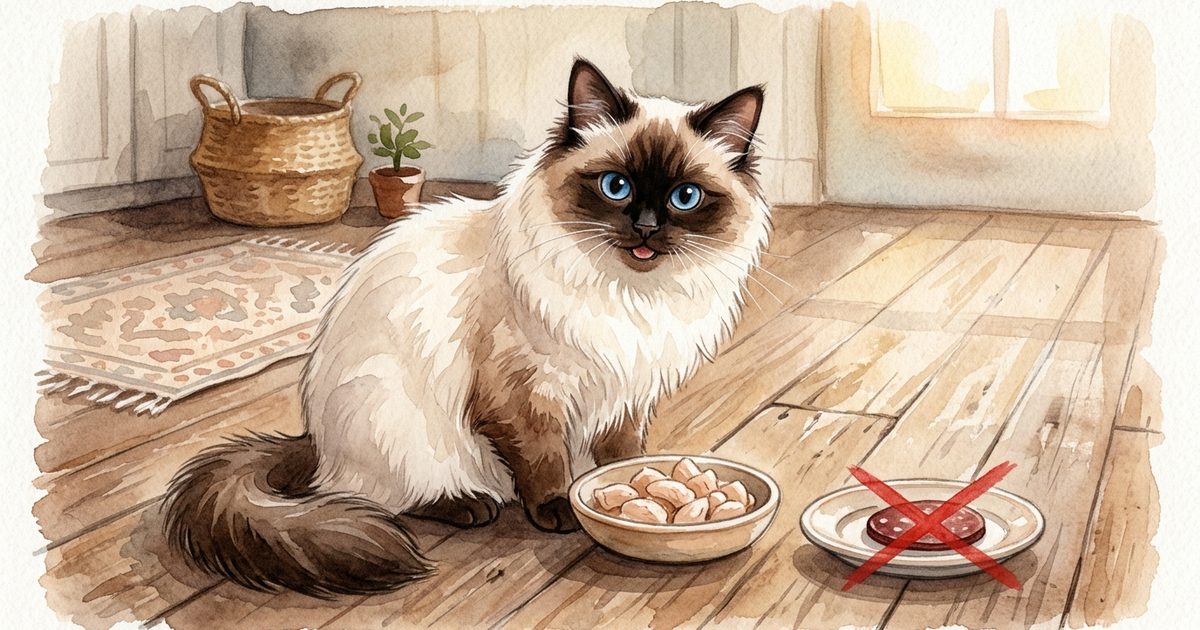
Skip the pepperoni and offer a small piece of plain cooked chicken or turkey, a lick of plain meat-based baby food (no onion-garlic), or a commercial cat treat. These give the meaty taste a cat actually wants, without the sodium, fat, and allium hazards of pepperoni.
The good news is that giving your cat a meaty reward doesn't require anything from the deli aisle. Cats don't want pepperoni specifically — they want the animal protein and fat beneath it. A plain, unseasoned protein satisfies that craving cleanly, and it's something you can offer with confidence.
Plain cooked meat
A thumbnail-sized piece of plain, unseasoned, cooked chicken, turkey, or beef is the closest safe parallel to the meaty snack your cat is drawn to — with no salt-curing, no spice rub, and no allium powder. Remove the skin, bones, and any seasoning or marinade before offering it, and keep the portion small (a treat, not a meal). It's the simplest swap: the same protein a cat naturally seeks, minus everything in pepperoni that makes it a bad idea. If you're weighing whether the uncooked version is ever appropriate, that's a separate question we cover in can cats eat raw meat.
Commercial cat treats
The other easy route is a commercial cat treat formulated to be complete and balanced within its own calorie budget. You skip the food-safety math entirely — no label-reading for garlic powder, no guessing at sodium. As International Cat Care advises, keep all treats under roughly 10% of your cat's daily calories so they complement the diet rather than unbalancing it.
Plain meat baby food — with a check
A small spoon of plain meat-based baby food is a long-standing, highly palatable cat treat — but only if the ingredient list contains no onion or garlic powder, which many brands do include. Read the label every single time, because formulations change and the allium content is what makes this otherwise-fine treat dangerous. For the broader "processed salty meat is not a treat" rule, our guides on can cats eat bacon and can cats eat ham cover why cured meats as a category don't belong in a cat's bowl.
Why Do Cats Seem to Like Pepperoni?
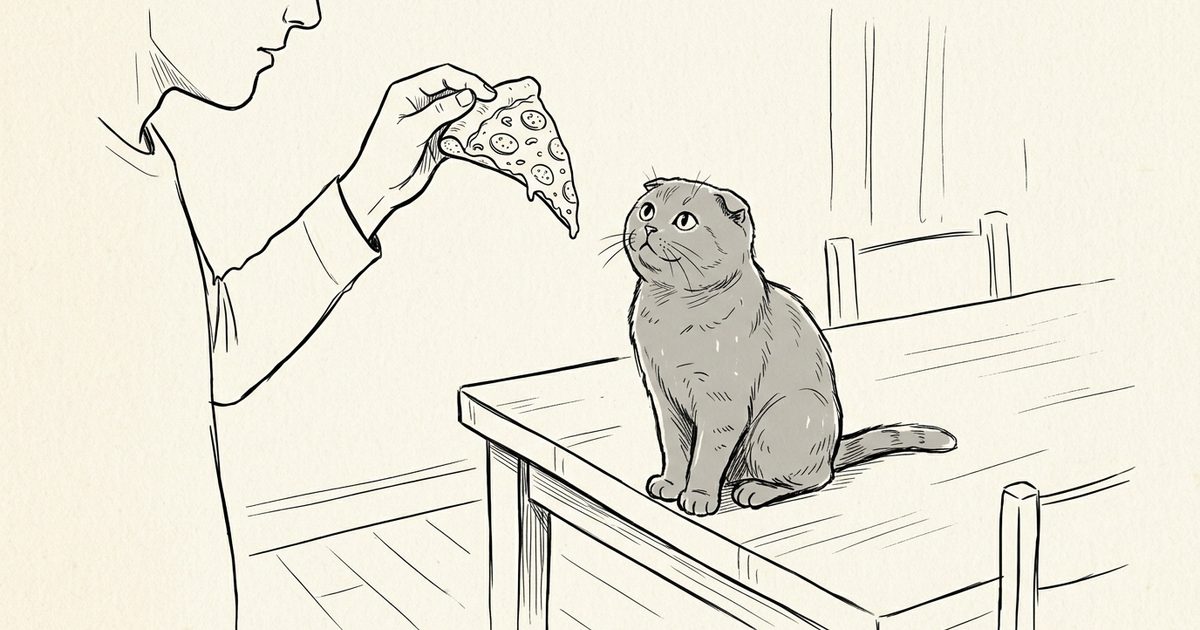
Cats are drawn to the fat, the meaty umami smell, and the strong aroma of pepperoni — not the spices. They are obligate carnivores wired for animal protein and fat. A cat begging for a slice is responding to the smell of cured meat, not a craving for pepperoni itself.
It's tempting to read begging as proof that a food is good for a cat, but those two things aren't connected. A cat that comes running when you open a pepperoni packet is reacting to exactly what its body is built to seek — and none of it is the part that makes pepperoni risky.
It's the fat and the umami
Cats have a powerful olfactory system and are biologically tuned to the smell of animal fat and protein. Pepperoni's high fat content and its cured, fermented aroma are precisely what registers as "good" to a carnivore — the same appeal that draws a cat to fresh meat. The spices that define pepperoni for you are largely irrelevant to the cat; it can't taste sweetness and doesn't experience a chili the way you do. So a cat begging isn't evidence the food is suitable — it's evidence the food smells like the animal fat a carnivore is wired to want. Those wires fire for safe fat sources too, which is why a piece of plain cooked chicken satisfies the same instinct without the risk.
Mimicking the owner
There's a learned layer on top of the instinctive one. A cat that begs while you eat pizza is partly copying a behavior it has seen work — the cat watches you, watches you respond, and discovers that persistence near food gets attention. Each time you offer a piece of pepperoni, the begging is reinforced, even though the cat received nothing it actually needed. The fix isn't coldness; it's redirecting the reward toward something appropriate. Curious what an obligate carnivore's diet is actually built around? Our overview on what cats eat puts it in context.
Curious What Your Cat Would Say?
Upload a photo and get a warm, personalized reading from your cat's perspective.
Start Your Free ReadingPepperoni and Cats at a Glance — Summary
| Question | Short answer |
|---|---|
| Can cats eat pepperoni? | No — not recommended. High in sodium, high in fat, and often spiced with garlic or onion powder that is toxic to cats. |
| Why is pepperoni bad for cats? | Three hazards: excess sodium can cause salt poisoning; high fat triggers GI upset and pancreatitis risk; garlic/onion powder damages red blood cells. |
| Are turkey or vegan pepperoni safer? | No. Turkey pepperoni is leaner but just as salty and spiced; vegan pepperoni is a different product, not designed for cats, and often still contains alliums. |
| What if my cat ate a little? | A tiny plain nibble is usually fine. Watch for vomiting, diarrhea, or lethargy over 12-24 hours; call your vet if a large or garlic-heavy piece was eaten. |
| What are safe treat alternatives? | Plain cooked chicken or turkey, a commercial cat treat, or plain meat baby food — with no onion or garlic powder on the label. |
| How much pepperoni is dangerous? | There is no safe "treat" amount. Even small quantities of alliums are best avoided, and the salt and fat load adds up fast in a small cat. |
Frequently Asked Questions
Can cats eat pepperoni?
No — pepperoni is not recommended for cats. It is very high in sodium, high in fat, and often seasoned with garlic or onion powder, which are toxic to cats. A tiny stolen nibble of plain pepperoni is unlikely to be fatal for a healthy adult cat, but there is no good reason to offer it as a treat.
Is pepperoni bad for cats?
Yes. Pepperoni is bad for cats for three reasons: its very high sodium can cause salt poisoning, its high fat triggers GI upset and pancreatitis risk, and it is frequently seasoned with garlic or onion powder — alliums that are toxic to cats and damage red blood cells, leading to anemia.
What happens if my cat eats a slice of pepperoni?
A tiny stolen nibble of plain pepperoni is unlikely to harm a healthy adult cat. Watch for vomiting, diarrhea, drooling, or lethargy over the next 12 to 24 hours. Call your vet if the amount was large, the piece was garlic-heavy, or you notice pale gums, weakness, or ongoing vomiting.
Can cats eat turkey pepperoni?
Not recommended. Turkey pepperoni is leaner, but it is still a cured, salted, spiced processed meat — the sodium load and the garlic or onion powder risk are essentially unchanged. 'Leaner' does not mean 'safe for a cat.'
Can cats eat vegan pepperoni?
No. Vegan or plant-based pepperoni is a different product, not cat food. Many versions still contain onion or garlic powder, which are toxic to cats, and the wheat, soy, or legume base is not part of an obligate carnivore's diet. 'Plant-based' does not mean 'safe.'
Is the garlic in pepperoni toxic to cats?
Yes. Garlic and onion powder — common pepperoni seasonings — are toxic to cats. All alliums damage red blood cells and can cause hemolytic anemia, and powdered forms are more concentrated than fresh. Rather than chase a 'safe' amount, the sound rule is that even small amounts of alliums are best avoided.
How much pepperoni is dangerous for a cat?
There is no 'safe' treat amount. The dose that causes harm depends on body weight, the form eaten, and cumulative intake, so it varies. Rather than risk it, treat pepperoni as a food to keep away from your cat entirely and reach for a treat actually made for cats.
Can kittens eat pepperoni?
No. Kittens are smaller, lighter, and more sensitive to sodium, fat, and alliums than adult cats, so the same slice is a far heavier load relative to their body weight. Keep pepperoni away from kittens entirely and call your vet if one eats any.
What are safe treats instead of pepperoni?
Offer a thumbnail-sized piece of plain, unseasoned cooked chicken or turkey, a commercial cat treat, or a small spoon of plain meat baby food — but only if the label contains no onion or garlic powder. These give the meaty taste a cat actually wants, without the sodium, fat, and allium hazards.
Can cats eat pepperoni from a pizza?
No. Pizza pepperoni is greasy, salty, and cooked alongside garlic, onion, and cheese — all of which add to the hazard. The cheese and oil make the fat load higher, and the cooking concentrates the seasoning, so pizza pepperoni is no safer than the plain slice.
Sources & References
You Might Also Like
Can Cats Eat Cherries? Flesh, Pit & Toxicity Facts
Can cats eat cherries? Pitted flesh is safe in tiny amounts — but the pit, stem, and leaves are toxic (cyanide precursors). Learn what's safe and what isn't.
15 min readCan Cats Eat Green Beans? Vet-Approved Veggie Treat Guide
Can cats eat green beans? Yes — plain cooked or raw, they're a safe, low-calorie, high-fiber treat and weight-loss filler. Serving sizes and risks.
17 min readCan Cats Eat Raspberries? The Tiny-Treat Rule
Can cats eat raspberries? Yes — non-toxic and low in sugar, safe as 1-2 berries as a rare treat. Learn the xylitol nuance, how to serve them, and how much.
15 min read