
Can Cats Eat Onion? Why Onions Are Toxic to Cats
If you are wondering can cats eat onions, the short answer is no — every form of onion is toxic to cats. The question of whether are onions toxic to cats has one clear answer, and onion poisoning in cats remains a common household problem year after year. Cooking does not neutralize the danger, and because the damage shows up as a delayed anemia, an exposure can seem harmless until days later.
Key takeaways
- No — every form of onion is toxic to cats, whether raw, sautéed, cooked, dried into flakes, or ground into powder.
- The toxin destroys red blood cells, causing hemolytic anemia — and the warning signs can be delayed for one to five days after ingestion.
- Onion powder is especially dangerous because it is concentrated and frequently hidden inside soups, gravies, seasoning mixes, and even some baby foods.
Onion Safety for Cats — Quick Reference
| Form | Toxic to cats? | Why |
|---|---|---|
| Raw onion | Yes | Full concentration of N-propyl disulfide and thiosulfate |
| Cooked onion | Yes | Heat does not destroy the toxin; cooking only removes water |
| Dried or powdered | Yes — most dangerous | Concentrated per gram; a pinch carries a meaningful dose |
| Hidden in food | Yes | Lurks in soups, stews, gravies, seasoning blends, and baby food |
Can Cats Eat Onion? The Short Answer
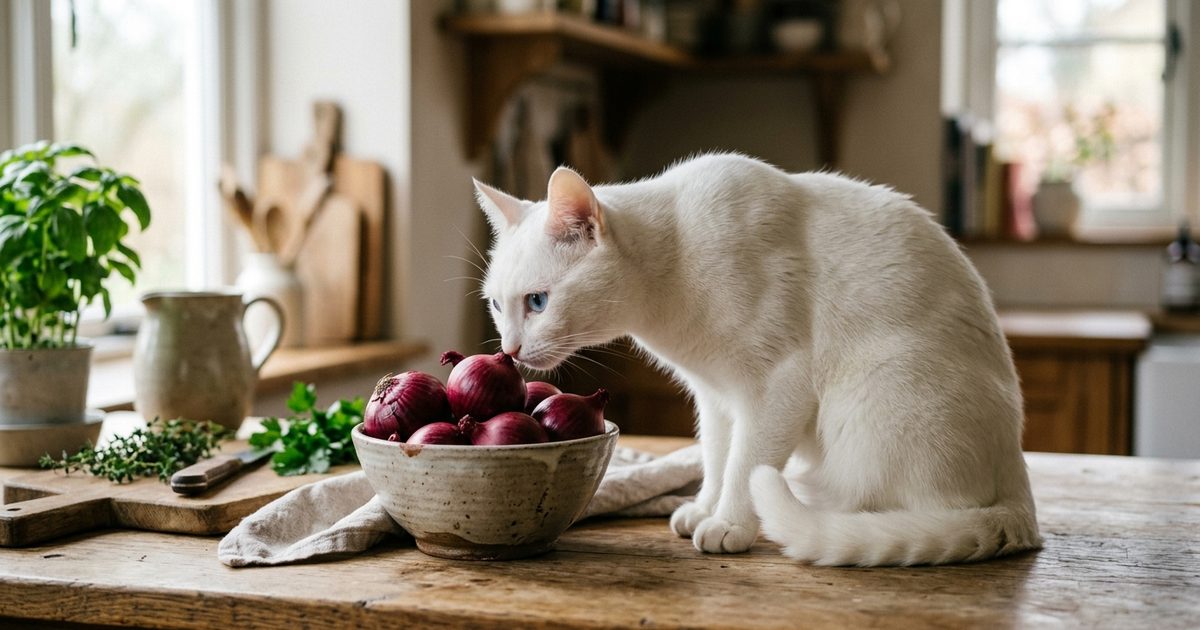
No. Cats cannot eat onion in any form — raw, cooked, dried, or powdered. Onions are toxic to cats, and even small amounts can damage red blood cells and cause hemolytic anemia. A little bit is not fine; the toxin can accumulate over repeated small exposures and still sicken your cat.
All forms are dangerous
There is no "safe version" of onion for a cat. The raw bulb, sliced rings, sautéed pieces, caramelized strips, dehydrated flakes, and jarred onion powder all carry the same toxin — only the water content and flavor change. This is the single biggest myth to put to rest: cooking does not destroy the toxin. Heat alters texture and concentrates sweetness, but the sulfur compounds responsible for the damage survive the pan, the oven, and the dehydrator intact.
Onion powder deserves special caution. It is the most concentrated form per gram, because drying removes nearly all the water and leaves the toxin behind in a dense, easy-to-sprinkle form. A pinch of powder can carry the same toxin load as a much larger piece of raw onion, and because it hides in soups, gravies, seasoning blends, and even some baby foods, it is the form most likely to reach your cat by accident. For a fuller look at how alliums work as a family, see our companion piece on whether cats can eat garlic — same toxin family, slightly different potency.
Is cooked onion safer than raw?
No. Cooking does not neutralize the danger. The two compounds at the heart of the problem — N-propyl disulfide and thiosulfate — are heat-stable, which means they survive boiling, roasting, and frying without breaking down. What heat mostly does is drive off water and intensify flavor, so a spoonful of cooked onion can actually deliver a more concentrated dose per bite than the same weight of raw.
This is why leftovers are such a common route of exposure: a bit of stew, a scrap of meatloaf, the sauce from a stir-fry. The cooking makes the onion smell and taste more appealing to a curious cat, while doing nothing to reduce the harm. The Cornell Feline Health Center is clear that the form of the allium matters far less than people assume — the toxin is present whether the onion is raw on a cutting board or slow-cooked into a casserole.
Why Is Onion Toxic to Cats?
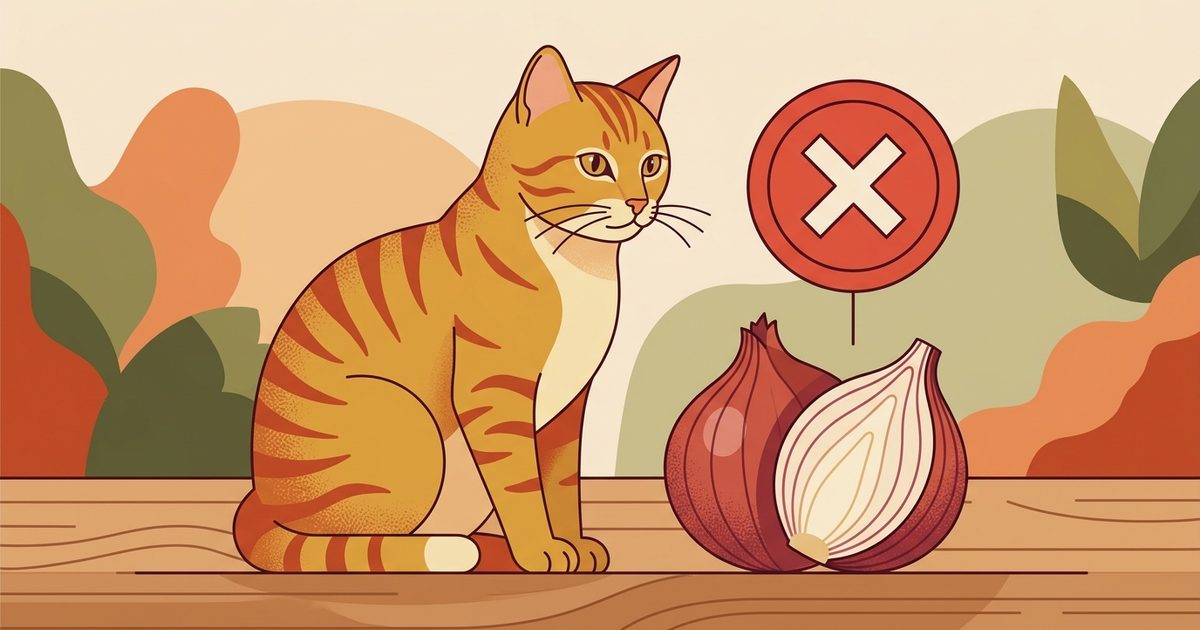
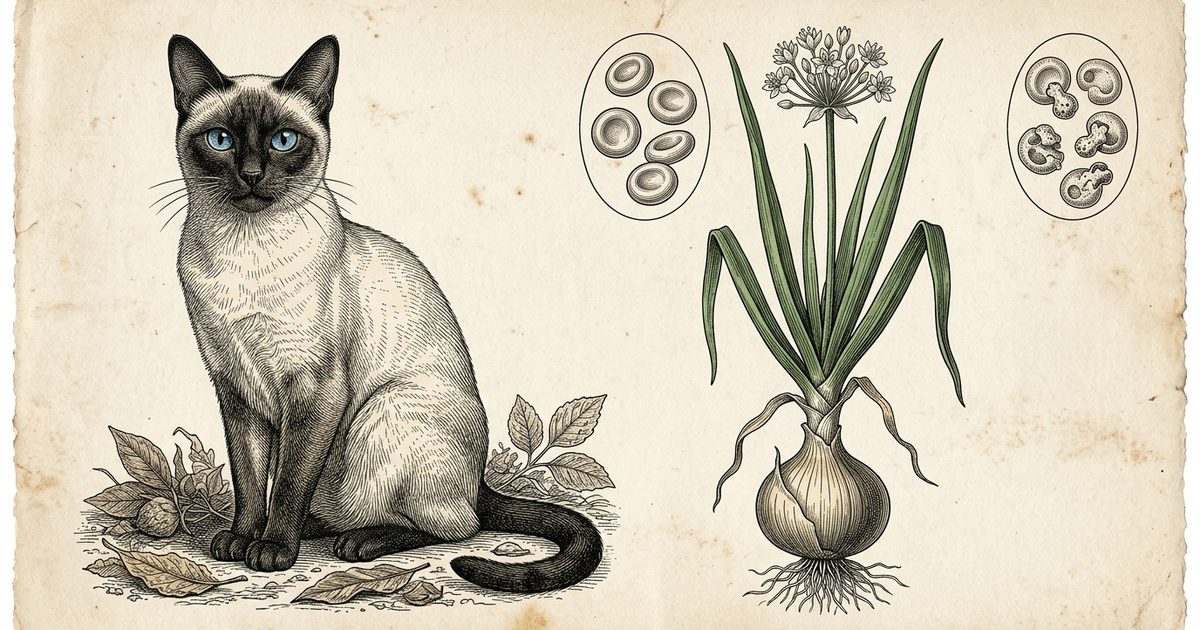
Onion contains N-propyl disulfide and thiosulfate — sulfur compounds that cats cannot break down. These oxidize hemoglobin inside red blood cells, forming clumps called Heinz bodies that rupture the cells and cause hemolytic anemia. The same mechanism makes garlic and other alliums dangerous to cats.
The toxin: N-propyl disulfide and thiosulfate
Onions belong to the Allium genus, and like their relatives — garlic, leeks, chives, and shallots — they carry sulfur compounds that give them their pungent smell and their danger to cats. The two most relevant are N-propyl disulfide and thiosulfate. Neither is something a cat's metabolism is built to handle.
The deeper question is why cats in particular are so vulnerable, and the answer lies in their red blood cells. Feline hemoglobin has weaker antioxidant defenses than the hemoglobin of humans or dogs — the chemical "shields" that normally soak up oxidative stress are simply less robust in cats. So when a cat ingests even a modest amount of onion, the sulfur compounds slip past those defenses and start oxidizing hemoglobin faster than the cell can repair itself. A dog or a person might shrug off the same exposure; a cat cannot. If you want the full clinical picture of where this leads, our guide to cat anemia walks through the disease end to end, and the garlic article covers why every member of the allium family shares this same mechanism.
How it causes hemolytic anemia
Once oxidation begins, a predictable chain of damage unfolds inside the bloodstream. The oxidized hemoglobin clumps together into structures called Heinz bodies — essentially damaged patches on the red blood cell's surface. A cell studded with Heinz bodies becomes stiff and fragile, and the spleen, whose job is to filter aging blood cells, reads it as defective and pulls it from circulation. The cell ruptures and is destroyed.
This is hemolysis — the breaking open of red blood cells — and when it outpaces the body's ability to replace them, the result is hemolytic anemia. With fewer healthy red blood cells, the blood carries less oxygen, and the cat begins to feel the effects: weakness, pale gums, rapid breathing, and in serious cases collapse. The ASPCA Animal Poison Control Center documents this exact allium-to-anemia pathway across pets, and it is the reason any suspected onion ingestion is treated as urgent rather than waited out.
What Are the Symptoms of Onion Poisoning in Cats?
Symptoms appear one to five days after ingestion and include pale gums, weakness, lethargy, elevated heart rate, dark or reddish-brown urine, reduced appetite, and in severe cases collapse. The delay is why owners often miss the link between a meal and the illness.
The first thing to understand about onion poisoning is that it rarely looks dramatic in the moment. A cat that steals a bite of seasoned meat may seem perfectly fine for hours — even a full day — before anything looks wrong. That lag is built into how the toxin works: it doesn't irritate the stomach first, it quietly damages red blood cells, and the body only shows distress once enough cells have been destroyed. Knowing the timeline is what lets an owner connect the dots in time.
Early signs (gastrointestinal)
In the first few hours after ingestion, some cats show mild and fairly non-specific stomach upset — drooling, a bout of vomiting, or loose stools. These early signs are easy to mistake for a minor stomach bug or simply eating something that didn't agree with them, and not every cat even shows them. They aren't the real signature of onion toxicity; they're just the body's first, generic reaction to a foreign food. The more telling signs come later, once the toxin reaches the bloodstream and begins attacking red blood cells — and that's where the picture changes completely.
Later signs (anemia)
The hallmark symptoms of onion poisoning are the signs of anemia — the condition that develops when too many red blood cells have ruptured to carry enough oxygen. Within roughly one to five days, an affected cat's gums may look noticeably pale, sometimes almost white, instead of their usual healthy pink. Energy drops sharply: a cat that normally greets you at the door may hide, sleep through meals, or refuse to move. Exercise intolerance shows up as rapid breathing and a fast heart rate even at rest, because the body is working harder to move the diminished oxygen supply around. One of the most distinctive clues is dark or reddish-brown urine — the result of the body flushing out the broken-down hemoglobin from ruptured cells, a process veterinarians call hemoglobinuria. If you notice that color change alongside pale gums and exhaustion, the connection to something eaten days earlier often clicks into place. The Cornell Feline Health Center is a reliable reference for the clinical signs of toxin-induced anemia in cats.
Severe signs and collapse
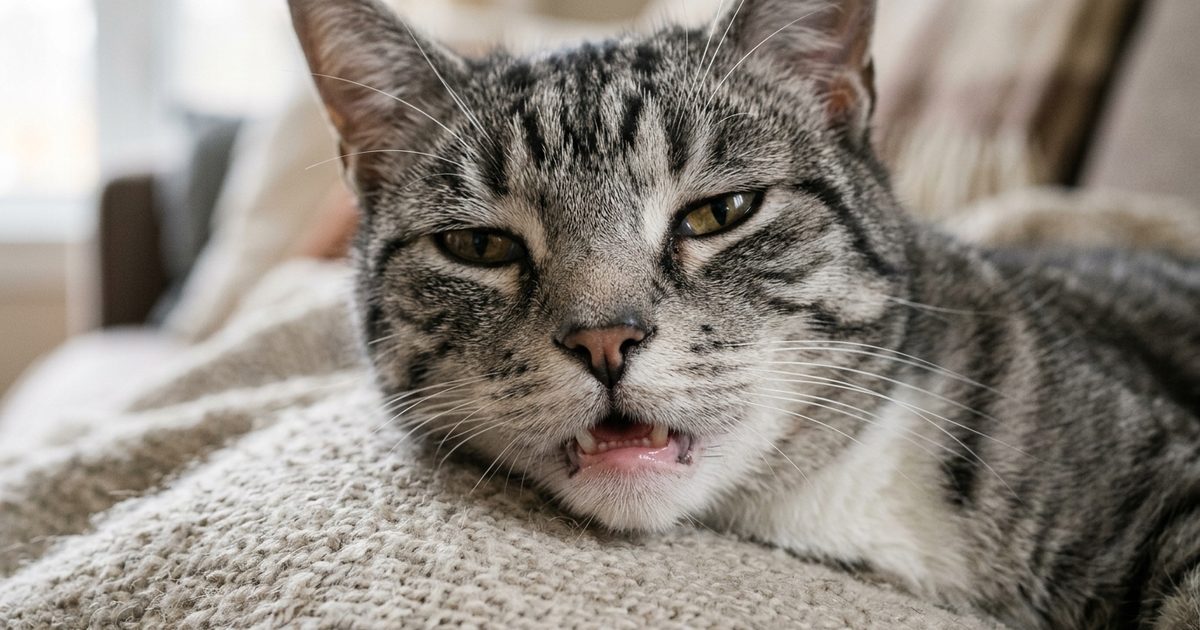
In the most serious cases, the anemia becomes severe enough to strain the organs. The cat may develop jaundice — a yellowish tint to the skin, gums, or the whites of the eyes — as the liver struggles to process the flood of broken-down blood cells. Collapse, profound weakness, and breathing distress can follow when oxygen delivery falls dangerously low. These are emergency signs, not something to monitor at home. A veterinarian determines how severe the damage is through bloodwork, so if any of these signs appear — or even if you simply know onion was eaten and anemia is developing — the right move is to seek care immediately rather than wait and watch.
Where Do Hidden Onion Sources Hide?
Most accidental poisonings do not come from raw bulbs — they come from onion powder hidden in soups, stews, seasoning mixes, gravy, and even some baby foods. Powder is concentrated, so a pinch carries a meaningful toxin dose. Read labels before sharing any human food.
When owners picture onion poisoning, they tend to imagine a cat biting into a raw bulb on the counter. In practice, that's the rarer route. Far more often, a cat is exposed through a small amount of food the owner didn't realize contained onion at all — a lick of gravy, a corner of stew, a pinch of seasoning dust that drifted onto a treat. Because the toxin is concentrated in dried and powdered forms, these hidden sources can carry a surprisingly large dose in a tiny, innocent-looking portion. Knowing where onion tends to hide is what closes that gap.
Onion powder in seasoning and mixes
Onion powder is the sneakiest source of all, and it's everywhere in a typical kitchen. Bouillon cubes, soup bases, taco seasoning, BBQ rubs, curry powders, and pre-mixed spice blends frequently list onion powder near the top of the ingredients — often alongside salt and sugar, so it barely registers as you cook. The danger is concentration: drying removes the water and leaves the sulfur compounds behind, so a single pinch of powder can carry the toxin load of a much larger piece of raw onion. A cat that licks a seasoned plate, a spilled spoon, or even the dust around a spice jar can ingest a meaningful dose without anyone noticing. This is also why "it was just the seasoning" is one of the most common refrains vets hear.
Soups, stews, gravies, and sauces
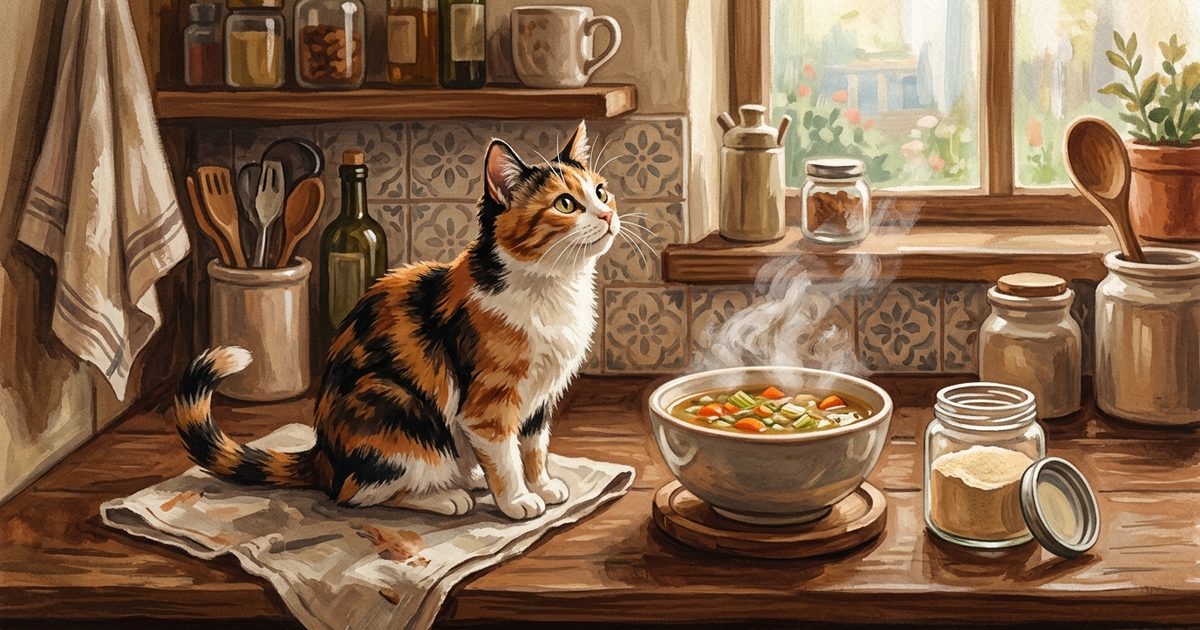
Onion is a foundational ingredient in an enormous amount of savory cooking — both homemade and commercial. Soups and stews almost always start with onion, gravies are built on onion-thickened reductions, and bottled pasta sauces, curry sauces, and stir-fry bases lean on it heavily as a flavor base. Even a dish that doesn't taste like onion often contains enough of it to matter to a cat, because the flavor disperses throughout the whole pot. A spoonful of broth offered to a sick cat, a piece of meat pulled out of a casserole, or sauce drizzled over dry food can all be the unwitting source. The rule of thumb is simple: if a savory dish was cooked by a human for humans, assume it contains onion until proven otherwise.
Baby food and prepared meals
This one catches owners off guard more than any other. Meat-based baby foods were once widely recommended by vets as a palatability boost or appetite stimulant for cats that wouldn't eat — and some older brands contained onion powder as a flavoring, which led to documented accidental poisonings. Modern labeling has tightened, but the lesson sticks: always read the ingredient list before giving any prepared food to a cat, even one a professional suggested. The same caution applies to prepared human meals, frozen dinners, and restaurant leftovers, which can all hide onion in concentrated, dehydrated form. International Cat Care keeps a useful reference on common household poisons, including the less obvious ones tucked into pantry staples.
What Should I Do If My Cat Ate Onion?
Call your vet or a pet poison helpline immediately — do not wait for symptoms, because the red-blood-cell damage often shows up days later. Bring the food wrapper or a photo, and tell them how much your cat ate and in what form. Do not induce vomiting unless a professional tells you to.
Immediate steps
Pick up the phone first. Call your regular vet, the nearest emergency clinic, or one of the dedicated pet poison lines — the ASPCA Animal Poison Control Center (a fee applies per case) or Pet Poison Helpline. Have three things ready before you dial: what your cat ate (raw onion, soup, onion powder, baby food), roughly how much, and when. If you still have the wrapper, container, or recipe, grab it — a photo works if you cannot bring the item itself.
Resist the urge to make your cat vomit or give milk, oil, or anything from your medicine cabinet on your own. Home remedies can make things worse, and the right next step depends on how much time has passed and how much was eaten. Let the vet or poison specialist decide. If your cat vomits on its own, save a sample in case the clinic wants to check it.
What the vet will do
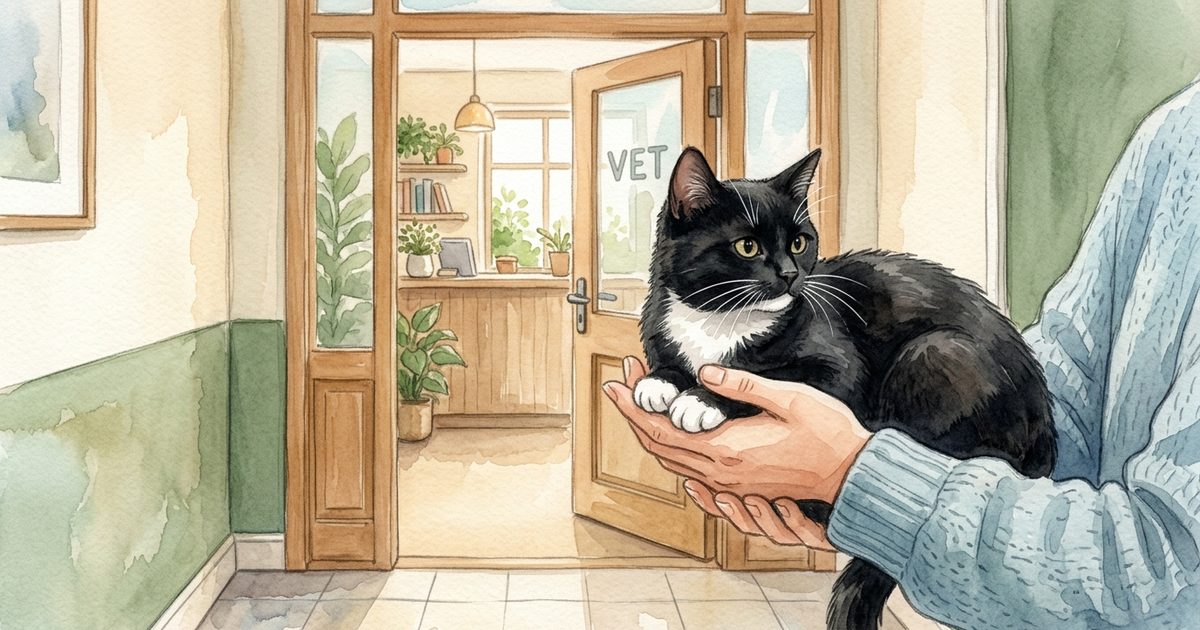
Treatment is guided by how recently the onion was eaten and how your cat is doing. If your cat is seen within the decontamination window, the vet may induce vomiting or give activated charcoal to limit further absorption — they will only do this when it is safe for your cat. From there, care is largely supportive: intravenous fluids to protect the kidneys, anti-nausea medication if needed, and bloodwork to check for the red-blood-cell damage that signals anemia.
Because the harm unfolds over several days, expect follow-up monitoring rather than a single visit. Your cat may need repeat blood tests and observation until the vet is confident the crisis has passed. The same emergency path applies to other foods that are off-limits to cats — see our can cats eat grapes guide for the shared "act fast, call first" principle.
How Much Onion Is Dangerous for a Cat?
There is no safe amount of onion for a cat. Toxicity is dose-dependent, but the toxin also accumulates — repeated small amounts over days or weeks can cause the same anemia as one large exposure. Treat any amount your cat ate as a reason to call the vet.
Acute vs cumulative exposure
Think of onion toxicity in two shapes. The first is acute: one large dose in a single sitting — a chunk of raw onion, a spoonful of soup, a stolen bite of meatloaf. The second is cumulative: tiny amounts sneaking into leftovers or seasoned food day after day. Both can end in the same hemolytic anemia, because the sulfur compounds that damage red blood cells build up in the body rather than clearing out quickly.
This is exactly why "a little bit is fine" is the most dangerous myth about onion and cats. It is only half true — it refers to a single small dose being less likely to cause immediate illness, not to repeated exposure. A pinch of onion powder in tonight's dinner and another pinch tomorrow and the night after is genuinely dangerous, even though each pinch looked harmless on its own. International Cat Care and other veterinary sources consistently advise treating any onion intake, however small, as worth a phone call.
Why cats are more sensitive than dogs or humans
Cats are not built to handle alliums the way we are. Their red blood cells carry weaker natural antioxidant defenses, so the oxidative damage from onion compounds hits them harder and faster than it hits a dog or a person of similar size. Add a much smaller body mass, and even a modest dose can produce a meaningful toxin load. The same principle makes the whole allium family risky — garlic is gram-for-gram even more potent, while chocolate carries a different toxin under the same "no safe amount" rule.
Onion Safety for Cats at a Glance — Summary
If you take one thing from this article, let it be this: there is no safe form of onion for your cat, and there is no safe amount worth risking. The table below distills everything above into the decisions that actually matter when it counts.
Onion Safety for Cats — Quick Reference
| Question | Short answer |
|---|---|
| Can cats eat onion? | No — all forms (raw, cooked, dried, powdered) are toxic to cats |
| Why is it dangerous? | Sulfur compounds damage red blood cells, causing hemolytic anemia |
| What are the symptoms? | Pale gums, weakness, lethargy, dark urine — often delayed 1–5 days |
| Where does it hide? | In onion powder, soups, gravies, seasoning mixes, and some baby foods |
| How much is too much? | Any amount warrants a vet call; small amounts can accumulate over days |
| What should I do? | Call your vet or a poison helpline immediately — don't wait for symptoms |
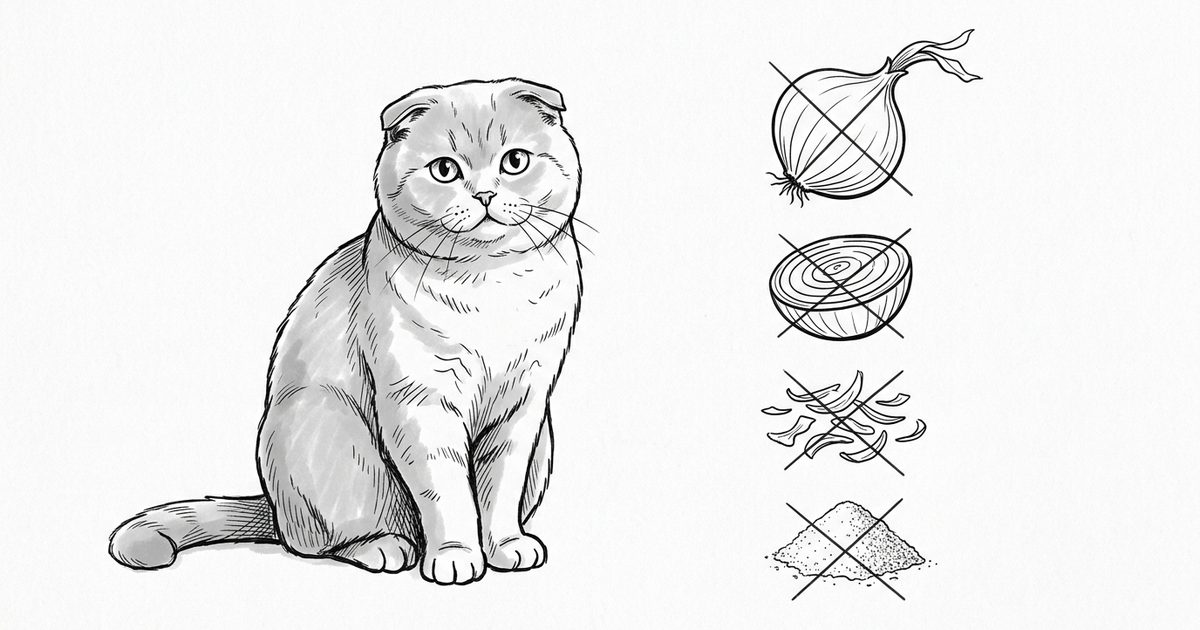
Keep onions, onion powder, and seasoned leftovers out of your cat's reach, treat even a small taste as a reason to call the vet, and you'll have done the single most important thing there is to do. If you've already read your cat once and want to go deeper, what cats should eat puts these toxic-food verdicts into the wider context of a safe feline diet.
Curious What Your Cat Would Say?
Upload a photo and get a warm, personalized reading from your cat's perspective.
Start Your Free ReadingFrequently Asked Questions
Can cats eat cooked onion?
No. Cooking does not make onion safe for cats. The sulfur compounds responsible for the damage — N-propyl disulfide and thiosulfate — are heat-stable, so they survive boiling, roasting, and frying. A spoonful of cooked onion can actually deliver a more concentrated dose than the same weight of raw.
Can cats have a tiny bit of onion?
There is no safe amount, even a small one. While a single tiny dose is less likely to cause immediate illness, the toxin accumulates over repeated small exposures. A pinch today and a pinch tomorrow can still produce the same anemia as one large exposure, so treat any amount as a reason to call your vet.
Is onion powder really toxic to cats?
Yes — onion powder is the most dangerous form per gram. Drying removes the water and leaves the sulfur compounds behind in a concentrated, easy-to-sprinkle form, so a single pinch can carry the toxin load of a much larger piece of raw onion. It also hides in soups, gravies, seasoning blends, and some baby foods.
What are the first signs of onion poisoning in a cat?
Early signs, within the first hours, are mild and non-specific — drooling, vomiting, or loose stools. The more telling signs come later as anemia develops: pale gums, weakness, lethargy, rapid breathing, and dark or reddish-brown urine. The delay of one to five days is why owners often miss the link to a meal.
How long after eating onion do symptoms appear?
Symptoms typically appear one to five days after ingestion. The lag is built into how the toxin works: it does not irritate the stomach first, it quietly damages red blood cells, and the body only shows distress once enough cells have been destroyed. That delay is exactly why owners often miss the connection.
What should I do if my cat ate onion?
Call your vet or a pet poison helpline immediately — do not wait for symptoms, because the red-blood-cell damage often shows up days later. Have ready what your cat ate, roughly how much, and when. Do not induce vomiting or give home remedies unless a professional tells you to.
Are onions more or less toxic than garlic for cats?
Both are dangerous, but garlic is gram-for-gram more concentrated, so less of it is needed to cause harm. Onion, however, is the more common household poison because of the sheer volume of onion in cooking and its hidden forms — onion powder in soups, gravies, and seasoning mixes. Treat both as toxic.
Can cats eat onion grass or chives?
No. Onion grass, chives, leeks, and shallots all belong to the same Allium family and carry the same sulfur compounds that damage a cat's red blood cells. Chives in particular are often grown in home gardens and within easy reach of a curious cat, so treat every member of the allium family as off-limits.
Does cooking destroy the toxin in onion?
No. This is one of the most common myths. The compounds at the heart of the problem — N-propyl disulfide and thiosulfate — are heat-stable, which means they survive boiling, roasting, and frying without breaking down. Heat mostly drives off water and intensifies flavor, so cooked onion can actually be more concentrated per bite than raw.
Sources & References
You Might Also Like
Kitten Teething: Timeline, Symptoms & How to Help
Kitten teething runs from 3 to 7 months as baby teeth fall out. Learn the timeline, signs to watch for, and how to soothe a teething kitten safely.
15 min readWhen Do Cats Stop Growing? A Complete Timeline
When do cats stop growing? Most cats reach adult size by 12-18 months, but large breeds like Maine Coons keep growing until 3-4 years. Full timeline inside.
14 min readCan Cats Eat Cherries? Flesh, Pit & Toxicity Facts
Can cats eat cherries? Pitted flesh is safe in tiny amounts — but the pit, stem, and leaves are toxic (cyanide precursors). Learn what's safe and what isn't.
15 min read