
Can Cats Eat Grapes? Why They're Toxic and What to Do
If you're wondering whether cats can eat grapes, the answer is a clear and serious no — and understanding grape toxicity in cats can protect your pet from life-threatening kidney damage. Grapes are not just an unhealthy snack; they are an active poison. The same is true of raisins, currants, and anything made from them. If you've ever asked yourself are grapes bad for cats, the short version is that no variety, color, or amount is safe, and even a single grape has the potential to harm your cat.
Key takeaways
- Grapes and raisins are toxic to cats — they can cause acute kidney failure and there is no safe amount.
- The exact toxin is still unknown — scientists know grapes damage cats' kidneys but have not identified the substance or how it works.
- If your cat eats even one grape, call your vet or a pet poison helpline immediately, because toxicity is unpredictable and early treatment changes the outcome.
Grapes and Your Cat — Quick Reference
| Form | Relative danger | Why |
|---|---|---|
| Fresh grapes | Dangerous | Toxicity is well documented; no variety is safe |
| Seedless green grapes | Dangerous | Seedless and green carry the same risk as any grape |
| Red grapes | Dangerous | Color makes no difference to the toxin |
| Raisins | Most concentrated | Drying packs the toxin into a smaller, denser package |
| Currants / Zante raisins | Dangerous | Dried grape-family fruits share the same risk |

Can Cats Eat Grapes? The Short Answer
No — cats should never eat grapes or raisins. Grapes are toxic to cats and can cause acute kidney failure, sometimes from a very small amount. There is no safe quantity, and because the poison is unpredictable, the only safe choice is to keep all grapes, raisins, and currants away from your cat.
The one-sentence verdict
Cats cannot eat grapes — not one, not a few, not as a treat, not ever. Grapes are not a food that is merely bad for cats; they are a true toxin that attacks the kidneys, and a cat can develop acute kidney failure after eating a small amount. The only safe amount of grape is none at all, and that rule does not bend for size, color, or variety. Whether the fruit is red, green, seeded, or seedless makes no difference to the danger. This is one of the few foods in a cat's world where the answer is a flat, safety-critical no, with no room for exceptions or moderation.
Why this is different from foods cats shouldn't snack on
Most "cats shouldn't eat this" foods cause discomfort rather than real danger. A saucer of milk, for example, leaves most adult cats with cramping and diarrhea because they can't break down lactose — unpleasant, but rarely an emergency. Grapes are in a different category entirely. They are actively poisonous, capable of destroying kidney tissue, and the damage can become irreversible within days. There is no version of grape exposure that is merely "uncomfortable." The ASPCA Animal Poison Control Center treats every reported grape or raisin ingestion in a pet as a potential poisoning, not a dietary indiscretion, and that urgency is the right frame for any cat owner.
Are any grape products safe?
No grape product is safe for a cat. Fresh grapes, raisins, currants, grape juice, and any food that contains them — fruitcake, mince pies, trail mix, granola bars, certain breads and cereals — all carry the same toxin, because it is intrinsic to the grape itself rather than something added in processing. Organic grapes are not safer than conventional ones. Seedless grapes are not safer than seeded ones. Grapes grown in your own garden carry the same risk as store-bought fruit. Because the toxic compound has never been isolated and tied to a specific variety or growing method, no category of grape can be carved out as an exception. Treat every member of the grape family as off-limits.

Why Are Grapes Toxic to Cats If the Toxin Is Unknown?
Grapes damage cats' kidneys — that much is well documented — but researchers have not identified the exact toxin or how it works. Suspects have included pesticides, molds, and a compound inside the fruit itself, but none has been confirmed. The honest science is: we know the effect, not the cause.
What we know for certain
What is firmly established is the outcome. Grape and raisin ingestion has been linked repeatedly to acute kidney failure — in cats, and even more often in dogs. The pattern is consistent enough that veterinarians do not wait for proof in an individual case; every known exposure is treated as a potential emergency. The damage lands on the kidneys specifically, not the stomach or liver, which is what makes grape toxicity so dangerous: once kidney function begins to fail, the consequences escalate quickly. The Cornell Feline Health Center lists grapes among the common household foods that can poison a cat, and that classification rests on documented kidney injury, not theory.
What is still unknown
What remains genuinely unresolved is the toxin itself. Despite decades of investigation, no single substance in grapes has been confirmed as the cause of the kidney damage. Researchers have studied several leading hypotheses — pesticide residue on the skin, mycotoxins from mold contamination, and a naturally occurring compound within the grape's flesh or skin — and none has been proven to be the culprit. Worse for anyone wanting a tidy answer, it isn't even clear whether one toxin is responsible or whether the injury comes from several factors acting together. This is real scientific uncertainty, not a gap in a finished story, and it's worth saying plainly rather than glossing over.
Why "unknown toxin" doesn't mean "maybe not toxic"
The most dangerous reaction to the missing answer is to read it as doubt. The logic runs: if they haven't even found the toxin, how bad can grapes really be? But an unidentified mechanism does not weaken the warning — it strengthens it. The kidney-failure outcome is well documented regardless of which compound causes it, and treating the cause as more important than the effect is exactly backwards. When the result is consistent and the cause is murky, caution has to be based on the result.
How research on dogs informs cats
Most of the documented cases and research come from dogs, who are far more likely to raid a fruit bowl or steal a raisin cookie. Cats are presumed to share the same vulnerability because their kidney physiology is broadly similar, and the confirmed feline cases that do exist match the canine pattern closely enough that vets apply the same standard of urgency. There is less feline-specific data, but no basis to assume cats are protected where dogs are not — so the guidance generalizes across both species.

Are Raisins More Dangerous Than Grapes for Cats?
Yes — raisins are dried grapes, which means the same toxin is packed into a much smaller, denser package. Gram for gram, raisins are more concentrated and therefore more dangerous than fresh grapes, and a cat can be poisoned by eating far fewer of them.
This is the part that catches many owners off guard. It's natural to assume a smaller piece of fruit is a smaller danger, but the opposite is true here. Drying does not neutralize the toxin — it only removes water, leaving the harmful compound behind in a much tighter space. So the question of whether cats can eat grapes extends directly to raisins, and the answer for raisins is, if anything, more urgent.

Drying concentrates the toxin
When a grape is dehydrated into a raisin, the water evaporates but the toxic compound stays behind. The result is that a single raisin holds roughly the same toxin as a fresh grape, only packed into a fraction of the weight. A small handful of raisins can therefore carry the same danger as a much larger amount of fresh grapes — which means a cat can reach a dangerous dose by eating what looks like very little. This concentration is the core reason raisins are never a "safer" alternative, and it is exactly why veterinarians treat raisin ingestion with the same urgency, or more, than fresh grapes.
Foods that hide raisins
Raisins rarely sit alone in a fruit bowl. They turn up inside cookies, breads, breakfast cereals, trail mix, granola bars, mince pies, and even some curries and chutneys. A cat that steals a bite of any of these is being exposed to the same toxin, and because the raisins are mixed in, it's easy to underestimate how much your cat actually ate. The practical takeaway is to check ingredient lists rather than relying on what you can see on the surface — and to assume that any food containing raisins is off-limits to your cat.
Currants and sultanas
The same risk extends to other dried grape-family fruits. Sultanas are simply golden raisins, and true "Zante currants" are tiny dried grapes — all of them carry the same toxin and the same danger. The word "currant" gets used loosely, though: blackcurrants and redcurrants are berries from an entirely different plant (Ribes) and are not in the grape family. When the label is ambiguous, the safe assumption is to treat any dried grape-family fruit as toxic. You can read our deeper dive on this in can cats eat raisins.
How Much Is Dangerous? Why Grape Toxicity Is Unpredictable
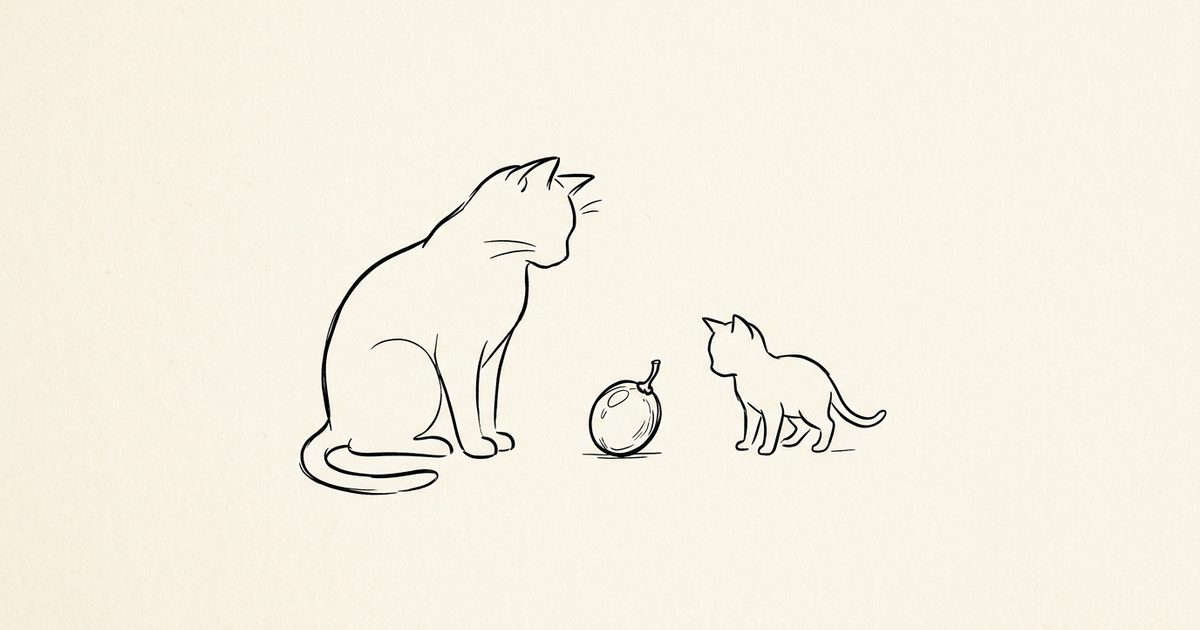
There is no known safe dose, and toxicity varies dramatically from cat to cat. One cat may eat a grape with no obvious harm while another develops kidney failure from the same amount. Because you cannot predict how your cat will react, zero grapes is the only safe amount.
If the unpredictability of grape toxicity feels frustrating, that's because it is — even for veterinarians. There is no neat line where a certain number of grapes becomes dangerous, and no reliable way to look at your cat and guess how she'll respond. This is not a gap in the advice; it is the advice. The safest reading of the science is that any amount is a gamble, and no amount is worth the risk.
Why individual sensitivity varies so much
The dose that triggers kidney failure is not consistent across cats. Body weight plays a role, but so do age, underlying kidney health, and an unknown individual factor that researchers have not been able to pin down. The same grape that one cat processes without obvious harm can send another into acute kidney failure. Because of this variability, veterinarians do not quote a toxic threshold — there is no "X grams per kilogram" number to lean on. The honest position is that the toxic dose appears to be different for every cat, which is precisely why there is no safe number.
"My cat ate one and was fine" is not reassurance
This is the single most dangerous assumption owners make. A single lucky outcome says nothing about the next exposure — the same cat could react very differently to a grape next week, or next month. Even more unsettling, cats who seem completely fine in the hours after eating a grape can go on to develop kidney failure over the following days, as the damage quietly accumulates. An asymptomatic cat is not evidence of safety; she may simply be in the window before symptoms emerge. This is the core reason to call your vet regardless of how your cat looks, and it holds even when a previous encounter ended without incident.
Why there is no published toxic dose for cats
The reason no one can state a safe dose comes down to two things working together. First, the toxin itself is unidentified — without knowing what substance causes the damage, it is impossible to measure how much of it is present in a given grape. Second, sensitivity varies so widely between individuals that even a known compound would not yield a clean threshold. On top of that, ethical and practical limits make controlled dosing studies in cats essentially impossible to run. The veterinary standard, therefore, is to treat every single ingestion as potentially dangerous, regardless of the amount. The Pet Poison Helpline reflects this consensus, as does guidance from the Cornell Feline Health Center — neither will tell you a safe number, because none exists.
What Are the Symptoms of Grape Poisoning in Cats?
Early signs usually appear within a few hours: vomiting is the most common, sometimes with pieces of grape in it, along with drooling and lethargy. Within 24 to 72 hours kidney failure can develop, shown by increased thirst and urination followed by a dangerous drop in urine output — this is a medical emergency.
The timeline of grape poisoning in cats unfolds in two distinct phases. The first is gastrointestinal and can look deceptively mild. The second, if it arrives, is a direct assault on the kidneys — and it is the phase that can kill. Knowing where your cat is on that timeline is what lets you act before the damage becomes irreversible.
Early signs (first hours)
The first reliable signal is almost always vomiting, often within a couple of hours of the cat eating the grape or raisin — and you may see recognizable pieces of fruit in what comes up. Alongside it can come diarrhea, drooling, a sudden loss of appetite, restlessness, or an unusual quietness. None of these are dramatic on their own, and that is precisely the trap: they can look like a mild upset stomach. After any known grape ingestion, even mild early signs warrant a vet call rather than a wait-and-see.
Signs of kidney failure (24-72 hours)
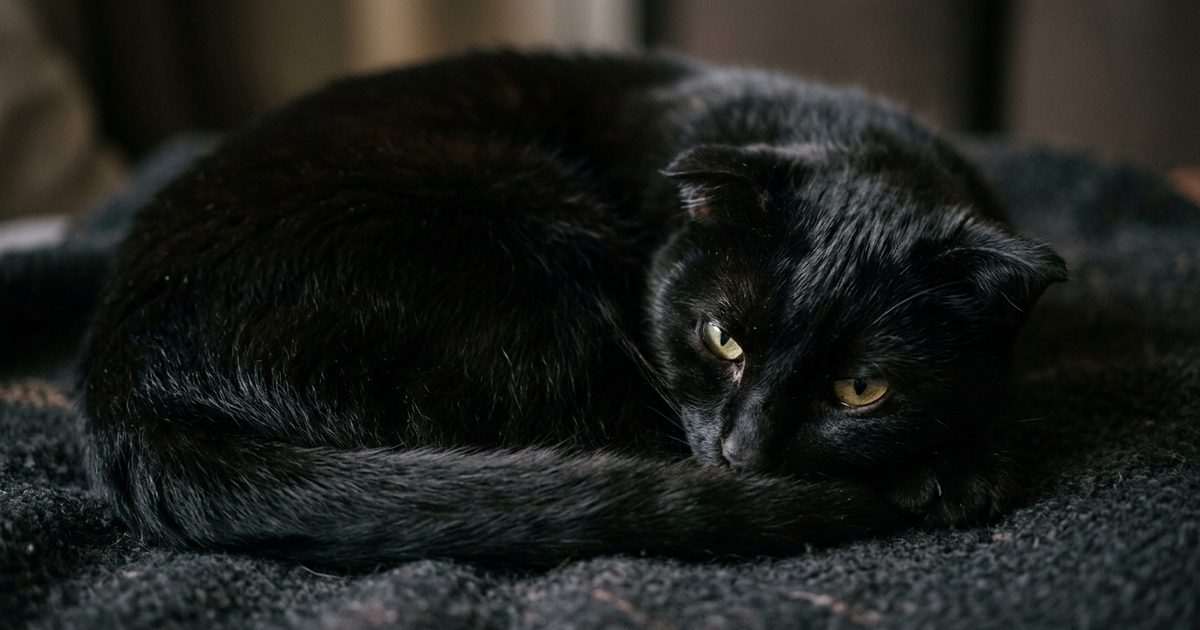
This is where grape toxicity turns lethal. Early on, the kidneys may push out more urine than usual, and your cat may drink noticeably more — increased thirst and urination that can mislead an owner into thinking the crisis has passed. Then the urine output reverses: it drops, sometimes to almost nothing. That reversal is a red-flag sign that the kidneys are failing. It is typically joined by deepening lethargy, weakness, dehydration, bad breath with a chemical or ammonia quality (uremic), and in severe cases collapse. Once kidney failure takes hold at this stage, it is life-threatening.
Why "she seems fine" is not safe
Kidney damage from grapes can develop silently over a day or more, beneath a cat who looks perfectly normal. The absence of early symptoms does not rule out toxicity — it may simply mean the damage has not yet become visible. This is why veterinarians recommend bloodwork and active monitoring even for cats who show no symptoms at all after eating a grape.
When symptoms mean emergency
Treat any of the following as an immediate emergency: vomiting after grape ingestion, any change in urination or thirst (in either direction), lethargy, or collapse. Do not wait to see whether symptoms progress — by the time they worsen, the kidneys may already be failing. Call your vet or a poison helpline the moment you notice them.
What Should I Do If My Cat Ate a Grape or Raisin?
Call your veterinarian or a pet poison helpline immediately — do not wait for symptoms. Tell them what your cat ate, how much, and when. If the ingestion was recent, the vet may induce vomiting and give activated charcoal; early, aggressive treatment to protect the kidneys dramatically improves the outcome.
The single most important variable in grape toxicity is time. Kidney damage can begin within hours, and once it starts, reversing it is far harder than preventing it. Acting immediately, before symptoms appear, is what changes the outcome — not the home remedies an owner might reach for first.
Steps to take right now
Stay calm, because your cat needs you clear-headed. Note how many grapes or raisins were eaten and roughly when — that timing shapes the vet's entire plan. Keep any remaining fruit or its packaging so the vet can see exactly what was involved. Then call your veterinarian or a poison helpline immediately; real resources include the ASPCA Animal Poison Control Center and the Pet Poison Helpline. Follow their instructions exactly, and remember that every minute counts — kidney damage can begin quickly.
What NOT to do
Do not induce vomiting unless a veterinarian instructs you to. Home methods — salt, hydrogen peroxide, mustard — can seriously harm cats and are unreliable in felines. Do not give milk; it does not neutralize any grape toxin and only adds lactose-related stomach upset (we bust this here). Do not take a "wait and see" approach, because symptoms can lag behind the kidney damage already underway. And never give your cat human medications.

What the vet will do
If the ingestion was recent, the vet may induce vomiting and administer activated charcoal to bind any toxin still in the gut. They typically start IV fluids to flush the kidneys and support blood pressure, and run blood and urine tests to monitor kidney function as it evolves. Cats who are at risk are usually hospitalized for ongoing care. The exact protocol depends on timing and your cat's condition — your vet will decide it, and no specific outcome can be promised in advance.
Grapes, Raisins, and Cats at a Glance — Summary
| Question | Short answer |
|---|---|
| Can cats eat grapes? | No — grapes are toxic to cats and can cause acute kidney failure; there is no safe amount. |
| Are raisins safer than grapes? | No — raisins are dried grapes, so the same toxin is more concentrated, making them more dangerous per gram. |
| What is the toxin in grapes? | Unknown — researchers know grapes damage cats' kidneys but have not identified the substance or how it works. |
| How much is dangerous? | There is no known safe dose — toxicity is unpredictable and varies from cat to cat, so zero is the only safe amount. |
| What are the early symptoms? | Vomiting (often within hours, sometimes with grape pieces), drooling, diarrhea, lethargy, and loss of appetite. |
| How long until kidney failure? | Kidney failure can develop within 24 to 72 hours, shown first by increased thirst and urination, then a dangerous drop in urine. |
| What should I do if eaten? | Call your vet or a pet poison helpline immediately — do not wait for symptoms, because early treatment protects the kidneys. |
| Are currants and sultanas safe? | No — currants (Zante raisins) and sultanas are dried grape-family fruits and carry the same toxic risk as raisins. |
The pattern across every row is the same: anything in the grape family can be dangerous, the dose that causes harm is unpredictable, and speed matters once it is eaten. If you remember nothing else, keep grapes, raisins, and currants away from your cat — and call your vet the moment you suspect she ate any. For a deeper look at the kidney condition grapes can trigger, see our guide on cat kidney disease.
Curious What Your Cat Would Say?
Upload a photo and get a warm, personalized reading from your cat's perspective.
Start Your Free ReadingFrequently Asked Questions
Can cats eat one grape?
No. There is no safe number of grapes for a cat — even one can trigger kidney failure in a sensitive individual, while another cat may tolerate several without obvious harm. Because the response is so unpredictable, the only safe amount is zero, and any ingestion is worth a vet call.
Are raisins safer than grapes for cats?
No — the opposite is true. Raisins are dried grapes, so the same toxin is packed into a much smaller, denser package. Gram for gram, raisins are more concentrated and therefore more dangerous, and a cat can be poisoned by eating far fewer of them than fresh grapes.
What is the toxin in grapes that hurts cats?
Honestly, no one has confirmed it. Researchers know grapes damage cats' kidneys, but despite decades of study the exact substance — and how it works — has never been proven. Suspects like pesticide residue, mold, and a compound inside the fruit itself have each been investigated and ruled out as the sole cause.
How many grapes will make a cat sick?
There is no known toxic dose. Toxicity varies dramatically from cat to cat based on weight, age, kidney health, and an unknown individual factor, so veterinarians cannot quote a safe number. One grape has caused kidney failure in some cats, which is why zero is the only safe amount.
What are the symptoms of grape poisoning in cats?
Early signs usually appear within hours: vomiting (sometimes with grape pieces), drooling, diarrhea, lethargy, and loss of appetite. Within 24 to 72 hours kidney failure can develop, shown first by increased thirst and urination, then a dangerous drop in urine output, weakness, and uremic breath.
How long after eating a grape do symptoms start?
Gastrointestinal signs like vomiting and drooling often begin within a few hours of ingestion. Kidney damage can develop silently over the next 24 to 72 hours, sometimes beneath a cat who looks completely fine, which is why waiting for symptoms is risky — early treatment changes the outcome.
What should I do if my cat ate a grape or raisin?
Call your veterinarian or a pet poison helpline immediately, before symptoms appear. Note how much was eaten and when, keep any remaining fruit, and follow their instructions exactly. Do not induce vomiting or give milk at home — both can cause more harm — let the vet decide the protocol.
Are organic or seedless grapes safe for cats?
No. The toxin is intrinsic to the grape family, so no variety, color, or growing method removes the risk. Organic, seedless, homegrown, red, or green grapes all carry the same danger, and because the toxic compound has never been isolated, no category of grape can be treated as an exception.
Sources & References
You Might Also Like
Kitten Teething: Timeline, Symptoms & How to Help
Kitten teething runs from 3 to 7 months as baby teeth fall out. Learn the timeline, signs to watch for, and how to soothe a teething kitten safely.
15 min readWhen Do Cats Stop Growing? A Complete Timeline
When do cats stop growing? Most cats reach adult size by 12-18 months, but large breeds like Maine Coons keep growing until 3-4 years. Full timeline inside.
14 min readCan Cats Eat Cherries? Flesh, Pit & Toxicity Facts
Can cats eat cherries? Pitted flesh is safe in tiny amounts — but the pit, stem, and leaves are toxic (cyanide precursors). Learn what's safe and what isn't.
15 min read