
Can Cats Eat Chocolate? Why It's Toxic and What to Do
Can cats eat chocolate? No — and this is one of the few food questions with a hard, non-negotiable answer. If you're wondering whether is chocolate bad for cats, the short version is that chocolate is genuinely toxic, not merely unhealthy. Chocolate toxicity in cats comes from two compounds — theobromine and caffeine — that a cat's body clears far too slowly, allowing them to build up to dangerous levels. A curious lick from a dropped square can be enough to cause real harm, especially in a small cat.
Key takeaways
- Chocolate is toxic to cats — no amount is safe, not even a "tiny taste."
- Theobromine and caffeine are the poisons; dark and baking chocolate are the most dangerous because they concentrate the most of these compounds.
- If you suspect your cat ate chocolate, call your veterinarian or a pet poison helpline immediately — do not wait for symptoms to appear.
Chocolate and Cats — Quick Reference
| Chocolate type | Theobromine level | Risk to cats |
|---|---|---|
| Baking chocolate | Very high | Extremely dangerous — small amounts can poison a cat |
| Dark chocolate | High | Dangerous — the darker, the more toxic |
| Milk chocolate | Moderate | Toxic; sugar and fat add pancreatitis risk |
| White chocolate | Very low (almost none) | Not theobromine-toxic, but fat/sugar make it unsafe |
| Cocoa powder | Very high | Extremely dangerous — highly concentrated |
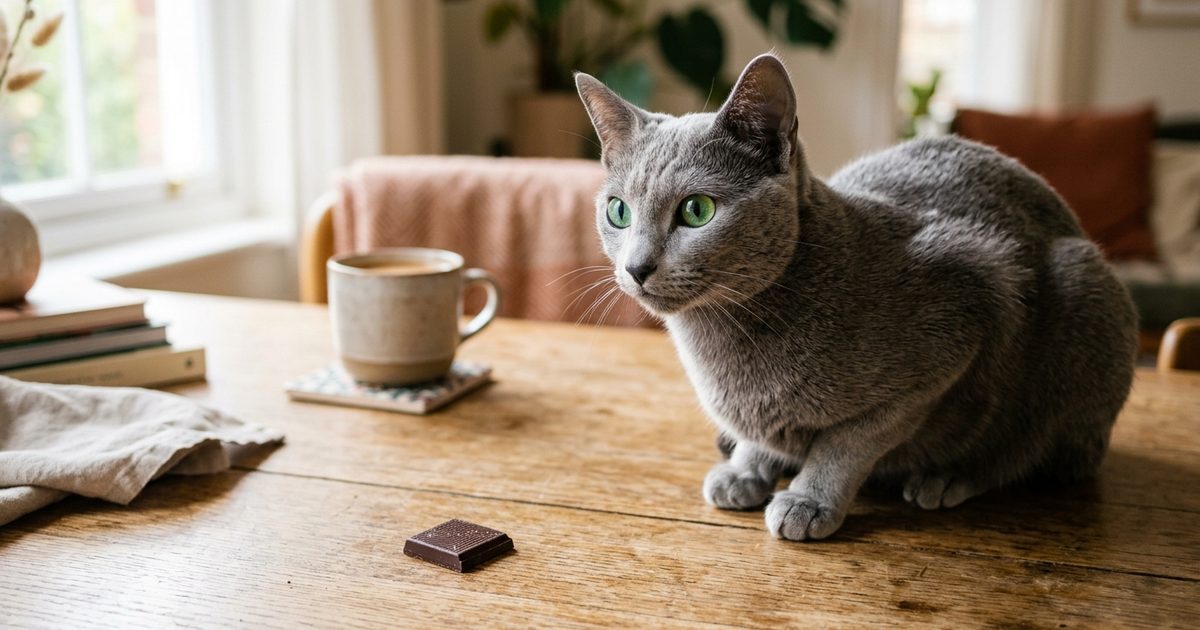
Can Cats Eat Chocolate? The Short Answer
No — cats should never eat chocolate. It contains theobromine and caffeine, two stimulants their bodies clear very slowly. These accumulate to toxic levels, causing vomiting, tremors, seizures, dangerous heart rhythms, and sometimes death. No amount of chocolate is safe.
The one-sentence verdict
Cats should never eat chocolate — not a piece, not a lick, not a crumb mixed into a baked good. This isn't a matter of preference or moderation. Chocolate is an active toxin to a cat, and there is no established safe dose. The only safe amount is none at all. If that sounds blunt, it's meant to: this is one of those rare foods where the guidance is absolute, because the compounds inside it attack the nervous system and the heart, and a cat's body has no efficient way to clear them.
Why this is different from "foods cats dislike"
It helps to separate two very different kinds of "people food" trouble. Some foods are simply a poor fit for a cat's digestion — cow's milk, for example, gives many cats gas and loose stools because they lack the enzyme to break down lactose. That's uncomfortable, but it isn't poisoning. Chocolate is different: it is actively poisonous. The theobromine and caffeine it contains don't just upset the stomach — they overstimulate the brain, nerves, and heart, and a cat's liver clears them so slowly that even a modest dose can climb to toxic levels. The Pet Poison Helpline classifies chocolate among the most common and serious poisoning calls they take for pets. Discomfort you can wait out; a toxin you cannot.
Are any chocolate products safe?
No. Any product made from cocoa — bars, chips, cocoa powder, chocolate milk, brownies, frosting, hot cocoa mix — carries theobromine, and therefore carries the risk. The concentration varies (baking chocolate and cocoa powder are far worse than milk chocolate), but the toxin is present in all of them. There is no "cat-safe" form of real chocolate, and homemade or "natural" versions are no exception. The only genuinely safe option is to keep all cocoa-containing foods out of your cat's reach and offer treats actually designed for a cat's biology.
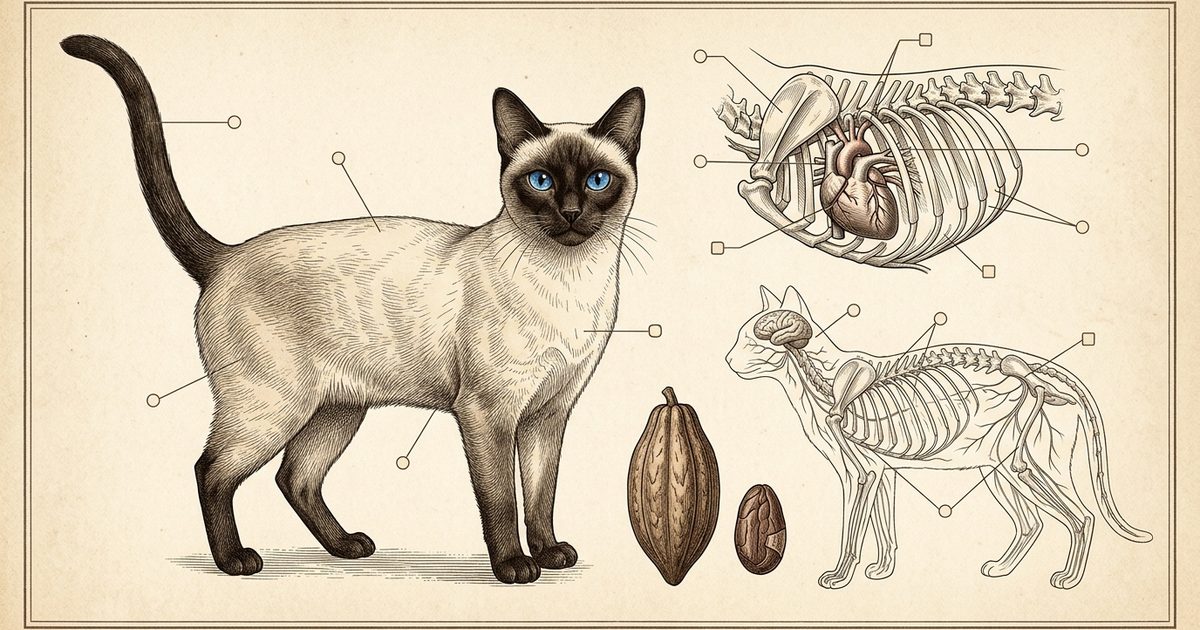
Why Is Chocolate Toxic to Cats? The Theobromine Problem
Chocolate's danger comes from theobromine and caffeine — methylxanthines a cat's body clears very slowly. They accumulate, overstimulate the nervous system and the heart, raise blood pressure, and at toxic levels trigger tremors, seizures, and dangerous heart rhythms that can be fatal.
Theobromine: the main culprit
Theobromine is a bitter alkaloid produced naturally by the cacao plant — it ends up in every cocoa-containing product, from a dark chocolate bar to a dusting of cocoa powder. It belongs to the same family as caffeine, and like caffeine it stimulates the central nervous system, the heart, and the muscles. The catch is that cats metabolize theobromine far more slowly than humans do. We clear it within hours; in cats and dogs the compound lingers, circulating and re-circulating, so a dose that barely registers in a person can climb toward toxic levels in a cat over the course of a day. The Cornell Feline Health Center lists chocolate among the common household toxins cat owners should keep out of reach.
Caffeine makes it worse
Chocolate also contains caffeine, a close chemical relative of theobromine that compounds the same effects on the heart and nervous system. Where theobromine acts slowly, caffeine acts fast — the two together push a cat's system harder than either would alone. The risk isn't limited to chocolate itself: coffee, tea, energy drinks, and any caffeinated food carry the same family of stimulants and pose a similar threat. You don't need to memorize a list — anything containing cocoa or caffeine belongs in the same "keep away from the cat" category.
Why cats are more vulnerable than people
Humans break theobromine down quickly because our livers produce the enzymes to do it; cats do not. A cat's liver simply clears methylxanthines much more slowly, so even an amount we wouldn't notice — a few crumbs, a licked wrapper — can build to a toxic concentration in a small body. Body weight magnifies the effect: a dose that spreads harmlessly through a 150-pound person concentrates heavily in an 8-pound cat. This is why a tiny taste is not a tiny risk for a feline.
Cocoa vs carob: a safe look-alike
Carob is sometimes sold as a "dog-safe chocolate" because it contains no theobromine. While carob itself isn't toxic, it's still not a necessary treat for cats — and commercial carob products are often high in sugar and fat, which can upset a cat's stomach on their own. "Not poisonous" is not the same as "good for your cat."
How Much Chocolate Is Dangerous for a Cat?
There is no guaranteed safe dose of chocolate for a cat — the risk depends on the type, amount eaten, and the cat's weight. Baking and dark chocolate hold the most theobromine; milk chocolate is still toxic, and even a few grams of baking chocolate can poison a small cat.
Dark, baking, and cocoa are worst
The darker the chocolate, the more theobromine it holds — that single rule explains almost everything about dose. Unsweetened baking chocolate and cocoa powder are the most concentrated forms: gram for gram they carry several times the theobromine of a milk chocolate bar. A licked baking-spoon, a dusting of cocoa powder on a countertop, or a corner torn off a dark bar can each contain enough theobromine to matter for a cat. Small lapses count — not because every taste is fatal, but because the margin between "fine" and "toxic" is far narrower than it is for us.
Milk chocolate and white chocolate
Milk chocolate does contain less theobromine than dark or baking chocolate, so a larger quantity is needed to reach toxic levels — that part of the old reassurance is true. But "less dangerous" is not the same as "safe." Milk chocolate is still toxic, and its sugar and fat add a second problem: rich, fatty foods can trigger pancreatitis, a painful inflammation of the pancreas that is its own veterinary emergency. White chocolate contains almost no theobromine, which is why it's sometimes called harmless — but it's essentially fat and sugar with no nutritional value for a cat, and it can still cause gastrointestinal upset. The honest bottom line is that none of them belong in a cat's diet.
Why body weight changes everything
Toxicity is a matter of dose per pound of body weight, which means the exact same square of chocolate represents a very different threat depending on who eats it. For a 12-pound adult cat, a small taste might cause mild symptoms; for a 4-pound kitten, the same taste is a much larger dose relative to body mass — and a small body clears the toxin more slowly on top of that. This is why kittens, small cats, and older or frail cats are at the highest risk from any amount of chocolate. For a broader look at what should and shouldn't be in your cat's bowl, see our guide on what cats eat.
What Are the Symptoms of Chocolate Poisoning in Cats?
Symptoms usually appear within 6 to 12 hours and include vomiting, diarrhea, restlessness, excessive thirst, rapid breathing, a racing or irregular heartbeat, and muscle tremors. In severe cases seizures follow. Any of these signs after chocolate is eaten is a veterinary emergency.
Theobromine and caffeine do their damage quietly at first, then visibly. The early signs are the body trying to expel or cope with the toxin; the later ones are the nervous system and heart being overwhelmed. Knowing the progression helps you act before the severe stage arrives — and crucially, stops you from mistaking "she seems okay" for "she is okay."
Early signs (first hours)
Vomiting is often the first thing you'll notice, sometimes within an hour or two. The cat may also drool, seem restless or unable to settle, drink more than usual, and urinate frequently. Some cats become mildly hyperactive — pacing, vocalizing, or unusually alert. None of these are specific to chocolate on their own, which is why a possible exposure makes them meaningful. If you want to understand what vomiting itself signals in cats, read our guide on cat vomiting for the symptom and its triage.
Severe signs (later onset)
As the toxin builds, symptoms escalate: muscle tremors, seizures, a rapid or irregular heartbeat, elevated blood pressure, and in the worst cases collapse. These reflect true systemic toxicity — the heart and nervous system are no longer coping. Onset windows vary by dose, chocolate type, and the cat's weight, so no specific timeline can be promised; what matters is that the trajectory is upward, and each new severe sign narrows the window for safe intervention.
When symptoms mean emergency
Any seizure, collapse, a racing or irregular heart, or persistent vomiting is an immediate emergency — call your vet or an emergency clinic right now, not in an hour. Even mild symptoms warrant a phone call, because chocolate toxicity can progress quickly from "unsettled" to "critical." For fuller triage context on when vomiting alone crosses into urgent territory, see our article on cat vomiting.
Why symptoms can be delayed
Here is the trap owners fall into: the cat ate the chocolate an hour ago and looks fine, so it must be fine. It often is not. Theobromine clears slowly from a cat's body, which means symptoms can appear late, persist, or worsen over 24 hours or more. "She seems fine now" is not a reliable signal of safety — it is a gap before the toxin reaches a level the body can no longer hide. The Cornell Feline Health Center emphasizes that delayed or prolonged symptoms are a hallmark of methylxanthine toxicity in cats, not a sign the danger has passed.
What Should I Do If My Cat Ate Chocolate?
Call your veterinarian or a pet poison helpline immediately — even before symptoms appear. Tell them the type of chocolate, roughly how much, and when. Do not try to induce vomiting at home, do not wait for symptoms to pass, and do not give human medications. Fast guidance matters.
Speed and accuracy are what protect your cat. The right call, made early, with the right information, lets a veterinarian calculate the real risk and tell you exactly what to do next. Most chocolate exposures in cats are treatable when handled promptly — the danger lies in delay and in home remedies that make things worse.
Steps to take right now
First, stay calm — your cat picks up on your stress. Then gather the details a professional will need: the wrapper or product name, the type of chocolate (dark, milk, baking, cocoa), an estimate of how much was eaten, and roughly when. With those in hand, call your veterinarian or, after hours, a dedicated pet poison helpline such as the Pet Poison Helpline or the ASPCA Animal Poison Control Center. Follow their instructions exactly — they may send you to the clinic, tell you to watch for specific signs, or advise next steps based on the dose.
What NOT to do
Do not try to induce vomiting unless a veterinarian explicitly tells you to — home methods like salt or hydrogen peroxide can harm a cat and do not work the same way they do in dogs. Do not give milk; the common myth that milk "binds" the chocolate is false — milk does not neutralize theobromine and adds its own gastrointestinal upset, which we explain in our article on whether cats can drink milk. Do not give salt, do not give any human medication, and do not "wait and see." Waiting is the single most common reason a treatable exposure becomes a serious one.
What the vet will do
Treatment depends on how recently and how much was eaten. If the exposure was very recent, a vet may induce vomiting in a controlled setting, then give activated charcoal to bind remaining theobromine in the gut. Intravenous fluids help flush the toxin, and medications can control tremors, seizures, or heart effects if they develop. Monitoring continues until the cat is stable, because of theobromine's long clearance time. The International Cat Care guidance stresses that veterinary support — not home care — is the standard response to known chocolate ingestion in cats.

What Can Cats Eat Instead of Chocolate? Safe Treats
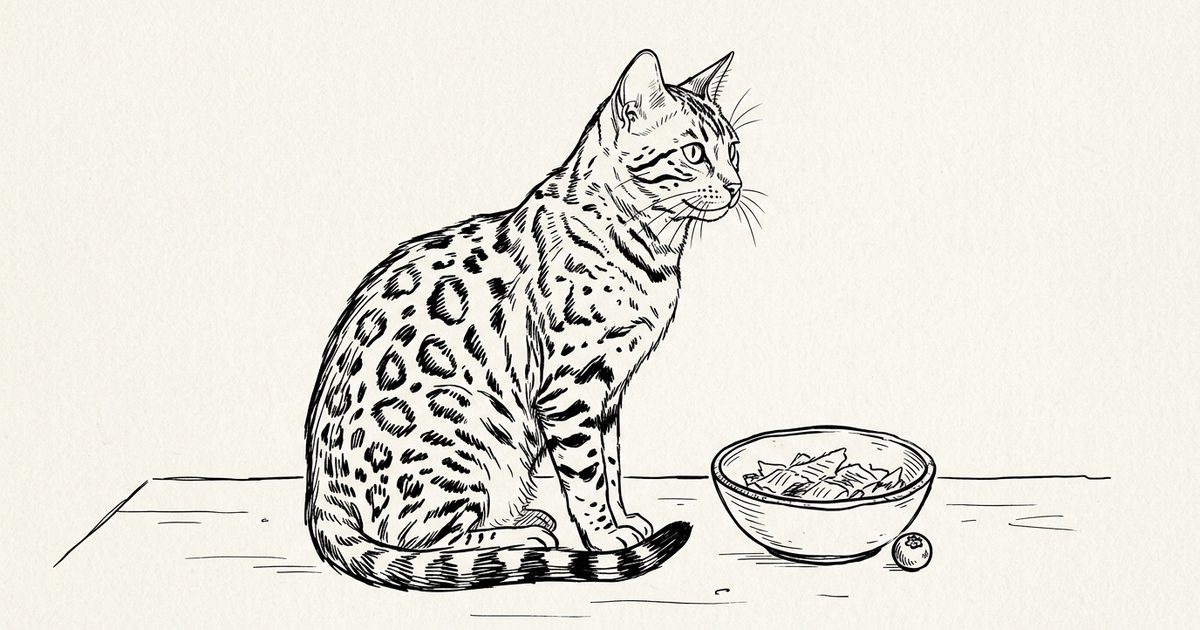
Cats do not need sweets — they cannot taste sweetness and gain nothing from sugar. Safe treats include small pieces of cooked plain meat or fish, commercial cat treats, and tiny tastes of cat-safe fruit like a blueberry or a cube of melon. Always in moderation, never replacing balanced food.
Treats cats actually enjoy
Cats are obligate carnivores, built to run on animal protein and fat rather than carbohydrates of any kind. A flake of cooked salmon, a shred of plain boiled chicken, or a small lick of tuna juice matches their biology far better than any sweet ever could — and most cats find these flavors genuinely exciting in a way chocolate could never be. For a fuller picture of how treats fit into the overall feline diet, see our guide on what cats eat.
Safe human foods in small amounts
Some human foods are fine as an occasional taste, provided the portions stay truly small: a single blueberry, a thumb-sized cube of melon, or a thin slice of cucumber on a warm day. Notice the contrast — where grapes are dangerous for cats, these fruits are generally tolerated in tiny amounts. Two cautions keep this safe: never offer a new food in quantity, and remember that treat calories count toward your cat's daily intake. International Cat Care recommends that all extras, combined, stay well under a tenth of a cat's daily energy.
Chocolate and Cats at a Glance — Summary
| Question | Short answer |
|---|---|
| Can cats eat chocolate? | No — chocolate is toxic to cats; there is no safe amount |
| Is dark chocolate worse? | Yes — dark and baking chocolate hold the most theobromine |
| Is milk chocolate safe? | No — lower in theobromine but still toxic, plus sugar and fat |
| Is white chocolate safe? | No — almost no theobromine, but it is essentially fat and sugar |
| How much is dangerous? | There is no guaranteed safe dose; it depends on type and cat's weight |
| What are the symptoms? | Vomiting, restlessness, racing heart, tremors, seizures |
| What to do if eaten? | Call your vet or a pet poison helpline immediately, before symptoms |
| What to give instead? | Plain cooked meat or fish, commercial cat treats, tiny cat-safe fruits |
Curious What Your Cat Would Say?
Upload a photo and get a warm, personalized reading from your cat's perspective.
Start Your Free ReadingFrequently Asked Questions
Can cats eat a little bit of chocolate?
No. There is no established safe amount of chocolate for a cat — even a small taste can cause toxicity, especially in kittens or small cats. The only safe quantity is none at all.
Is dark chocolate more dangerous than milk chocolate for cats?
Yes. Dark and baking chocolate contain far more theobromine than milk chocolate, so a much smaller amount can poison a cat. Milk chocolate is still toxic, but dark chocolate carries the higher risk.
What happens if a cat eats chocolate?
Chocolate's theobromine and caffeine overstimulate a cat's nervous system and heart. Effects range from vomiting, restlessness, and a racing heart to tremors, seizures, and in serious cases death — onset is usually within 6 to 12 hours.
How much chocolate will make a cat sick?
There is no guaranteed toxic threshold because it depends on the chocolate type and the cat's weight. A few grams of baking chocolate or cocoa powder can poison a small cat, while milk chocolate takes more — but no amount is considered safe.
What should I do if my cat ate chocolate?
Call your veterinarian or a pet poison helpline immediately, even before symptoms appear. Give them the chocolate type, an estimate of how much, and when it was eaten. Do not induce vomiting or give home remedies unless a vet instructs you to.
Can cats eat white chocolate safely?
No. White chocolate has almost no theobromine, so it is not the same kind of toxin — but it is essentially fat and sugar with no nutritional value for a cat, and it can still cause gastrointestinal upset. It is not a safe treat.
How long after eating chocolate do symptoms start in cats?
Symptoms usually begin within 6 to 12 hours, but because cats clear theobromine very slowly, signs can appear late, persist, or worsen over 24 hours or more. A cat that seems fine at first is not necessarily in the clear.
Are there any safe chocolate alternatives for cats?
Real chocolate is never safe, but you can offer a flake of cooked plain meat or fish, a commercial cat treat, or a tiny taste of cat-safe fruit like a blueberry. Cats cannot taste sweetness, so they enjoy protein- and fat-based treats far more than any sweet.
Sources & References
You Might Also Like
Kitten Teething: Timeline, Symptoms & How to Help
Kitten teething runs from 3 to 7 months as baby teeth fall out. Learn the timeline, signs to watch for, and how to soothe a teething kitten safely.
15 min readWhen Do Cats Stop Growing? A Complete Timeline
When do cats stop growing? Most cats reach adult size by 12-18 months, but large breeds like Maine Coons keep growing until 3-4 years. Full timeline inside.
14 min readCan Cats Eat Cherries? Flesh, Pit & Toxicity Facts
Can cats eat cherries? Pitted flesh is safe in tiny amounts — but the pit, stem, and leaves are toxic (cyanide precursors). Learn what's safe and what isn't.
15 min read