
Can Cats Eat Garlic? Why It Is Highly Toxic to Cats
No, cats cannot have garlic in any amount. If you're wondering can cats eat garlic, the answer is a hard no — and if you're asking is garlic toxic to cats, it genuinely is. Garlic belongs to the allium family, the same plant group as onions, leeks, and chives, and it carries compounds that cats cannot metabolize. Even a small taste can damage your cat's red blood cells, sometimes severely enough to cause a life-threatening form of anemia. This is a safety-critical food, not a "small treat now and then" food, so it's worth knowing exactly why it's dangerous and what to do if your cat gets into it.
Key takeaways
- Any amount of garlic is risky for cats — there is no safe "just a little" threshold, because the toxin builds up in the blood.
- Garlic damages red blood cells through allium compounds, which can lead to a serious condition called Heinz body hemolytic anemia.
- If your cat eats garlic, treat it as a vet emergency and call your veterinarian or a poison helpline right away — do not wait for symptoms.
Garlic and Cats — Quick Reference
| Garlic form | Toxic to cats? | Risk level |
|---|---|---|
| Raw clove | Yes | High — concentrated allium toxin |
| Cooked garlic | Yes | High — toxin survives cooking |
| Garlic powder | Yes | Very high — most concentrated form |
| Garlic salt | Yes | Very high — toxin plus sodium load |
| Garlic supplements | Yes | Very high — concentrated doses on purpose |
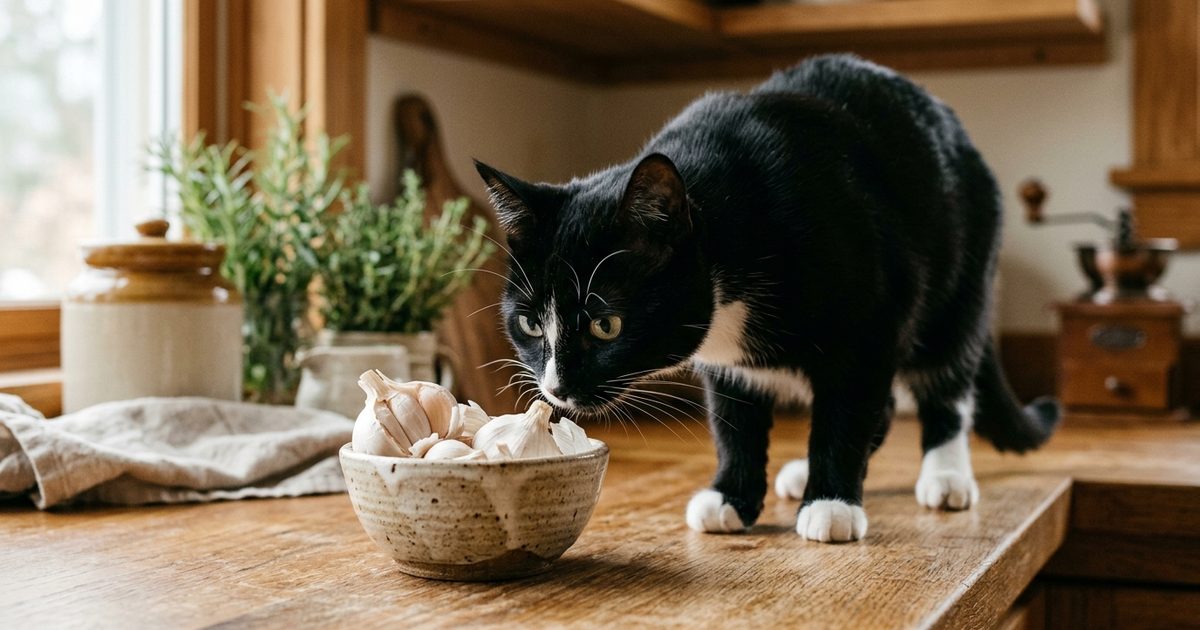
Can Cats Eat Garlic?
No — cats cannot eat garlic in any form. Garlic is highly toxic to cats because its compounds destroy red blood cells and can trigger hemolytic anemia. Even a small amount is risky and warrants an immediate call to your vet.
This is the question every cat owner ends up asking, and the answer needs no softening. If you've been wondering whether cats can have garlic, the verdict is unambiguous — no. Unlike many human foods that are merely "not ideal" for cats, garlic sits firmly in the dangerous category, alongside onions, chocolate, and grapes. A clove dropped on the floor, a scrap of garlic-seasoned meat, a lick of sauce — each is a genuine reason to take notice, because cats are built very differently from us when it comes to processing this particular plant.
Why even a little is dangerous
The core problem is metabolic. Humans and many other animals carry the enzymes needed to break down the sulfur compounds that give allium plants their pungency. Cats do not. Their body lacks the pathway to detoxify these compounds efficiently, so instead of clearing them, it lets them circulate and accumulate. The result is that repeated small exposures — or even a single modest one — can build toward the same damage that a larger dose would cause outright. This is why veterinarians don't recognize a "safe" threshold for garlic in cats: the toxin is cumulative, and the safe dose is effectively none at all.
All forms are off-limits
A common and dangerous assumption is that only raw garlic is risky. That's not the case. The damaging compounds are remarkably stable — they survive cooking, drying, salting, and concentration. Raw cloves, roasted garlic, sautéed garlic in a stir-fry, garlic powder in a seasoning blend, garlic salt, and even garlic sold as supplement pills all carry the same toxin class. Powders and concentrates are the most hazardous form of all (see the drying-concentrates-toxin mechanism below). This is also true of the broader allium family — if you want the full picture of which related plants carry the same risk, see our guide on whether cats can eat onion.
What Makes Garlic Toxic to Cats?
Garlic contains two compounds — thiosulfate and N-propyl disulfide — that cats cannot metabolize. These compounds damage the membranes of red blood cells, causing them to rupture. The result is Heinz body hemolytic anemia, a serious breakdown of the blood.
Understanding the "why" behind garlic toxicity takes a little biochemistry, but it's worth grasping because it explains why this food is so uniquely dangerous to cats — and why no amount is harmless. The damage doesn't come from a stomach upset or an allergic reaction. It comes from a direct attack on the blood itself.
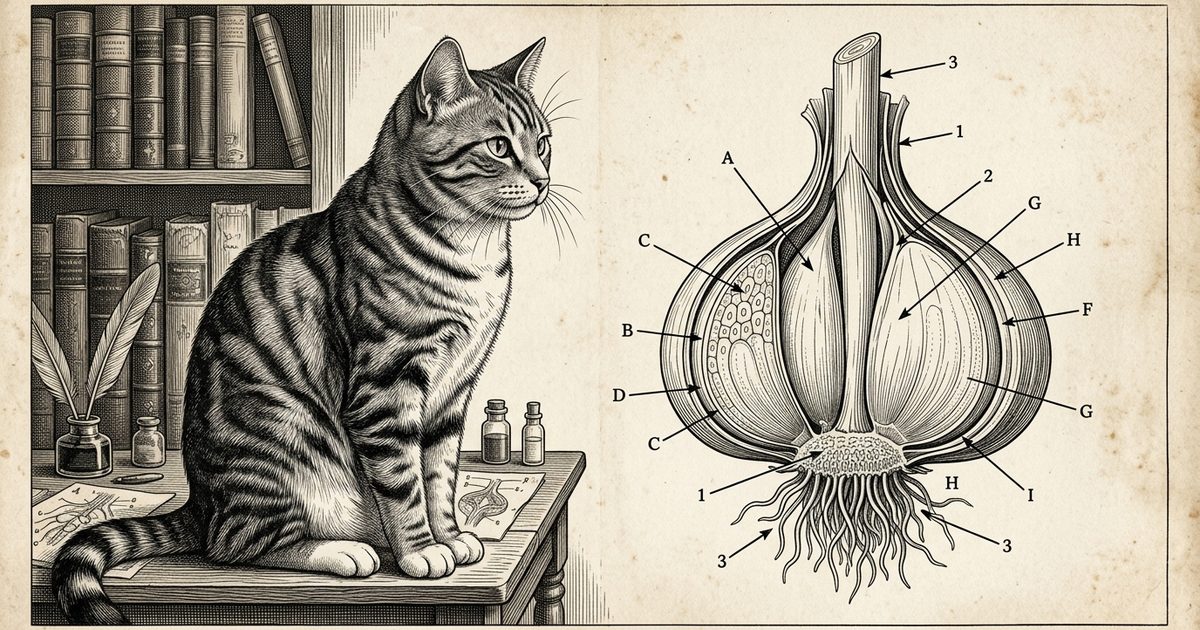
Thiosulfate and N-propyl disulfide
Garlic, like all allium-family plants, carries a pair of organosulfur compounds called thiosulfate and N-propyl disulfide. In a human body, these are handled by a well-developed detox pathway — the liver oxidizes and clears them without issue. A cat's metabolism takes a different and far less forgiving route. Cats have a known limitation in their ability to process certain oxidizing compounds, and they also have red blood cells that are unusually vulnerable to oxidative damage. So instead of neutralizing thiosulfate, a cat's bloodstream lets it accumulate and attack. Because the compounds linger and the damage stacks with each exposure, the effect is cumulative rather than one-time — a small amount today adds to the burden from a small amount last week. The Cornell Feline Health Center and the ASPCA Animal Poison Control both flag allium plants as a leading cause of this kind of poisoning in cats.
Heinz body hemolytic anemia
Once thiosulfate and N-propyl disulfide reach a cat's red blood cells, they oxidize the hemoglobin inside them. That oxidation produces clumps of denatured protein called Heinz bodies, which attach to the inner wall of each red blood cell. A cell marked this way is damaged goods — its membrane becomes rigid and fragile, and the body's own spleen recognizes it as abnormal and pulls it out of circulation. As damaged cells are destroyed faster than they can be replaced, the red blood cell count drops, and the cat slides into hemolytic anemia: too few cells to carry oxygen, leading to weakness, pale gums, and breathlessness. This is the mechanistic bridge between garlic and disease — the food damages the blood, and the disease is the shortage of working blood cells. For a deeper look at the condition itself, including its other causes and treatment, see our article on cat anemia.
How Much Garlic Is Dangerous?
Very little. Garlic is more concentrated than onion, so the toxic dose is lower than most owners expect. Raw cloves are dangerous, but garlic powder — used in soups, seasoning, and baby food — is the most hazardous form because the toxin is concentrated by drying.
The hardest part of answering "how much" is that there is no genuinely safe number. The damaging compounds in garlic (covered above in What Makes Garlic Toxic to Cats?) don't behave like a simple on/off switch — they build up, and a cat's body clears them slowly. A dose that causes no obvious harm in one cat can tip another into anemia, which is why veterinarians treat any garlic exposure as worth a phone call rather than a wait-and-see. That cautious stance is shared across major veterinary authorities; the Cornell Feline Health Center places alliums like garlic on its list of foods to keep away from cats entirely.
Raw, cooked, and powdered compared
The form changes the concentration, not the underlying danger. Gram for gram, garlic powder is the most potent of the common forms, because drying removes the water and packs far more of the damaging organosulfur compounds into a single pinch than a whole raw clove contains. A lick of soup made with powdered garlic can carry a meaningful dose while barely registering on your radar.
Cooking does not rescue you here, and this is the point most owners get wrong. As noted above, the compounds survive cooking — they are heat-stable through roasting, boiling, sautéing, and microwaving. Garlic that has been cooked soft, browned in a pan, or baked into a dish is still garlic as far as your cat's red blood cells are concerned. So if you've ever heard that "cooked garlic is safe," treat that as a myth: heat changes the flavor and texture, not the toxin. The same logic applies across the allium family — preparation doesn't neutralize the risk.
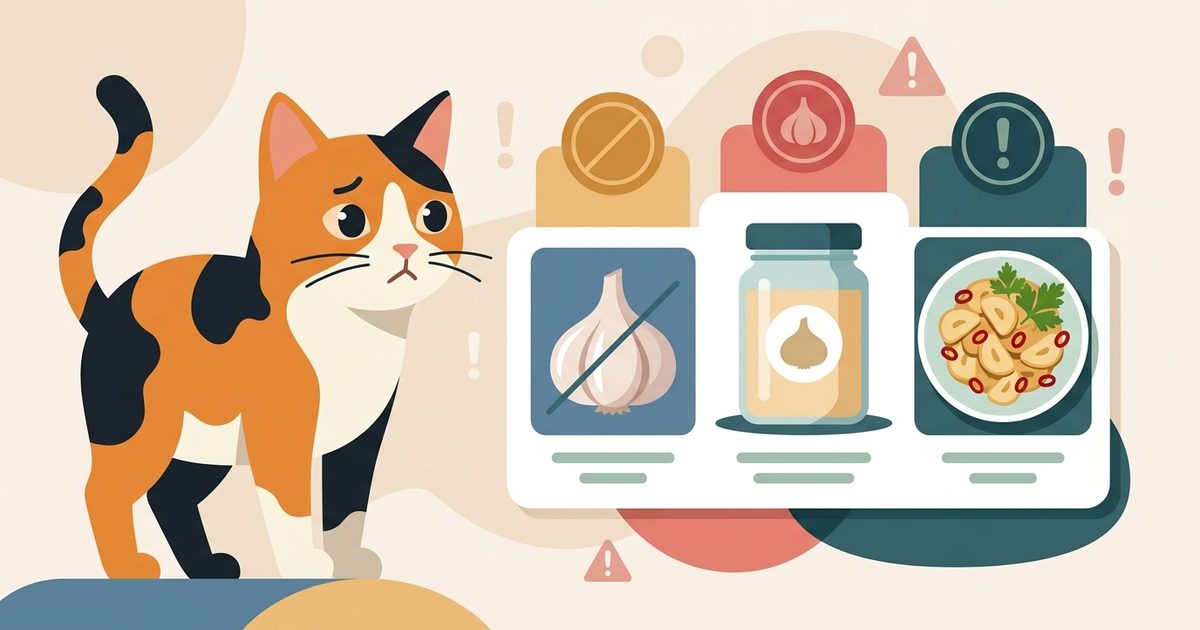
Accidental and hidden sources
Most garlic exposure in cats isn't from a clove on the counter — it's from food the owner didn't realize contained garlic. The common culprits are seasoned table scraps, soups and stews, pasta sauces, marinades, gravy, flavored chips and crackers, certain sausages, and some baby foods (garlic is a frequent seasoning in savory baby-food jars). Because powder is the most concentrated form, these seasoned foods can deliver a surprising dose in a small bite. Garlic and garlic powder also show up in supplement pills marketed to humans for "immune support," which a curious cat can sometimes get into.
The danger of these hidden sources is that you may not connect the symptom to the cause. A cat that licked a plate of garlic-butter shrimp, or ate a piece of dropped seasoning-coated cracker, has ingested the same toxin as one that chewed a raw clove — but the path is invisible to you. If your cat shows signs of poisoning and you can't trace them to anything obvious, tell your vet about anything in the kitchen the cat could have reached. A different toxin class entirely, like the theobromine in chocolate, would need different handling — so the ingredient matters.
What Are the Symptoms of Garlic Poisoning in Cats?
Symptoms include lethargy, weakness, pale gums, rapid breathing, dark or red-brown urine, loss of appetite, and in severe cases collapse. Signs often appear one to five days after ingestion, so an asymptomatic cat who ate garlic still needs urgent veterinary attention.
The single most important thing to understand about garlic poisoning is its timeline. Unlike many toxins that show their hand within hours, allium toxicity unfolds over days. The damage to red blood cells doesn't peak right after ingestion — it builds as more and more cells sustain injury, rupture, and get cleared from circulation. That means a cat can look perfectly fine the evening it ate the garlic and still be in serious trouble 48 or 72 hours later. The ASPCA Animal Poison Control and other poison authorities emphasize exactly this gap: the absence of immediate symptoms does not mean safety.
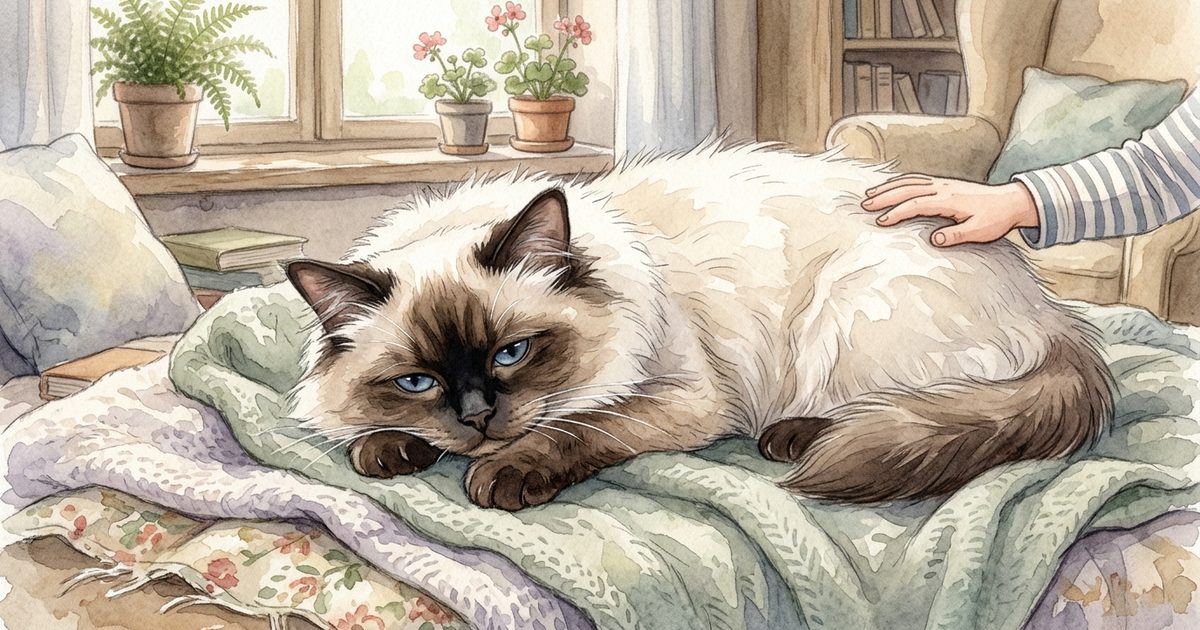
Early signs (day 1–2)
In the first day or two, the signs tend to be gastrointestinal and easy to dismiss. You might see vomiting, drooling, or diarrhea, often paired with mild lethargy and a drop in appetite. A cat who ate a small amount of garlic may simply seem "off" — quieter than usual, uninterested in food, sleeping more — and it's very natural to read that as a minor stomach bug or a hot day.
This is the window where owners most often miss what's happening, because nothing about early gastrointestinal upset screams "toxin." If you know or suspect garlic was involved, don't wait for things to get worse before calling your vet — the early phase is exactly when treatment works best, and when the delayed anemia signs haven't yet had time to develop.
Anemia signs (day 2–5)
Two to five days in, the picture shifts from stomach upset to the real danger: the breakdown of red blood cells we cover in the toxin section above. As damaged cells rupture and the red cell count falls, you may notice pale gums (lift the lip — healthy gums are pink; anemic gums look white or almost gray), pronounced weakness, rapid or labored breathing even at rest, and exercise intolerance where a normally active cat won't move around. One of the more distinctive signs is dark or red-brown urine, which is the body clearing the remnants of ruptured blood cells. In severe cases a cat may collapse.
This is the anemia that makes garlic genuinely life-threatening, and it can arrive days after an exposure you'd already stopped worrying about. The lesson bears repeating: a cat who seems fine the morning after eating garlic is not in the clear — the worst of the damage may still be three days away. If you're ever unsure, a quick call to your vet or a poison helpline is cheap insurance against a problem that gets harder to treat the longer it runs.
Is Garlic Worse Than Onion for Cats?
Both garlic and onion are allium-family plants and both are toxic to cats through the same mechanism. Garlic, however, is more concentrated: gram for gram it contains higher levels of the damaging compounds, so a smaller amount of garlic can cause serious harm.
Same toxin family, different potency
Garlic and onion share the same chemistry at the heart of their danger — both carry thiosulfate and N-propyl disulfide, the organosulfur compounds that cats cannot break down. The difference is concentration. Pound for pound, garlic packs meaningfully more of these damaging compounds than onion does, which is why the toxic dose for garlic is lower than most owners expect. A quantity of onion that would already be cause for concern is matched by a smaller quantity of garlic.
That gap in potency is the reason garlic reliably appears near the top of every "most toxic foods for cats" list, sometimes ranked even above onion. The mechanism is identical — red blood cell membrane damage, Heinz body formation, hemolytic anemia — it simply takes less garlic to get there. If you want the full allium-family picture, we break down the same risk from the onion side in can cats eat onion.
Why alliums as a group matter
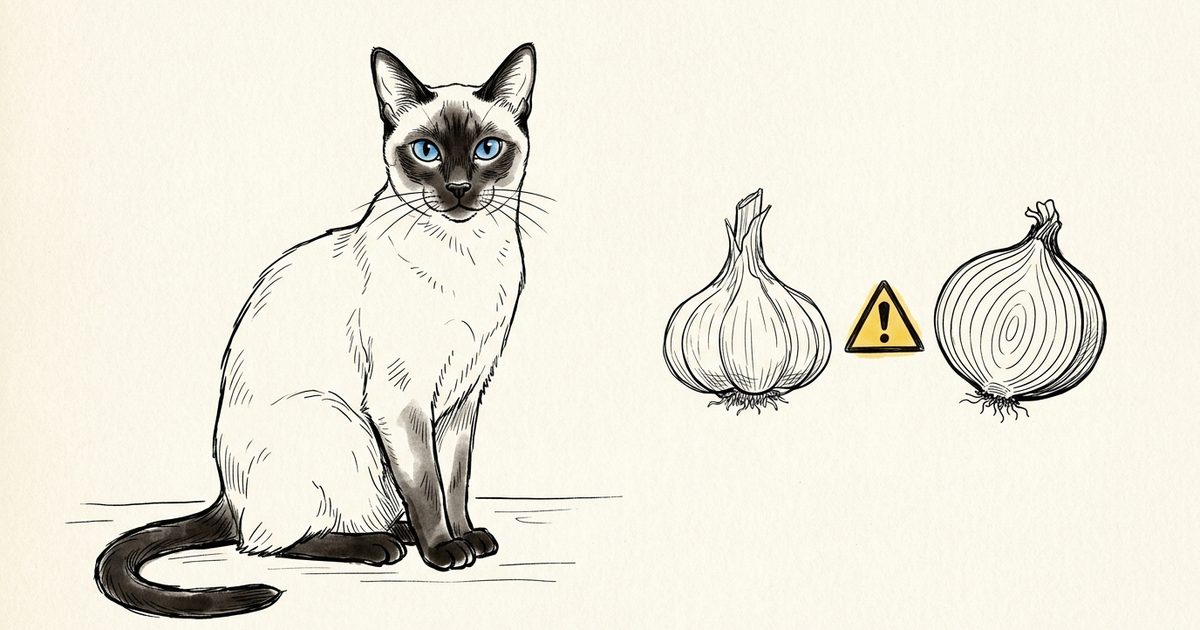
The lesson isn't really about garlic or onion individually — it's about the family. Leeks, chives, scallions, and shallots all belong to the same Allium genus and all carry the same toxin class, so the safest rule is a general one: the entire allium family is off-limits to cats, not just the two most famous members. Treat any member of the onion/garlic clan as a risk, in any form.
What Should I Do If My Cat Ate Garlic?
Call your veterinarian or a pet poison helpline immediately — do not wait for symptoms. Do not induce vomiting or try home remedies unless a vet tells you to. Even a small amount can become serious, and early treatment significantly improves the outcome.
Immediate steps
Speed matters more than anything else here. Before you pick up the phone, gather three pieces of information: roughly how much garlic your cat ate, what form it was in (a raw clove, cooked garlic, garlic powder, or a seasoned food), and when the ingestion happened. Those details let the vet or poison specialist judge the risk quickly.
Then call — your own vet, an emergency clinic, or a dedicated helpline like the ASPCA Animal Poison Control Center. Follow their instructions exactly; they may tell you to bring the cat in right away, watch for specific signs, or take a particular next step. Because the red blood cell damage can take one to five days to show, an asymptomatic cat who just ate garlic still needs that call — waiting for symptoms to appear first is the wrong move.
Why home treatment is dangerous
The instinct to do something at home is understandable, but the wrong intervention can make things worse. Inducing vomiting without veterinary guidance risks aspiration — the cat inhaling what comes up — or aggravating an already fragile situation. Home remedies you may have read about, from salt water to milk to herbal concoctions, do not neutralize thiosulfate and can cost you the window where treatment works best.
Real treatment for garlic poisoning is clinical: decontamination if the cat is seen early enough, IV fluids to support the kidneys and circulation, monitoring of red blood cell counts, and — in severe anemia — a blood transfusion. None of that is reproducible at a kitchen sink. The Cornell Feline Health Center and International Cat Care both stress early veterinary involvement for allium ingestion, and that professional care is what turns a dangerous exposure into a survivable one.
Garlic and Cats — At a Glance
| Question | Short answer |
|---|---|
| Can cats eat garlic? | No — any amount is toxic and can damage red blood cells |
| Is cooked garlic safe? | No — the toxin is heat-stable and survives cooking |
| Is garlic powder worse? | Yes — drying concentrates the toxin, making powder the most hazardous form |
| Is garlic worse than onion? | Yes — garlic carries a higher concentration of the same damaging compounds per gram |
| What are the symptoms? | Lethargy, pale gums, weakness, dark urine, collapse; onset is often delayed 1–5 days |
| What to do if eaten? | Call your vet or a poison helpline immediately — do not wait or try home treatment |
Curious What Your Cat Would Say?
Upload a photo and get a warm, personalized reading from your cat's perspective.
Start Your Free ReadingFrequently Asked Questions
Can a small amount of garlic kill a cat?
Yes, a small amount of garlic can be fatal to a cat. There is no safe threshold because the toxin is cumulative — it builds up and damages red blood cells, which can progress to life-threatening anemia. Any garlic ingestion warrants an immediate call to your vet or a poison helpline.
How much garlic is toxic to a cat?
Garlic is more concentrated than onion, so the toxic dose is lower than most owners expect. Gram for gram, garlic powder is the most hazardous form because drying packs more toxin into each pinch. Veterinarians treat any amount of garlic as worth a phone call rather than a wait-and-see.
What happens if a cat eats garlic?
The compounds in garlic attack the cat's red blood cells, causing them to rupture and leading to Heinz body hemolytic anemia. Early signs include vomiting and drooling; days later the cat may develop pale gums, weakness, rapid breathing, and dark urine. Severe cases can collapse.
How long after eating garlic do symptoms appear in cats?
Symptoms often appear one to five days after ingestion. Early gastrointestinal signs may show on day one or two, while the more dangerous anemia signs typically surface between days two and five. An asymptomatic cat who ate garlic still needs urgent veterinary attention.
Is cooked garlic safer than raw garlic for cats?
No. The damaging compounds — thiosulfate and N-propyl disulfide — are heat-stable and survive roasting, boiling, sautéing, and microwaving. Cooked garlic is still toxic to cats; heat changes the flavor and texture, not the toxin.
Is garlic worse than onion for cats?
Yes. Both are allium-family plants that carry the same toxin class, but garlic is more concentrated. Gram for gram, garlic contains higher levels of the damaging compounds than onion, so a smaller amount of garlic can cause the same serious harm.
What should I do if my cat licked garlic?
Call your veterinarian or a poison helpline like the ASPCA Animal Poison Control Center immediately, even if your cat only licked garlic. Note the amount, form, and time of ingestion, and follow their instructions. Do not induce vomiting or try home remedies without veterinary guidance.
Can garlic powder hurt a cat more than fresh garlic?
Yes. Garlic powder is the most hazardous common form because the drying process removes water and concentrates the toxin. A small pinch of powder can carry a meaningful dose, and it shows up in soups, seasonings, chips, crackers, and some baby foods.
Does garlic work as a natural flea remedy for cats?
No. The evidence that garlic repels fleas is weak, and the toxicity risk to cats far outweighs any unproven benefit. Do not use garlic — ingested or topical — as a flea treatment. Talk to your vet about safe, proven flea preventives instead.
Sources & References
You Might Also Like
Kitten Teething: Timeline, Symptoms & How to Help
Kitten teething runs from 3 to 7 months as baby teeth fall out. Learn the timeline, signs to watch for, and how to soothe a teething kitten safely.
15 min readWhen Do Cats Stop Growing? A Complete Timeline
When do cats stop growing? Most cats reach adult size by 12-18 months, but large breeds like Maine Coons keep growing until 3-4 years. Full timeline inside.
14 min readCan Cats Eat Cherries? Flesh, Pit & Toxicity Facts
Can cats eat cherries? Pitted flesh is safe in tiny amounts — but the pit, stem, and leaves are toxic (cyanide precursors). Learn what's safe and what isn't.
15 min read