
Can Cats Eat Bacon? Why It's Best Kept Off Their Plate
If you're wondering whether cats can eat bacon, the short answer is that bacon is not toxic to cats but it isn't a good treat either — and asking is bacon bad for cats points to a real concern. Bacon is a cured, smoked, salty processed meat that cats' bodies aren't designed to handle, so even a small piece carries more salt and fat than a cat should have. The smell and rendered fat make it tempting for your cat, and that's exactly why it's worth knowing the risks before you share a strip.
Key takeaways
- Bacon is not toxic to cats, but it's not recommended — a tiny crumb once is unlikely to harm, while regular feeding is a problem.
- The salt, fat, and preservatives in bacon can cause salt poisoning, pancreatitis, and weight gain, so it's best kept off your cat's plate.
- Safer swaps exist: plain cooked chicken or turkey, or bacon-flavored cat treats, satisfy the craving without the salt load.
Bacon and Cats — Quick Reference
| Form of bacon | Safe for cats? | Key risk |
|---|---|---|
| Raw bacon | No | Bacteria and parasites like Salmonella or Trichinella |
| Cooked bacon | No | Concentrated salt and fat per gram |
| Seasoned or flavored bacon | No (worse) | Onion, garlic, and spices can be toxic |
| Bacon grease | No | Pure fat — diarrhea and pancreatitis risk |
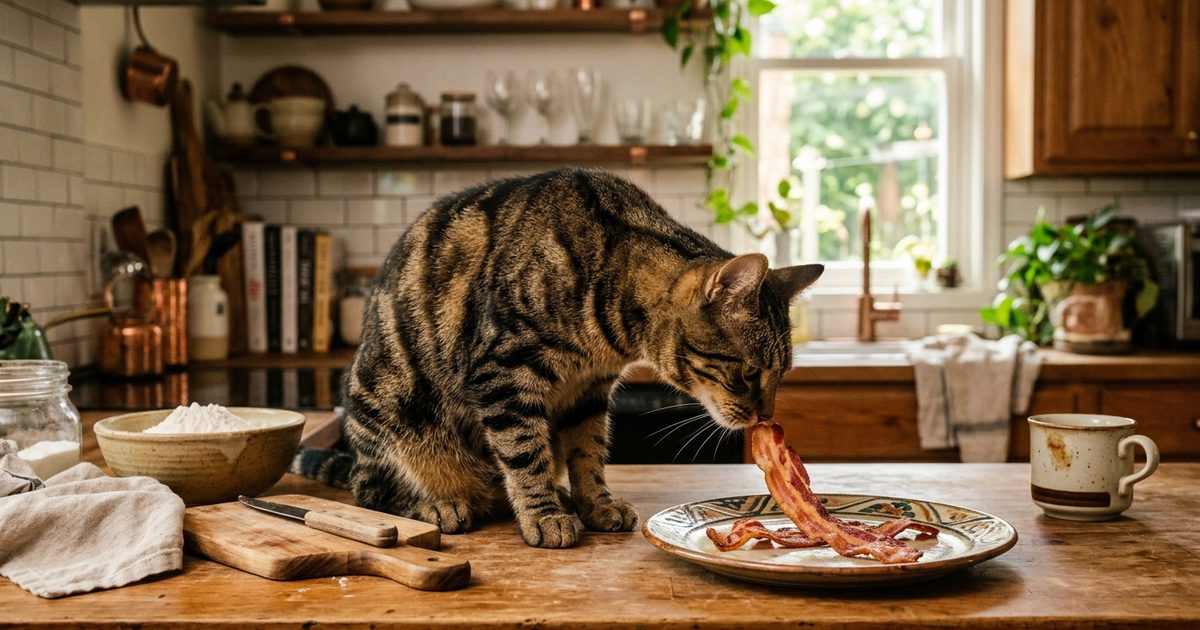
Can Cats Eat Bacon?
Bacon is not toxic to cats, so a tiny crumb will not poison them — but it is not a good treat. Cured, smoked, and packed with salt, fat, and preservatives, bacon is made of things a cat's body is not built to handle. Technically edible, but best avoided.
Not toxic, but not recommended
The word "non-toxic" is where a lot of confusion starts. When something is not outright poisonous, it is easy to read that as "fine to feed." But a food does not have to kill on contact to be harmful over time. Bacon falls squarely in that gap. A single accidental crumb off the floor is not an emergency — your cat's kidneys can clear that small a load. The problem is that "not toxic" quietly becomes "a little bit every weekend," and that is where the salt, fat, and preservatives start to accumulate.
The honest distinction is between a one-off trace and a regular habit. One tiny unseasoned piece, once, is very unlikely to harm a healthy adult cat. But feeding bacon as a recurring treat is a different decision entirely — and it is the habit, not the single crumb, that this article is really cautioning against. If you are looking for a clean answer: technically yes, cats can eat bacon in the strict "will not immediately die" sense, and practically no, you should not make it a treat.
Why cats are drawn to bacon
It is worth understanding why your cat begs so hard for it, because the begging itself can feel like evidence that bacon must be good for her. It is not. Bacon is engineered to be irresistibly aromatic to omnivores and carnivores alike — the rendered fat, the Maillard browning from frying, and the smoky compounds from curing all hit scent receptors that cats find exciting. Cats are obligate carnivores wired to seek dense calorie sources, and bacon smells exactly like one.
But palatability and nutritional suitability are two different things. Many foods cats find delicious — including plenty that are outright harmful — are attractive precisely because they are rich. Your cat's enthusiasm tells you the bacon smells good, not that her body can handle the sodium and fat load inside it. Attraction is real; it just is not the same as "this belongs in her bowl."
Why Is Bacon Bad for Cats?
Bacon is bad for cats because it is high in sodium, high in fat, and loaded with curing preservatives like nitrates and nitrites. Smoked and seasoned varieties add further compounds that a cat's liver and kidneys struggle to process, making bacon categorically riskier than fresh meat.
High sodium — the biggest concern
This is the single most important reason to keep bacon off your cat's plate. Cats are small — typically 4 to 5 kilograms — and their sodium tolerance is far lower than a human's. A single strip of bacon can carry enough salt to approach or exceed what a small cat should consume in an entire day, and that margin shrinks fast for kittens, seniors, and cats with kidney or heart disease.
The contrast with plain pork is instructive: ham in small amounts is a very different conversation from bacon, precisely because ham has not been cured and smoked to the same salt density. Bacon sits at the extreme end of the processed-meat spectrum. For a clear veterinary explanation of why excess sodium is dangerous, International Cat Care's guidance on salt poisoning walks through how sodium ion toxicosis develops and when it becomes an emergency.
High fat — pancreatitis and weight
Bacon is roughly half fat by weight, and that fat is exactly the kind — saturated, rendered, calorie-dense — that cats process poorly in large amounts. Two risks compound here. The first is pancreatitis, an inflammation of the pancreas that high-fat meals can trigger; it is painful, can come on suddenly after a fatty indulgence, and often needs urgent veterinary care. The second is the slower, cumulative one: regular fat intake from table scraps is one of the main drivers of obesity in indoor cats, and obese cats face a higher lifetime risk of diabetes, joint strain, and reduced mobility.
Preservatives: nitrates and nitrites
Commercial bacon is not just salted pork — it is cured with nitrates and nitrites, compounds that preserve color and inhibit bacterial growth during curing. These additives are considered safe for humans at typical servings, but a cat's smaller liver and kidneys process additives more slowly, and processed meats are categorically different from the fresh muscle meat a cat's digestive system evolved to handle. The Cornell Feline Health Center, a leading authority on feline nutrition, emphasizes that a cat's diet should be built around complete, species-appropriate foods rather than cured human products. The preservative load is one more reason bacon is not a "just meat" food, no matter how it looks on the plate.
Smoked, seasoned, and flavored bacon
If you reach for the flavored varieties, the risk profile gets worse, not better. Many seasoning blends contain onion or garlic powder, both of which are toxic to cats and can damage red blood cells even in small repeated doses. Black pepper, sugar, and maple or honey glazes add their own problems — sugar contributes nothing nutritionally and maple-glazed "candied" bacon concentrates sweeteners and sodium together. The general rule holds: the more a bacon is seasoned, smoked, or flavored, the further it moves from anything resembling appropriate feline food.
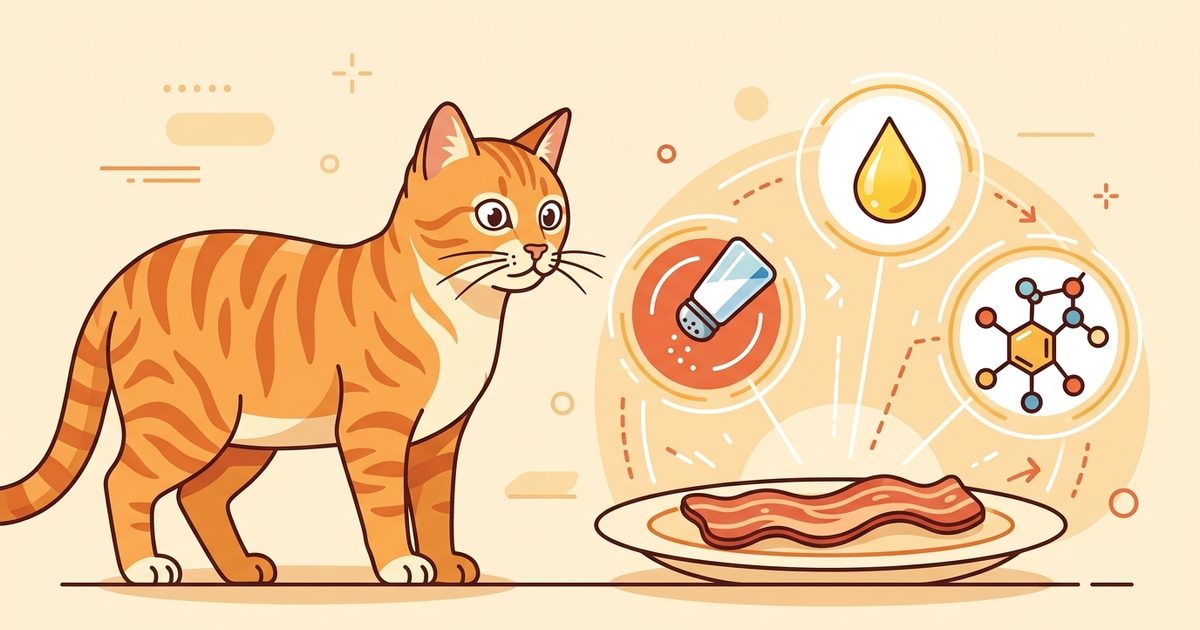
Can Cats Eat Raw Bacon? What About Cooked?
Neither raw nor cooked bacon is good for cats. Raw bacon can carry bacteria and parasites like Salmonella, E. coli, or Trichinella. Cooked bacon is safer from pathogens, but cooking concentrates the salt and fat — and that is the real danger.
When you're standing at the kitchen counter with a strip of bacon in hand and two hopeful eyes fixed on you, the question of which form is "less bad" feels reasonable. It is worth asking, because the answer changes the risk profile — but it does not change the bottom line. Preparation shifts which danger you are courting, not whether you are courting one.
Raw bacon — pathogens and parasites
Raw pork, including raw bacon, can carry foodborne threats that cats are not exempt from. Salmonella and E. coli are the headline bacteria, but the classic raw-pork fear — Trichinella parasites — is part of why raw pork has a reputation to begin with. Modern commercial curing has reduced but not erased that risk. If you have wondered whether cats can eat raw bacon specifically, the honest answer is that raw is the worst option of the bunch: it layers pathogen risk on top of the salt, fat, and preservatives already in the strip. A cat's digestive system is hardier than ours in some respects, but it is not a shield. This is also the key contrast with whole-food proteins like salmon, which is a fresh, unprocessed option in an entirely different category — the issue with bacon is not the underlying pork, it is everything that gets added to it.
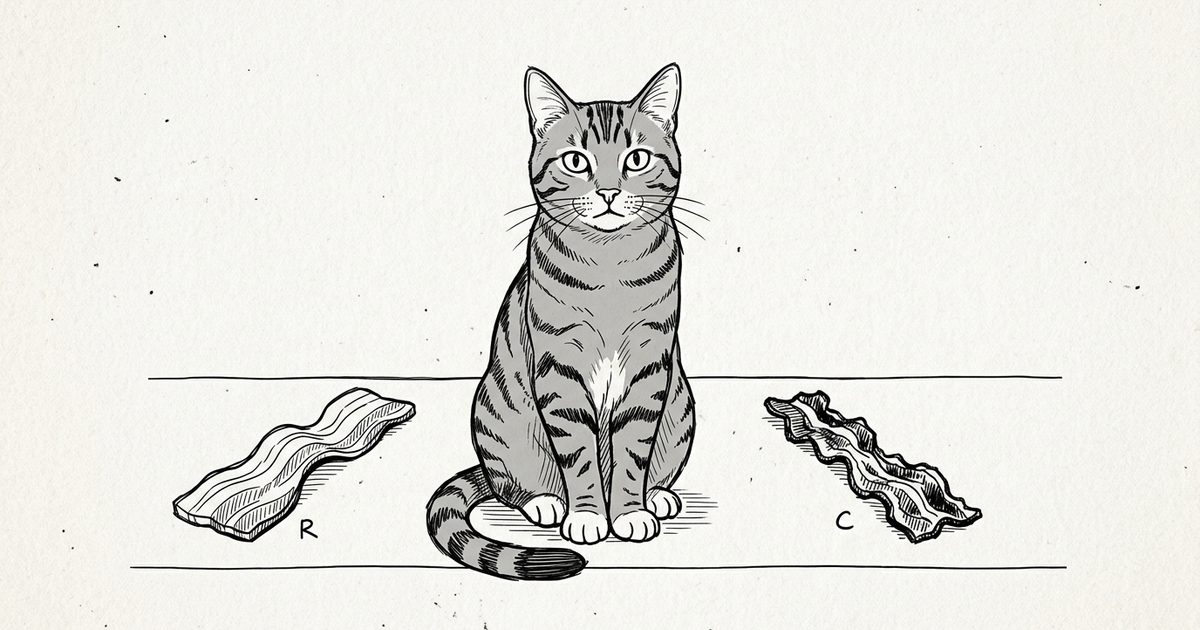
Cooked bacon — concentrated risk
Cooking solves one problem and quietly worsens another. Heat kills most bacteria and parasites, so the foodborne danger drops substantially — this is the kernel of truth in the idea that cooked bacon is "safe." But cooking drives off water, and what remains is more densely packed per gram: the same sodium and fat that were already too high, now concentrated. A crisp strip is, almost by definition, a saltier strip than a floppy one. A small cooked piece is genuinely the least-bad option among the bad options, but "least bad" is not the same as "a good idea." It is simply the form most likely to pass through without incident if a bite happens.
What about bacon grease?
Bacon grease is essentially rendered fat with the meat stripped away — close to pure fat, high in calories, and exactly the wrong thing to add to a cat's meal. It can trigger diarrhea almost immediately, and in cats prone to it, a fatty meal can provoke pancreatitis, an inflammation of the pancreas that is painful and sometimes serious. The appeal is obvious — cats love the smell, and a drizzle over kibble seems like a kindness — but it is one of the fastest ways to turn a treat into a vet visit. Never add bacon grease to cat food.
How Much Bacon Is Dangerous for a Cat?
There is no safe "serving" of bacon for cats. Even a single strip can deliver too much salt for a small or senior cat, and the fat adds up fast. A tiny unseasoned crumb once is unlikely to harm; regular feeding or a whole strip is risky.
Dose is where the bacon question stops being theoretical. A food can be "not great" in the abstract and genuinely dangerous at a quantity that looks small to us. Cats are little — a typical adult weighs around 4 to 5 kilograms — and that changes the math on every human food that crosses their path.
Why even one strip is a lot
A single strip of bacon carries somewhere in the range of 130 to 200 milligrams of sodium depending on the brand and cure. For a 4-kilogram cat, that is a meaningful chunk of, or even well beyond, what a cat's body is comfortable processing in a day. The same strip also delivers several grams of fat. Scaled to body weight, handing a cat a whole strip is closer to handing a human a small plate of bacon than a single bite. The numbers do not have to be exact to make the point: the math favors avoidance.
Cats most at risk
Some cats have even less room for error. Kittens, with their small bodies and developing kidneys, have a far lower threshold before salt becomes a problem. Senior cats, and any cat with kidney or heart disease, are already working with systems that handle sodium poorly — extra salt is an avoidable load on organs that do not need it. Small or slight-framed cats hit their limits faster simply because there is less of them to absorb the hit. As International Cat Care emphasizes, high-sodium human foods are a genuine concern for these groups. This is a general principle, not a diagnosis — if your cat falls into one of these categories, the safe move is to skip the bacon entirely.
The "tiny piece won't hurt" caveat
The kernel of truth here is real: a literal crumb of unseasoned bacon, once, is very unlikely to harm a healthy adult cat. Cats are resilient, and the body handles trace exposure. But "a tiny piece won't hurt" is true as a one-off and false as a habit. The principle to hold onto is that occasional trace exposure is not the same as regular feeding. A crumb that slips off the counter on a Sunday is one thing; a strip shared every weekend is a different category of risk — one where the salt, fat, and preservatives stop being a fluke and start being a pattern your cat's kidneys and waistline are quietly paying for. The safest reading of the rule is simple: if it happens once, do not worry; make sure it does not become a tradition.
What Can I Give My Cat Instead of Bacon?
Safer alternatives include a small piece of plain cooked chicken or turkey, commercial cat treats, or bacon-flavored cat treats that satisfy the bacon craving without the salt and fat. Plain lean meat is the closest healthy swap for cats.
If your cat lights up at the smell of bacon, you don't have to share the strip itself. Several treats are far gentler on a cat's body while still hitting the "meaty reward" note that makes bacon tempting in the first place. The goal isn't to be strict — it's to give the flavor and protein without the salt, rendered fat, and preservatives that make bacon a poor choice in the first place.
Plain cooked chicken or turkey
Plain, cooked, unseasoned chicken or turkey is the single closest healthy swap. It's lean, high in the protein cats are built to run on, and free of the curing agents and sodium packed into bacon. Tear off a pea-sized piece of cooked breast — no skin, no seasoning, no oils — and offer it on its own. It's the same kind of meat cats would recognize as food, minus everything that makes bacon risky. For the full safety picture, see our guides on whether cats can eat chicken and turkey.
Commercial cat treats
Store-bought cat treats are formulated around feline nutrition, not human taste. Their sodium is measured and controlled, and they're designed to be given as a regular reward without unbalancing a cat's diet. For owners who want the easiest path, a quality commercial treat covers the "something special" moment without any guesswork. To see where treats fit in the bigger picture of daily meals, our overview of what cats eat lays out the proportions.
Bacon-flavored cat treats
If it's specifically the bacony smokiness your cat goes wild for, bacon-flavored cat treats are the compromise worth feeling good about. They're built to deliver that familiar aroma and taste without the human-food bacon's salt load, rendered fat, or preservatives — the engineering does the work so you don't have to worry about the dose. You get the flavor your cat loves and the safety margin a real strip of bacon can't offer.
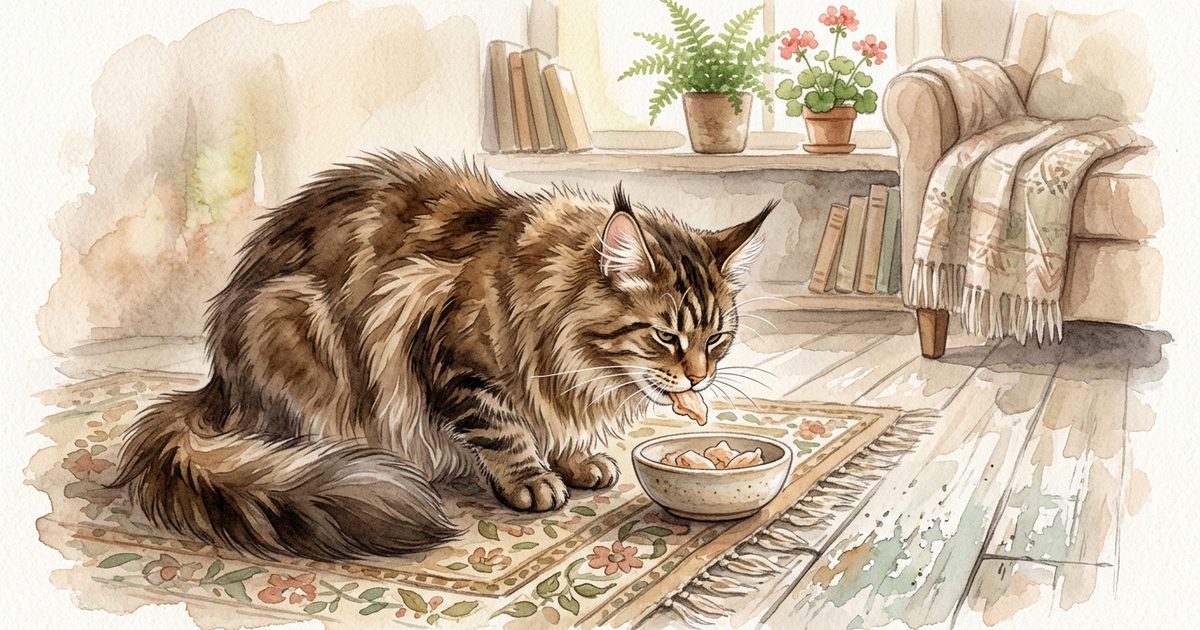
Symptoms of Salt Poisoning in Cats
Signs of too much salt include excessive thirst and urination, vomiting, diarrhea, lethargy, loss of appetite, and in serious cases tremors or seizures. If your cat ate a lot of bacon or shows these signs, call your vet or a pet poison line right away.
This is the section that matters most if your cat has already helped itself to bacon. Salt poisoning — sodium ion toxicosis — is rare from a single crumb but very real after a meaningful amount of a cured, salty food. Cats are small, and their bodies clear sodium far less efficiently than ours do, so what looks like "a little" to us can be a genuine overload to them. Knowing the progression helps you tell a "watch and wait" moment from a "call now" one.
Early and severe symptoms
Salt poisoning tends to unfold in stages. The earliest signs are the body trying to rebalance itself: your cat drinks noticeably more water, uses the litter box more often, and may vomit or have diarrhea as the gastrointestinal tract reacts. Appetite often drops off, and a cat that's usually social may become quiet and withdrawn — lethargy is one of the most reliable early clues that something is off.
The picture changes if sodium climbs high enough to disrupt the brain. As the Cornell Feline Health Center notes, severe sodium imbalance can trigger neurological signs — tremors, stumbling, stiffness, or seizures. These are not "wait and see" symptoms; they reflect pressure building in the nervous system and warrant urgent veterinary care. Vomiting and thirst alone, in a cat that's otherwise alert, usually warrants a watchful call to your vet. Tremors or seizures warrant a trip.
What to do if your cat ate bacon
Stay calm and act methodically. First, offer fresh water — hydration is the body's main defense against excess sodium, so let your cat drink freely. Then jot down what you can remember: roughly how much bacon, whether it was raw or cooked, any seasonings, and the time. These details are exactly what a veterinarian will ask for.
Next, call your vet or a pet poison helpline for guidance, even if your cat seems fine so far. Professional advice beats guessing, and the right move sometimes depends on the cat's size, age, and health. One thing not to do unless you're explicitly told to: do not induce vomiting. With certain substances, bringing it back up can cause more harm than good, and the decision belongs to a professional.
Curious What Your Cat Would Say?
Upload a photo and get a warm, personalized reading from your cat's perspective.
Start Your Free ReadingBacon and Cats — Quick Summary
A single crumb of bacon is unlikely to harm your cat, but bacon is genuinely a processed meat loaded with salt, fat, and preservatives that make it unsuitable for felines. The quick summary below lists the most common questions so you can make a safe treat choice in seconds.
| Question | Short answer |
|---|---|
| Can cats eat bacon? | Not toxic, but the salt and fat load is too high — best avoided |
| Can cats eat raw bacon? | No — raw pork may carry Salmonella, E. coli, or parasites |
| Is bacon bad for cats? | Yes — high sodium, high fat, and preservatives make it unsuitable |
| How much bacon is too much? | There is no safe serving — even one strip can exceed a small cat's daily sodium limit |
| What are safer alternatives? | Plain cooked chicken or turkey, commercial cat treats, or bacon-flavored cat treats |
| What are the symptoms of salt poisoning? | Extreme thirst, vomiting, diarrhea, lethargy, tremors, or seizures — call your vet |
In short: the smell of bacon may be irresistible to cats, but the salt, fat, and preservatives it loads onto their body systems outweigh any satisfaction it brings. If your cat ate a small crumb by accident, don't panic — simply offer plenty of fresh water and watch for symptoms. But if you want to treat your cat safely, keep plain cooked chicken or turkey, or cat treats formulated for her specific nutritional needs, as her go-to extras beyond her regular meals. If vomiting, lethargy, or tremors appear, call your vet right away.
Frequently Asked Questions
Can cats eat a small piece of bacon?
A tiny unseasoned crumb once is very unlikely to harm a healthy adult cat, but bacon is not a good treat even in small amounts. A whole strip carries too much salt and fat for a small cat, so it's best kept off your cat's plate entirely.
Is bacon toxic to cats?
No, bacon itself is not toxic to cats — a one-off trace won't poison them. The concern is the high sodium, fat, and curing preservatives, which cause real harm through salt overload, pancreatitis, and weight gain when fed regularly rather than as a rare crumb.
Can cats eat raw bacon?
No. Raw bacon can carry bacteria like Salmonella and E. coli, plus parasites such as Trichinella, on top of the salt, fat, and preservatives already in the strip. Raw is the worst form of bacon you could offer a cat.
Can kittens eat bacon?
Kittens should never be given bacon. Their small bodies and still-developing kidneys have a far lower threshold for salt, and the fat and preservatives sit heavy on a growing digestive system. Stick to kitten-formulated food and plain lean treats.
How much bacon is too much for a cat?
There is no safe serving of bacon for cats. A single strip can approach or exceed a small cat's daily sodium tolerance, and the fat adds up quickly. One accidental crumb is fine; a strip or regular feeding is risky.
What happens if my cat eats bacon grease?
Bacon grease is close to pure fat, high in calories, and one of the fastest ways to trigger diarrhea or pancreatitis in a cat. Offer fresh water, watch for vomiting or lethargy, and call your vet if symptoms appear. Never add grease to cat food.
What are signs of salt poisoning in cats?
Early signs include excessive thirst and urination, vomiting, diarrhea, loss of appetite, and lethargy. Severe cases progress to tremors, stumbling, stiffness, or seizures — these neurological symptoms are a vet emergency, so call immediately.
What can I give my cat instead of bacon?
Safer swaps include a pea-sized piece of plain cooked chicken or turkey (no skin, seasoning, or oil), commercial cat treats with controlled sodium, or bacon-flavored cat treats that deliver the smoky aroma without the salt and rendered fat.
Sources & References
You Might Also Like
Kitten Teething: Timeline, Symptoms & How to Help
Kitten teething runs from 3 to 7 months as baby teeth fall out. Learn the timeline, signs to watch for, and how to soothe a teething kitten safely.
15 min readWhen Do Cats Stop Growing? A Complete Timeline
When do cats stop growing? Most cats reach adult size by 12-18 months, but large breeds like Maine Coons keep growing until 3-4 years. Full timeline inside.
14 min readCan Cats Eat Cherries? Flesh, Pit & Toxicity Facts
Can cats eat cherries? Pitted flesh is safe in tiny amounts — but the pit, stem, and leaves are toxic (cyanide precursors). Learn what's safe and what isn't.
15 min read