
Can Cats Eat Turkey? Safety, Benefits & Holiday Truths
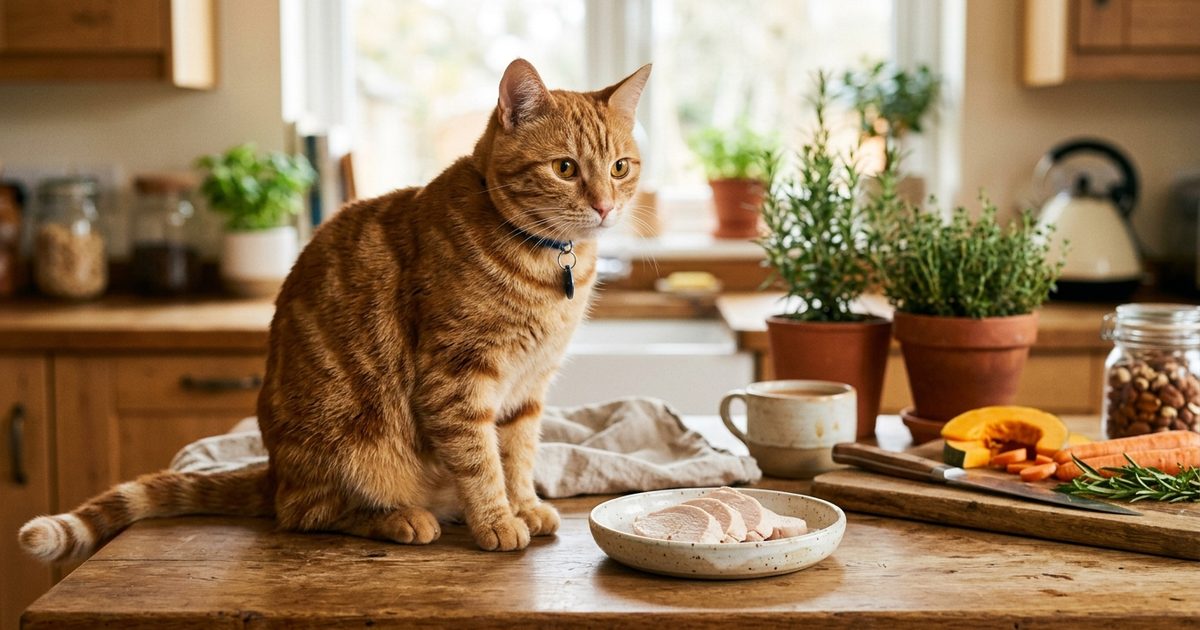
So, can cats eat turkey — and is turkey good for cats, or is it one of those human foods best kept off the menu? The short version: yes, plain cooked turkey is one of the safer foods you can share with your cat. Turkey is a lean, high-quality protein that fits a cat's obligate-carnivore biology well, and it sits in the same "safe plain poultry" family as the chicken that already forms the base of most commercial cat foods.
The catch — and there is one — is all in how the turkey is prepared. A plain baked or poached piece of breast is a legitimate treat your cat can enjoy year-round. The big roasted Thanksgiving bird with herbed butter under the skin, onion-heavy stuffing, salty gravy, and a pile of cooked bones is a very different story, and one that brings several hazards at once.
This guide breaks down exactly which forms of turkey are safe, how much your cat can eat, and where the real danger hides — so you can share confidently and keep the holidays stress-free.
Key takeaways
- Plain cooked turkey is safe and one of the better human foods you can share with a cat — lean, digestible, and biologically appropriate.
- It must be plain: no salt, seasoning, oil, skin, gravy, stuffing, or bones. Bake, steam, boil, or poach with nothing added.
- Thanksgiving and holiday turkey is a separate, more dangerous case — the festive preparation, not the meat itself, is what makes it risky.
Turkey for Cats — Quick Reference
| Turkey form | Safe for cats? | Notes |
|---|---|---|
| Plain cooked turkey breast | Yes | Leanest and safest choice; bake, steam, boil, or poach with nothing added |
| Plain cooked turkey thigh (dark meat) | Yes, in small amounts | Higher in fat and richer — fine occasionally but heavier on digestion |
| Raw turkey | Not recommended | Salmonella and Campylobacter risk; cooking is the safer default |
| Turkey with seasoning, salt, gravy, or skin | No | Sodium, fat, and often toxic alliums (onion, garlic) |
| Thanksgiving turkey with stuffing | No (as served) | Only plain meat pulled off before seasoning is safe |
| Cooked turkey bones | Never | Splinter into sharp shards that can puncture the GI tract |
Can Cats Eat Turkey?
Yes — cats can eat turkey, and plain cooked turkey is one of the safest human foods you can share. It is a lean, high-quality protein that matches a cat's obligate-carnivore biology, and it sits in the same plain-poultry family as chicken, the base of most commercial cat foods.
For a food surrounded by so much holiday anxiety, the verdict is reassuringly simple: the meat itself is fine. Cats have eaten poultry for as long as they have lived alongside humans, and turkey is close enough to chicken — biologically and nutritionally — that the same plain-cooking rules apply. The complications almost never come from the turkey. They come from everything we do to it before it reaches the table.
The short answer
Yes, plain cooked turkey is safe and genuinely beneficial for cats. It is a legitimate protein source, not just a rare holiday indulgence. If you can serve a piece of turkey that has been baked, steamed, boiled, or poached with nothing added, your cat can enjoy it. The qualification matters: "plain" is doing a lot of work in that sentence, and we cover exactly what it means in the next section.
Why turkey suits a cat
Cats are obligate carnivores — their bodies are built to run on animal protein, and turkey delivers exactly that: lean, complete protein supplying the full set of essential amino acids a cat's body cannot make on its own (taurine included), in a form that is easy to digest. Turkey breast is one of the leanest meats you can offer a cat, which makes it a gentle choice for cats watching their weight, or a bland, appetizing option when a picky or recovering appetite needs coaxing. In other words, turkey fits a cat's biology because it is the kind of food that biology was designed around. You can read more about what cats are meant to eat in our guide on what cats eat, and see how turkey compares to its close cousin in can cats eat chicken. For a veterinary view of feline nutrition and essential nutrients, the Cornell Feline Health Center and International Cat Care both publish detailed guidance on feeding cats well.
What Form of Turkey Is Safe for Cats?
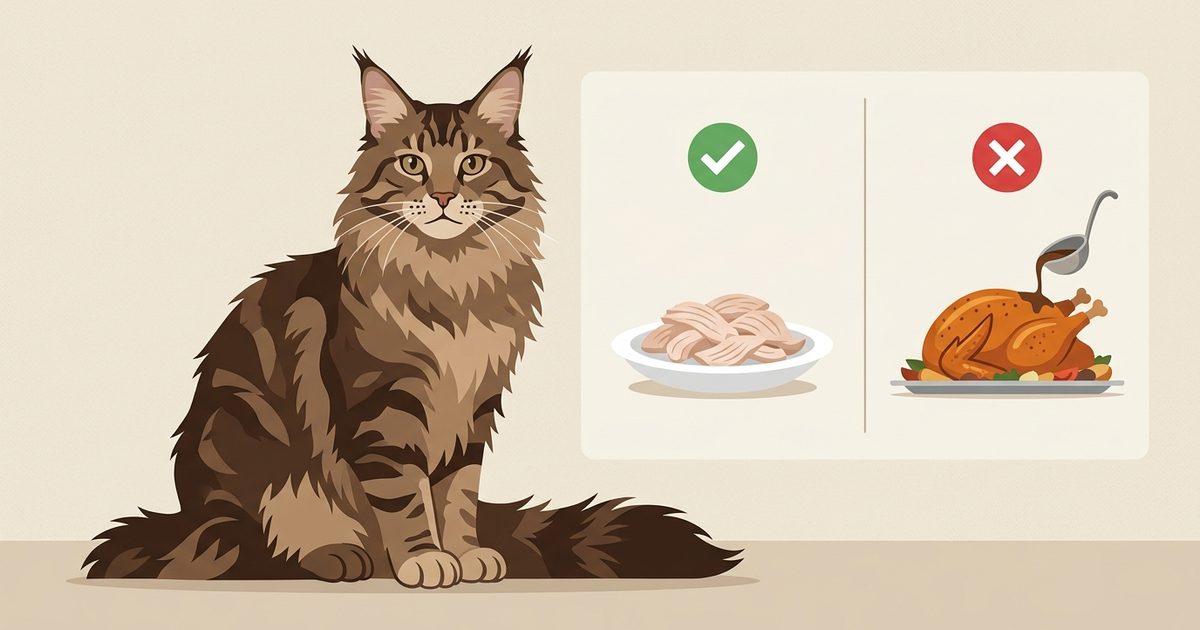
Only plain cooked turkey is safe — no salt, oil, butter, garlic, onion, herbs, skin, gravy, or stuffing. Bake, steam, boil, or poach the meat through with nothing added, then shred or dice it small and cool it. White breast meat is the leanest and safest choice; dark meat is higher in fat.
The verdict for your cat is plain, and plain means genuinely plain. A slice torn from a Thanksgiving bird that was basted, brined, or tucked under herbed butter is not the same thing as a piece of turkey you cooked for her with nothing added. The preparation — not the meat itself — is where most of the risk lives, so it is worth getting the method right.
Plain cooking methods
Cook the turkey as plainly as you can: baked, steamed, boiled, or poached, with no salt, no oil, no butter, and no seasoning of any kind. The meat must be cooked fully through — raw poultry carries Salmonella and Campylobacter, and a cat's stomach is not immune to them. Once cooked, shred or cut the meat into bite-size pieces small enough that your cat will not choke, and let it cool before serving. Always check for and remove any bone fragments before the turkey reaches her bowl. If you are also wondering whether she can have it raw, that question has its own trade-offs — it is covered in our look at whether cats can eat raw meat.
What to never add
The list of additions that turn safe turkey into a problem is long: salt, oil, butter, garlic, onion, herbs, spices, gravies, pan drippings, and any sauce. Alliums — garlic and onion in particular — are genuinely toxic to cats and can damage red blood cells even in small amounts, which is why onion-heavy stuffing and gravy are a real concern. Turkey skin is fatty and absorbs salt and seasonings during roasting, so it should come off, not go in her bowl. Fried or glazed turkey is off the table entirely. If you want the full picture on why these ingredients are dangerous, read our breakdowns on whether cats can eat garlic and cats can eat onion.
White meat vs dark meat
White breast meat is the leaner cut and the safer default for cats — lower in fat, easier on digestion, and a sensible choice if your cat is carrying extra weight or has a sensitive stomach. Dark meat from the thigh and leg is richer and higher in fat, which makes it tastier but heavier on both calories and the digestive system. Small amounts of dark meat are fine; it is not dangerous, just less ideal as the everyday choice. If your cat loves the dark meat off your plate, a little now and then is nothing to worry about — just keep the bulk of what she gets lean and white.
Is Turkey Good for Cats?
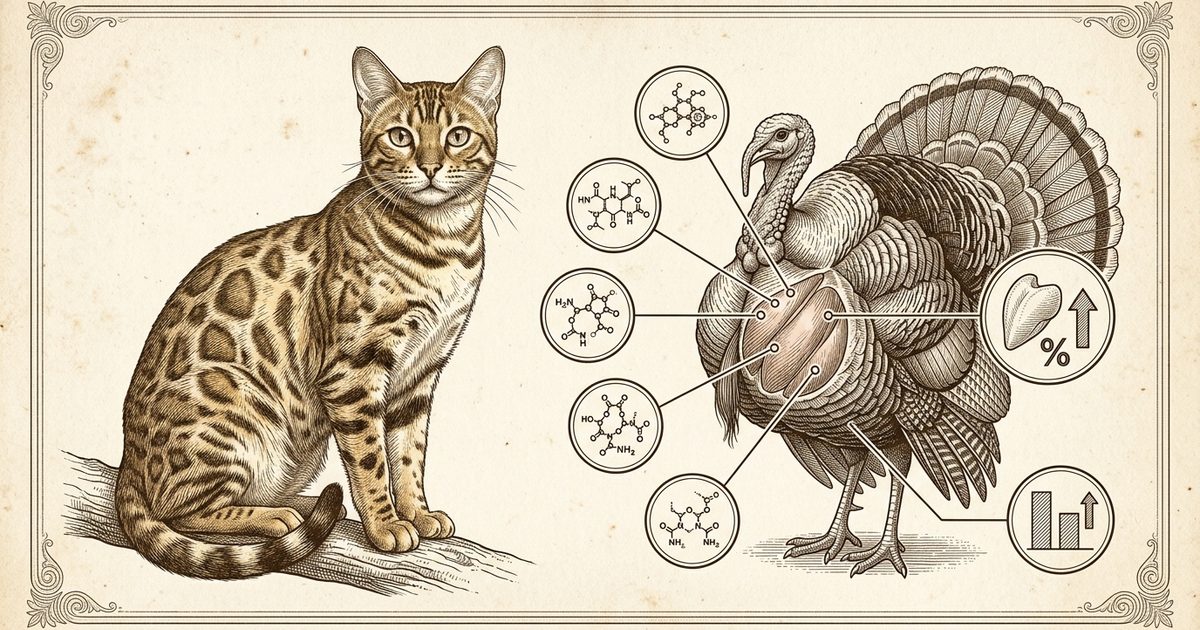
Turkey is rich in lean, high-quality protein with the amino acids a cat needs, and it is slightly leaner than chicken. It can supplement a cat's diet as a topper or treat — but turkey alone is not a complete diet and lacks enough taurine, calcium, and other micronutrients.
So is turkey good for cats? Yes — as a protein source, it genuinely earns its place. It supplies the kind of complete animal protein an obligate carnivore runs on, and it is digestible. The catch is that "good protein" and "complete diet" are not the same thing, and a piece of turkey on its own is only the first half of that story.
High-quality, leaner protein
Turkey's lean, complete-protein profile and its fit as a daily protein source are covered above under Why turkey suits a cat. For a deeper veterinary read, International Cat Care covers the broader picture of feline nutrition and essential nutrients — the principle is that protein quality matters as much as quantity, and turkey delivers on both.
Can it supplement the diet?
Because turkey is a biologically appropriate protein rather than a novelty, it can occupy a larger share of your cat's intake than treat-only foods like fish. Used as a topper over her regular food, it coaxes appetite in a cat who has gone off her meals and adds gentle variety without throwing her diet out of balance. Many commercial cat foods already include turkey as a base ingredient, which tells you the nutrition world considers it mainstream feline fuel, not an exotic extra. To see where turkey fits in the bigger picture of a cat's daily eating, our guide on what cats eat walks through the obligate-carnivore diet as a whole.
Why turkey is not a complete diet on its own
A boneless fillet of turkey, however good the protein, is not a complete meal. Muscle meat alone lacks enough taurine, calcium, vitamin A, and the other micronutrients a cat needs in the right proportions, and a turkey-only diet would eventually cause malnutrition — including the heart and eye damage linked to taurine deficiency. The reason is that cats evolved eating whole small prey: muscle, organs, bone, and all the trace nutrients that come with the entire animal. Turkey is a wonderful addition to a balanced diet, but it is an addition — never the whole thing.
How Much Turkey Can a Cat Eat?
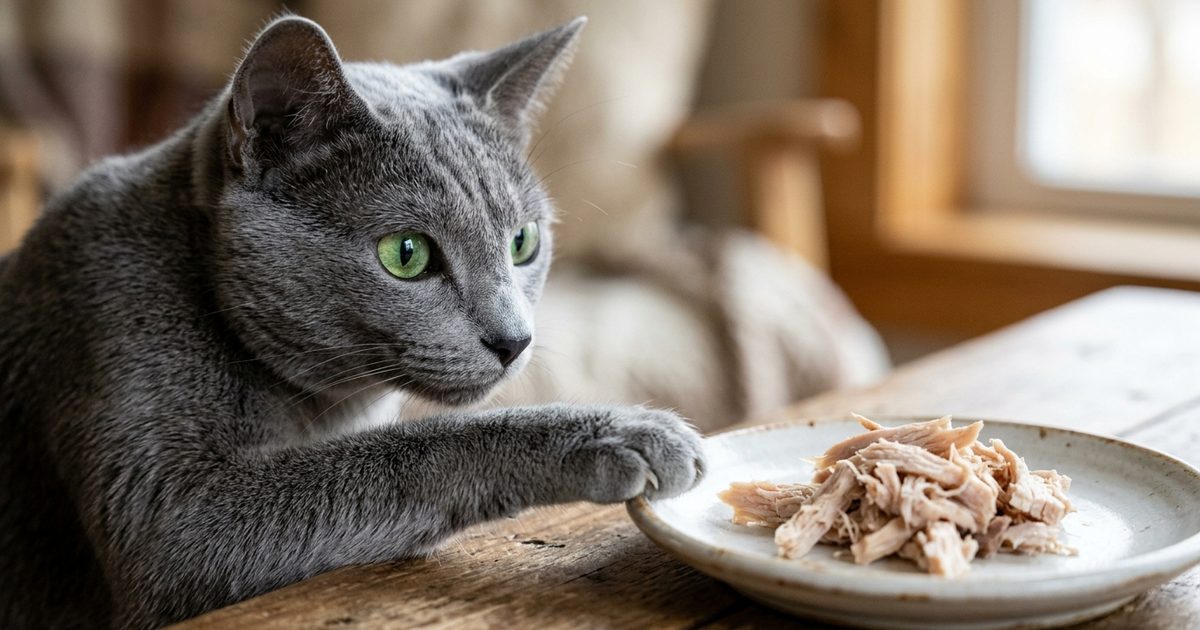
Turkey can be a larger share of your cat's food than treat-only items like fish — up to about 10% of daily calories as a topper, just like chicken. For a healthy adult cat, a tablespoon or two of shredded plain cooked turkey, a few times a week, is a sensible portion.
The portion guide
Two figures make the rule concrete. A tablespoon of plain cooked turkey breast runs only about 15–20 calories, so even a generous portion stays light. And the roughly 10% ceiling matters because every treat above it crowds out the complete, balanced nutrition in your cat's regular food. Turkey is a clean protein, not a junk treat — which is exactly why it earns a larger share than a fish-flavored nibble — but it still isn't a complete meal on its own. For context, see the same poultry-staple logic in our piece on whether cats can eat chicken, and the contrast with fish like salmon, which sits closer to the "occasional treat" end of the scale.
Kittens, seniors, and cats with conditions
Kittens are still building bone, muscle, and immune function, so they need complete growth-formula food rather than turkey on the side. For senior cats, or cats with kidney disease, food allergies, or pancreatitis, any change to the diet — even adding a lean protein — should get a vet's sign-off first. The Cornell Feline Health Center is a sound starting point on feline nutrition across life stages. Whenever you introduce turkey (or any new food), start with a small amount and watch for vomiting or diarrhea over the next day.
Can Cats Eat Thanksgiving Turkey?
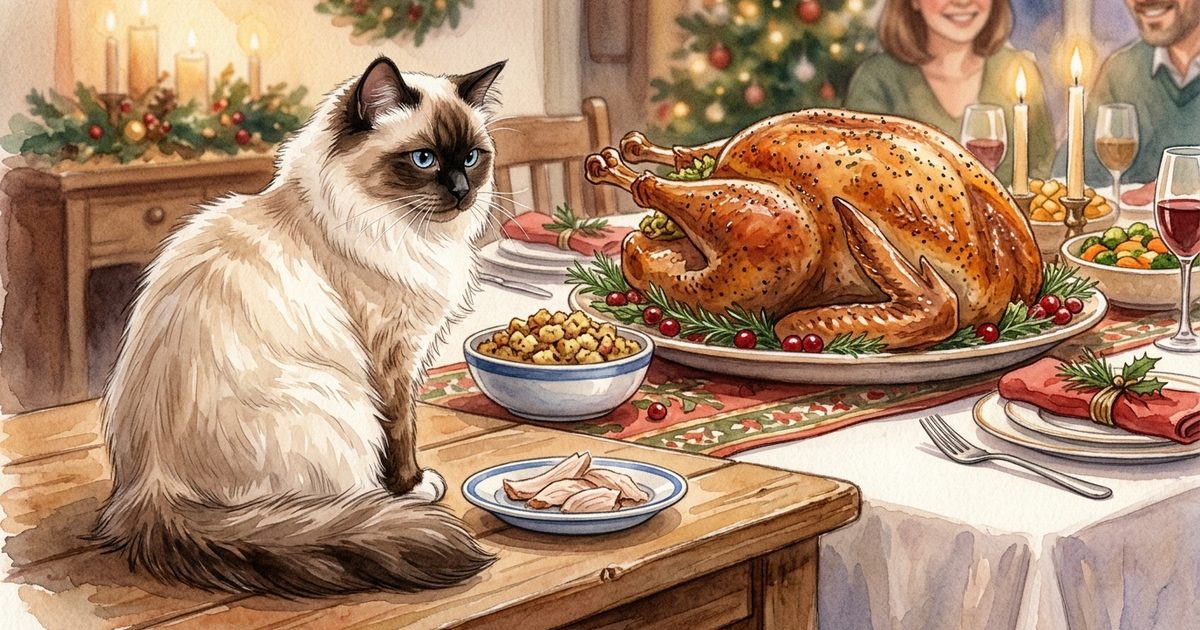
The holiday turkey on your Thanksgiving table is a different story. A roasted bird with stuffing, gravy, seasoned skin, and bones carries multiple hazards for a cat at once. Only the plain cooked meat — pulled off before any seasoning or sauce — is safe to share.
So, can cats eat Thanksgiving turkey? Yes, but only the same plain cooked meat that's safe every other day of the year. The Thanksgiving bird itself, as it's usually served, is the dangerous part.
Why the festive bird is risky
The problem isn't the turkey — it's everything a holiday bird arrives coated, stuffed, and surrounded by. A single Thanksgiving turkey can combine onion-and-celery-and-sage stuffing tucked inside the cavity, salty herb butter massaged under the skin, a gravy built from flour, fat, alliums, and concentrated sodium, a glazed or brined skin, and a pile of cooked bones. Several of those elements are outright toxic to cats. The allium family — onions and garlic — damages feline red blood cells and is one of the most common kitchen dangers for cats; you can read more in our guides on whether cats can eat onion and whether cats can eat garlic. The high sodium and fat load from butter, brine, and gravy strain a cat's kidneys and pancreas. As International Cat Care notes, many foods that are harmless to people are harmful or toxic to cats precisely because their metabolism handles sodium, fat, and certain plant compounds differently.
How to share safely at the holidays
The safe share at the holidays is identical to the safe share on any Tuesday: pull a small piece of plain cooked white meat off the bird before any seasoning, butter, stuffing, or gravy touches it. Set it aside unsalted and unseasoned, let it cool, shred it small, and offer it on its own. The holiday doesn't change the rule — it just multiplies the ways to accidentally break it. Think of the Thanksgiving turkey as a roast dressed up in things that are bad for your cat, rather than as a single safe dish.
Watch for brines and glazes
There's one more trap worth naming. Many holiday turkeys are brined (soaked in a heavy salt solution) or glazed with sugar, maple, honey, or fruit. These preparations soak into the meat, so a brined or glazed bird is not plain cooked meat even when it looks unseasoned on the surface. If you didn't cook the turkey yourself and can't confirm it's completely unseasoned, the safest call is not to share it at all.
Can Cats Eat Turkey Bones?
No — never give a cat cooked turkey bones. Cooking makes bones brittle, so they splinter into needle-sharp shards that can puncture the mouth, throat, stomach, or intestines, causing a life-threatening emergency. Raw bones are a separate, debated question, but cooked bones are firmly off limits.
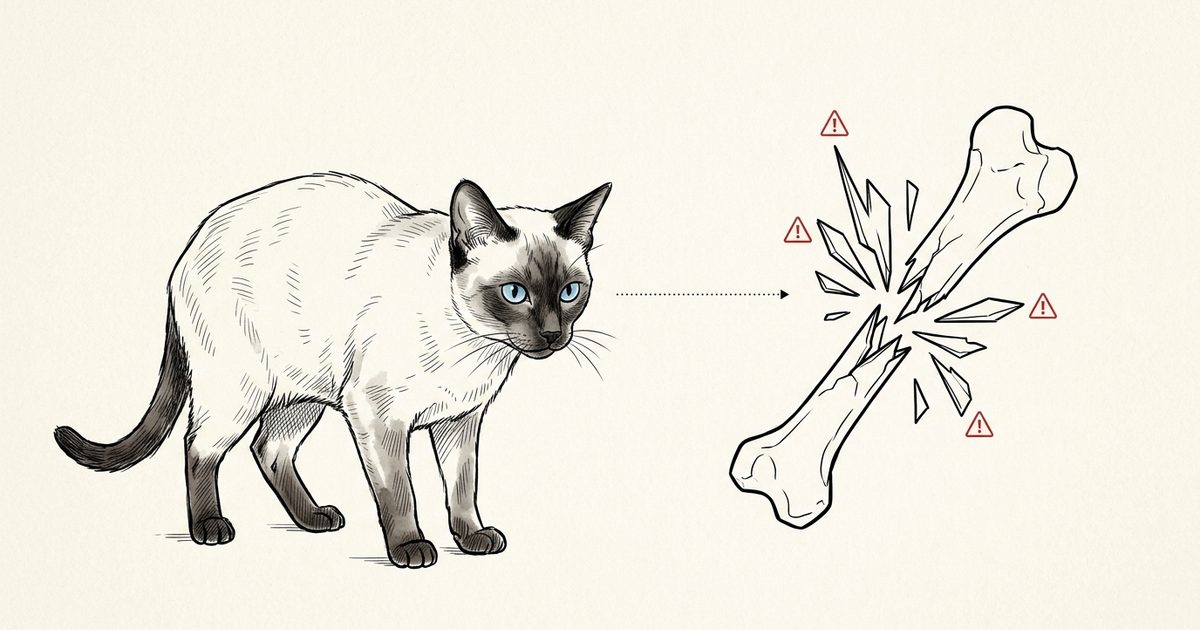
So can cats eat turkey bones? The short answer is no — not cooked ones, ever. This is one of the few hard lines in feline feeding, and it's worth understanding exactly why.
Why cooked bones are dangerous
Cooking changes the structure of a bone. Heat strips out the moisture and collagen that make raw bones slightly flexible and resilient, leaving them dry and brittle. When a cat bites into a cooked turkey bone — especially the long leg bones or the thin wishbone — it doesn't crunch cleanly. It snaps into long, needle-like splinters, and those splinters are the problem. They can lacerate the mouth or throat on the way down, puncture the stomach or intestinal wall once inside, or lodge in the throat and choke the cat. Gastrointestinal perforation and blockage from cooked poultry bones are well-documented surgical emergencies in cats.
The signs that something has gone wrong come on quickly: drooling, gagging or retching, repeated vomiting, sudden lethargy, a painful or tense abdomen, or a cat that refuses to eat. If you suspect your cat has swallowed any cooked bone, treat it as an emergency and call your vet or the nearest emergency clinic immediately — do not wait to see if it passes. The Cornell Feline Health Center is a reliable reference for recognizing feline emergencies and when to seek urgent care.
What about raw bones?
The raw-bone question is genuinely contested. Some owners who feed raw diets offer small, raw, meaty poultry bones — like a turkey neck or wing tip — for dental wear and as a natural calcium source, arguing this is closer to what a wild cat would consume. Others point to real risks: raw poultry bones can still choke a cat, and raw turkey carries bacteria like Salmonella and Campylobacter that pose a problem for both the cat and the humans handling the food. There's no single right answer here, and reasonable people land on different sides. If you're weighing raw bones for your cat, talk it through with your vet first — it should be a deliberate decision for that specific cat, not a casual hand-off from the dinner table. We cover the wider raw-feeding debate in our article on whether cats can eat raw meat.
Bones in cat food
One source of confusion: many commercial cat foods list "turkey by-product meal" or finely ground bone among their ingredients. That bone is mechanically processed into a fine, uniform meal and formulated as part of a nutritionally complete recipe — it bears no resemblance to a whole bone off your plate, and it is not a reason to hand your cat the carcass.
Turkey for Cats at a Glance — Summary
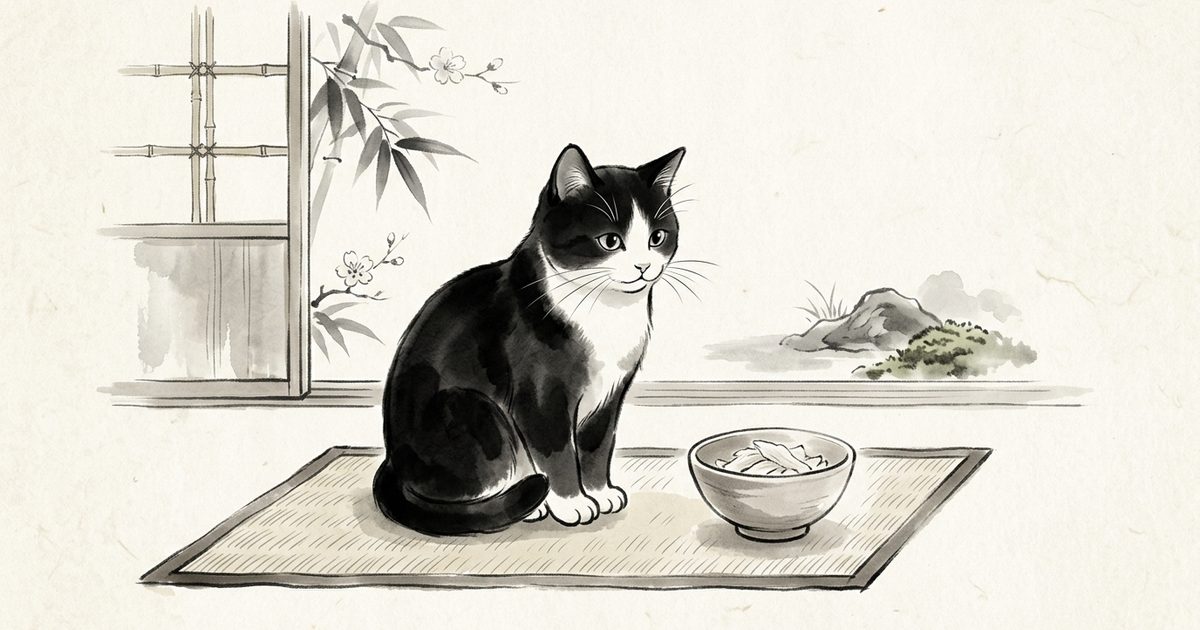
If you've read this far, you already know the shape of the answer. Turkey is a safe, lean, biologically appropriate protein for cats — as long as it stays plain, cooked, and unseasoned. The meat itself is not the risk. The preparation is. Keep the festive bird's skin, gravy, stuffing, and bones on the human plate, and the rest of the meal works fine for your cat.
For the everyday case, plain cooked turkey is one of the better human foods you can share — close in spirit to chicken, and far safer than the salty ham or processed bacon sitting beside it on the same table. It fits comfortably into a complete feline diet as a topper or treat, but it is not a diet on its own.
| Question | Short answer |
|---|---|
| Can cats eat turkey? | Yes — plain cooked turkey is safe, lean protein for cats |
| Can cats eat raw turkey? | Not recommended — raw poultry carries Salmonella and Campylobacter risk |
| Can cats eat Thanksgiving turkey? | Only plain meat pulled off before seasoning — the festive bird is a hazard |
| Can cats eat turkey bones? | No — cooked bones splinter and can puncture the digestive tract |
| Is turkey good for cats? | Yes as a supplement — lean protein, but not a complete diet alone |
| How much turkey can a cat eat? | A tablespoon or two, a few times a week (~10% of daily calories) |
| What turkey form is unsafe? | Seasoned, salted, skinned, glazed, brined, stuffed, fried, or boned |
The simplest rule, the one that holds every day of the year: plain cooked meat, nothing added, no bones. Get that right and turkey becomes a safe, generous little act of love you can share with your cat — holidays included.
Curious What Your Cat Would Say?
Upload a photo and get a warm, personalized reading from your cat's perspective.
Start Your Free ReadingFrequently Asked Questions
Can cats eat plain cooked turkey?
Yes. Plain cooked turkey — baked, steamed, boiled, or poached with nothing added — is one of the safest human foods you can share with a cat. It's lean, digestible, and biologically appropriate for an obligate carnivore.
Can cats eat Thanksgiving turkey?
Only the plain cooked meat, pulled off before any seasoning, butter, stuffing, or gravy. The festive bird as served is a composite of hazards — alliums, sodium, fat, and cooked bones — so share a small unsalted piece set aside on its own.
Can cats eat raw turkey?
It's not recommended. Domestic raw turkey can carry Salmonella and Campylobacter, which pose real risks to both cat and human. Cooking fully through is the safer default, even though wild cats eat raw prey.
Can cats eat turkey bones?
Never give a cat cooked turkey bones. Heat makes bones brittle, so they splinter into needle-sharp shards that can puncture the mouth, throat, stomach, or intestines — a life-threatening emergency. Raw bones are a separate, debated question.
Is turkey or chicken better for cats?
Both are safe, lean plain-poultry proteins, and they sit in the same family. Turkey breast is slightly leaner than chicken breast, which can help a weight-conscious cat, but neither is a complete diet on its own.
Can kittens eat turkey?
Kittens are still building bone, muscle, and immune function, so they need complete growth-formula food rather than turkey on the side. A tiny taste of plain cooked turkey won't harm a weaned kitten, but it shouldn't displace balanced meals.
Can cats eat turkey deli meat or cold cuts?
Best avoided. Deli turkey and cold cuts are typically high in sodium and often contain preservatives, flavorings, or seasonings — very different from plain home-cooked turkey, and a poor fit for a cat's kidneys.
How much turkey can I give my cat?
A tablespoon or two of shredded plain cooked turkey, a few times a week, is a sensible portion for a healthy adult cat. Keep all treats and toppers combined under about 10% of daily calories.
Sources & References
You Might Also Like
Kitten Teething: Timeline, Symptoms & How to Help
Kitten teething runs from 3 to 7 months as baby teeth fall out. Learn the timeline, signs to watch for, and how to soothe a teething kitten safely.
15 min readWhen Do Cats Stop Growing? A Complete Timeline
When do cats stop growing? Most cats reach adult size by 12-18 months, but large breeds like Maine Coons keep growing until 3-4 years. Full timeline inside.
14 min readCan Cats Eat Cherries? Flesh, Pit & Toxicity Facts
Can cats eat cherries? Pitted flesh is safe in tiny amounts — but the pit, stem, and leaves are toxic (cyanide precursors). Learn what's safe and what isn't.
15 min read