Are Succulents Toxic to Cats? Which Are Safe & Which Aren't
So the question of whether succulents are poisonous to cats doesn't have a clean yes-or-no answer — it depends on the type. If you're searching "are succulents toxic to cats," the honest reply is that some common ones are, and many others are succulents safe for cats. The same shelf can hold a toxic jade plant next to a harmless haworthia, so the species is what matters.
Key takeaways
- The answer is mixed — popular toxic succulents include jade, aloe, kalanchoe, euphorbia, and snake plant, while cat-safe ones include haworthia, echeveria, burro's tail, Christmas cactus, and hens-and-chicks.
- "Succulent" describes a water-storing form shared by many unrelated plant families, not one plant — so you have to identify the exact species before judging safety.
- If your cat chews an unknown or known-toxic succulent, identify the plant and call your vet or animal poison control rather than waiting for symptoms.
Succulents and Cats — Quick Reference
| Succulent | Toxic to cats? | Severity |
|---|---|---|
| Jade (Crassula ovata) | Yes | Mild to moderate |
| Aloe vera | Yes | Mild to moderate |
| Kalanchoe | Yes | Moderate to severe |
| Euphorbia (pencil cactus) | Yes | Moderate to severe |
| Snake plant (Sansevieria) | Yes | Mild to moderate |
| Haworthia | No | Non-toxic |
| Echeveria | No | Non-toxic |
| Christmas cactus | No | Non-toxic |
Are Succulents Toxic to Cats? The Short Answer
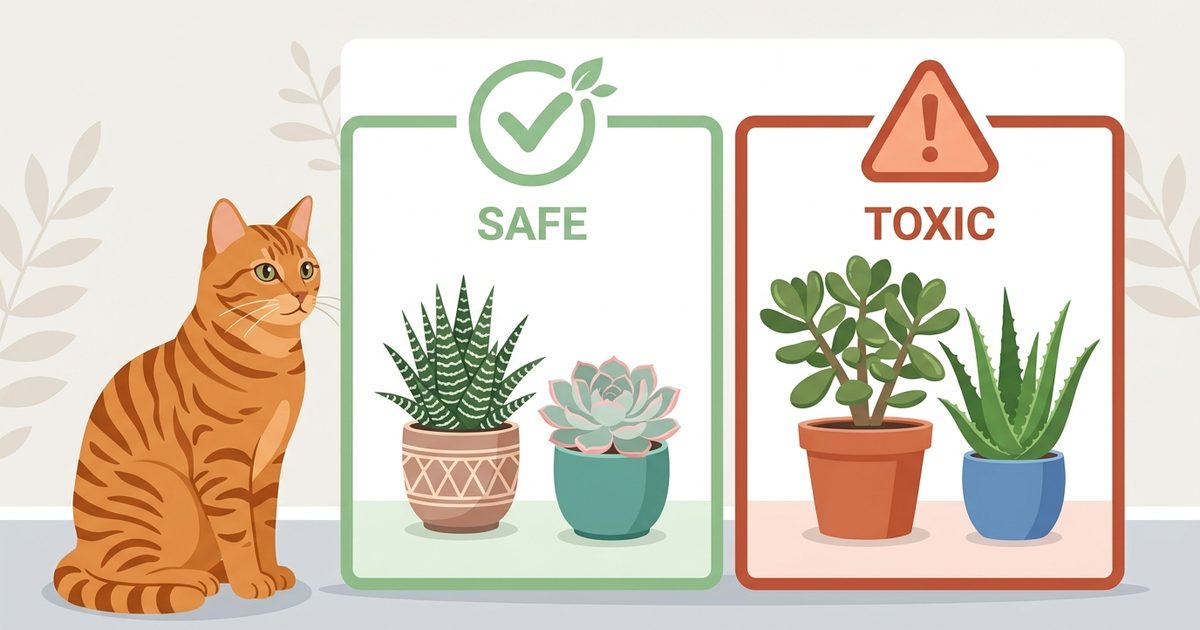
It depends on the type. Toxic succulents include jade, aloe, kalanchoe, euphorbia, and snake plant, while cat-safe ones include haworthia, echeveria, burro's tail, and Christmas cactus. Because succulent is a form, not a plant, identify the exact species to know if it is safe.
A mixed answer — it depends on the species
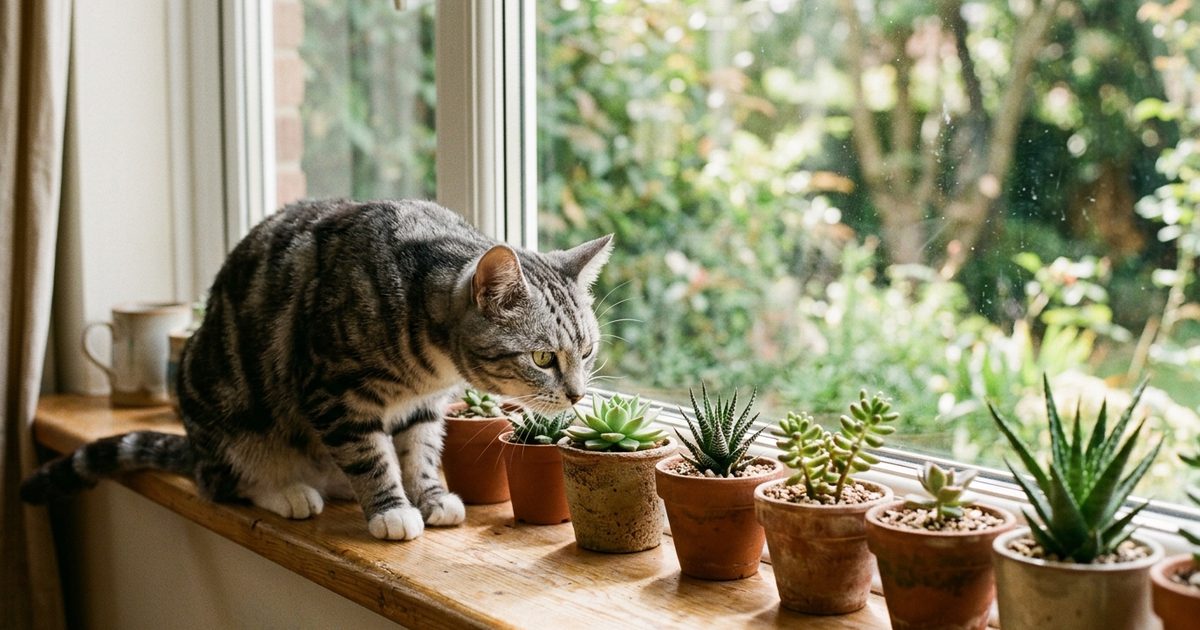
The reason there's no clean yes or no is that "succulent" describes any plant that stores water in fleshy leaves or stems to survive dry stretches, not a single plant family. That water-storing trait evolved independently across many unrelated lineages, and each arrived at water storage with completely different internal chemistry. Some evolved chemical defenses — bitter or toxic compounds that deter herbivores — and those are the succulents that can harm a cat. Others never did, and a nibble of those is essentially harmless. The full mechanism — why this form spans so many unrelated families, with examples — is laid out later in Why Succulents Are Tricky to Judge; here the takeaway is simply that a jade and a haworthia can sit side by side on the same windowsill, look equally plump and innocent, and carry opposite risk.
The quick rule of thumb
If you cannot name the exact succulent in front of your cat, assume it may be toxic until you can verify it. That single habit — treat the unknown as potentially dangerous — keeps most cats out of trouble without requiring you to memorize every species. Keep unidentified plants out of reach, and when you bring a new one home, check its label or look it up on the ASPCA toxic plant list before it goes anywhere a curious nose can reach.
For the broader picture of which houseplants are cat-safe beyond succulents, our cat-safe plants guide covers spider plants, ferns, palms, and cat grass — the full positive catalog to balance the cautions here.
Which Succulents Are Toxic to Cats?
The toxic succulents most common in homes are jade, aloe vera, kalanchoe, euphorbia like the pencil cactus, and the snake plant. Each causes different harm — GI upset, vomiting, or mouth and skin irritation — so identify which one your cat can reach and treat any chewing as a reason to call your vet.
These five show up again and again on veterinary toxic-plant lists because they're cheap, easy to grow, and sold in nearly every garden center — which means they're also the ones most likely to be sitting on a shelf a cat can reach. They don't all share one toxin; each produces a different compound that harms a cat in a different way, so the symptoms and the right response differ from plant to plant. Cornell Feline Health Center offers owner guidance on plant toxicity and when a vet call is warranted, and it's worth bookmarking alongside the ASPCA list.
Jade plant (Crassula ovata)
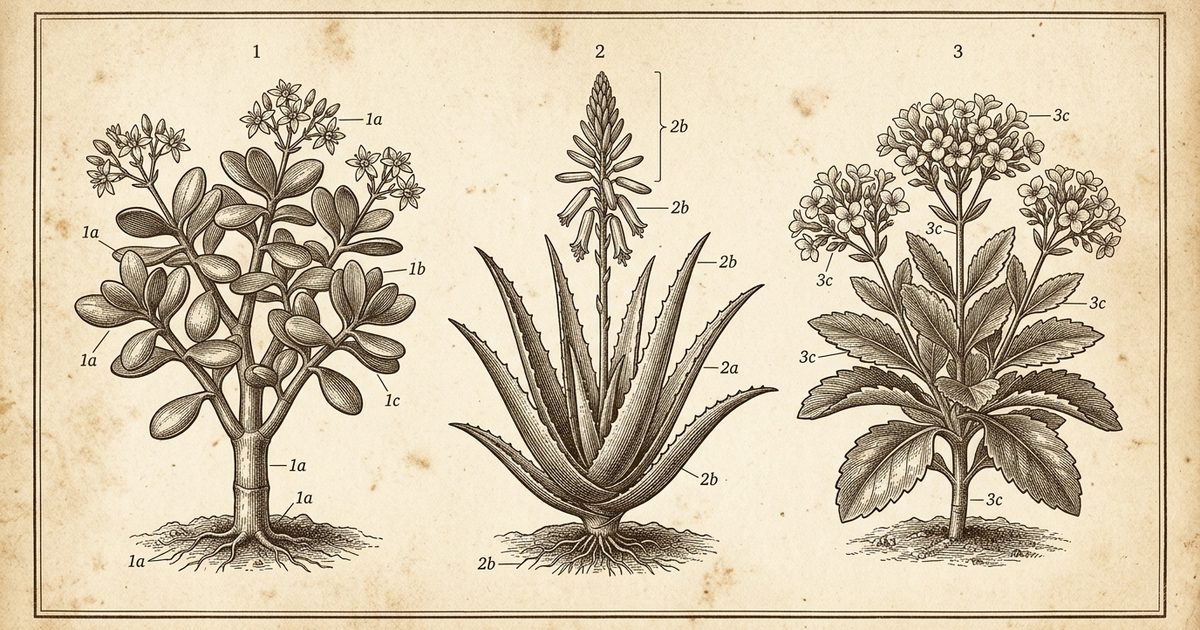
The jade plant is the archetypal succulent — glossy oval leaves on a thick trunk, sold as a "money tree" or friendship plant. It carries mild-to-moderate toxicity for cats: the classic signs are vomiting, depression or lethargy, and a wobbly, uncoordinated gait if enough is eaten. Because jades grow into small, accessible shrubs and shed leaves that drop to the floor, they're one of the more commonly chewed toxic succulents. We walk through jade's effects and what to watch for in our full are jade plants poisonous for cats explainer, so we won't re-derive the mechanism here — the short version is, treat any jade nibble as a reason to observe your cat closely and call your vet if signs appear.
Aloe vera
Aloe is the houseplant people keep for burns, and it's also toxic to cats — but the danger isn't the clear gel you'd put on your own skin. Beneath the leaf's outer skin lies a layer of yellow latex rich in saponins and anthraquinones, and a cat that bites through the whole leaf gets both. The result is vomiting, diarrhea, and lethargy, sometimes within hours. Because the gel and the latex are inseparable in an intact leaf, the whole plant is treated as toxic. For the full breakdown of aloe's compounds and symptoms, see our is aloe toxic to cats guide.
Kalanchoe
Kalanchoe is a flowering succulent sold for its long-lasting clusters of red, orange, or pink blooms, and it's one of the more serious entries on this list. Its tissues contain bufadienolides — the same family of heart-affecting compounds found in certain toads — so a cat that eats a meaningful amount can show gastrointestinal signs first (vomiting, drooling) and, in significant ingestions, potential cardiac effects. A small nibble of a leaf is usually mild, but the flowers are more concentrated, and any kalanchoe chewing warrants a prompt call to your vet or poison control rather than a wait-and-see.
Euphorbia — pencil cactus and crown of thorns
The euphorbia family, which includes the pencil cactus and crown of thorns, is dangerous in a different way from jade or aloe. These plants bleed a milky white latex sap when a leaf or stem is broken, and that sap is a severe irritant to skin, eyes, and the mouth — caustic enough to cause burning, drooling, and swelling on contact, and harmful if swallowed. The risk isn't from a quiet nibble; it's from a cat batting at a stem, snapping it, and getting sap on its paws or face. Handle euphorbias with gloves yourself, and if your cat has any contact with the sap, rinse the area and call your vet.
Snake plant (Sansevieria)
The snake plant — also sold as mother-in-law's tongue — is marketed as nearly indestructible, and that toughness is exactly why it ends up in homes with cats. Its leaves contain saponins, the same detergent-like compounds that make aloe's latex irritating, so chewing snake plant usually produces mild-to-moderate gastrointestinal upset: vomiting, drooling, nausea, and a briefly off-food cat. It's rarely severe, but it's genuinely unpleasant for the cat and not a plant to leave within reach.
Which Succulents Are Safe for Cats?
The cat-safe succulents include haworthia, echeveria, burro's tail and other sedums, Christmas cactus, and hens-and-chicks (Sempervivum). None are toxic to cats, so a curious nibble won't cause poisoning — though eating a large amount of any plant can still upset a cat's stomach from sheer fiber volume.
The good news is that a fair number of popular succulents are genuinely safe for cats, so you don't have to choose between keeping a cat and growing things. The five below are the most common, verified options, and each is listed as non-toxic by the ASPCA, the trusted toxic and non-toxic plant database. As long as you choose these, a curious sniff or small nibble on the windowsill is a harmless little episode rather than an emergency.
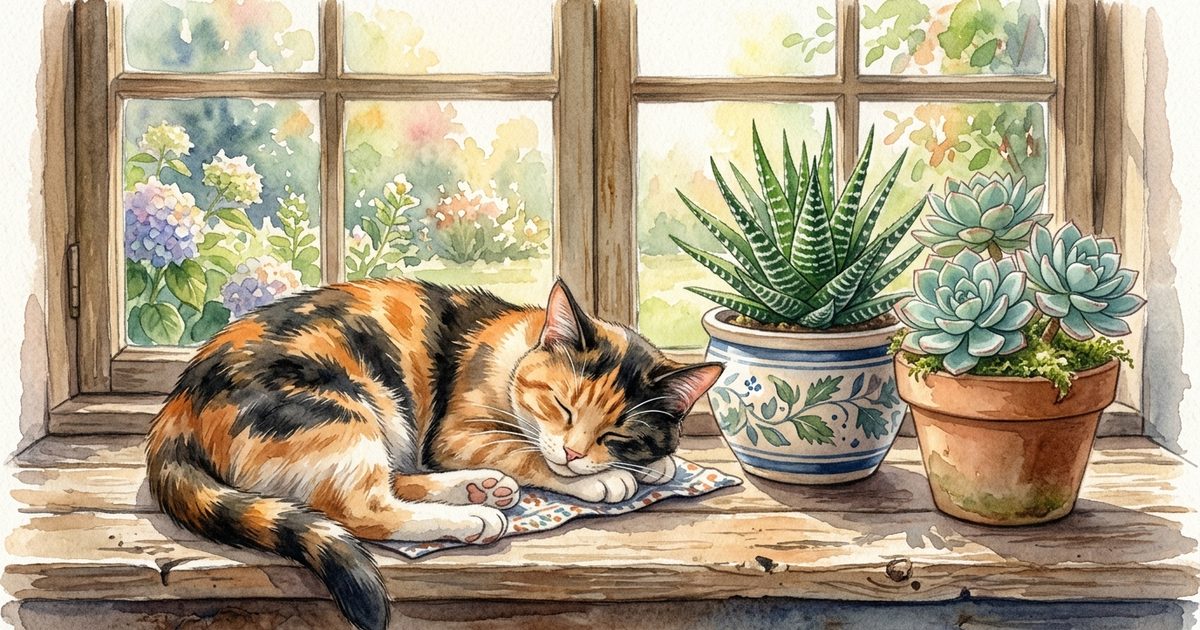
Haworthia
Haworthia is a small, compact rosette of thick, fleshy leaves marked with distinctive white stripes. They look tough but feel surprisingly soft — no spines, just texture. They're one of the safest succulents you can grow, fully non-toxic per the ASPCA, and they're often a great starting point for new growers who also keep cats.
Echeveria
Echeveria is the classic soft rosette with waxy leaves in pastel blues, greens, and pinks. They're non-toxic and easy to grow, which is why they're everywhere. One practical caveat: echeveria rosettes look very similar to some toxic Euphorbia species, so if there's no label, identify it before bringing it home — shape is not a reliable guide, as we explain later in this article.
Burro's tail and sedum
Burro's tail (Sedum morganianum) grows dense, trailing stems of plump gray-green leaves, perfect for a high shelf or hanging basket where it can trail safely out of a cat's curious reach. It's non-toxic, like most common sedums, which makes trailing varieties a great choice when you want something both attractive and safe.
Christmas cactus (Schlumbergera)
Christmas cactus is a holiday-blooming plant with flat, segmented stems that usually turn pink or red in late winter. It is non-toxic to cats per the ASPCA. Two points of clarification: it is not a true cactus (it grows in forests, not deserts), and despite the similar name, it is entirely unrelated to the truly dangerous Easter lily, which is highly toxic to cats. Do not confuse the two.
Hens-and-chicks (Sempervivum)
Hens-and-chicks is a hardy rosette succulent that produces small offsets around the mother plant, non-toxic and adaptable. It grows equally well in a windowsill pot and an outdoor rock garden, so if you want a plant a cat might sniff but won't be harmed by, this is a sturdy, low-maintenance choice.
For a complete list of non-toxic houseplants that covers spider plants, ferns, palms, and more, see our broader cat-safe plants catalog.
Why Succulents Are Tricky to Judge
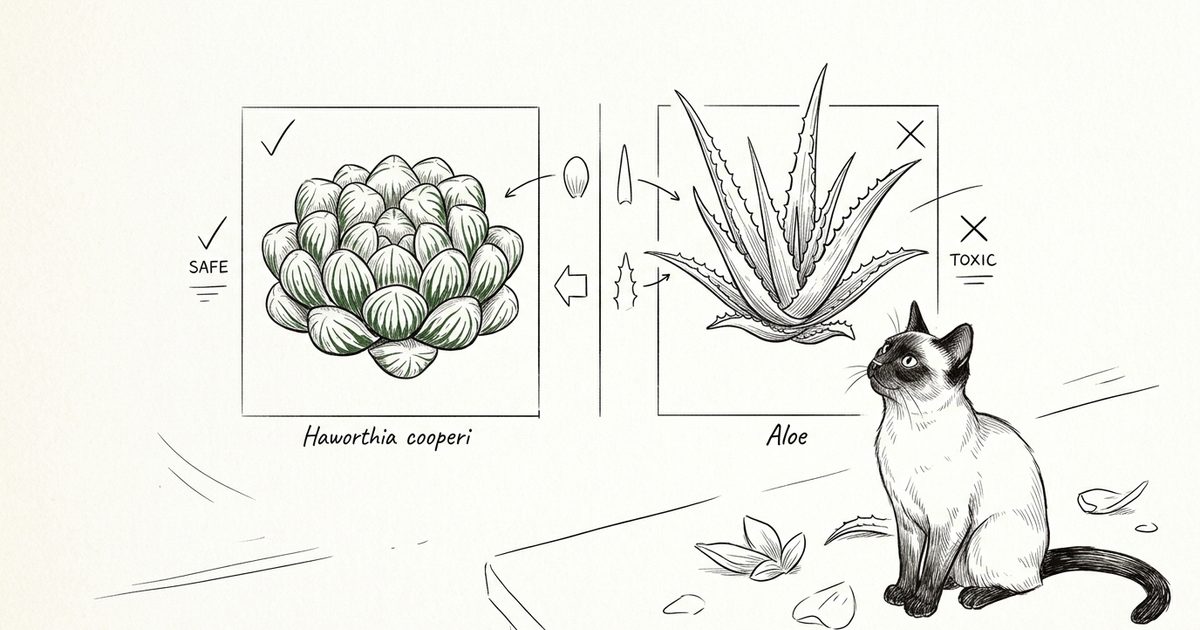
"Succulent" is a form, not a species — a plant that stores water in fleshy leaves. That group spans many unrelated plant families with completely different chemistry, and many succulents look nearly identical from the outside. Judging by shape alone is unreliable: identify the exact plant to know if it is safe.
To understand why the answer always comes back to "it depends," it helps to know what the botanical term actually covers. Here is why the danger genuinely depends on the species, and why visual identification alone fails.
'Succulent' describes a form, not a family
"Succulent" describes a trait — the ability to store water in leaves, stems, or roots — rather than a single plant family. That water-storing characteristic evolved independently across multiple unrelated plant lineages: Crassulaceae (echeveria, hens-and-chicks, sedums), Asphodelaceae (aloe), Euphorbiaceae (pencil cactus, crown of thorns), Cactaceae (true cacti), and Asparagaceae (snake plant). Because these lineages arrived at water storage separately over long stretches of time, their chemistry has nothing to do with one another — some developed chemical defenses (toxins), and some did not. The same fleshy look masks completely different internal chemistry, which is why there is no single universal answer.
Look-alikes fool the eye
This is where owners get caught out. A tight, spiky rosette could be haworthia (safe) or a small aloe (toxic) — the shapes are nearly identical at a glance. A trailing succulent could be burro's tail (safe) or string-of-pearls, a Senecio species that is toxic to cats. Even the ASPCA database, the standard reference for toxic and non-toxic plants, lists safe and toxic species side by side within the same general look. The practical rule: when the exact species is unknown, treat the plant as potentially toxic and keep it out of reach until you can identify it.
What Should I Do If My Cat Eats a Succulent?
First, identify the exact plant your cat ate — a photo or the pot label helps. If it is toxic or you cannot identify it, call your vet or animal poison control right away; do not wait for symptoms or try home remedies. Bring a sample to the clinic.
Identify the plant first
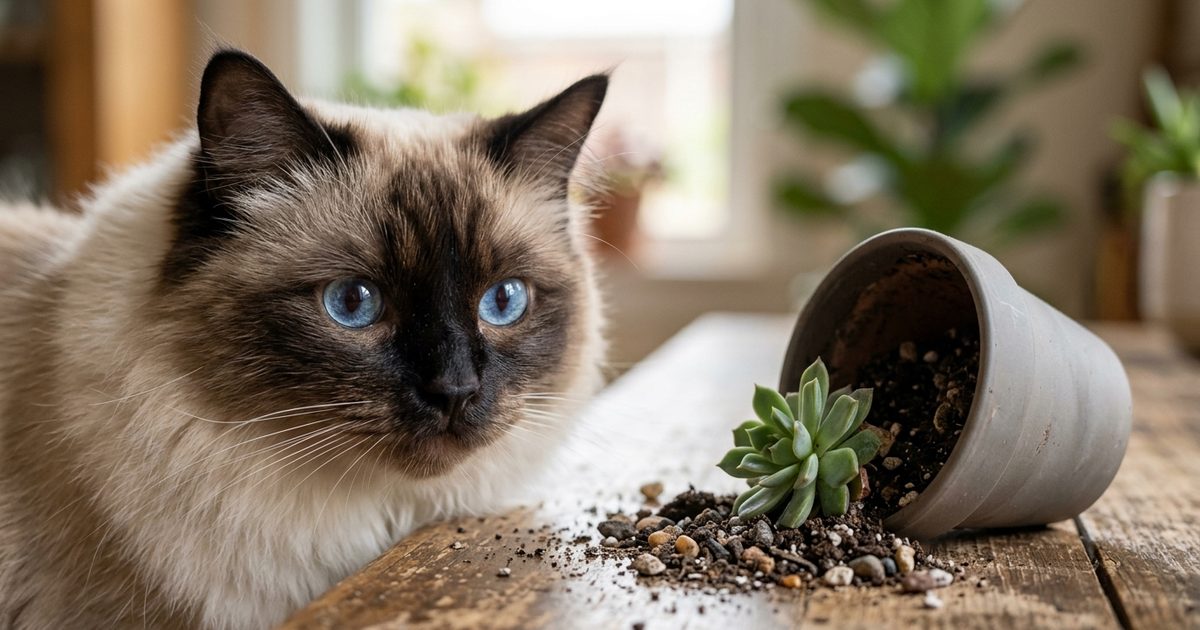
This is the single most useful step, and it is exactly why knowing the species matters so much. Before you panic, figure out what your cat actually chewed: check the pot label, the original receipt, a plant-identification app, or a clear photo. Knowing the exact plant turns a frightening moment into a decision — a nibble of haworthia is a non-event, while a nibble of kalanchoe or euphorbia sap warrants a vet call. As we saw above, succulents span unrelated plant families with different chemistry, so "it ate a succulent" is not enough information to act on. One quick identification can tell you whether this is an emergency or nothing at all.
Call the vet or poison control
If the plant is toxic, or you cannot identify it, call immediately — do not wait for symptoms to appear, because some effects take hours to show and early guidance matters. In the US, the ASPCA Animal Poison Control Center (888) 426-4435 is staffed around the clock, or call your own vet. What you should not do is just as important: do not induce vomiting, do not give milk, and do not try home remedies unless a veterinarian specifically tells you to. Well-meant interventions can sometimes make things worse, so let a professional guide the next step.
Watch for symptoms
While you wait for guidance, keep an eye on your cat. Mild signs include a single bout of vomiting, drooling, lethargy, or a drop in appetite — unpleasant but usually manageable. Severe signs are different in kind, not degree: repeated vomiting, collapse, tremors, or difficulty breathing all mean immediate veterinary attention. If you notice any of the severe signs, do not wait for a callback — head straight to the clinic.
How to Keep Cats Safe Around Succulents
Identify every plant in your home, move any toxic succulents out of reach, and use hanging planters or closed rooms for the dangerous ones. Offer cat grass as a sanctioned chewing outlet, and keep the safe succulents where curiosity lands without risk. When unsure, assume it is toxic until verified.
Identify every plant you own
Start with a full audit of your collection. Go pot by pot, confirm the species, and label each one — a piece of tape and a marker is enough. This is the foundation everything else rests on, because you cannot protect your cat against a plant you have not identified. If a succulent came without a label and you are unsure what it is, treat it as potentially toxic until you can verify it against a trusted source like the ASPCA plant list.
Move toxic ones out of reach
Once you know which are dangerous, physically separate them from your cat. A high shelf is not automatically cat-proof — cats climb — so choose genuinely inaccessible spots: a hanging planter well off any launching surface, or a room the cat cannot enter. Then do the reverse: put your safe succulents in the spots your cat can reach, so curiosity lands on something harmless.
Offer a safe alternative
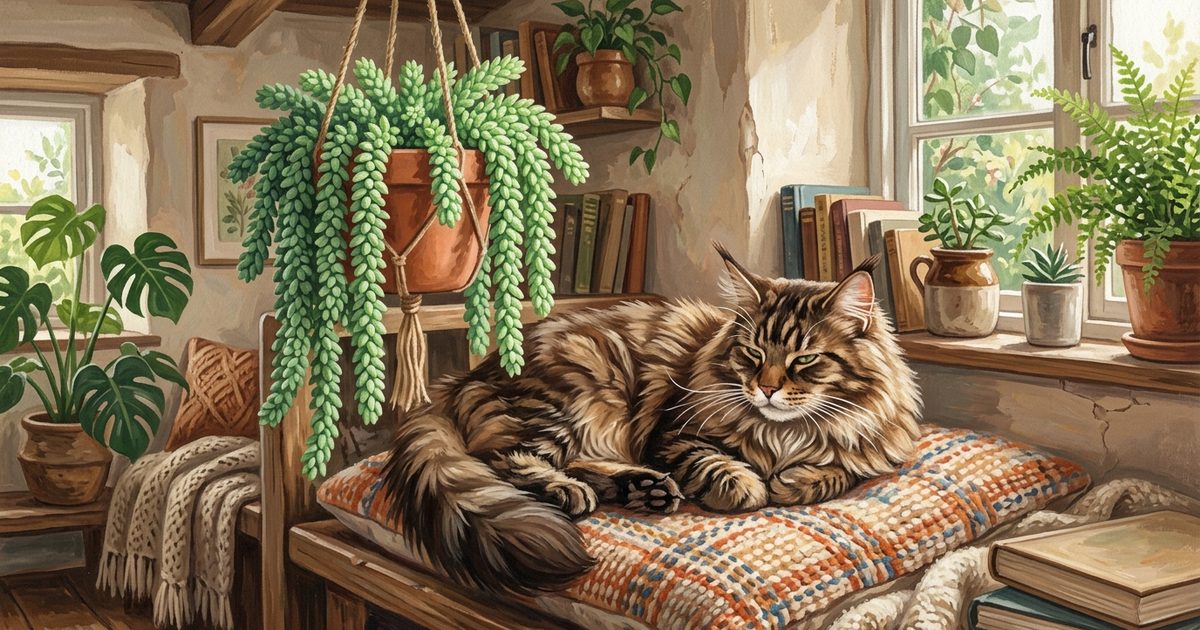
Cats chew plants partly out of instinct, so give that instinct somewhere to go. A shallow tray of cat grass — typically oat, wheat, or barley seedlings — offers a sanctioned outlet that draws attention away from your succulents. It will not stop every nibble, but it meaningfully reduces the pull toward your other plants. For the full list of cat-safe houseplants and cat-grass guidance, see our broader safe-plant catalog.
Succulents and Cats — Quick Summary
| Question | Short answer |
|---|---|
| Are succulents overall toxic to cats? | It depends on the species — the answer is mixed, not a single yes or no. |
| Which succulents are toxic to cats? | Jade, aloe, kalanchoe, euphorbia (pencil cactus, crown of thorns), and snake plant. |
| Which succulents are safe for cats? | Haworthia, echeveria, burro's tail and other sedums, Christmas cactus, and hens-and-chicks. |
| Why is the answer mixed? | "Succulent" describes a water-storing form spanning many unrelated plant families with different chemistry. |
| What is the most dangerous succulent? | Euphorbia's caustic sap and kalanchoe's cardiac potential both warrant an immediate vet call. |
| What should I do if my cat eats one? | Identify the exact plant, then call your vet or animal poison control right away. |
| How do I keep my cat safe? | Identify every plant, move toxic ones out of reach, and offer cat grass as a safe outlet. |
| What is a safe alternative plant? | A tray of cat grass, or a cat-safe succulent like haworthia. |
Curious What Your Cat Would Say?
Upload a photo and get a warm, personalized reading from your cat's perspective.
Start Your Free ReadingFrequently Asked Questions
Are all succulents toxic to cats?
No. Many common succulents are non-toxic per the ASPCA, including haworthia, echeveria, burro's tail, Christmas cactus, and hens-and-chicks. The danger is species-specific, not universal, so each plant must be checked individually before it goes within a cat's reach.
Which succulents are safe for cats?
The reliably cat-safe succulents are haworthia, echeveria, burro's tail and other sedums, Christmas cactus, and hens-and-chicks (Sempervivum). All are listed as non-toxic by the ASPCA, so a curious nibble won't cause poisoning, though a large amount of any plant can still upset the stomach.
Is the jade plant toxic to cats?
Yes. The jade plant (Crassula ovata) carries mild-to-moderate toxicity for cats, with typical signs of vomiting, lethargy or depression, and an uncoordinated gait if enough is eaten. Any jade nibble warrants close observation and a vet call if symptoms appear.
Is aloe vera toxic to cats?
Yes. Beneath aloe's leaf skin lies a layer of yellow latex rich in saponins and anthraquinones, and a cat that bites through the whole leaf can develop vomiting, diarrhea, and lethargy. Because the gel and latex are inseparable in an intact leaf, the whole plant is treated as toxic.
Is the snake plant safe for cats?
No. The snake plant (Sansevieria) contains saponins that cause mild-to-moderate gastrointestinal upset in cats, including vomiting, drooling, nausea, and a temporary loss of appetite. It's rarely severe but is genuinely unpleasant and should be kept out of reach.
Is haworthia safe for cats?
Yes. Haworthia is one of the safest succulents you can grow, listed as non-toxic by the ASPCA. Its small, compact rosettes of plump, white-striped leaves carry no chemical defenses that can harm a cat, so a nibble is a harmless non-event.
What happens if my cat eats a succulent?
It depends entirely on the species. A nibble of haworthia or echeveria is harmless, while kalanchoe or euphorbia sap can cause vomiting, drooling, mouth irritation, or in serious cases cardiac effects. Identification, not the size of the nibble, determines the risk.
What should I do if my cat ate part of a succulent?
First, identify the exact plant from a photo, label, or app. If it's toxic or you can't identify it, call your vet or the ASPCA Animal Poison Control Center at (888) 426-4435 right away. Do not induce vomiting or try home remedies unless a vet instructs you to.
Why is it hard to tell if a succulent is toxic just by looking?
Because 'succulent' describes a water-storing form that evolved independently across many unrelated plant families with completely different chemistry. A tight rosette could be safe haworthia or toxic aloe, and a trailing succulent could be safe burro's tail or toxic string-of-pearls, so you must identify the exact species.
Sources & References
You Might Also Like
Kitten Teething: Timeline, Symptoms & How to Help
Kitten teething runs from 3 to 7 months as baby teeth fall out. Learn the timeline, signs to watch for, and how to soothe a teething kitten safely.
15 min readWhen Do Cats Stop Growing? A Complete Timeline
When do cats stop growing? Most cats reach adult size by 12-18 months, but large breeds like Maine Coons keep growing until 3-4 years. Full timeline inside.
14 min readCan Cats Eat Cherries? Flesh, Pit & Toxicity Facts
Can cats eat cherries? Pitted flesh is safe in tiny amounts — but the pit, stem, and leaves are toxic (cyanide precursors). Learn what's safe and what isn't.
15 min read