Are Jade Plants Poisonous to Cats? Symptoms & What to Do
Are jade plants toxic to cats? Yes — and if you're asking because your cat just took a bite, that single question matters more than any other on this page. The jade plant (Crassula ovata) is genuinely toxic to cats, so "are jade plants poisonous to cats" and "jade plant toxic to cats" both have the same answer: yes, remove the plant and pay attention.
The good news, before the worry sets in: jade poisoning is usually mild to moderate, not a lily-scale emergency. Most cats recover fully with watchful care and a timely vet call. This is a plant to take seriously, not to panic over — and that distinction is exactly what this article is built to give you clearly, so you know what to do in the next hour rather than scrolling through conflicting lists.
Key takeaways
- Jade plant (Crassula ovata) is toxic to cats — the ASPCA lists it as toxic, and all parts of the plant are poisonous.
- The exact toxin is still unknown, but symptoms are usually mild to moderate — vomiting, lethargy, depression, and incoordination.
- If your cat chews or eats jade, remove the plant and watch closely — call your vet for guidance, because even "mild" poisoning warrants a professional check.
Jade Plants and Cats — Quick Reference
| Question | Short answer | Action |
|---|---|---|
| Are jade plants poisonous to cats? | Yes — toxic (ASPCA-listed), all parts | Remove from cat's reach |
| What are the symptoms? | Vomiting, lethargy, depression, incoordination | Monitor closely for hours |
| Why is jade such a common issue? | Popular, cheap, placed at cat height | Rethink low placement |
| Are other succulents safe? | Mixed — aloe is toxic; haworthia and echeveria are safe | Check each species individually |
| What if my cat eats jade? | Usually mild, but the toxin is unknown | Call your vet or poison control |
| Are there safe alternatives? | Yes — haworthia, echeveria, burro's tail, Christmas cactus | Swap jade for a non-toxic succulent |
Are Jade Plants Poisonous to Cats? The Short Answer
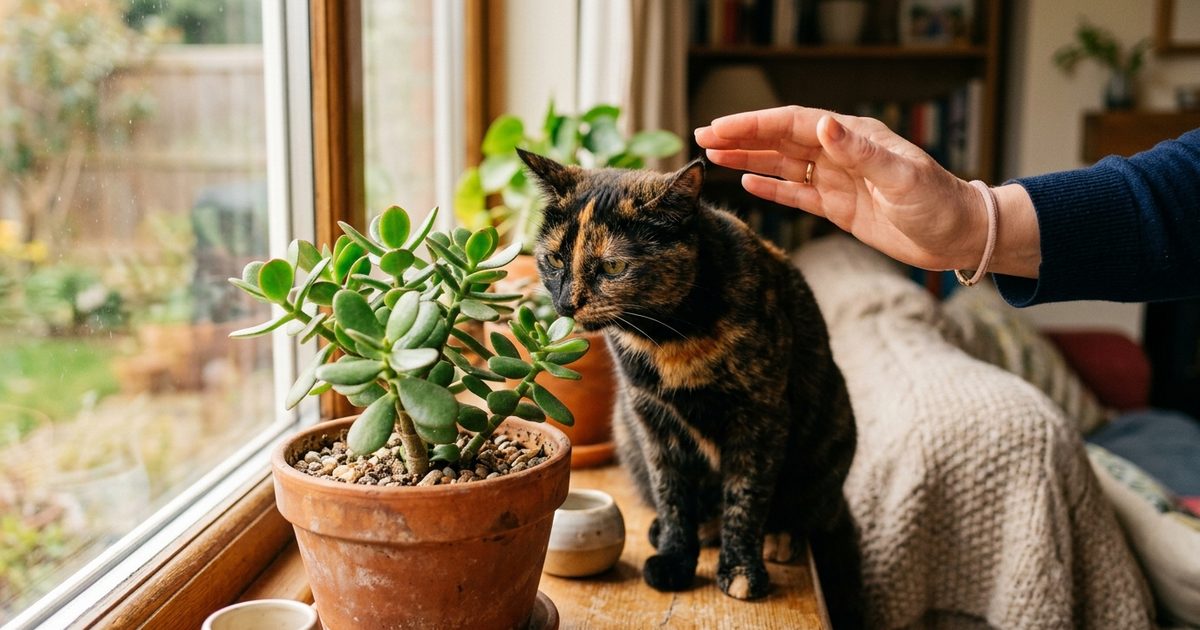
Yes. Jade plants (Crassula ovata) are toxic to cats — the ASPCA lists jade as poisonous, and all parts of the plant are toxic, though the exact toxin remains unknown. Most cases are mild to moderate, but jade is never a safe houseplant for a cat that chews greenery.
Yes — jade is toxic to cats
The authoritative answer comes straight from the ASPCA's toxic plant database: jade plant — listed under Crassula ovata and the synonym Crassula argentea, and commonly sold as "money plant" or "lucky plant" — appears on the toxic list for cats, with clinical signs of vomiting, depression, and incoordination. You can confirm this directly on the ASPCA Toxic and Non-Toxic Plants list, the reference vets themselves work from.
It's worth being precise about one uncertainty: the specific compound that makes jade poisonous has not been definitively identified. Saponins and other plant metabolites are suspected, but researchers have not confirmed a single toxin — so any source that tells you "it's the saponins" as settled fact is overstepping the evidence. What is settled is that the plant tissue itself, across leaves, stem, and roots, is toxic to cats. The unknown-toxin caveat is a reason to err on the side of caution, not a reason to doubt the toxicity.
Usually mild — but not always
Here is the part that calms the panic without dismissing the risk. Jade poisoning in cats is typically mild to moderate: a bout of vomiting, a stretch of unusual low energy, sometimes a wobbly or unsteady gait that resolves as the plant works its way out of the system. Most cats recover fully with supportive care and time. Serious cases are uncommon.
But "usually mild" is not "harmless," and that gap matters. Rare severe reactions have been reported, and because the toxin is unidentified and individual cats react variably, no ingestion should be brushed off as automatically fine. The useful contrast is with lilies: lilies are a lethal emergency that can cause acute kidney failure within hours, and a cat that has chewed one must be rushed to a vet immediately. Jade is not that. Jade is a vet-call plant — you pick up the phone, describe what happened, and follow professional guidance — rather than a panic-and-rush plant. So to the related search, "is jade plant safe for cats": no, it is not safe, but it is also not a catastrophe in most cases. International Cat Care likewise classifies jade among the houseplants cat owners should remove or place out of reach rather than treat as benign decor.
What Are the Symptoms of Jade Plant Poisoning in Cats?
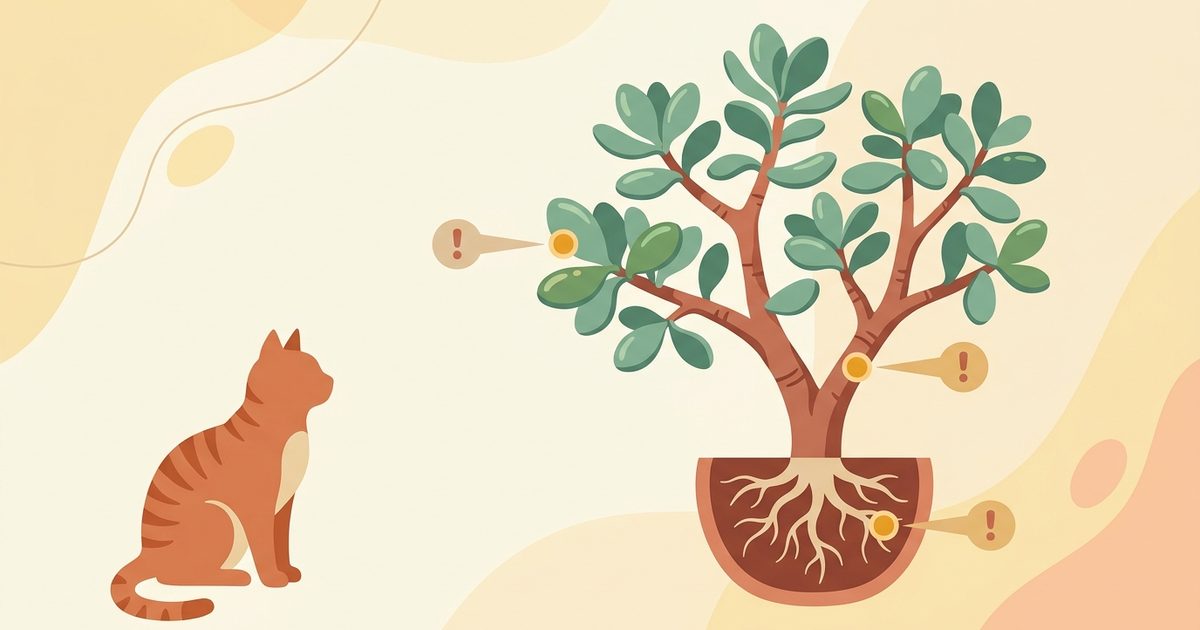
Jade plant poisoning in cats most often causes vomiting, lethargy, depression, and an uncoordinated gait (ataxia), sometimes with drooling or appetite loss. Symptoms usually begin within hours and are typically mild to moderate; severe effects are rare, but any symptom after jade is eaten warrants a vet call.
Common symptoms
The signs to watch for are gastrointestinal and neurological, and they tend to arrive together. Vomiting is usually the first and most frequent sign — your cat may bring up plant materials or foam. Lethargy and depression show up as a noticeable drop in your cat's normal energy and responsiveness: she's quieter than usual, less interested in interaction, slower to react. Here "depression" means a real, observable flattening of behavior — not a sad mood. Incoordination, or ataxia, is a wobbly, unsteady walk; she may stumble, misjudge jumps, or stand with her legs braced wide. Drooling and a reduced appetite round out the picture. None of these is unique to jade, but the cluster — vomiting plus low energy plus an unsteady gait — is a recognizable fingerprint.
Timeline and severity
Symptoms most often appear within hours of the chewing or eating, not days later. The good news is that most cats recover fully with supportive care and time. Severity tends to scale with how much was ingested — a single exploratory nibble is usually lighter than a real meal of leaves — but it isn't always predictable. Individual cats react differently, so the amount eaten is a guide, not a guarantee. A small exposure can still produce clear symptoms in one cat and barely any in another, which is exactly why even a little jade warrants attention rather than dismissal.
When it is more serious
A case pushes past "mild" when the symptoms don't settle — repeated vomiting, a depression that doesn't lift over hours, prolonged incoordination, or refusing food and water for an extended period. Rare reports of more severe reactions do exist, so watchful monitoring matters. If your cat is vomiting and you want to understand what that sign means in the broader vomiting workup, that guide covers causes and when to worry — we won't re-derive it here. For authoritative guidance on plant toxicity and these signs, the Cornell Feline Health Center and the ASPCA Animal Poison Control Center are the right first stops.
Why Are Jade Plants a Common Issue for Cats?
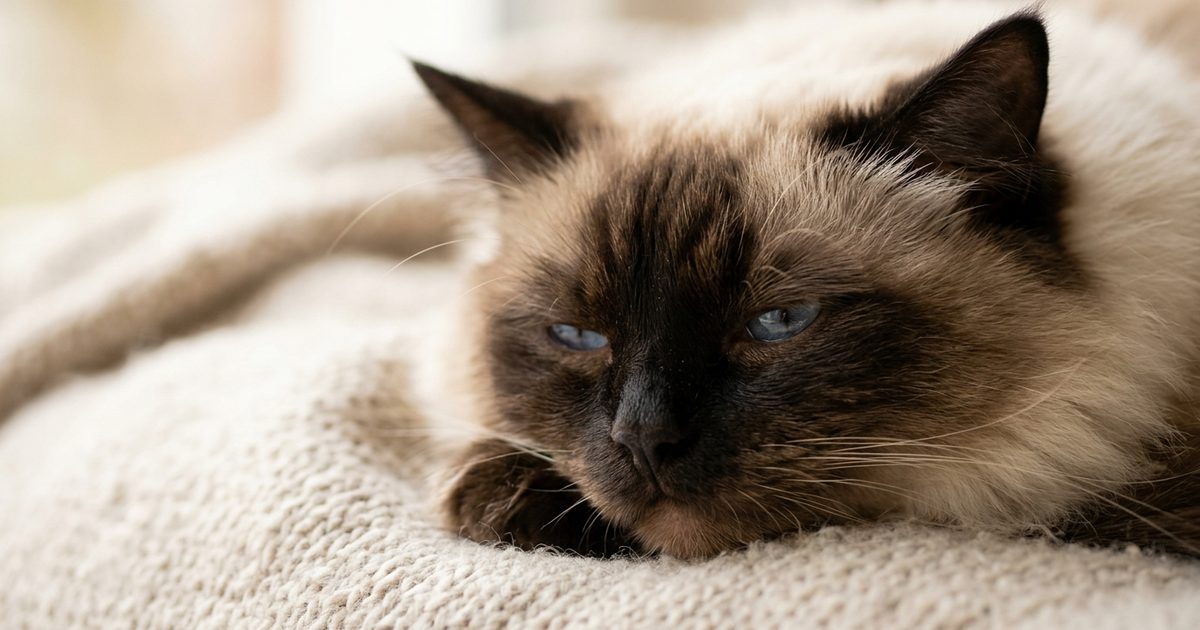
Jade is one of the world's most popular houseplant succulents — cheap, easy to keep, and usually placed on low windowsills and shelves cats can reach. Cats investigate plants with their mouths, and jade's thick, fleshy leaves invite exactly the kind of curious bite that makes it show up so often in vet calls.
The most popular succulent in homes
Jade (Crassula ovata) is everywhere. It's sold from garden centres to supermarket plant sections, given as gifts under the names "money plant" or "lucky plant," and recommended to beginners as practically indestructible — the houseplant you can't kill. That ubiquity is precisely why so many cat owners ask about crassula ovata cats and jade plant safety: the plant is in millions of homes, including millions of cat-owning households. The exposure scale is the point. A plant this common is a common poison risk by simple arithmetic — not because jade is unusually dangerous, but because it's unusually present. The more homes it lives in, the more cats it meets.
Accessible placement + curious cats
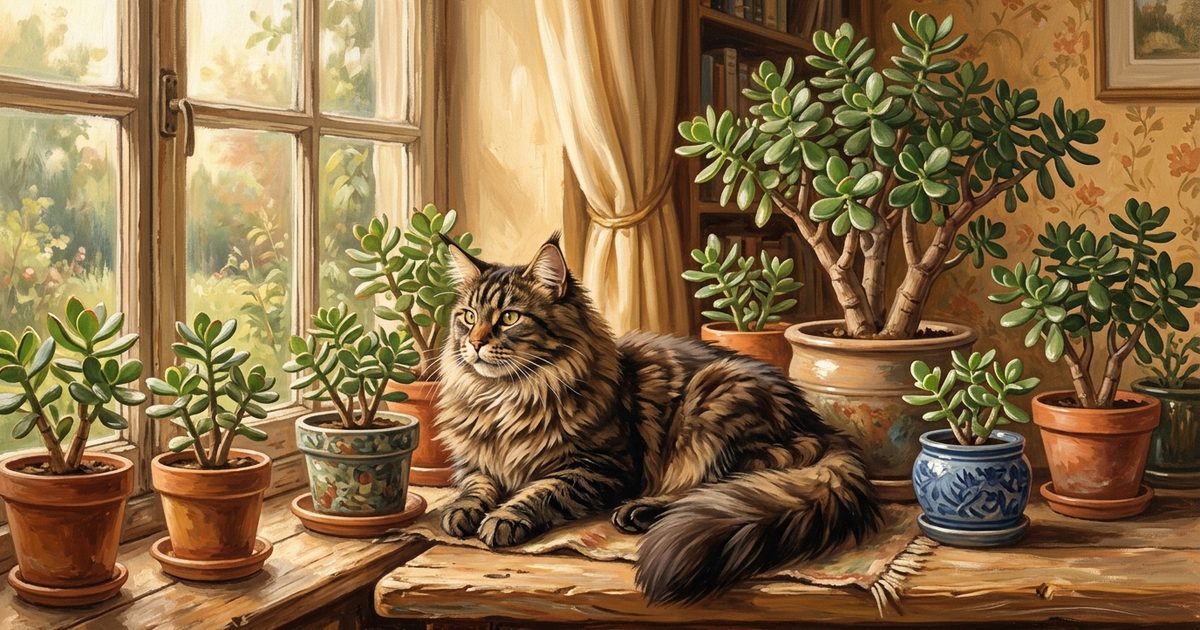
The other half of the recipe is reachability. Jade is typically a small, tabletop- or sill-sized plant, and it's usually placed exactly where cats can investigate — windowsills, low shelves, desks, plant stands at paw height. Cats explore novelty with their mouths, and jade's plump, rubbery, glossy leaves invite exactly the kind of inquisitive bite a cat can't resist. A plant that is simultaneously everywhere and within easy reach is the structural reason jade shows up so often in exposure reports. For the broader pattern of which succulents carry this kind of risk, see our overview of whether succulents are toxic to cats — jade is the most common face of it, but it isn't the only one.
Jade vs. Other Succulents & What to Do If Eaten
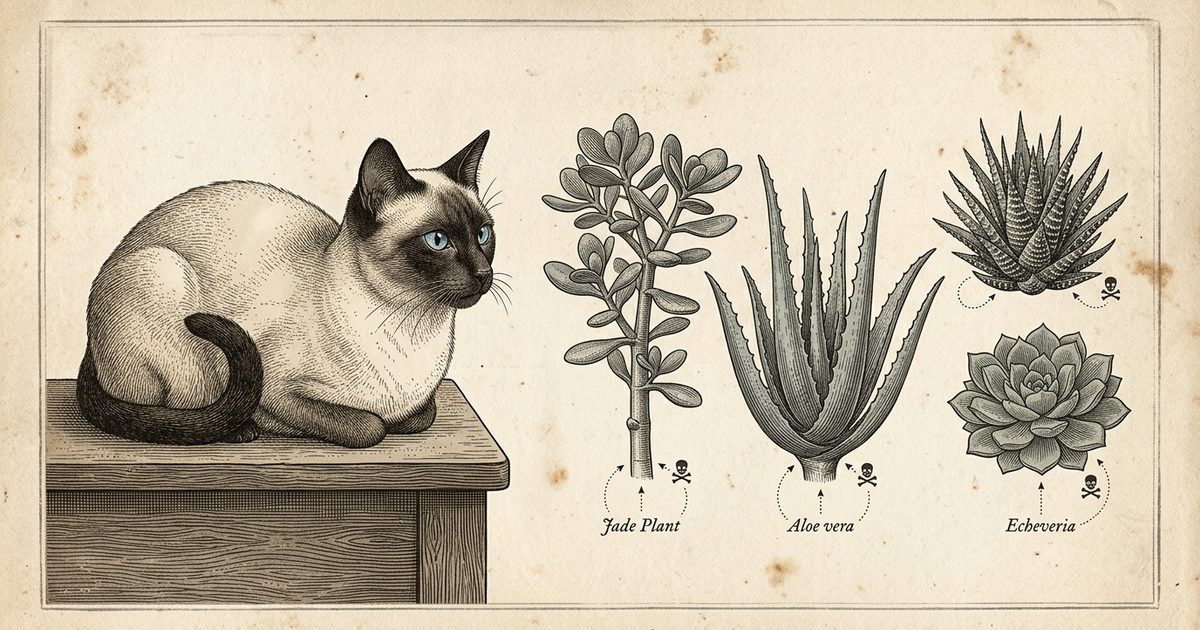
Yes and no — not all succulents are toxic, and jade sits in the confusing middle. Jade and aloe are both toxic to cats, but safe succulents do exist: haworthia, echeveria, and burro's tail are ASPCA-confirmed non-toxic. Never assume "succulent" means "safe" — check each species individually.
When people ask whether jade plants are toxic to cats, the underlying question is often broader: are succulents, as a group, safe? The honest answer is that "succulent" describes a plant's shape and water-storage habit — not its chemistry. Some are toxic, some are completely benign, and jade is one of the common ones that falls on the wrong side for cats.
Jade and aloe — both toxic
Jade (Crassula ovata) and aloe (Aloe vera) are the two most common toxic succulents cat owners run into. They share the same risky profile: popular, fleshy-leaved, and usually placed low where cats can reach them. But they differ in how they affect a cat. Aloe tends to produce a more gastrointestinal, diarrheal reaction, while jade leans toward depression and an unsteady gait — two distinct symptom patterns for two plants owners often confuse. You can read more about the comparison in our aloe toxicity guide. The shared lesson is simple: popularity has never meant safety.
Safe succulents exist too
Here is the reassuring half of the picture. Haworthia, echeveria, burro's tail (Sedum morganianum), and Christmas cactus are all ASPCA-confirmed non-toxic to cats — meaning a genuinely cat-safe succulent collection is entirely possible. The point of laying them beside jade is that "succulent" is not a toxicity category. The family contains both poison and safety, and the difference comes down to the species, not the look. For the full catalog, see our cat-safe plants list and the broader succulent toxicity overview.
The "succulents are safe" myth
There is a persistent assumption — held by many owners and even repeated on some lists — that succulents are harmless because they "look benign." Jade and aloe both disprove this. The safe generalization is to verify each species against the ASPCA toxic and non-toxic plant list before bringing it home, and never judge a plant's safety by its appearance.
What Should I Do If My Cat Eats a Jade Plant?
Remove the plant, check your cat's mouth for leftover leaves, and note how much was eaten. Then call your vet or ASPCA Animal Poison Control — most jade ingestions are mild, but because the toxin is unknown and reactions vary, a professional call is the right move. Watch for vomiting, lethargy, or an unsteady gait.
Finding a nibbled jade leaf is alarming, but it is also one of the most common calls vets take about houseplants. The response is less about panic and more about a calm, specific sequence of steps that gives your vet the information needed to advise you quickly.
Immediate steps
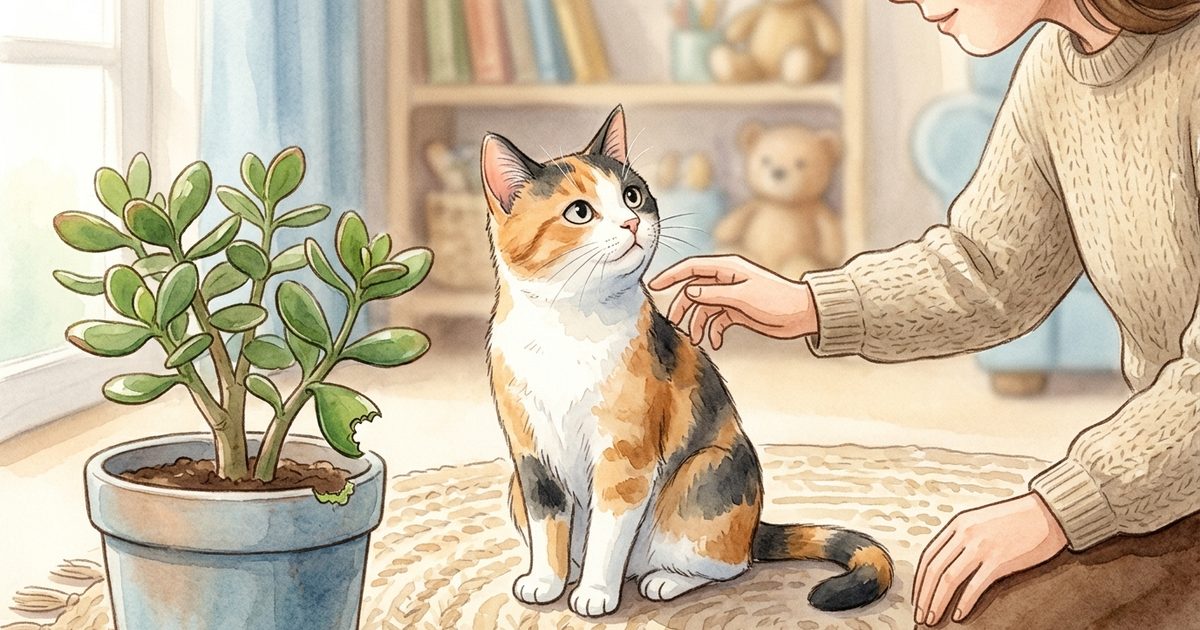
Move the jade out of your cat's reach immediately, so no more can be eaten. Gently open your cat's mouth and remove any plant material still inside — bits of leaf left in the cheek or stuck to the palate keep exposing your cat to the toxin. Do not induce vomiting unless a vet specifically tells you to; with jade, forcing vomiting is rarely helpful and can make things worse. Then gather the details that matter: roughly when it happened, an estimate of how much was eaten, and a clear photo of the plant. If you are unsure whether the plant is actually jade, the photo lets the vet or poison control confirm the species fast.
When to call the vet
Any ingestion of jade warrants at least a phone call to your vet or the ASPCA Animal Poison Control Center at (888) 426-4435 — even if your cat seems completely fine. Because the toxin in jade has not been identified and symptoms can develop over several hours, a cat that looks well at first is not necessarily in the clear. The Cornell Feline Health Center and International Cat Care both advise treating suspected plant ingestion as a call-first situation.
What turns a phone call into a vet visit? Repeated vomiting, a marked depression that does not lift, genuine incoordination, or a cat that refuses food and water. If you notice any of those — or simple gut-level unease about how your cat looks — err toward bringing them in. The cost of a needless check is small; the cost of waiting on a real reaction is not.
What Succulents Are Safe for Cats Instead?
If you want succulents that are genuinely safe around a cat, choose ASPCA-confirmed non-toxic species: haworthia, echeveria, burro's tail, and Christmas cactus. They give you the same fleshy, sculptural look as jade without the poisoning risk, and they let you and your cat share the home without worry.
Cat-safe succulent picks
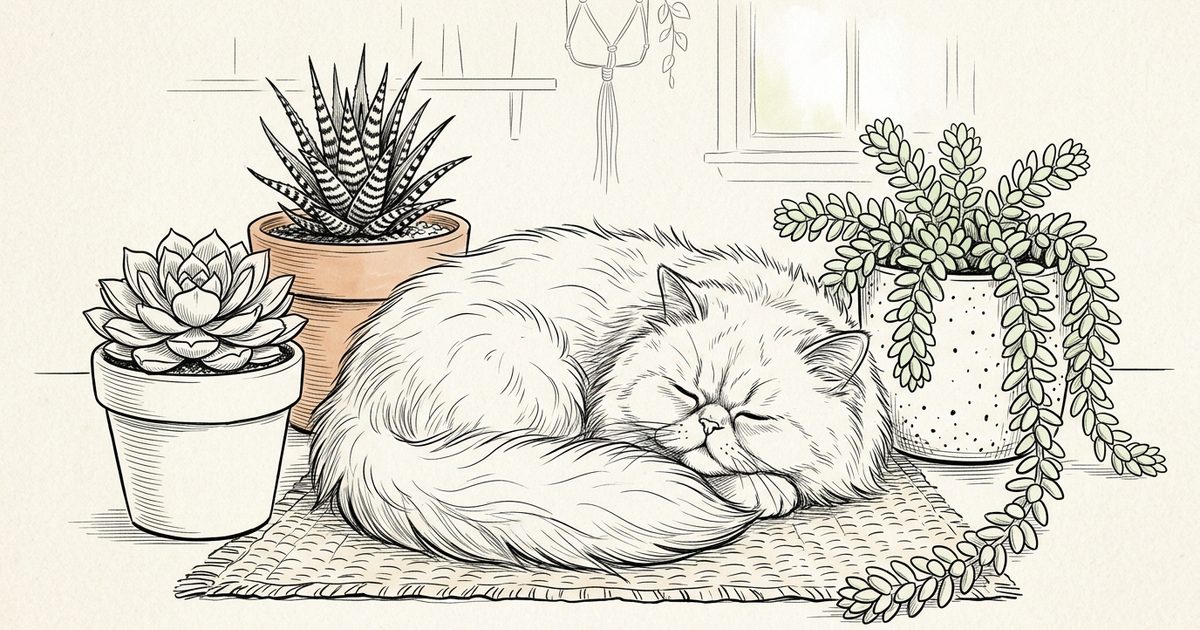
Haworthia is the standout: small, striped, and so jade-adjacent in its plump, structured look that most owners can swap jade for haworthia and barely notice the difference — except that their cat is now safe. Echeveria is the rosette-forming favourite, widely available in garden centres and almost decorator-pretty on a sill. Burro's tail (Sedum morganianum) trails in fat, beaded strands that belong in a hanging pot — conveniently out of a cat's reach anyway. And Christmas cactus brings a seasonal burst of colour while staying on the ASPCA's non-toxic list. Each of these is confirmed safe, so "succulent" stops being a gamble. For the full catalogue of cat-friendly houseplants, see our cat-safe plants list.
Placement habits that protect both
Choosing a safe species is only half the solution — where you put the plant still matters. Hanging pots, high shelves, and a dedicated "cat-free" plant zone all reduce both chewing and the risk of a heavy pot being knocked over onto a paw or a tail. Even a non-toxic plant can cause a mild stomach upset if a cat eats enough of it, and a toppled pot is a physical hazard regardless of species. Choosing safe plants and placing them thoughtfully is the durable answer — the same point we make in the broader are succulents toxic to cats overview. The ASPCA's toxic and non-toxic plants list is the reference to check before bringing any new plant home.
Jade Plants and Cats — Quick Summary
| Question | Short answer |
|---|---|
| Are jade plants poisonous to cats? | Yes — the ASPCA lists jade (Crassula ovata) as toxic, and all parts of the plant are poisonous |
| What is the toxic compound? | Unknown — the specific toxin has not been identified, though saponins and other compounds are suspected |
| What are the symptoms? | Vomiting, lethargy, depression, and an uncoordinated gait (ataxia); sometimes drooling or appetite loss |
| Why is jade a common issue? | It's one of the most popular houseplant succulents, cheap and usually placed at cat height on windowsills |
| Are other succulents safe? | Some are — haworthia, echeveria, burro's tail, and Christmas cactus are ASPCA-confirmed non-toxic |
| What if my cat eats jade? | Remove the plant, check the mouth, note how much was eaten, and call your vet or ASPCA Poison Control |
| What are the safe alternatives? | Swap jade for haworthia or echeveria, and place all plants thoughtfully — high shelves or hanging pots |
Curious What Your Cat Would Say?
Upload a photo and get a warm, personalized reading from your cat's perspective.
Start Your Free ReadingFrequently Asked Questions
Are jade plants toxic to cats?
Yes. The ASPCA lists jade (Crassula ovata, also sold as money plant or lucky plant) as toxic to cats, and all parts of the plant are poisonous. The exact toxin has not been definitively identified, but symptoms usually appear within hours of a cat chewing on it.
What happens if a cat eats a jade plant?
Most cats develop mild to moderate symptoms — vomiting, low energy, and an unsteady gait — that resolve with supportive care and time. Serious reactions are uncommon, but because the toxin is unidentified and each cat reacts differently, any amount eaten warrants a call to your vet or ASPCA Poison Control.
What are the symptoms of jade plant poisoning in cats?
The typical signs are vomiting (often first), lethargy and a noticeable depression, an uncoordinated or wobbly walk called ataxia, sometimes drooling and a reduced appetite. They usually arrive together within hours of the chewing and form a recognizable cluster worth watching for.
What is the toxic compound in jade plants?
The specific compound has not been confirmed. Saponins and other plant metabolites are suspected, but researchers have not identified a single toxin, so any source claiming certainty is overstepping the evidence. What is settled is that the plant tissue itself is toxic to cats.
Are all succulents toxic to cats?
No. Succulent describes a plant's shape and water-storage habit, not its chemistry, so the family contains both poison and safety. Jade and aloe are toxic, while haworthia, echeveria, burro's tail, and Christmas cactus are ASPCA-confirmed non-toxic — each species must be checked individually.
Which succulents are safe for cats?
Haworthia, echeveria, burro's tail (Sedum morganianum), and Christmas cactus are all ASPCA-confirmed non-toxic to cats. Haworthia in particular looks remarkably jade-like, so most owners can swap jade for it and keep the same fleshy, sculptural look without the risk.
What should I do if my cat chews a jade leaf?
Move the plant out of reach, gently check your cat's mouth for leftover leaf bits, and note roughly how much was eaten and when. Then call your vet or ASPCA Animal Poison Control at (888) 426-4435 — most cases are mild, but a professional call is the right move even if your cat looks fine.
Is jade plant poisoning fatal to cats?
Fatal outcomes are rare. Jade is a vet-call plant rather than a panic-and-rush emergency like lilies, which can cause acute kidney failure within hours. Most cats recover fully with watchful care and timely guidance, but any ingestion still warrants monitoring and a professional check.
Sources & References
You Might Also Like
Kitten Teething: Timeline, Symptoms & How to Help
Kitten teething runs from 3 to 7 months as baby teeth fall out. Learn the timeline, signs to watch for, and how to soothe a teething kitten safely.
15 min readWhen Do Cats Stop Growing? A Complete Timeline
When do cats stop growing? Most cats reach adult size by 12-18 months, but large breeds like Maine Coons keep growing until 3-4 years. Full timeline inside.
14 min readCan Cats Eat Cherries? Flesh, Pit & Toxicity Facts
Can cats eat cherries? Pitted flesh is safe in tiny amounts — but the pit, stem, and leaves are toxic (cyanide precursors). Learn what's safe and what isn't.
15 min read