Can Cats Eat Pumpkin? The Safe, Vet-Backed Digestive Boost
So, can cats eat pumpkin? Yes — plain cooked pumpkin is one of the few human foods vets genuinely welcome for cats, and using pumpkin for cats as a gentle digestive aid is a well-trodden home practice. If you've ever wondered is pumpkin good for cats, the honest answer is that in small amounts it's safe, palatable, and quietly useful — especially for the messy middle of digestion. Cats are obligate carnivores, so they don't need plant matter, but this particular squash is a rare, beneficial exception rather than a treat to fear.
Key takeaways
- Plain cooked pumpkin or 100% pure canned pumpkin puree is safe and beneficial in small amounts — a supplement, not a meal.
- Its soluble fiber is unusual because it helps both diarrhea (adding bulk) and constipation (softening stool).
- Never use pumpkin pie filling (added sugar and spices like nutmeg), don't feed raw pumpkin as a staple, keep portions to roughly 1–4 teaspoons, and don't treat it as a replacement for complete cat food.
Can Cats Eat Pumpkin — Quick Reference
| Question | Short answer |
|---|---|
| Can cats eat pumpkin? | Yes — plain cooked pumpkin is safe and vet-recommended in small amounts |
| Which forms are safe? | Plain cooked or 100% pure canned pumpkin puree (one ingredient: pumpkin) |
| How much can I give? | Start with ½–1 tsp; up to about 1–4 tsp daily for an average adult cat |
| What are the benefits? | Digestive regularity, mild hairball help, and light satiety for weight plans |
| What are the cautions? | Too much can cause diarrhea; it's not nutritionally complete; stop if issues persist |
| Is pumpkin pie filling okay? | No — never; it contains sugar and spices (nutmeg, cinnamon, allspice) unsafe for cats |
Can Cats Eat Pumpkin?
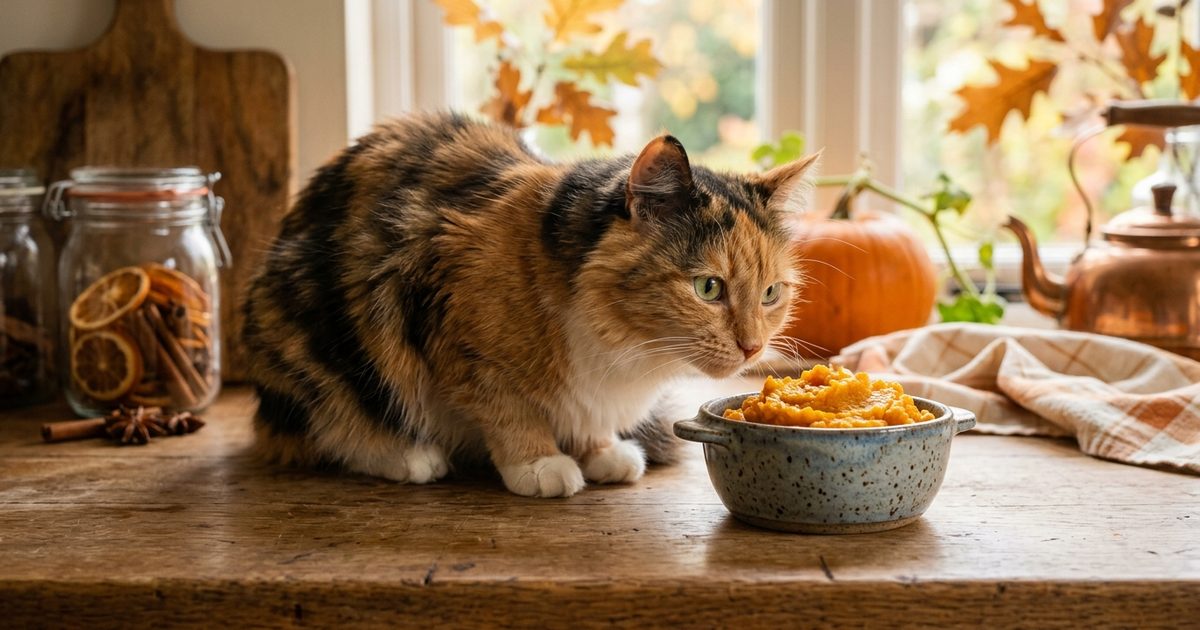
Yes — plain, cooked pumpkin is safe for cats and one of the few human foods vets commonly recommend. Given in small daily amounts it supports digestion without replacing complete cat food. It is a useful supplement, never a meal.
The short answer
If you've been wondering whether cats can eat pumpkin, the answer is a genuine yes — not a grudging "in a pinch." Plain cooked pumpkin is one of the rare human foods that sits comfortably on a cat's safe list, and many vets actively suggest it for mild tummy trouble. Cats are obligate carnivores, which means their bodies run on meat and they don't actually need plant matter to thrive. But fiber is the one place a little plant food helps rather than harms, and pumpkin happens to deliver it in a form cats tolerate well. Think of it less as "people food for cats" and more as a small, useful digestive tool that happens to come from your kitchen.
Cooked, not raw
The "cooked" part matters more than it sounds. Raw pumpkin is tough, dense, and largely indigestible to a cat — its fiber and starch are locked inside cell walls that feline digestion simply isn't built to break down. Cooking (steaming, roasting, or the gentle heat used for canned puree) softens those cell walls and frees up the soluble fiber so your cat's gut can actually use it. A tiny raw nibble stolen off the counter isn't an emergency, but raw pumpkin isn't a feeding strategy — it mostly passes through undigested, offering little benefit and occasionally mild stomach upset. Cooking is what turns pumpkin from a hard squash into something genuinely useful for your cat's digestion.
Why Is Pumpkin Good for Cats?
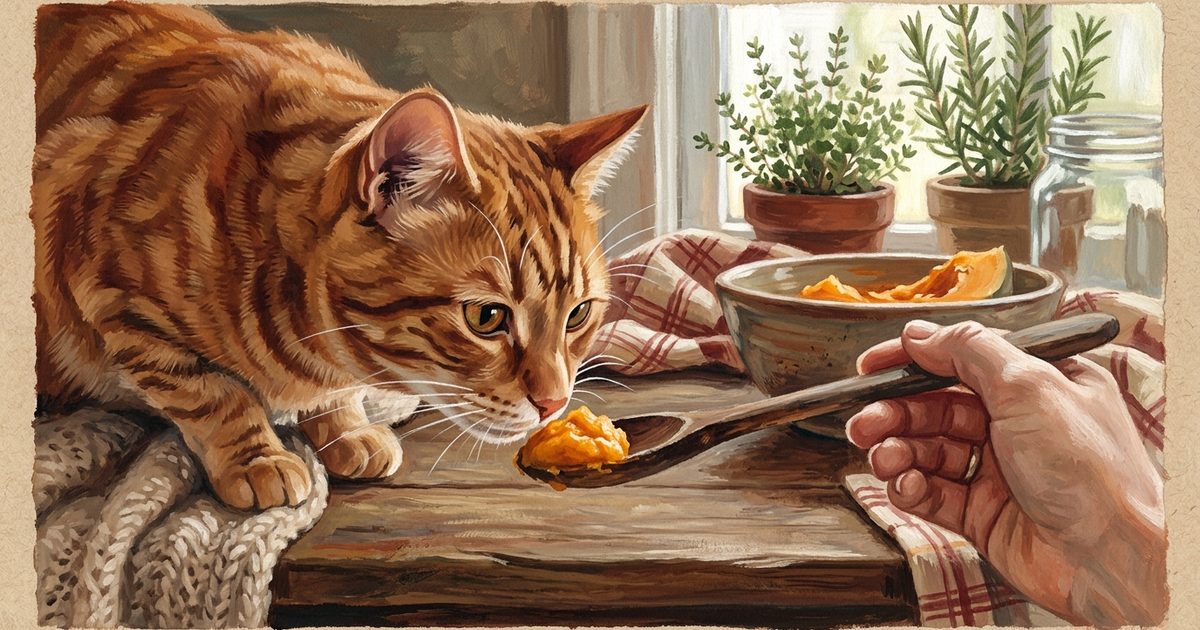
Pumpkin's benefit is fiber. It is unusually high in soluble fiber, which absorbs water in the gut — this is why the same food can help both diarrhea and constipation. Few foods work both directions like this.
Fiber that works both ways
The remarkable thing about pumpkin's fiber is that it does two seemingly opposite jobs at once. Soluble fiber acts like a sponge in the gut: it draws in water and forms a soft gel. When your cat has loose stool, that gel adds the bulk and structure the stool is missing, helping it firm up. When your cat is constipated and the stool is hard and dry, that same water-attracting gel softens things and helps them move. So a cat dealing with mild diarrhea and a cat dealing with mild constipation can both be helped by the same spoonful. That bidirectional effect is rare — most foods push the gut one way or the other, and it's the main reason pumpkin has earned its reputation among cat owners and vets.
Other nutrients
Pumpkin does bring a few other nutrients to the bowl — modest amounts of vitamin A, beta-carotene (the compound that gives pumpkin its orange color), a little potassium, and a fair bit of water. These are real, but they're secondary to fiber. It's worth knowing that cats convert beta-carotene to vitamin A quite poorly compared to humans, so pumpkin isn't a meaningful vitamin strategy for your cat — they get the vitamin A they need from complete cat food. The water content can be a mild plus for cats who eat mostly dry food, but again, it's a bonus layered on top of the real benefit, which is fiber.
Why vets reach for pumpkin
When a vet wants a cat to get a little more fiber, pumpkin is often the first thing that comes to mind — and it's not because nothing else works. It's because pumpkin hits an unusually convenient sweet spot: it's safe, widely available year-round, easy to portion, and — crucially — most cats will actually eat it. A fiber supplement does no good if the cat refuses it, and pumpkin's mild, slightly sweet taste tends to go over well mixed into wet food. The Cornell Feline Health Center and International Cat Care both recognize dietary fiber as a normal, useful part of supporting feline digestive health. None of this makes pumpkin a prescription or a cure — it's a gentle, everyday tool that happens to be unusually well-suited to cats.
What Kind of Pumpkin Can Cats Eat?
Use plain cooked pumpkin or 100% pure canned pumpkin puree — the kind with one ingredient on the label. Never pumpkin pie filling, which adds sugar and spices unsafe for cats. Raw pumpkin is not recommended beyond a nibble.
Plain cooked or canned puree
There are really only two right answers here: plain cooked pumpkin and 100% pure canned pumpkin puree. That's it. Anything else — sweetened, spiced, salted, or raw — is either unsafe or just not digestible enough to bother with.
Reading the label is the whole game. The ingredient list should say one word: pumpkin. If it says anything else — sugar, salt, spices, "natural flavors," cornstarch — put the can back. The front of the can can be misleading; a can that screams "pumpkin" in giant letters might still be pie filling. Trust only the ingredient panel. International Cat Care is clear that when feeding any human food to a cat, simplicity matters — the fewer ingredients, the better.
If you'd rather cook fresh, that works too. Roast or steam cubes of fresh pumpkin until soft, then mash or puree them plain. No oil, no butter, no salt. The result is nutritionally the same as the canned version, and some cats actually prefer the fresher taste.
Never pumpkin pie filling
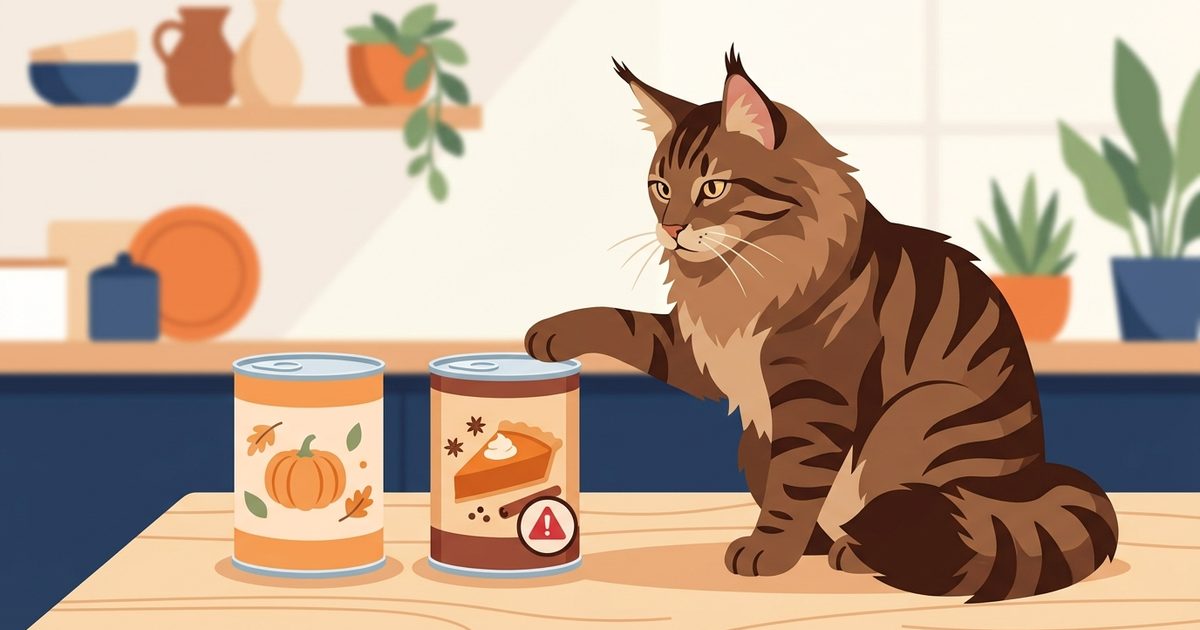
This is the single most important safety distinction in the whole article, so it's worth a section of its own: pumpkin pie filling is not the same as pumpkin puree, and it is not safe for cats.
Pie filling looks almost identical on the shelf, and the front of the can often just says "pumpkin" — which is how people accidentally buy it. But flip it over and the ingredient list tells a different story: sugar, sweetened condensed milk, eggs, and a spice blend built around nutmeg, cinnamon, and allspice. Nutmeg in particular contains a compound that can cause real trouble for cats even in modest amounts, and the added sugar and thickeners are gastrointestinal irritants on their own.
The practical rule: if the can says "pie filling," "ready-to-bake," or anything beyond plain pumpkin, it's not for your cat. Reach for the can labeled "100% pumpkin" or "pure pumpkin puree" and check the ingredient list to confirm. This one habit prevents the most common pumpkin-feeding mistake owners make.
Seeds and other forms
What about pumpkin seeds, raw pumpkin, and the stringy guts? Here's the short version.
Plain roasted pumpkin seeds — unsalted, shelled, and crushed into small pieces — are safe for cats in tiny amounts. They don't add much nutritionally that a complete cat food doesn't already cover, and they're not necessary, but they're not dangerous either. The catch is that most roasted seeds sold for humans are salted and seasoned, and those are not fine. If you offer any, make them yourself, plain, and keep it to a piece or two as a rare treat.
Raw pumpkin flesh is hard for a cat to digest and isn't recommended as anything more than a small nibble — the fiber and starch are far more usable cooked. Pumpkin skin and the stringy guts aren't digestible at all; skip them entirely.
One last note: pumpkin is a winter squash, and the plain-cooked safety logic carries across the squash family — but this article stays focused on pumpkin, since that's what most owners are actually reaching for.
How Much Pumpkin Can I Give My Cat?
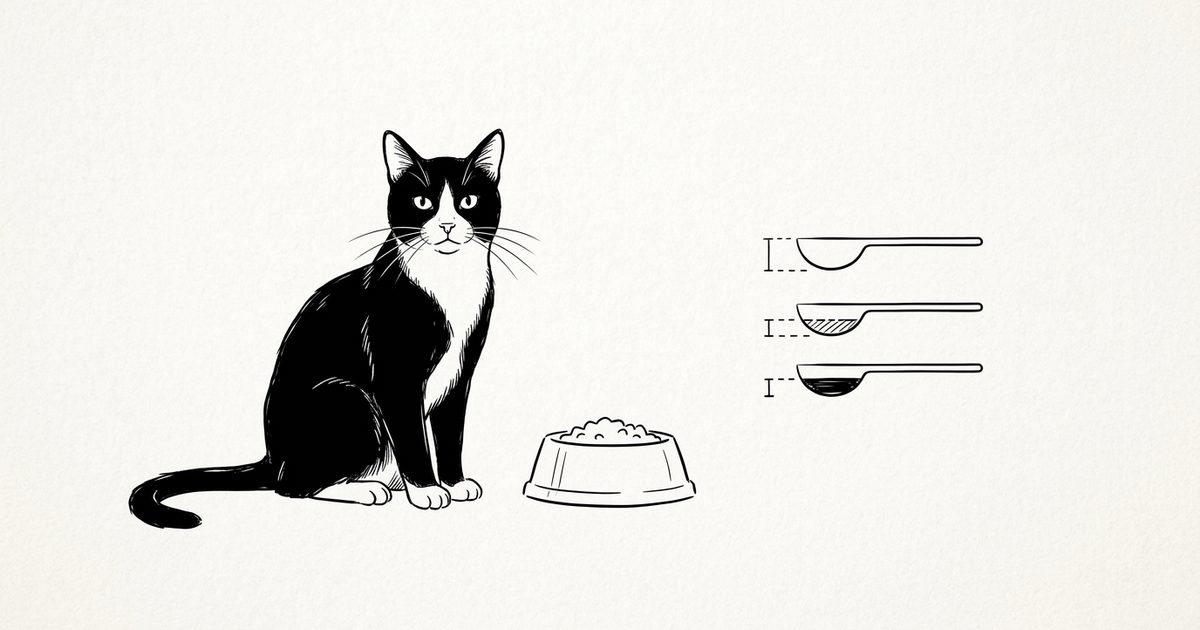
Start with half to one teaspoon of plain pumpkin mixed into your cat's regular food, once or twice a day, then adjust up to about one to four teaspoons total daily for an average adult cat. It is a topper and supplement, never a meal replacement.
Serving size by cat size
Dosing pumpkin is genuinely small-scale, and that's the point — a little goes a surprisingly long way. Here's a practical breakdown:
- Kittens and small cats — start around 1/2 teaspoon per serving. Their digestive systems are smaller and more sensitive, so err on the low side.
- Average adult cats — 1 to 2 teaspoons total per day is the sweet spot for most cats in the 8–11 pound range.
- Large cats — up to 1 tablespoon daily, split across feedings. This covers big-framed breeds and overweight cats on a vet-guided plan.
Give it once or twice a day rather than all at once. Mixing it into wet food is ideal — it improves palatability (many cats love the taste) and adds a little extra hydration, which matters because pumpkin's main job is fiber, and fiber works best with water. If you're reaching for pumpkin because of loose stool, the same modest doses apply; pair it with our guidance on managing cat diarrhea rather than pushing the dose higher.
How to serve it
Serving is simple. Offer plain puree at room temperature — straight off the spoon for a cat that eats it eagerly, or stirred into wet food for one that needs encouragement. You can also freeze tiny spoonfuls on parchment paper as an occasional warm-weather treat.
Two things to keep in mind: serve it plain, with nothing added, and introduce it slowly. Start with the smaller end of the dose range and build up over several days. A sudden fiber increase can cause gas or mild bloating in some cats, just as it can in people — gradual introduction lets the gut adjust.
What Are the Benefits of Pumpkin for Cats?
The main benefits are digestive regularity, mild help with hairballs, and a little satiety for cats on weight plans. These are gentle, supportive, everyday benefits rather than cures — and persistent or recurring digestive problems always need a vet, not more fiber.
So if you've settled that pumpkin is safe in small amounts, the natural next question is what it actually does for your cat. The honest answer is: not very much nutritionally, but a surprising amount for the gut. Pumpkin's value is almost entirely about fiber, and fiber shows up in three practical ways.
Digestive regularity
As covered in Fiber that works both ways above, that dual fiber effect is why pumpkin earns its place — but what matters in practice is when you reach for it. A mild, short-lived rough patch — a day of loose stool after a dietary slip, or a sluggish stretch of mild constipation — is exactly where a teaspoon or two of plain pumpkin mixed into the food often nudges stool back toward normal. For ongoing or recurrent trouble, pumpkin alone is not enough: persistent diarrhea or chronic constipation points to an underlying cause that needs your vet, not a fiber top-up. We walk through both conditions in detail in our guides on cat diarrhea and cat constipation.
Mild hairball help
Extra fiber and roughage can help move swallowed hair through the digestive tract in some cats, so less of it comes back up as a hairball. Notice the hedging — this is a real but modest effect, and it varies by cat. A bit of pumpkin may reduce how often your cat hacks up a fur gift, but it is not a substitute for regular grooming or a dedicated hairball strategy. For the full picture on why cats get hairballs and how to manage them, see our guide on cat hairballs.
Weight-management fiber
For cats on a reduced-calorie weight plan, fiber has a useful side job: it adds bulk and a sense of fullness without adding many calories. A little pumpkin mixed into a smaller portion of food can help a dieting cat feel less cheated. Again, this is a supporting role — pumpkin does not cause weight loss on its own, and it is not a substitute for an actual weight-management program. Read our guide on cat weight for the full approach. Used as part of a real plan, though, it is one of the few human foods that earns its place in a slimming cat's bowl.
What Are the Risks and Cautions?
Too much pumpkin can itself cause diarrhea or upset. Pie filling is unsafe. Pumpkin is not nutritionally complete and must never replace cat food. If digestive issues persist beyond a day or two, stop and see your vet.
The same fiber that helps your cat can also hurt it. The risks with pumpkin are not exotic — they are mostly about dose, product choice, and knowing where support ends and veterinary care begins. The Cornell Feline Health Center is clear that home dietary measures are supportive, not a replacement for diagnosis when something is genuinely wrong.
Too much causes the problem it fixes
Fiber is a balancing act: the same mechanism that helps stool (see Fiber that works both ways) tips the gut the wrong way when the dose is too high. Cross the line from "just enough" to "a bit much," and you get loose stool, gas, bloating, or a cat who picks at its food. If stool gets worse instead of better after starting pumpkin, back off the dose or stop for a day — more is not better with fiber, and doubling it tends to undo the benefit.
Product and cooking mistakes
Pie filling and raw pumpkin as a staple — the two product failures covered above — account for nearly every pumpkin mishap. Rather than repeat the sugar, nutmeg, and spice details here, see Never pumpkin pie filling in What Kind for the full label-reading rule, and Cooked, not raw for why cooking is what unlocks the fiber.
Not a substitute for complete food
This deserves repeating because it is the most common overreach. Pumpkin is a supplement, not a meal. It lacks the protein, taurine, and fat that cats — as obligate carnivores — must get from complete cat food every day. International Cat Care stresses that cats need a diet built around animal-based protein, and no plant food, however useful, can fill that role. If you want the wider context of what cats should actually eat, see our guide on what cats eat. Pumpkin sits on top of a complete diet; it never replaces any meaningful part of one.
Pumpkin for Cats at a Glance — Summary
| Question | Short answer |
|---|---|
| Can cats eat pumpkin? | Yes — plain cooked or canned puree, in small amounts |
| How much is safe? | 1/2 to 4 teaspoons a day, mixed into food |
| What kind is safe? | Plain cooked pumpkin or 100% pure puree only |
| What's unsafe? | Pie filling (sugar, spices) and raw pumpkin as a staple |
| What are the main benefits? | Digestive regularity, mild hairball help, fiber for satiety |
| Can it replace cat food? | No — it is a supplement, never a meal |
| When should I see a vet? | If issues persist beyond a day or two, or worsen |
Curious What Your Cat Would Say?
Upload a photo and get a warm, personalized reading from your cat's perspective.
Start Your Free ReadingFrequently Asked Questions
Can cats eat pumpkin every day?
Yes — plain cooked pumpkin or 100% pure canned puree can be given daily in small amounts, usually 1 to 4 teaspoons mixed into your cat's food. It stays a supplement though, never a replacement for complete cat food, and any persistent digestive change still warrants a vet visit.
Is canned pumpkin or fresh pumpkin better for cats?
Both are fine as long as the canned version is 100% pure pumpkin puree with no added sugar or spices. Canned is more convenient and consistent in fiber, while fresh roasted or steamed plain pumpkin is nutritionally similar — choose whichever your cat accepts more readily.
How much pumpkin should I give my cat for diarrhea?
Start with about half to one teaspoon of plain pumpkin puree mixed into food once or twice a day, and watch the stool for a day. If it firms up, continue at that low dose; if diarrhea persists beyond a day or two or worsens, stop and contact your vet rather than raising the dose.
Can kittens eat pumpkin?
Yes, in very small amounts — start with around a quarter to half a teaspoon of plain puree mixed into kitten food. Their digestive systems are smaller and more sensitive, so keep portions tiny and introduce it slowly. For any ongoing digestive issue in a kitten, see a vet promptly.
Can cats eat raw pumpkin?
Not as a regular food. Raw pumpkin is tough and dense, and a cat's digestion struggles to break down the fiber and starch locked in the cell walls, so it mostly passes through unused. A small stolen nibble is not an emergency, but cooking is what makes the fiber actually useful.
Can cats eat pumpkin pie filling?
No — never. Pumpkin pie filling is a different product from plain puree, with added sugar, eggs, condensed milk, and spices such as nutmeg, cinnamon, and allspice. Nutmeg in particular can be unsafe for cats even in modest amounts, so always use 100% pure pumpkin only.
Does pumpkin help with cat constipation?
Yes, for mild cases. The soluble fiber in pumpkin draws water into the gut and softens hard stool, which can help a mildly constipated cat move things along. It is supportive care for a passing rough patch though, not a treatment for chronic constipation — see your vet if it persists.
Can cats eat pumpkin seeds?
Plain, unsalted, shelled, and crushed roasted pumpkin seeds are safe for cats in very small amounts, though they add little a complete cat food doesn't already provide. Salted or seasoned seeds meant for humans are not fine — if you offer any, make them yourself, plain, as a rare treat.
Can too much pumpkin hurt my cat?
Yes. The same fiber that helps digestion can tip the gut the other way when overdone, causing loose stool, gas, bloating, or a cat that picks at its food. The effective dose is small — usually 1 to 4 teaspoons daily — so if stool worsens, back off or stop for a day rather than increasing.
Sources & References
You Might Also Like
Kitten Teething: Timeline, Symptoms & How to Help
Kitten teething runs from 3 to 7 months as baby teeth fall out. Learn the timeline, signs to watch for, and how to soothe a teething kitten safely.
15 min readWhen Do Cats Stop Growing? A Complete Timeline
When do cats stop growing? Most cats reach adult size by 12-18 months, but large breeds like Maine Coons keep growing until 3-4 years. Full timeline inside.
14 min readCan Cats Eat Cherries? Flesh, Pit & Toxicity Facts
Can cats eat cherries? Pitted flesh is safe in tiny amounts — but the pit, stem, and leaves are toxic (cyanide precursors). Learn what's safe and what isn't.
15 min read