Can Cats Get COVID-19? What the Science Actually Says
Yes, cats can get COVID-19 — that's the short, honest answer, and the one the science backs. Since 2020, veterinarians and labs have confirmed SARS-CoV-2 infections in domestic cats through both PCR testing and antibody studies, usually after close contact with a sick person in the same household. So if you've been searching can cats get covid 19 or can cats catch covid out of genuine worry, the cases are real and documented, not rumor. But here's the part that matters most: the dominant direction of spread is human-to-cat, not cat-to-human, illness in cats is usually mild, and there's no meaningful evidence that pet cats are driving human cases. This article walks through what's actually known — how cats acquire the virus, what symptoms look like, and the simple steps that protect both of you.
Key takeaways
- Yes, cats can be infected with SARS-CoV-2. It's documented worldwide, but most cases are mild or entirely asymptomatic, and cats generally recover fully.
- The risk runs overwhelmingly from infected humans to cats — a reverse zoonosis — through respiratory droplets and close contact, not the other way around.
- Cat-to-human spread is not considered a significant source of human COVID-19. People remain the main vector, and cats have not driven outbreaks.
Cats and COVID-19 — Quick Reference
| Question | Short answer | Risk level |
|---|---|---|
| Can cats get COVID-19? | Yes — documented worldwide, usually after contact with a sick person | Low overall |
| How do cats catch it? | Almost always from infected humans (reverse zoonosis) via droplets | Moderate when owner is sick |
| Can my cat give it to me? | Not considered a significant source; humans are the main vector | Very low |
| Are symptoms severe in cats? | Usually mild — fever, sneeze, cough, lethargy; many have no signs | Low |
| Should I isolate from my cat if sick? | Yes — treat your cat like another household contact | Recommended |
| Do cats need a COVID vaccine? | No routine recommendation for pet cats | Not needed |
| Is COVID in cats a public-health threat? | No — cats are not a major reservoir | Very low |
Can Cats Get COVID-19?
Yes — cats can get COVID-19. SARS-CoV-2 has been found in pet cats in documented cases worldwide, usually after close contact with an infected person. Most infections are mild, and many cats show no symptoms at all, recovering fully without specific treatment.
If you first asked "can cats get covid" out of genuine worry — maybe you were sick, or you read a headline about a tiger at a zoo testing positive — the short, honest answer is yes, it happens. It is documented by PCR and antibody testing since 2020, and veterinarians and public-health agencies have studied it carefully. The longer answer, which is the reassuring one, is that cats are a minor side character in this story, and what follows is what the evidence actually shows.
What the science actually shows
The virus that causes COVID-19, SARS-CoV-2, can infect domestic cats — that is not in dispute. Real-world cases have been confirmed through both PCR testing (finding viral genetic material) and serology (finding antibodies in a cat's blood, proving a past infection). Experimentally, cats have been shown to shed viable virus for a short time, which means they can be genuinely infected, not merely carrying virus particles on their fur. The CDC's guidance on SARS-CoV-2 in animals lays out the documented cases and the consensus that cats, alongside a handful of other species, are susceptible hosts — but minor ones compared to humans.
Coronavirus vs feline coronavirus — not the same thing
The word "coronavirus" scares cat owners, and for a specific reason: there is a completely different virus called feline coronavirus (FCoV) that is common in cats, usually causes mild or no intestinal illness, and only rarely mutates into FIP, a serious disease. SARS-CoV-2, the pandemic virus, is a different coronavirus entirely — a respiratory virus that jumped from animals into humans and occasionally back into cats. Sharing the word "coronavirus" does not make them the same any more than sharing the word "virus" makes a cold the same as the flu. It's also distinct from parvovirus, an unrelated, severe enteric virus of kittens — a different family, a different disease, and not something COVID in cats turns into.
How severe is it when a cat does get it
For the vast majority of cats, infection is mild or entirely asymptomatic — they look and act normal, and the infection is only caught if they're tested. The small number of severe or fatal cases that have been reported have generally involved older cats or cats with pre-existing health conditions, the same pattern you see in many infections across species. Rather than fixating on a fatality rate — which the data is too sparse to pin down precisely — the calmer and more accurate framing is: most cats recover fully, severe outcomes are rare, and underlying health is the key factor. We'll cover the specific symptoms a cat might show next.
How Do Cats Get COVID-19?
Cats almost always catch COVID-19 from infected people — a reverse zoonosis — through respiratory droplets and close contact. Cat-to-cat spread can occur but is uncommon, and cat-to-human transmission is not considered a significant source of human cases.
So can cats catch covid? Yes, and when they do, the route is nearly always the same one: a sick human in the household. This is called a reverse zoonosis — a human virus moving into an animal — and it is the dominant pattern in every documented cluster of cat cases. Understanding this directionality matters, because it reframes the risk entirely: the concern is not your cat as a source, but your cat as a close contact of you.

Reverse zoonosis: human to cat
The main route is the same one that spreads the virus between people — respiratory droplets. A sick owner breathes, coughs, sneezes, or talks near a cat; handles the cat's food, litter, or bedding with virus on their hands; or simply shares close indoor air for hours at a stretch. Cats in the same household as a person with COVID-19 are the ones who get exposed, which is exactly why the early pandemic cases clustered in COVID-positive households rather than in stray or shelter populations. The virus did not sweep through cat colonies the way it swept through human ones; it arrived in cats one sick owner at a time. That clustering is some of the strongest evidence that the arrow points from person to cat, not the reverse.
Cat-to-cat and the limits of spread
Cats can pass SARS-CoV-2 to other cats — this has been shown both experimentally and, occasionally, in the field, usually among cats kept in very close quarters. But the spread is short-lived and inefficient. It does not sustain itself in cat populations the way human-to-human transmission does in ours, and it does not drive outbreaks. A cat infecting another cat in the same home is possible; a cat sparking a chain of infections across a neighborhood is not. This is a key reason public-health agencies treat cats as a low-priority host: they can catch it, but they don't amplify it.
Other animals in the picture
Cats are far from the only animal susceptible to SARS-CoV-2, and placing them in that wider context keeps the science honest. Farmed mink, white-tailed deer, and hamsters have all shown more significant reservoir dynamics — mink in particular had documented outbreaks on farms and even spill-back into humans. Cats, by comparison, are a minor host: susceptible but not a meaningful driver of the virus's circulation. The Cornell Feline Health Center and International Cat Care both summarize the evidence in this proportion — cats are part of the picture, but a small part, and the risk runs overwhelmingly from people to cats rather than the other way around.
What Are the Symptoms of COVID-19 in Cats?
Symptoms in cats are usually mild: fever, coughing, sneezing, a runny nose, lethargy, and sometimes vomiting or diarrhea. Many infected cats show no signs at all, and most recover fully with supportive care. Severe illness is rare.
Most cats who catch SARS-CoV-2 either show nothing at all or develop a short, mild illness that clears on its own within days to a couple of weeks. The signs tend to fall into two familiar groups — respiratory and gastrointestinal — and they're exactly the kind of symptoms you'd notice during any ordinary spell of your cat being a little under the weather. That overlap matters, because it's also why a sneezing or off-food cat is far more likely to have a routine sniffle than COVID-19.
Respiratory signs
The respiratory signs are the most recognizable: a dry cough, sneezing, a clear nasal discharge, and sometimes mild changes in breathing rate or effort. A veterinarian may also pick up a low-grade fever on exam. These symptoms look almost identical to a standard feline upper respiratory infection — because, structurally, they are. The catch is that ordinary feline URI is overwhelmingly caused by herpesvirus or calicivirus, not SARS-CoV-2, and a cat sneezing at home is statistically far more likely to have one of those than COVID. If you want the fuller picture of how routine cat colds behave, that's the place to look — the symptoms overlap heavily, but the cause usually doesn't.
Gastrointestinal and general signs
Less obvious but still common are the general signs: reduced appetite, lethargy, and a cat that simply wants to sleep more than usual. Some cats develop mild vomiting or diarrhea, and a fever is sometimes present even when the cat looks outwardly fine. These signs are non-specific — they show up in dozens of ordinary feline illnesses — which is why they're most meaningful when they appear alongside known exposure to a sick person in the household.
When symptoms mean call the vet
Most cats need nothing more than supportive care — warmth, hydration, and encouragement to eat — and recover fully without specific treatment. A vet visit is warranted when symptoms cross into clearly concerning territory: breathing difficulty or labored breath, a complete refusal to eat or drink for more than a day, or persistent lethargy that isn't improving. Kittens, seniors, and cats with weakened immune systems — including those with conditions like FIV — deserve a lower threshold for calling the vet, since they have less reserve. These are general guidelines, not a diagnosis; when in doubt, a quick phone call to your clinic costs nothing and settles it.
Can Cats Give COVID-19 to Humans?
Extremely rarely, if ever. There is no evidence that cats are a meaningful source of human COVID-19. Humans are the main vector — people spread it to other people and occasionally to cats, not the other way around.
This is the question most cat owners actually carry, often quietly: is my cat a risk to me or my family? The honest, evidence-based answer is reassuring without being dismissive. A small number of suspect cat-to-human cases have been investigated globally, and none have established cats as a significant route of transmission. The risk that dominates the pandemic is, and has always been, people infecting other people.
What the evidence shows about cat-to-human spread
Since 2020, public-health agencies have traced and investigated a handful of cases where a cat-to-human transmission was theoretically possible — typically in households where the cat had been infected by an owner and a second person later fell ill. In none of these has the cat been confirmed as the source, and the far simpler explanation (direct human-to-human contact) almost always fits the data better. The CDC and the Cornell Feline Health Center both summarize the position the same way: the risk of COVID-19 from pets is very low compared to the risk from other people. This isn't a gap in research being papered over — it's a consistent finding across multiple countries and surveillance programs.
Why cats are not a major reservoir
The science behind that low risk is straightforward. When a cat does get infected, it sheds the virus for only a short window and at much lower levels than a sick person does. The virus does not circulate widely or persistently in cat populations the way it does in humans, and cats don't generate the kind of sustained chains of transmission needed to act as a reservoir. In practical terms, a cat is closer to a dead-end host: the virus arrives, lingers briefly, and fades. That's not reassurance by assertion — it's the pattern the surveillance data consistently shows, and it's why no major health agency treats cats as a public-health concern for COVID-19.
The real direction of risk
Flipped around, the risk worth paying attention to runs the other way entirely. If someone in your home has COVID-19, the meaningful question isn't whether the cat will infect the household — it's whether the infected person might pass the virus to the cat. People spread SARS-CoV-2 to cats far more often than cats spread it to people, which is why the practical guidance focuses on protecting your cat from you when you're sick, not the reverse. Keeping that direction straight is the single most useful thing to take from this whole topic — and it sets up exactly what to do next.
What Should I Do If I Have COVID-19 and a Cat?
If you have COVID-19, treat your cat like another household contact: wash your hands, wear a mask, and avoid close face contact like kissing or snuggling while you're sick. If your cat shows symptoms, call your vet — don't panic.
The same plain hygiene that protects the people in your home is what protects your cat. There's no special cat protocol, no quarantine room you have to build — just calm, consistent habits while you recover. Think of your cat as one more family member you're being careful around, because the risk genuinely does run from you to them, not the other way.
Practical steps when you're sick
A few simple routines cover most of it. Wash your hands before and after handling your cat, its food, or its litter box. Wear a mask around your pet for the same reason you wear one around people — it cuts down the droplets you release when you breathe, cough, or talk near them. Avoid letting your cat sleep on your chest, nuzzle your face, or share your pillow while you're symptomatic. If someone else in the household is well, let them take over feeding and litter duty for a few days. The CDC's guidance for pet owners is built on exactly these basics, and they're enough.
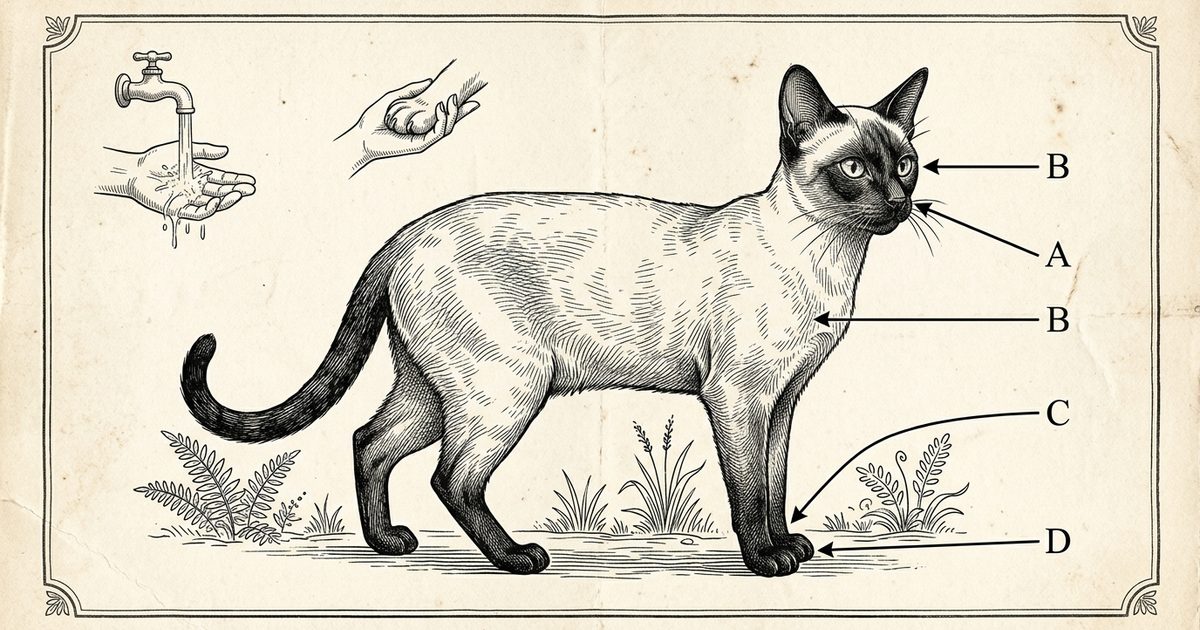
What NOT to do
A few well-meaning impulses do real harm. Do not put a mask on your cat — it doesn't fit a cat's face, restricts breathing, and most cats find it genuinely distressing. Do not wipe your cat down with disinfectants, alcohol, or hand sanitizer; these are made for human skin and surfaces, not fur a cat will lick. Do not abandon, surrender, or put your cat outdoors over a COVID worry — there is no public-health reason to, and shelters say these surrenders did happen during the pandemic. And never give your cat human medication of any kind; dosing and toxicity are entirely different in a cat's body.
If your cat becomes symptomatic
Start with a phone call to your vet rather than a frantic trip in. If your cat is sneezing, off its food, or lethargic, your vet can tell you whether an in-person visit makes sense. Keep the symptomatic cat separate from other pets in the home, and offer supportive care — warmth, fresh water, and gentle encouragement to eat. The home-care overlap with an ordinary feline URI is real, and the practical steps in our guide to whether cats get colds apply here too. Testing a cat for SARS-CoV-2 is a veterinary decision, not a routine one — it's usually reserved for confirmed exposure or unusual illness, not offered to every sneezing pet.
The Bigger Picture: Cats and COVID-19
Cats are not a major COVID-19 reservoir. The risk runs from infected humans to cats, not the reverse, and cat-to-human transmission is not a significant source of cases. The honest science — from the CDC and WHO — is that people remain the real vector.
Step back from any single household and the picture stays consistent. Cats have been infected, yes — but documented cases cluster tightly around infected owners, the virus doesn't circulate widely in free-ranging cat populations, and global surveillance has never traced an outbreak back to cats. The fear that cats might silently drive spread is the fear that the evidence has repeatedly failed to confirm.

One-line global health framing
The consensus position, held across the CDC and WHO, is straightforward: humans are the engine of this pandemic, and cats — like most companion animals — are a minor, largely dead-end host in comparison. Surveillance of animal infections continues, because science keeps watching for any change in that picture, but nothing to date has recategorized cats as a public-health threat in the way that, for example, farmed mink briefly were in a few regions. If you want the official framing on SARS-CoV-2's origins and its animal hosts, the WHO's ongoing review is the clearest single read.
Do cats need a COVID vaccine?
No. There is no routine veterinary recommendation to vaccinate pet cats against SARS-CoV-2. Veterinary COVID vaccines have been developed and used in specific settings — most notably for farmed mink in a small number of countries where outbreaks threatened those industries — but they are not part of standard pet-cat medicine, and you should not seek out an unlicensed human or farmed-animal vaccine for your cat. What actually protects a cat's respiratory health is its routine core immunizations, and the FVRCP vaccine covered in our guide to cats and colds remains the one that matters for the everyday viruses a cat is realistically exposed to.
Cats and COVID-19 at a Glance — Summary
| Question | Short answer |
|---|---|
| Can cats get COVID? | Yes — documented cases exist, usually mild, after contact with an infected person |
| How do they catch it? | Almost always from infected humans, via respiratory droplets and close contact |
| Can they give it to humans? | Not a significant source of human cases; humans remain the main vector |
| How severe is it? | Most cases are mild or asymptomatic; severe illness is rare |
| What if I'm sick? | Wash hands, wear a mask, skip face contact, and call the vet if your cat is unwell |
| Do cats need a vaccine? | No routine recommendation; core vaccines like FVRCP are what matter |
| Are cats a reservoir? | No — cats are a minor, largely dead-end host, not a driver of the pandemic |
Curious What Your Cat Would Say?
Upload a photo and get a warm, personalized reading from your cat's perspective.
Start Your Free ReadingFrequently Asked Questions
Can cats get COVID-19 from humans?
Yes. A sick owner is by far the most common source — the virus reaches the cat through respiratory droplets and close contact. It's a reverse zoonosis, meaning a human virus moves into an animal, and most exposed cats either stay asymptomatic or recover with mild symptoms.
Can I give my cat COVID if I'm sick?
It's possible but not guaranteed. Many cats in COVID-positive households never develop any illness. The simplest protection is ordinary hygiene — wash your hands, wear a mask near your cat, and skip close face contact while you're symptomatic, just as you would with another family member.
Can my cat give me COVID-19?
Not considered a meaningful source. A few suspect cases have been investigated globally, and none have confirmed cats as a significant transmission route. Humans remain the main vector — people spread it to other people far more often than to or from cats.
What are the symptoms of COVID in cats?
Usually mild: fever, a dry cough, sneezing, a runny nose, lethargy, and sometimes vomiting or diarrhea. Many cats show no signs at all. These overlap heavily with ordinary feline colds, which are far more common, so a sneezing cat rarely has COVID.
Should I keep away from my cat if I have COVID?
Treat your cat like another household contact. Wash your hands, wear a mask around your pet, and avoid kissing or snuggling your face into their fur while symptomatic. Let a well household member handle feeding and litter duty if possible.
Do cats need a COVID vaccine?
No. There is no routine veterinary recommendation to vaccinate pet cats against SARS-CoV-2. Veterinary COVID vaccines exist for farmed mink in specific regions, not for house cats. A cat's routine core immunizations, like FVRCP, are what actually protect its respiratory health.
Is feline coronavirus the same as COVID-19?
No. SARS-CoV-2 is a respiratory coronavirus that jumped from animals into humans and occasionally back into cats. Feline coronavirus is a different, common intestinal virus that is usually mild and only rarely mutates into FIP. Sharing the word 'coronavirus' does not make them the same disease.
What should I do if my cat catches COVID?
Start with a phone call to your vet rather than panicking. Most cats need only supportive care — warmth, fresh water, and gentle encouragement to eat — and recover fully. Keep the symptomatic cat separate from other pets, and never give human medication.
Sources & References
You Might Also Like
Kitten Teething: Timeline, Symptoms & How to Help
Kitten teething runs from 3 to 7 months as baby teeth fall out. Learn the timeline, signs to watch for, and how to soothe a teething kitten safely.
15 min readWhen Do Cats Stop Growing? A Complete Timeline
When do cats stop growing? Most cats reach adult size by 12-18 months, but large breeds like Maine Coons keep growing until 3-4 years. Full timeline inside.
14 min readCan Cats Eat Cherries? Flesh, Pit & Toxicity Facts
Can cats eat cherries? Pitted flesh is safe in tiny amounts — but the pit, stem, and leaves are toxic (cyanide precursors). Learn what's safe and what isn't.
15 min readA message, in your cat's voice
Upload a photo, get a warm note written from your cat's perspective — just for fun. Plus 121 vet-cited articles, offline.