
Can Cats Get Parvo? Feline Panleukopenia Symptoms & Care
So you're wondering whether your cat can catch parvo — and the honest answer is the kind that comes with both reassurance and a real warning. The question can cats get parvo matters because cats do not catch canine parvovirus, the disease people usually mean by "parvo." But cats have their own parvovirus, called feline panleukopenia (also known as feline distemper), and parvo symptoms in cats can be just as devastating. Among unvaccinated cats and young kittens it is one of the deadliest infectious diseases they can face, and a kitten that seemed fine yesterday can be desperately ill by tomorrow.
The good news is that feline panleukopenia is also one of the most preventable diseases in veterinary medicine, because vaccination works extremely well. The hard part is recognizing the danger early and acting on it — hours matter, not days.
Key takeaways
- Cats do not catch canine parvo, but they get their own parvovirus — feline panleukopenia — in the same virus family, and it is often deadly.
- Sudden bloody vomiting and diarrhea in a kitten or unvaccinated cat is a veterinary emergency right now, not a wait-and-see situation.
- Vaccination (the core FVRCP shot) is highly effective and is the single most important thing you can do to protect your cat.
Feline Panleukopenia — Quick Reference
| What you see | What it may mean | Urgency |
|---|---|---|
| Kitten suddenly lethargic and off food | Early panleukopenia, among other causes | Call vet same day |
| Fever, then a dangerously low temperature | The disease is progressing / decompensation | Urgent — vet today |
| Repeated vomiting that won't stop | GI lining under attack; dehydration risk | Urgent — vet today |
| Bloody or foul-smelling diarrhea | Severe intestinal damage | Emergency — go now |
| Severe dehydration, sunken eyes, tacky gums | Systemic collapse beginning | Emergency — go now |
| Pregnant cat or young kitten exposed | Risk to mother and developing kittens | Call vet promptly |
| Healthy vaccinated adult cat exposed | Strong protection; low risk of illness | Monitor; ask vet if unsure |
Can Cats Get Parvo?
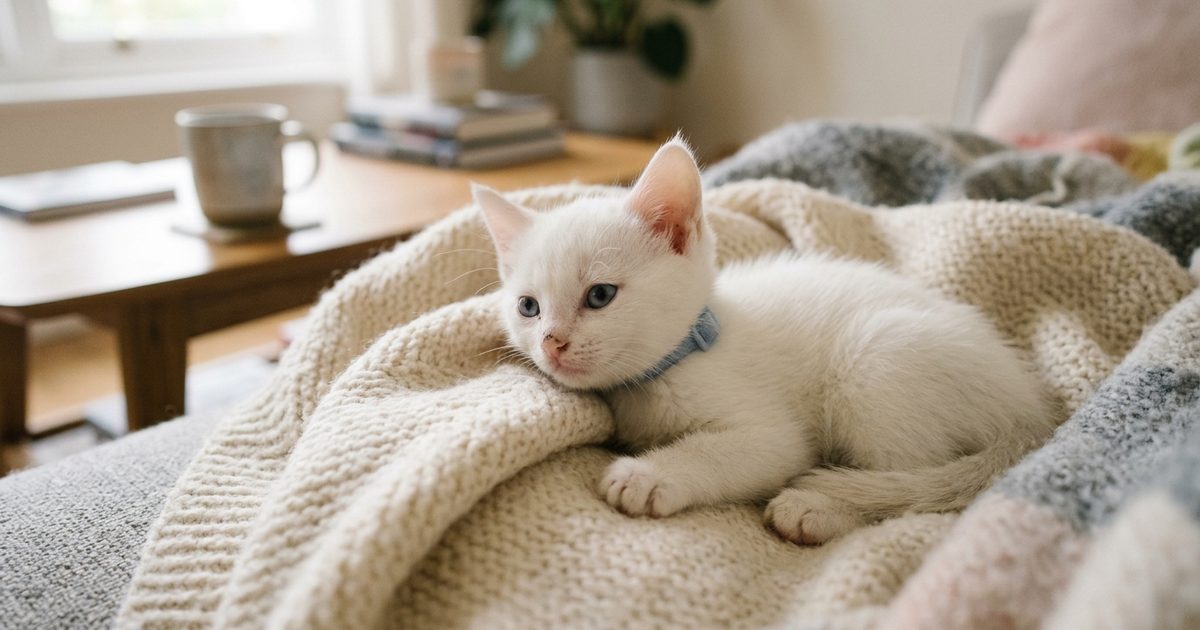
Cats do not catch canine parvovirus, but they get their own parvovirus called feline panleukopenia — also known as feline distemper. It is in the same parvovirus family, it is highly contagious, and it is often deadly, especially in unvaccinated kittens.
The short answer is yes and no, and both halves matter. No, your cat did not catch your dog's parvo — canine parvovirus and feline panleukopenia are close relatives, but they are not the same disease, and cats are not the natural host of the canine form. Yes, cats have their own parvovirus, and it is serious. Understanding that distinction is the first step toward protecting your cat, because it points you to the right vaccine, the right symptoms to watch for, and the right sense of urgency.
Not dog parvo — but a feline relative
Canine parvovirus and feline panleukopenia virus are closely related members of the same parvovirus family, but they are distinct viruses with different natural hosts. Cats are the natural host of feline panleukopenia (FPV), and they do not typically develop illness from canine parvovirus. So if you have both a dog and a cat and the dog comes down with parvo, your cat is not "catching it" from the dog in the way people often fear — but your cat carries its own equivalent risk in feline panleukopenia. The Cornell Feline Health Center is an excellent, trustworthy source if you want the veterinary overview of feline panleukopenia in plain language.
Why the confusion exists
The shared word "parvo" is really the root of the confusion. It comes from parvovirus, the name of the entire virus family — not from one specific disease. Feline panleukopenia, canine parvovirus, and even parvoviruses in other animals all belong to that family, which is why the shorthand "parvo" gets used for so many of them. The older name "feline distemper" adds another layer of confusion, because it sounds like canine distemper — but canine distemper is a completely different virus (a paramyxovirus) with no relation to feline panleukopenia at all. Different virus, different disease, shared name only.
The stakes in one sentence
Feline panleukopenia is among the most lethal infectious diseases a cat can face, and in untreated kittens the mortality can be very high — even with aggressive treatment the prognosis is often guarded. Rather than anchor to a single fragile percentage, it is more honest to say the stakes are genuinely grave in young, unvaccinated, or immune-compromised cats, and far lower in cats protected by a complete vaccine series. That is exactly why vaccination, covered below in How Do You Prevent Feline Parvo?, is treated as a core, non-optional part of feline medicine.
What Is Feline Panleukopenia?
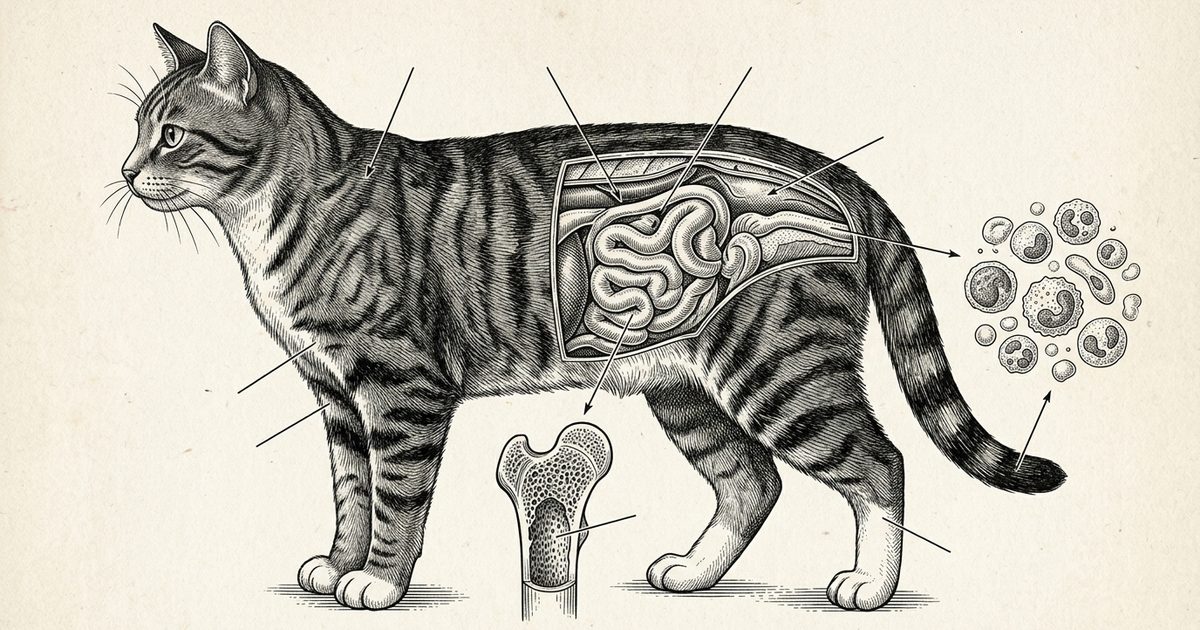
Feline panleukopenia is a highly contagious viral disease caused by feline parvovirus. It attacks rapidly dividing cells — especially in the bone marrow and the lining of the intestines — causing severe vomiting and diarrhea and a dangerous collapse of the cat's white blood cells and immune defenses.
If the question "can cats get parvo" is the yes-or-no framing, "what is feline panleukopenia" is the deeper one: what the disease actually is, how it works inside the cat's body, and why it is so dangerous. Feline panleukopenia is a systemic viral illness — it does not just upset the stomach, it simultaneously wrecks the gut and dismantles the immune system, which is what makes it so much more than a bad case of diarrhea.
A virus that targets dividing cells
Parvoviruses are unusually efficient at one thing: they multiply inside cells that are actively dividing. In a cat, that means the virus homes in on two of the most rapidly renewing tissues in the body — the lining of the intestines and the bone marrow. The intestinal lining is normally a tough, fast-repairing barrier; as the virus destroys it, the gut can no longer digest food or hold back its own bacteria, leading to the severe vomiting and diarrhea owners see. Meanwhile the bone marrow — the factory for blood cells — is being shut down at the same time. This two-front attack, gut destruction plus immune collapse happening together, is the core reason the disease is so severe.
Why the white blood cell count crashes
The name "panleukopenia" is literal: it means an across-the-board ("pan-") drop in white blood cells ("-leukopenia"). Because the virus disables the bone marrow, the cat's white blood cell count plummets just when it is needed most. With the immune system gutted, the cat cannot fight off the virus itself — and worse, bacteria from the damaged intestine begin leaking through the broken gut wall into the bloodstream. That combination, a virus the body can't clear plus bacteria it can't stop, is the mechanism that turns a gastrointestinal infection into a life-threatening systemic collapse.
Who is most at risk
The classic victims are unvaccinated cats and kittens, especially in the vulnerable window between weaning and the completed vaccine series, when maternal antibodies have faded but full protection has not yet built up. Shelters, rescues, feral colonies, and multi-cat households are where outbreaks most often appear, because the virus spreads easily wherever susceptible cats are close together. Vaccinated adult cats are strongly protected. Two cross-references are worth making here: the kitten vaccination schedule, covered in our kitten care guide, is the single most important prevention step; and cats with FIV or other causes of immune compromise can suffer a more severe course if they are exposed.
Unrelated to COVID-19 and to cat colds
Because so many "can cats get X" questions circulate online, it is worth being direct: feline panleukopenia is a parvovirus, not a coronavirus, so it is unrelated to the question of whether cats can get COVID-19 — a different virus family entirely, with different symptoms and a different transmission story. And although both are covered by the same core FVRCP vaccine, panleukopenia is also not the same as the colds cats get. Cat colds are upper respiratory infections (typically herpesvirus or calicivirus) that affect the nose, throat, and eyes; feline panleukopenia is a gastrointestinal and immune disease. Different virus, different system, different illness — the shared "can cats get" phrasing is the only real overlap.
What Are the Parvo Symptoms in Cats?
Parvo symptoms in cats come on suddenly: fever, repeated vomiting, bloody or severe diarrhea, profound lethargy, and rapid dehydration. A kitten that was fine yesterday and is collapsed today is a feline-panleukopenia emergency — do not wait, call the vet immediately.
Sudden onset is the signature
The single most striking thing about parvo symptoms in cats is how fast they move. Owners again and again describe the same thing: a bright, playful kitten at breakfast, listless and hiding by afternoon, collapsed by evening. That dramatic overnight change is itself a red flag. A slow digestive upset that drifts over days is one thing — a cat falling apart in hours is another, and the speed points toward feline panleukopenia rather than ordinary tummy trouble.
Vomiting and diarrhea
Vomiting usually comes first — repeated, not the one-off hairball a cat brings up. Soon after, the diarrhea begins, and it is often foul-smelling and streaked with blood as the virus destroys the lining of the intestines. We cover the broader picture in our guides to cat vomiting and cat diarrhea, but the key distinction here is severity and context: bloody diarrhea in a young or unvaccinated cat is an emergency, never a wait-and-see sign. The combination of relentless vomiting, bloody stool, and a rapidly weakening cat is the pattern that should send you to the clinic without delay.
Lethargy, fever and dehydration
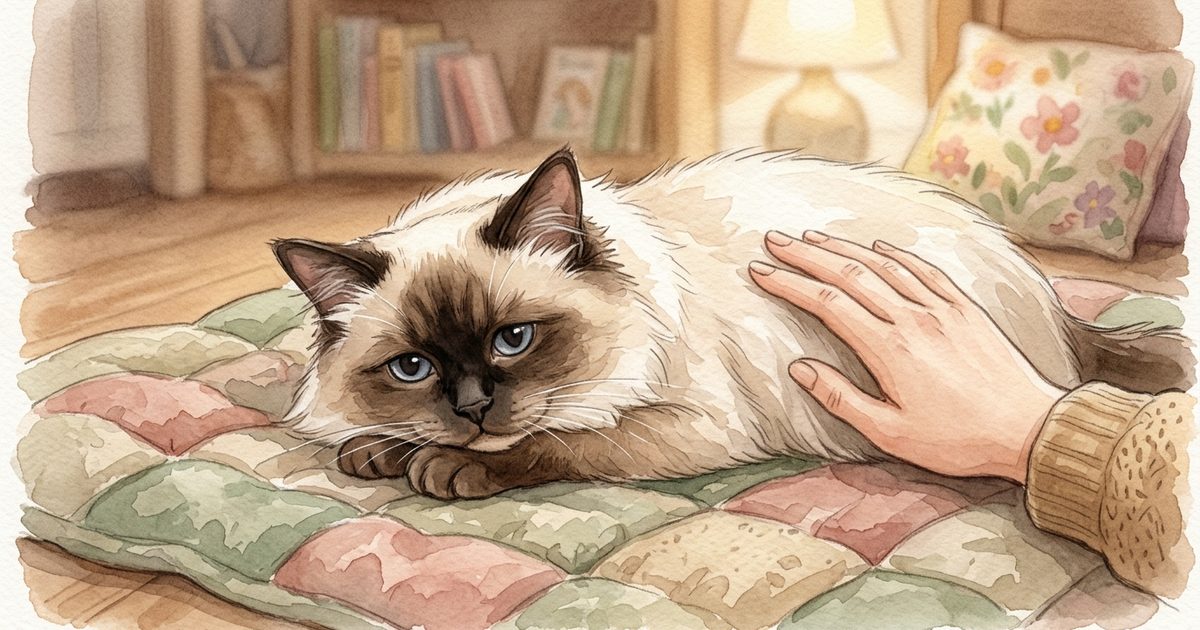
Early in the illness many cats run a high fever; as they decompensate, the temperature can drop dangerously low instead. You may notice your cat barely lifting its head, refusing food and water, with sunken eyes, tacky or dry gums, and skin that stays tented when gently pinched. These are the outward signs of rapid dehydration and a body in trouble. We would not coach you through checking these at home — the point of naming them is so you recognise the picture and act on it, not so you second-guess a thermometer reading.
When it is an emergency
Call your vet or an emergency clinic the moment a young, unvaccinated, or recently rescued cat shows sudden vomiting with bloody diarrhea, collapse, or a temperature that is clearly very high or very low. Hours genuinely matter with feline panleukopenia — the cat's white blood cells are crashing and its gut wall is failing, and supportive care must be given at a clinic through IV fluids and medication. Please do not attempt home treatment, and do not wait to see if it improves overnight; the window for saving these cats is short, and acting early is the one thing that reliably changes the outcome.
How Do Cats Get Feline Parvo?
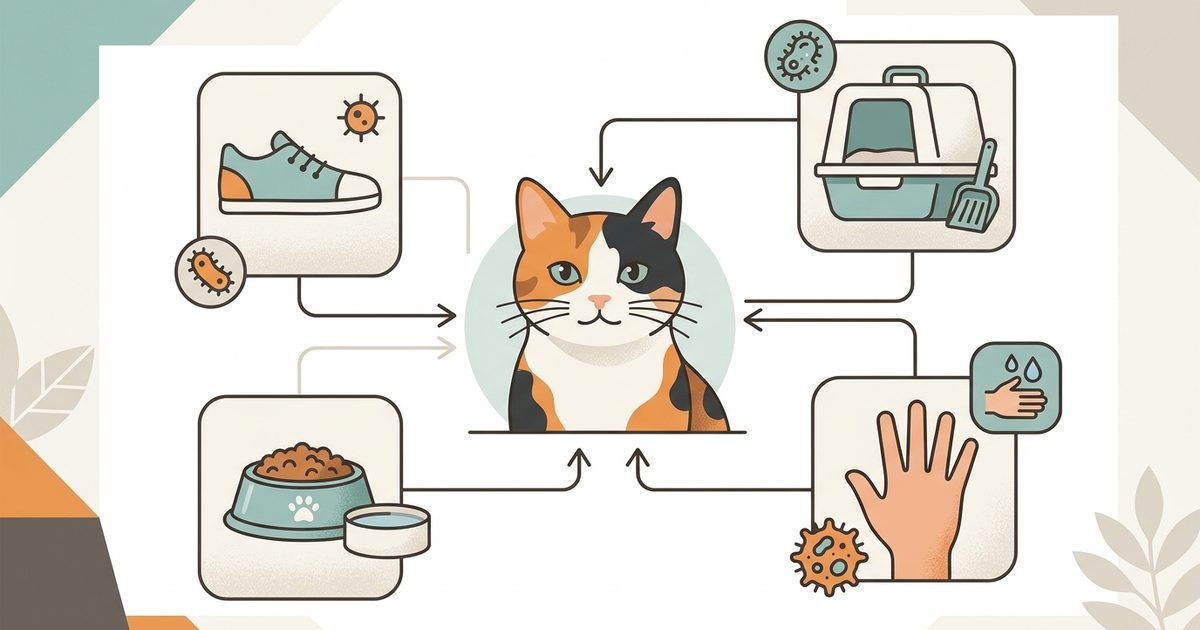
Cats catch feline parvo mainly through the fecal-oral route — contact with infected feces, contaminated litter, food bowls, bedding, or a human's hands or shoes. The virus is extraordinarily hardy and can survive in the environment for months to over a year.
The fecal-oral route
An infected cat sheds enormous amounts of virus in its feces, often before it even looks sick. A susceptible cat picks it up by grooming a contaminated paw, sharing a litter box, or eating and drinking from contaminated bowls — and fomites do the rest. The virus hitches a ride on hands, clothing, shoes, and toys, which is exactly why an apparently safe indoor-only cat can still be exposed: someone walks it in on the sole of a shoe. The Cornell Feline Health Center describes this fecal-oral spread as the primary route of transmission.
An unusually tough virus
What makes feline parvovirus so difficult to eliminate is its hardiness. It survives freezing, ordinary heat, and many common disinfectants, lingering on surfaces, in carpets, and in yards for months — and sometimes more than a year. This environmental persistence is why outbreaks in shelters and rescues are so stubborn, and why a new kitten brought into a home where panleukopenia once occurred is at real risk unless the environment has been properly disinfected with a genuinely parvocidal product. International Cat Care is a reliable source on feline panleukopenia and the disinfection protocols that actually work.
Who is most likely to be exposed
Unvaccinated cats and kittens carry the highest exposure, especially in shelters, rescues, feral colonies, and multi-cat homes where the virus passes easily between animals. Indoor-only cats are at lower risk — but lower is not zero, because the virus travels in on shoes and clothing. A cat that is also immune-compromised, for example one living with FIV, can face more severe disease if exposure occurs.
Pregnant cats and the cerebellum
One transmission route deserves a special note: if a pregnant cat is infected, the virus can cross the placenta and damage the developing kittens' cerebellum. The kittens may be born with cerebellar hypoplasia — wobbly, uncoordinated movement for life. It is not always fatal, but it is lifelong, and it is one more reason protecting pregnant and nursing cats through vaccination matters.
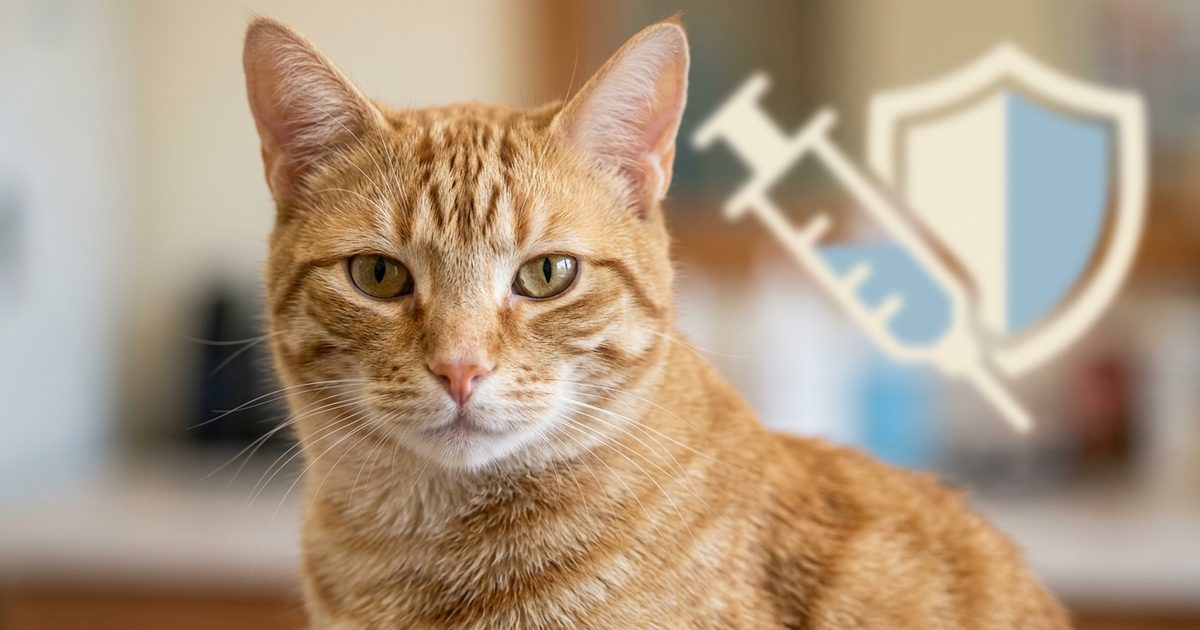
How Do You Prevent Feline Parvo? (Vaccination)
Feline parvo is preventable with vaccination, and the vaccine is one of the most effective in veterinary medicine. The core FVRCP vaccine includes feline panleukopenia, and following the kitten series plus adult boosters gives strong, long-lasting protection.
The FVRCP core vaccine
The single most powerful thing you can do to protect your cat from feline panleukopenia is to keep the FVRCP vaccine current. FVRCP is a combination shot that guards against three core feline diseases at once: feline viral rhinotracheitis (the FVR), calicivirus (the C), and panleukopenia (the P). That final letter is the one this article cares about. Because panleukopenia is so contagious, so hardy in the environment, and so often fatal in unvaccinated cats, every major veterinary body classifies FVRCP as a core vaccine — meaning it is recommended for every cat, regardless of lifestyle. The AAFP and International Cat Care feline vaccination guidelines both treat it as non-optional, the same way rabies is. You can read more on the disease itself from the Cornell Feline Health Center.
Why vaccination works so well
The panleukopenia component of FVRCP is unusually immunogenic — it reliably produces a strong, durable immune response. A fully vaccinated adult cat carries robust, often years-long protection, which is why break-through disease is uncommon.
That said, you will sometimes hear that "vaccinated cats can still get parvo," and there is a kernel of truth worth being honest about. Break-throughs do happen, but they are rare and usually tied to an incomplete kitten series, a waning booster in a high-exposure environment like a shelter, or an immune-compromised cat — the same cats who are vulnerable to FIV-related immune suppression. They are the exception, not the rule. The vaccine is highly effective, and a fully vaccinated cat is overwhelmingly likely to stay well.
The kitten schedule
Vaccination is not a one-and-done event; it is a series, and the series matters because of how a kitten's immunity develops. Newborn kittens borrow antibodies from their mother's milk, but those maternal antibodies wane at unpredictable times — anywhere from a few weeks to several months — leaving a vulnerable window when the kitten is no longer protected but its own immune system is not yet ready. To cover that gap, kittens receive a FVRCP shot starting around 6–8 weeks of age, with boosters every 3–4 weeks until roughly 16 weeks, followed by a one-year booster and adult boosters on your vet's schedule. We walk through the full timeline, including what to expect at each visit, in our kitten-care guide.
Indoor cats still need it
A common and understandable belief is that an indoor-only cat does not need the panleukopenia vaccine because it never goes outside. The logic feels sound — no contact with other cats, no exposure. But feline parvovirus does not need your cat to leave the house. It survives freezing, heat, and many disinfectants, and it can be carried in on shoes, clothing, hands, and anything that has touched a contaminated surface. An indoor cat can be exposed simply because you walked through a contaminated area. Given that the vaccine is safe, inexpensive, and the disease is devastating, the core vaccine is recommended for indoor cats too — not because they are likely to be exposed, but because the cost of being wrong is so high.
How Is Feline Parvo Treated?
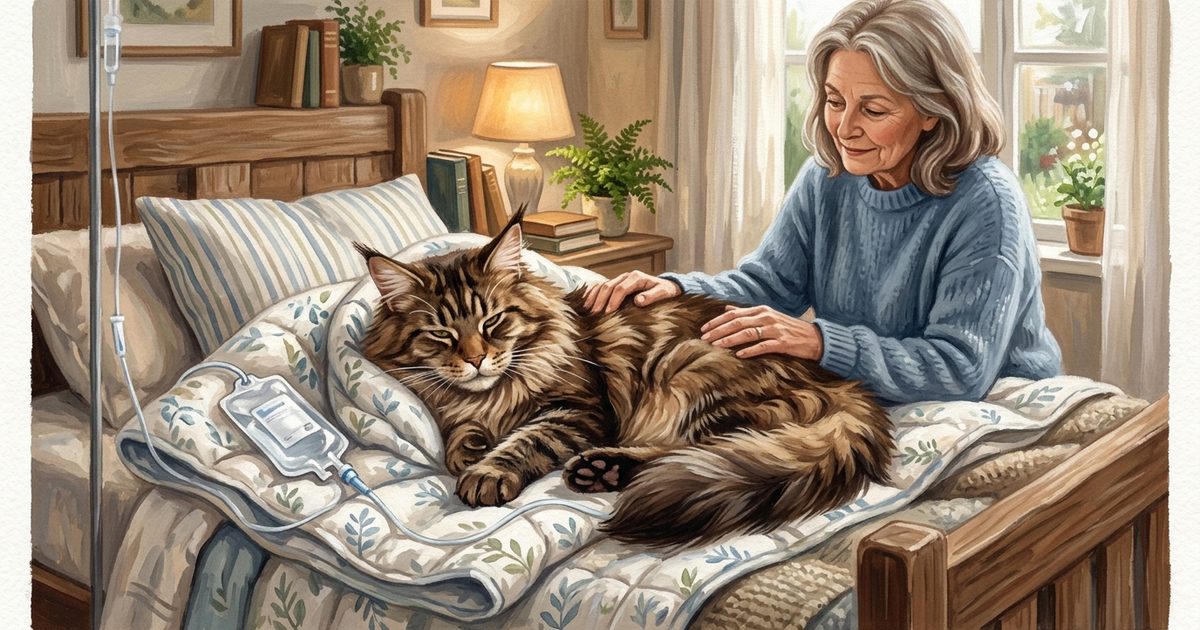
There is no drug that kills the virus, so treatment is intensive supportive care: hospitalization, IV fluids, anti-vomiting medication, antibiotics for secondary bacterial infection, and strict isolation. With aggressive early treatment many cats survive, but the prognosis is guarded.
Supportive care is the treatment
Parvoviruses cannot be cleared with antiviral drugs, so there is no "cure" in the sense of a pill that eliminates the infection. Instead, treatment does something just as important: it keeps the cat alive and stable while its own immune system fights the virus off. IV fluids and electrolytes correct the dehydration and shock caused by relentless vomiting and diarrhea. Antiemetics control the vomiting so the exhausted gut can rest. And targeted antibiotics are given not for the virus itself, but for the bacteria that breach the damaged intestinal wall once the white blood cell count has crashed — the secondary infections that so often turn a serious illness into a fatal one. Think of supportive care as buying your cat the time and physiological stability it needs to recover on its own terms.
Isolation and biosecurity
A cat with feline parvo is extremely contagious and sheds enormous amounts of virus in every stool. Treatment therefore means strict isolation, usually in a veterinary clinic, with barrier nursing and careful disinfection of every surface the cat touches. Parvocidal disinfectants — bleach-based products where appropriate — are used because many common cleaners simply do not touch this virus. If you have other cats at home, this is also why confirmed cases are not something to manage on your own without explicit veterinary instruction: the environmental contamination you bring back on your hands or clothes can put every other cat in the household at risk.
Prognosis and survival
Survival depends on three things: the cat's age, its immune status going in, and how quickly treatment began. With prompt, aggressive supportive care started early, many cats do survive and go on to recover fully. But honesty matters here — very young kittens, unvaccinated cats, and cats that already arrive at the clinic collapsed face a guarded to poor prognosis, and not every cat makes it. We will not promise a recovery that cannot be guaranteed; what we can say is that early, intensive care meaningfully shifts the odds in your cat's favor.
After recovery
Cats that survive feline parvo typically develop strong, long-lasting immunity to it. Two responsibilities remain: they continue to shed virus for several weeks, and the environment they occupied must be thoroughly disinfected before any new, unvaccinated cat is introduced into the home.
Feline Parvo in Cats at a Glance — Summary
| Question | Short answer |
|---|---|
| Can cats get parvo? | Not canine parvo — cats get their own parvovirus, feline panleukopenia |
| What is feline panleukopenia? | A highly contagious parvovirus that attacks the gut lining and bone marrow |
| What are the main symptoms? | Sudden fever, vomiting, bloody diarrhea, lethargy, and rapid dehydration |
| How does it spread? | Mostly fecal-oral, through shared litter, bowls, hands, or shoes |
| How do you prevent it? | The core FVRCP vaccine — highly effective, given as a kitten series plus boosters |
| How is it treated? | Intensive supportive care: IV fluids, anti-vomiting drugs, antibiotics, isolation |
| Can a vaccinated cat get it? | Rarely — break-throughs are uncommon and usually mild |
| Is it an emergency? | Yes — sudden bloody vomiting and diarrhea in a young cat needs the vet now |
If you take away one thing, let it be this: feline parvo is devastating but preventable, and the single most powerful protection your cat will ever have is a completed FVRCP vaccine series. A kitten that was fine yesterday and is collapsed today is an emergency — minutes matter, not days. Cats with a weakened immune system, such as those living with FIV, face an even harder fight, which is exactly why prevention comes first.
Curious What Your Cat Would Say?
Upload a photo and get a warm, personalized reading from your cat's perspective.
Start Your Free ReadingFrequently Asked Questions
Can cats get parvo from dogs?
Not in the way people fear. Cats do not typically develop disease from canine parvovirus, but they have their own equivalent called feline panleukopenia. Both are parvoviruses, but they target different hosts — so your cat did not catch your dog's parvo, though it carries its own risk.
Can cats get canine parvovirus?
Rarely and not as a natural disease. Cats are the natural host of feline panleukopenia, not canine parvovirus, and they do not usually become ill from the canine form. The dangerous parvovirus in cats is feline panleukopenia, which is prevented by the core FVRCP vaccine.
What are the first signs of feline panleukopenia?
The first signs are usually sudden lethargy, refusal of food, and a fever, followed quickly by repeated vomiting and foul-smelling, often bloody diarrhea. The speed of the decline is the real warning — a kitten fine yesterday and collapsed today is an emergency.
How is feline parvo spread?
Mainly through the fecal-oral route. An infected cat sheds huge amounts of virus in its stool, and a susceptible cat picks it up from shared litter, bowls, bedding, or a person's hands and shoes. The virus is so hardy it can survive in the environment for over a year.
Can a vaccinated cat get feline parvo?
Rarely. Break-throughs do occur but are uncommon and usually mild, often tied to an incomplete kitten series or a waning booster in a high-exposure environment. A fully vaccinated cat is overwhelmingly protected, which is why FVRCP is a core vaccine.
How long does the parvo virus live in the environment?
A remarkably long time. Feline parvovirus survives freezing, ordinary heat, and many common disinfectants, persisting on surfaces, in carpets, and in yards for months — and sometimes more than a year. This hardiness is why outbreaks are so stubborn and proper parvocidal disinfection matters.
Is feline panleukopenia curable?
There is no drug that kills the virus, but it is treatable with intensive supportive care — IV fluids, anti-vomiting medication, antibiotics for secondary infection, and strict isolation. With prompt aggressive treatment many cats survive, though the prognosis is guarded, especially in young kittens.
Do indoor cats need the panleukopenia vaccine?
Yes. Because the virus survives freezing, heat, and many disinfectants and can be carried in on shoes, clothing, and hands, even indoor-only cats can be exposed. Given that the vaccine is safe, inexpensive, and the disease is devastating, it is a core vaccine recommended for every cat.
Sources & References
You Might Also Like
Kitten Teething: Timeline, Symptoms & How to Help
Kitten teething runs from 3 to 7 months as baby teeth fall out. Learn the timeline, signs to watch for, and how to soothe a teething kitten safely.
15 min readWhen Do Cats Stop Growing? A Complete Timeline
When do cats stop growing? Most cats reach adult size by 12-18 months, but large breeds like Maine Coons keep growing until 3-4 years. Full timeline inside.
14 min readCan Cats Eat Cherries? Flesh, Pit & Toxicity Facts
Can cats eat cherries? Pitted flesh is safe in tiny amounts — but the pit, stem, and leaves are toxic (cyanide precursors). Learn what's safe and what isn't.
15 min readA message, in your cat's voice
Upload a photo, get a warm note written from your cat's perspective — just for fun. Plus 121 vet-cited articles, offline.