
Why Is My Cat Coughing? Causes & When to See a Vet
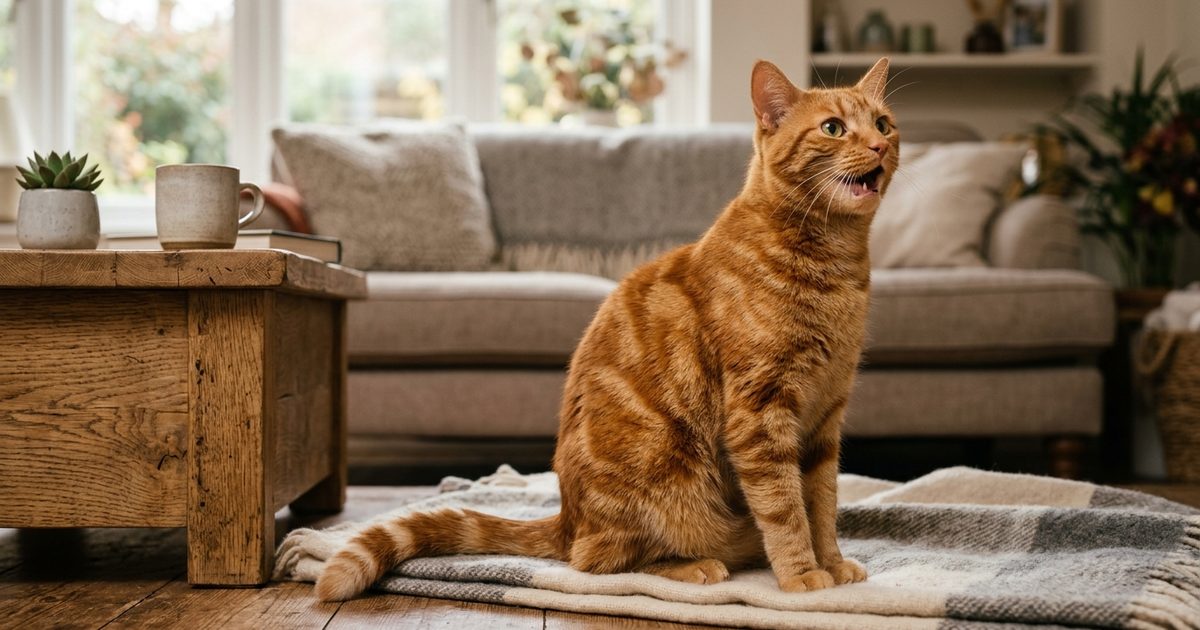
Cat coughing is one of those sounds that stops a cat owner mid-sentence — and the first questions that follow are almost always why is my cat coughing, and can cats cough at all. The short answer to both is reassuring: yes, cats genuinely cough, and an occasional cough can be completely benign. What decides whether it matters is the pattern — how often it happens, what it sounds like, and what else comes with it — not the cough itself.
The catch is that most owners mistake a true cough for a hairball gag. The two sound similar from across the room, but they come from different parts of the body and point to very different things. Once you can tell them apart, you can read what your cat is actually doing — and know when it's time to call the vet.
Key takeaways
- Cats do cough — it's a real lower-airway reflex, not just a hairball in disguise.
- A true cough (dry, chest-driven, nothing comes up) is different from a hairball gag (stomach-driven retch that produces fur).
- Coughing warrants a vet visit when it's persistent, frequent, or paired with wheezing, breathing effort, lethargy, or loss of appetite.
Cat Coughing — Quick Reference
| What you observe | Most likely | Urgency |
|---|---|---|
| A single dry cough, then the cat is fine | Dust, scent, or a drink down the wrong way | Monitor — usually nothing |
| Coughing + gagging that brings up fur | A hairball being cleared | Low — self-limiting |
| Persistent dry, honking cough | Feline asthma, allergies, or chronic airway irritation | Book a vet visit |
| Cough + wheeze or obvious breathing effort | Feline asthma or lower-airway disease | Soon — same-week vet |
| Cough right after dust, perfume, or litter change | Environmental or allergic airway irritant | Monitor; reduce the trigger |
| Cough + lethargy, not eating, or hiding | Infection, heart disease, or systemic illness | Prompt vet visit |
| Cough + open-mouth breathing or blue gums | Respiratory emergency | Emergency — don't wait |
Do Cats Cough? What It Sounds and Looks Like
Yes, cats cough. A cat cough is a sudden, dry, often honking or wheezing sound made with the mouth slightly open and the chest and abdomen heaving — it comes from the lower airway and lungs, not the stomach. It is a genuine reflex, and a single occasional cough can be harmless.
What a cat cough actually is
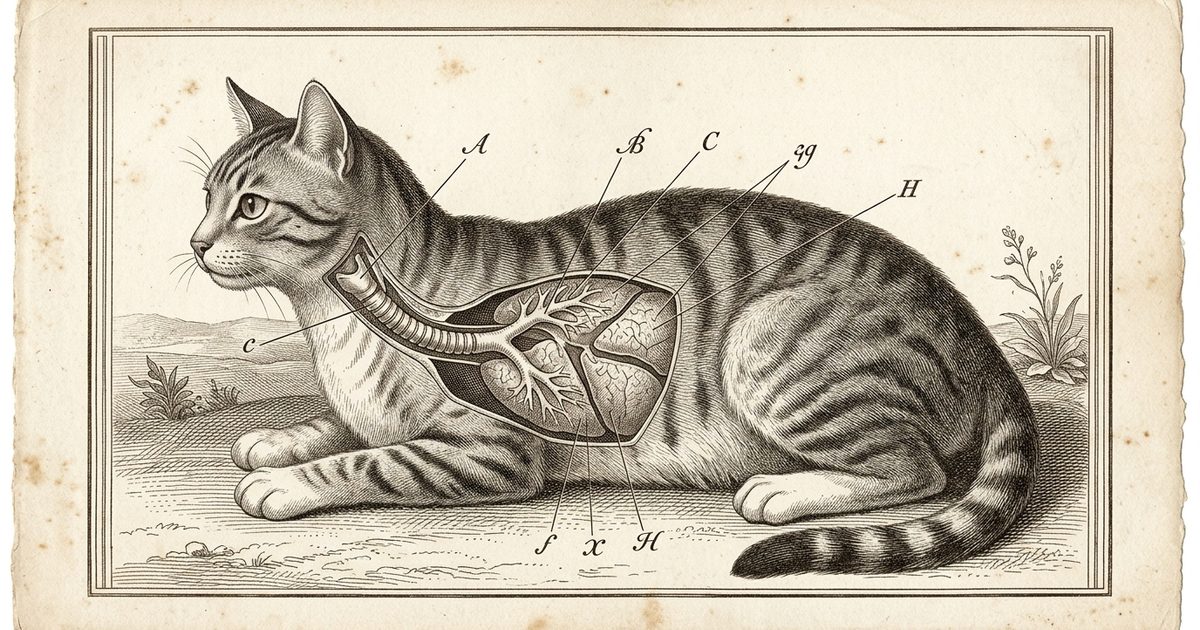
A cough is an expulsive reflex of the lower airway — the trachea, bronchi, and lungs — designed to clear out an irritant, excess mucus, or inflammation. When something trips that reflex, the cat crouches low, extends its neck forward, holds the mouth slightly open, and the abdominal wall contracts sharply, over and over, to push air out of the chest. Nothing comes up; the cat is clearing its airway, not bringing anything up from the stomach. You can read more about the mechanics of feline respiration from the Cornell Feline Health Center, a leading authority on cat health.
What it sounds and looks like
Owners describe the sound in a few vivid ways — a dry hack, a "goose honk," a wheeze, or even a sound like a small dog with kennel cough. What makes it recognizable isn't just the noise but the posture: a low stance, neck stretched forward, and clear abdominal effort with each cough. Because the movement is dramatic and head-and-neck-heavy, owners very often film it assuming they're watching a hairball come up (film it — more on that below) — which is exactly why the hairball-vs-cough confusion trips up so many households.
Is coughing ever normal?
Yes — a one-off cough after a puff of dust, a strong scent, or a drink going down the wrong way is normal and usually self-resolves within moments. Occasional coughing in an otherwise bright, alert, eating cat is generally nothing to worry about. The question worth watching is the pattern: how often it happens, whether it's increasing, and whether anything else has changed — not whether a single cough occurred.
Why Is My Cat Coughing? Common Causes
Cat coughing has several common causes: hairballs triggering a gag-cough, feline asthma, allergies, respiratory infections, inhaled foreign bodies, and less often heart disease or lung parasites. The pattern — how often, what else comes with it — narrows down which one it is.
Hairballs and the gag-cough
Cats swallow a lot of fur during grooming, and that fur can irritate the throat and stomach lining enough to trigger a cough-like gag before a hairball comes up. It's common and usually self-limiting — the cat clears the fur and goes back to normal. The key distinction: the cough is the airway event; the hairball itself is the swallowed-fur mass the stomach is rejecting. For the full deep-dive on what a hairball is, how often is too often, and how to manage fur buildup, see our guide on cat hairballs.
Feline asthma
Feline asthma is one of the leading medical causes of true coughing in cats. It's an allergic inflammation that narrows the lower airways, and its signature is a dry, honking or wheezing cough that tends to come in bouts. It's also one of the most under-recognized causes, because between episodes the cat seems perfectly fine and owners assume it's just a recurring hairball. Mechanistically, when a sensitive cat inhales a trigger — dust, pollen, mould, litter dust, perfume, or smoke — the immune system overreacts: the bronchi inflame and swell, mucus production jumps, and the muscles wrapping the airways tighten (bronchoconstriction), so the passages narrow and the cat coughs and wheezes to force air through. It often first appears between the ages of 2 and 8 and tends to be chronic and recurrent rather than a one-off. A vet confirms it by ruling out the other causes — infection, a foreign body, heart disease — using chest x-rays and sometimes airway samples; if confirmed, treatment most often centers on corticosteroids to calm the inflammation, frequently delivered through an inhaler with a feline spacer mask. If your cat has bouts of dry coughing that keep coming back, asthma is high on the list — our feline asthma guide covers the pathology, triggers, and long-term inhaler management in full.

Allergies
Environmental allergens — pollen, dust mites, mold, and especially dusty cat litter — can irritate the airway and trigger coughing much the way they do in people. Allergic coughing is often seasonal and tends to come with sneezing or itchy, over-groomed skin. If you suspect allergies are behind the cough, the full allergic-spectrum workup (environmental, food, and contact) is in our guide on cat allergies, and the upper-airway side of the picture is covered in cat sneezing.
Respiratory infections
Viral upper respiratory infections — feline herpesvirus and calicivirus — along with bordetella and mycoplasma, can cause cough alongside sneezing and nasal or eye discharge. These are most common in kittens, cats in shelters, and multi-cat households where pathogens pass easily. For the deep-dive on the most common of these, see our guide on feline herpesvirus. Owners often ask can cats get kennel cough or can cats get kennel cough from dogs — the honest answer is that Bordetella can transmit between dogs and cats, but it's uncommon, and kennel-cough-style coughing in cats is rare compared to the other causes above. There's no reason to panic over a multi-pet home, but it's a real, vet-confirmed possibility worth keeping on the list.
Inhaled foreign body
A grass awn or seed inhaled deep into the airway can cause sudden, persistent coughing — often with one-sided signs or a clear onset after the cat was outdoors or in long grass. This is one cause that can escalate quickly, because the foreign material irritates and sometimes infects the airway. A sudden, stubborn cough that won't settle warrants prompt veterinary attention, covered in detail below in When Is Cat Coughing Serious? and When Should I Take My Coughing Cat to the Vet?
Heart disease and lungworm
Less common but more serious, heart disease — especially cardiomyopathy — can cause fluid to build up in the lungs and produce a softer, persistent cough, often with exercise intolerance or breathing changes. Lungworm, picked up by eating infected prey like slugs or snails, can cause a chronic cough that lingers for weeks. Neither is the first thing to jump to, but they're exactly the kind of cause a vet investigates when the obvious explanations don't fit. The Cornell Feline Health Center is a reliable reference for the range of conditions that can underlie a cough, and International Cat Care covers the lower-airway diseases in depth — both are good starting points if your vet is working through the differential.
Cough, Hairball, or Sneeze? How to Tell Them Apart
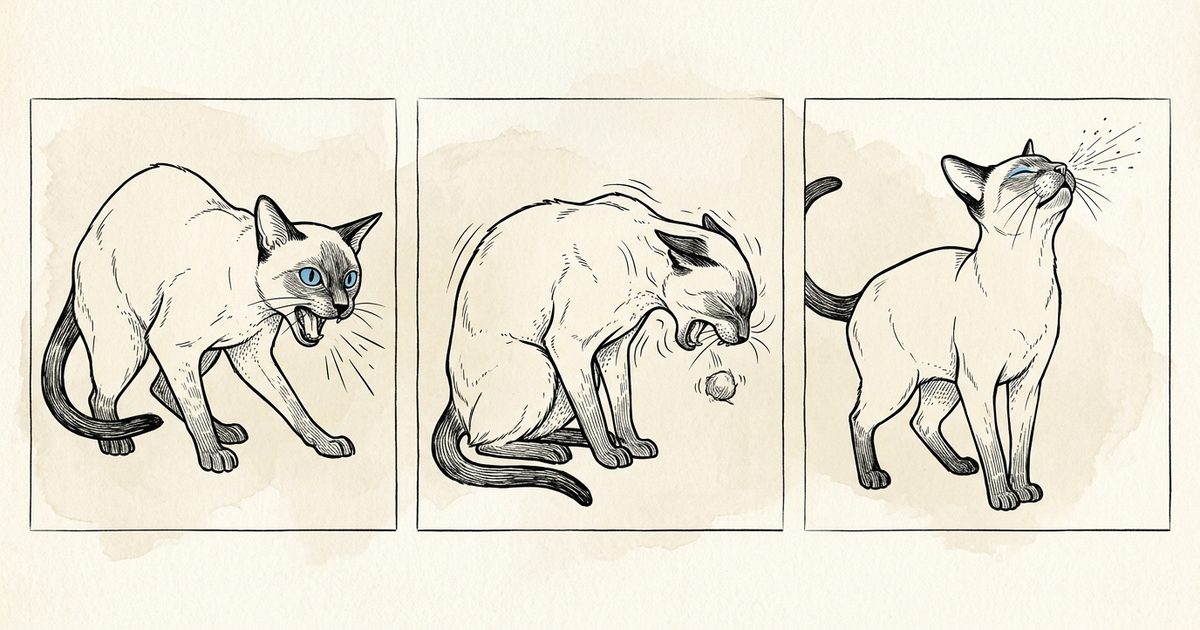
A cough is dry, repeated, and comes from the chest with abdominal effort and the mouth open; a hairball gag is a prolonged, low, stomach-driven retch often ending with a fur cylinder; a sneeze is a short, single, head-and-nose burst. Owners confuse all three — the body part doing the work tells them apart.
If you've ever watched your cat hacking in a hunched posture and couldn't tell what was happening, you're in good company. The three sounds blur together because they all involve the head and neck — but the body part doing the work is different every time. Here's how to separate them.
The cough: lower airway, chest effort
A true cough originates in the chest, not the throat or stomach. The cat crouches low, extends its neck forward, and holds its mouth slightly open. You'll see the abdominal wall contract sharply — repeated, rhythmic contractions rather than one big effort. The sound is dry, sometimes described as a "goose honk" or a wheeze, and crucially, nothing comes up. It's an airway reflex, the lungs trying to clear an irritant or inflammation. This is the pattern most associated with feline asthma, allergies, or infection — not fur.
The hairball gag: stomach, retching
The hairball gag feels different. It's prolonged — sometimes lasting a minute or more — and the effort comes from the stomach and abdomen rather than the chest. The cat ducks low, makes loud retching or hacking noises, and usually produces a tubular mass of fur at the end (though not always). The work is gastric, not respiratory. If food, bile, or foam comes up instead of fur, that crosses into vomiting territory; if it's a compacted fur cylinder, it's a hairball. The key tell: the production of something solid at the end.
The sneeze: nose, single burst
A sneeze is the easiest to identify once you're watching for it. It's a quick, expulsive burst from the nose and head — eyes scrunch shut, the head pulls back sharply, and it's over in about a second. There's no abdominal effort, no prolonged retching, no chest heaving. Sneezing reflects the upper airway (the nasal passages), not the lungs, and it's usually tied to irritants or upper respiratory infections rather than lower-airway disease. We cover the upper-airway side of that picture in our guide to cat sneezing.
Why owners conflate them
All three involve head and neck movement, all three make noise, and all three can look dramatic — so without watching the posture and what (if anything) is produced, they blur into one confusing "cat hacking" moment. The one-line test that cuts through it: chest + dry + nothing up = cough; stomach + retch + fur = hairball; nose + burst = sneeze. If you're unsure, film the next episode (film it — more on that below).
When Is Cat Coughing Serious? Red Flags to Watch For
Coughing becomes a concern when it is persistent — lasting more than a day or two — frequent, or paired with wheezing, labored breathing, lethargy, loss of appetite, or blue gums. These point beyond a simple irritant to asthma, infection, heart disease, or a foreign body, and warrant prompt veterinary attention.
A single cough after your cat sticks its nose into a dusty box is rarely anything to worry about. The pattern is what matters: how often it happens, how long it has been going on, and what else shows up alongside it. Most cat coughing is mild and self-limiting — but cat coughing crosses into "call the vet" territory when it stops being an isolated event and starts becoming a pattern, or when other signs of illness ride along with it. Read the trend rather than any single episode — frequency (how many times a day), duration (how many days it has lasted), and whether it is getting worse, staying flat, or fading. A one-off after a puff of dust is the airway doing its job; a daily cough that is becoming more frequent is the airway asking for help. If the cough feels habitual, that itself is the signal worth acting on.
Accompanying symptoms that escalate
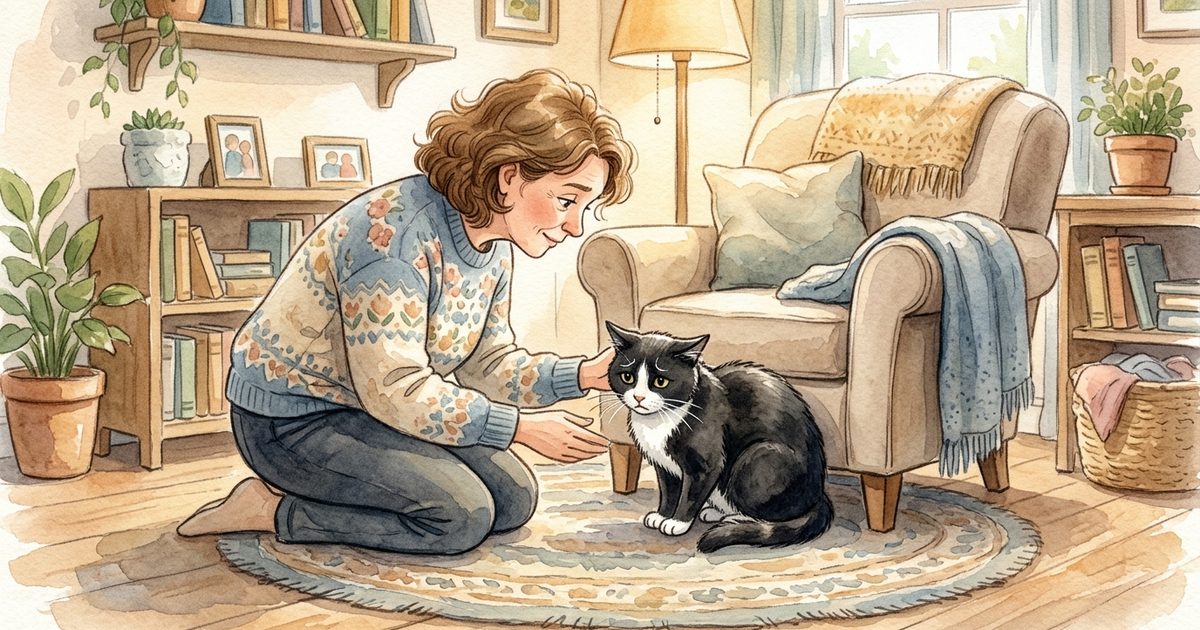
The cough alone rarely tells the whole story — what comes with it does. Watch for wheezing or obvious breathing effort (the cat crouching low, neck extended, breathing with its abdomen doing the work rather than its chest), open-mouth breathing at rest, blue or pale gums, lethargy, fever, a reduced appetite, gradual weight loss, or coughing up foam or blood. Each cluster of symptoms tends to point a different direction, though only a vet can confirm: wheeze plus breathing effort often suggests feline asthma; cough alongside nasal or eye discharge and lethargy points toward a respiratory infection; a soft cough paired with exercise intolerance or tiring easily can hint at heart disease; and a sudden, persistent cough with no obvious trigger can mean an inhaled foreign body. None of this is a diagnosis — it is a map of where a vet investigation tends to start. The Cornell Feline Health Center is a reliable reference for when respiratory signs in cats warrant a visit.
Asthma attacks can look alarming
An active asthma attack is a distinct emergency: the cat crouches low to the ground, extends its neck forward, and breathes with visible abdominal effort — you can see the belly working hard with each breath — and it may wheeze audibly on the exhale. An active asthma attack with labored breathing needs same-day veterinary care; it can escalate quickly. You can read the full picture of this disease in our guide to cat asthma, but the short version is: breathing that looks effortful is not something to monitor overnight.
Persistent cough in kittens and seniors
Age changes the threshold for concern. Kittens are small, fragile, and quick to dehydrate; a persistent cough in a kitten is more likely to be an infection, and it can go downhill faster than in an adult because they have less reserve. Seniors are a different story — chronic coughing in an older cat more often reflects heart disease, especially cardiomyopathy, or long-standing airway disease, both of which need management rather than waiting. In both age groups, lower the bar for calling the vet. A persistent cough that you might reasonably watch for a few days in a healthy young adult deserves a quicker phone call in a kitten or a cat in its senior years.
Is It Feline Asthma?
Feline asthma is common, widely missed, and worth its own deep-dive: the pathology, the full trigger list, flare-up management, and the long-term inhaler plan are all covered in detail in our dedicated guide to cat asthma. If your cat's cough fits the shape described above — recurrent dry, honking or wheezing bouts, onset between 2 and 8 years old, normal between episodes — read that guide rather than this section. The reason owners miss it for months or years is simple: the cat looks fine between episodes, so a recurring hairball seems like the obvious explanation until a vet connects the pattern to the lungs.
When Should I Take My Coughing Cat to the Vet? (And What to Record)
Book a vet visit if your cat's coughing lasts more than a day or two, becomes frequent, or comes with wheezing, labored breathing, lethargy, not eating, or blue gums. Film the cough on your phone — the vet can tell an enormous amount from the sound and posture, and it saves guesswork.
The decision to call the vet doesn't require certainty about what's wrong — it requires recognizing the pattern of wrong. Here's how to read that pattern, and the one simple thing you can do right now that helps your vet more than any description you could write.
The decision rule in plain terms
Use two questions. First, is it persistent — lasting more than a day or two, or coming back day after day? Second, is it paired with anything else — wheezing, breathing effort, lethargy, appetite loss, discharge? If the answer to either is yes, book a vet visit. The same goes if the coughing is clearly getting worse. A single cough, or a short bout right after an obvious irritant like a puff of dust, in a cat that's otherwise bright and eating, is reasonable to monitor at home for a day or two. When in doubt, call — most clinics will triage over the phone for free.
What counts as urgent (don't wait)
Some signs mean don't wait for a routine appointment. Open-mouth breathing at rest in a cat (dogs pant; cats generally don't) is an emergency. Blue or pale gums signal the blood isn't carrying enough oxygen. Severe respiratory effort — the abdomen heaving hard with every breath, the cat crouched low and unable to settle — needs same-day care. So does collapse, a cat that has stopped eating or drinking for 24 hours, or a kitten that has stopped feeding. These point to a crisis, not a passing irritation, and they warrant an emergency vet, not a booked slot next week.
Film the cough — it helps the vet more than any description
If there's a single most useful thing an owner can do, it's this: film the cough on your phone. Coughing is notoriously hard to describe in words — "hacking," "wheezing," "gagging" all mean different things to different people — but a 15-second video captures the sound, the posture, and the effort in a way nothing else can. From footage alone, a vet can often tell a true cough from a hairball gag, an asthma wheeze, or a cardiac cough. If you can't be seen immediately, record a few episodes over a couple of days so the vet sees the pattern, not just one moment.
What to note for the vet
Alongside the video, jot down a quick history: how long the coughing has been going on, how often per day, any triggers you've noticed (a new litter, perfume, dust, a recent move), and any other symptoms — sneezing, nasal or eye discharge, appetite, energy, weight. Note whether other cats in the home are affected too, which can point toward something infectious. Bring the video and these notes to the appointment. Two minutes of preparation can save a lot of diagnostic back-and-forth.
What the vet will do
Expect a history and physical exam first — the vet will listen to the chest with a stethoscope, checking lung sounds and heart. From there it may involve x-rays to look at the airways and heart, and possibly airway samples or tests for infection and parasites. Treatment follows the cause: antibiotics for a bacterial infection, anti-inflammatories for asthma, removal of a foreign body if one is lodged in the airway. One thing the vet will tell you, and it bears repeating: never give your cat human cough syrup, cold medication, or painkillers. Many common human remedies — including acetaminophen/paracetamol and certain decongestants — are toxic to cats and can be fatal. Always let the vet prescribe.
Curious What Your Cat Would Say?
Upload a photo and get a warm, personalized reading from your cat's perspective.
Start Your Free ReadingCat Coughing at a Glance — Summary
| Question | Short answer |
|---|---|
| Do cats cough? | Yes — a dry, honking reflex from the lower airway, not the stomach |
| What does a cat cough sound like? | Dry, hacking, often a "goose honk" or wheeze, with neck extended and mouth open |
| What are the most common causes? | Hairball gag-cough, feline asthma, allergies, respiratory infections, foreign bodies |
| Cough or hairball gag? | Cough is chest-driven and dry; a hairball gag is a prolonged retch ending in fur |
| Cough or sneeze? | Cough comes from the chest with abdominal effort; a sneeze is a quick nose burst |
| When is coughing serious? | When persistent, frequent, or paired with wheezing, lethargy, or labored breathing |
| Could it be feline asthma? | A common cause of true coughing — recurrent dry, wheezing bouts, often in young-to-middle-aged cats |
| When should I take my cat to the vet? | If it lasts over a day or two, worsens, or comes with any red-flag symptom — and film the cough |
Frequently Asked Questions
Why is my cat coughing?
The most common reasons are a hairball gag-cough, feline asthma, allergies, or a respiratory infection — and less often an inhaled foreign body, heart disease, or lungworm. How often it happens and what comes with it narrows down which one, so the pattern matters more than any single cough.
Do cats cough, or is it always a hairball?
Yes, cats genuinely cough — it's a real lower-airway reflex from the lungs, not a stomach event. A hairball gag is a prolonged retch that often ends with fur, while a true cough is dry, chest-driven, and brings nothing up. Many owners mistake one for the other.
How can I tell a cough from a hairball gag?
A cough comes from the chest with abdominal effort, a slightly open mouth, and a dry, honking or wheezing sound — nothing comes up. A hairball gag is a prolonged, stomach-driven retch that usually produces a tubular mass of fur. Chest plus dry means cough; stomach plus retch means hairball.
When should I take my coughing cat to the vet?
Book a visit if the coughing lasts more than a day or two, becomes frequent, or comes with wheezing, labored breathing, lethargy, loss of appetite, or blue gums. A single cough after an obvious irritant in an otherwise bright, eating cat is reasonable to monitor at home.
Can cats get kennel cough from dogs?
It is possible but uncommon. Bordetella, the bacterium behind kennel cough, can transmit between dogs and cats, yet kennel-cough-style coughing in cats is rare compared to asthma, allergies, or respiratory infections. A multi-pet home isn't a reason to panic, but it's a real, vet-confirmed possibility.
Is my cat's cough asthma?
It can be. Feline asthma is one of the most common medical causes of true coughing in cats, marked by recurrent dry, honking or wheezing bouts — often in young-to-middle-aged cats that seem perfectly fine between episodes. If the pattern fits, a vet can confirm it with x-rays and airway tests.
What does a cat cough sound like?
Owners describe it as a dry hack, a 'goose honk,' or a wheeze. The cat crouches low, extends its neck forward, holds its mouth slightly open, and the abdominal wall contracts sharply with each cough — and nothing comes up. The posture is often more recognizable than the sound.
Should I film my cat's cough for the vet?
Yes — it's the single most useful thing you can do. Coughing is hard to describe in words, but a short phone video captures the sound, posture, and effort so clearly that a vet can often tell a cough from a hairball gag, an asthma wheeze, or a cardiac cough from the footage alone.
Sources & References
You Might Also Like
Kitten Teething: Timeline, Symptoms & How to Help
Kitten teething runs from 3 to 7 months as baby teeth fall out. Learn the timeline, signs to watch for, and how to soothe a teething kitten safely.
15 min readWhen Do Cats Stop Growing? A Complete Timeline
When do cats stop growing? Most cats reach adult size by 12-18 months, but large breeds like Maine Coons keep growing until 3-4 years. Full timeline inside.
14 min readCan Cats Eat Cherries? Flesh, Pit & Toxicity Facts
Can cats eat cherries? Pitted flesh is safe in tiny amounts — but the pit, stem, and leaves are toxic (cyanide precursors). Learn what's safe and what isn't.
15 min readA message, in your cat's voice
Upload a photo, get a warm note written from your cat's perspective — just for fun. Plus 121 vet-cited articles, offline.