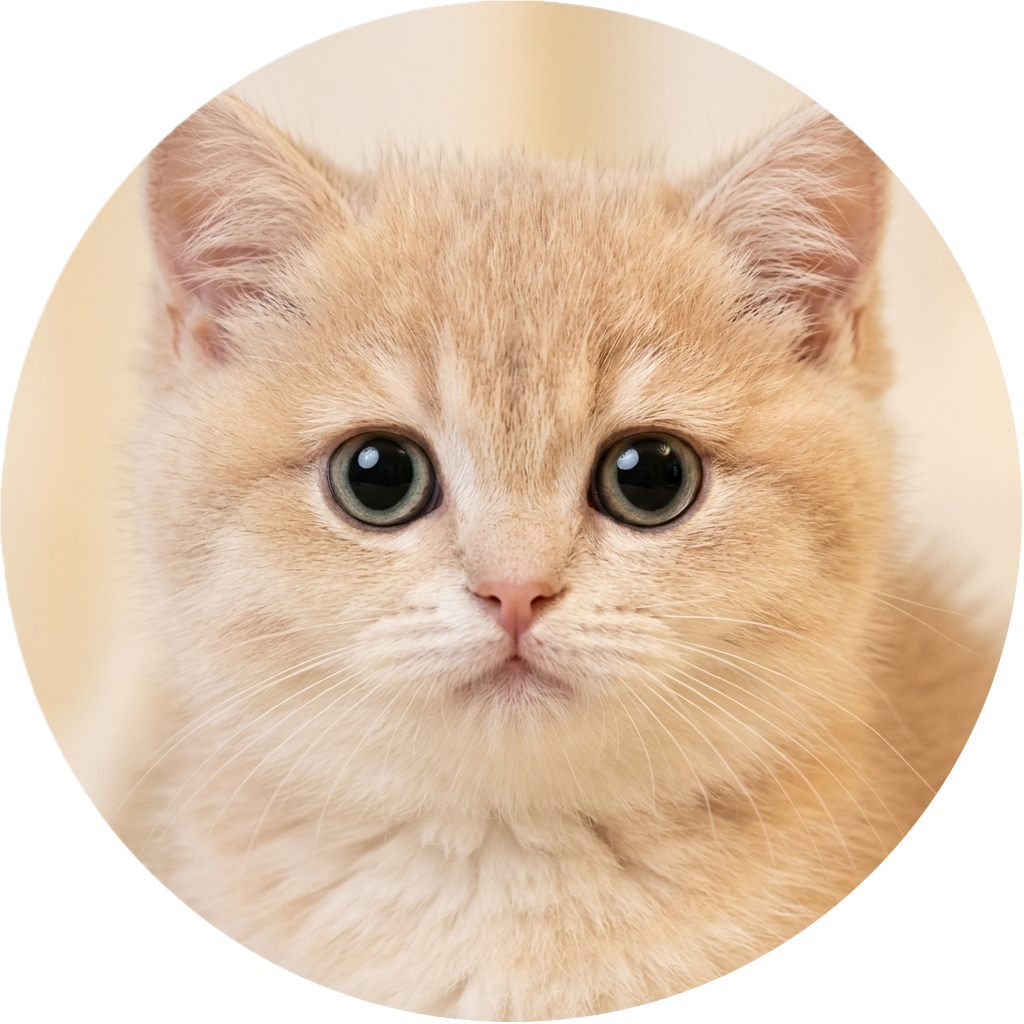
Cat Side Eye: Why Your Cat Gives You That Look
That look — your cat turns her head away but keeps one eye locked on you — is what people call cat side eye. It's not judgment. A side eye cat is usually monitoring something she's unsure about, and the more tense version, cat whale eye, is a recognized stress signal worth knowing. This guide breaks down the anatomy, the motivation, and exactly how to respond when your cat gives you that look.
Key takeaways
- Side eye is an averted, peripheral glance — your cat watching without committing to a direct stare, not a moral judgment of you.
- Whale eye is the tense extreme: the eye rotates far enough that the white sclera shows in a half-moon, usually signaling overstimulation or stress.
- The right response is space, not confrontation — stop petting, soften your gaze, and let your cat re-engage on her own terms.
Cat Eye Signals — Quick Reference
| Eye signal | What it looks like | What it usually means |
|---|---|---|
| Relaxed side-glance | Head turned, one eye drifting sideways, soft body | Casual peripheral awareness, no tension |
| Relaxed slow blink | Half-closed eyes, blinking slowly while facing you | Trust and affection |
| Mild side-eye watch | Head turned away, one eye fixed on you, normal pupils | Monitoring something, mild uncertainty |
| Tense whale eye | Eye rotated to show white sclera in a half-moon, dilated pupil | Stress or overstimulation — needs space |
| Half-closed sleepy | Eyelids drooping, blinking long, loose posture | Deep relaxation and contentment |
What Is Cat Side Eye?
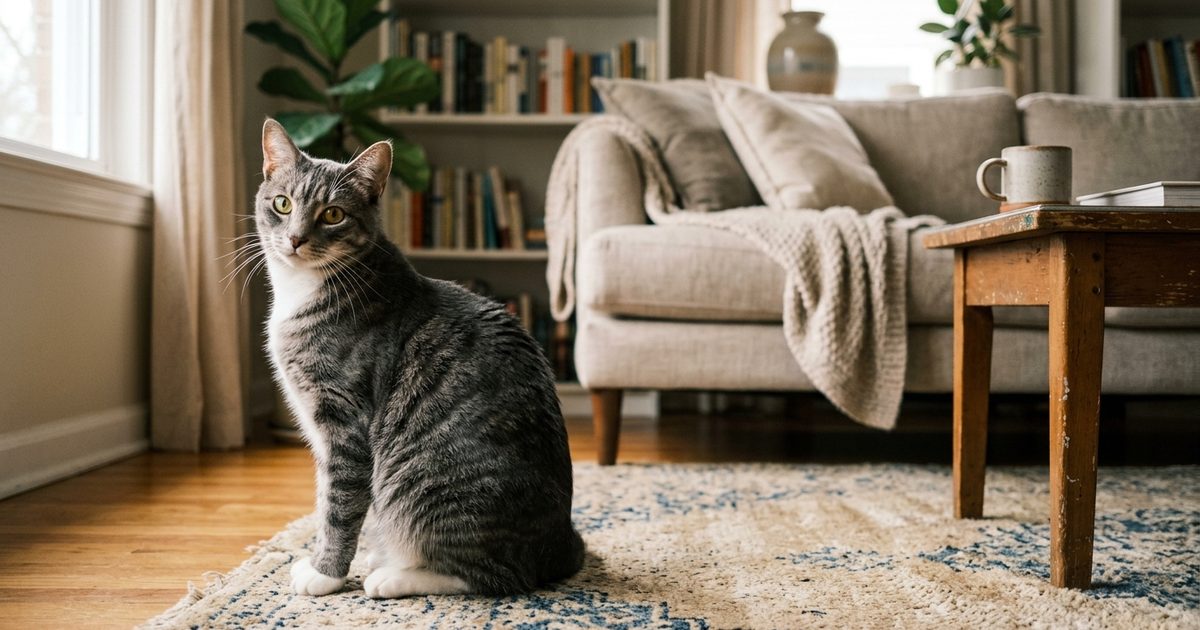
Cat side eye is when your cat turns her head away but keeps one eye on you, or rotates the eye sideways without meeting your gaze. It's an averted, peripheral look — not a locked-on direct stare — and the visible white of the eye is what people notice most.
The phrase gets thrown around online as if cats are silently judging their owners — the feline equivalent of an eye-roll. The reality is more interesting, and more useful. Side eye is a piece of feline body language, and like most cat communication signals, it tells you something specific about how your cat is feeling in that moment if you read the whole picture.
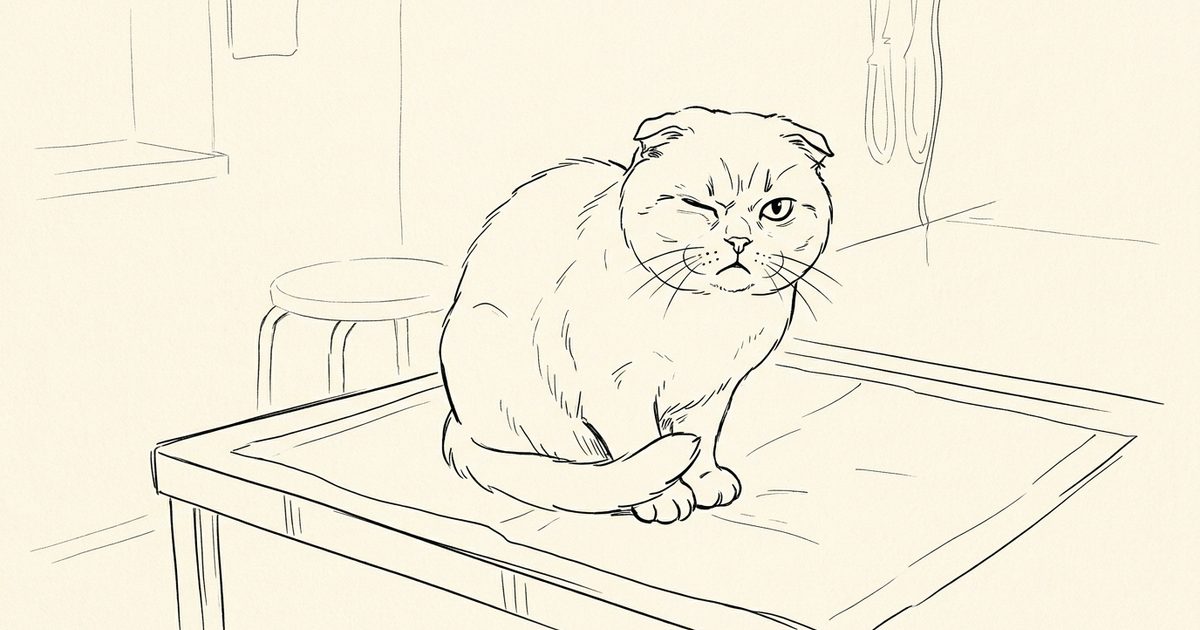
What makes it confusing is that the same physical motion — a head turned away, an eye held to the side — can mean very different things depending on context. A cat sprawled on the sofa, half-asleep, glancing sideways at a passing dust mote is doing something completely different from a cat crouched tense on the vet's exam table, head turned, one eye wide and fixed on the technician. Both look "sideways." Only one is what behaviorists would flag as a stress signal.
The key is the rest of the body. Side eye rarely travels alone — it shows up alongside ear position, tail movement, posture, and pupil size. Once you can read those clusters, that single averted glance stops being a mystery and becomes information you can act on. This article focuses specifically on the averted and rotated eye; if your cat is giving you a locked-on direct stare, that's a different signal we cover separately in our guide to why cats stare.
The anatomy of an averted gaze
Physically, cat side eye happens in two steps. First the head turns away from whatever has the cat's attention — you, another pet, a noise in the hallway. Then the eye itself rotates toward the lateral corner (the outer edge) rather than following the head. Cat eyes are large and sit forward on the skull for binocular vision, which means rotating the globe too far pulls the muscles taut and exposes the sclera — the white of the eye — at the outer corner. That white sliver is the visual cue people register as "side eye." Sometimes the nictitating membrane (the third eyelid) also flicks across, especially when the cat is tense. This is one small piece of the wider feline body language map, where ears, tail, and posture work together to tell the full story.
Side eye vs a relaxed glance
Here's where most cat owners get tripped up: a resting cat scanning the room often looks "sideways" without any tension at all. Her pupils are normal, her body is soft, her ears face forward, and she's simply using her peripheral vision — cats have a massive field of view, nearly 200 degrees, so a sideways glance is their default way of taking in the world. That's a neutral glance, not a signal.
The tense side eye is different. The eye holds longer, the pupil is either dilated or pulled into tight slits, the body carries a low-grade stiffness, and the white sclera may show. International Cat Care, a leading authority on feline welfare, describes these subtle facial tension changes as early markers of a cat feeling uncomfortable. The difference between "just looking around" and "watching because something feels off" lives in that tension, not in the head turn itself.
Why Do Cats Give Side Eye?
Cats give side eye to monitor something they are unsure about without committing to a direct stare, which cats read as confrontational. It usually signals mild anxiety, overstimulation, or threat assessment — your cat is watching while keeping the option to retreat, not judging you.
Threat monitoring without confrontation
In cat language, eye contact doesn't mean the same thing it means to humans. A direct, locked stare is a challenge — between cats it is the opening move of a confrontation, and a confident, calm cat will hold one only with someone she trusts or with something she is sizing up. So when your cat wants information about you, a stranger, or a sudden noise without inviting a fight, she turns her head away and keeps you in her peripheral vision instead. The averted gaze says "I am not picking a fight," while the eye still tracks you. This is the same reason two unfamiliar cats will avoid locking eyes across a room — it is politeness, not indifference. If you want to understand the full mechanics of the direct stare and why your cat sometimes holds one, we break it down in our guide to why cats stare.
Anxiety and overstimulation
Side eye also shows up when a cat is uncomfortable but not yet ready to leave — during a long petting session that is tipping into overload, when a new person enters the room, around loud appliances, or near a resource she wants to guard. The cat is braced, not relaxed, and the averted gaze is part of a wider tension pattern. You will usually see it paired with other stress signals: ears rotating back or sideways (our guide to cat ear positions covers the full map), or a tail that begins to twitch or thump. Read together, side eye plus rotated ears plus a twitching tail is a clear, three-part message that the cat is winding up, not winding down — see our cat tail meanings guide for the tail half of that read.
The "judging you" myth
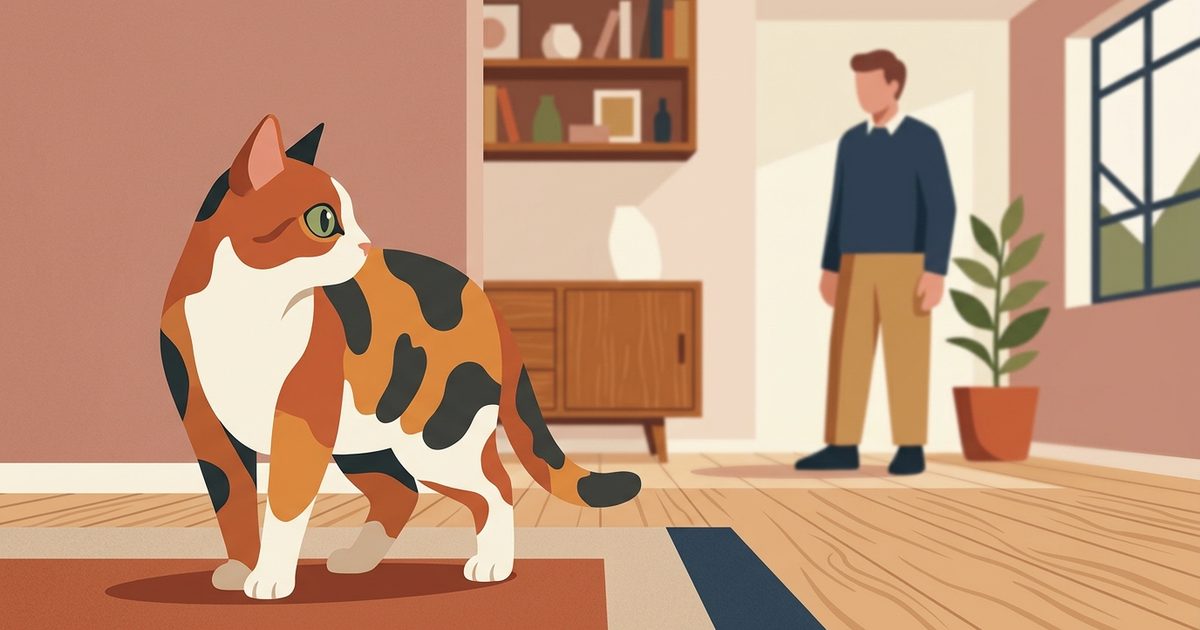
The popular reading of cat side eye — "she is judging me" — is anthropomorphism, and it is worth treating carefully. Humans project moral judgment onto the look because it resembles a human eye-roll or a skeptical sideways glance, expressions that in our own species really do carry social meaning. But cats do not have the architecture for moral evaluation; what looks like judgment is, in feline terms, vigilance, disengagement, or de-escalation. Some behaviorists push back hard on any emotional framing at all and prefer to describe the signal as pure information-gathering under low-grade stress. The honest, contested-claim summary: the look is real and it does mean something, but "judging you" is a human story laid on top of a cat's threat-monitoring reflex.
Side Eye vs Slow Blink — Two Opposite Eye Signals
Side eye and the slow blink are nearly opposite cat eye signals: side eye is an averted, watchful, tense look that signals discomfort, while the slow blink is a soft, direct, half-closed eye gesture that signals trust and relaxation. Reading which one your cat is giving matters.
What the slow blink means
The slow blink is the warm pole of feline eye communication. The cat looks directly at you, lets her eyelids drift down to half-closed, holds it for a beat, and opens them again — slowly, deliberately, with no tension anywhere in her face. Behavior researchers describe the famous slow blink cat gesture as a relaxation and trust signal that cats direct at familiar, safe beings, and many owners can even return it to build rapport. It is so closely tied to affection that we cover it inside our guide on how cats show affection, where it sits alongside head-butting and purring. For a veterinary perspective on feline communication signals like this, the Cornell Feline Health Center is a reliable, science-based reference.
How to tell them apart
The fastest way to tell the two apart is to look at three things at once — pupil, head, and body. They move as a package, and any one of them on its own can mislead you.
| Signal | Pupil | Head | Body |
|---|---|---|---|
| Side eye | Dilated or slit-tense | Turned away, eye rotated to the side | Braced, stiff, may be crouched |
| Slow blink | Loose, normal size | Facing you directly | Soft, relaxed, often loafed or stretched |
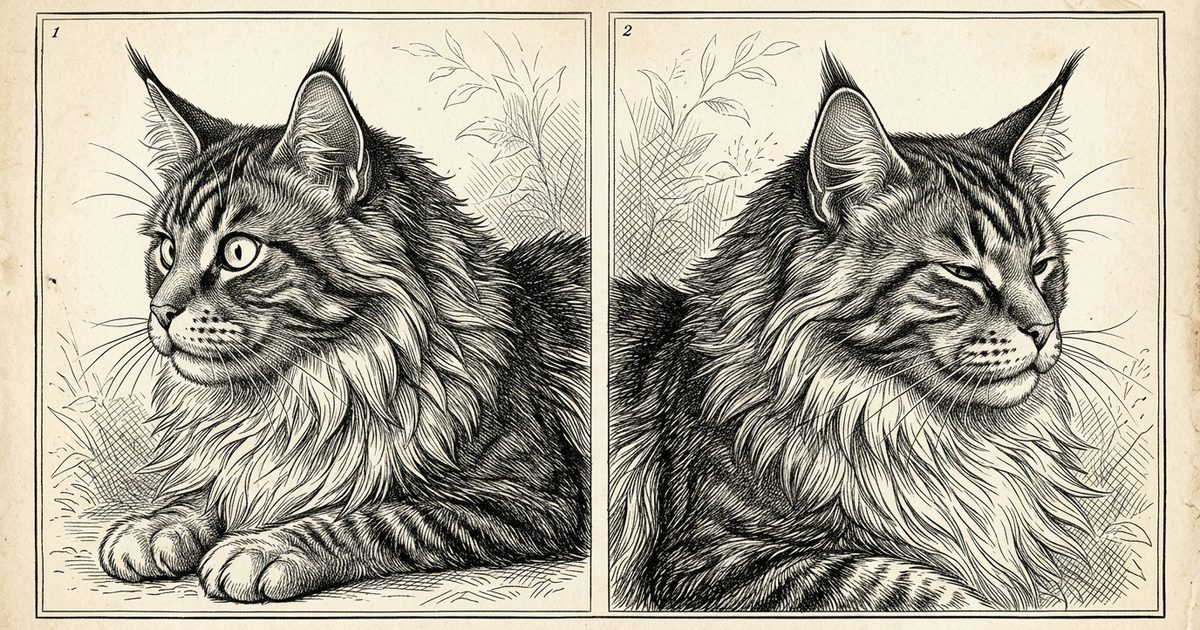
The quick owner's test: if your cat is looking at you from a turned head with a stiff body, that is side eye — give her space. If she is facing you, soft-bodied, and her eyes are slowly closing and opening, she is offering trust, and you can blink slowly back. The pupil is the tiebreaker when you are unsure — a tense slit or a blown-wide pupil points to side eye; a relaxed, normal pupil points to the slow blink.
Curious what your cat would say if she could put that look into words? Get a MeowMind reading — is that look stress, trust, or something else? Upload a photo and hear your cat's side of the conversation in her own words.
What Is Cat Whale Eye?
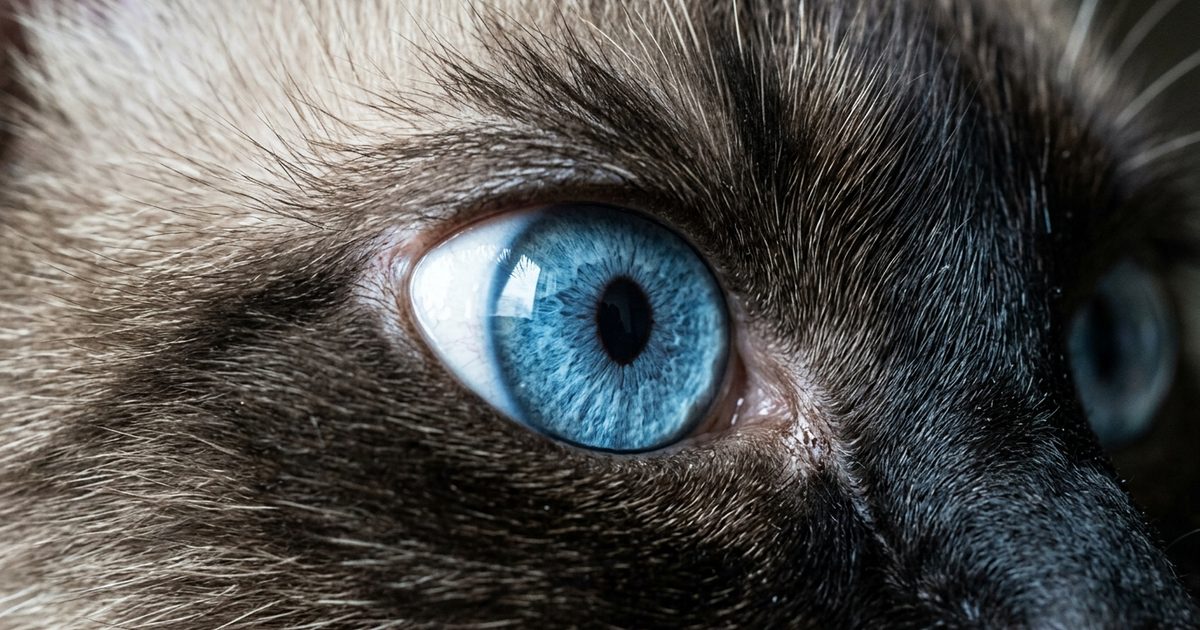
Whale eye is the veterinary term for when a cat's eye rotates far enough that the white sclera shows in a half-moon at the outer corner, with a dilated pupil and stiff body. It is a recognized stress and overstimulation sign — a warning that the cat needs space.
"Whale eye" sounds like folklore, but it is a real, named clinical observation. The phrase comes from the way the exposed white curves along the outer edge of the eye — a half-moon of sclera that resembles the visible white on a whale's eye when it rolls. Groomers, vet techs, and behaviorists use the term because it reliably shows up in cats who are being held still, overstimulated, or pushed past their comfort threshold. You will most often see it during nail trims, at the vet, or when a cat is cornered by handling she cannot easily leave. It is the eye's way of saying I am holding on, but I am near my limit — which is exactly why reading it correctly matters so much for how you respond.
The mechanics are straightforward: the cat fixes her attention on something that worries her while her head is restrained or turned away, so the eye itself rotates further than it normally would to keep that thing in view. The pupil often dilates at the same time, the body stiffens, and you may notice the nictitating membrane — the third eyelid — protruding partway across the inner corner, which amplifies the strained, wide-open look. The crescent of sclera pulled into view at the lateral corner is the visible signature, and taken together none of this is random twitching; it is a coordinated stress read driven by the same sympathetic surge that is stiffening the rest of the body.
Whale eye is a warning, not an attack
There is a common shorthand that whale eye means a cat is "about to attack." That overstates it. Whale eye is a stress and overstimulation warning — it tells you the cat is close to her threshold, and if the pressure continues she may escalate to a defensive bite or scratch. But the signal itself is not aggression; it is a request for space. The reliable response, whether you are a groomer or an owner, is to stop petting, release any restraint, and let the cat leave. Never punish the look — you cannot train away a stress response, and trying to only confirms to the cat that she was right to feel trapped. International Cat Care treats visible sclera alongside flattened ears and a twitching tail as one of the standard feline stress indicators, not as a predictor of violence.
How Should I Respond to Side Eye?
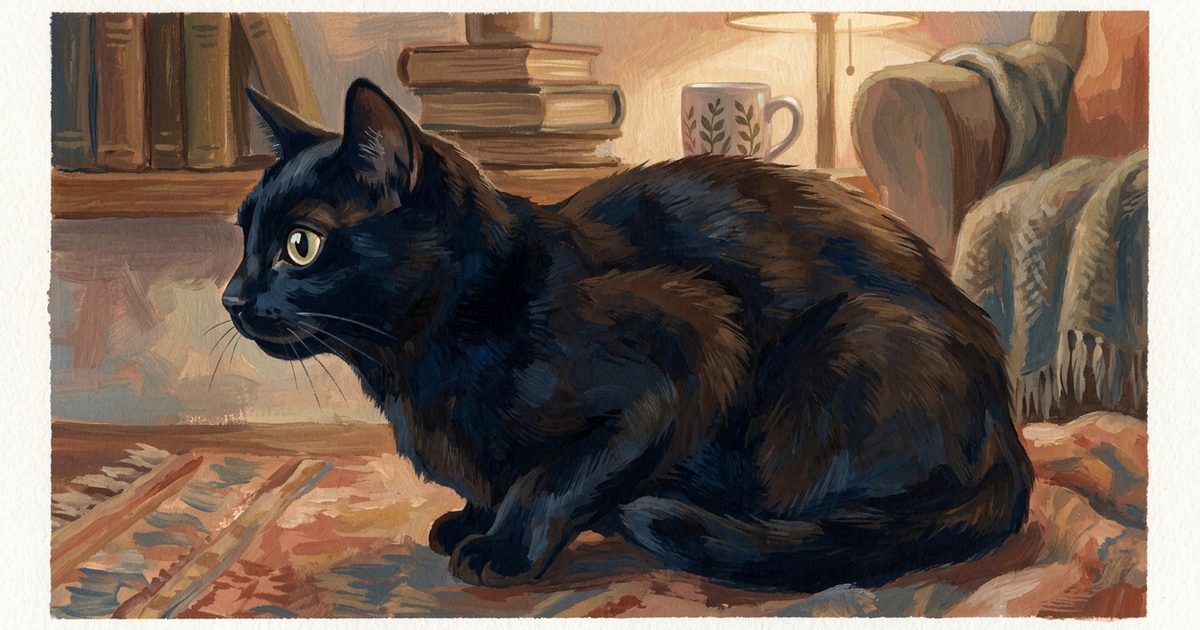
When your cat gives side eye, stop what you are doing, avoid a direct stare, blink slowly, and give her space to re-engage. Forcing interaction, looming over her, or continuing to pet an overstimulated cat is exactly what the side eye is asking you not to do.
The instinct most people have when a cat goes tense is to lean in, soothe, or "show her it's okay." In human terms that is comfort; in cat terms it is pressure. Side eye is already a request for distance, and any approach — a reaching hand, a hovering body, sustained eye contact — reads as the opposite of what she is asking for. The single most useful thing you can do is also the simplest: do less. Pause, soften, and let her decide whether to come back. Cats re-engage far faster when the exit feels genuinely open than when they have to defend it.
De-escalate, don't confront
The first move is to avert your own gaze. In cat communication a direct stare is confrontational, so looking away is not weakness — it is politeness, the same de-escalation a cat offers when she does not want a fight. Soften your posture: lower your shoulders, turn slightly to the side rather than squaring up, and keep your hands still and low. If you have been petting her, stop; if you have been hovering, sit back. Then let her leave if she wants to. The goal is to remove the pressure that produced the side eye in the first place, not to win a standoff. The same logic explains the polite blink cats use to diffuse tension — eye language is where most feline confrontations are won or avoided.
Offer the slow blink back
If the cat has softened even slightly — her body is less rigid, the side eye has relaxed into a softer glance — you can offer a slow blink in return. Close your eyes slowly, hold them closed for a beat, and open them just as slowly, all while looking gently in her direction rather than locking on. It is the reciprocal trust gesture, the feline equivalent of "I'm not a threat either." Pair it with space, never as a replacement for it: if she is still fully braced or showing whale eye, prioritize giving her room over making eye contact. The slow blink is a peace offering to a cat who is already considering standing down, not a tool to talk one down who is not. You can read more about it as an affection signal.
Reduce the trigger
Finally, work out what caused the side eye so you can address the environment rather than the cat. Common triggers: a new person in the room, petting that has gone on too long or touched a sensitive area, a loud sound, or two cats contesting a resource like a bed or a food bowl. Each has a different fix — shorten petting sessions before she gets wound up, give a newcomer a perch to observe from, separate feeding stations, or simply lower the noise. Pair the eye read with the rest of the body: a twitching tail or rotated-back ears confirm you are looking at the three-part stress read above, not a passing glance. Fix the trigger and the side eye stops showing up on its own — you never have to correct the cat at all.
When Is Side Eye a Concern?
Occasional side eye during grooming, vet visits, or new situations is perfectly normal. It becomes a concern when it is constant, or paired with hiding, appetite loss, vocalization, squinting, or eye discharge — patterns that point to pain, eye injury, or chronic stress and warrant a vet visit.
Normal vs chronic side eye
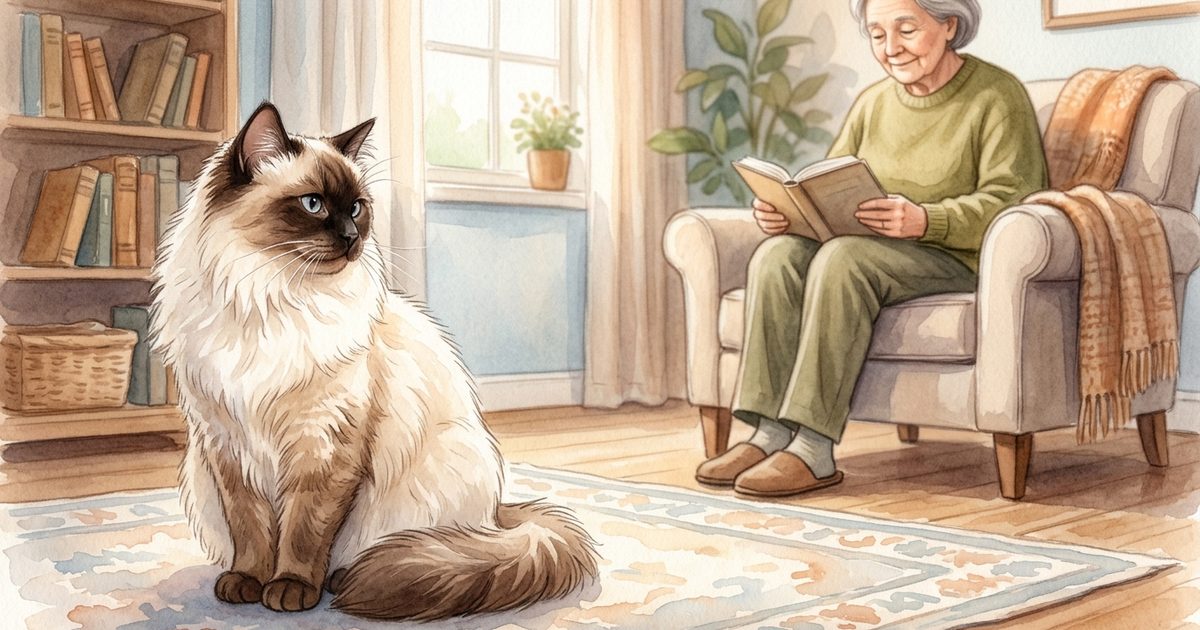
Context is everything. A cat who gives you a single piece of side eye at the vet, when a stranger enters the room, or after ten minutes of petting is reading the situation the way a healthy cat should — watchful, but not stuck. That is the body language of a cat processing a moment and then moving on.
The concern is the pattern. If your cat is tense at home, in a familiar place, most of the time — side-eye paired with ears rotated back, a twitching tail, hiding, or refusing food — that baseline tension is chronic stress, not a passing reaction. The difference between "she's watching something new" and "she never relaxes" is the line that tells you something deeper is going on.
Medical red flags
Some signs move past body language into clear medical territory. Watch for squinting that won't resolve, the third eyelid protruding across the eye, redness, any discharge or tearing, or pawing repeatedly at the eye. These can point to a corneal ulcer, glaucoma, or uveitis — painful eye conditions that need prompt diagnosis and treatment. A sudden behavior change plus side-eye can also signal pain elsewhere in the body, since cats hide discomfort and let it leak out in small shifts like this.
Your job is to notice and report — not to diagnose. If you see any of these signs, or if a long-standing habit changes abruptly, call your vet. The Cornell Feline Health Center is clear that a change in the eyes or in normal behavior is a valid reason to contact your veterinarian. The same goes for International Cat Care, which lists eye changes among the subtle welfare signs owners are best placed to catch early. Because chronic stress in cats often traces back to resource conflict or territory tension, it can also help to review our guide to how to introduce cats when multi-cat friction is part of the picture.
Cat Side Eye at a Glance — Summary
| Signal | What it means |
|---|---|
| Relaxed side-glance | Casual scanning, no tension — the cat is at ease |
| Mild side-eye watch | Mild uncertainty or monitoring; give space, don't stare |
| Tense whale eye (sclera showing) | Stress or overstimulation warning — back off calmly |
| Slow blink | Trust and relaxation; the opposite of side eye |
| Half-closed sleepy eyes | Deep comfort and contentment |
| Constant side-eye + hiding or discharge | Possible pain, eye injury, or chronic stress — call your vet |
Curious What Your Cat Would Say?
Upload a photo and get a warm, personalized reading from your cat's perspective.
Start Your Free ReadingFrequently Asked Questions
What does it mean when a cat gives you side eye?
It usually means your cat is monitoring something she is unsure about without committing to a direct stare, which cats read as confrontational. The look signals mild uncertainty, threat assessment, or overstimulation — your cat is watching while keeping the option to retreat, not judging you.
Is cat whale eye the same as side eye?
They sit on the same spectrum, but whale eye is the more extreme, tense version. Side eye is an averted glance; whale eye is when the eye rotates so far that the white sclera shows in a half-moon, usually with a stiff body and dilated pupil, marking it a recognized stress warning.
Why does my cat look at me sideways while I pet her?
She is likely getting overstimulated. Side eye during petting often appears alongside rotated-back ears or a twitching tail, forming a three-part stress cluster. It is her early signal that the session is tipping past comfortable, so the kindest move is to stop and give her space.
How is side eye different from a slow blink?
They are nearly opposite signals. Side eye is averted, watchful, and tense with the head turned away; a slow blink is soft, direct, and half-closed while facing you, and it signals trust and relaxation. The pupil and body tension are the quickest tiebreakers between the two.
Should I stare back at my cat when she gives side eye?
No. In cat communication a direct stare is confrontational, so holding one only adds pressure to a cat already asking for distance. Avert your gaze, soften your posture, and let her decide whether to re-engage — that de-escalation is the feline equivalent of politeness.
Is cat side eye a sign of stress?
It can be. The tense version — eye held longer, pupil dilated or slit-tight, body slightly stiff — is a recognized mild stress signal. But a relaxed side-glance with a soft body and normal pupils is just casual peripheral scanning, not stress at all. Context and the rest of the body decide.
When should I worry about my cat's side eye?
Worry when it becomes constant or pairs with hiding, appetite loss, vocalization, squinting, or eye discharge — these point to pain, eye injury, or chronic stress. Occasional side eye at the vet or with a stranger is normal; a long-standing habit that suddenly changes is a reason to call your vet.
Can a slow blink calm a cat giving side eye?
Only if she has already started to soften. A slow blink is a reciprocal trust gesture for a cat who is considering standing down, not a tool to talk one down who is fully braced or showing whale eye. If she is still tense, prioritize giving her space over making eye contact.
Sources & References
You Might Also Like
Why Does My Cat Stare at Me? 6 Stares Explained
Discover why your cat stares at you — from affectionate slow blinks to hunting focus, anxiety, and warning signs. Learn to read the whole body.
23 min readCat Body Language: The Complete Guide to Reading Your Cat
Cat body language decoded — how to read your cat's ears, eyes, tail, posture, fur, and voice at once. The complete guide to understanding what your cat feels.
29 min readKitten Teething: Timeline, Symptoms & How to Help
Kitten teething runs from 3 to 7 months as baby teeth fall out. Learn the timeline, signs to watch for, and how to soothe a teething kitten safely.
15 min readA message, in your cat's voice
Upload a photo, get a warm note written from your cat's perspective — just for fun. Plus 121 vet-cited articles, offline.