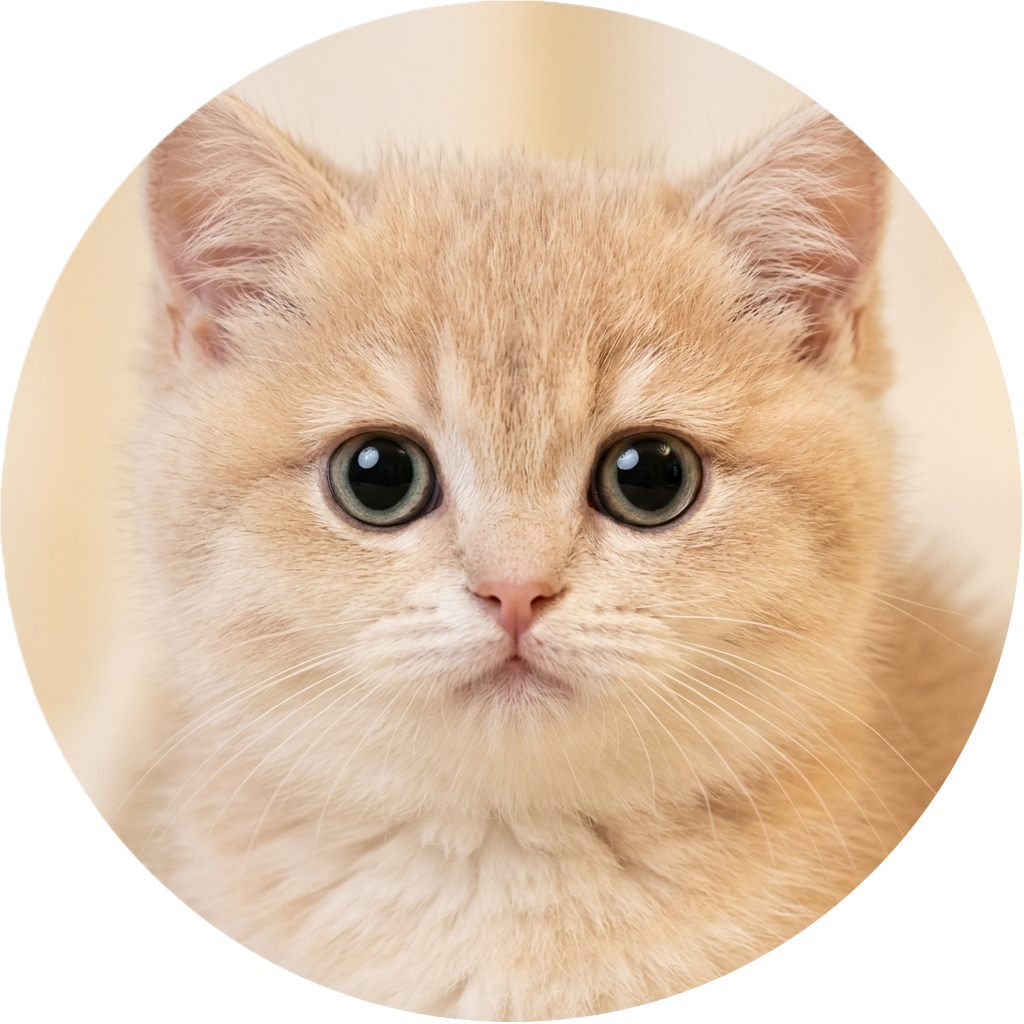
How Do Cats Show Affection? 12 Signs Your Cat Loves You
Wondering how do cats show affection? Once you know the signals, the table below gives you the whole catalog at a glance.
Cats show affection through small, repeated gestures — the slow blink of trust, the head bunt that marks you as family, the purr against your skin — not the grand displays we humans expect. If you've wondered whether do cats love their owners the way dogs do, the honest answer is yes, but in a feline dialect: quieter, more selective, and built on trust. The 12 signs your cat loves you below span physical contact, scent-marking, proximity, and vocal cues, and once you learn them, a lot of confusing behavior suddenly makes sense.
Key takeaways
- Affection in cats is subtle and shown through small repeated behaviors, not grand gestures.
- The 12 signs span physical contact, scent, proximity, and vocal cues.
- Some classic "affection" signs — belly exposure, over-licking — can mean something else, so context matters.
How Cats Show Affection — Quick Reference
| Sign | What it looks like | What it usually means |
|---|---|---|
| Slow blink | Half-closed eyes held, then a deliberate slow close and open | Trust and relaxation — a "cat kiss" |
| Head bunt (bunting) | The cat presses the top of its head or cheek against you | Scent-marking you as family |
| Purring | A low, rumbling vibration against your lap or chest | Contentment and comfort (usually) |
| Kneading (making biscuits) | Rhythmic paw-pressing on your lap or a blanket | Kittenhood comfort, deep trust |
| Licking / grooming you | Tongue licks on your hand, hair, or face | Social bonding, treating you like a cat |
| Tail straight up with hooked tip | A vertical tail with the tip curved over | Friendly greeting, happiness on seeing you |
| Sleeping on you | Curled on your lap, chest, or beside you in bed | Total vulnerability — the highest trust |
| Following you room to room | The cat shadows you wherever you go | Supervising, choosing to be near you |
| Exposing the belly | Rolling over to show the stomach | Trust display (usually, not a rub invite) |
| Trill / chirp greeting | A soft rolling "brrp" or chirp when you appear | Friendly recognition, "hello" |
| Bringing "gifts" | Dropping a toy, sock, or prey at your feet | Sharing or teaching — instinct read as affection |
| Rubbing against your legs | Side-of-body and cheek rubs around your ankles | Scent-marking and affection combined |
How Do Cats Show Affection? The Physical Signs
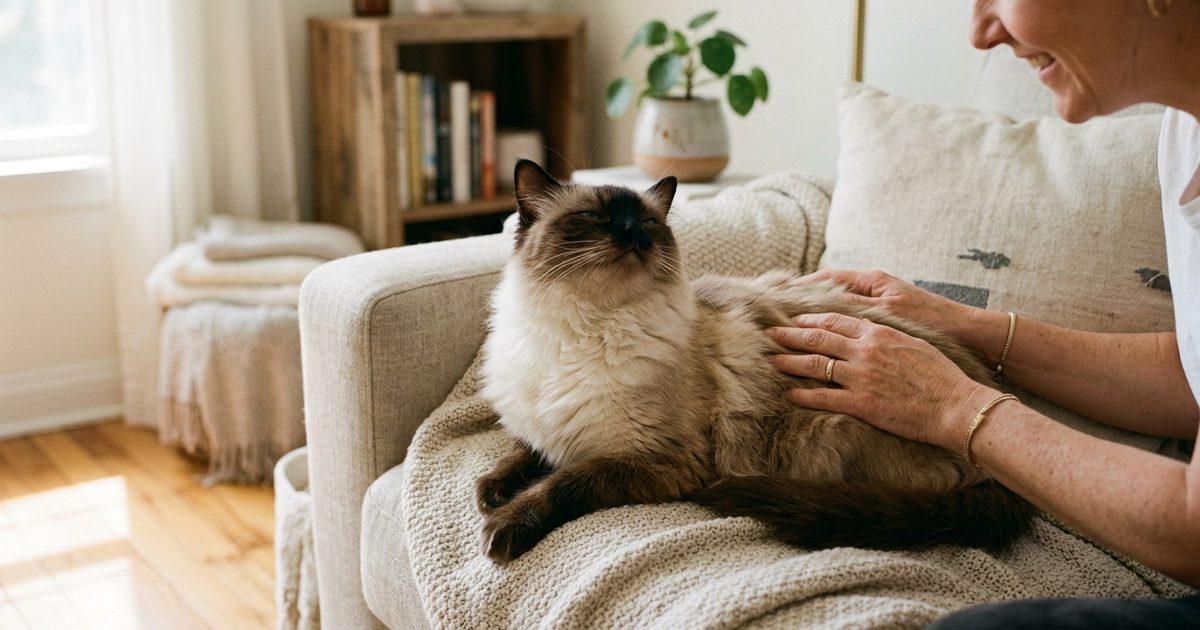
Cats show affection through small, repeated physical gestures: the slow blink of trust, a head bunt that marks you with their scent, a deep purr against your skin, rhythmic kneading, gentle licking, and a tail held straight up with a hooked tip. Each is a learned, voluntary signal aimed at you.
Cats don't declare love loudly. When a cat cares about you, it speaks in a vocabulary of small, deliberate body signals — each one voluntary, each one aimed at you specifically. Unlike the reflexive flick of a startled tail or the widening of a fearful pupil, the physical signs of affection are behaviors your cat chooses to do, toward you, again and again. The Cornell Feline Health Center describes feline communication as a layered system where posture, scent, and sound combine — and the affection layer is the quietest one of all. Learn to read it and an entire silent conversation opens up between you and your cat.
The Slow Blink — a Cat Kiss
The slow blink is the closest thing a cat has to a spoken "I trust you." Your cat looks at you, half-closes its eyes, holds them that way for a beat, and slowly opens them again. It's deliberate — a relaxed cat does not hold eye contact with someone it fears, because staring is a threat signal in cat language. By closing its eyes toward you, your cat is choosing vulnerability. You can return it: catch your cat's gaze, slowly close your own eyes, keep them shut a moment, and reopen them softly. Many cats will blink back. For the full deep dive into what your cat's eyes are telling you — including the slow blink — see why cats stare.
Head Bunting and Rubbing
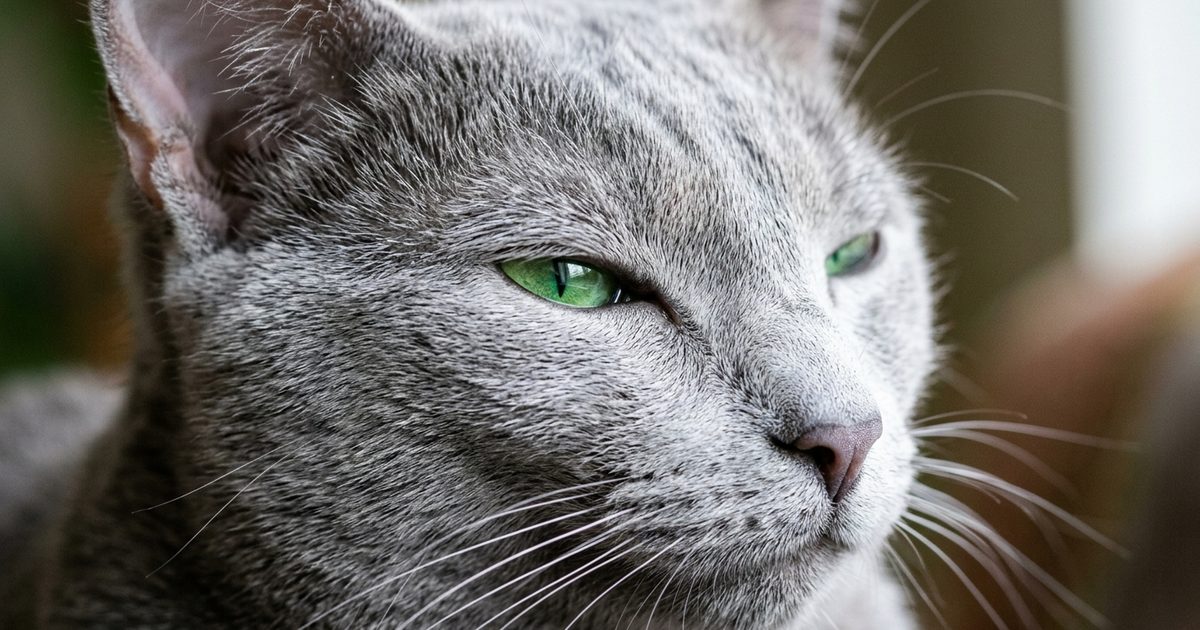
A head bunt is exactly what it sounds like: your cat presses the top of its head, its cheek, or its whole face into your hand, your leg, or even your face, with gentle, insistent pressure. Cats carry scent glands on their forehead, cheeks, and chin, and bunting deposits those pheromones directly onto you. In cat logic, this marks you as part of the family — a known, safe, claimed individual whose scent has been quietly updated to match their own. A cat that bunts you has decided you belong to its inner circle. For the mechanism behind this behavior — why cats choose legs, hands, and faces — read why cats rub against your legs.
Purring Against You
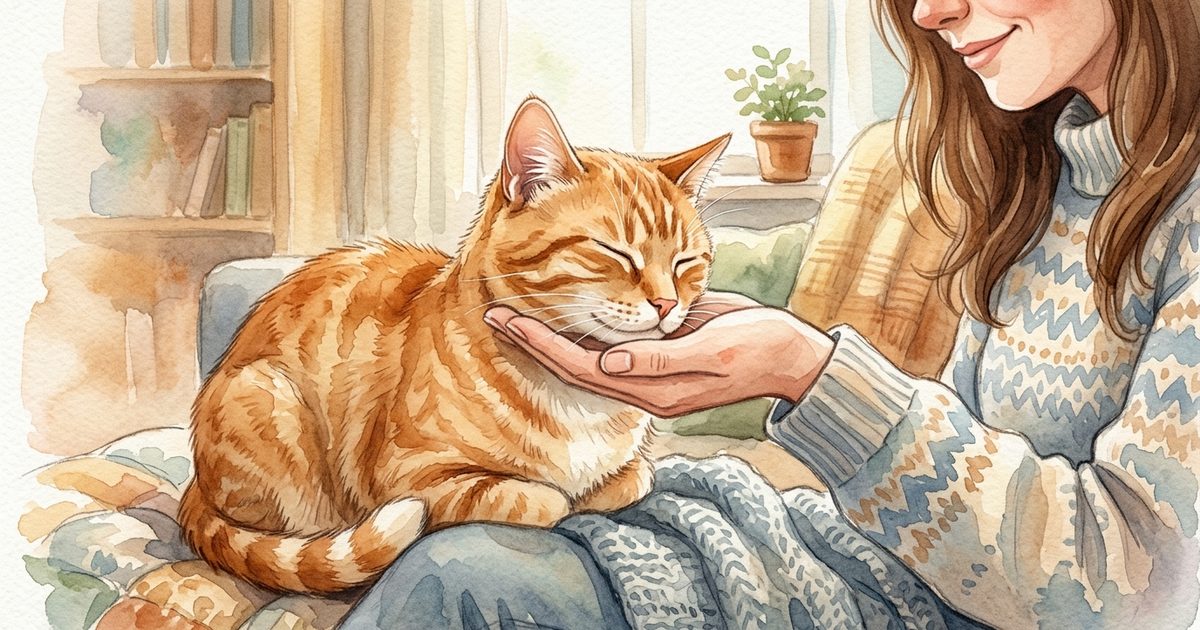
A purr is a low, rhythmic vibration produced as the cat's laryngeal muscles twitch around 25 to 150 times per second, and you usually feel it before you hear it — a warm rumble pressed against your chest, lap, or arm. Purring against you, in a relaxed body with half-closed eyes, is one of the clearest contentment and trust signals a cat offers. The purr is also context-dependent rather than a pure happiness meter — we unpack the dual function (contentment versus stress, pain, and self-soothing) in Purring under stress or pain below. For the full acoustics and meaning, see why cats purr.
Kneading (Making Biscuits)
Kneading is the slow, rhythmic pressing of your cat's front paws — alternating left and right — against your lap, your chest, or a soft blanket beside you. It begins in kittenhood: newborns knead their mother's belly to stimulate milk flow, and the motion becomes permanently linked to the deepest safety a cat ever feels. An adult cat only kneads where it feels completely secure, which is why a cat making biscuits on you is, in a very real sense, treating you the way a kitten treats its mother. For the full science behind this instinct, read why cats knead.
Grooming and Licking You
When your cat licks your hand, your hair, or even your face with its rough, warm tongue, it is extending a behavior cats reserve for each other: allogrooming. Cats that bond mutually groom — licking around the head, ears, and neck as both hygiene and social glue. Licking you is the same impulse pointed at a species it has decided is worth grooming. It's an act of care and bonding, not a request. There's one edge worth flagging: when licking — of you or of itself — becomes repetitive, frantic, or compulsive, it can cross from affection into stress, anxiety, or overgrooming. We cover that contested territory in detail below in Signs That Look Like Affection — But Aren't Always, and you can also read why does my cat lick me for the full picture.
The Upright Tail With a Hooked Tip
A cat walking toward you with its tail held straight up — sometimes with the top few centimeters curved into a little hook, sometimes with the whole tip quivering — is giving you the friendliest greeting in its repertoire. The upright tail signals confidence and approachability, and cats use it specifically toward beings they like and trust. The quivering version, often seen when you come home or walk into the room, is excitement: your cat is genuinely pleased to see you. It's a small gesture, but in cat language it's the equivalent of a delighted wave.
Scent, Proximity & Following — Affection Through Trust
A cat who chooses to be near you is showing affection: sleeping on you or beside you, following you from room to room, exposing the belly, and greeting you at the door. Cats only lower their guard around people they trust, so voluntary closeness is one of the strongest love signals.
Touch gets the attention, but proximity is where trust actually lives. A cat that walks over and sits on your keyboard, curls against your side at night, or waits by the door when your keys hit the lock is telling you something no purr can say on its own: you are the safest place I know. Because cats are both predator and prey, choosing to be close — eyes closed, body soft, attention off the room — is a calculation they make only with family. When you read these signs together with the physical ones above, you get the full picture of how cats show affection: it is small, voluntary, and almost always about being near you.
Sleeping on and next to you
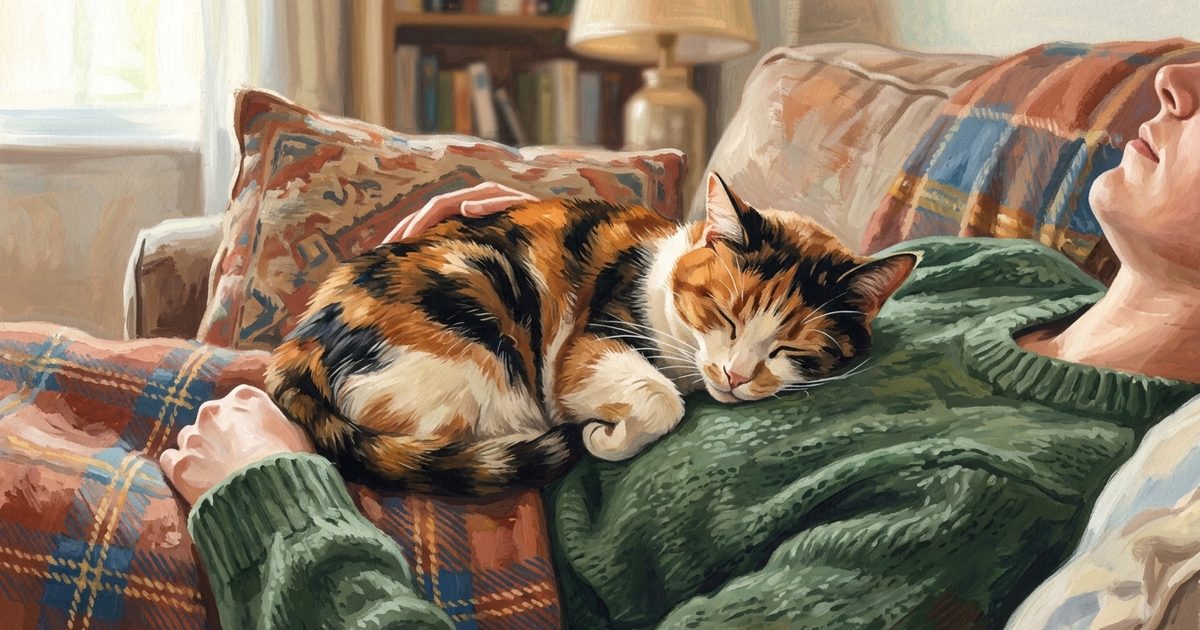
Sleep is the most vulnerable thing a wild animal can do, and cats know it. When your cat chooses your lap, your chest, or the pillow beside your head as a sleeping spot, it has decided those places are as safe as any hiding hole it could find. The lap choice matters especially: your cat is pinning itself under its most trusted human, half-immobilized, and doing it on purpose. That is not convenience — that is a trust statement. Some cats go further and sleep sprawled on their side or back, belly soft and paws loose, the posture a cat reserves for places it has zero expectation of being attacked. If you want the deeper mechanism — why your cat picks you over a perfectly good cat bed — we break it down in why cats sleep on you.
Following you room to room
The "shadow cat" — the one that appears in the bathroom doorway the moment you stand up, supervises the loading of the dishwasher, and settles on the laundry pile the second you start folding — is performing a quiet, persistent act of attachment. Cats are territorial, and their territory is partly you. Following you from room to room is your cat keeping its most important resource in sight, and often settling wherever you settle, as though your location is the day's real anchor. It is usually healthy attachment, not neediness. The difference from separation anxiety is one of degree and distress: a securely attached cat follows you around and naps when you're busy; a cat with separation distress vocalizes, panics, eliminates outside the box, or destroys things when you leave. If the second pattern shows up, that is worth a conversation with your vet — but a cat that simply likes to be where you are is showing love. For the full breakdown, see why does my cat follow me.
Exposing the belly
When your cat flops onto its side and rolls to expose the soft fur of its belly, it is offering you the most defended part of its body. In cat language, that exposure reads as I trust you enough to put my most vulnerable area on display. It is a genuine compliment, and like all cat compliments it comes with a catch. The belly exposure is a trust display, not an invitation. Most cats find belly rubbing overstimulating, and many will wrap their paws around your hand and rake it with their back claws within seconds of the first rub. The same cat that shows you the belly may then bite the hand that touched it — not out of betrayal, but because trust and tolerance are two different dials. If you have been on the receiving end of that switch, the pattern (and how to avoid it) is explained in why does my cat bite me. The rule of thumb: admire the belly, return a slow blink, and pet the head.
Greeting you at the door
Few signs are as unambiguous as the welcome-home ritual: tail straight up with the hooked tip, a rising trill, a figure-eight rub around your ankles, sometimes a roll at your feet. Your cat has been tracking your routine — the sound of the elevator, the time of day, the rattle of keys — and has positioned itself at the door before you even turn the handle. Cats form strong expectations around their humans' patterns, and the greeting is both genuine excitement and a re-establishment of the shared scent mark you carry. International Cat Care describes the human-cat bond as a real, learned attachment in which cats actively seek out their owner for social contact — not just food. The door greeting, in that frame, is your cat's clearest daily evidence that you were missed.
Ever wonder which of these signs your own cat uses most? Upload a photo and hear, in your cat's voice, exactly how she says I love you — get a MeowMind reading.
Vocal & Interactive Affection
Cats also show love vocally and through play: a soft trill or chirp when you enter a room, a greeting meow reserved for you, a solicitation purr that mimics a baby's cry, and the offering of toys or prey. Each is a directed, learned signal — your cat has decided you are worth talking to.
Adult cats rarely meow at other cats; the meow is a sound they refined largely for us. The same is true of the trill, the chirp, and the play invitation that involves carrying a toy to your feet. These are signals your cat developed because they worked on humans, and they are directed at you specifically — which is exactly what makes them affection rather than noise.
Trills, chirps, and the greeting meow
A trill is a short, rolled sound somewhere between a meow and a purr — friendly, soft, and almost always aimed at someone the cat recognizes and likes. The chirp, that little clicking staccato a cat makes at a bird through the window (or at you across the room), is a recognition sound: I see you, I'm acknowledging you. The greeting meow, reserved almost exclusively for their person, is the most human-directed of the bunch. Cats do not meow to each other as adults; they learned, over thousands of years living alongside us, that we respond to it. When your cat meows hello at the door or greets you in the hallway with a conversational string of sounds, that is affection made audible. We unpack the full range of feline sounds in why do cats meow and the specifics of the trill and chirp in why do cats chirp.
Bringing you gifts
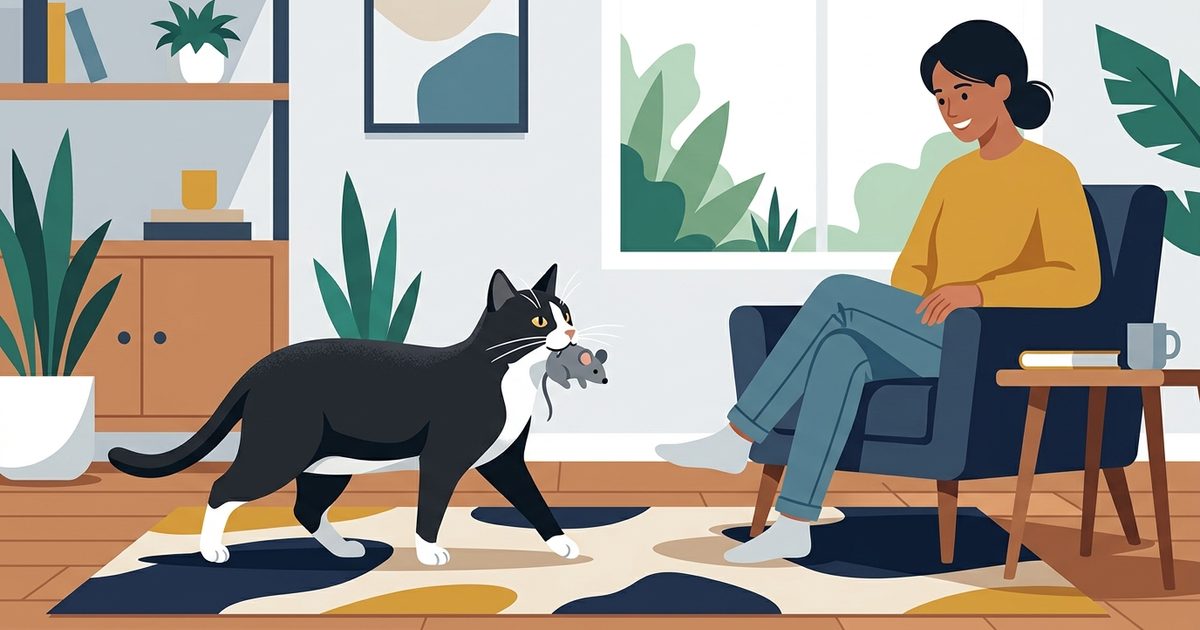
The drop at your feet — a toy mouse, a wadded sock, a leaf, or, in outdoor cats, very real prey — is one of the most debated affection signs, and it deserves an honest both-sides reading. One interpretation is generous and emotional: your cat is sharing its most prized catch with a beloved, possibly clumsy hunter who clearly needs feeding. Another interpretation is more clinical and equally valid: this is hunting instinct and maternal teaching behavior, the same sequence a mother cat runs through with her kittens, replayed with whatever target is available — including you. The truth is almost certainly a mix. The behavior is rooted in instinct, but the choice of recipient is not random: cats bring these offerings to the beings they live with, sleep beside, and have decided belong to their inner circle. So while "she loves me" is an oversimplification, "she has decided you are family, and this is what family gets" is fair. Either way, the right response is a calm thank-you — never punishment, which only confuses an instinctive behavior.
Head-butting your hand for petting
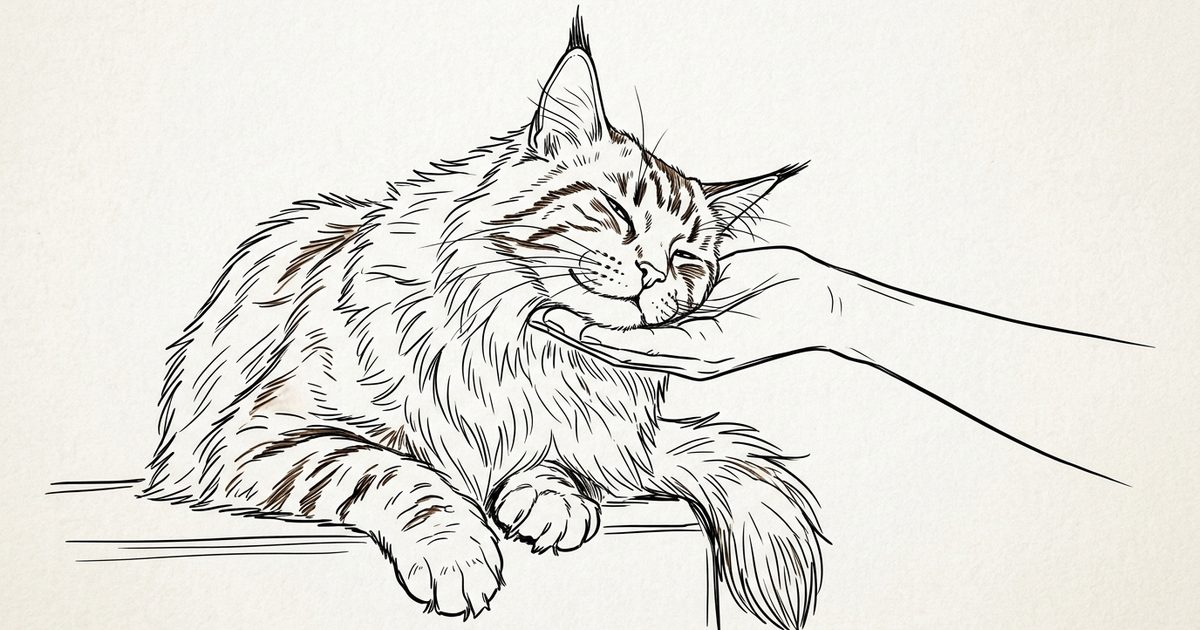
This is the deliberate head-press — your cat pushes the top of its head or the flat of its cheek into your open palm, holds the pressure for a beat, and waits. It is a two-part signal: a scent deposit (the same glands behind the head bunt) and a request. The cat is simultaneously marking you as mine and asking for exactly the kind of contact it wants, in exactly the spot it wants it. It is one of the clearest "may I have attention now, please" gestures a cat offers, and the fact that it is initiated by the cat — on its own terms — is what makes it affection rather than demand.
Play as bonding
A cat that drops a toy on your lap, ambushes your ankles from behind a door, or initiates a wrestling match with your hand under the blanket is choosing you as its social partner. Play is how cats practice hunting, but in a home with humans — especially a single-cat home where you are the only available playmate — it is also the main channel through which affection gets expressed as activity. The cat that brings you the wand toy every evening is not just burning energy; it is building a shared ritual, and rituals are how cats and humans build attachment over time. The affection lives in the repetition: same toy, same time, same person, every day.
Does My Cat Actually Love Me? What Science Says
Yes — research on cat-human attachment shows cats form secure bonds with their owners comparable to those of dogs and human infants. Cats do love their owners in their own way: they seek you out for comfort, show distress when separated, and prefer you to strangers. Love just looks different in cats.
For a long time, cats got an unfair reputation — aloof, independent, only in it for the food. The science tells a different story, and it's one most cat owners already suspected. When researchers actually measured cat-human attachment rather than assuming it didn't exist, they found exactly the kind of bond we recognize as love: selective, durable, and built on trust. It just doesn't come wrapped in a wagging tail.
The secure attachment studies
In 2019, a landmark study from Oregon State University applied the standard "secure base" test — the same one used to measure attachment in dogs and human infants — to cats and their owners. The results surprised even the researchers: around 65% of cats showed a secure attachment to their person, meaning they used their owner as a base of safety in an unfamiliar room, explored freely while the owner was present, and showed clear distress when the owner left. When the owner returned, securely attached cats settled back down and resumed exploring. That's the same proportion found in human children, and notably higher than the 58% measured in dogs.
This matters because secure-base behavior is the scientific fingerprint of a real attachment bond, not simple food-seeking. A cat with a secure bond doesn't just tolerate you for the kibble — it actively prefers your presence, calms down with you, and is visibly unsettled without you. You can dig deeper into the broader emotions research behind this in our article on whether cats have feelings. For a veterinary perspective on feline bonding, the Cornell Feline Health Center is a trusted starting point.
Do cats love their owners — or just the food?
The cynic's version goes: cats don't love you, they love the hand that feeds you. It's a common claim, and attachment research directly pushes back on it. In the same body of studies, cats sought out social contact with their owners even when no food was involved — approaching, rubbing, vocalizing, and choosing to stay near a person who offered nothing but presence. Food motivates cats, certainly, but it doesn't explain why a cat greets you at the door after you've been gone all day, or sleeps on your chest when the bowl is full in the kitchen.
The cleaner framing is this: in cats, love is the affection shown. Because cats don't perform grand gestures, their attachment lives in the small, repeated, voluntary signals — the slow blink, the lap chosen, the trill when you walk in. Those signals are directed at you specifically, not at any human with a can opener. International Cat Care describes the human-cat bond as a genuine, two-way relationship built over time, not a transactional one.
Why some cats show affection differently
Here's where it's easy to misread a quiet cat as a cold one. How any individual cat shows love depends on a mix of breed tendencies, early socialization, personality, and age — and none of those factors is destiny. Some cats are simply less demonstrative by nature, the way some people are reserved without loving anyone less. A cat who sits calmly in the same room rather than on your lap may be showing exactly as much trust; closeness without contact is still closeness.
Early socialization plays a real role: kittens handled gently and regularly in their first weeks tend to grow into more outgoing, people-oriented adults, while under-socialized cats often stay cautious for life — which is personality shaped by history, not a lack of affection. Breed gets talked up a lot, and certain breeds like the Ragdoll — that cream-bodied, colorpoint cat with striking blue eyes — do have a reputation for going floppy and clingy with their people. But breed tendencies are owner-reported averages, not rules; individual personality dominates, and plenty of "aloof" breeds produce deeply attached cats, just as famously affectionate breeds produce independent ones. Age matters too — kittens are often manic and physical, while senior cats tend toward calmer, more settled closeness.
The point: a cat who never kneads, rarely purrs, and keeps a respectful distance is not loving you less. It's loving you in its own language. Learning how cats show affection is less about spotting a fixed list of universal signs and more about learning your particular cat's vocabulary — then trusting that the bond is real even when it's quiet.
Signs That Look Like Affection — But Aren't Always
Not every soft-looking behavior is affection: a rolled-over belly often means "trust, not touch," over-licking can signal stress rather than love, a sudden gift of prey is instinct more than romance, and purring sometimes means pain. Context, frequency, and the rest of the cat's body tell you which.
Plenty of feline behaviors look loving and sometimes are — but the same gesture can mean something quite different depending on the moment. Learning to tell them apart is what separates a good cat read from a bitten hand. The same gesture can be affection in one context and a warning in another; International Cat Care stresses that no single sign should ever be read in isolation — the whole cat, and the situation, decide the meaning.
The belly-exposure trap
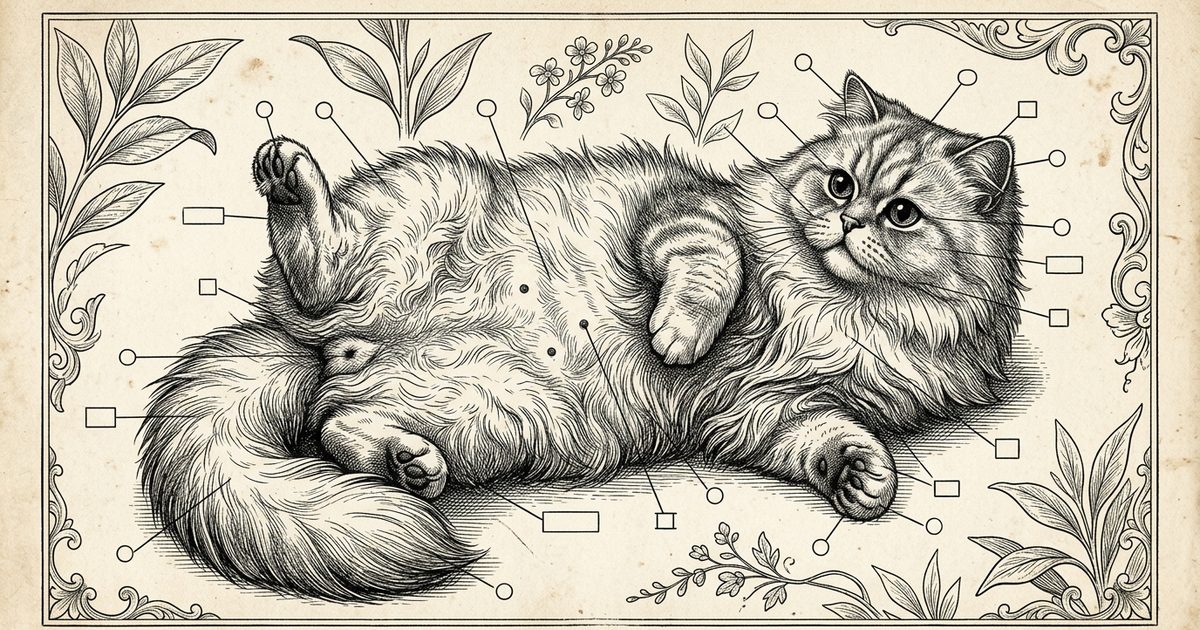
The belly-exposure trap is the single most common affection misread: the instinct to rub that inviting belly is almost irresistible, and it's exactly what trips the overstimulation bite. Because we cover the full mechanism — trust display versus invitation, the claws-and-teeth lock, and the safe read — above under Exposing the belly, the short version here is the trap's name: admire the belly from afar and pet the head instead.
Overgrooming and stress licking
Licking — yours or their own — is normally affectionate allogrooming, the social grooming cats use to bond. But when licking becomes repetitive, frantic, or leaves bald patches and sore skin, it has crossed from love into anxiety. Compulsive overgrooming is a well-documented stress response in cats, sometimes called a stereotypy, and it frequently shows up alongside other signs that a cat is struggling emotionally — a topic we cover in do cats get depressed. If your cat's licking of you has become relentless, or it's licking itself raw, that's a vet-and-behavior conversation, not a compliment. The healthy version of this behavior lives in why does my cat lick me.
Prey and "gifts"
This is the same gift-bringing behavior covered earlier under Bringing you gifts — rooted in hunting and maternal teaching instinct, with the choice of recipient directed at family rather than any random human. Treat it as instinct with an affectionate overlay, not proof of pure love, and respond with a calm thank-you rather than punishment.
Purring under stress or pain
Purring is the affection signal owners trust most — and it's also the most easily misread. Cats purr when content, yes, but they also purr when frightened, injured, or close to the end of life. The vibration is thought to be self-soothing and may even serve a healing function, which is why a purring cat at the vet isn't necessarily a relaxed cat. Frequency, body posture, and setting decide the meaning: a loose, kneading cat purring in your lap is happy; a tense, hiding cat purring is coping. We unpack the full dual function in why do cats purr.
How to Show Love Back (In Cat)
Cats read affection on their own terms: let them initiate contact, return a slow blink, pet the safe zones (head, cheeks, chin — not belly), respect retreat, and keep a predictable routine. Matching your cat's language — not forcing yours — is how they feel loved.
Loving a cat well means speaking cat, not louder human. The gestures that make a cat feel safe and seen are quiet, slow, and above all consensual — the cat gets to choose when contact starts and when it ends.
Return the slow blink
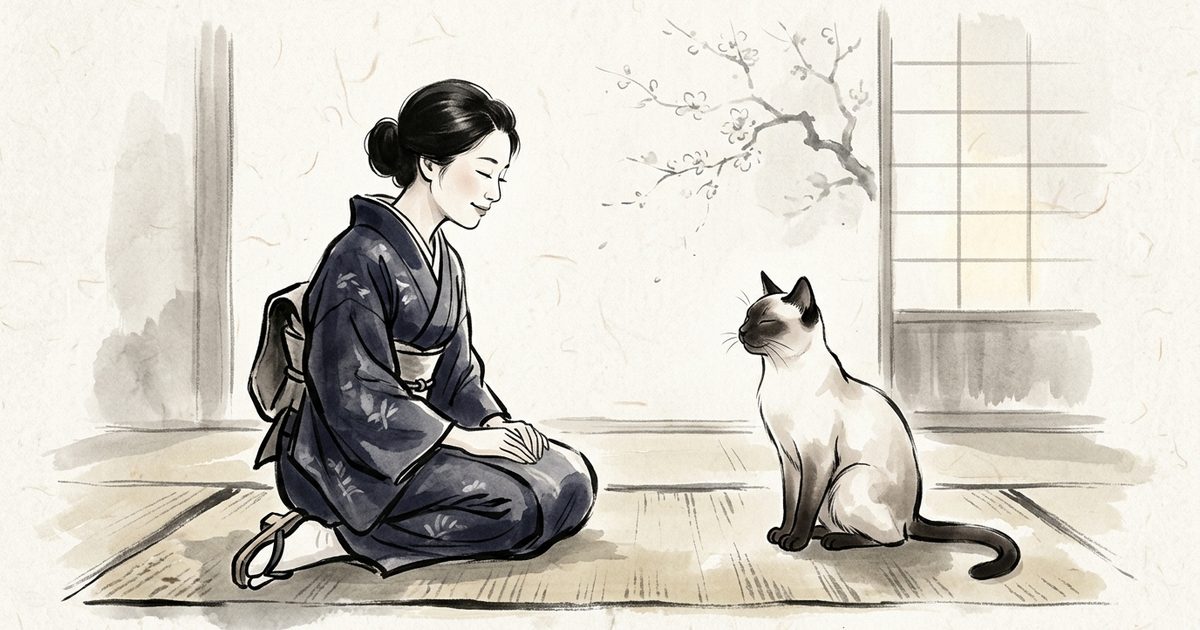
The slow blink is a reciprocal cat-kiss, and returning it is one of the simplest ways to say "I love you" in a language your cat understands. When your cat half-closes its eyes and looks at you, do the same back — slow, deliberate, hold for a beat. Studies on cat-human communication have shown cats respond to the slow blink with increased approach and reduced tension; it's a real, measurable signal of trust. Do it during calm moments, not play.
Pet where cats like it
Most cats have clear preferences about where they're touched, and honoring them is a form of respect. The safe zones cluster around the scent glands: the head, cheeks, chin, and the base of the tail — areas cats use to mark the beings they consider family, which is why rubbing feels good and meaningful to them (we explore the mechanism in why do cats rub against your legs). The belly, paws, and along the back toward the tail base are off-limits for many cats — touch there often triggers the overstimulation bite. Read the individual cat, not the average.
Let them come to you
Cats value initiation almost as much as the contact itself. A cat that chooses to climb into your lap is investing trust; scooping it up and placing it there removes the choice and quietly erodes that trust over time. Let your cat approach, let it leave when it's done, and you'll find it comes back more often, not less. Forced affection — holding, restraining, cuddling past the cat's tolerance — is the fastest way to teach a cat that your hands are unpredictable.
Predictability and routine
To a cat, reliability is love. Feeding, play, and attention on a predictable rhythm make a cat's world feel safe, and a safe cat is an affectionate cat. You don't need grand gestures — consistent meal times, a regular play session, and a quiet spot that's always there do more for the bond than any single act of attention.
Cat Affection at a Glance — Summary
| Sign | Is it affection? |
|---|---|
| Slow blink | Usually yes — a deliberate trust signal |
| Head bunting / rubbing | Usually yes — scent-marking you as family |
| Purring | Context-dependent — also stress and pain |
| Kneading (biscuits) | Usually yes — comfort and trust, occasionally self-soothing |
| Licking / grooming you | Usually yes, unless compulsive — then it's stress |
| Tail straight up with hooked tip | Usually yes — a friendly greeting |
| Sleeping on you | Usually yes — deep vulnerability, deep trust |
| Following you room to room | Usually yes — chosen proximity |
| Exposing the belly | Often misread — trust display, not a rub invitation |
| Trill / chirp greeting | Usually yes — recognition and welcome |
| Bringing "gifts" | Context-dependent — instinct with possible affection overlay |
| Rubbing against your legs | Usually yes — scent-marking and greeting |
Curious What Your Cat Would Say?
Upload a photo and get a warm, personalized reading from your cat's perspective.
Start Your Free ReadingFrequently Asked Questions
How do cats show affection to humans?
Cats show affection through small, repeated, voluntary gestures aimed at you specifically — slow blinks, head bunts, purring against you, kneading your lap, grooming you, and following you from room to room. Each is a deliberate signal, not a random behavior, and learning your cat's own mix is how the bond becomes readable.
What are the clearest signs your cat loves you?
The clearest signs are the ones that involve voluntary closeness and vulnerability: sleeping on your chest, greeting you at the door with a tail straight up, slow-blinking at you, and choosing to sit on you even when the food bowl is full. These signals are directed at you, not at any nearby human.
Do cats actually love their owners, or just the food?
Attachment research suggests cats do form real bonds with their owners, independent of feeding. In secure-base tests, cats sought out their owner for comfort, explored freely when the owner was present, and showed distress when separated — the same pattern seen in dogs and human infants. Food motivates cats, but it doesn't explain the door greeting.
Why does my cat slowly blink at me?
The slow blink is a deliberate trust signal — sometimes called a cat kiss. Because staring is a threat in cat language, half-closing its eyes toward you means your cat is choosing vulnerability and showing it feels safe. You can return it by catching its gaze and slowly closing your own eyes.
Is my cat head-butting me a sign of love?
Yes. A head bunt — pressing the top of the head or cheek into your hand or face — deposits scent from glands on the forehead and cheeks, which in cat logic marks you as part of the family. It's both a scent claim and a request for contact, initiated by the cat on its own terms.
Why does my cat sleep on me — is that affection?
Yes. Sleep is the most vulnerable thing a cat can do, so choosing your lap or chest as a sleeping spot is a strong trust statement — your cat has decided you are the safest place it knows. A cat that sprawls loose-limbed on you has zero expectation of being attacked there.
Does my cat bringing me a toy or prey mean it loves me?
It's a mix. The behavior is rooted in hunting and maternal teaching instinct, but the choice of recipient isn't random — cats bring these offerings to the beings they live with and have accepted into their inner circle. So it's fair to read it as instinct with an affectionate overlay, not proof of pure love.
How can I show my cat I love it back?
Speak cat, not louder human: let your cat initiate contact, return its slow blinks, pet the safe scent-gland zones around the head, cheeks, and chin (not the belly), respect retreat, and keep feeding and play on a predictable routine. Matching its language — rather than forcing yours — is how a cat feels loved.
Why does my cat roll over and show its belly — does it want a rub?
Usually no. Belly exposure is most often a trust display, not an invitation — your cat is showing you its most vulnerable area because it feels safe. Reaching for the belly commonly triggers an overstimulation bite, so the safer read is to admire it, return a slow blink, and pet the head instead.
Do all cats show affection the same way?
No. How any individual cat shows love depends on breed tendencies, early socialization, personality, and age — and none of those is destiny. A quiet cat that sits nearby rather than on your lap may be showing just as much trust; learning your particular cat's vocabulary matters more than checking off a universal list.
Sources & References
You Might Also Like
Kitten Teething: Timeline, Symptoms & How to Help
Kitten teething runs from 3 to 7 months as baby teeth fall out. Learn the timeline, signs to watch for, and how to soothe a teething kitten safely.
15 min readWhen Do Cats Stop Growing? A Complete Timeline
When do cats stop growing? Most cats reach adult size by 12-18 months, but large breeds like Maine Coons keep growing until 3-4 years. Full timeline inside.
14 min readCan Cats Eat Cherries? Flesh, Pit & Toxicity Facts
Can cats eat cherries? Pitted flesh is safe in tiny amounts — but the pit, stem, and leaves are toxic (cyanide precursors). Learn what's safe and what isn't.
15 min readA message, in your cat's voice
Upload a photo, get a warm note written from your cat's perspective — just for fun. Plus 121 vet-cited articles, offline.