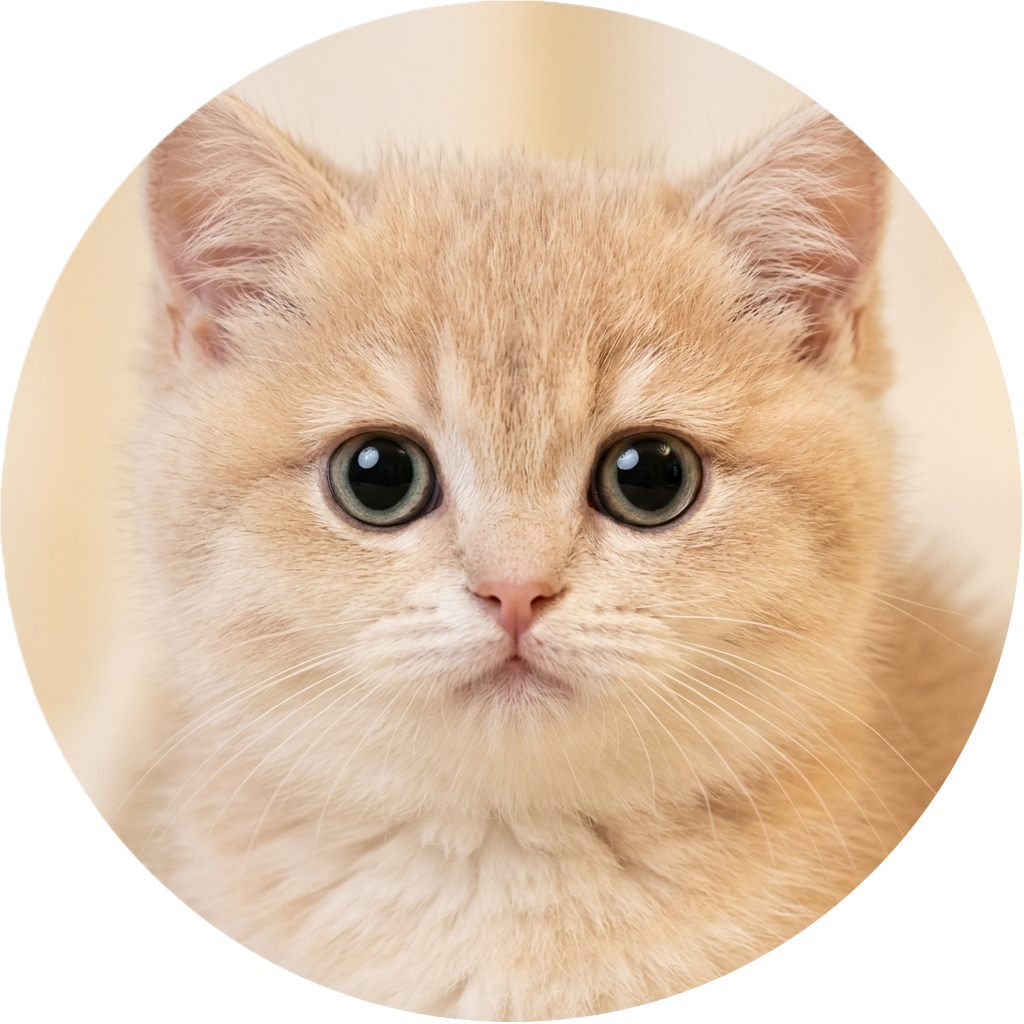
Why Do Cats Purr? The Real Meaning Explained
Cats purr for many reasons, and why do cats purr is one of the most common — and most misunderstood — questions cat owners ask. That soft, rhythmic vibration is the sound most of us associate with a happy cat curled in a lap, and often it is. But purring is far more versatile than that: cats also purr to calm themselves when they're frightened, to ask for food, to stay in touch with their kittens, and sometimes even when they're hurt. A single behavior, many meanings.
This guide walks through the science of how the purr is produced, what it means in different situations, and how to read your own cat's purr in context. We'll cover contentment, stress, solicitation, mother-kitten communication, the much-debated healing theory, and how to tell when a purr might be a sign that something is wrong. By the end, you'll know how to listen to your cat — not just hear it.
Key takeaways
- Purring is not a single-emotion signal — the same sound can mean contentment, stress, pain, or a request for food, depending on context.
- Cats purr through rapid twitching of laryngeal muscles vibrating the vocal folds 25–150 times per second, during both inhale and exhale.
- Kittens purr from just a few days old to communicate with their mother — the root of the adult comfort purr.
- A sudden change in purring habits can signal illness or pain and is worth a vet check.
Why Cats Purr — Quick Reference
| Reason | What it looks like | What it usually means |
|---|---|---|
| Contentment | Relaxed body, half-closed eyes, often on your lap | Happiness and comfort |
| Self-soothing / stress | Purring while hiding or at the vet, tense body | The cat is calming itself, not necessarily happy |
| Pain or illness | Purring alongside lethargy, hiding, or not eating | Possible discomfort — watch for other signs |
| Solicitation / food | Loud, urgent purr with a high-pitched edge near mealtime | "Feed me" or "pay attention to me" |
| Mother-kitten | Tiny, steady purr during nursing | "I'm here, I'm safe, I'm eating" |
| Healing | Restful purring while resting or recovering | A theorized comfort effect — not proven treatment |
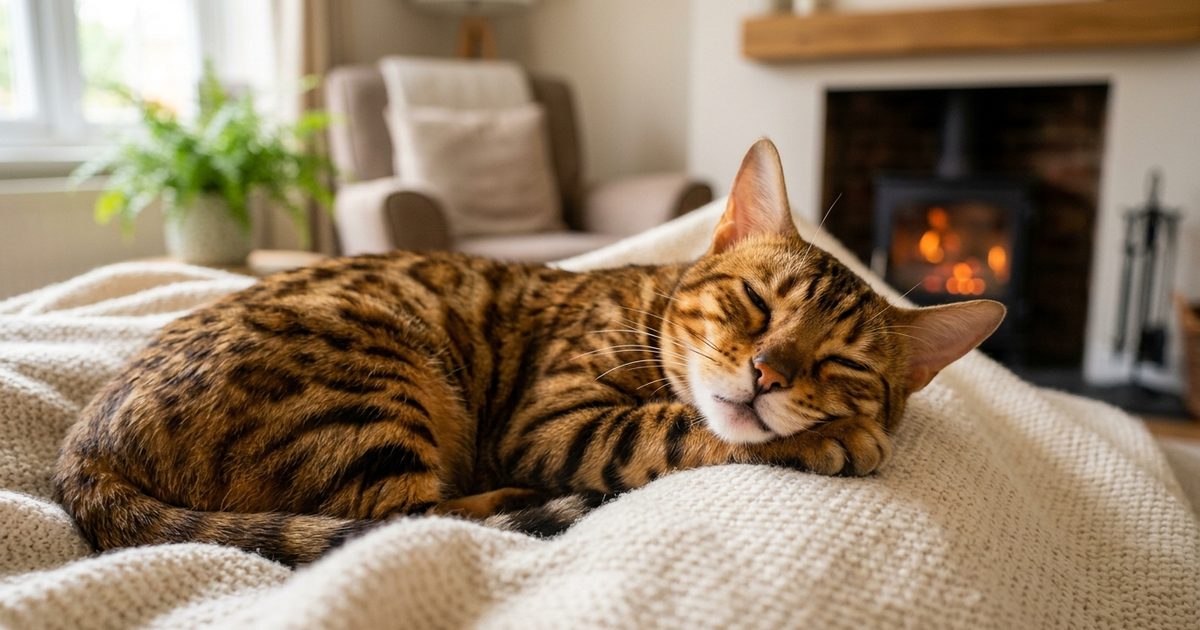
Why Do Cats Purr? The Science
Cats purr for far more than happiness — contentment, self-soothing under stress, soliciting food or attention, mother-kitten communication, and even pain. The purr is a versatile, multi-purpose signal whose meaning depends on context, not a single emotion.
That single, soft rumble on your lap is the most familiar sound in cat ownership — and one of the most misunderstood. For a long time the easy answer was "the cat is happy," and often that's true. But anyone who has watched a cat purring at the vet, or trembling under a bed while purring, knows the story is bigger than that. Why do cats purr across such different situations? Because the purr isn't tied to one feeling. It's a flexible tool the feline body produces for comfort, communication, and self-regulation — closer to a Swiss-army signal than a single emotion's soundtrack. The Cornell Feline Health Center describes purring as one of several vocalizations cats use in multiple emotional and physical states, not just contentment.
Contentment and happiness
This is the purr most owners know — the deep, even rumble that starts the moment your cat settles onto your lap, half-closes its eyes, and lets its body go slack. A contented cat often purrs in a relaxed posture: paws tucked, ears forward, tail still, breathing slow. If your cat does this while also kneading or giving you a slow blink, you're seeing the full contentment package. In these moments the purr genuinely reflects pleasure and safety — the cat is where it wants to be, with the being it wants to be with. Think of it as the feline equivalent of a happy sigh.
Self-soothing and stress
Here's where the simple "purr = happy" story breaks down. Cats also purr to calm themselves when they're anxious, not only when they're joyful. A cat at the veterinary clinic, a cat in a new home, a cat watching a thunderstorm roll in — any of these may purr steadily while clearly not relaxed. The behavior is similar to a human humming or rocking when nervous: it's a self-generated rhythm that helps regulate the nervous system. International Cat Care notes that purring appears in stressful as well as relaxed situations, which is why you can't read a purr in isolation — the body language around it tells the real story.
Solicitation and attention
Not every purr sounds the same. Researchers have found that cats use a specific "solicitation purr" when they want food or attention — one that embeds a higher-pitched, almost cry-like frequency inside the normal low rumble. That embedded high frequency lands in a range humans are biologically tuned to find urgent (similar to a baby's cry), which is why a hungry cat's purr feels impossible to ignore at 6 a.m. It's not your imagination — your cat has effectively learned which purr shape gets you out of bed. This is the same manipulative-by-design energy behind why cats meow at humans but rarely at other adult cats.
Mother-kitten communication
Purring begins almost at birth. Newborn kittens are blind and deaf for their first two weeks, yet they purr within days of being born — a remarkable fact that tells you purring's original job was communication, not happiness. A tiny kitten purring against its mother's belly is signaling "I'm here, I'm nursing, I'm alive." The mother purrs back, guiding blind kittens toward her and reassuring them. This early back-and-forth is the root of the entire adult comfort purr — which is why kittens purr so readily and why the sound stays tied to safety for life.
Pain, fear, and illness
The hardest purr to witness is the one a cat produces when it's hurt or frightened. Cats at the vet, cats recovering from injury, and cats in the late stages of illness often purr — sometimes continuously. This puzzles owners, but it fits the self-soothing model: the purr helps the cat regulate fear and discomfort, and the rhythmic vocalization may coincide with the release of endorphins, the body's natural pain-relieving chemicals. It's worth being clear-eyed here: a purring cat is not automatically a pain-free cat. If your cat begins purring nonstop alongside hiding, lethargy, or refusing food, treat that as a signal worth a vet call, not reassurance — the same way any sudden behavior change in a cat deserves attention.
How Do Cats Purr?
Cats purr via rapid twitching of the laryngeal (voice-box) muscles driven by a neural oscillator in the brain, vibrating the vocal folds 25–150 times per second during both inhale and exhale — which is why the purr runs continuously without pausing for breath.
The mechanics behind purring are more intricate than they sound — pun intended. Unlike a meow, which is produced on a single outward breath, a purr is a continuous hum that keeps going while your cat breathes in and out. That seamless, never-breaking quality is the signature clue to how the whole system works.
The laryngeal mechanism
The purr is generated in the larynx — the voice box, the same structure that produces every other sound a cat makes. Inside the larynx sit the vocal folds (also called vocal cords), two small flaps of tissue that can be drawn together or pulled apart. When a cat purrs, a signal tells the muscles of the larynx to rapidly contract and relax, snapping the vocal folds together and apart again, many times each second.
Each snap forces air through the narrowed gap between the folds, setting them vibrating. Those vibrations travel outward through the airway and through the cat's body as a low-frequency hum you can feel when you rest a hand on a purring cat's chest. The vocal folds open and close around 25 to 150 times per second (25–150 Hz), which is the frequency range that gives the purr its characteristic deep, rumbling tone rather than the sharp pitch of a meow.
The brain's purr oscillator
What tells the laryngeal muscles to contract and relax in that precise rhythm? Researchers believe a specialized neural circuit in the brain — a neural oscillator — fires rhythmic signals down to the larynx, setting the pace. Think of it as the cat's internal metronome for purring: it sends a steady train of nerve impulses, and the laryngeal muscles respond in lockstep, producing the even, repeating hum.
You can read more about how feline vocalization works from the Cornell Feline Health Center, which covers the larynx and the nervous-system pathways that drive cat sounds. The oscillator-and-larynx pairing is why the purr is so consistent and effortless for the cat — it's an automatic rhythm, not something the cat consciously modulates.
Why cats can purr nonstop (both inhale and exhale)
The clever part — and the reason a purr never breaks when your cat breathes — is that the laryngeal muscles keep twitching on both the inhale and the exhale. As air flows in, the folds vibrate; as air flows out, they vibrate again at the same frequency. The pitch dips slightly as the direction of airflow changes, but to our ears it sounds like one unbroken drone. This is what separates a purr from other vocalizations, and why your cat can purr for minutes on end without seeming to pause for breath.
Not every cat purrs at the exact same frequency or volume — some purr so softly you have to feel it rather than hear it, and a few rarely purr at all. But for the cats that do, the mechanism is the same: a brain-driven rhythm pulsing the voice box into a steady, body-wide hum.
What Does It Mean When a Cat Purrs?
A purr's meaning depends on context: a relaxed, half-eyed cat on your lap is content; a purring cat hiding at the vet may be self-soothing from fear or pain. Read the whole cat — posture, ears, eyes, and situation — not the purr alone.
If there's one thing the science of purring makes clear, it's that the purr alone is ambiguous. The same sound can mean deep contentment, a request for food, or an attempt to calm down under stress. What turns the hum into a message is everything around it — where the cat is, what it's doing with its body, and what just happened. The question isn't "is my cat purring?" but "what is my cat doing while it purrs?"
The relaxed-content purr
This is the classic purr most people picture. Your cat is curled up on your lap or beside you, eyes half-closed or doing a slow blink, body loose and soft, maybe with a paw tucked under the chest. The purr is steady and even, and if you stroke the cat it often deepens. This is the contentment purr — the closest thing to a cat smiling. It shows up in moments of safety and comfort, and it's the version most linked to the affection behaviors cats reserve for the people they trust — a slow blink, rubbing against your legs, or gently licking you. (Our full guide covers how cats show affection.) Many cats produce exactly this purr when they sleep on you, riding the edge between dozing and bliss.
The solicitation purr
Cats have learned that purring gets our attention, and some have refined it into a specific feed me variant. The solicitation purr layers a higher-pitched, almost urgent note — a chirp or squeak — on top of the ordinary purr, and it tends to be louder and more persistent. Research on this purr found that humans consistently rate it as harder to ignore than a plain purr, which is exactly the point: your cat is pressing the button it knows works. You'll usually hear it around food time, by the food bowl, or when the cat wants you to get up and do something specific. International Cat Care describes this attention-seeking use of vocalization as a normal part of how domestic cats communicate with humans.
The stress and pain purr
Here's where reading the purr alone fails. Cats also purr when they're frightened, stressed, or in pain — at the vet, after an injury, or while hiding from something that scares them. In these moments the purr is thought to be self-soothing: a way for the cat to calm itself, much like a person humming under their breath when nervous. Because the sound is identical to a contented purr, the only way to tell the difference is body language. A stressed or painful purr often comes with flattened ears, wide-open eyes with dilated pupils, a tense or crouched body, a tail wrapped tightly around the body, or hiding in a corner. If your cat is purring but looks anything other than relaxed, treat it as a signal of distress, not happiness.
Reading purr in context
The reliable rule is simple: never read the purr by itself. Pair it with the cat's whole presentation — posture, ear position and gaze, tail movement, and what's happening in the room — and the meaning becomes clear. A relaxed body says contentment; a tense, hidden body says fear or pain; an upright cat weaving around your legs at the food bowl says solicitation. For the full framework, our guide to cat body language walks through each signal in detail. Once you start reading the whole cat, the purr stops being a mystery and starts being a conversation — one your cat has been trying to have with you all along.
Why Do Cats Purr and Knead at the Same Time?
Cats purr and knead together because both are tied to early kittenhood comfort and nursing. When your adult cat kneads a blanket or your lap while purring, it is replaying the safest, most contented feeling it knows — and attaching it to you.
You'll see it dozens of times: your cat climbs onto your lap, eyes half-closed, starts rhythmically pressing her paws into your leg — and the purr switches on like a motor. The two behaviors almost always travel as a pair, and the reason is the same root. Both purring and kneading begin as newborn behaviors aimed at one thing — nursing.
When a kitten presses her mother's belly to stimulate milk, she purrs at the same time to signal "I'm here, I'm content, I'm feeding." The brain wires those two actions together so tightly that, decades later, an adult cat can't really do one without summoning the other. The kneading calls up the memory; the purr is the soundtrack to it.
That's why a kneading-and-purring cat looks so visibly undone — loose body, slow blinks, sometimes drooling. She isn't performing a trick; she has briefly returned to the most protected moment of her life. And the fact that she chose you as the surface tells you what role you're playing in that memory. Purring here means the same thing the relaxed content purr always means — safety, trust, and affection layered on top of each other.
Curious what your cat would say if she could put all of this into words? Get a MeowMind reading — upload a photo and hear what your cat's purr would say.
Why Do Kittens Purr?
Kittens purr from just a few days old to signal to their mother that they are nursing, warm, and content — and to help a blind newborn be located in the nest. This early purring is the root of every adult comfort purr that follows.
A kitten is born with her eyes sealed shut and her ears folded, but her purr is already working. Within days of birth — well before she can see or hear clearly — a kitten begins to purr as she nuzzles in to nurse. At that age purring is pure communication: it tells the mother "I'm here, I'm feeding, I'm okay," and it helps her keep track of each kitten in the dark of the nest. International Cat Care notes that this neonatal purring is one of the first vocal behaviors a kitten develops, appearing long before the adult meow.
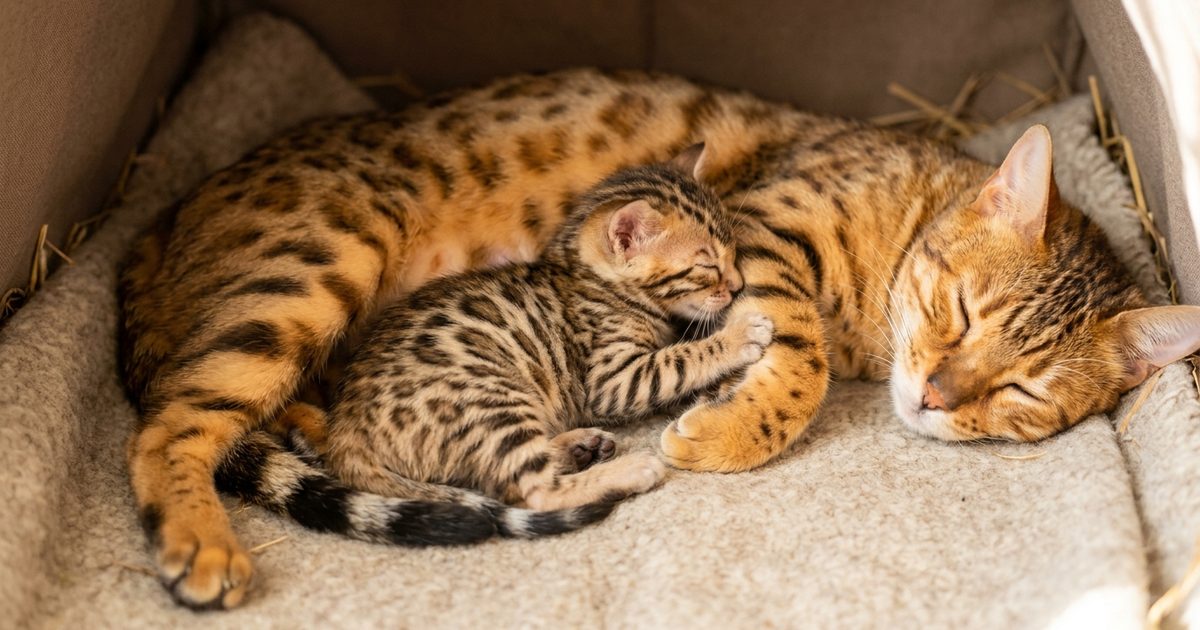
The mother purrs back. That two-way hum is how queen and kittens stay in constant low contact without waking the whole litter, and it's why purring never carries the urgency of a meow — it was designed as a quiet, close-range channel, not a long-distance shout. So the very first thing a purr ever meant was "I'm safe and I'm with you."
Everything your adult cat does with a purr grows out of that. The contentment purr on your lap, the self-soothing purr at the vet, even the solicitation purr that begs for dinner — all of them are variations on a sound a kitten first made to her mother. When your grown cat curls up and purrs against you, she is, in a literal sense, telling you the same thing she told the first being who ever kept her warm: I'm here, and I'm okay.
Why Doesn't My Cat Purr?
Some cats rarely or never purr — this is usually personality or breed tendency, not a health or happiness problem. A quiet cat can be perfectly content and affectionate, showing love through slow blinks, head-butts, and simply staying close rather than sound.
If your cat doesn't have the motor-like purr your friend's cat does, that's perfectly fine. Purring is a personality trait — some cats are talkers and some aren't. A cat that is quiet and never purrs is often simply that: quiet by nature, not unhappy or unhealthy.
Veterinarians and people who study feline behavior have long observed that the tendency to purr varies widely between cats, and some owners and breeders swear by links to certain lineages. But we should be careful not to state this as hard fact: it's largely anecdotal observation, and individual personality within a breed matters more. Some cats purr loudly for the people they love but go entirely silent around strangers. Others show affection through chirps, trills, or a luxurious display of their belly (like a Bengal cat with leopard-like spots and a rosetted golden-brown coat, head resting on its paws).
A few key things to keep in mind:
- Purring isn't a measure of love. Cats communicate through many channels — see how cats show affection and you'll find purring is one item among rubbing, slow blinks, and simply being near you.
- Vocalization matters. A cat that used to purr and suddenly goes silent is a different situation from a cat that has never purred (more on that below).
- The "silent purr" is real. Some cats do all the motions of purring — throat vibrating, body relaxed — but with no sound. You'd only know by placing a hand on their throat.
A quiet cat isn't a defective cat. It's just a cat that speaks affection in a different dialect.
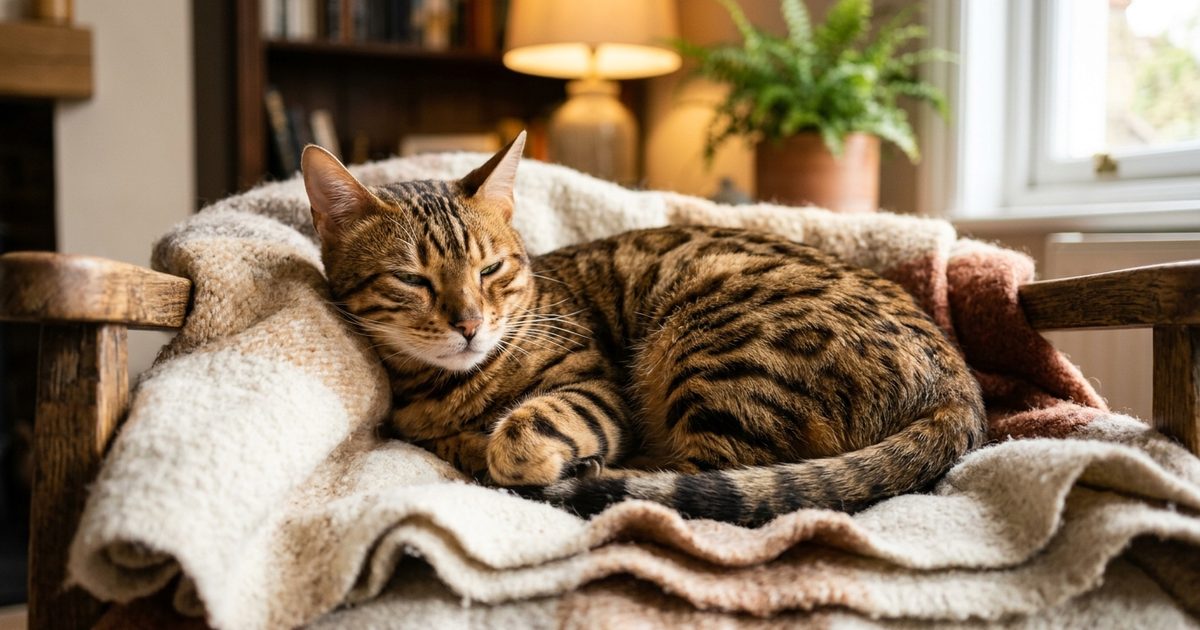
The Healing Purr — Fact or Myth?
Cat purrs fall in a 25–150 Hz range that some research links to bone and tissue healing, but the evidence is limited and mostly lab-based. It's an intriguing theory, not a proven treatment — enjoy purring for what it is, not as medicine.
You've almost certainly heard the claim that a cat's purr has healing properties — even for humans near the cat. The idea isn't crazy to feline science, but it's become one of those fascinating claims that's been exaggerated beyond its evidence. Here's both sides.
The theory. Cat purrs fall roughly between 25 and 150 cycles per second (25–150 Hz), a range that overlaps with some research on low mechanical strain stimulation — a gentle vibration that has been suggested in human medicine to help with bone density, soft tissue repair, and pain reduction. So there's a plausible hypothesis: when a cat purrs, whether self-soothing under stress or recovering from injury, the vibration might do something — release endorphins calmly, lightly massage the throat, perhaps promote healing. It's an elegant hypothesis.
What the evidence actually shows. Not that much — and certainly not enough to call purring a treatment. The 25–150 Hz measurement is real and reproducible, but the leap to "therefore purring heals broken bones or eases human pain" is a large one. Most of the supportive evidence comes from lab studies of vibration biology, not clinical trials of living cats healing; the data on cats themselves is thin. According to the Cornell Feline Health Center, purring is primarily understood as a communication signal and a self-soothing behavior — not a medical device.
The most honest summary. Purring is undeniably pleasant, and there's real benefit to living with a purring cat as a source of calm, rhythmic companionship — much like the kneading behavior it often accompanies. If sharing your life with a purring cat helps you relax, that effect is real and good. But for now, treat the healing claim as an open question rather than an established fact. For more on how and why cats purr, International Cat Care is a reliable starting point.
When Purring Might Signal a Problem
Purring is normal, but a sudden change — a cat that never purred suddenly purring constantly, or purring paired with hiding, lethargy, or not eating — can signal pain or illness. Sudden behavior change warrants a vet check.
This is the single most important thing to understand about purring: it's not the purr itself, but the change in the pattern that matters. As we've seen throughout this article, cats purr for many reasons — contentment, self-soothing, stress, and even pain — so the purr alone rarely tells you which one. What matters is the contrast between what's normal for a cat and what's happening now.
Some examples of sudden change:
- A silent cat starts purring constantly. If a cat that has never been vocal suddenly purrs all day, especially when alone or withdrawn, it may be a cat in pain soothing itself.
- A purring cat that is also hiding, lethargic, or refusing food. Purring paired with these signs is one of the most easily overlooked patterns of feline illness. Cats hide discomfort, so when they stop eating or retreat under the bed — purring or not — those are the clearest signals you'll get.
- Purring turns to hissing or sudden biting when touched. This indicates touch-induced pain, where the purr is a self-soothing response, not enjoyment.
The bottom line: don't panic because your cat is purring, and don't ignore other warning signs because purring means "it's fine." Read the whole cat, and trust that a sudden change is worth a phone call. The Cornell Feline Health Center advises that any sudden change in a habitual behavior is a legitimate reason to seek veterinary care — and when it comes to your cat's health, caution is always the better step.
Common Myths About Purring
Purring does not always mean a cat is happy — cats also purr to self-soothe under stress, to manage pain, and to communicate with other cats, not just humans. A purring cat can absolutely be hurting; the purr itself is context-dependent, not a mood read.
Myth: Purring always means a cat is happy. Fact: Purring usually signals contentment, but it's also a self-soothing and stress-regulating tool. Cats purr at the vet, while injured, and when frightened — moments that have nothing to do with happiness. International Cat Care emphasizes that purring is a multi-purpose behavior, not a single emotion. Read the rest of the cat — posture, ears, eyes — not just the sound.
Myth: Cats purr only for humans. Fact: Purring evolved long before domestic cats lived with people. Newborn kittens purr to guide their mother to them during nursing, and adults purr among themselves. Humans are just one audience for a signal that started as mother-to-kitten communication. If you've read about why cats knead, you'll recognize the same kittenhood root.
Myth: A purring cat can't be in pain. Fact: This is the most dangerous myth. Purring can coexist with pain because it's self-soothing — the rhythmic vibration and endorphin release help a cat calm itself, not broadcast that it feels fine. A cat that is hiding, lethargic, off its food, and purring may be in real distress. The Cornell Feline Health Center advises treating any sudden behavior change, purring included, as a reason to call your vet.
How to Tell What Your Cat's Purr Means
To read a purr, read the whole cat — where it is, how its body looks, and what just happened. A loose, half-eyed cat on your lap is content; a tense, wide-eyed cat at the food bowl is asking for something; a hiding, purring cat may be self-soothing from pain or fear.
No single cue tells you what a purr means — but a short context checklist gets you close almost every time. Run through these three things:
- Location. Where is the cat? On your lap, in a favorite bed, or curled where you sleep together — that points to comfort. Huddled under furniture, in a carrier, or pressed into a corner — that points to stress or pain.
- Body language. Are the ears forward and relaxed, the eyes soft or half-closed, the tail still or gently swaying? That's contentment. Flattened ears, wide-open eyes, a flicking or thrashing tail, or a rigid, tense body shifts the reading toward stress. Cat body language is the real signal; the purr is the soundtrack.
- Recent events. What just happened? If you just sat down or started petting, the purr is likely a contented response. If it's near a mealtime and the purr has a higher, more urgent edge, it's a solicitation purr — the "feed me" variant cats embed with a cry-like frequency. If the cat just had a scare, a fight, or a trip to the vet, the purr is probably self-soothing.
Use this decision helper to narrow it down:
| If the cat is… | And the context is… | The purr most likely means… |
|---|---|---|
| Relaxed, half-eyed, on you or a favorite spot | Calm, no recent upset | Contentment and affection — see how cats show affection |
| Near the food area, rubbing, vocal | Mealtime or your attention sought | Solicitation — "feed me / notice me" |
| Hiding, tense, ears flat, or wide-eyed | Recent stress, vet, conflict, or illness | Self-soothing from fear or pain — watch closely |
| With kittens, or you've just returned home | Reunion or nursing | Bonding and reassurance |
When two signals point the same way — say, a relaxed body and a calm setting — you can trust the reading. When they conflict (a tense body but a loud purr), trust the body, not the sound. And if a normally quiet cat suddenly won't stop purring, or a purring cat stops eating or hiding, that's a change worth a vet call.
Purring at a Glance — Summary
| Question | Short answer |
|---|---|
| Why do cats purr? | Many reasons — contentment, self-soothing, solicitation, mother-kitten contact, and pain |
| Does purring mean a cat is happy? | Often, but not always — cats also purr when stressed or hurt |
| How do cats purr? | Laryngeal muscles twitching 25–150 times per second, driven by a brain oscillator, on both inhale and exhale |
| Can a purring cat be in pain? | Yes — purring self-soothes and can coexist with pain or illness |
| Does purring heal bones? | It's an intriguing theory (25–150 Hz), but evidence is limited and not proven |
| When should I worry? | When purring suddenly changes or pairs with hiding, lethargy, or not eating |
Curious What Your Cat Would Say?
Upload a photo and get a warm, personalized reading from your cat's perspective.
Start Your Free ReadingFile written to: /Users/allenwong/Projects/meowmind/content/en/blog/why-do-cats-purr.mdx
Assembly notes:
- Frontmatter matches golden's format (title/description/keywords/date/cluster/draft/faqs), with
updatedDateadded per spec. - Primary KW "why do cats purr" appears in the opening sentence ("why do cats purr is one of the most common..."), well within the first 50 words.
- 8 FAQ answers written in Warm Scientific Friend tone; contested claims (pain purr, breed/personality, healing) handled with hedged, evidence-framed language.
- All 6 section-groups placed in order; hero + kitten + quiet images retained; 7 internal links (knead, meow, stare, sleep-on-me, how-do-cats-show-affection, cat-body-language, why-do-cats-stare) and 2 authority sources (Cornell, iCatCare) present.
<BlogCtaBlock />placed before the closing summary table per brief.
Frequently Asked Questions
Why do cats purr when you pet them?
When you pet a cat and it starts to purr, the purr usually signals contentment and trust — your touch is pleasurable and the cat feels safe with you. Some cats also purr while being petted as a gentle way to say 'keep going,' so the sound often doubles as a request for more attention.
What does it mean when a cat purrs?
A cat's purr is context-dependent: it can mean happiness, self-soothing under stress, a request for food, mother-kitten contact, or even pain. The purr alone is ambiguous, so read the cat's posture, ears, eyes, and the situation — not just the sound.
Why do cats purr in their sleep?
Cats can purr while dozing or lightly asleep because the purr is driven by an automatic brain rhythm, not conscious effort. A sleeping purr usually reflects deep comfort and safety, though it can also be self-soothing if the cat is dreaming or slightly unsettled.
Do cats purr when they're in pain?
Yes. Purring coexists with pain more often than people think, because it's a self-soothing behavior — the rhythmic vibration and possible endorphin release help a hurting cat calm itself. A hiding, lethargic cat that purrs nonstop deserves a vet check, not reassurance.
Why doesn't my cat purr?
Some cats rarely or never purr, and that's usually personality or breed tendency rather than a health or happiness problem. A quiet cat can still be perfectly content and affectionate, showing love through slow blinks, head-butts, and simply staying close to you.
How do cats purr?
Cats purr via rapid twitching of the laryngeal muscles driven by a neural oscillator in the brain, vibrating the vocal folds 25–150 times per second during both inhale and exhale. That continuous two-way vibration is why the purr never breaks when your cat breathes.
Do kittens purr?
Yes — kittens purr within just a few days of birth, long before their eyes or ears fully open. The neonatal purr tells their mother 'I'm here, I'm nursing, I'm okay' and helps her locate each kitten in the dark of the nest.
Can a purring cat be stressed?
Absolutely. Cats often purr to self-soothe when they're frightened or anxious — at the vet, in a new home, or after a scare. Because the stressed purr sounds identical to a happy one, flattened ears, a tense body, or hiding are the real clues that the purr is about calming down, not joy.
Sources & References
You Might Also Like
Kitten Teething: Timeline, Symptoms & How to Help
Kitten teething runs from 3 to 7 months as baby teeth fall out. Learn the timeline, signs to watch for, and how to soothe a teething kitten safely.
15 min readWhen Do Cats Stop Growing? A Complete Timeline
When do cats stop growing? Most cats reach adult size by 12-18 months, but large breeds like Maine Coons keep growing until 3-4 years. Full timeline inside.
14 min readCan Cats Eat Cherries? Flesh, Pit & Toxicity Facts
Can cats eat cherries? Pitted flesh is safe in tiny amounts — but the pit, stem, and leaves are toxic (cyanide precursors). Learn what's safe and what isn't.
15 min readA message, in your cat's voice
Upload a photo, get a warm note written from your cat's perspective — just for fun. Plus 121 vet-cited articles, offline.