Cat Body Language: The Complete Guide to Reading Your Cat
Cats don't speak in words — they speak in bodies. Learning cat body language is how you finally hear what yours has been saying all along, and the good news is that domestic cat body language follows clear, readable patterns anyone can learn. Once you know how to read a cat's body language, a confident cat looks nothing like a scared one: the posture, the ears, the eyes, the tail all tell one coherent story. The trick — and this is the part most owners miss — is reading several signals together, never one in isolation. A single twitching ear means almost nothing. Ears, eyes, tail, and posture agreeing with each other means everything.
Key takeaways
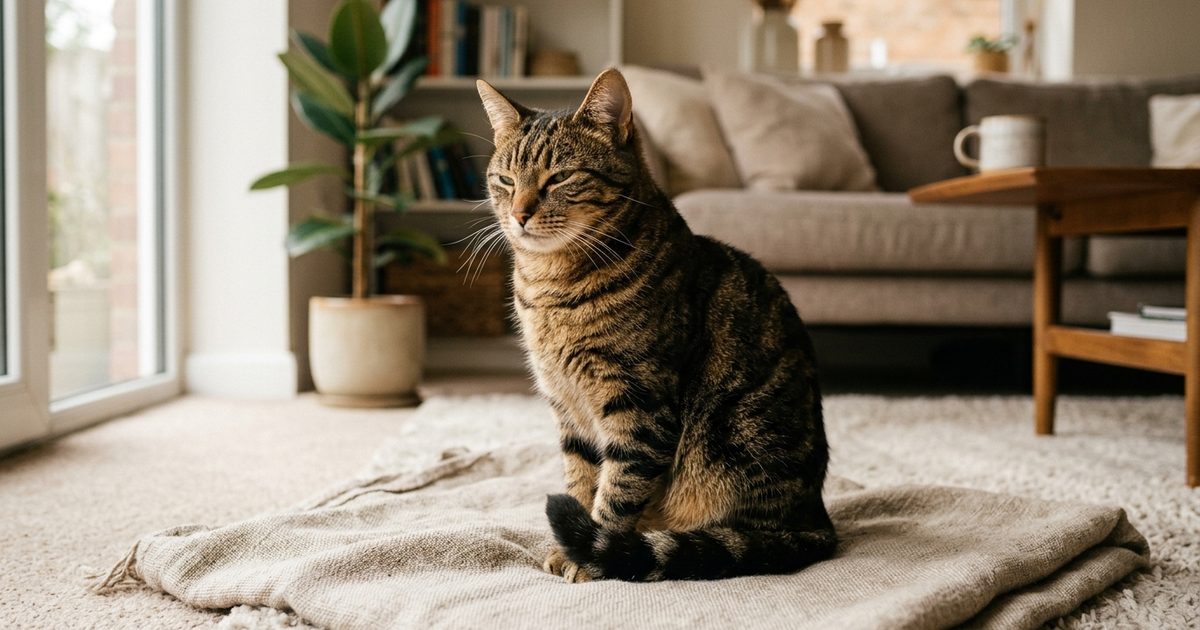
- Read ears, eyes, tail, posture, fur, and voice together — never trust one signal alone.
- The big divide is friendly-and-confident (open, loose, approach-oriented) versus fearful-and-defensive (closed, tight, withdrawn or puffed).
- Context and your cat's individual baseline always matter — the same ear position can mean different things in different rooms.
- Conflicting signals (purring with a thrashing tail, slow-blink with airplane ears) mean mixed emotion, usually trust mixed with overstimulation.
Cat Body Language — Quick Reference
| Body part | Relaxed / friendly signal | Stressed / fearful signal |
|---|---|---|
| Ears | Forward and upright, interested | Turned sideways ("airplane") or pinned flat |
| Eyes | Half-closed, soft, slow blink | Wide, unblinking, or whale eye (whites visible) |
| Tail | Upright with curved tip, still or gently waving | Thrashing, puffed, or tucked tight to the body |
| Posture | Loose, open, upright or stretched out | Crouched low, small, rigid, or arched with puffed fur |
| Fur | Flat, smooth, lying clean against the body | Standing up along the back or tail (piloerection) |
| Voice | Soft purr, trill, quiet chirp | Hiss, growl, spit, or loud sustained yowl |
How to Read a Cat's Body Language
Scan several body parts at once — ears, eyes, tail, posture, fur, and voice — and weigh them together rather than trusting any single signal. Sort the whole cat into "open and loose" (friendly) or "closed and tight" (fearful), then let context refine the read.
Most owners learn one signal at a time and then get confused when their cat seems to contradict itself. The fix isn't more signals — it's a method for putting them together. Once you treat the cat as one integrated picture, most of the confusion disappears, because a confident cat agrees with itself across every body system and a frightened cat does the same.

Read signals together, not in isolation
A single body part is almost never enough to read a cat. One ear swivelling back could mean your cat heard a noise behind it, or it could be the first flicker of annoyance — and you cannot tell which from the ear alone. That's why fluent cat-readers run a quick 3-part check: pick any three body systems — say ears, eyes, and tail — and see whether they agree. Forward ears plus soft half-closed eyes plus a gently upright tail all say the same thing, so the read is confident. Forward ears plus wide unblinking eyes plus a thrashing tail are pulling in three different directions, and that disagreement is itself the message. We return to those mixed-signal cases in detail in the Reading the Whole Cat at Once section below.
The friendly-vs-fearful baseline
Before memorizing dozens of individual positions, learn the two big whole-body silhouettes, because almost every cat falls into one or the other at any given moment. The open, loose silhouette is friendly and confident: the body looks soft and spread out, weight balanced, head up, tail up or gently moving, ears forward, eyes relaxed. This cat is approachable. The closed, tight silhouette is fearful or defensive: the body looks small, low, and compact or rigid, head tucked, tail down or puffed, ears flat or sideways, eyes wide. This cat wants more space. Sorting any cat into one of these two shapes first — then refining with the details — is the single fastest habit you can build.
Know your cat's individual baseline
Every cat has a personal default, and reading against that baseline matters as much as reading the signals themselves. Breed differences are real but they're tendencies, not rules: a Ragdoll may go floppy and boneless when handled in a way a Siamese never would, a Siamese is often dramatically more vocal than average, and a Scottish Fold's folded ears are a structural trait of the cartilage — not an emotional "airplane ear" reading of fear or annoyance. Personality matters too: one cat's relaxed is another cat's baseline tension. Aging also shifts things — older cats often slow down, stiffen up, and tolerate less handling, which can look like withdrawal rather than distress. For a deeper reference on how cats communicate across all these dimensions, International Cat Care is an excellent authoritative starting point.
Cat Ears: What Ear Positions Mean
A cat's ears are radar dishes that track mood as well as sound. Ears forward mean alert and interested; ears turned sideways ("airplane") signal uncertainty or irritation; ears flattened back mean fear, anger, or defensive aggression. Ear direction often moves before the rest of the body.
A cat's ears are controlled by more than thirty separate muscles, which is why they swivel independently, flatten in a flash, and often move a full second before the rest of the body reacts. If you want an early-warning system for your cat's mood, watch the ears first — they almost always telegraph what's coming. For a position-by-position deep dive, see our dedicated cat ears guide.
Forward and upright
Ears facing forward and sitting tall on the head are the default of a relaxed, confident, interested cat. This is the ear position you'll see during play, greeting, exploration, and most affection. The cat is engaged with its environment rather than bracing against it, and it's approachable. Paired with a soft gaze and an upright tail, forward ears are one of the most reliable "you're welcome here" signals a cat gives.
Turned sideways — "airplane ears"
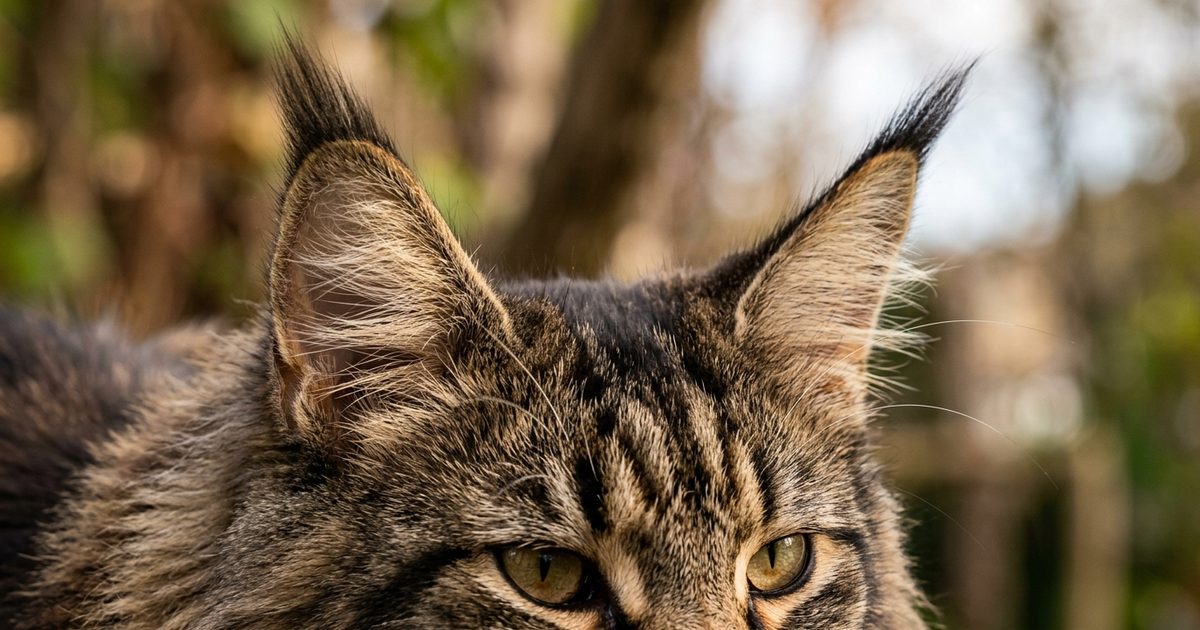
When the ears rotate outward so they point to the sides like little airplane wings, the cat has shifted from "engaged" to "ambivalent." Airplane ears are the early-warning position many owners miss entirely — they usually show up before a hiss, a swat, or a flatten, while the cat is still deciding whether it's annoyed enough to act. You'll see them during overstimulating petting sessions, when the vacuum cleaner appears, or when a second animal is being sized up. The read is "uncertain and tipping toward irritated," and the right response is to ease off before the ears go any further back.
Pinned back or flat
Ears flattened tight against the skull — sometimes called "plane ears" in their most extreme form — are the defensive or threat position, and they mean business. A cat with flat ears is frightened, angry, or both, and it is closer to a bite or a scratch than at any other point on the ear spectrum. This is the classic silhouette of a cornered cat preparing to fight its way out. If you see flat ears paired with a stiff body, dilated pupils, or a puffed tail, stop interacting, give the cat an exit route, and do not reach in. When the interaction tips into an actual hiss or growl, that's the vocal half of the same defensive pattern — covered in our guide to why cats hiss.
Twitching and rotating
Not every ear movement is emotional. Cats twitch and rotate their ears constantly to pinpoint sounds, and a single ear swivelling backward often just means the cat is half-listening to something behind it while keeping its attention forward. Independent ear movement — one forward, one back — is usually neutral tracking, not a mixed mood. The signal that matters is a sustained shift in both ears together, held for more than a second or two. Fleeting twitches are just your cat being a cat.
Cat Eyes: Pupils, Blinks, and the Side-Eye
A cat's eyes show arousal through pupil size and eyelid shape. Big pupils mean excitement, play, fear, or pain — context decides which. Half-closed eyes with a slow blink mean trust; wide unblinking eyes mean alarm; "whale eye" (seeing the whites) signals tension and a likely bite if pushed.
The eyes are where a lot of owners get tripped up, because the same pupil can mean opposite things. Huge dilated pupils can be pure play-joy in one moment and pure terror in the next — the eyes alone never carry the whole answer. Read the eyes with the ears, the tail, and the posture, and they become one of the richest signals you have.
Pupil size: dilation vs constricted
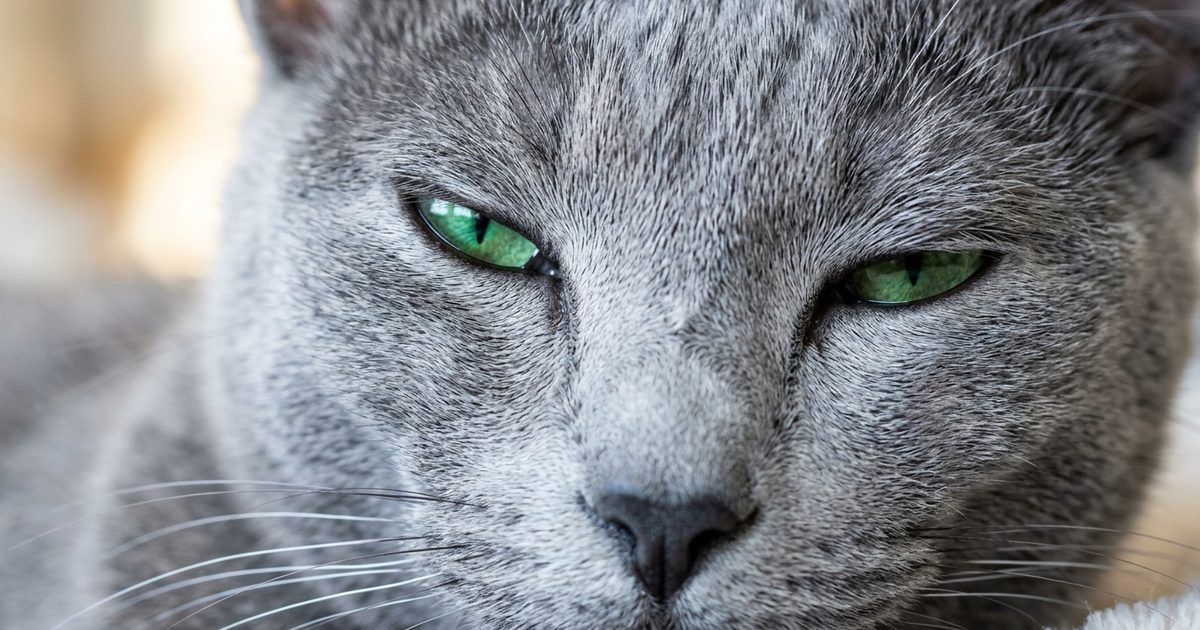
Cat pupils can shift from thin vertical slits to near-full-black circles in fractions of a second, and that range maps onto arousal. Big, dilated pupils mean the cat is highly aroused — which could be excitement during play, the thrill of a hunt, fear, or pain. You tell which by the rest of the body: big pupils on a pouncing, bounding cat is play; big pupils on a crouched, flat-eared cat is fear. Tiny constricted slit pupils, by contrast, usually mean the cat is relaxed and confident in normal light — though they can also appear during predatory focus. What matters most is sudden change: pupils that blow wide in a calm room are a stress or pain flag worth noticing, regardless of the absolute size.
The slow blink
The slow blink is the closest thing cats have to a spoken "I love you." When a cat looks at you, closes its eyes slowly and deliberately, and opens them again, it's signaling trust — because closing its eyes around another creature is, for a predator that is also prey, a genuine gesture of safety. You can do it back: relax your own face, meet your cat's gaze softly, and close your eyes slowly for a beat. Many cats will return the gesture, and the exchange tends to deepen the bond. The slow blink is a real, research-supported affection signal, but it's not universal — some cats rarely slow-blink, and a cat that doesn't isn't necessarily cold. For more on where the slow blink sits in the full catalog of feline affection, see how cats show affection.
Whale eye and the "side-eye"
Whale eye — when a cat fixes its gaze forward but keeps its head still while the eyes are pulled wide enough that you can see the white sclera at the outer edge — is a genuine tension signal. It typically appears when a cat is guarding a resource (food, a resting spot, a kitten), when it's being handled past its tolerance, or when it's cornered and deciding whether to strike. Whale eye paired with a stiff body is one of the clearest "I am about to bite or scratch if you push further" warnings a cat gives. The internet loves to meme the "cat side-eye," but the meme oversimplifies what's actually a real, uncomfortable arousal signal — it's not sass, it's the cat trying to watch you without moving its head and triggering a confrontation. For a focused walkthrough of this signal, see our cat side-eye explainer.
Half-closed and soft
When a cat's eyes are half-closed with the lids relaxed into a soft almond shape, the face reads as peaceful and unguarded. This is the resting-state eye of a cat that feels safe in its environment and with whoever is nearby. You'll see it during quiet affection, on the verge of sleep, and during a slow blink. Half-closed soft eyes paired with forward ears and a still tail is about as relaxed as a cat gets.
Unblinking stare
A wide, fixed, unblinking stare is the opposite end of the spectrum from the soft half-closed eye, and it has two main flavors. In a play or hunting context, it's predatory focus — the cat has locked onto a toy, an insect, or another cat and is calculating the pounce. In a social context, a sustained unblinking stare directed at another cat or at a person can read as a challenge, which is why cats find direct staring from strangers unsettling. Soften your own gaze around cats who don't know you well. For the full taxonomy of what a fixed stare can mean, our why do cats stare guide breaks down the affection, hunting, and challenge readings in depth, and the Cornell Feline Health Center is a reliable reference for how eye and body signals fit into overall feline health and behavior.
Know the signals but still not sure what your cat is feeling? Get a MeowMind reading — upload a photo and hear your cat put it into words.
The Tail: Positions in Brief
The tail is the most expressive part of cat body language. Upright with a curved tip means confident and friendly; a swishing or thrashing tail means overstimulation or annoyance; puffed fur means fear; tucked means insecure; a wrapped tail is affection. Read the tail with the ears and eyes.
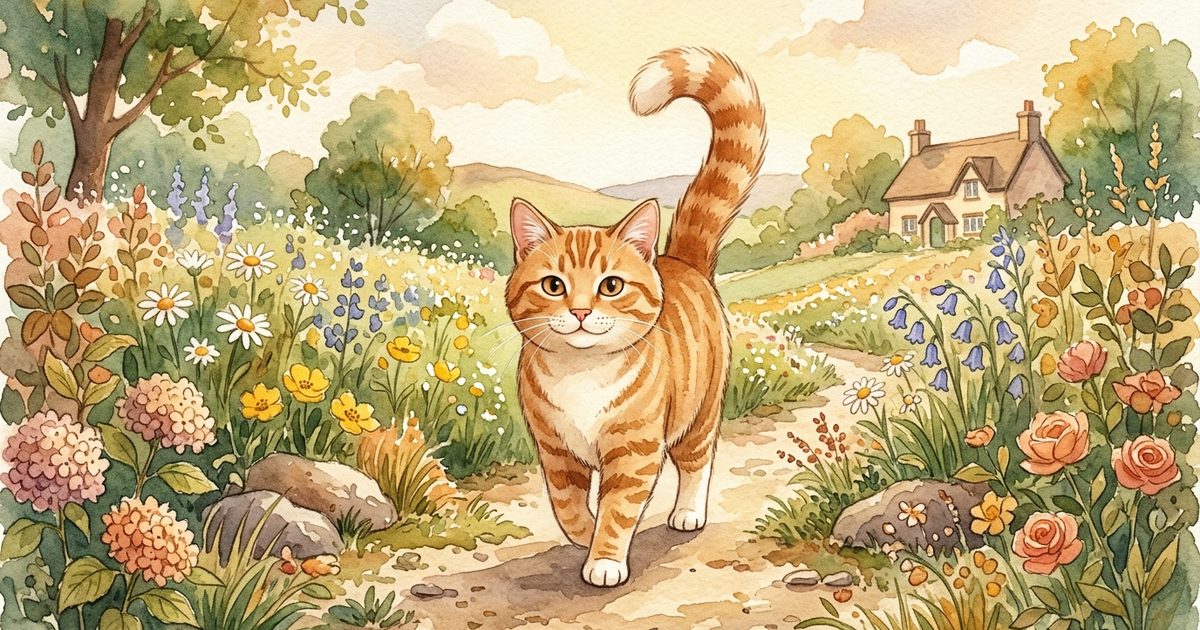
Upright, curved tip, quiver
A tail held straight up, often with the tip curled into a soft question mark, is one of the clearest "I'm glad to see you" signals in cat body language. You'll often see it as a cat trots toward a trusted person — confident, open, and ready for interaction. A high, slightly quivering tail is a step further still: an intensely affectionate greeting, especially common between cats that are close bonded and directed at people a cat adores.
Swishing, thrashing, twitching
Here's the trap that catches every new cat owner: a tail swishing side to side is not the feline version of a happy dog wag. In cats, a thrashing or fast-swishing tail signals arousal — overstimulation, frustration, or prey focus. A slow, lazy swish can mean the cat is thinking about something (a toy, a bug, the view out the window); a fast, hard thrash means the cat is annoyed or wound up, and a bite or scratch may follow if you keep pushing. This is the opposite of the canine read, and getting it wrong is one of the fastest routes to a hand that gets swatted. International Cat Care treats tail thrashing as a classic early-warning sign of irritation.
Puffed, tucked, wrapped
A puffed tail — fur standing on end so the whole tail looks like a bottle brush — is a fear or threat display: the cat is making itself look bigger to intimidate whatever scared it. A tail tucked tight against the body or wrapped low underneath signals insecurity, pain, or fear; the cat is trying to look small and protected. At the other end of the spectrum, a tail draped around you, draped around another cat, or curled around a favored object is a quiet, unmistakable gesture of trust and affection — the feline equivalent of an arm around your shoulder. For a fuller look at how each of these signals functions as affection, the wrap is one of the warmest.
When the tail disagrees with the body
Cats feel two things at once, and their bodies show it. A purring cat in your lap with a thrashing tail is not giving you mixed signals by accident — it's telling you the trust is real and the arousal is real, and you're probably one pet away from overstimulation. A belly-up cat with a twitching tail tip is showing trust while also winding up. When the tail disagrees with the rest of the body, trust the more aroused signal (usually the tail) and back off. For every tail position in depth, see our cat tail meanings guide.
Posture and Stance: The Whole-Body Silhouette
Overall posture is the most reliable cat body language cue. A loose, open cat is relaxed and confident; a small, crouched, low-to-the-ground cat is fearful or hunting; an arched back with puffed fur is a fear display; a frozen, stiff cat is preparing to fight or flee.
The confident upright stance
Picture a cat standing with weight evenly placed on all four paws, head up, ears forward, and tail held high — that's the confident baseline. This cat is approachable, curious, and comfortable in its space. It will often walk toward you rather than away, and its movements are fluid rather than jerky. The Cornell Feline Health Center describes this relaxed, open silhouette as the healthy default for a cat that feels safe in its environment.
The loaf and the curl
The loaf — paws tucked neatly underneath, body compact, eyes soft or half-closed — is the signature relaxed-but-ready posture. The cat is comfortable enough to tuck away its paws (a vulnerable move), yet it can spring up in a second if something interesting happens. A curled cat, body wrapped into a neat circle with the tail over the nose, is one step further into rest. The line between loafing and true sleep is worth knowing — for the full map of resting shapes, see our guide to cat sleep positions.
Belly-up: trust, not a belly-rub invitation
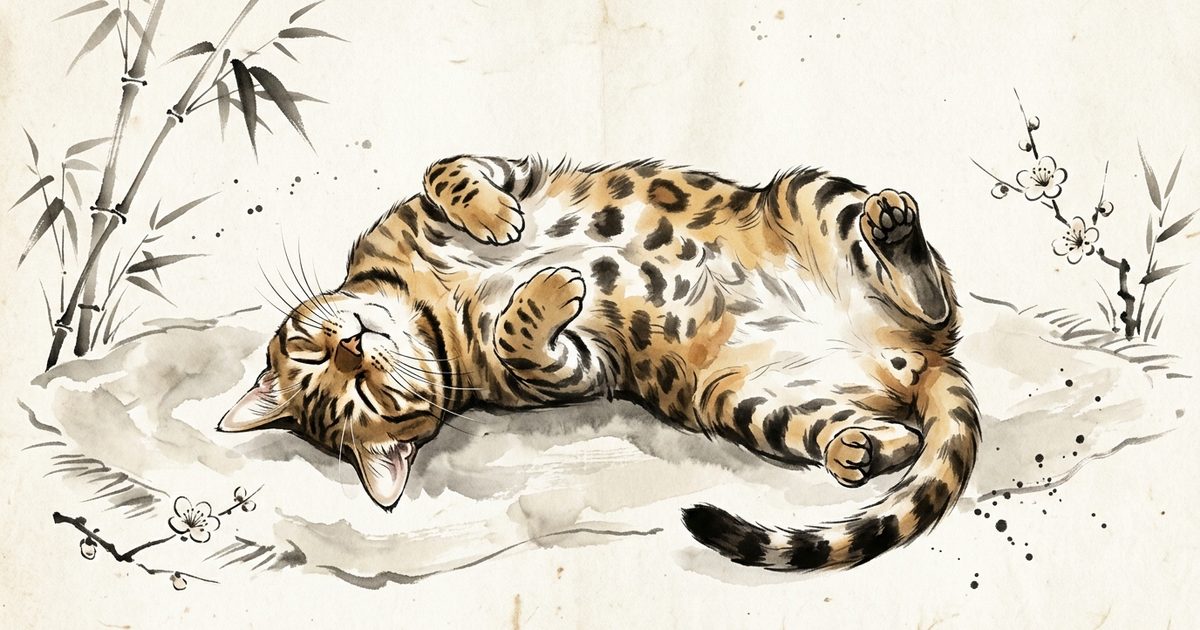
This is the posture that causes the most bites, so let's be precise. An exposed belly in cat body language is primarily a trust and self-defense display — not an invitation. By showing you its most vulnerable area, the cat is saying it feels safe enough to let its guard down. But the belly is also loaded with survival reflexes: many cats will instinctively grab a touching hand with their front paws and rake with the hind legs the moment the belly is touched. Some individual cats genuinely enjoy belly rubs; most do not. The safe read is to treat belly-up as a compliment, keep your hands away from the belly, and let the cat tell you over time whether it's the rare exception.
Crouched low and small
A cat pressed low to the ground, legs folded tight, body contracted into the smallest possible shape, is frightened, hiding, or stalking. Telling fear from a hunting stalk is the key skill here: look at the ears and eyes. A fearful crouch comes with ears flattened or turned sideways and wide, unblinking eyes fixed on the threat; a hunting crouch comes with ears forward and pupils locked on the prey, muscles coiled for a pounce. Same silhouette, completely different internal state — which is exactly why cat body language never works one signal at a time.
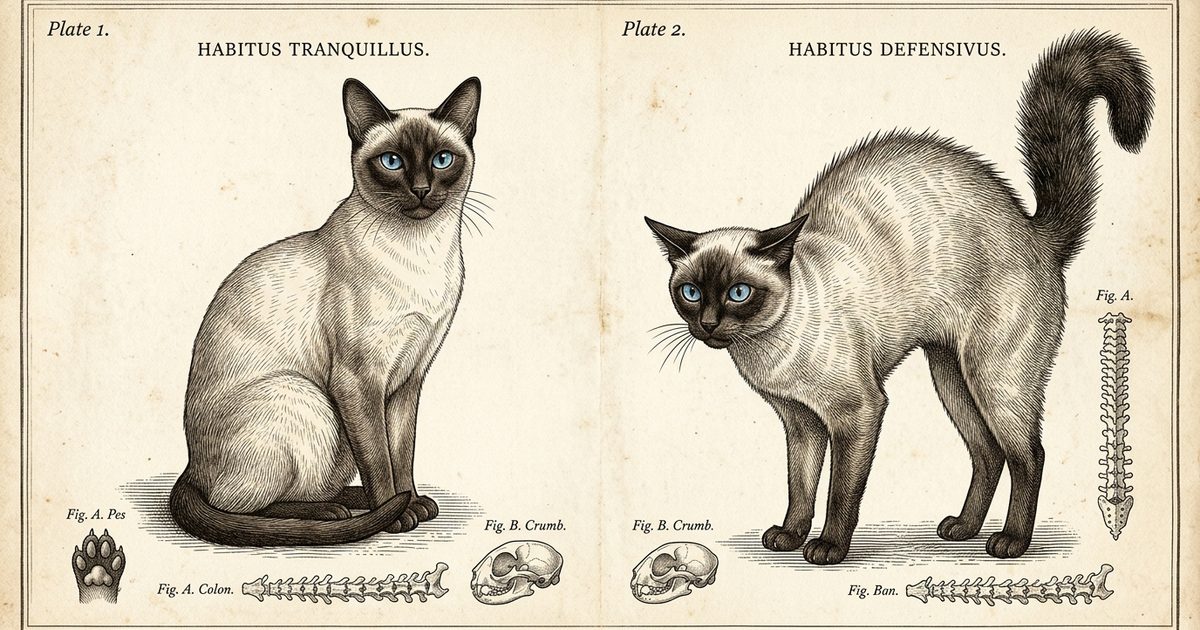
Arched back, puffed, sideways
The Halloween-cat silhouette — back arched high, fur puffed along the spine and tail, body turned sideways to look as large as possible — is the classic feline fear and threat display. The cat is trying to convince whatever frightened it that it's bigger and more dangerous than it really is. It usually comes with hissing, spitting, or flattened ears, and it means the cat wants distance, not contact. You can read more about the vocal side of this display in our guide to why cats hiss.
These whole-body silhouettes overlap with several other affection and comfort postures worth knowing: the head-rub and body-rub against your legs (why cats rub against your legs) is scent-marking plus greeting; the rhythmic kneading of a soft surface (why cats knead) is a deeply affectionate comfort posture; the raised-tail presentation of the hindquarters (why cats show their butt) is, oddly, a friendly feline hello; and the soft extension of a paw toward you is covered among the subtler signals in our guide to the cat paw. Read the whole cat — posture is the frame, and these are the details that fill it in.
Fur and Skin: Piloerection and Twitches
Fur and skin are part of cat body language. A suddenly puffed coat means the cat is trying to look bigger to scare off a threat. Twitching skin along the back often signals overstimulation or irritation, and over-grooming one spot may communicate pain, allergies, or stress.
A cat's coat is not just insulation — it's a signalling surface. The same tiny muscles that fluff the fur in a threat display also twitch when a cat has had enough petting, and changes in how a cat grooms can carry meaning the body alone is struggling to say. Fur and skin round out the picture that ears, eyes, and tail already started.
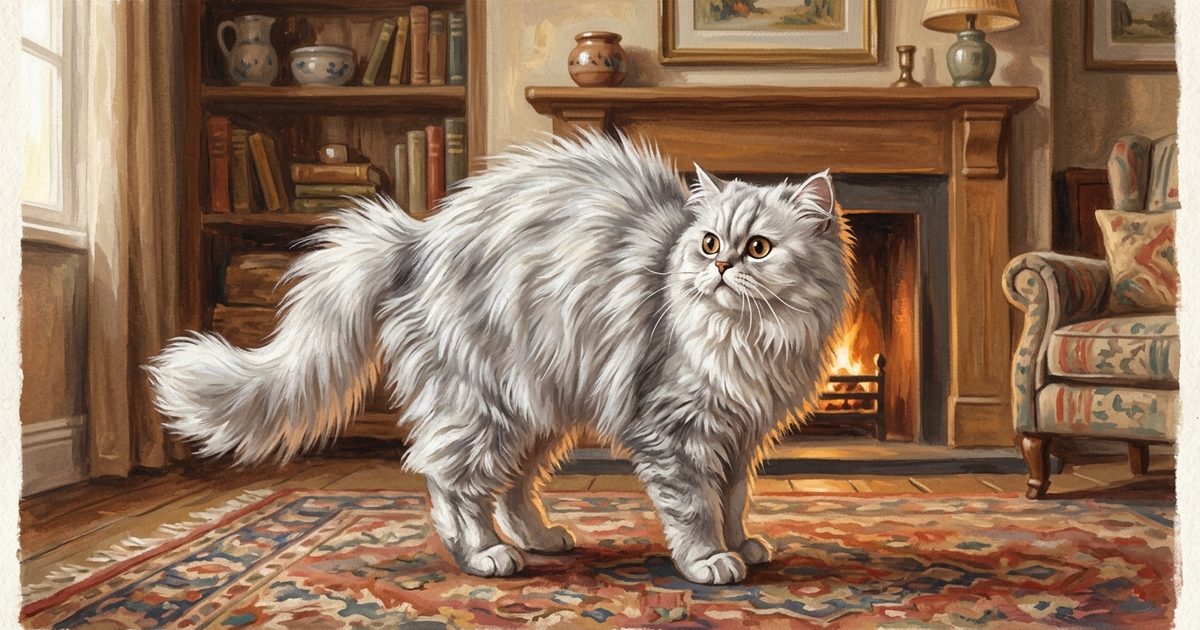
Piloerection — the puffed coat
Piloerection is the same involuntary mechanism behind human goosebumps: tiny muscles at the base of each hair follicle contract, making the fur stand up. In a frightened or angry cat, the whole coat — and especially the tail — puffs outward so the cat looks larger and more intimidating to whatever is threatening it. This is the classic "Halloween cat" effect, and it almost always pairs with the arched-back posture and stiff legs we covered above. A puffed tail alone, without the arched back, can also mark a startled-but-recovering cat who is deciding whether to calm down or escalate. The puff fades as the cat relaxes; if it lingers, the threat still feels real to the cat.
Rippling and twitching back
A ripple of skin running along a cat's back or flanks — sometimes called feline hyperesthesia when it becomes frequent or intense — is usually a sign of mounting arousal or irritation. You'll often see it during a petting session that has gone on a touch too long: the skin rolls, the tail starts to flick, and within seconds the cat may swat or nip. Read it as an early warning, not a quirk. If you notice the ripple, stop petting and give the cat space — it is the body's polite version of "I'm getting close to my limit." For the full escalation ladder from twitch to bite, see our guide on why your cat bites you.
Over-grooming as a body signal
Sometimes the message is in what the fur is missing. A bald patch, a thin strip along the belly, or a chewed-down foreleg can be a cat communicating distress through its coat rather than its posture. Over-grooming is linked to several causes — allergies, parasites, localized pain, and chronic stress or boredom among them — and none of them are vanity. A cat that suddenly grooms one spot raw is worth a vet visit rather than a guess. Generalize, don't diagnose: the fur loss is a body-language signal that something internal or environmental needs attention, in the same way that your cat licking you can carry social meaning rather than simple grooming.
Vocal Cues as a Body-Language Co-Signal
Sound confirms what the body already shows. A purr pairs with a relaxed body; a hiss or growl with flattened ears and a stiff posture; a trill greets a friendly approach; a yowl comes with restless pacing. Read voice and body together, never sound alone.
A cat's voice is a powerful signal, but it is a co-signal — it confirms and amplifies what the body is already telling you, and it can mislead you if you listen to it alone. Treat every vocalization as one channel in the whole-cat read, and this chapter is intentionally brief because each sound deserves its own deep dive.
Purr, trill, and chirp — friendly sounds
Purring, trilling, and chirping tend to ride on a relaxed, open body: soft eyes, loose shoulders, a tail held still or gently curved. A trill — that rolling brrrt — is a friendly greeting cats use with beings they like, and chirps often bubble up at the sight of a bird or a favourite person. Purring is the contested one. It most often means contentment, but it also appears in cats that are in pain, frightened, or even close to death — possibly a self-soothing mechanism. So treat a purr as one signal, not the verdict: pair it with the body before you decide what it means. For the full mechanism, see why cats purr, and for those chatty bird-watching sounds, our guide on why cats chirp.
Hiss, growl, spit — threat sounds
These are unambiguous warning sounds, and they almost never travel alone. A hiss, growl, or spit comes with flattened ears, a stiff or crouched body, dilated pupils, and often a puffed tail — the full defensive picture. They mean "back off," and the right response is to honor it: stop approaching, give the cat an exit, and let the arousal come down. Our deep dive on why cats hiss walks through the full escalation from warning to strike.
Meow and yowl — human-directed
Adult cats rarely meow at each other — the meow is shaped for human ears, a sound cats learn because it works on us. A conversational meow usually pairs with an attentive, approach-oriented body; a long, low yowl, especially with pacing or restlessness, can signal distress, disorientation, or (in unspayed cats) a mating call. Either way, the meow is asking for something — attention, food, a door opened — and the body tells you the cat's emotional state while the voice tells you the request. See why cats meow for the full vocabulary.
Reading the Whole Cat at Once
The skill that separates a fluent cat-reader from a beginner is integration: weighing ears, eyes, tail, posture, fur, and voice as one picture. When signals conflict — purring with a swishing tail, or belly-up with airplane ears — the cat is usually feeling trust mixed with overstimulation.
Everything above — ears, eyes, tail, posture, fur, voice — is a system. The real skill of reading cat body language is not memorizing each one; it is weighing them together in a single glance. This synthesis is the heart of cat body language, and it is what lets you read a strange cat in seconds rather than guessing signal by signal.
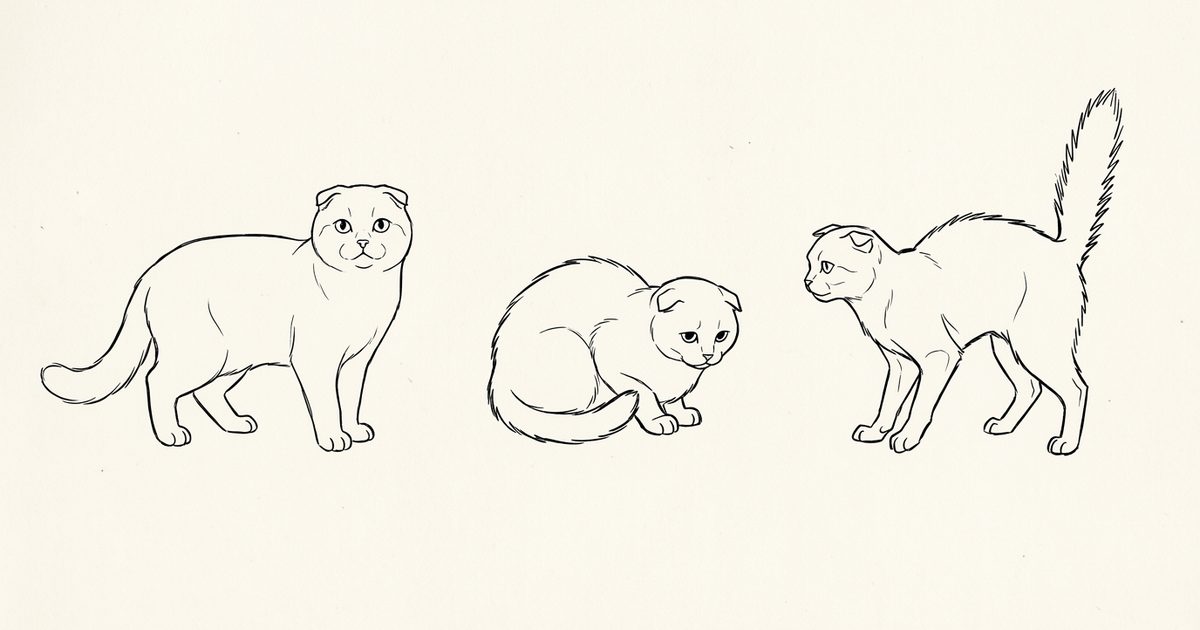
When all signals agree
The easy reads happen when every system points the same way. A cat with ears forward, soft half-closed eyes, an upright tail with a curved tip, a loose upright posture, smooth fur, and a gentle purr is broadcasting friendly and confident across every channel — there is no ambiguity. Likewise, a cat with flattened ears, wide dilated pupils, a tucked or puffed tail, a crouched-low body, raised fur, and a low growl is broadcasting fearful and defensive just as clearly. When all six systems align, you do not need to overthink it; the whole silhouette is the message.
When signals conflict
The confusing cases — and the ones that lead to bites — happen when the signals disagree. A cat purring in your lap with a tail that starts thrashing, or a cat showing its belly with ears swiveled sideways into "airplane" position, is not contradicting itself; it is feeling two things at once. The usual interpretation is trust mixed with overstimulation: "I trust you enough to stay, and I am also reaching my limit." That mixed state is exactly when a friendly interaction tips into a swat or a bite. The right action is to read the conflict early and back off — stop petting, withdraw your hands, let the cat reset — before the overstimulation wins. International Cat Care, in their guide to understanding your cat, emphasizes that conflicting signals are common and almost always reflect genuine mixed emotion rather than a cat being "moody." For the overstimulation-bite pattern in detail, see why cats bite, and for the emotional backdrop, whether cats have feelings.
Context changes everything
The same body can mean different things in different rooms. A cat lying belly-up on the living room rug is usually relaxed; a cat lying belly-up on the examination table at the vet is often frozen in fear. A cat crouched low and staring in the garden is hunting; the same crouch under the bed in a new home is hiding. Pupil dilation during play is excitement; the same dilation during a thunderstorm can be fear. Always fold in the setting — new environment, vet visit, mealtime, the presence of a stranger or another pet — before you read the body. Context is the seventh signal, and without it the other six can be perfectly clear and still misleading.
A 10-second whole-cat check
Here is the routine you can run on any cat, yours or a stranger's, in about ten seconds. Look at the eyes: soft and almond, or wide and staring? Check the ears: forward and upright, sideways, or flat? Note the tail: up with a curve, still, swishing, puffed, or tucked? Take in the posture: loose and open, or small and tight? Feel the tension in the fur and skin: smooth, or rippling and raised? Listen to the voice: silent, purring, trilling, or hissing? If most of those agree, you have your read. If they conflict, assume mixed emotion and give the cat room. Run that check a few times and it becomes automatic — which is the whole point of learning cat body language in the first place.
Common Myths About Cat Body Language
Several cat body language "facts" are half-truths that cause bites. A wagging tail is annoyance, not happiness. A belly-up cat shows trust, not an invitation to rub. Purring can signal pain, not just contentment. The slow blink is genuine affection, but not every cat does it.
The myths below are the ones that most often send an owner to the medicine cabinet with a scratch on their wrist. Each one takes a real signal and mislabels it, usually by borrowing a meaning from dogs, from humans, or from a cute video. Knowing the correction is often the difference between a cat that relaxes into your hand and one that grabs it.
Myth: A wagging tail means a happy cat. Fact: In a cat, a swishing or thrashing tail is the opposite of a friendly dog wag — it signals overstimulation, annoyance, or predatory focus. If you reach for a cat whose tail is thumping while it purrs, you're reading two signals and trusting the wrong one. We break the full continuum down in our cat tail meanings guide.
Myth: A cat showing its belly wants a belly rub. Fact: An exposed belly is primarily a trust display and a self-defense position — the cat is saying "I feel safe enough to be vulnerable," not "rub here." Many cats will clamp your hand with their front paws and rake with the hind claws the moment you touch the belly. Some individuals genuinely enjoy it; the Cornell Feline Health Center treats it as an individual preference, not a default. Read the cat in front of you, not the meme.
Myth: Purring always means a cat is happy. Fact: Purring usually signals contentment, but it also occurs with pain, stress, and even near death. Cats purr as a self-soothing mechanism, so treat the purr as one signal in the mix — not the verdict. Pair it with the body: a loose, soft cat purring on your lap is almost certainly content; a stiff, hiding cat purring is not. More on this in our why do cats purr explainer.
Myth: If a cat doesn't slow-blink at you, it doesn't love you. Fact: The slow blink is a genuine, research-supported trust signal — but it isn't universal. Some cats rarely slow-blink, some never do, and a few express the same trust through a headbutt or a tail-wrap instead. Don't use the absence of a slow blink as proof of coldness; it just means that cat speaks affection a different way.
Myth: A quiet, still cat is always relaxed. Fact: Stillness cuts both ways. A loafing cat with soft ears facing forward and half-closed eyes is relaxed. A cat that's frozen rigid, ears swivelled or pinned, eyes wide and fixed — that cat is frozen in fear, not resting. The difference lives in muscle tension and in where the ears and eyes are pointing. When you're unsure, the safe read is to check those two before reaching in; if a still cat feels cornered, a bite is often how it asks for space.
Cat Body Language at a Glance — Summary
| Signal | What it usually means |
|---|---|
| Ears forward | Alert, interested, confident, friendly |
| Ears flat or pinned back | Fear, anger, defensive aggression — give space |
| Big (dilated) pupils | High arousal — play, fear, or pain; context decides |
| Slow blink | Trust and contentment — you can blink back |
| Whale eye (whites showing) | Tension, overstimulation — a bite may follow |
| Tail up, curved tip | Confident, friendly greeting |
| Tail swishing or thrashing | Overstimulation or annoyance — the opposite of a dog wag |
| Tail puffed | Fear; the cat is trying to look bigger |
| Belly up | Trust and self-defense display — not a belly-rub invite |
| Arched back | Fear or threat display, especially with puffed fur |
Curious What Your Cat Would Say?
Upload a photo and get a warm, personalized reading from your cat's perspective.
Start Your Free ReadingFrequently Asked Questions
How do I read my cat's body language?
Read several body systems at once — ears, eyes, tail, posture, fur, and voice — and weigh them together rather than trusting any single signal. The fastest frame is to sort the whole cat into 'open and loose' (friendly, confident) or 'closed and tight' (fearful, defensive), then let the setting refine the read.
What does it mean when my cat's ears are flat?
Ears flattened tight against the skull mean fear, anger, or defensive aggression, and the cat is closer to a bite or scratch than at any other point on the ear spectrum. If you see flat ears paired with a stiff body, dilated pupils, or a puffed tail, stop interacting, give the cat an exit route, and don't reach in.
Why does my cat show its belly to me?
An exposed belly is primarily a trust and self-defense display, not an invitation for a belly rub. By showing its most vulnerable area, the cat is saying it feels safe — but the belly is also loaded with reflexes, and many cats will grab a touching hand and rake with their hind legs. Some individuals enjoy belly rubs; most don't.
Is a wagging cat tail a good sign?
No — in cats a swishing or thrashing tail is closer to the opposite of a happy dog wag, signalling overstimulation, annoyance, or predatory focus. A slow, lazy swish can mean the cat is thinking about something; a fast, hard thrash means it's wound up, and a bite or scratch may follow if you keep pushing.
What does the slow blink mean from a cat?
The slow blink is the closest thing cats have to a spoken 'I love you' — a genuine, research-supported trust signal, because closing its eyes around another creature is a gesture of safety for an animal that is both predator and prey. It's real affection, but not universal; some cats rarely slow-blink and still trust you.
How can I tell if my cat is happy or stressed?
Look at whether the whole body agrees with itself. Happy cats show forward ears, soft half-closed eyes, an upright tail with a curved tip, a loose posture, smooth fur, and often a quiet purr. Stressed cats show flattened or sideways ears, wide unblinking eyes, a thrashing or puffed tail, a crouched body, raised fur, or a hiss — the signals pull in one defensive direction.
What is whale eye in cats?
Whale eye is when a cat fixes its gaze forward but keeps its head still while the eyes are pulled wide enough that you can see the white sclera at the outer edge. It typically appears during resource guarding, handling past the cat's tolerance, or feeling cornered, and paired with a stiff body it's a clear warning that a bite or scratch may follow.
Why does my cat's tail puff up?
A puffed tail — fur standing on end so the whole tail looks like a bottle brush — is a fear or threat display: the cat is making itself look bigger to intimidate whatever scared it. This piloerection usually pairs with an arched back and stiff legs, and it means the cat wants distance, not contact.
How do I know if my cat wants to be left alone?
Trust the most aroused signal, usually the tail or ears. A thrashing tail, airplane ears flattened sideways, whale eye, a rippling back, or a stiff frozen body all say the cat has reached its limit — especially when they conflict with a friendly signal like purring. Stop petting, withdraw your hands, and give the cat an exit before arousal wins.
Can I trust one body signal, or should I read them together?
Always read them together. A single twitching ear or big pupil is almost meaningless in isolation — one ear swivelling back could be neutral sound-tracking or the first flicker of annoyance, and you can't tell which from the ear alone. Pick any three systems and see whether they agree; when they conflict, the cat is feeling two things at once.
Sources & References
You Might Also Like
Cat Side Eye: Why Your Cat Gives You That Look
Cat side eye and whale eye explained — what that averted gaze means, how it differs from a slow blink, when it signals stress, and how to respond calmly.
18 min readWhy Does My Cat Stare at Me? 6 Stares Explained
Discover why your cat stares at you — from affectionate slow blinks to hunting focus, anxiety, and warning signs. Learn to read the whole body.
23 min readCat Tail Meanings: What Your Cat's Tail Is Telling You
Cat tail meanings decoded — what each tail position means, from upright and happy to puffed and scared, why cats wag their tails, and how to read them.
21 min readA message, in your cat's voice
Upload a photo, get a warm note written from your cat's perspective — just for fun. Plus 121 vet-cited articles, offline.