
Cat Ears: Hearing, Positions & Health Explained
Cat ears are one of the most remarkable sensory organs in the animal kingdom — controlled by roughly 32 muscles each, able to swivel independently, and tuned to a frequency range that reaches deep into the ultrasonic. Cat hearing is the sense that quietly runs a cat's whole life, from pinpointing a mouse in the dark to signalling mood to you, and it's the same delicate system that cat ear mites and infections love to attack. Whether you're decoding ear position, wondering how your cat hears a sound you can't, or worried about a possible cat ear infection, it all starts with understanding how the ear itself is built.
Key takeaways
- Each cat ear is moved by about 32 muscles and can rotate up to 180 degrees independently, letting a cat pinpoint a sound's source within inches.
- Cats hear a far wider frequency range than humans — roughly 48 Hz to 85 kHz — including the ultrasonic squeaks of their rodent prey.
- Ear position is a fast mood readout: forward means alert, relaxed means content, sideways or flat signals stress or fear, and twitching means the cat is deciding how to react.
Cat Ear Positions — Quick Reference
| Ear position | What it usually means | Mood |
|---|---|---|
| Forward, pricked | Tracking something with interest | Alert, curious, confident |
| Relaxed, slightly to the side | At ease, no threat detected | Content, comfortable |
| Sideways / flat ("airplane ears") | Uncertain or uncomfortable — fear, stress, or overstimulation | Anxious, ambivalent |
| Pinned back against the head | Feeling threatened or in pain | Defensive, frightened |
| Twitching or flicking | Actively sorting multiple sounds | Processing, deciding how to react |
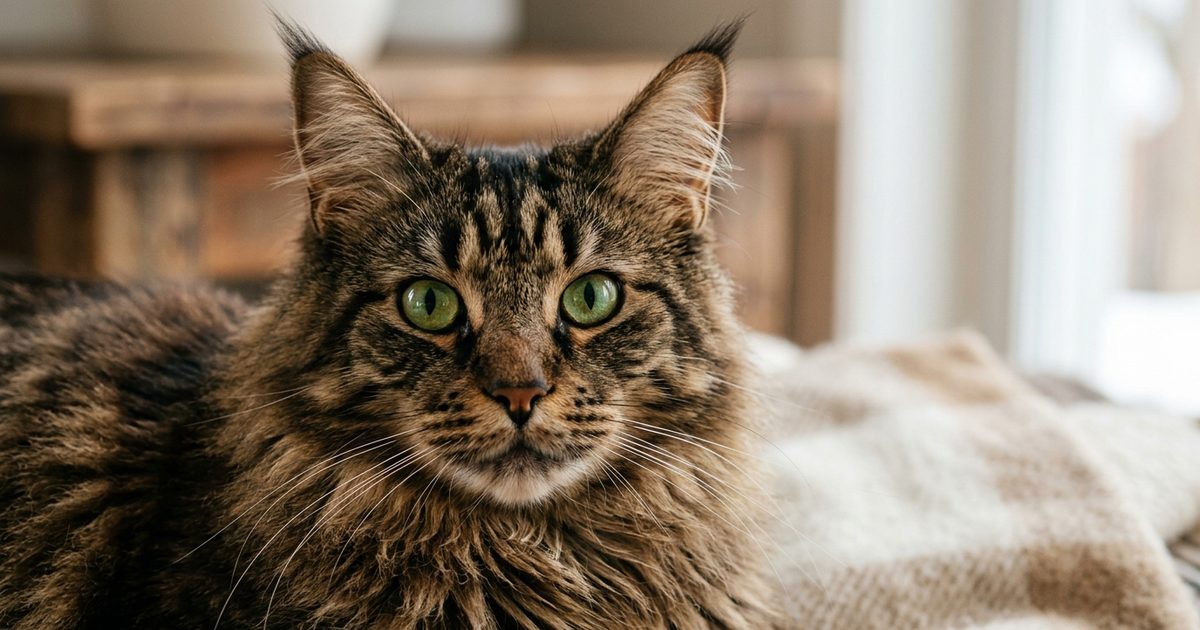
How Do Cat Ears Work? The Anatomy
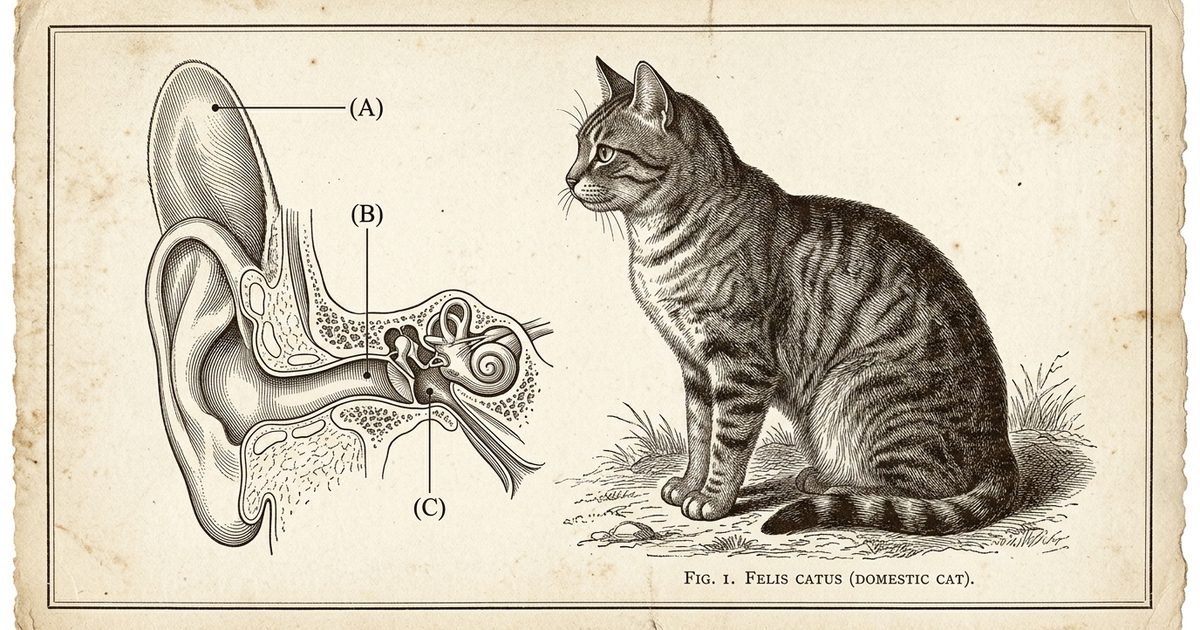
A cat's outer ear is controlled by about 32 muscles per ear, letting each ear rotate independently up to 180 degrees to pinpoint sound. The cup-shaped pinna funnels sound into the canal toward the eardrum, and cats hear a far wider frequency range than humans — including ultrasonic prey sounds we simply cannot detect.
The pinna — a movable satellite dish
The visible part of a cat's ear is the pinna — a cone of cartilage covered in fur, inside and out, that acts like a movable satellite dish. Its cup shape gathers incoming sound waves and funnels them down toward the ear canal, amplifying faint noises the way cupping your hand behind your ear does. The fur lining isn't decorative: it filters dust and debris and may help dampen background noise. Because the pinna is mounted on a dense cluster of muscles, both ears can move independently — swivelling toward, away, or in opposite directions within fractions of a second. That lets a cat triangulate where a sound is coming from almost instantly, even before its head turns.
32 muscles and 180-degree rotation
This is where the cat ear leaves the human ear far behind. Humans have about six tiny ear muscles left over from our evolutionary past, and most of us can barely wiggle an ear on command. A cat has roughly 32 muscles per ear, and it uses every one of them. Each ear can rotate up to 180 degrees, and the two ears move independently — one pointed forward at a rustle, the other swivelled back to monitor what's behind. The result is precise localization: cats can identify the direction of a sound source to within a few degrees and pinpoint it to within inches, often without moving their head at all. It's the difference between hearing a sound and knowing exactly where it is.
From canal to eardrum
Once sound passes the pinna, it travels down the ear canal toward the eardrum (the tympanic membrane). A cat's ear canal has a notable quirk: it's L-shaped, bending partway down. That bend helps protect the delicate eardrum from debris and direct impact — but it also means anything that falls into the ear, like wax or dirt, tends to settle deep in the corner of the L where it's hard to reach. (That's the same reason you should never poke anything into a cat's ear canal — a lesson we come back to in the ear-care section.) Past the canal, the eardrum vibrates in response to sound waves, passing those vibrations through the tiny bones of the middle ear into the fluid-filled inner ear, where they become nerve signals the brain reads as sound.
The frequency range cats hear
The numbers tell the story. Cats hear frequencies from roughly 48 Hz up to about 85 kHz. Humans top out near 20 kHz, and even dogs generally don't reach much past 45 kHz. That means cats own a wide band of ultrasonic sound that's completely silent to us — exactly the band where small rodents communicate. A cat can hear the high-pitched squeaks of a mouse that neither you nor a dog would ever notice. The Cornell Feline Health Center, a leading authority on feline medicine, notes that this extended high-frequency hearing is one of the defining features of the cat's auditory system.
Why Do Cats Hear So Well?
Cats evolved as solo hunters of small rodents and birds that communicate in high-frequency squeaks and rustles, so exceptional hearing meant the difference between eating and starving. The large, independently movable pinna acts as a directional amplifier, gathering faint ultrasonic prey sounds across a wide arc.
Built for hunting high-frequency prey
The reason cats hear so exquisitely well comes down to what they evolved to eat. The domestic cat's ancestors were solo hunters of small prey — mostly mice, voles, and small birds — and many of those animals communicate in the ultrasonic range. Mice, in particular, produce high-frequency vocalizations well above 20 kHz, sounds that are inaudible to humans and most larger predators. Over millions of years, this set up an evolutionary arms race: prey that could squeak at frequencies their predators couldn't hear survived, and predators that could hear higher frequencies ate. The cat's ear ended up tuned almost exactly to the band where its favourite prey talks. Exceptional hearing wasn't a luxury for the ancestral cat — it was the line between a full belly and starvation.
The pinna as a satellite dish
Hearing a sound is one thing; knowing where it came from is another, and the pinna is what closes that gap. The cup-shaped outer ear works as both amplifier and antenna: its curved form gathers and concentrates incoming sound waves, boosting weak signals the way a satellite dish boosts faint transmissions. The dense muscle array around the pinna then steers the whole dish — pointing it toward a sound to maximize what it picks up, or angling both dishes to triangulate direction. The two ears working together give the cat a kind of acoustic stereo vision, letting it locate a faint rustle in three-dimensional space almost instantly. This is what makes a cat's hearing not just sensitive, but directional.
Solo hunters need pinpoint hearing
Pack hunters like wolves can share the work of tracking — one animal's ears cover what another's miss. A cat hunting alone doesn't have that luxury. It must localize its prey entirely on its own, often in low light at dawn or dusk when vision is unreliable and hearing takes over as the primary hunting sense. That's why the cat's ears are so heavily invested in pinpointing direction rather than raw volume — a solo hunter that can tell exactly where a mouse is, even in near-darkness, eats; one that only knows a sound is somewhere nearby often doesn't. Hearing and low-light vision work together as a single sensory stack for the night-hunting cat — we explore that partnership in our piece on how cats see in the dark. For a broader overview of the feline sensory world, International Cat Care offers well-sourced guidance on how the cat's senses, hearing chief among them, fit together.

What Do Cat Ear Positions Mean?
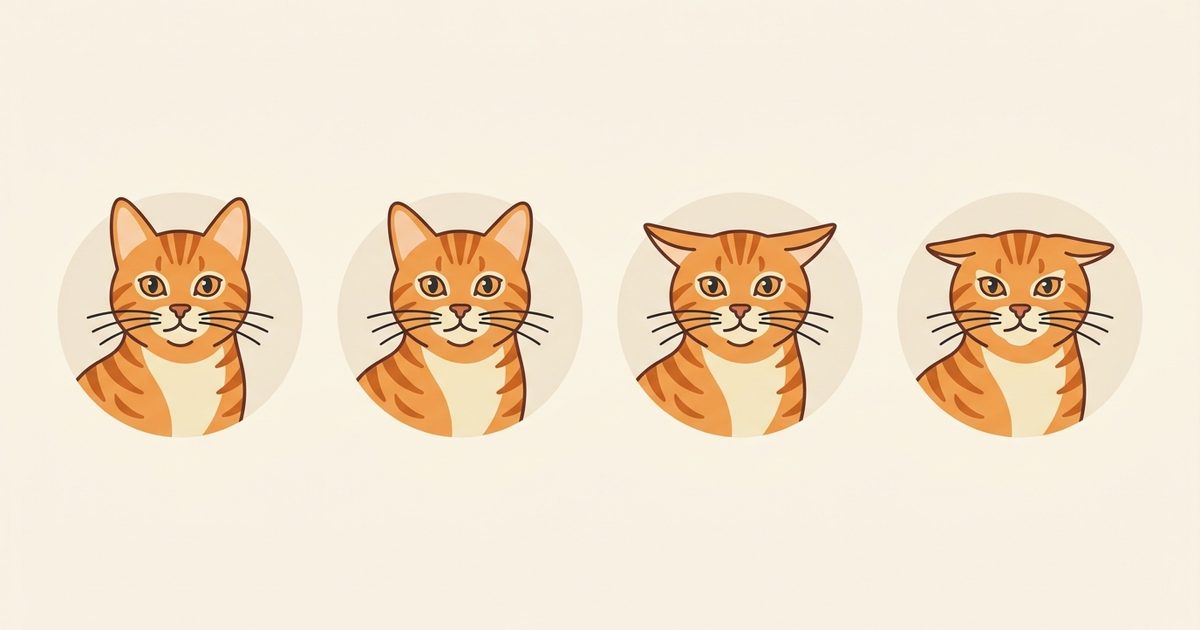
Ear position is a fast, honest mood readout. Pricked forward means alert or curious, relaxed and slightly to the side means content, flattened sideways ("airplane ears") signals fear or stress, fully pinned-back ears mean the cat feels threatened or in pain, and quick twitching means the cat is actively deciding how to react.
Cat ears are expressive in a way our own barely-functional human ears are not. With thirty-two muscles steering each one, a cat can reposition an ear in a fraction of a second, and the position it settles on tells you what the cat is feeling before anything else in its body catches up. Learning to read these five positions is like learning a small, reliable vocabulary — once you know it, your cat stops being quite so mysterious.
Forward and pricked — alert and curious
When both ears point up and slightly forward, your cat is engaged with something — a sound, a movement, a person walking into the room. This is the confident, interested posture of a cat that is open to interaction rather than hiding from it. You will see it during play, when a toy rustles, when a familiar human sits down nearby, or when the cat is working out whether the thing in front of it is worth investigating. The forward ear is essentially a "tell me more" signal — the cat has decided its environment is safe enough to pay attention to, rather than retreat from. It's a good moment to engage, offer a hand, or toss a toy.
Relaxed and neutral — content
This is the baseline of a comfortable cat. The ears sit loosely upright, sometimes tilted just a little to the side or slightly outward, with no obvious tension. A cat sleeping lightly, dozing on a sunny windowsill, or resting near you with half-closed eyes will usually hold its ears in this neutral position. It signals no alarm and no particular interest — simply an absence of threat. If you want a single image of "my cat is at ease," neutral ears paired with a soft body and slow breathing is it. Note that relaxed does not mean floppy; the muscles are still quietly working, ready to pivot the instant a sound arrives.
Sideways and flat — airplane ears
When the ears rotate out to the sides and flatten against the head, the cat is uncomfortable. People often read "airplane ears" as anger, but fear, stress, and overstimulation are far more common causes. A cat at the vet, a cat meeting a stranger, a cat being handled past its tolerance — all flatten the ears the same way. The common thread is discomfort, not aggression. Sideways ears are your early cue to slow down: reduce petting, lower your voice, give the cat an exit. Ears are only one signal, though. For the whole-cat read, pair this position with the tail, the eyes, and the overall posture — our guide to cat body language walks through how those signals combine.
Pinned back — threatened or in pain
Fully pinned-back ears, pressed tight against the skull, are the next step past sideways flattening — and they signal something more serious. This is the defensive posture of a cat that feels actively threatened, cornered, or in pain, and it very often comes with other warning signs: dilated pupils, a rigid body, a thrashing tail, and hissing. When you see ears pinned flat against the skull, give the cat space immediately and remove whatever is pushing it over its threshold. Persistent pinning with no obvious trigger, especially if it comes with hiding or reluctance to move, can point to pain and is worth a vet visit. Hissing and pinned ears tend to travel together — if you want to understand that pairing, our article on why cats hiss breaks down what the sound is actually doing.
Twitching — processing
A flick, a swivel, a single backward rotation — quick ear twitches are the cat's sorting mechanism. One or both ears will snap toward a sound, hold for a moment, then return. This happens constantly and is completely normal: the cat is processing multiple sounds at once, deciding which matter and which don't, often while appearing to ignore everything. A sleeping cat whose ear flicks at a footstep and then settles again is doing exactly this. Frequent twitching is not a problem — it's the sound-tracking system running in the background, the way your own attention shifts to a noise without your eyes moving.
Do Cats Hear Better Than Dogs?
Cats and dogs simply hear different ranges. Cats detect much higher frequencies — up to about 85 kHz — than dogs (around 45 kHz) and humans (about 20 kHz), while dogs outperform cats on very low frequencies and distant sounds. Neither is uniformly "better"; each is tuned to its own prey.
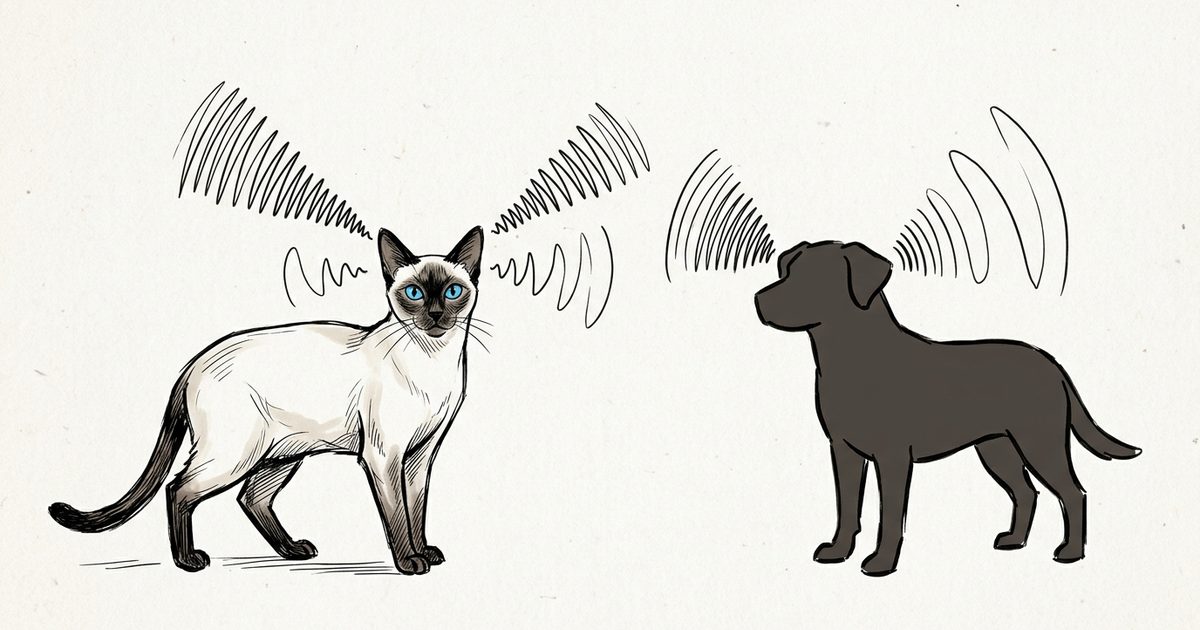
The honest answer to "who hears better" is that the question is the wrong shape. Cats and dogs evolved to hunt different animals under different conditions, and their hearing reflects that. Crown a champion on one frequency band and the other species wins on the next.
The high-frequency crown goes to cats
Cats sit firmly above dogs at the top of the audible range. A cat's hearing extends to roughly 85 kHz, while a dog's tops out closer to 45 kHz — and a human's near 20 kHz. That high-frequency reach is not an accident. The small rodents cats evolved to hunt communicate and move in ultrasonic squeaks and rustles that are well above what humans and dogs can detect. A mouse making a high-pitched distress call is, to a cat, clearly audible; to a dog, largely silent. This is the band where cat ears excel, and it maps directly onto the prey that shaped them. You can read more about feline sensory abilities from the Cornell Feline Health Center.
Dogs win on low and distant
Dogs have the edge at the other end of the spectrum. Their hearing covers a broader band of low frequencies, and they are notably better at picking up faint sounds from far away — the distant footstep, the low rumble, the movement a quarter-mile off. This makes sense for an animal that evolved partly as a pack hunter relying on long-range coordination and the ability to detect prey or threat across open ground. So if the question is "who hears a mouse squeak," the cat wins; if it is "who hears a distant footfall," the dog does. Neither species is uniformly superior — each ear is tuned to the hunting life it actually lived.
How humans compare
Humans sit in the middle and hear neither band well. Our upper limit is around 20 kHz, far below the ultrasonic range where mice vocalize and cats listen. We are also less sensitive than dogs to the low, distant rumbles a canine ear catches easily. This is why your cat may snap its head toward a sound you never heard — and why your dog may perk up at something that reads as total silence to you. International Cat Care notes that cats live in a richer and wider sound-world than we do, and much of it is simply invisible to us.
Get a MeowMind reading — your cat's ears are always telling you something. Upload a photo and hear what your cat is really tuning in to, in her own words.
How Do I Keep My Cat's Ears Healthy?
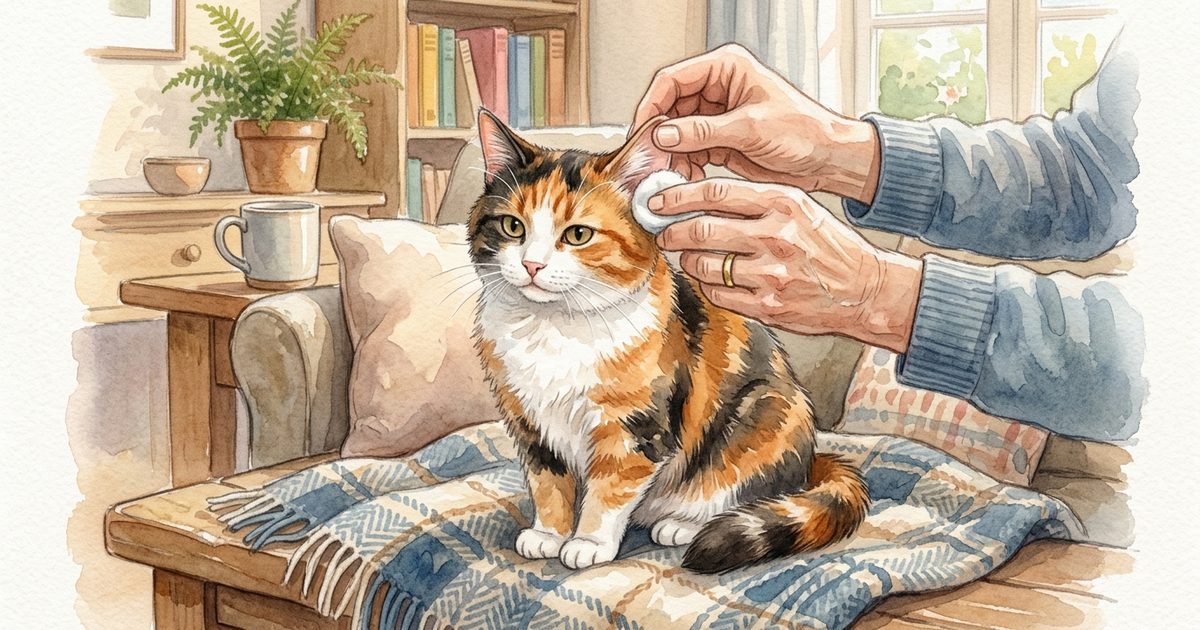
Healthy cat ears are pale pink, clean-smelling, and free of discharge. Check them weekly, and clean only the outer flap with a vet-approved ear cleaner on a cotton ball — never insert cotton swabs or anything into the canal, which can rupture the eardrum or push debris deeper.
Most cat ears take care of themselves remarkably well — the design that gives a cat its phenomenal hearing also includes built-in self-cleaning. Your job is mostly to look, not to scrub. Done right, home ear care takes about thirty seconds a week and prevents the kind of problems that end in an emergency vet visit.
What a healthy ear looks like
Flip the ear flap back and look at the skin inside. A healthy cat's ear is pale pink, smooth, and glistening — not red, not raw, not thickened. You may see a tiny amount of pale, slightly waxy secretion, which is normal: it's the ear's own lubrication, trapping dust and carrying it outward. There should be no smell at all. A healthy ear is also quiet — no head-shaking, no repeated scratching with a hind paw, no tilt of the head to one side. If your cat is calm and letting you look without flinching, that comfort itself is a good sign; a sore ear makes a cat pull away fast.
Cleaning — the safe way
The single most important rule of cat ear cleaning is also the most broken: never put anything into the ear canal. A cat's ear canal is L-shaped, bending downward and then inward toward the eardrum. Debris, wax, and moisture collect deep in that horizontal section — exactly where you cannot see and should never reach. A cotton swab that "looks clean" on the way out has often packed wax further in, against the eardrum, where it causes infection or muffles hearing.
The safe method is outer-pinna only. Moisten a cotton ball or a piece of gauze with a vet-approved cat ear cleaner, gently wipe the visible folds of the outer ear, and stop there. Don't worry about the deep wax — the cleaner loosens it, and the ear's natural outward migration carries it to where you can reach on the next check. If a vet has shown you how to instill drops and massage the base, follow their exact instructions; otherwise, the outer flap is your territory and the canal is the vet's.
When to clean and when to leave them alone
Here's the counterintuitive part: most healthy cat ears need very little cleaning, and over-cleaning is a common cause of irritation in its own right. Every wipe strips some of the ear's protective wax and oils, leaving the skin drier and more vulnerable — so a well-meaning owner who cleans "just in case" every few days can actually create the redness and itch they were trying to prevent. Clean when the outer ear looks dusty or has visible buildup, when your vet advises it, or before a check-up. Otherwise, leave a healthy ear alone. The instinct to fix can be more harmful than the wax you're worried about.
Routine checks every owner should do
Build a weekly "flip and look" into something you already do — grooming time, a Sunday treat session, whenever your cat is relaxed on your lap. Gently lift each ear flap and note five things: the color (pale pink, not red), the smell (none), any discharge (none, or a trace of pale wax), the cat's head position (level, not tilted), and whether she's scratching or shaking her head. Most weeks you'll see nothing, and that's the point — you're establishing a normal baseline so that the one week something changes, you notice immediately. The Cornell Feline Health Center publishes plain-language guidance on routine feline ear care that's worth bookmarking for the same reason. Ear problems rarely appear overnight; they develop over days, and a weekly check is early warning. (And because upper-respiratory infections can stir up both, it's worth knowing the signs of a cat eye infection at the same time.)
Cat Ear Mites and Ear Infections
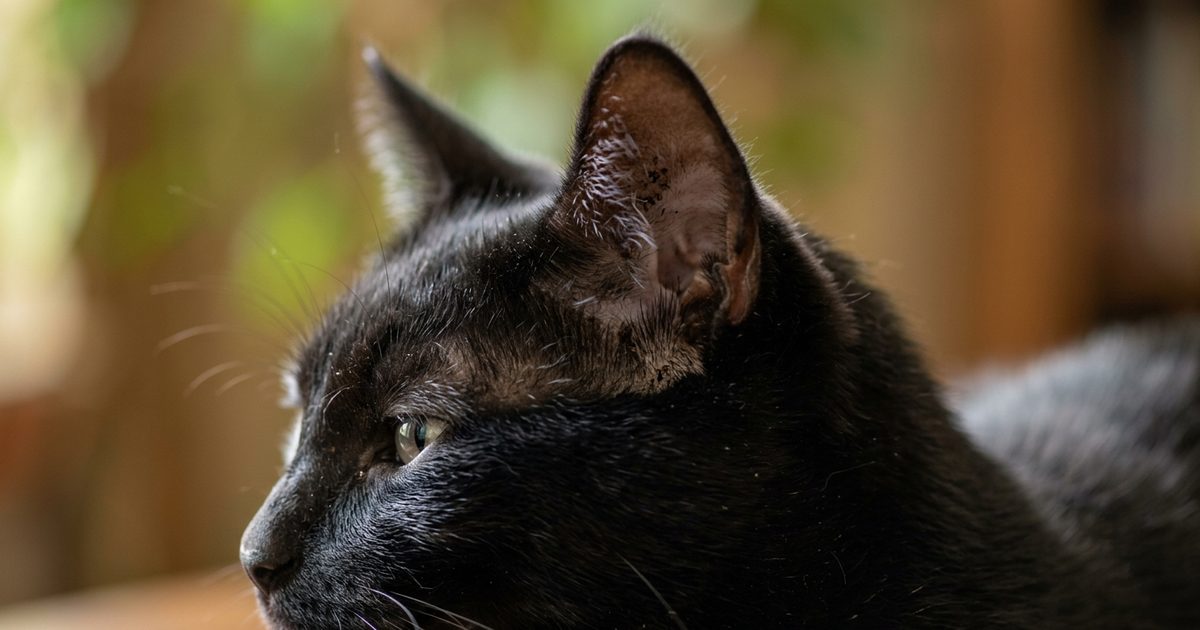
Dark, crumbly, coffee-ground-like discharge in a cat's ear is the classic sign of ear mites, while redness, swelling, odor, or yellow discharge points to a bacterial or yeast infection. Both need a vet's diagnosis and prescription treatment — over-the-counter mite drops often miss the real cause and can irritate the ear.
When a cat's ears go wrong, it almost always falls into one of two boxes: parasites (mites) or infection (bacteria or yeast). They look different, they need different treatments, and guessing wrong wastes time and money — which is why the first step for any abnormal ear is always the same: a vet visit and a microscope slide. Here's how to tell them apart and what each one means.
Ear mites — signs and cause
Ear mites are tiny, barely visible parasites called Otodectes cynotis that live in the ear canal and feed on skin oils and wax. Their hallmark is a dark, dry, crumbly discharge that looks exactly like coffee grounds — quite different from the soft, pale wax of a healthy ear. The itching is intense: an affected cat shakes her head repeatedly, scratches at the ear with a hind paw, and may hold the ear flattened and tilted. Mites are highly contagious between cats (and dogs), spreading through close contact and shared bedding, so they're most common in kittens, rescue cats, and multi-cat households. If you're searching for a cat ear mite treatment or cat ear mites cure, the honest answer is that effective treatment exists — but it has to match the parasite, and that's a vet's call.
Ear infections — bacterial and yeast
When the ear's normal balance is disrupted, bacteria or yeast (usually Malassezia) multiply and cause otitis externa — inflammation of the outer ear canal. Unlike mites, an infection typically produces a moist, yellowish or brownish discharge, often with a noticeable odor. The ear looks red and swollen, feels warm, and may be painful when touched. The underlying trigger is usually something that trapped moisture or irritated the canal: allergies (especially food or environmental allergies), water from a bath, a polyp or growth, or simply the warm dark environment of a neglected ear. Cat ear infection treatment only works when it targets the specific organism, which is why a smear under the microscope comes first.
Treatment — see the vet first
The temptation, especially at 9 p.m. on a Sunday, is to grab an over-the-counter mite product from the pet store and hope. Resist it. A vet takes a small sample of the discharge on a cotton swab, looks at it under the microscope, and within minutes can tell you whether you're dealing with mites, bacteria, yeast, or sometimes more than one at once. Each requires a different prescription — an anti-parasitic for mites, an antibiotic for bacteria, an antifungal for yeast — and the wrong one does nothing, or worse, irritates an already inflamed ear. A vet may also prescribe a cat ear cleaner to flush the canal before treatment, and if mites are confirmed, every cat in the household needs treating at the same time, or they'll simply pass the parasites back and forth. Most courses clear up in two to three weeks when they're matched to the actual cause.
When ear problems are an emergency
Some ear situations can't wait for a routine appointment. Head tilt, loss of balance or stumbling, a thick discharge paired with swelling of the ear flap, sudden sharp pain when the ear is touched, or a drooping ear that feels like a warm, fluid-filled pillow — these point to deep infection, a ruptured eardrum, or an aural hematoma (a blood-filled swelling caused by violent head-shaking). All warrant a same-day vet visit. Ear problems that reach the inner ear can affect hearing and balance permanently, and a hematoma often needs surgical drainage to heal cleanly. International Cat Care offers reliable, vet-reviewed information on feline ear disease and mites that's worth reading if you want to understand the full picture before you call.
What About Folded or Unusual Ears?
Breeds like the Scottish Fold have an adorable folded ear caused by a cartilage-affecting genetic mutation that can also harm the cat's joints and bones. The cute fold is a real health trade-off — prospective owners should understand the ethics and choose reputable, health-screened breeders or adopt.
Most cats have upright, fully functional ears — the default shape that 32 muscles were designed to steer. But a handful of breeds carry genetic quirks that fold, curl, or reshape the pinna, and those quirks aren't purely cosmetic. Understanding what's behind them helps you appreciate the cat and make kinder choices.
The Scottish Fold mutation
The Scottish Fold's signature look comes from a dominant gene that affects cartilage development — and it doesn't stop at the ears. The same mutation that folds the pinna also shapes cartilage throughout the body, which is why some Folds develop a condition called osteochondrodysplasia: abnormal bone and joint growth that can cause stiffness, pain, and arthritis, sometimes from a young age. A cat with one copy of the gene tends to have milder effects; a cat with two copies (bred fold-to-fold) is far more likely to develop serious skeletal disease. That's why the fold is not purely a cosmetic variation — it's the visible tip of a body-wide cartilage difference, and the welfare concern is recognized in mainstream veterinary guidance, not just opinion. The Cornell Feline Health Center covers breed-related health considerations as part of routine feline care.

Curled and other ear shapes
Not every unusual ear carries the same risk. The American Curl, for example, has ears that curve gently backward due to a different gene that affects only the cartilage of the pinna, and it's generally considered less severe than the Scottish Fold's body-wide mutation. Beyond these named breeds, there's wide natural variation in ear size and set — large, tall ears on a Siamese, tufted Lynx tips on a Maine Coon — that are simply normal feline diversity, not a health condition. Curled or unusually shaped ears aren't automatically a problem; what matters is which gene is behind them and what else it affects.
Choosing ethically
The kindest general guidance, supported by groups like International Cat Care, is to favor adoption, or to seek breeders who health-test their cats and avoid fold-to-fold pairings that stack the mutation. If you already share your life with a Fold, that's not a failing — it simply means staying alert to mobility and comfort, and partnering with your vet on joint care. The goal isn't to judge owners; it's to understand the cat behind the ears and make informed choices going forward. For the wider picture on how ears fit into everything a cat communicates, our cat body language guide ties ear shape and position into the whole-cat read.
Cat Ears at a Glance — Summary
| Question | Short answer |
|---|---|
| How do cat ears work? | ~32 muscles per ear rotate each pinna up to 180°, funneling sound to the eardrum |
| What do ear positions mean? | Forward = alert, relaxed = content, sideways/airplane = stress, pinned back = threat or pain |
| Why do cats hear so well? | They evolved to hunt small prey that vocalize in ultrasonic frequencies we can't detect |
| Do cats hear better than dogs? | Different ranges — cats win on high frequencies, dogs on low and distant sounds |
| How do I keep ears healthy? | Weekly checks; clean the outer flap only with approved cleaner; never insert anything into the canal |
| Ear mites and infection signs? | Dark coffee-ground discharge = mites; redness, odor, yellow discharge = infection — see the vet |
| Emergency warning signs? | Head tilt, balance loss, sudden pain, or swollen thick discharge need same-day veterinary care |
| Folded-ear ethics? | The fold signals a cartilage mutation with joint risk — adopt or choose health-tested breeders |
Curious What Your Cat Would Say?
Upload a photo and get a warm, personalized reading from your cat's perspective.
Start Your Free ReadingFrequently Asked Questions
Why do my cat's ears move independently?
Each cat ear is driven by roughly 32 muscles, so the two ears can rotate, swivel, and point in completely different directions at the same time. One ear may track a rustle in front while the other monitors a sound behind — the cat triangulating the source almost instantly without moving its head.
What does it mean when a cat's ears are flat or sideways?
Sideways or flattened 'airplane ears' usually mean the cat is uncomfortable — fear, stress, or overstimulation are far more common causes than anger. It's an early cue to slow down: reduce petting, lower your voice, and give the cat an exit so it can settle.
Can cats hear sounds humans can't?
Yes. Cats hear a wider range than we do — roughly 48 Hz to 85 kHz, while humans top out near 20 kHz. They detect ultrasonic frequencies, exactly the high-pitched squeaks rodents make, so a cat can react to a sound that reads as total silence to you.
Do cats hear better than dogs?
Neither is uniformly better — each is tuned to its own prey. Cats win on high frequencies, reaching about 85 kHz versus a dog's 45 kHz, which helps them hear mouse squeaks. Dogs outperform cats on low, distant sounds, reflecting their different hunting history.
How often should I clean my cat's ears?
Most healthy cat ears need very little cleaning — over-cleaning itself causes irritation by stripping protective wax. Check them weekly with a gentle flip-and-look, and clean the outer flap only when it looks dusty, your vet advises it, or before a check-up.
What are the dark coffee-ground bits in my cat's ear?
Dark, dry, crumbly discharge that looks like coffee grounds is the classic sign of ear mites — tiny parasites that live in the canal and cause intense itching and head-shaking. A vet can confirm mites under the microscope and prescribe the right anti-parasitic treatment.
Can I use cotton swabs to clean my cat's ears?
No. A cat's ear canal is L-shaped, and inserting a cotton swab can pack wax deeper against the eardrum or even rupture it. The safe method is outer-pinna only — wipe the visible folds with a vet-approved cleaner on a cotton ball, and leave the canal to the vet.
Are Scottish Fold cats' ears a health problem?
The fold comes from a cartilage-affecting genetic mutation that can also harm the cat's joints and bones, sometimes causing arthritis from a young age. It's a real welfare trade-off — adopt, or choose a health-tested breeder who avoids fold-to-fold pairings, and partner with your vet on joint care.
What do forward, pricked ears mean on a cat?
Ears pointing up and slightly forward mean the cat is alert, curious, and confident — engaged with something in its environment. It's the 'tell me more' posture of a cat that feels safe enough to pay attention, and a good moment to offer a hand or toss a toy.
Sources & References
You Might Also Like
Kitten Teething: Timeline, Symptoms & How to Help
Kitten teething runs from 3 to 7 months as baby teeth fall out. Learn the timeline, signs to watch for, and how to soothe a teething kitten safely.
15 min readWhen Do Cats Stop Growing? A Complete Timeline
When do cats stop growing? Most cats reach adult size by 12-18 months, but large breeds like Maine Coons keep growing until 3-4 years. Full timeline inside.
14 min readCan Cats Eat Cherries? Flesh, Pit & Toxicity Facts
Can cats eat cherries? Pitted flesh is safe in tiny amounts — but the pit, stem, and leaves are toxic (cyanide precursors). Learn what's safe and what isn't.
15 min readA message, in your cat's voice
Upload a photo, get a warm note written from your cat's perspective — just for fun. Plus 121 vet-cited articles, offline.