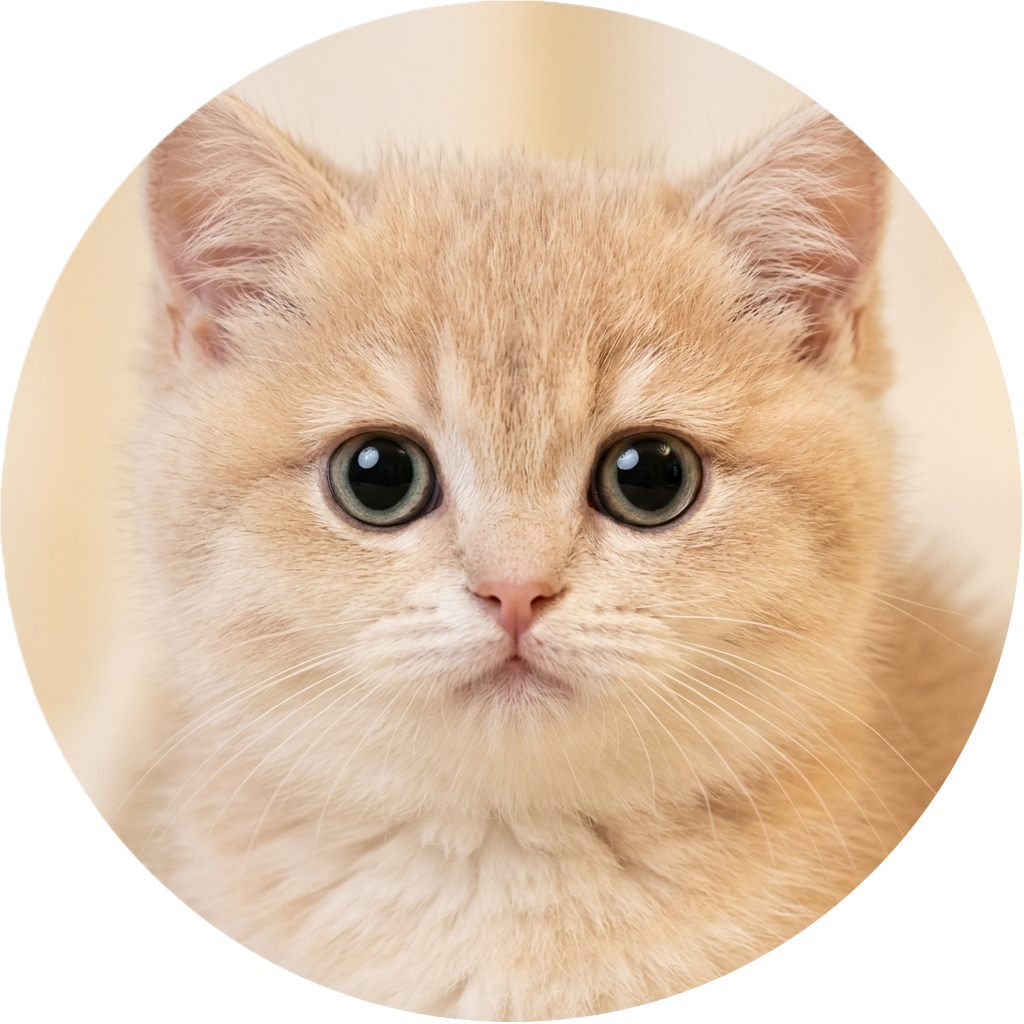
Why Does My Cat Stare at Me? 6 Stares Explained
If you have ever wondered why does my cat stare at me, you are in good company — that fixed, unblinking gaze is one of the most common (and slightly unsettling) things cats do. The good news is that a cat's stare is almost always meaningful rather than menacing. So why do cats stare at you? Your cat is communicating something: affection and trust, hunting focus, a request for food or attention, anxiety, or a warning that it feels cornered. The trick is learning to read the rest of the body, because the eyes alone rarely tell the whole story.
Key takeaways
- A stare is communication, not menace — most staring signals affection, curiosity, or a simple want like food.
- The slow blink is a cat's clearest sign of trust, and you can blink slowly back to return it.
- An unblinking, stiff-bodied stare with dilated pupils is usually hunting focus or alarm — read the ears and tail to tell which.
- A sudden change in staring habits, such as staring at walls or vacant looks, can be worth a vet check.
Cat Stares at a Glance — Quick Reference
| Type of stare | What the body looks like | What it usually means |
|---|---|---|
| Slow-blink affection | Eyes half-closing, relaxed posture, soft face | Trust and affection — your cat feels safe with you |
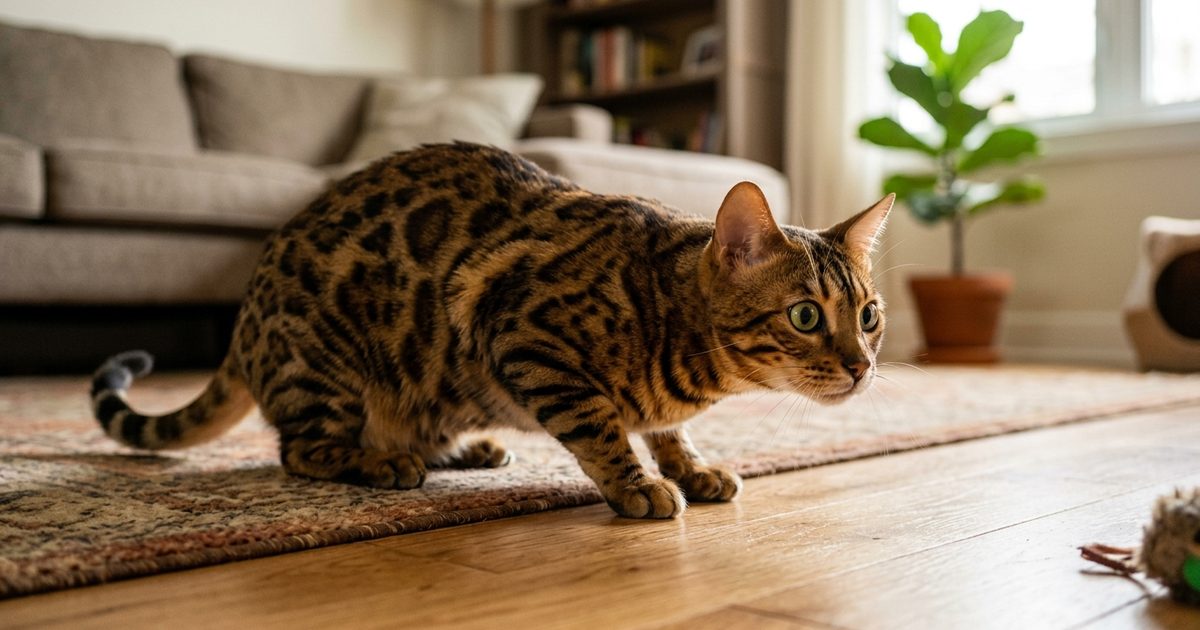
| Hunting focus | Body still and low, pupils dilated, locked on target | Instinct — stalking a toy, insect, or shadow |
| Alert / investigating | Ears forward, body upright, tracking something | Curiosity — your cat has noticed something interesting |
| Anxious or frozen | Wide eyes, still body, ears swiveling | Uncertainty — your cat is assessing a perceived threat |
| Warning / threat | Hard stare, stiff body, ears flattened, tail twitching | Your cat feels threatened and may escalate — give space |
| Medical | Staring at walls, vacant gaze, pupils that won't respond | Possible health issue — worth a vet visit if sudden |
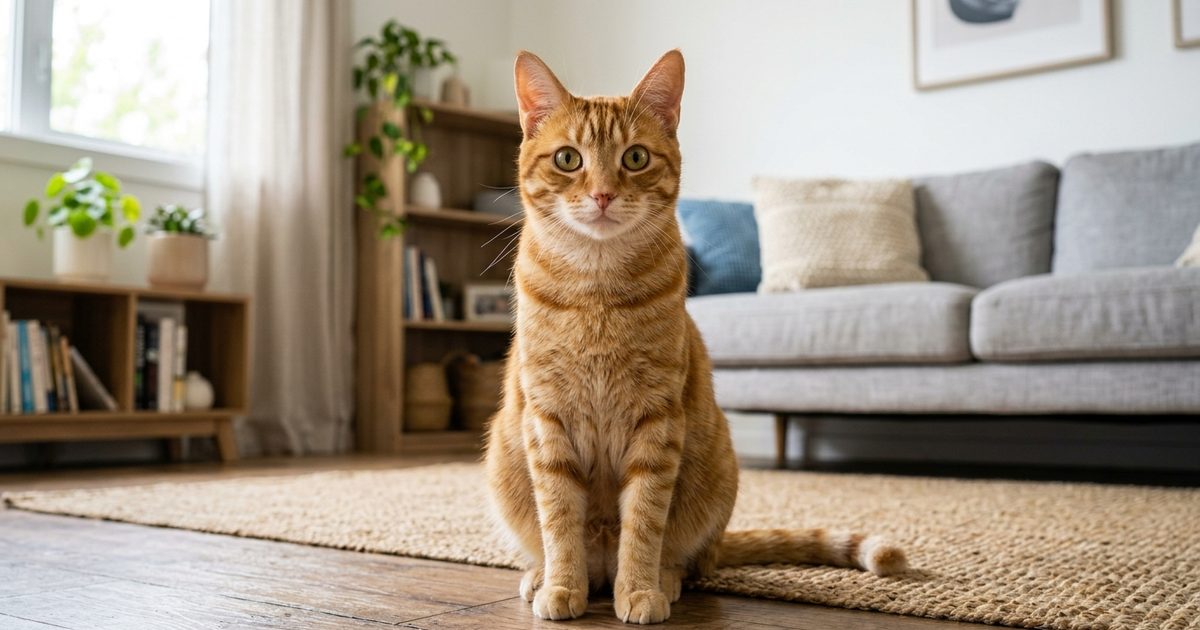
Why Does My Cat Stare at Me?
Cats stare for several reasons — affection shown through the slow blink, hunting instinct, wanting food or attention, anxiety, or feeling threatened. The meaning lives in the rest of the body: a relaxed posture points to affection or curiosity, while a tense, frozen body with dilated pupils signals alarm.
That fixed gaze can feel intense, even a little eerie — but it's almost always communication, not menace. Cats simply don't share the human habit of glancing away to seem polite. In feline body language, holding a look is normal; the question is what the look is for. The eyes are only one channel. To read the stare correctly, you pair it with the ears, tail, and posture — the same whole-cat read you'd use for any other behavior. Below are the five most common stares your cat gives you and what each one is really saying.
The affection stare and the slow blink
Sometimes a stare is just love, delivered in the only quiet way a cat knows how. Your cat sits across the room, body soft and loose, eyes open but relaxed — maybe half-closed — and holds a gentle gaze on you. No tension, no urgency. This is the affection stare, and it often comes with the famous slow blink, the feline equivalent of a kiss. Because direct eye contact is a challenge in cat language, a cat that watches you with soft, relaxed eyes is deliberately choosing vulnerability over threat. It's one of the clearest signs of how cats show affection, and it means your cat feels safe with you.
The hunting-focus stare
When a cat locks onto something — a toy, a dust mote, your ankles under the blanket — the stare changes character entirely. The body goes still, the pupils dilate wide to gather light and track motion, the haunches drop, and the tail may twitch at the tip. This is the hunting-focus stare: pure predatory attention, hardwired from thousands of years of stalking prey. Your cat isn't angry or threatened; it's switched into instinct mode. The unblinking quality of this stare is what makes it so striking — a hunting cat keeps its eyes open and fixed to avoid losing the target for even a fraction of a second.
The "I want something" stare
Many cats develop a remarkably direct solicitation stare. Your cat sits and stares at you, then at the food bowl, then back at you — or simply holds a steady look while you're eating, working, or waking up. This is the "I want something" stare, and it usually means food, play, fresh water, or attention. Cats are excellent at learning which of their behaviors get results, and a fixed, expectant gaze paired with a relaxed but alert body is a learned request. The giveaway is the context: mealtime, an empty bowl, a closed door, or a toy just out of reach.
The anxious or startled stare
Not every stare is comfortable. A cat that is frightened or uncertain may freeze and stare with wide eyes and fully dilated pupils, body low and tight, ears swiveling or slightly flattened. This is the anxious stare — your cat is assessing a threat it isn't sure about yet, whether that's a strange noise, a visitor, or another animal. The stillness is real: a startled cat often won't move or blink until it decides whether to flee, hide, or stand its ground. The tense body is what sets this apart from the calm affection stare.
The warning stare
The most important stare to recognize is the warning stare, because it's the precursor to a swipe or a bite. Your cat holds a hard, wide-eyed look, body stiff, ears flattened back, tail thrashing or thumping, and pupils dilated. This cat feels cornered, overstimulated, or threatened — and the stare is a final clear signal before the claws come out. In cat language, returning a hard stare is itself an escalation, so the right response is to break eye contact, stay still, and give your cat space rather than challenge it. The same body language often precedes a hiss and the tense moments before a bite, so it pays to know this look cold.
Curious what that unblinking look really means from your cat's side of the room? Get a MeowMind reading — upload a photo and hear it in her own words.
What Is the Slow Blink, and Why Do Cats Do It?
The slow blink is a cat's "kiss" — a deliberate half-closing of the eyes that signals trust and relaxation. Because closing the eyes is an act of vulnerability, a slow blink means "I feel safe with you." Slow-blink back to return the affection.
What the slow blink means
When your cat looks at you and slowly closes both eyes — a measured, intentional movement, not a real sleep-blink — you are receiving one of the clearest signals of trust a cat can give. In the wild, a cat that shuts its eyes is a cat that has dropped its guard. Eyes are how cats track threats and prey, so voluntarily breaking that surveillance is a gesture of confidence: I don't need to watch you, because you are not a danger. This is the same reason cats often slow-blink before settling into a loaf next to someone they love.
The slow blink is distinct from a hard stare (a challenge or hunting focus) and from a startled wide-eyed stare (alarm). It is specifically the relaxed register of feline eye contact, and behaviorists treat it as a core piece of affiliative communication — the eye-language equivalent of the headbutt or the lap-knead. Slow-blinking back is one of the most reliable ways to speak a little cat yourself; how cats show affection covers the wider vocabulary of feline warmth.
How to slow-blink back
The technique is deliberately simple. Make soft eye contact with your cat — not a hard, unblinking lock — then slowly close your eyes, hold them closed for a beat, and slowly open them again. Keep your face relaxed and your body still. Many cats will return the blink, and over time the exchange becomes a quiet, repeatable ritual of mutual trust. It works especially well when your cat is already calm and looking your way; trying to force it when she's alert or busy rarely lands.
Curious what else your cat's gaze is telling you — beyond the slow blink? Get a MeowMind reading and hear what's really on her mind.
Why Do Cats Stare Without Blinking?
An unblinking stare is usually hunting focus or high alert — a cat locked onto prey or a perceived threat holds its eyes wide and still to track without losing the target. It can also signal anxiety, so read the ears and body to tell which is which.
That fixed, glassy look can feel eerie when it lands on you, but there's nothing supernatural about it. Cats blink far less often than we do — their tear film and nictitating membrane (the "third eyelid") keep the cornea moist without frequent blinking. When a cat stops blinking entirely, it's almost always because something has grabbed its full attention. The body tells you what kind of attention.
The stalk stare
The classic unblinking stare is the hunt — the same lock-on stare described above in The hunting-focus stare: pupils blow wide, the body goes still and low, and the cat refuses to blink because blinking breaks its lock on the target. International Cat Care explains this focused fixation as part of normal feline hunting behavior — the body freezes, the eyes track, and only the pupils move.
This is the stare that often gets aimed at you from across the room, and it's not a threat. Your cat is simply in scanning mode, and you happen to be the most interesting large object in view. Some cats will break the stare with a slow blink when you make eye contact — that's an affectionate reset, covered above in What Is the Slow Blink, and Why Do Cats Do It?. Others hold the look until something better comes along.
Anxiety vs hunting — how to tell
An unblinking stare can also be a fear response, and this is where reading the whole cat matters. Both the hunting stare and the anxious stare share wide-open eyes and stillness, but the surrounding signals point in opposite directions. The Cornell Feline Health Center notes that a cat's emotional state is best read by combining eyes, ears, tail, and posture — no single feature tells the whole story.
| Signal | Hunting stare | Anxious stare |
|---|---|---|
| Ears | Forward, alert | Flattened or swiveling sideways |
| Body | Low, coiled, ready to spring | Crouched tight, making itself small |
| Tail | Still, maybe a slow tip-twitch | Tucked or thrashing |
| Pupils | Very dilated | Dilated, sometimes uneven |
| Breathing | Slow and controlled | Faster, shallow |
A cat locked onto a mouse is electric with readiness; a cat frozen in fear is electric with tension. The difference is in what the body is preparing for. If your cat is staring unblinking at a new person or a loud appliance with flattened ears and a tucked tail, she's not hunting — she's assessing a threat and deciding whether to hide. Give her an exit route and don't corner her; a startled, frozen cat that feels trapped is the one most likely to escalate, which connects to the warning patterns we cover later in Is My Cat's Stare a Sign of Aggression?. For the full body-language context that disambiguates the two — especially how the tail behaves under each emotion — see our guide to cat tail meanings.
Most of the time, an unblinking stare is simply a cat doing what cats do: tracking, watching, and waiting. Blinks return the moment the object of interest moves on.
What Does the "Thousand-Yard Stare" Mean in Cats?
A distant, unfocused "thousand-yard stare" is usually a relaxed cat zoning out — resting but awake, eyes open and pointed at nothing. In senior cats, however, a new vacant gaze paired with confusion or disorientation can point to cognitive decline, so a fresh onset is worth mentioning to your vet.
The thousand-yard stare is one of the most misread looks a cat gives. Your cat sits or lies comfortably, eyes open, gazing past you at something that doesn't seem to be there — no tracking, no blinking, no tension. It can feel eerie, especially when those unblinking eyes hold for a long beat. Most of the time, though, it's nothing sinister: cats rest with their eyes partially or fully open, drifting in a light doze, half-watching the room without any particular intent. Think of it as daydreaming — the feline equivalent of staring out a window on a train.
The context usually settles it. A relaxed body, soft ears, slow breathing, and a cat that snaps back to attention the moment you move or speak is simply resting. This is normal across all ages and not a sign that your cat sees anything you can't.
What's worth paying attention to is change in an older cat. As cats move into their senior years, some develop cognitive changes — not unlike the mental softening people experience with age. A new pattern of vacant staring, getting "stuck" in corners, disorientation in familiar rooms, or disrupted sleep-wake cycles can be early signals. Behaviorists and veterinarians at the Cornell Feline Health Center note that behavioral shifts in senior cats are worth taking seriously, because they often reflect an underlying change in the brain or in overall health. None of this means you should diagnose your cat from a single faraway look — but a fresh, persistent vacant stare in a cat over ten or eleven, especially alongside confusion, is a reasonable reason to book a vet visit. You can read more in our overview of cat body language and our notes on why do cats sleep on me, where rest-state behaviors overlap.
Is My Cat's Stare a Sign of Aggression?
A hard, wide-eyed stare with a stiff body, flattened ears, and a twitching or thrashing tail is a warning — your cat feels threatened and may escalate to a swipe or bite. Give space, and don't stare back: in cat language, direct eye contact is a challenge, not comfort.
Most of the time, when your cat stares at you, it's affection, curiosity, or a polite request for dinner. But there is one stare you should take seriously. The warning stare looks and feels different from every other kind — and once you've seen it, it's hard to miss.
Reading the Aggressive Stare
The key is never to read the eyes alone. An aggressive stare comes packaged with a whole body that has shifted into defense mode. Look for the cluster: eyes wide open and locked on, often with fully dilated pupils; ears flattened sideways or pinned back against the head; a body that has gone rigid or low to the ground; and a tail that's twitching, thrashing, or wrapped tight. Your cat may also growl, hiss, or settle its weight back as if coiled to strike.
This is the same escalation pathway that leads to a hiss — the stare is simply the first, quieter step. The cat is saying, in the only language it has, "back off." If you miss the stare, the next signals get louder, and a cat pushed past its threshold may bite or swipe. Reading the tail alongside the eyes is one of the fastest ways to tell a relaxed stare from a warning one — a thrashing tail turns an ambiguous gaze into an unambiguous one.
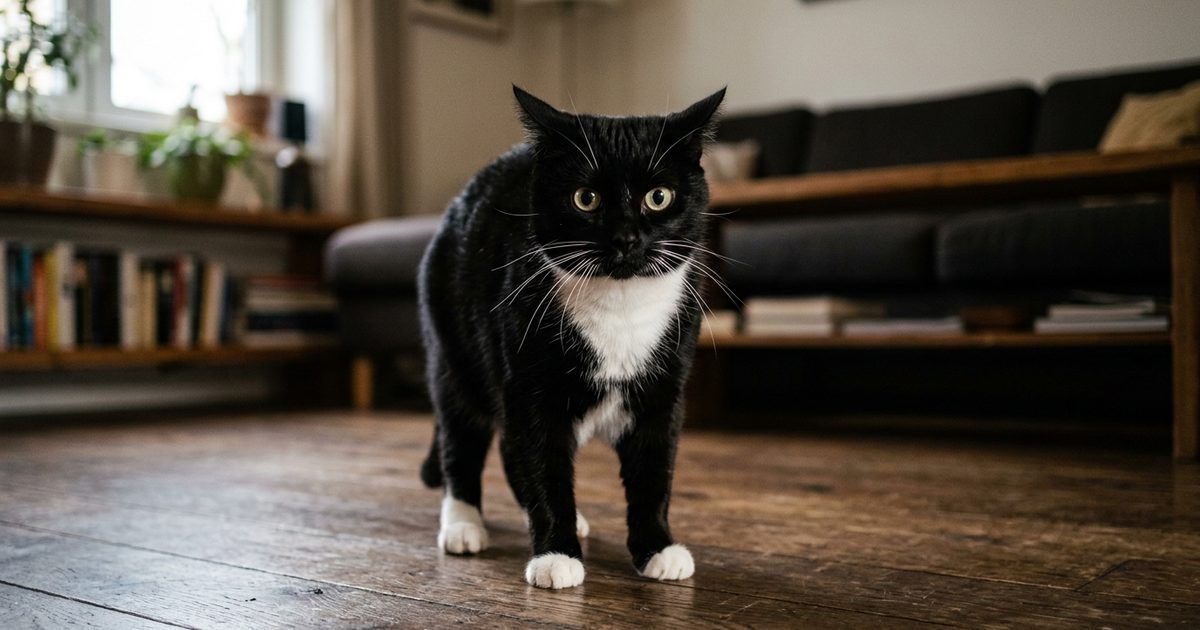
What to Do When Your Cat Gives You the Warning Stare
If you recognize the warning stare, the response is simple: stop what you're doing, break eye contact, and give your cat space. Don't reach in, don't try to soothe, and above all don't stare back — prolonged direct eye contact reads as a threat in cat communication and will only push the cat further. Slowly blink, turn your head, and let the cat decompress on its own timeline.
Most warning stares are preventable. They happen when a cat feels cornered, overstimulated, or startled — for example, during a petting session that's gone on too long. Learning to notice the stare before the hiss or bite is the single best way to avoid escalation, and it's a habit that deepens trust rather than straining it.
How to Read Your Cat's Stare
Your cat's stare never travels alone — it comes wrapped in ears, tail, posture, and pupil size. To decode any stare, read the whole cat at once: a relaxed body and soft eyes mean affection or curiosity; a stiff body, flattened ears, dilated pupils, or a thrashing tail mean alarm or warning.
The single biggest mistake owners make is reading the eyes in isolation. A stare is only one signal in a sentence your cat is writing with its entire body, and the same pair of eyes can mean opposite things depending on what the rest of the body is doing. The fix is simple: before you react to a stare, take two seconds to scan the whole cat.
Here's the whole-cat read, broken into parts:
- Eyes — soft, half-closed, or slow-blinking signals trust and relaxation; wide-open with huge (dilated) pupils signals excitement, hunting focus, or fear; a hard, unblinking stare with constricted pupils can be a warning.
- Ears — facing forward means interest or friendly attention; flattened sideways or pinned back means fear, irritation, or aggression.
- Tail — still or gently curving means calm; thrashing, thumping, or puffed up means overstimulation or alarm. Reading the tail alongside the stare is one of the fastest ways to tell affection from agitation — see our guide to cat tail meanings for the full map.
- Posture — a loose, relaxed body (often sitting or lying loosely) means the cat is comfortable; a stiff, low, or crouched body means the cat is braced for action.
Put it together and the patterns separate cleanly. A cat sitting loosely, ears forward, gazing at you with soft eyes and a gently swaying tail is showing interest or affection — that's an invitation, not a threat. A cat locked onto you with a rigid body, flattened ears, and a twitching tail is winding up; back off, blink slowly, and give space. A cat frozen wide-eyed with ears swiveling is startled or anxious, not aggressive — remove the trigger rather than confronting the cat.
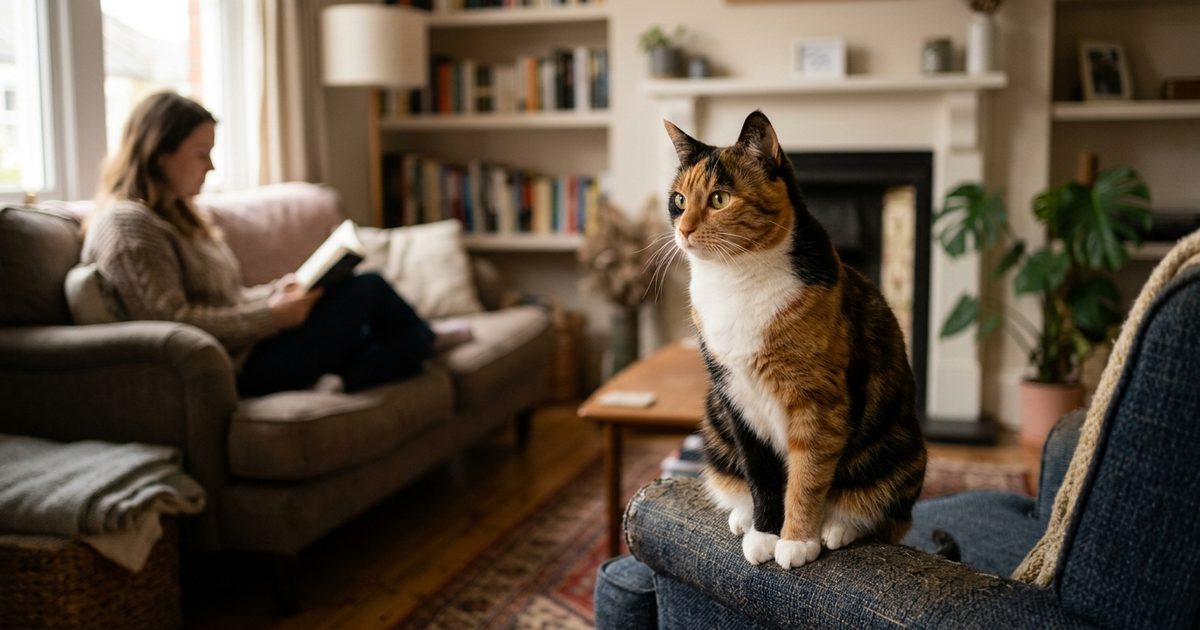
When the signals conflict — say, soft eyes but a thrashing tail — trust the more aroused signal (the tail). Cats can be mid-transition between states, and the aroused body part tells you where they're heading. For the bigger picture of how stare fits alongside every other signal your cat sends, our overview of cat body language ties it all together.
When a Stare Might Signal a Health Issue
Most staring is behavioral, not medical — but a sudden change deserves attention. Staring at walls, vacant looks, pupils that stay dilated, or red, cloudy eyes can point to neurological, vision, or blood-pressure issues. Any abrupt shift warrants a vet visit.
Most of the time, a cat's stare is perfectly normal — hunting focus, affection, curiosity, or just keeping tabs on you. But the eyes are also a window into several real health conditions, and a new or unusual staring pattern is sometimes the first visible clue. The key word is change: a behavior that's new for your cat matters far more than a behavior that's simply present.
A few patterns are worth flagging to a vet. Staring at walls or into corners for long stretches, pressing the head against objects, or circling can sometimes reflect neurological issues. Pupils that stay dilated even in bright light may point to high blood pressure (hypertension), which is common in older cats and can damage the retina and cause vision loss if untreated. Cloudy, red, weepy, or squinting eyes can signal eye disease — anything from infections to glaucoma to retinal problems. And in senior cats, a new vacant, disoriented stare paired with confusion at night can be an early sign of cognitive decline. None of these symptoms confirm a diagnosis on their own — that's what a veterinarian is for — but they're exactly the kind of "this is new" changes worth reporting. The Cornell Feline Health Center is a reliable starting point for feline eye and neurological health, and International Cat Care covers warning signs in detail.
The practical rule is reassuringly simple: if your cat has always been a starer and nothing else has changed, there's usually no cause for concern. But if the staring is new, frequent, paired with other shifts — appetite loss, hiding, disorientation, vocalizing at night — or accompanied by any sign of eye discomfort, book a vet check. Cats hide illness well, and a small change in how they look at you can be the earliest signal that something deeper needs attention.
Common Myths About Cats Staring
Cats do not stare to assert dominance, express anger, or see ghosts. In feline body language, direct eye contact can be a mild challenge, but the vast majority of staring is affection, hunting focus, or simple curiosity. A relaxed body tells you the stare is benign, not confrontational.
There's a lot of folklore around a cat's gaze, and most of it overshoots the real science. Cats stare for practical, instinctive reasons — and the dramatic interpretations people layer on top usually say more about us than about the cat. Let's clear up the three you'll hear most often.
Myth: Cats stare to assert dominance.
It's partly true that, in cat communication, unblinking eye contact functions as a challenge — two cats locking eyes are often sizing each other up before one backs down. So a hard stare can carry a confrontational edge. But applying the word "dominance" to most human-cat staring stretches the concept. The affection stare, the slow blink, the food-solicitation stare, and the hunting-focus stare are all far more common than any status display, and none of them are about control. As International Cat Care explains, eye contact is one piece of feline communication, and its meaning depends entirely on the surrounding body language — not on a fixed hierarchy. When your cat watches you with soft eyes and a relaxed posture, she is engaging with you, not commanding you.
Myth: A staring cat is angry.
Usually, no. A relaxed, soft gaze — often paired with a slow blink — is one of the clearest signs of trust a cat offers. A hard, wide-eyed stare with stiff body, flattened ears, and a twitching tail can be a warning, but that's the exception, not the default. Most of the time, when your cat simply watches you, she is curious, bonded, or waiting for something — not angry.
Myth: Cats stare at ghosts.
This is the fun one, and it's tempting — your cat suddenly locks onto an empty corner of the room and refuses to look away. The mundane explanation is that cats have hearing and motion-detection far sharper than ours, and a stare at "nothing" is almost always a stare at a sound, a draft, a dust mote, or a faint movement your senses can't register. Their eyes are tuned to pick up tiny shifts in light and motion, the kind of thing that signaled prey for their wild ancestors. So what looks supernatural is usually just superior sensory hardware doing its job. If you're curious where the ghost idea comes from, our piece on whether cats can see ghosts covers the cultural side — but the behavioral side is firmly grounded in hunting and alert instincts, not the paranormal.
The pattern across all three myths is the same: people read human drama into feline instinct. Cats stare because they are wired to track, bond, and investigate — and the rest of their body, not the stare alone, tells you which.
Cat Stares at a Glance — Summary
A cat's stare means something different every time — affection through a slow blink, locked-on hunting focus, food solicitation, anxiety, or a hard warning. Read the whole body: relaxed posture signals trust or interest, while a stiff body, flattened ears, and dilated pupils signal alarm or threat.
You don't need to memorize every detail above to understand why your cat stares at you. The core skill is reading the whole cat — eyes paired with ears, tail, and posture — rather than the gaze alone. The table below condenses the main stares, their body-language signatures, and what each one is usually trying to tell you.
Cat Stares at a Glance
| Type of stare | What the body looks like | What it means |
|---|---|---|
| Slow-blink stare | Eyes soften and half-close, body relaxed, ears forward | Trust and affection — your cat feels safe with you |
| Hunting-focus stare | Pupils dilated, body still and low, ears swiveled forward | Locked onto "prey" (a toy, a speck, your ankle) |
| "I want something" stare | Direct gaze, meowing or pacing, often near food or a door | Solicitation — your cat is asking for food, play, or attention |
| Anxious or startled stare | Eyes wide, body frozen, ears back or swiveling | Alarm or uncertainty — give space and let your cat settle |
| Warning stare | Hard unblinking gaze, stiff body, flattened ears, twitching tail | Your cat feels threatened — back off and avoid eye contact |
| Thousand-yard / vacant stare | Distant unfocused gaze, relaxed body, often in older cats | Usually zoning out — but a new vacant stare in a senior warrants a vet check |
When in doubt, the simplest rule holds: a soft, relaxed body means your cat is comfortable with you, and a tense, rigid body means something has shifted. Pair that with what you learned about how cats communicate through body language, and read the tail alongside the eyes — together they tell you far more than a stare ever could alone.
Curious What Your Cat Would Say?
Upload a photo and get a warm, personalized reading from your cat's perspective.
Start Your Free ReadingFrequently Asked Questions
Why does my cat stare at me without blinking?
An unblinking stare is usually hunting focus or high alert. The body goes still and pupils dilate to lock onto a target — a toy, insect, or you across the room — because blinking would break the lock. It can also signal anxiety, so read the ears and tail: forward ears mean hunting, while flattened ears and a tucked tail mean fear.
What does it mean when a cat slow blinks at you?
A slow blink is one of the clearest signs of trust a cat can give. Because closing the eyes is an act of vulnerability, your cat is saying she feels safe enough to drop her guard around you. Return it by making soft eye contact, slowly closing your eyes, holding for a beat, and opening them again.
Why does my cat stare at me from across the room?
A distant stare is usually affection, curiosity, or keeping tabs on you. A relaxed cat with soft eyes and a loose body is watching because she's bonded and interested, not plotting anything. If the body is stiff and the ears are flat, the stare becomes a warning — so always pair the gaze with the rest of the body.
Is my cat's stare a sign of aggression?
It can be, but only when paired with a tense body. A warning stare looks hard and wide-eyed, with flattened ears, a rigid posture, and a twitching or thrashing tail. If you see this cluster, break eye contact, don't stare back, and give your cat space. Most stares are benign — the body makes the aggressive version obvious.
Why does my cat stare at nothing or at walls?
Cats have hearing and motion-detection far sharper than ours, so a stare at 'nothing' is usually a stare at a faint sound, draft, or dust mote your senses can't register. Persistent wall-staring in an older cat can occasionally reflect a medical or cognitive issue worth a vet check, but the everyday explanation is superior sensory hardware, not the supernatural.
Do cats stare to assert dominance over humans?
Not really. While unblinking eye contact between cats can be a mild challenge, the affection stare, slow blink, food-solicitation stare, and hunting stare are all far more common than any status display. A cat watching you with soft eyes and a relaxed posture is engaging with you, not commanding you.
What does the thousand-yard stare mean in cats?
A distant, unfocused gaze is usually a relaxed cat zoning out — resting but awake, eyes open and pointed at nothing. In senior cats, however, a new vacant stare paired with confusion or disrupted sleep can point to cognitive changes worth a vet check.
When should I worry about my cat staring?
Worry when staring is new, frequent, or paired with other changes. Red flags include staring at walls for long stretches, pupils that stay dilated in bright light, cloudy or red eyes, head-pressing, or a vacant disoriented gaze. If your cat has always been a starer and nothing else changed, there's usually no cause for concern.
Sources & References
You Might Also Like
Cat Side Eye: Why Your Cat Gives You That Look
Cat side eye and whale eye explained — what that averted gaze means, how it differs from a slow blink, when it signals stress, and how to respond calmly.
18 min readCat Body Language: The Complete Guide to Reading Your Cat
Cat body language decoded — how to read your cat's ears, eyes, tail, posture, fur, and voice at once. The complete guide to understanding what your cat feels.
29 min readKitten Teething: Timeline, Symptoms & How to Help
Kitten teething runs from 3 to 7 months as baby teeth fall out. Learn the timeline, signs to watch for, and how to soothe a teething kitten safely.
15 min readA message, in your cat's voice
Upload a photo, get a warm note written from your cat's perspective — just for fun. Plus 121 vet-cited articles, offline.