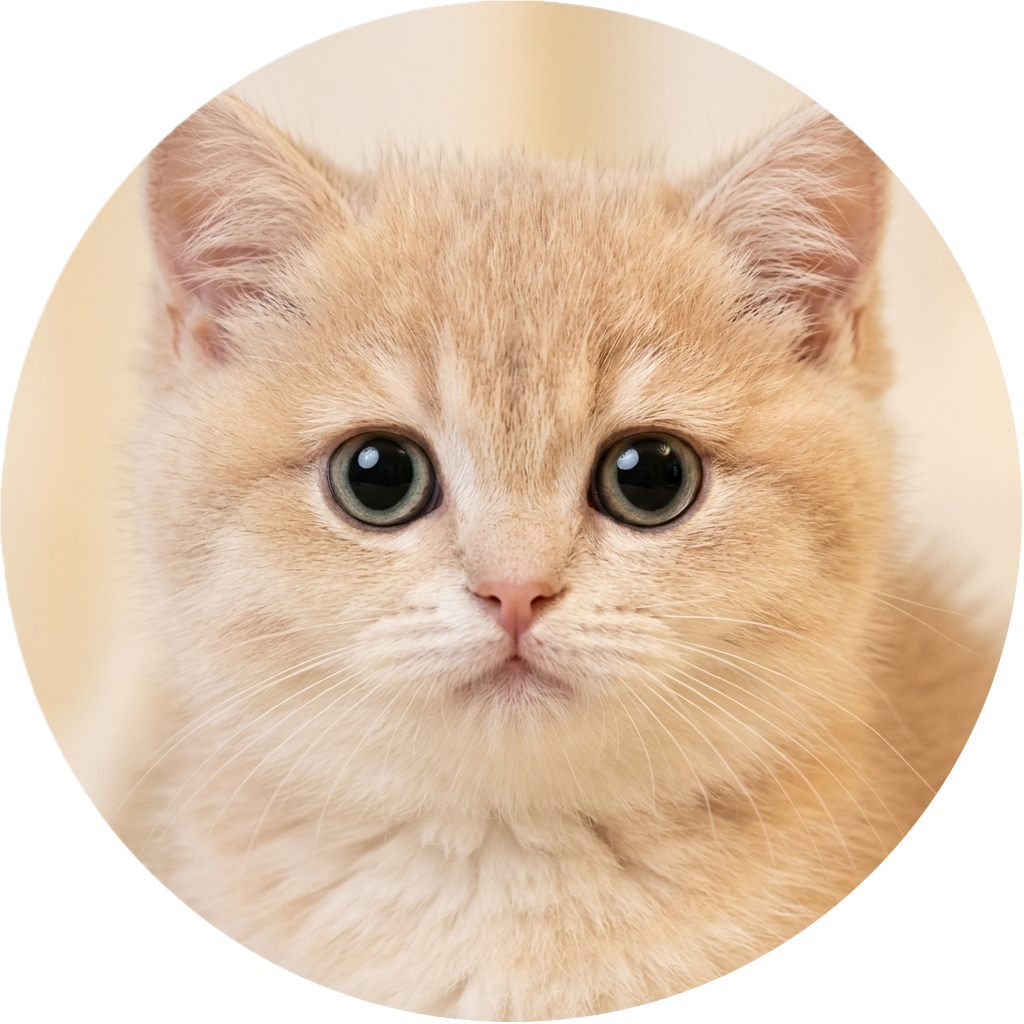
Why Do Cats Sleep on You? The Real Reasons
If you're wondering why does my cat sleep on me, you've earned one of the highest compliments a cat can give. Choosing your lap or chest as a bed isn't about convenience — it's raw trust. When a cat falls asleep on you, it's surrendering its most vulnerable state to the person it feels safest with.
The reasons stack: trust and safety, your body warmth, the familiar comfort of your heartbeat and breathing, the scent bond your cat has built with you, and the simple pull of routine. We'll unpack each one.
Key takeaways
- Sleeping on you is a profound display of trust — sleep is when a cat is most vulnerable, and it chose you as its safe place.
- Your body heat, heartbeat, and scent all play a role; cats are drawn to warmth and rhythms they learned as kittens.
- Choosing you over every other spot signals an attachment bond, much the way a child bonds with a parent.
- For most healthy adults, it's safe and even good for the bond — with a few cautions we'll cover later.
Why Cats Sleep on You — Quick Reference
| Reason | What it looks like | What it signals |
|---|---|---|
| Trust and safety | Deep sleep, exposed belly, fully relaxed | "You are my safe place" |
| Warmth | Curled tight against your body | Seeking your body heat |
| Heartbeat and breathing | Draped on your chest | Comfort from rhythms learned as a kitten |
| Scent-bonding | Pressing face or body into you | "You smell like home" |
| Routine and habit | Same spot, same time each day | Familiarity and predictability |
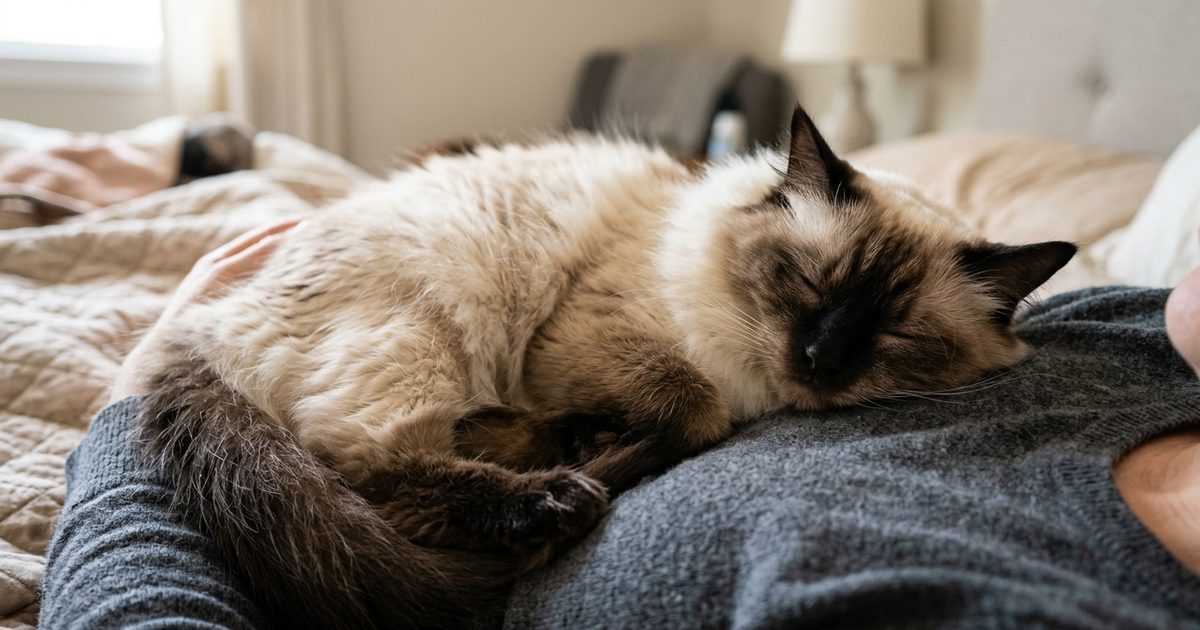
Why Does My Cat Sleep on Me?
Your cat sleeps on you because you are their safest, warmest, most familiar place — a profound display of trust. They're drawn to your body heat, your steady breathing and heartbeat (rhythms kittens imprint on), and your scent. Sleeping on you means your cat feels completely safe.
When a cat chooses your lap, your chest, or the crook of your neck as a bed, it isn't a casual choice. Cats are both predators and prey by nature, which makes sleep their most vulnerable state. A cat that climbs onto you and closes its eyes is telling you, in the clearest language a cat has, that you are the safest place it knows. The reasons stack on top of each other — trust, warmth, the rhythms of your body, and the scent that means home —and together they turn you into the spot your cat would pick over any other.
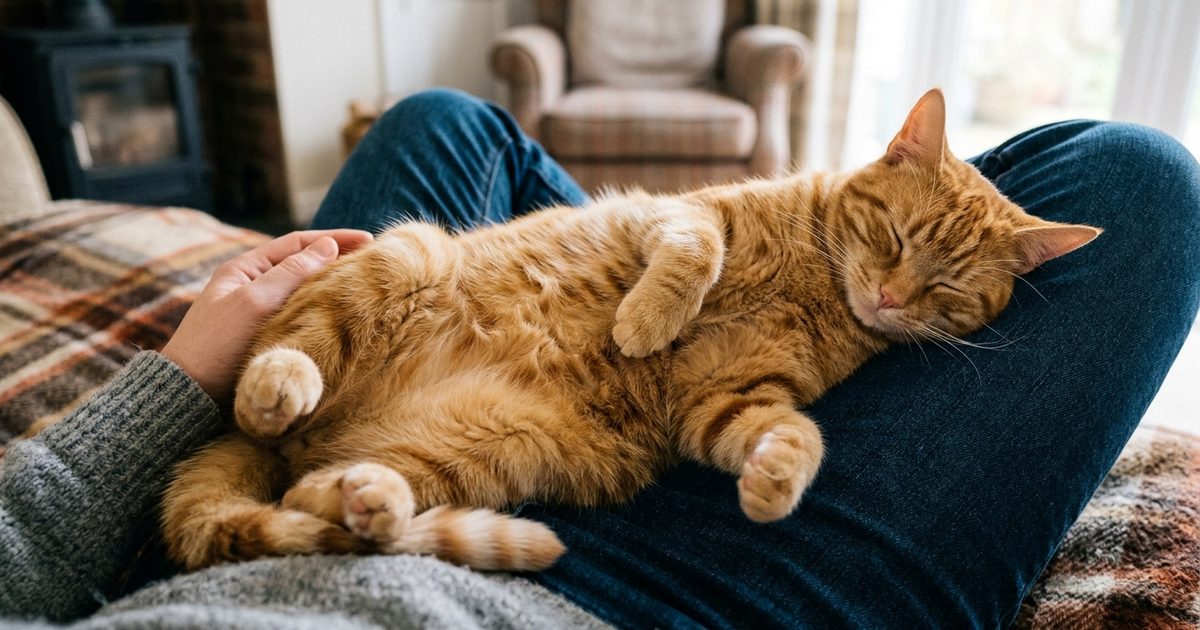
Trust and safety
Sleep is when a cat is most exposed, so where a cat chooses to sleep is a direct read on how safe it feels. In the wild, cats sleep in hidden, elevated, or defended spots — anywhere they won't be ambushed. Choosing you over a closet, a high shelf, or a dark corner means your cat ranks your body alongside those instinctive refuges. This is one of the clearest forms of how cats show affection: not a performance, but a quiet decision to be vulnerable near you. The cat that flattens itself against your chest, eyes half-shut, has decided the risk is zero.
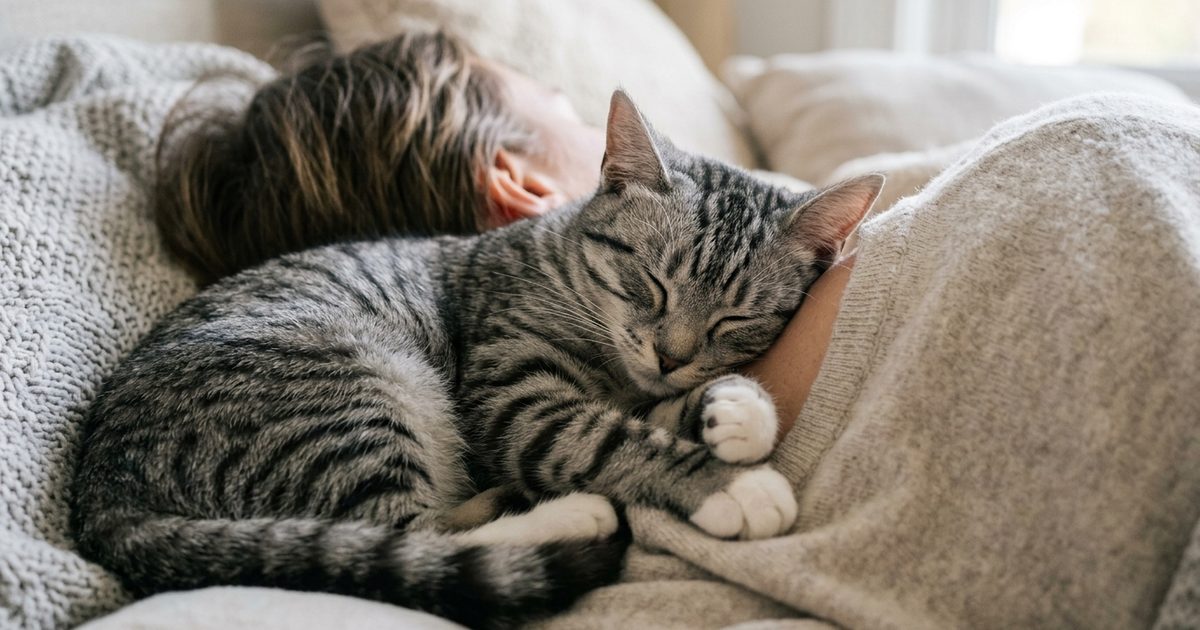
Warmth
A cat's resting body temperature sits a couple of degrees higher than ours — around 38-39°C (101-102°F) — which means cats lose heat faster and actively seek out warm surfaces to conserve energy. Your body is a steady, radiating heat source, and a cat will gravitate toward it the same way it gravitates toward a sunny windowsill or a laptop vent. Warmth is often the first magnet that draws a cat onto you, even before trust fully cements the habit. The trust is what keeps the cat there once it lands; the warmth is what made it climb up in the first place.
Your heartbeat and breathing
Kittens are born blind and deaf, and in their first weeks they navigate the world through touch and vibration — the rise and fall of their mother's chest, the rhythm of her heartbeat, the steady cadence of her breathing. Those rhythms get wired into a kitten's sense of safety, and they don't fade in adulthood. When your cat presses against your chest, it's partly replaying that earliest comfort — we unpack the full mechanism below in Why Does My Cat Sleep on My Chest?. It's also why cats so often purr themselves to sleep: a self-generated rhythm layered on top of yours. We go deeper into that in our piece on why cats purr.
Scent-bonding
Cats live in a world of scent we barely perceive. They carry scent glands in their cheeks, chin, forehead, paws, and the base of the tail, and they use them constantly to mark the things and beings that belong to their inner circle. Sleeping on you presses those glands against your clothes and skin, layering your scent with theirs until the two become, to the cat, one familiar signature. This is the same chemistry behind grooming and licking — your cat is, quite literally, making you smell like family. Scent-bonding is also why a cat that sleeps on you often follows it up by kneading: pressing paws into your lap deposits more scent and completes the "this is mine" loop. You can see the full pattern in our guide to why cats knead, and why the same instinct drives why your cat licks you.
Taken together, these four threads — safety, warmth, your heartbeat, your scent — explain why "why does my cat sleep on me" has the same answer every time: because you have become, through repetition and trust, the place your cat's body wants to be when it lets its guard down completely.
Why Does My Cat Sleep on My Chest?
Your chest is the closest spot to your heartbeat and breathing — the rhythms your cat learned as a kitten — plus it's warm, soft, and rises gently with each breath. Sleeping on your chest is peak comfort and bonding: your cat pressed against the very sound and warmth that mean "home."
Your chest puts your cat directly over your heartbeat and breathing — the same kittenhood rhythms we covered above — plus steady warmth and a gentle rise and fall. It's peak comfort: the sound and warmth that mean "home," all in one spot. It's also elevated, which cats prefer, keeping them close to your face, voice, and scent.
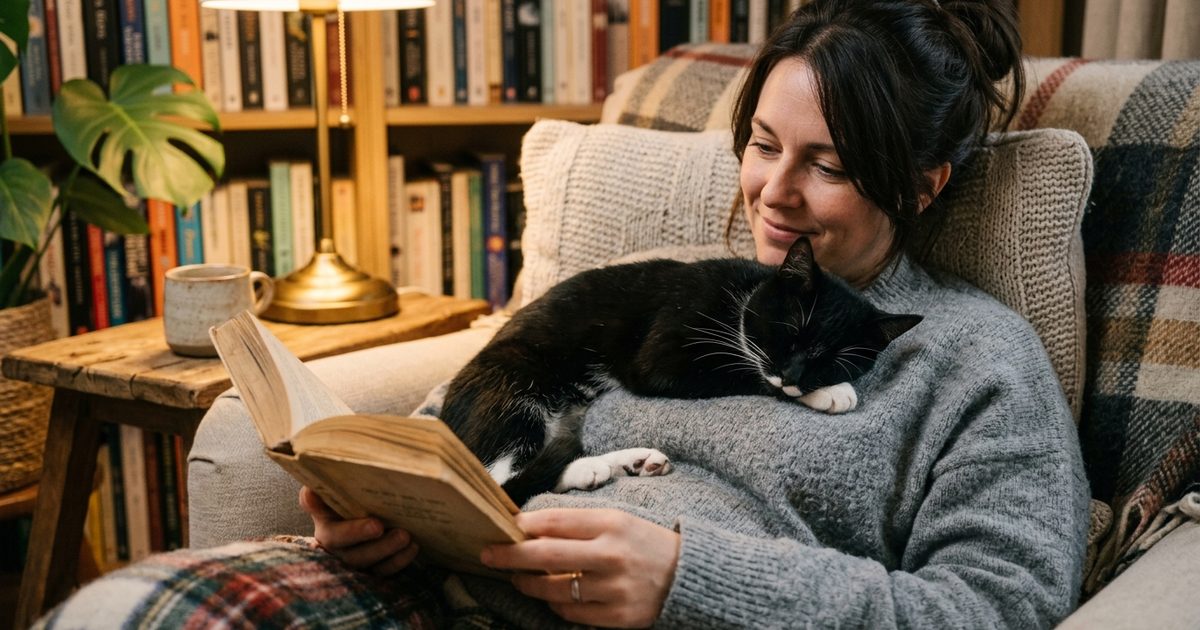
There's a practical side too. Your chest is elevated, which cats prefer — it gives them height without the effort of climbing, and keeps them close to your face, your voice, and your scent. Combined with the warmth and that familiar beat, it's the most complete "you" they can sleep on.
Curious what's going through your cat's mind in that peaceful chest-nap moment? Get a MeowMind reading — upload a photo and hear what your cat would say about choosing you as their bed.
Why Does My Cat Like to Sleep on Me Specifically?
Choosing you over every other spot means your cat has bonded to your specific scent, warmth, voice, and routine. Cats form attachment bonds that look a lot like the ones human infants form, and your cat has simply decided you are their primary safe person.
There is a difference between a cat that sleeps on a person and a cat that sleeps on you. A friendly cat might curl up on a warm lap now and then, but a cat that returns to your chest, your legs, or the crook of your neck night after night has made a specific, individual choice. Out of every warm body in the house, yours is the one they want.
Attachment bonding
What you're seeing is an attachment bond — the same kind of primary-caregiver relationship researchers have documented between human infants and their parents. Studies of cat-owner pairs have found that cats show the same classic attachment styles (secure, anxious, avoidant) that infants show, complete with using their person as a base to explore from and returning to them under stress. So when your cat keeps picking you — following you between rooms, greeting you at the door, and choosing your body as a bed — they are showing a secure attachment, with you as their anchor.
That same attachment is what drives why your cat follows you everywhere — sleeping on you is simply the still, resting version of that bond.
Can Cats Sleep With Their Eyes Open?
Yes — cats can sleep with their eyes slightly or half-open during a light doze, staying partly alert to sounds. You'll often glimpse a whitish film, the third eyelid, sliding across. It's normal in light sleep, but fully open, unblinking eyes are not truly sleeping and may warrant a vet check.
Light sleep vs deep sleep
Cats cycle through two main sleep states, and the eyes behave differently in each. In light sleep (also called slow-wave sleep), your cat stays semi-alert — ears still swiveling toward noises, muscles ready to move. During this stage a cat often keeps its eyes partly open, and the nictitating membrane, or third eyelid, may sweep across from the inner corner. That whitish flash is normal; it protects and moistens the eye while the lid stays open. You are most likely to see "sleeping with eyes open" here, during a short nap on your lap.
Deep sleep is different. This is where the real rest — and dreaming — happens: the body goes slack, the paws may twitch, and the eyes close fully. Adult cats reach true deep sleep in shorter bursts than people do, which is why they nap so often throughout the day to make up the total. The distinction matters for reading your cat: a half-open eye during a light doze is nothing to worry about, but a cat whose eyes stay wide and unblinking while the body looks limp is not sleeping normally. International Cat Care notes that persistent abnormalities in eye position or awareness during rest can signal a neurological or pain issue, so if it looks off, a vet visit is the safe call.
Is It Safe to Let Your Cat Sleep on You?
For most healthy adults, yes — sleeping with your cat is safe and genuinely good for the bond. The cautions are narrow but real: avoid it with infants, watch allergies and sleep quality, and be aware of rare infection risk. The main downside for most people is simply lost sleep if your cat is restless at night.
The benefits
Sharing your bed with your cat does more than feel cozy — it actively strengthens your relationship. The physical closeness reinforces the attachment bond we talked about earlier, the same one that drives your cat to choose you over everyone else. For many owners, a purring cat curled against them lowers stress and makes falling asleep easier. That low, rhythmic purr isn't just background noise; it's a sound your cat associates with safety, and hearing it signals the same to your own nervous system. For a healthy adult, there is little to lose and a quiet, daily dose of comfort to gain.
The cautions
The honest caveats are narrow but worth knowing. Never let a cat sleep with an infant — cats are drawn to warmth and milk scent, and even a gentle cat can accidentally settle over a baby's face. Most veterinary guidance, including from the Cornell Feline Health Center, advises keeping cats out of a baby's sleep space entirely.
For everyone else, the more common issues are mundane. Cat dander and saliva can worsen allergies, and a cat that paws your face at 4 a.m. will fragment your sleep over time — poor sleep has real health costs, so a restless cat may belong in their own bed nearby rather than on you. The often-cited infection risk exists but is genuinely rare for healthy adults; basic hygiene — keeping your cat indoors, dewormed, and off your pillow — keeps it negligible. If you're immunocompromised, pregnant, or have a young child at home, ask your vet for tailored advice rather than relying on general rules.
How to Encourage (or Gently Discourage) It
To encourage sleeping on you, build positive associations: a blanket carrying your scent, a warm lap, and a predictable routine invite your cat closer. To discourage it, offer a cozy bed right beside you and shift gradually — never shove or lock your cat out, which damages the trust behind the behavior.
If you'd like more of it
Cats repeat what feels safe and rewarding, so make yourself the most appealing bed in the house. Lay a soft blanket that already smells like you across your lap or chest before you sit down — your scent is the strongest signal that this spot is "yours and theirs." Time it to routine: most cats are drawn to settle in after a meal or a play session, when their body is warm and their guard is down. A little quiet, low light, and a still body on your part do more than any treat. If your cat already kneads before lying down, that's your cue they're about to choose you — stay still and let it happen.
If you'd like a little less of it
There's no shame in wanting your lap back. The gentle path is redirection, not rejection: place a high-quality cat bed right next to where you sit, ideally something that holds warmth and has your scent on it, and reward your cat for using it. Move the favored spot a few inches further from you over several nights rather than banning it outright. Avoid shoving your cat off, scolding, or suddenly shutting the door — abrupt rejection reads as betrayal to a cat that has chosen you as their safe place, and it can erode the bond that made them sleep on you in the first place. Patience wins: a gradual shift keeps the trust intact while reclaiming your space.
Common Myths About Cats Sleeping on You
When your cat sprawls across your chest every night, the behavior can start to feel loaded with hidden meaning — and the internet has no shortage of confident explanations for it. Let's separate the real science from the folklore, because most of what cats do on you comes down to trust, warmth, and scent, not anything dramatic.
Myth: Cats sleep on you to dominate you. Fact: Dominance is a concept from dog behavior, and it doesn't transfer cleanly to cats. Feline behaviorists at the Cornell Feline Health Center describe cats as socially flexible rather than hierarchy-driven. When your cat chooses your lap or chest, it's seeking safety, warmth, and your scent — not asserting rank. A cat that sleeps on you is showing the opposite of dominance: it's making itself vulnerable because it trusts you completely.
Myth: A cat sleeping on your chest is guarding or protecting you. Fact: This one is harder to dismiss outright, because cats do sometimes position themselves near a person they're bonded to. But the most accurate reading is that your chest offers proximity, warmth, and the sound of your heartbeat — comfort and bonding, not a protective watch. There's no solid evidence that cats "guard" sleeping humans in any deliberate, protective sense; that's a story we tell ourselves because it feels good. The same closeness your cat craves when it curls on you is the closeness it shows through how cats show affection — quiet, physical, and rooted in attachment, not sentry duty.
Myth: Cats only sleep on you because you're warm. Fact: Warmth is a big part of it — cats run a slightly higher body temperature than humans and actively seek out heat sources. But warmth alone doesn't explain why your cat picks you over a radiator, a sunbeam, or a heated bed that's just as warm. Your cat also sleeps on you for your scent (which it reads as familiar and safe), your steady breathing and heartbeat, and the attachment bond it has formed with you specifically. Reducing the behavior to temperature alone misses the trust at its center. If your cat then settles in with a purr, that's the same self-soothing contentment we explore in why do cats purr — a comfort signal, not just a heat-seeking one.
Myth: If your cat sleeps on you constantly, it's overly dependent or anxious. Fact: Sleeping on a bonded human is normal, healthy feline behavior, not a red flag. Cats form strong attachment bonds — in many ways comparable to the bonds infants form with caregivers — and choosing to rest on you is a natural expression of that bond. Concern would only be warranted if the clinginess is new and paired with other stress signs, like following you constantly, vocalizing excessively, or refusing to eat when you're away. On its own, a cat that loves sleeping on you is simply a cat that loves sleeping on you. International Cat Care notes that close physical contact with a bonded human is a normal feature of feline social life, not a symptom of dysfunction.
Cats Sleeping on You at a Glance — Summary
Cats sleep on you because you are their safest, warmest, most familiar place. Trust, body heat, your heartbeat and breathing, your scent, and simple routine all pull your cat toward you — and together they explain almost every nap on your lap or chest.
If you've read this far, you already know the short version: a cat choosing to sleep on you is one of the clearest signs of trust and comfort in the feline playbook. Here's the whole picture in one place.
| Reason | What it looks like | What it usually means |
|---|---|---|
| Trust and safety | Curled up on your lap or chest, eyes closed, body fully relaxed | "I feel completely safe with you" |
| Warmth | Tucked against your neck, under blankets, or between your legs | Your body heat draws them in — cats run warm-seeking |
| Heartbeat and breathing | Pressed flat against your chest, often purring | The rhythms your cat learned as a kitten mean "home" |
| Scent-bonding | Kneading first, then settling in; rubbing face on you before sleeping | Marking you as theirs and bonding through your scent |
| Routine and habit | Same spot, same time, every day | Predictability is comforting — you're part of the ritual |
A few takeaways to carry with you: sleeping on you is normal and healthy for most cats, it's almost always a compliment rather than a bid for dominance, and the spot your cat picks — chest, lap, legs, even your head — usually points back to warmth, your scent, or the comfort of your heartbeat. If the behavior ever changes suddenly, that's the one moment worth a vet check; otherwise, enjoy the trust.
Curious What Your Cat Would Say?
Upload a photo and get a warm, personalized reading from your cat's perspective.
Start Your Free ReadingFrequently Asked Questions
Why does my cat sleep on me?
Your cat sleeps on you because you are their safest, warmest, most familiar place. It's a profound display of trust — sleep is when a cat is most vulnerable, and yours is the body they chose to let their guard down on. Warmth, your scent, and your heartbeat all play a part.
Why does my cat sleep on my chest?
Your chest puts your cat directly over your heartbeat and breathing — the rhythms they learned as a kitten pressed against their mother. It's also warm, soft, and elevated, which cats prefer. Sleeping on your chest is peak comfort and bonding.
Why does my cat sleep on my head or face?
Your head radiates warmth, and it carries your scent and the sound of your breathing most strongly. Some cats are also drawn to the steady rhythm near your face. It's the same trust and comfort as sleeping on your chest, just aimed at an even warmer, more familiar spot.
Can cats sleep with their eyes open?
Yes — during light sleep a cat may keep its eyes partly open and stay semi-alert, with the third eyelid sweeping across. This is normal. But fully open, unblinking eyes while the body looks limp is not true sleep and may warrant a vet check.
Is it safe to sleep with my cat?
For most healthy adults, yes — it's safe and good for the bond. Never let a cat sleep with an infant, and watch for allergies and disrupted sleep. Infection risk is real but rare for healthy adults; basic hygiene keeps it negligible.
Why does my cat sleep on me and no one else?
Choosing only you means your cat has formed an attachment bond to your specific scent, warmth, voice, and routine. Cats develop primary-caregiver-style attachments, and a bonded cat will hold out for the real thing rather than accept the nearest warm surface.
Why does my cat sleep between my legs?
Between your legs is a warm, enclosed, slightly elevated spot that makes your cat feel secure. It also keeps them close to your scent and body heat. Like sleeping on your chest, it's about comfort, warmth, and feeling safe with you.
How do I get my cat to sleep in their own bed?
Place a cozy, warm bed right next to where you sit or sleep, ideally with your scent on it, and reward your cat for using it. Move the favored spot gradually further away over several nights. Never shove or scold your cat — abrupt rejection damages the trust behind the behavior.
Sources & References
You Might Also Like
Kitten Teething: Timeline, Symptoms & How to Help
Kitten teething runs from 3 to 7 months as baby teeth fall out. Learn the timeline, signs to watch for, and how to soothe a teething kitten safely.
15 min readWhen Do Cats Stop Growing? A Complete Timeline
When do cats stop growing? Most cats reach adult size by 12-18 months, but large breeds like Maine Coons keep growing until 3-4 years. Full timeline inside.
14 min readCan Cats Eat Cherries? Flesh, Pit & Toxicity Facts
Can cats eat cherries? Pitted flesh is safe in tiny amounts — but the pit, stem, and leaves are toxic (cyanide precursors). Learn what's safe and what isn't.
15 min read