Why Does My Cat Follow Me Everywhere? 9 Real Reasons
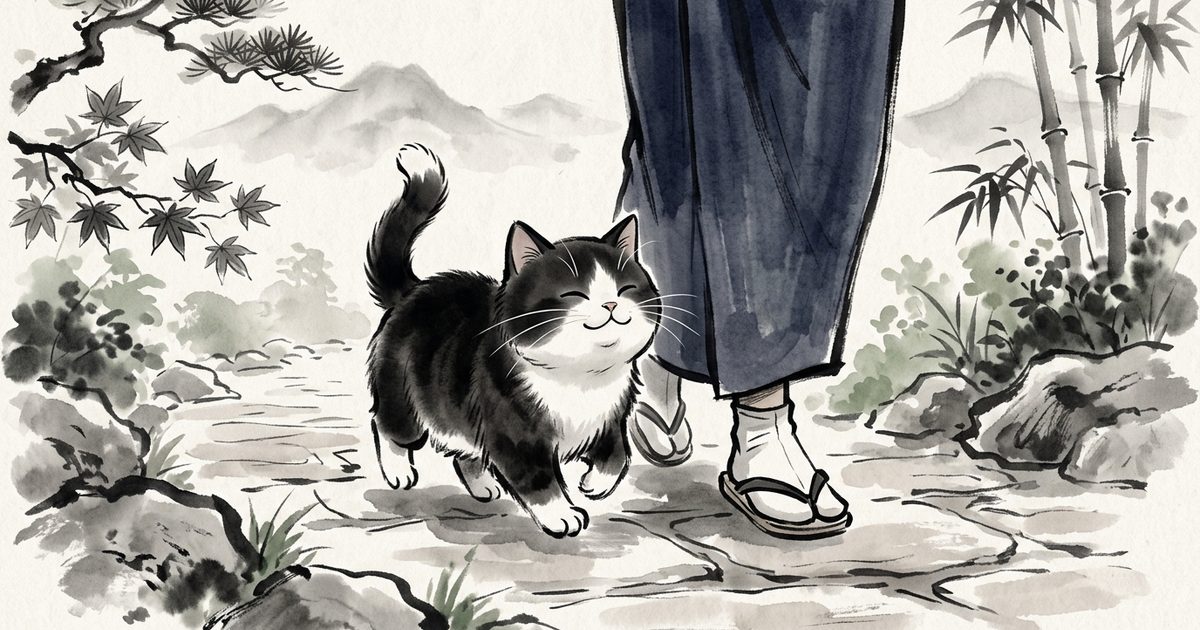
If you're asking "why does my cat follow me everywhere," the short answer is usually a good one: your cat is bonded to you, curious about what you're doing, or running on a routine you taught her. The internet has a name for this — a clingy cat, or the more affectionate "velcro cat" — and in most households it's simply how a healthy, attached cat shows that you are her person. Cats that shadow their humans from room to room, kitchen to couch, and yes, even to the bathroom, are doing something deeply normal, even if it sometimes feels a little much.
Following behaviour sits at a crossroads, though. The same trailing-at-your-ankles pattern can be love, hunger, habit, breed personality, or — less often — anxiety, and only the surrounding context tells you which. A relaxed body, a high tail, and a cat that resettles when you sit is one story; a cat that cries at closed doors, paces, or starts following only recently is another. The biggest thing this article will help you do is tell those stories apart, and know when a trip to the vet is actually warranted.
Key takeaways
- Following you room to room is usually a healthy bond, curiosity, or routine — not a problem behaviour.
- The same trailing can mean love, hunger, habit, or (less often) anxiety — body language and context tell them apart.
- Sudden onset in an older or normally-independent cat is the real red flag worth a vet call.
Cats That Follow — Quick Reference
| Following pattern | What it usually means | Healthy or watch? |
|---|---|---|
| Trails you room to room, tail up, settles near you | Bond and trust — you are her safe person | Healthy |
| Materialises the second you head for the kitchen | Learned routine and hunger | Healthy |
| Follows and then rubs against your legs | Scent-marking you as hers | Healthy |
| Wants to be in every room, including closed ones | Territory patrol and curiosity | Healthy |
| Follows a breed known for it (Ragdoll, Siamese) | Personality and breed tendency | Healthy |
| Kittens that follow you constantly | Normal dependence on a caregiver | Healthy (life-stage) |
| Sudden, new clinginess in an adult or senior cat | Possible pain, sensory loss, or cognitive change | Watch — call your vet |
Why Does My Cat Follow Me Everywhere? The Main Reasons
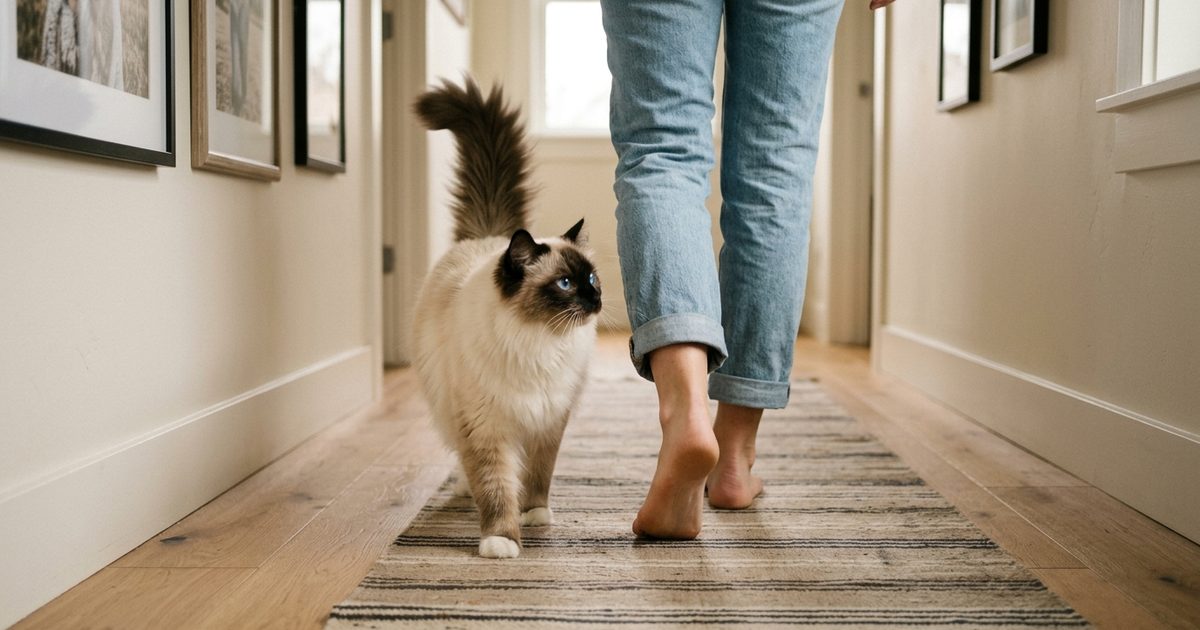
Cats follow their humans mostly because they are bonded, curious, hungry, or running on a routine. A cat that trails you room to room is usually showing trust — you are their safe person, their food source, and the most interesting thing happening in the house all day.
If you have ever turned around to find your cat two steps behind you, you are not alone. "Why does my cat follow me everywhere?" is one of the most common questions cat owners ask — and the honest answer is that there is no single reason. Most following is a layered behaviour: affection plus curiosity plus habit, with hunger and routine stirred in. Below are the six main drivers, from the most flattering to the most practical.
You are their person — attachment and trust
The simplest explanation is also the most important: your cat has chosen you. Cats form real, lasting attachments to their people — not the cold, transactional bond they are often caricatured for, but something closer to the secure attachment we more readily associate with dogs or even human infants. Following you from room to room is, in many ways, the locomotor version of the slow blink: a moving declaration that you are the centre of their safety. If you want to understand the emotional substrate behind it, our piece on whether cats have feelings goes deeper — but the short version is that a bonded cat simply feels better when you are nearby. The Cornell Feline Health Center describes feline social behaviour as far more nuanced than the old "aloof" stereotype, and a cat that shadows you is good evidence of it. Scent-marking is part of that same attachment language — see why cats rub against your legs for the full picture.
Curiosity and territory patrol
Cats are territorial to their core, and in a house cat's mind the entire home is their domain — every room, every doorway, every change you make to it. When you get up and move, you are altering the environment: opening a door, switching on a light, shifting the soundscape. Your cat follows because she wants to audit the change in real time. This is the same instinct behind the tail-up, relaxed trailing you will see in healthy cat body language — a confident cat patrolling her territory alongside her favourite human. It is not surveillance; it is stewardship. You are interesting, and anything that interests you is, by default, worth inspecting.
Food and routine
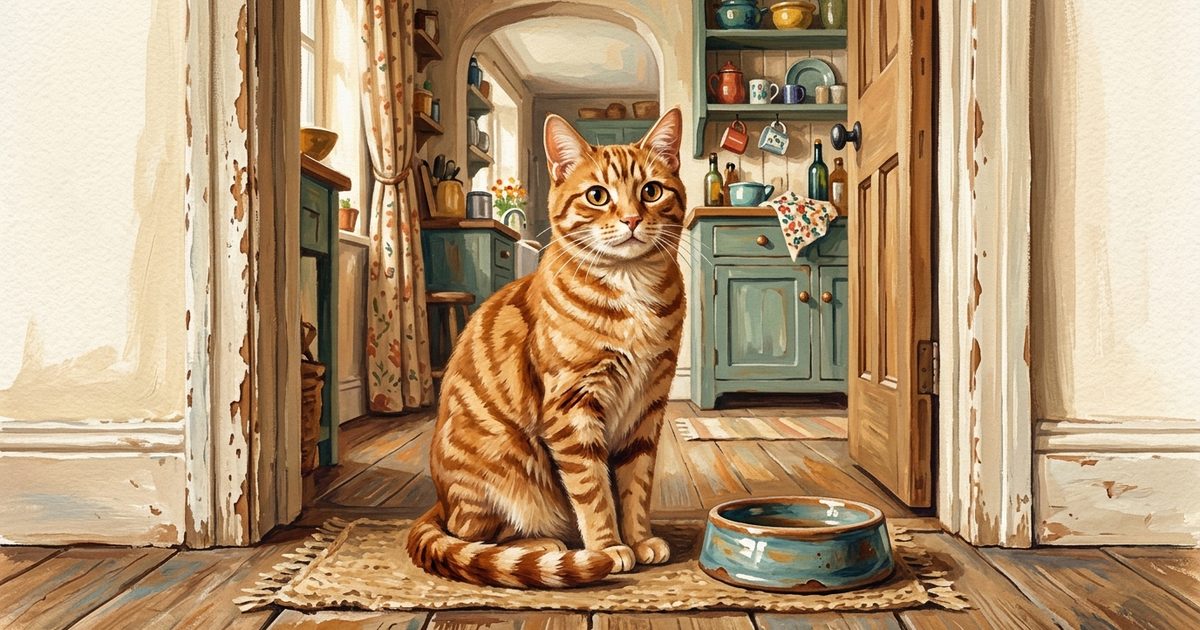
Then there is the explanation every cat owner secretly suspects: she wants food. Cats are extraordinary timekeepers. They learn your routines — the sound of the alarm, the creak of the kitchen cabinet, the particular footstep that means a can is about to be opened — and they learn to position themselves accordingly. The cat who materialises the moment you walk toward the kitchen is not psychic; she is running an internal schedule, and following you is the most efficient way to be present when dinner happens. Solicitation following is one of the most common forms, and it is entirely rational from her point of view.
Attention and play
Indoor cats, especially active ones, live in a world of limited stimulation, and a moving human is the most reliably interesting thing in it. A cat that trots after you, then winds around your ankles or parks herself in your path, is often making a request: play with me, notice me, interact. It is the preamble to attention-seeking, and it overlaps heavily with the broader catalogue of how cats show affection — because for a cat, asking for your engagement is a form of bonding. If your cat also locks eyes on you while trailing, the meaning of that gaze is worth a look in why cats stare. A bored cat is a following cat, and a short play session often dissolves the behaviour entirely.
Mating and hormones
For intact cats, hormones add another layer. An unspayed female in estrus may shadow her human closely — part of a restless, vocal state that also includes yowling, increased affection, and position-taking. Intact males can become similarly persistent. Spaying or neutering typically settles this within weeks. It is worth naming this possibility rather than ignoring it, but there is no need to moralise about it: it is biology, and it has a straightforward fix.
Age and life-stage
Finally, how much a cat follows you depends heavily on where she is in her life. Kittens follow almost constantly because you functionally are their world — we cover that developmental angle in full in the section on why your kitten follows you everywhere. At the other end of life, senior cats sometimes start following more closely too, for very different reasons — confusion, sensory change, or the comfort of the person they trust most. We come back to that, and to when it should prompt a vet visit, in the section on when following becomes a red flag. Life-stage matters more than most owners expect.
Why Does My Cat Follow Me to the Bathroom?
Bathrooms fascinate cats because closed doors break their territory patrol, the room smells strongly of you, sinks and tubs are warm and enclosed, and — most of all — you are a captive audience they have all to themselves. It is routine, scent, and attention rolled into one room.
"Why does my cat follow me to the bathroom?" deserves its own answer, because it is one of the most-searched variations on this question — and the bathroom is, in feline terms, the single most interesting room in the house. Almost every cat owner has experienced the paw reaching under the door, the mournful meow, or the cat who simply must escort you in. There are four overlapping reasons, and together they explain why this particular following is near-universal.
The closed-door problem
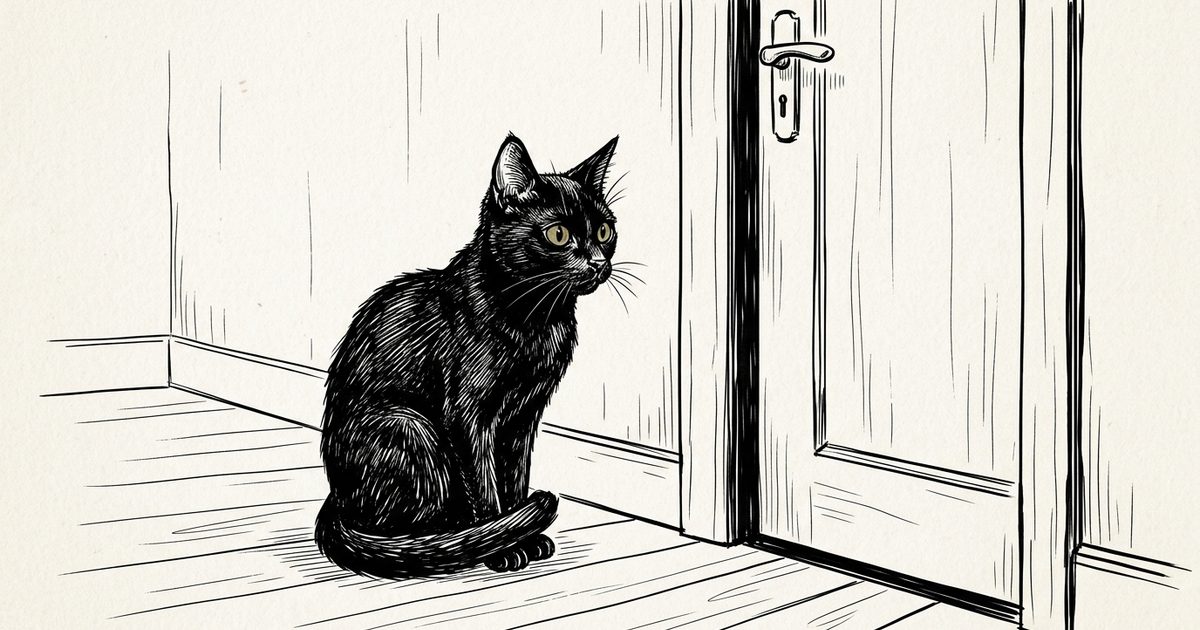
Cats do not understand privacy; they understand territory. To a cat, a closed door is a barrier across part of her domain — and the bathroom door is the one that closes most often, making it the most consistently provocative. The behaviour you see — the crying, the pawing underneath, the waiting — is not about wanting to be in the bathroom so much as wanting the barrier gone. This is also why following often ramps up precisely when the door shuts: the closed door is a territory patrol interrupted, and your cat is lobbying to resume it. It pairs with the meowing at closed doors pattern we cover elsewhere.
Your scent is concentrated
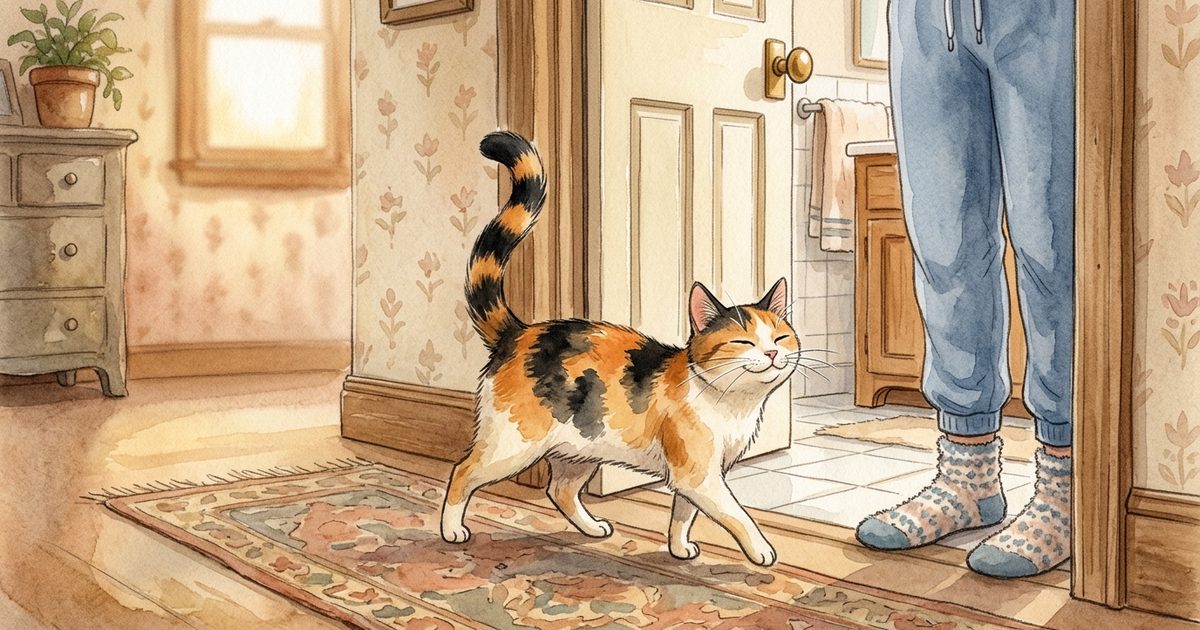
Bathrooms are where your scent collects. Towels, worn clothes in the laundry, the bathmat you stood on — all of it carries your smell at high concentration, and for a scent-oriented animal that is genuinely comforting. A cat who slips into the bathroom and settles on your discarded towel is not being odd; she is sitting in the strongest available cloud of the person she trusts. Scent security is a real need for cats, and the bathroom is, in effect, a room-sized version of you.
Running water and warmth
Many cats are drawn to running water — the drip of a tap, the rush of a flush — and some learn that the bathroom sink is a reliable place to drink. Sinks and tubs are also warm, smooth, and enclosed: the kind of small, bounded space cats naturally seek out for security. Add warmth from a recent shower and you have a near-perfect resting spot, independent of anything you are doing. Your cat's bathroom obsession may be mostly about the bathroom itself.
Captive audience
And then there is the social reason, which is the one most owners underestimate. In the bathroom, you are still, seated, and unable to leave — a rare state for a normally mobile human. From your cat's perspective, this is ideal: you are a captive audience, fully available for attention, with no competing task. A cat that hops onto the sink, rubs against your knee, or simply sits and watches is making the most of a window when you have nothing better to do than be with her. It is routine, scent, warmth, and undivided attention, all in one small room — which is why cats keep coming back.
Get a MeowMind reading — when your cat shadows you everywhere, what is she actually trying to say? Upload a photo and hear your cat's reason in her own words.
Is My Cat Following Me Out of Love or Anxiety?
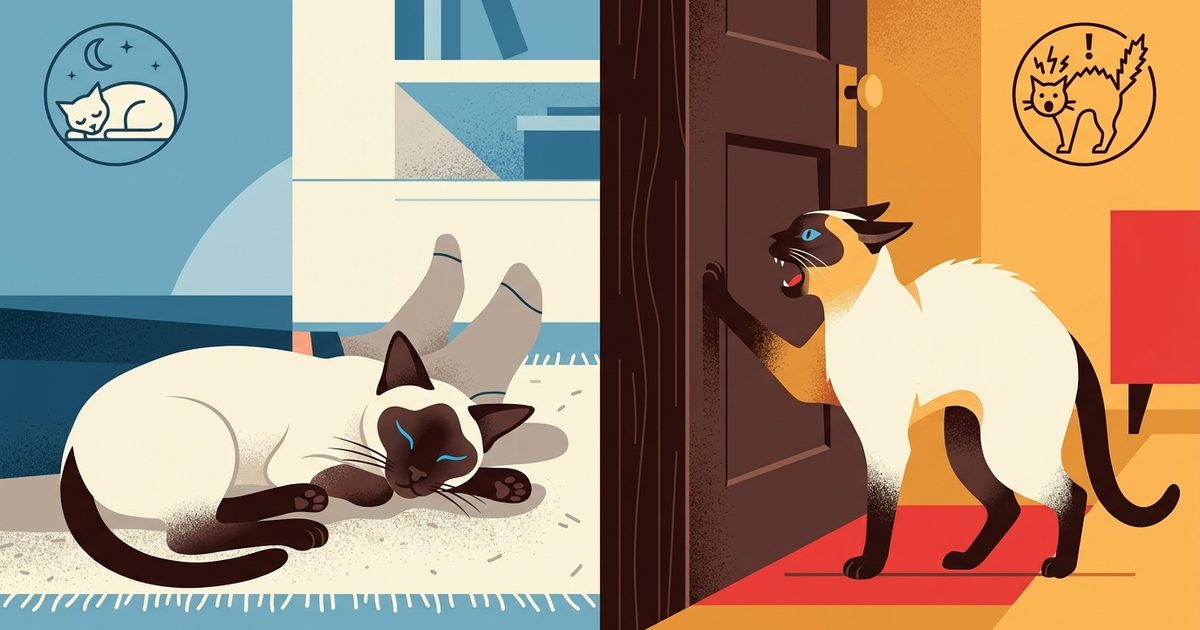
Most following is a healthy bond — but separation anxiety looks similar. The tell is what happens when you close a door or leave: a bonded cat resettles within minutes; an anxious cat cries, scratches, soils, or stays frozen by the door for far longer than is comfortable.
This is the question that quietly worries most people who live with a so-called "clingy cat" or "velcro cat" — the cat who trails them from kitchen to living room to bedroom and back again. The good news, up front, is that the great majority of following behaviour is simply a healthy expression of attachment and curiosity, not a symptom of distress. A cat that chooses to be near you, follows you at a relaxed pace with a tail held high, and settles calmly the moment you sit down is showing you trust. That is attachment in motion — your cat moving through the house with you because you are their safe person.
Where it gets complicated is that genuine separation-related distress can wear a very similar costume. The same cat who follows you lovingly through the day might also be the cat who panics when you leave. The distinction matters because the two call for opposite responses: one is to be enjoyed and reciprocated, the other is to be gently helped. Fortunately, there are clear behavioural tells that separate the two — and you can read most of them in under a minute by watching what your cat does when you walk away or close a door.
Signs of a healthy, bonded follower
A bonded follower moves with a relaxed body. The ears sit forward or neutrally, the tail is carried high — often with that little question-mark curl at the tip — and the cat's pace is unhurried, sometimes pausing to sniff or look back rather than shadowing at speed. When you sit, the cat settles nearby rather than staying on its feet, and within a short while it resumes normal cat business: grooming, dozing, watching birds. If you leave the room and shut the door behind you, a healthy bonded cat might wait a moment or call once, then find a sunny spot and go to sleep. This is the cat most owners describe as a "velcro cat" — and in this form, velcro is simply affection with legs.
Signs the following is separation anxiety
Separation anxiety in cats is less common than in dogs, but it is real and increasingly recognised by feline behaviourists. International Cat Care describes separation-related behaviour as distress that appears specifically when the cat loses access to an attachment figure — and it tends to come as a cluster, not a single quirk. Watch for: persistent vocalisation (meowing, yowling) at closed doors or exit points that goes on far longer than a momentary protest; destructive scratching focused on door frames or the area around exits; house-soiling — urinating or defecating near the door you left through, even with a clean litter box available; refusing to eat while alone; and a cat who follows you through the day but also paces, rather than resting, when you are present. The signature feature is that the distress is disproportionate — it does not settle, and it centres on your absence rather than on any external trigger.
How to tell the difference in 60 seconds
You do not need a formal diagnosis to get a read on your own cat — a couple of simple observational tests will point you in the right direction, and they take about a minute. Try the door-close test: step into a room and pull the door shut behind you, leaving your cat on the other side. Note the time. A bonded cat may walk to the door, sniff, perhaps call once or twice, and then wander off to do something else within a couple of minutes. An anxious cat will escalate — louder and more frequent crying, pawing at the door, remaining planted at the threshold long after a healthy cat would have moved on. The departure test is similar: pick up your keys or put on your shoes as if leaving, and watch whether the cat's body language shifts from relaxed to tense, pacing, or vocalising. These are observations, not diagnoses — a true assessment of separation-related problems is made by a veterinarian or a qualified behaviourist — but they are a useful first filter for most owners.
If it is anxiety — what actually helps
If the tests suggest real distress rather than healthy attachment, the goal is to lower your cat's dependence on your constant presence without ever punishing the behaviour. Help comes in layers: enrich the environment so solo time is interesting (food puzzles, window perches, new toys rotated in); provide scent items that carry your smell (a worn t-shirt left in a favoured bed); make departures and arrivals calm and low-key rather than dramatic greetings; and build tolerance to short absences gradually, stretching them out over days. Predictability also matters — cats who know roughly when you will return settle better than cats who don't. Severe cases, especially those involving self-injury from scratching or persistent house-soiling, warrant a vet visit to rule out a medical cause and to discuss behaviour modification, and in some cases short-term anxiety medication. For the practical, day-to-day side of managing solo time, our guide on how long cats can be left alone walks through the detail.
Which Cat Breeds Follow Their Humans the Most?
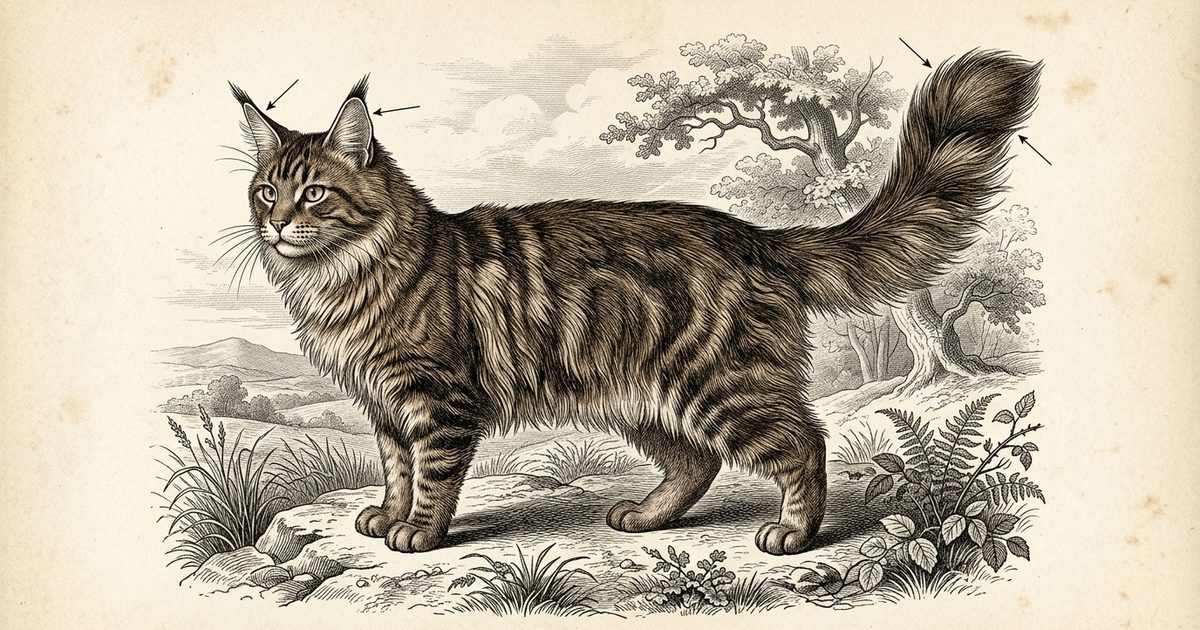
Some breeds are famous 'velcro cats' — Ragdolls, Siamese, Maine Coons, Sphynx, and Abyssinians were shaped toward intense people-attachment through breeding and natural personality. These cats shadow you room to room and greet you at the door, and this close following is a healthy breed trait, not a problem.
Not every cat who follows you is driven by the same engine. Alongside bond, routine, and curiosity, there is a fourth and often overlooked factor: who your cat simply is. Some breeds have been shaped — by natural selection or by the humans who bred them — to attach themselves to people with an intensity that other cats would find exhausting. If you share your home with one of these breeds, a cat who shadows you from room to room is almost certainly just being the cat it was built to be.
The classic velcro breeds
A handful of breeds turn up again and again in conversations about clingy, people-oriented cats, and the pattern is consistent enough to be meaningful, even though individual cats always vary. Ragdolls are the archetype — their name comes from their tendency to go limp and relaxed when picked up, and they are famous for following their humans from room to room, greeting them at the door, and staying close at all times. With their long silky fur, cream bodies, dark brown colorpoint faces, ears and paws, and striking blue eyes, they look as soft as they act. Siamese are equally attached, but in a louder, more demanding register — vocal, intelligent, and famously unhappy when left to their own devices for long. Maine Coons are the gentle giants of the group, often described as "dog-like" in the way they attach to one or two people and trail them through the house. Sphynx, the hairless breed, seek warmth and skin contact, and tend to be physically pressed against their humans whenever possible. Abyssinians round out the list — active, athletic, and intensely curious, they follow partly out of attachment and partly because they cannot bear to miss whatever is happening. These are tendencies, not guarantees: a Ragdoll who prefers solitude and an aloof Siamese both exist, and they are not defective versions of their breed.
Personality matters more than breed
Breed is a useful guide, but it is not destiny. The biggest single predictor of how clingy any individual cat will be is, simply, that cat's personality — and personality is shaped by far more than pedigree. Mixed-breed domestic shorthairs run the full spectrum, from cats who would happily live on your shoulder to cats who tolerate a single daily pat. Early socialisation matters enormously: a kitten handled gently and frequently in its first weeks grows into a more people-oriented adult. Single-cat households, where the human is the cat's only social partner, tend to produce more attached cats. And cats that were hand-reared — bottle-fed by a person from a very young age — often carry a heightened, lifelong attachment to humans that can look indistinguishable from a breed trait. So before attributing everything to breed, look at the life your cat has lived.
Should you ever discourage it?
Almost never — at least, not the following itself. A cat who chooses to be near you is giving you a clear, uncomplicated compliment, and there is nothing to fix. The only situation in which you would want to gently reshape the behaviour is when it has crossed the line from attachment into the separation distress described above — and even then, the work is about reducing the anxiety, not training the cat to stop following. To pathologise a healthy bond, or to push away a cat who is simply expressing affection, is to misunderstand what following means in the first place: your cat is telling you that you matter, in the clearest way it knows how. The question of whether cats have feelings is worth a deeper look — because if your cat follows you, the answer is already walking behind you.
Why Does My Kitten Follow Me Everywhere?
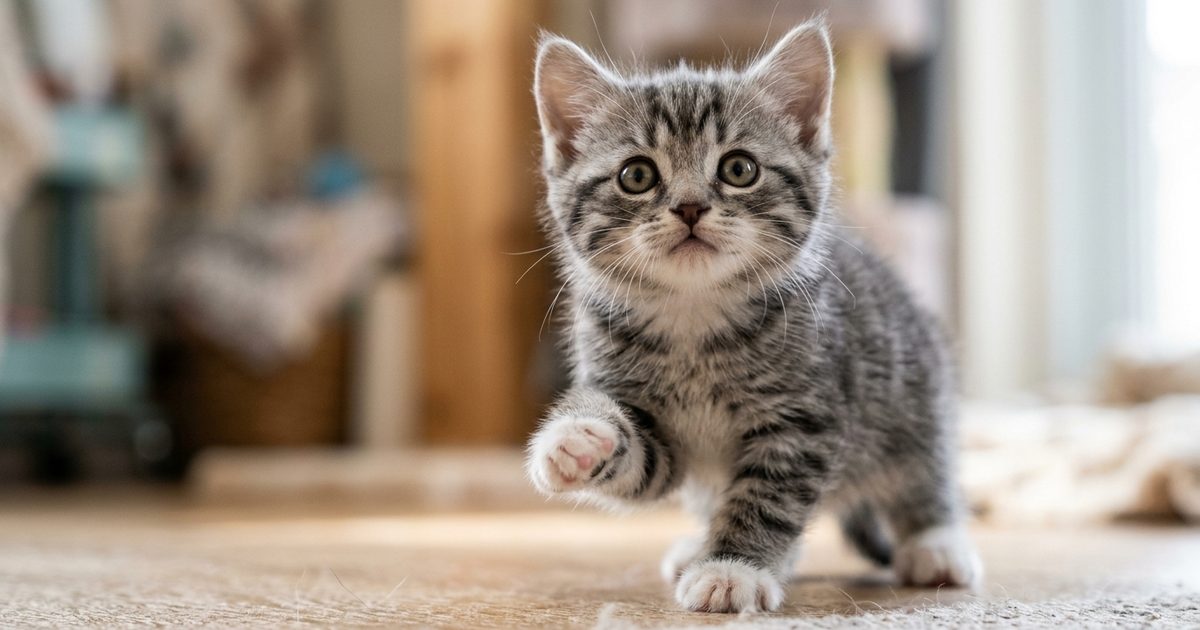
Kittens follow their humans because, until roughly six months old, you functionally are their mother — source of warmth, food, safety, and every lesson about the world. Following naturally drops off as a kitten gains confidence, though a hand-reared or single kitten may stay attached for life.
If you are googling "why does my kitten follow me everywhere," the short answer is developmental: a kitten is a dependent animal wired to stay close to its caregiver. Unlike an adult cat choosing to trail you out of bond or curiosity, a kitten is doing something closer to what a toddler does — sticking to the person who meets every survival need. It is endearing, and it is also exactly how a healthy kitten is supposed to behave.
You are the surrogate mother
Kittens are born blind, deaf, and entirely unable to thermoregulate. For the first weeks of life, the mother cat is literally their warmth, their food, and their protection. When a human takes over that role — whether through hand-rearing or simply by being the most reliable source of meals and laps in the house — the kitten's "following response" redirects onto you. This is the same early attachment behaviour seen across young mammals: stay close to the big, safe, warm thing that feeds you, and you survive. By the time a kitten is mobile, following you has become a learned default, not a choice. A kitten that bonds to you during this window tends to keep that bond, which is why hand-reared cats are often the most devoted adult followers of all — they never had a feline to attach to instead.
Learning the territory
Cats are territorial, and a kitten does not yet have a map of yours. Following you from room to room is how a kitten learns the layout — which door leads where, where the food lives, which sofa is the sunny one, and which corners are safe to retreat to. You are, in effect, a guided tour. Each room you walk into becomes "known" rather than "unknown," and a kitten allowed to explore at your ankles builds confidence far faster than one shut in a single room. As the territory gets familiar, the following tends to loosen — the kitten starts making solo expeditions because the house is no longer mysterious.
When a kitten's following is concerning
Kittens are small, fast-growing, and hold very little metabolic reserve, which means they can go downhill quickly when something is wrong. The red flag is not following itself — it is a sudden stop. A kitten that was shadowing you happily and now hides, goes quiet, stops eating, cries without settling, or feels limp when picked up needs a vet the same day. Lethargy and refusing food in a kitten are never "wait and see" signals the way they sometimes are in adults. Diarrhoea, vomiting, and a cold or pot-bellied feel all compound that urgency.
When Should I Worry About My Cat Following Me?
Following becomes a red flag when it is sudden, new, or paired with other changes — crying at closed doors, not eating, hiding, weight loss, litter-box changes, or night-time restlessness in an older cat. Any abrupt behaviour shift in an adult cat is a legitimate reason to call the vet.
Most following is healthy, and most cats who trail their humans are simply bonded, curious, or hungry. The worry threshold is not about how much your cat follows — it is about change. A cat who has always been your shadow is probably fine. A cat who has never cared where you were and is suddenly underfoot everywhere is the one to pay attention to.
The sudden onset rule
If there is one heuristic worth remembering from this whole article, it is this: a cat that was independent and is now clingy is the cat to watch. Behaviour change in cats is rarely random. When a previously self-sufficient adult starts following you room to room, sitting by closed doors, or refusing to settle unless you are nearby, that shift usually has a cause — and the cause is as likely to be medical as emotional. This is the single most useful filter for telling a healthy "velcro cat" apart from a cat who needs help: baseline vs now. If you find yourself thinking "this is new," treat that thought seriously, even if you cannot immediately see what else is wrong.
Senior cats and cognitive decline
In older cats, new-onset clinginess is one of the hallmark signs of feline cognitive dysfunction — the feline equivalent of the brain changes seen in ageing dogs and humans. A senior cat who begins following you closely, pacing at night, vocalising for no clear reason, or seeming disoriented in a house she has known for years may be showing early cognitive decline. These cats often seek the one thing that still feels reliable: you. It is not that she has suddenly become affectionate — it is that the world has become a little less predictable, and proximity to her person is grounding. New clinginess in a senior, especially paired with night-time restlessness or increased vocalisation, is worth a vet conversation; cognitive decline can overlap with the mood and withdrawal changes we discuss in do cats get depressed.
Pain, hyperthyroidism, and sensory loss
Several medical conditions make a cat follow their human more closely, and most share the same logic: the cat seeks the person they trust because something feels wrong. Chronic pain, hyperthyroidism (common in older cats), and the gradual loss of vision or hearing can all push a previously independent cat to stay near you for reassurance. A cat whose sight is fading will follow your movement because you are a known, safe reference point in an increasingly blurry world; a cat in discomfort may simply find your presence settling. The Cornell Feline Health Center advises that any noticeable change in an adult cat's behaviour — including sudden clinginess — is a legitimate reason to call the vet, because cats hide illness well and behaviour is often the first outward sign. You do not need a diagnosis before you pick up the phone; describing the change is enough.
Common Myths About Cats That Follow You
A following cat is not necessarily needy, unhappy, or spoiled — and cats absolutely do form real attachments, despite the old myth that they are aloof. Breed and early socialisation explain most "velcro" cats, and a clingy cat is not a failed cat.
A cat shadowing you from room to room attracts a surprising amount of folklore. Some of it is harmless, but a few persistent myths nudge owners to worry when they really don't need to — or to misread a healthy bond. The Cornell Feline Health Center is clear that modern feline behavioural science has moved well past the "cats are aloof and independent" stereotype that dominated for decades.
Myth: A cat that follows you is needy or insecure. Fact: Following is most often a healthy bond, a learned routine, or a breed trait — not a personality flaw. A relaxed cat trailing you with a tail up is showing trust, the locomotor version of the affection signals we cover in how cats show affection. Insecurity is possible, but it is one diagnosis among several, not the default.
Myth: Cats don't really attach to humans the way dogs do. Fact: This is one of the most thoroughly debunked cat myths. Controlled studies of cat attachment (Potter, Mills, and others) repeatedly show that the majority of cats form a secure attachment to a primary caregiver, returning to them for comfort after a stressor and exploring more confidently when they're nearby. You can read more about the underlying emotion in do cats have feelings. Cats attach — they just show it on their own terms.
Myth: Clingy cats are unhappy cats. Fact: Often the opposite. The famously clingy breeds — Siamese, Ragdoll, Sphynx — were shaped toward intense people-attachment, and a cream-bodied, blue-eyed Ragdoll trailing its human all day is expressing personality, not distress. Frequent following, paired with a relaxed body and normal appetite, usually signals affection rather than sadness; the "clingy equals unhappy" idea overlaps with the much more nuanced question of whether cats get depressed.
Myth: A cat that follows you to the bathroom is behaving strangely. Fact: It is extremely common, and almost never a problem. Closed doors, concentrated scent, warm enclosed surfaces, and a captive audience combine to make bathrooms genuinely interesting to cats. We break the full pattern down in how cats show affection — the short version is that following you to the bathroom is normal cat behaviour, not a quirk to correct.
Cats That Follow — At a Glance
| Following pattern | What it usually means & whether to act |
|---|---|
| Trails you room to room, tail up, relaxed | A healthy bond — your cat has chosen you as their safe person. No action needed. |
| Appears the moment you head for the kitchen | Learned routine and food anticipation. Normal; consider whether meal timing is predictable. |
| Follows you to the bathroom, sits by the door | Curiosity, territory patrol, and your concentrated scent. Extremely common, not a problem. |
| Follows a specific breed (Ragdoll, Siamese, Sphynx) | Breed personality — these cats were shaped toward people-attachment. Enjoy it. |
| Kitten follows you constantly | Developmental stage — you are the surrogate mother until roughly six months old. Normal. |
| Following is sudden and new in an adult cat | The pattern worth watching. Pair with appetite, hiding, or vocal changes → call the vet. |
| Following plus crying, scratching, or soiling at doors | Possible separation anxiety rather than a healthy bond. International Cat Care describes this pattern; a vet behaviourist can confirm. |
| Older cat begins following more, especially at night | May reflect cognitive change, sensory loss, or pain. A vet visit is the right call. |
Curious What Your Cat Would Say?
Upload a photo and get a warm, personalized reading from your cat's perspective.
Start Your Free ReadingFrequently Asked Questions
Why does my cat follow me everywhere all of a sudden?
Sudden clinginess in an adult cat usually reflects a stronger bond or new routine, but when it appears abruptly in a previously independent cat it more often points to a medical or emotional cause — pain, hyperthyroidism, sensory loss, or stress over food, litter, or schedule. A vet visit is the right first move.
Why does my cat follow me to the bathroom every time?
Bathrooms are the most interesting room in a cat's house. A closed door interrupts her territory patrol, your towels and laundry carry concentrated scent, sinks and tubs are warm and enclosed, and — best of all — you are a still, captive audience. Following you to the bathroom is normal multi-cause behaviour, not a quirk to correct.
Is my cat following me a sign of love?
Most often, yes. A cat that trails you room to room with a relaxed body and a high tail is showing trust — the locomotor version of a slow blink. Following can also be hunger, routine, or breed personality, but the affection substrate is real: a bonded cat simply feels better when you are nearby.
How do I know if my cat's following is separation anxiety?
Watch what happens when you close a door or leave. A bonded cat may call once and resettle within a couple of minutes; an anxious cat cries persistently, scratches at exit points, soils near the door, refuses to eat alone, or paces rather than resting. Distress that does not settle and centres on your absence is the tell.
Why does my kitten follow me everywhere but ignore other people?
A kitten imprints on the person who feeds, warms, and handles her most — usually you — so she treats you as her surrogate mother until roughly six months old. Other family members simply have not earned the same status in her attachment map yet, and the singularity is developmentally normal rather than a sign of something wrong.
Which cat breeds are the most clingy?
The classic velcro breeds are Ragdolls, Siamese, Maine Coons, Sphynx, and Abyssinians. They were shaped toward intense people-attachment through breeding and natural personality, so a cat of one of these breeds trailing you all day is usually being the cat she was built to be — not showing a problem to fix.
Should I stop my cat from following me around?
Almost never. A cat who chooses to be near you is giving you an uncomplicated compliment, and there is nothing to fix. The only time to reshape the behaviour is when it has crossed from attachment into genuine separation distress — and even then the work is about lowering the anxiety, not training the cat to stop following.
Do cats follow you because they think you are their mother?
Only in a loose sense, and mostly in kittens. Young kittens genuinely imprint on the caregiver who feeds and warms them, so they follow as if you were their mother. Adult cats follow for many reasons — routine, territory patrol, food, affection, habit — and not because of any confusion about who you are.
When is a clingy cat a medical problem?
When the clinginess is new, sudden, or paired with other changes — not eating, hiding, weight loss, litter-box changes, crying at closed doors, or night-time pacing in an older cat. Cats hide illness well, so any abrupt behaviour shift in an adult cat is a legitimate reason to call the vet and describe what you are seeing.
Why does my older cat follow me more than she used to?
New clinginess in a senior cat often reflects cognitive dysfunction, sensory loss such as fading vision or hearing, or an underlying condition like hyperthyroidism and chronic pain. The world becomes less predictable for her, and proximity to the person she trusts is grounding. A vet conversation is the right next step, especially if restlessness or vocalising has also increased.
Sources & References
You Might Also Like
Kitten Teething: Timeline, Symptoms & How to Help
Kitten teething runs from 3 to 7 months as baby teeth fall out. Learn the timeline, signs to watch for, and how to soothe a teething kitten safely.
15 min readWhen Do Cats Stop Growing? A Complete Timeline
When do cats stop growing? Most cats reach adult size by 12-18 months, but large breeds like Maine Coons keep growing until 3-4 years. Full timeline inside.
14 min readCan Cats Eat Cherries? Flesh, Pit & Toxicity Facts
Can cats eat cherries? Pitted flesh is safe in tiny amounts — but the pit, stem, and leaves are toxic (cyanide precursors). Learn what's safe and what isn't.
15 min read