Do Cats Have Feelings? What Science Really Says
If you've ever wondered do cats have feelings, the answer from modern science is a clear yes — and understanding it changes how you relate to your cat, whether you live with a rescue tabby or rely on an emotional support cat. It also answers the question every multi-pet owner asks eventually: do cats get jealous when you fuss over a rival? They do, in their own feline way, and that's just the start.
For decades cats were cast as aloof and self-contained, more roommate than family. But the neuroscience, hormone, and attachment research of the last fifteen years paints a very different picture: cats possess the same emotion-generating brain structures we do, release the same bonding chemistry, and form attachments to their people that look strikingly like a young child's. Their inner lives are real — just expressed in a language of ears, tail, and slow blinks rather than words.
This article walks through what the evidence actually shows: which emotions cats feel, how to read them, where the science is still debated (guilt, spite, jealousy), and what it all means for the bond you share with your cat.
Key takeaways
- Cats have the limbic brain structures, oxytocin chemistry, and attachment behaviors that make a genuine emotional life possible — the "aloof cat" myth is outdated.
- They clearly feel fear, joy, affection, frustration, and likely grief; the contested emotions are the self-reflective ones like guilt and spite.
- Reading the whole cat — ears, eyes, tail, posture, and proximity — tells you far more than any single signal.
Do Cats Have Feelings? — Quick Reference
| Emotion | Do cats feel it? | How you can tell |
|---|---|---|
| Fear | Yes — strongly | Hiding, flattened ears, crouching, dilated pupils |
| Joy | Yes | Play, purring, "zoomies," relaxed open posture |
| Affection | Yes | Slow blinks, head-bunting, choosing to sit on you |
| Jealousy | Likely — as resource-guarding | Pushing between you and a rival, attention-seeking |
| Grief | Likely — behavioral evidence | Searching, vocalizing, appetite drop after a loss |
| Guilt | Probably not | The "guilty look" is appeasement to your cues, not remorse |
Do Cats Have Feelings? The Science Says Yes
Yes — cats do have feelings. Modern neuroscience shows cats share the same limbic brain structures humans use to process emotion, release bonding hormones like oxytocin, and form secure attachments to their people. Their emotional lives are real, even if they do not match ours detail for detail.
The question "do cats have feelings" used to be a matter of opinion. It isn't anymore. The convergence of three independent lines of evidence — brain anatomy, bonding chemistry, and attachment behavior — makes the case about as settled as behavioral science gets. Cats feel. They feel in ways continuous with how we feel, generated by the same neural hardware, moderated by the same hormones, and expressed through attachments that follow the same patterns researchers see in human infants and dogs.
That doesn't mean a cat's inner world is a miniature version of yours. Cats almost certainly lack the self-reflective layer that produces guilt, shame, or grudge-holding, and their attachment style is more autonomous than a dog's joyful clinginess. But the foundation — fear, pleasure, comfort, distress, affection, and something a lot like love — is built on the same biology as yours. Here's the evidence.
The brain that feels
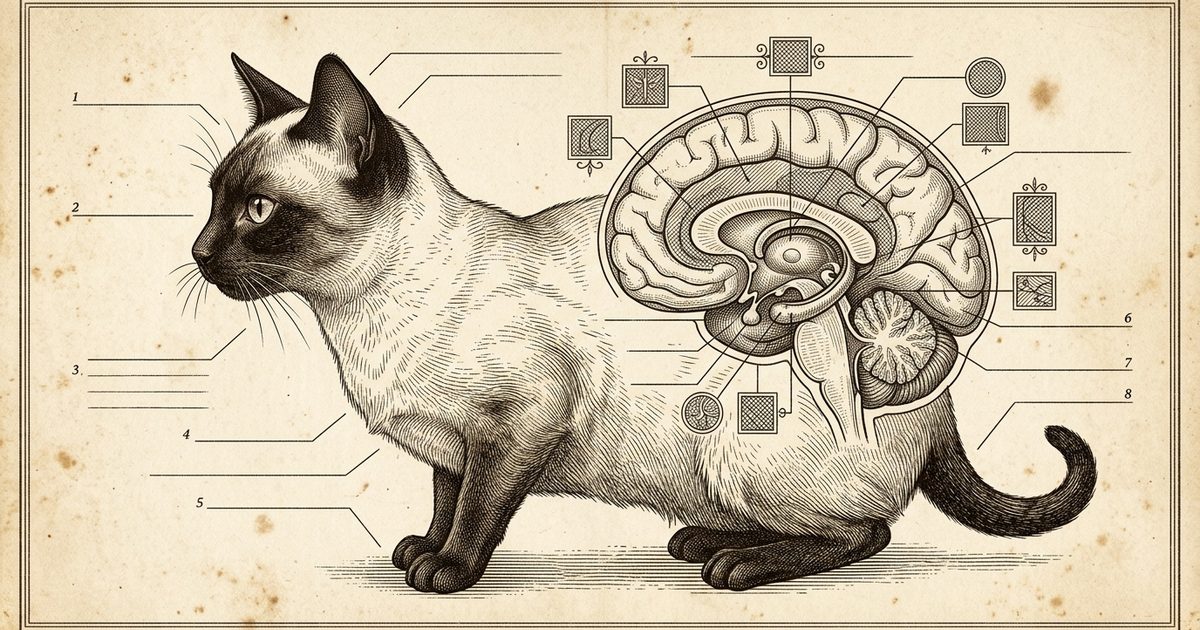
Every emotion you've ever had was generated, in large part, by a cluster of structures deep in the brain called the limbic system — the amygdala, hippocampus, and cingulate cortex among them. Cats possess the same structures, arranged in the same way, doing the same jobs. The amygdala tags experiences as threatening or rewarding; the hippocampus ties emotion to memory; the cingulate cortex helps regulate emotional responses. In cats, as in humans, these regions light up with fear, pleasure, and attachment.
This isn't a vague parallel. Comparative neuroanatomy shows the mammalian limbic system is remarkably conserved across species, which is why fear looks like fear whether the brain generating it belongs to a person, a dog, or a cat. A peer-reviewed overview of mammalian limbic neuroanatomy lays out the homology in detail: the same circuits that make a human recoil from danger make a cat flatten its ears and crouch. The hardware is shared. What differs is the software — the layers of reflection, language, and social complexity stacked on top.
Oxytocin, the bonding hormone
If the brain provides the hardware, oxytocin provides the chemistry of connection. Often called the "cuddle hormone," oxytocin is released during positive social contact — between mother and baby, between partners, and, yes, between cat and human. Studies measuring oxytocin in cats' blood and urine after stroking and play show the same spike that bonds a mother cat to her kittens bonds your cat to you.
This is why your cat seeking your lap after a hard day isn't random. It's neurochemistry doing exactly what it evolved to do: reinforcing a bond that benefits both of you. The behaviors that feel like affection — the purring, the kneading, the head-bunting — are the outward surface of that chemical warmth underneath. If you want the full catalog of what those affection signals look like, our guide to how cats show affection breaks down each one.
Secure attachment: the Strange Situation evidence
The most striking evidence came in 2019, when researchers at Oregon State University — led by Kristyn Vitale Shreve and Monique Udell — adapted the classic "Strange Situation" test, originally designed to study human infant attachment, to cats. They found that roughly 65% of cats formed a secure attachment to their owner, a figure that closely mirrors the proportion seen in human children and dogs.
The pattern was textbook. In a novel room, a securely attached cat explored freely with its owner present, showed clear distress when the owner left, and resumed calm exploration on reunion. That sequence — distress on separation, recovery on return — is the signature of a real attachment bond, not mere familiarity. You can read the study directly in Current Biology. For a species long stereotyped as indifferent, the result was a quiet earthquake: cats, it turns out, are attached to us in much the same way dogs are.
Why anyone ever doubted
So why did the "cats don't really care" myth stick for so long? Two reasons. First, cats are evolutionarily solo hunters, which bred an independent, self-reliant temperament that humans often misread as coldness. Second, a cat's attachment is quieter than a dog's — a dog greets you at the door; a cat drifts into the room and sits near you, not on you. Subtler signals got mistaken for no signal at all.
Modern behavior science has overturned that reading. Independence and attachment are not opposites; a cat can bond deeply while preserving its autonomy, and memory turns out to be central to both — which is why emotion and how cats remember are so tightly linked. The cat that remembers you across months apart is the same cat that feels your absence.
What Emotions Do Cats Feel?
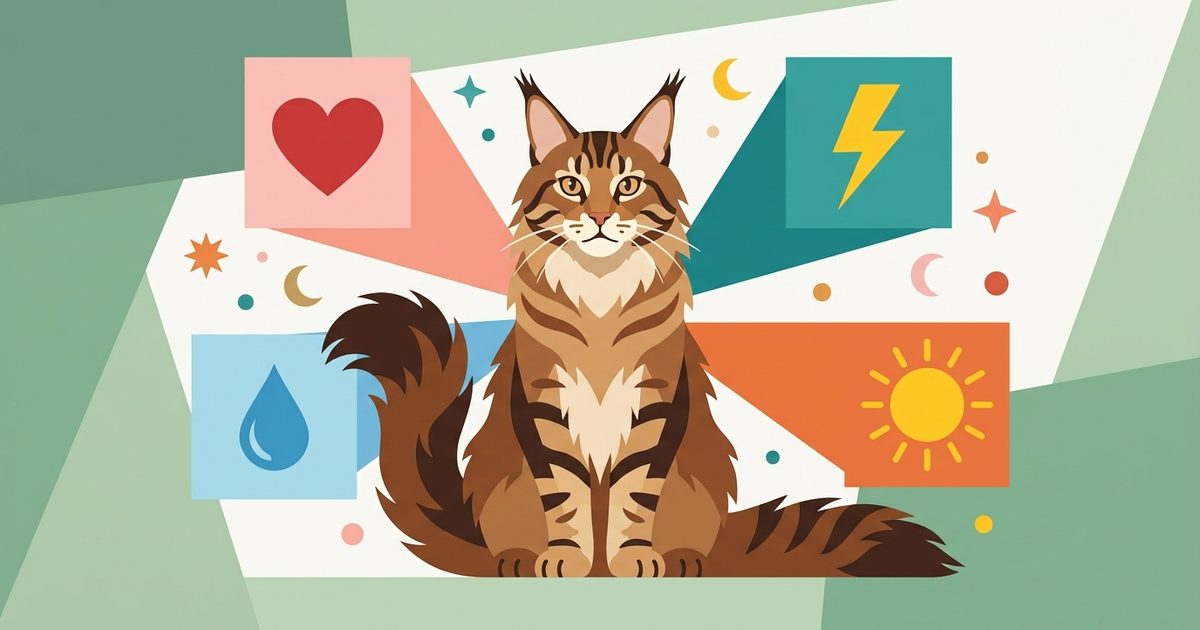
Cats feel a range of basic emotions — fear, anger, joy, contentment, affection, and likely grief. The scientific consensus is that they have the primary emotions clearly, and many of the social ones; the debate is over the more complex, self-reflective emotions like guilt or shame.
Once you accept that cats feel something, the next question is what. Animal behavior researchers generally divide emotions into two layers. Primary emotions — fear, anger, joy, contentment, attachment — are well documented in cats and shared widely across mammals. Secondary or self-reflective emotions — guilt, shame, jealousy, gratitude — require a sense of self that cats probably don't have in the human form, though some, like jealousy, show up in behavior so reliably that the debate is lively.
What follows is a tour of the emotions the evidence supports, from the clearest to the most contested.
Fear and anxiety
Fear is the most-studied feline emotion, and for good reason — it's the one that keeps a small solo hunter alive. A frightened cat flattens its ears, dilates its pupils, crouches low or retreats to a hiding spot, and may freeze or bolt. New environments, loud noises, unfamiliar animals, and sudden changes in routine are common triggers. Chronic fear tips into anxiety, the low-grade version that wears a cat down over weeks or months; prolonged anxiety is also the doorway into the more serious territory covered in our article on whether cats get depressed. If your cat is hiding more than usual, that's fear asking for your attention.
Joy and play
Joy in cats looks like play — and play isn't just kitten practice. Adult cats chase, pounce, bat, and leap for the sheer pleasure of it, releasing the same reward chemistry that makes a human feel good after exercise. The "zoomies," the triumphant kick of a toy, the chattering at birds through the window — these are positive-affect behaviors, evidence of a cat enjoying its own body and environment. A cat that plays is, in the most literal sense, a cat that feels good.
Affection and attachment
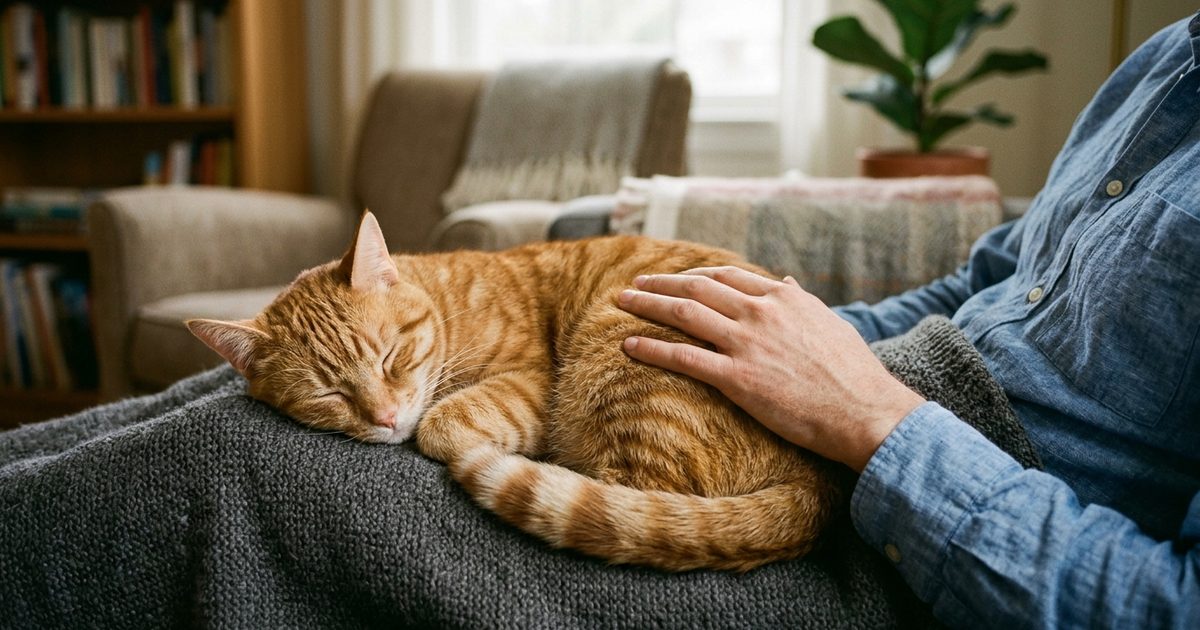
Affection is where a cat's emotional life becomes most visible to the people who love them. Purring, slow blinks, head-bunting, choosing to sleep on you — each is a deliberate act of closeness toward someone the cat trusts. Cats don't seek proximity to strangers; they seek it to their people. The full catalog of these signals is in our guide to how cats show affection, and the particular case of a cat choosing to sleep on you is one of the clearest: a sleeping cat is a vulnerable cat, and vulnerability is only offered where trust is complete.
Grief and loss
Do cats grieve? The behavioral evidence says yes, and it's increasingly hard to dismiss. Cats that lose a companion — another cat, a dog, or a human — often show searching behavior, increased vocalization, appetite changes, and withdrawal. These are the same outward signs grief produces in humans and dogs. What's harder to know is whether a cat's inner experience matches human mourning; researchers flag that equating the felt experience is speculation. What's observable, though, is real: cats change after a loss. International Cat Care offers guidance on recognizing and supporting a grieving cat.
Frustration and anger
Cats have a clear frustration-to-anger cascade, and reading it early is the key to avoiding a scratch. It starts with a twitching tail and flattened ears, escalates to a swishing or thrashing tail, dilated pupils, and a rigid body, and can end in redirected aggression — a swipe or bite aimed at whoever's nearest, not whoever caused the frustration. This isn't malice; it's an emotion overflowing its container. The full map of these signals lives in our cat body language guide, but the shorthand is simple: a cat's tail is the honest meter of its mood.
Do Cats Get Jealous?
Yes — cats can get jealous. Research on social jealousy in cats (including the well-known 2014 UCSD study) shows they react more strongly when their owner fusses over a rival — a toy cat or another pet — than when given a neutral object. It looks less like human envy and more like resource-guarding of your attention.
If you've ever had a cat wedge itself between you and a laptop, a book, or a new partner, you already suspect the answer. The interesting question is not whether cats get jealous — it's what kind of jealousy they feel, and how to read it without projecting human envy onto a creature whose inner life runs on different software.
The bucket-and-jack-o-lantern study
The clearest evidence comes from a 2014 study at the University of California, San Diego, adapted from the classic infant-jealousy paradigm. Researchers had owners ignore their cat while paying attention to three objects in turn: a realistic toy cat, a jack-o-lantern bucket, and a children's book that played a melody. The cats' reactions were recorded on video and scored.
The results were striking. Cats were significantly more likely to approach, rub against, vocalize, or insert themselves between the owner and the toy cat than the other objects — exactly the pattern seen in dogs and human infants tested the same way. The takeaway: when you ask do cats get jealous or can cats get jealous, the behavioral evidence says yes. Whether you call it do cats feel jealousy in the human sense is a separate, harder question — and the honest answer is "the behavior is real; the inner experience is inferred."
What feline jealousy really is
Here's where it pays to be careful. Human jealousy is self-reflective — we brood on what we lack, compare ourselves to rivals, and feel the sting of imagined inadequacy. There is no evidence cats do any of that.
What cats appear to feel is closer to resource-guarding of social attention. You are a valued resource — a source of food, warmth, scent-comfort, and security — and a rival threatens access to you. The cat's reaction is practical and immediate, not symbolic. Generalize the parallel rather than equate it: your cat is protecting a bond, not nursing a grudge. The Cornell Feline Health Center frames most "jealous" behavior as a response to change in the social environment, not evidence of complex self-aware emotion.
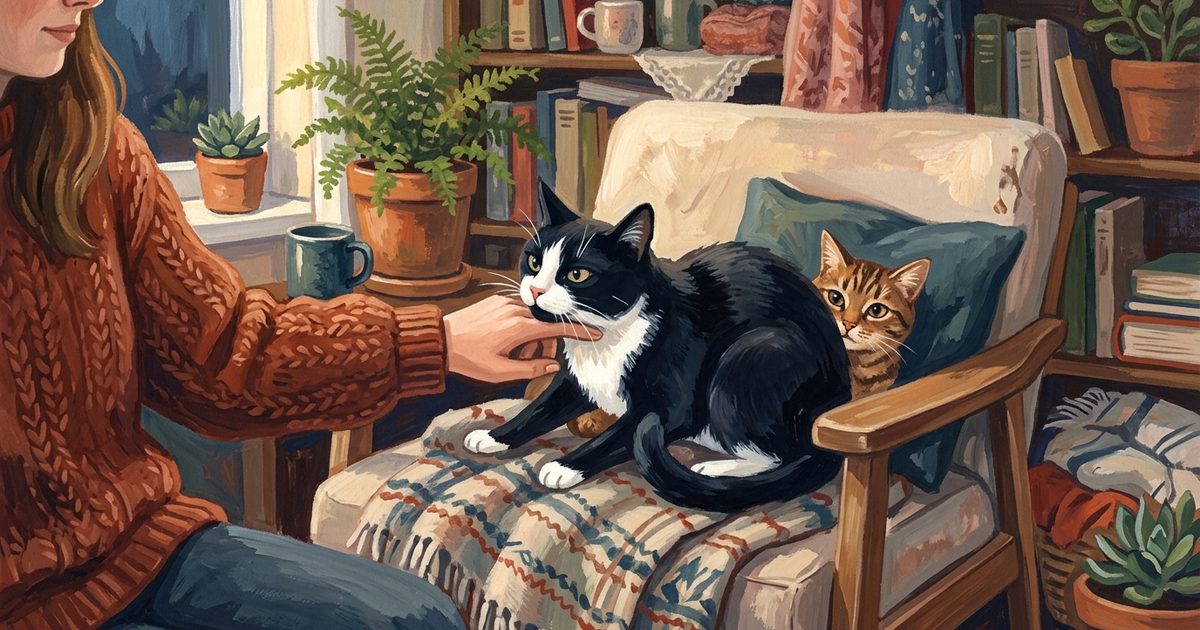
Signs your cat might be jealous
Jealousy in cats tends to look like a campaign for your attention:
- Pushing in — physically wedging between you and the new pet, person, or even your phone.
- Attention-seeking aggression — a swat, nip, or grab when you're petting someone else.
- Urine marking — especially after a new animal or baby arrives. This is stress signaling, not malice.
- Sudden cold-shoulder — the cat that always follows you suddenly avoids you, which is its own form of protest.
None of these mean your cat is being petty. They mean your cat noticed the hierarchy of attention shifted and is trying to restore it.
How to reassure a jealous cat
Jealousy fades fastest when the cat feels the bond is not under threat.
- Schedule one-on-one time — even ten minutes of focused play or petting daily, away from the rival.
- Don't punish the push-in — scolding confirms the cat's fear that it's losing you. Gently redirect instead.
- Enrich the environment — vertical space, puzzle feeders, and solo-play outlets reduce competition for your attention as the only interesting thing in the room.
For households with more than one cat, International Cat Care has practical guidance on easing multi-cat tension through resource distribution — the rule of thumb is one key resource (litter box, bed, feeding station) per cat, plus one extra.
How Do Cats Show Their Feelings?
Cats show feelings mostly through body language — ears, eyes, tail, posture, and vocalization. A relaxed cat has soft eyes and a still tail; a fearful cat flattens ears and crouches; an affectionate cat slow-blinks and bunts your hand. Reading the whole cat beats reading any single signal.
Cats do not announce their feelings the way humans do. They broadcast them — quietly, continuously, through a body that's always saying something. Once you learn to read the signals together rather than one at a time, the inner life of your cat becomes a lot more legible.
Eyes and slow blinks
A slow blink is the closest thing a cat has to a spoken "I trust you." When a cat looks at you and deliberately closes both eyes for a beat before opening them again, it's signaling that it feels safe enough to drop its guard in your presence. Research from the University of Sussex found that cats slow-blink more at humans who slow-blink back at them — a genuine two-way exchange.
This is also the contrast point for why cats stare: a hard, unblinking, wide-eyed stare is a different signal entirely, often signaling tension, a challenge, or focused predatory intent. Soft eyes and a slow blink say trust; a hard stare says the opposite. The eyes alone tell you a great deal — but only when you remember to ask which kind of look you're getting.
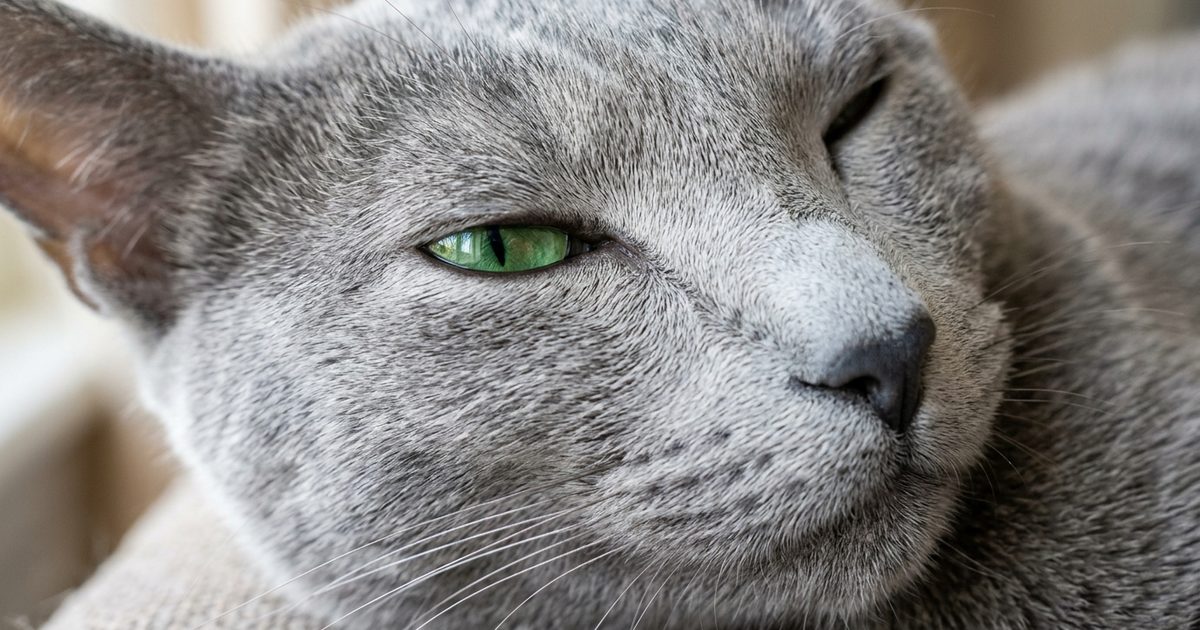
Ears, tail, and posture
The body is a map of the cat's current emotional state, and you can read it in clusters:
- Forward ears + upright tail (often with a little curl at the tip) = friendly, confident, approachable. This is the cat that greets you at the door.
- Flat or sideways ears + puffed-up tail = fear or defensive arousal. The cat is trying to look bigger and is ready to flee or fight.
- Tail lashing or thrashing while the body stays still = agitation or overstimulation. This is your warning that petting is about to tip into a swat.
Posture fills in the rest: a relaxed cat sprawls loose and exposed; a tense cat crouches small and tight. Our full cat body language guide walks through the full repertoire — but the rule of thumb is to read the whole cat, never a single moving part.
Vocalization
Cats are remarkably quiet with each other; most of their elaborate vocal repertoire is reserved for humans. Meowing, trilling, and chattering are almost entirely human-directed — adult cats rarely meow at other cats. A meow at the kitchen door is a request aimed at you, which is why cats meow so much more around people than around their own kind.
And then there's the purr. Purring usually signals contentment — the cat on your lap, eyes half-closed, engine running. But it's also a self-soothing mechanism: cats purr when stressed, injured, or even near death, and the vibration sits in a frequency range linked to bone and tissue healing. So when you ask why cats purr, the honest answer is "sometimes joy, sometimes comfort, sometimes both at once." A purr is a tool, not a single emotion.
Proximity and touch
Perhaps the clearest signal of all is where the cat chooses to put its body. A cat that elects to sit on you — on your lap, your chest, your keyboard, your book — is voting with its whole self. That vote means safety, warmth, and attachment.
Touch deepens it. Rubbing against your legs deposits scent from cheek and forehead glands, marking you as part of the cat's trusted inner circle. And kneading — that rhythmic biscuit-making on your lap — is a kittenhood comfort behavior adult cats keep only for beings they feel completely safe with. When a cat offers any of these, you are reading affection in its most physical form.
Curious what your cat would say if she could put all of this into words? Get a MeowMind reading — you can see the purrs and the head-bunts, but what is your cat actually feeling underneath? Upload a photo and hear your cat's inner world described in her own words.
Do Cats Feel Love the Same Way Dogs or Humans Do?
Cats feel love — but the flavor is feline. They form genuine, neurochemically-measured attachments to their people, yet their attachment style is more independent than a dog's: they seek proximity on their own terms and rarely show distress as dramatically. Different, not lesser.
The question "do cats have feelings" often hides a comparison: are those feelings as real, as deep, as a dog's — or a person's? The honest answer is that feline love is a real thing, measured in the same bonding chemistry every mammal shares, but it wears a different face. Expecting a cat to love like a dog is a bit like expecting a violin to sound like a drum. Both make music; the instruments are simply built differently.
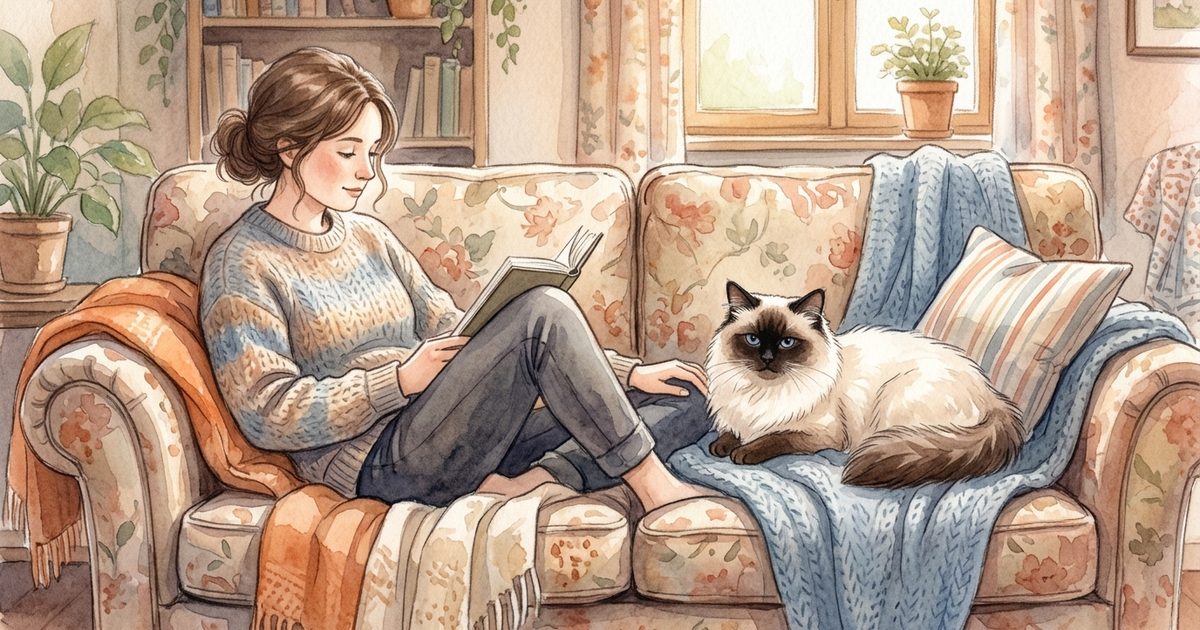
Attachment styles compared
Dogs, descended from pack-hunting cooperative species, tend to show what researchers call an exuberant — and sometimes anxious — attachment style. They greet explosively, follow closely, and often visibly pine when their person leaves. Cats evolved from a solitary hunting lineage, and their bond expresses itself as secure-but-autonomous. They seek you out, choose the chair you're in, follow you from room to room — but they also retreat to a quiet corner when they want to be alone, and that is part of the bond, not a contradiction of it.
The landmark Oregon State attachment study found that roughly 65% of cats form a secure attachment to their caregiver, a figure that essentially rivals the dog number. On separation these cats showed clear distress; on reunion they settled and resumed exploring. That is the textbook signature of attachment — not coldness, not indifference, simply a quieter register.
Why "aloof" is a myth
The reputation cats carry for being aloof comes from confusing independence with coldness. A cat's autonomy is an evolutionary inheritance: a solo hunter had to be self-reliant to survive, and that self-reliance is wired into modern house cats even when their dinner comes from a tin. But independence and affection are not opposites in a cat's mind. A cat can bond deeply — sleeping on you, slow-blinking, head-bunting — while still reserving the right to walk away when she's had enough. That walking away is not rejection; it is a cat being a cat.
Do cats love each other?
Yes — cats form real attachments to other cats, not only to humans. Bonded pairs groom each other, sleep curled together, and protest loudly when separated. When a companion cat or person dies, the surviving cat often searches, vocalizes, and loses appetite — behaviors that look very much like grief. International Cat Care recognizes grief-related behavior change as a documented response in cats. If your cat has lost a companion, the deeper story of that emotional shift is covered in our guide on whether cats get depressed.
Do Cats Feel Guilt or Spite?
Probably not. The classic "guilty look" — ears back, avoiding eye contact after knocking over a plant — is your cat reading your annoyed body language and offering appeasement, not feeling remorse. Spite and revenge require a concept of moral wrongdoing cats do not appear to have.
Few beliefs about cats cause more misunderstanding than the idea that they act out of guilt or spite. The cat who knocks over a plant and then slinks away looks guilty to us because we project a human moral framework onto the scene. But what is actually happening is something gentler, and more interesting: your cat is reading you, and responding to you.
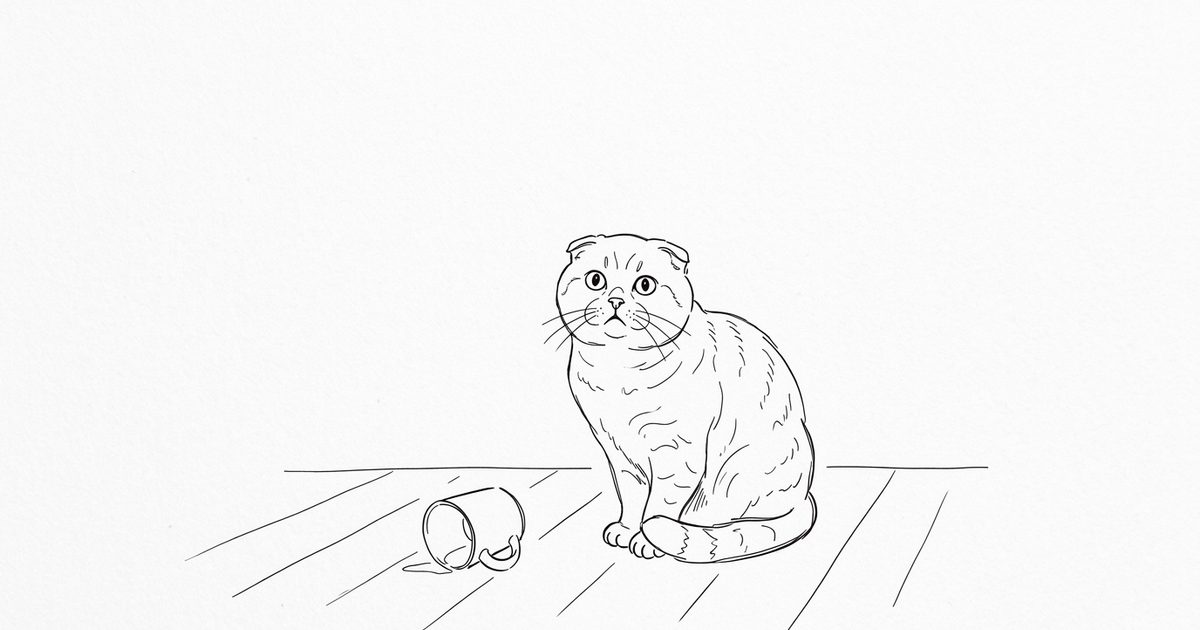
The "guilty look" explained
The classic experiment on the guilty look was run with dogs: owners were told to scold their dog for a misdeed that, in some cases, the dog had not actually committed. The dogs still displayed the "guilty" posture — ears back, lowered body, avoiding eye contact. The conclusion was that the look is a response to the owner's anger, not evidence of inner remorse. Feline behaviorists apply the same logic to cats: your cat's slink after the knocked-over plant is appeasement — an attempt to defuse your irritated tone and posture — not a confession. The Cornell Feline Health Center is a reliable starting point for understanding feline behavior and the common ways we misread it. The emotion on display is closer to "I can tell you're upset, and I would like you not to be" than to "I know I did wrong."
Why cats are not spiteful
Spite and revenge require something cats almost certainly lack: a concept of moral wrongdoing plus the intention to punish you for it. When a cat pees on the bed or shreds the sofa, the cause is almost never malice. It is far more likely to be stress (a recent move, a new pet, a change in routine), an undiagnosed medical issue like a urinary tract problem, or simple under-enrichment — a bored cat with no acceptable surface to scratch will use the sofa. Reinterpreting these behaviors as requests for help, rather than insults, completely changes how you respond to them.
What to do instead of blaming
The right first move is always the vet. A sudden change in litter habits or destructive scratching can have a medical cause, and no amount of behavior work will fix a bladder infection. Once health is ruled out, look at enrichment: more vertical space, sturdy scratching posts, predictable play, and a clean litter box in a quiet spot. Stress-related behavior change can also shade into something deeper, which is why it's worth reading our piece on do cats get depressed if the mood shift persists. Your cat is never plotting against you — she is, at most, telling you something is wrong in the only language she has.
Can Cats Be Emotional Support Animals?
Yes — cats can be emotional support animals. Their calming presence, the daily routine they impose, and the oxytocin-boosting bond they build with their people genuinely reduce anxiety and loneliness for many owners. The science behind why a cat helps is the same science behind why cats feel.
What an ESA cat actually does
An emotional support cat does not perform trained tasks the way a service animal does. Instead, it works through presence. The reliable rhythm of feeding, play, and quiet companionship gives an owner a reason to maintain routine when motivation is low. Stroking a cat has been shown to lower cortisol and raise oxytocin in humans — the same bonding hormone that flows the other direction during a positive interaction, which you can read more about in our guide to how cats show affection.
There is an important distinction worth keeping straight. In most jurisdictions an emotional support animal is a recognized category that grants certain housing rights, but it is not the same as a service animal and the legal protections are narrower than many people assume — the rules vary by country and are best checked locally rather than taken on faith.
Which cats make good ESAs
The best emotional support cats are calm, social, and even-tempered — cats who actively seek out a lap and recover quickly from a disruption. A confident Ragdoll or a steady senior who has spent years learning your rhythms often fits the role naturally.
But not every cat wants this job. A skittish or highly sensitive cat may find a struggling owner's tension stressful rather than soothing, and forcing that cat into a "support" role ignores the very emotional life this article is about. Respecting a cat means reading whether proximity calms her or winds her up, and choosing accordingly.
The loop: your feelings and theirs
The bond is bidirectional. Your cat reads your stress — the tense shoulders, the shortened breath, the late nights — and many cats respond by settling closer, purring, or offering a slow blink. If you have ever wondered whether cats can sense sadness, the answer from behaviorists is a measured yes: cats detect changes in our scent, voice, and movement, and adjust their own behavior in response.
That mutual reading is what makes the relationship therapeutic rather than one-directional. You calm her; she calms you. You learn her signals; she learns yours. The same emotional capacity that lets a cat feel fear, joy, and attachment is what lets her meet you where you are — and why a cat, chosen well, can be one of the most effective forms of daily support a person can have.
Feelings at a Glance — Summary
| Question | Short answer |
|---|---|
| Do cats have feelings at all? | Yes — they share the limbic brain structures and bonding chemistry that produce emotion in humans. |
| What emotions do cats feel? | Fear, anger, joy, contentment, affection, and likely grief; the debate is over complex, self-reflective emotions. |
| Do cats get jealous? | Yes — they show resource-guarding of your attention, closer to guarding than to human envy. |
| How do cats show their feelings? | Mostly through body language — ears, eyes, tail, posture, and vocalization read as a whole cat. |
| Do cats feel love like dogs or humans? | They feel genuine attachment, but in a more autonomous style — different, not lesser. |
| Do cats feel guilt or spite? | Probably not — the "guilty look" is appeasement to your cues, not remorse. |
| Can cats sense when you are sad? | Yes — cats detect changes in your scent, voice, and behavior, and many adjust theirs in response. |
| Can cats be emotional support animals? | Yes — their calming presence, routine, and bonding chemistry genuinely reduce anxiety and loneliness. |
Curious What Your Cat Would Say?
Upload a photo and get a warm, personalized reading from your cat's perspective.
Start Your Free ReadingFrequently Asked Questions
Do cats have feelings for their owners?
Yes. Cats form genuine attachment bonds with their owners, measurable in oxytocin release and secure-attachment behavior. The 2019 Oregon State Strange Situation study found about 65% of cats bond securely with their person — the same pattern seen in human infants and dogs.
Do cats feel love?
Yes, in a feline form. Cats form neurochemically real attachments to their people, but the style is more autonomous than a dog's. They seek you out, choose your chair, and slow-blink — different expression, not a lesser bond.
Do cats get jealous of other pets or people?
Behaviorally, yes. The 2014 UCSD study showed cats react far more strongly when their owner fusses over a rival than a neutral object. It looks less like human envy and more like resource-guarding of your attention — real behavior, with the inner experience inferred.
Do cats feel sadness or grief?
Likely yes, based on behavior. Cats losing a companion often search, vocalize more, and drop appetite — the same outward signs grief produces in humans and dogs. Whether the inner experience matches human mourning is something researchers flag as speculation.
Do cats feel guilt when they do something wrong?
Probably not. The classic guilty look — ears back, avoiding eye contact — is your cat reading your annoyed tone and offering appeasement, not remorse. Spite and revenge require a concept of moral wrongdoing cats do not appear to have.
Can cats sense when you are sad?
Yes, in a measured way. Cats detect changes in your scent, voice, and movement, and many adjust their own behavior in response — settling closer, purring, or offering a slow blink when you are low. It is attunement, not human-style empathy.
Do cats feel emotions like humans do?
Partially. Cats share the same limbic brain structures and bonding chemistry as humans, so primary emotions like fear, joy, and affection run on the same biology. They likely lack the self-reflective layer that produces guilt, shame, or grudge-holding.
How can I tell what my cat is feeling?
Read the whole cat, not a single signal. Soft eyes and a still tail mean relaxed; flattened ears and a crouched body mean fear; a slow blink means trust; a thrashing tail means overstimulation. Ears, eyes, tail, posture, and proximity together tell the full story.
Can a cat be an emotional support animal?
Yes. Cats can serve as emotional support animals through their calming presence, the routine they impose, and the oxytocin-boosting bond they build. Calm, social, even-tempered cats fit the role best — not every cat wants the job.
Do cats feel happy?
Yes. Joy in cats looks like play — chasing, pouncing, batting, and the triumphant kick of a toy — releasing the same reward chemistry humans feel after exercise. A cat that plays is, literally, a cat that feels good.
Sources & References
You Might Also Like
Do Cats Know Their Names? What Research Really Shows
Do cats know their names? Science says yes — cats recognize their name, your voice and moods, and your daily routine. Learn what cats actually understand.
18 min readKitten Teething: Timeline, Symptoms & How to Help
Kitten teething runs from 3 to 7 months as baby teeth fall out. Learn the timeline, signs to watch for, and how to soothe a teething kitten safely.
15 min readWhen Do Cats Stop Growing? A Complete Timeline
When do cats stop growing? Most cats reach adult size by 12-18 months, but large breeds like Maine Coons keep growing until 3-4 years. Full timeline inside.
14 min readA message, in your cat's voice
Upload a photo, get a warm note written from your cat's perspective — just for fun. Plus 121 vet-cited articles, offline.