
Do Cats Remember? How Long a Cat's Memory Really Is
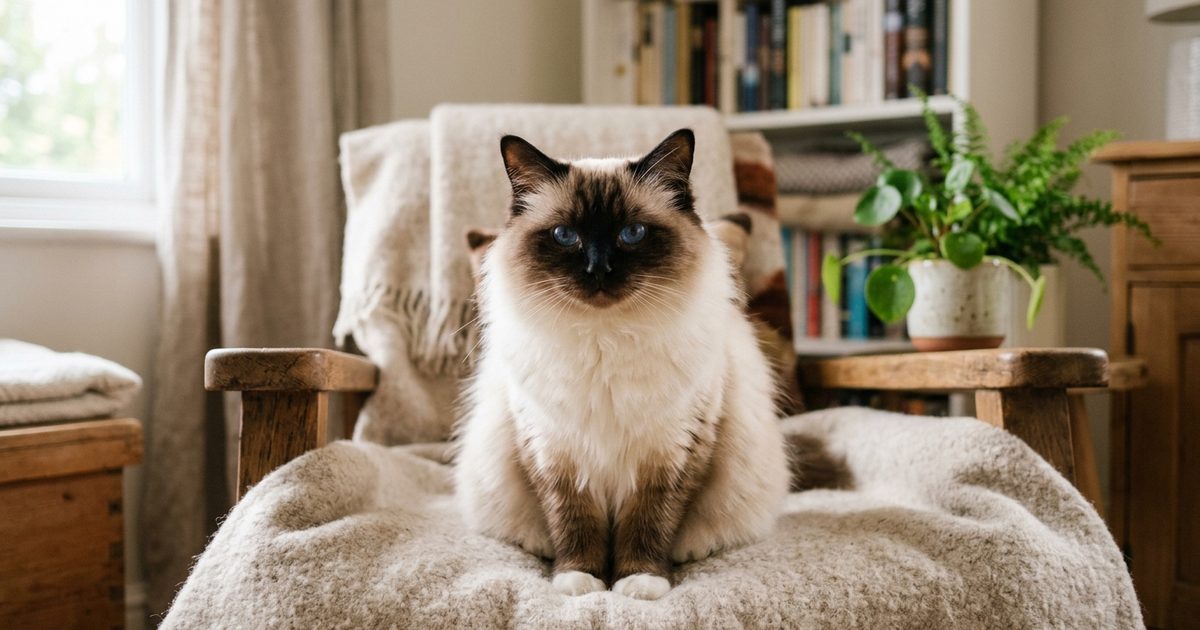
Anyone who lives with a cat has seen memory cats rely on every day — the dash to the food bowl at the same hour, the slow blink for one person and the retreat from another. Understanding how long is a cats memory, and do cats remember people, places, and past events, reveals an animal whose recall is far richer than the old myths suggest. Cats hold both brief working memory and long-term memory that can span years, shaped by routine, scent, and emotion.
Key takeaways
- Cats have both short-term working memory and strong long-term memory that can span years — they are not forgetful in the way the old "goldfish" myth claims.
- They remember people, places, daily routines, and other animals — recognizing them by face, voice, and especially scent.
- They also remember negative experiences, which is the basis of fear and the reason routine, predictability, and gentle handling matter so much.
Cat Memory — Quick Reference
| Memory type | How long it lasts | What it stores |
|---|---|---|
| Working memory | Minutes–hours | Where food is, what just happened |
| Short-term recall | Hours–days | Locations, recent routines |
| Long-term memory | Months–years | People, places, trauma, daily routines |
| Episodic-like | Years | Specific meaningful events |
Do Cats Have Good Memory?
Yes — cats have genuinely good memory. They remember people, places, daily routines, other animals, and specific experiences for months to years. A cat's memory is not goldfish-level or fleeting; it stores both what just happened and events from years ago.
The short answer: yes, cats remember a lot
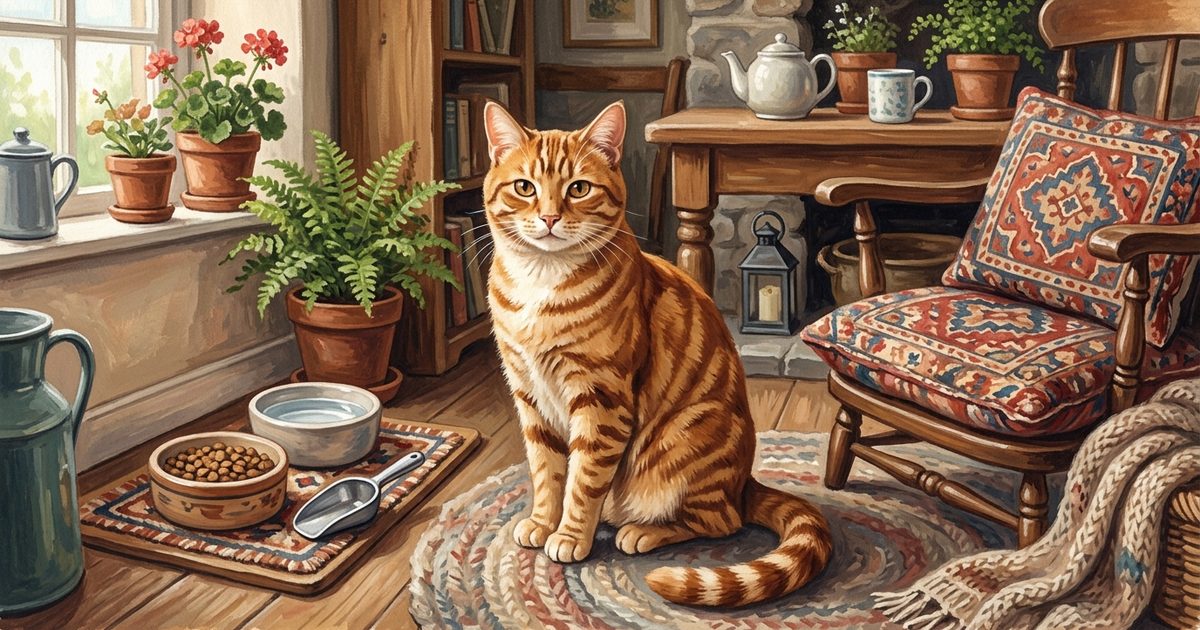
There's an old idea that cats barely remember anything from one moment to the next — the "goldfish memory" myth. It doesn't hold up. Watch any cat navigate its own home and the claim falls apart immediately. Your cat knows exactly where the food is kept, which corner holds the litter box, and which spot by the window is safest for a long nap. It remembers feeding times down to the minute, waiting by the bowl before you've moved toward the kitchen. Cats have even been documented orienting confidently in territory they knew years earlier, as though the layout were still fresh. That kind of recall is the opposite of fleeting — it's durable, structured, and quietly impressive.
What kinds of things do cats remember?
A cat's memory covers a surprisingly wide catalog. They remember people — their owner, the vet who handled them, the visitor who always brings treats, and unfortunately, anyone who was rough or frightening. They remember places: the home they grew up in, a favorite hiding spot, the clinic where one visit left a mark. They hold onto routines — feeding, play, bedtime — with real precision, which is why a shifted schedule can unsettle them. They remember skills: how to hunt, how to open a cabinet, how to ask at the right door. And perhaps most importantly, they remember emotional associations — the warmth of kind handling, the shock of a loud noise, the safety of a familiar lap. If you've explored whether cats have feelings, you'll notice the overlap is no coincidence: memory and emotion are deeply linked, and recall is strongest when feeling was present.
The recognition test
You don't need a laboratory to see memory in action — your cat runs the experiment daily. When you walk in, ears orient toward you before the cat even turns its head. A familiar person gets the slow blink, the head-butt, the figure-eight between your ankles. A stranger gets watched. And a person who once handled the cat roughly gets avoided — sometimes for years. That selective response is behavioral proof of recall: the cat is matching the present moment to something it has stored. Recognition isn't always dramatic; often it's quiet — a softening of posture, a chosen proximity, a purr that only starts for one specific person. The Cornell Feline Health Center, a leading authority on feline health and cognition, notes that cats form strong associations through experience, and those associations guide behavior long after the original event.
How Long Is a Cat's Memory? Short-Term vs Long-Term
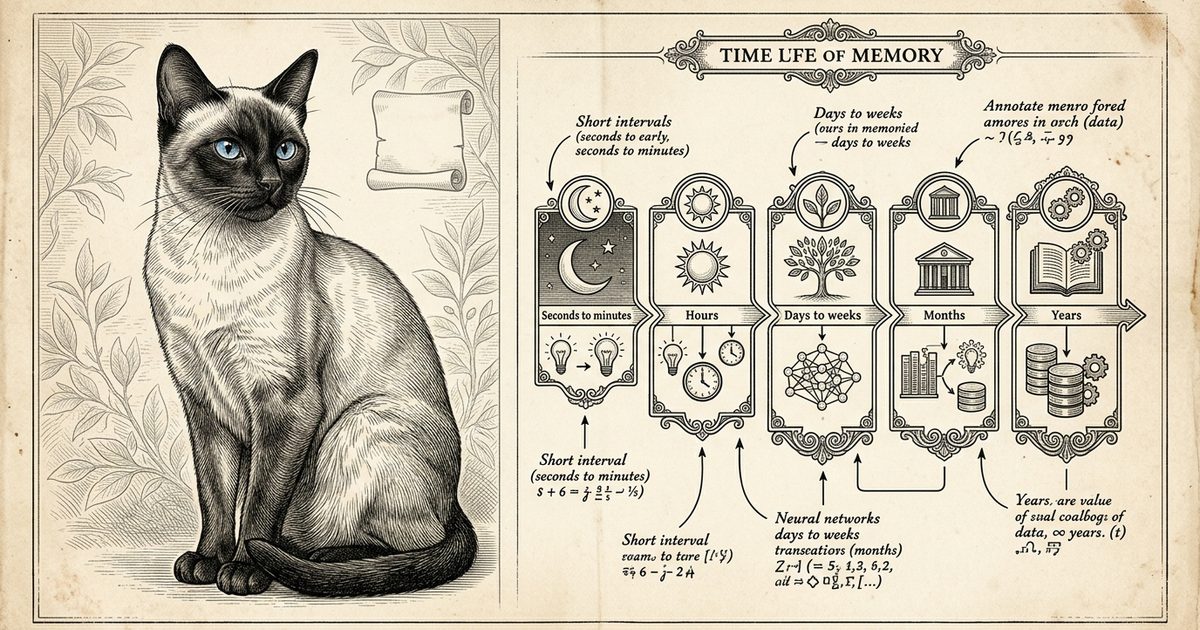
A cat's working memory holds details for seconds to minutes, while short-term recall lasts hours to days for food locations and recent routines. Long-term memory stores people, places, and meaningful events for months to years, with strong emotional memories lasting the longest.
Working memory: seconds to minutes
Working memory is the thin slice of "right now" — the information a cat holds in mind actively, without yet storing it anywhere durable. In controlled tests, cats have been shown to remember an object's hidden location for roughly a minute, sometimes a little longer if the task matters to them. That's short by human standards, but it's exactly enough for what a cat needs: tracking prey that ducked behind a sofa, remembering which way a toy rolled, holding onto the thread of a hunt. Once the moment passes and the detail stops being useful, it simply drops away. This brief window is the real grain of truth behind the "cats forget fast" idea — but it describes only one layer of memory, not the whole system.
Short-term recall: hours to days
Step up one layer and the timeline stretches. Short-term recall holds information for hours to a few days: where food appeared yesterday, the new spot you moved the feeder to, the scent of a visitor who came by last night. Cats use this kind of memory constantly to manage their day — adjusting to a changed routine, tracking which doors are open, noticing a new object in their territory. The detail that defines short-term recall is its fade-out. Unimportant information doesn't get promoted to long-term storage; it simply erodes. A stranger's scent from three days ago is already dim; the location of yesterday's treat is sharper. This selective forgetting is a feature, not a flaw — it keeps the cat's mental map focused on what actually matters for survival and comfort.
Long-term memory: months to years
This is where cat memory becomes remarkable. Long-term storage holds people, places, routines, and meaningful events for months, years, and sometimes close to a lifetime. There are well-documented cases of cats recognizing owners after years apart, returning to a childhood home and orienting as if they'd never left, and remembering a specific vet clinic after a single visit — enough to hide the next time a carrier appears. A daily routine can be recalled faithfully for a decade. The strongest encoding is emotional: a frightening event, a deeply comforting person, a bonded companion — these carve the deepest grooves. This is also why cats appear to miss someone who's gone: they retain the association with an absent person, and the reunion — the head-butt, the calming, the vocalizing — is recognition surfacing again. International Cat Care, a trusted authority on feline behavior, emphasizes that cats learn and retain through experience, and that emotionally charged handling — positive or negative — leaves the most lasting traces.
Do Cats Remember People?
Yes — cats remember people, including owners, frequent visitors, vets, and anyone who has treated them kindly or harshly. They recognize humans by face, voice, gait, and especially scent, and they retain associations with that person — kind handling builds trust, rough handling builds lasting wariness.
This is one of the most important questions to ask about memory cats possess, because a cat's relationship with humans is almost entirely built on what it remembers about them. Recognition is the foundation: a cat cannot trust, fear, miss, or "understand" a person it cannot first identify and recall. The recognition itself runs on scent above all, with voice, gait, and face layered on top — and once a cat has filed you in its memory, the emotional tone of every past interaction comes back with you.
Recognizing owners by face, voice, and scent
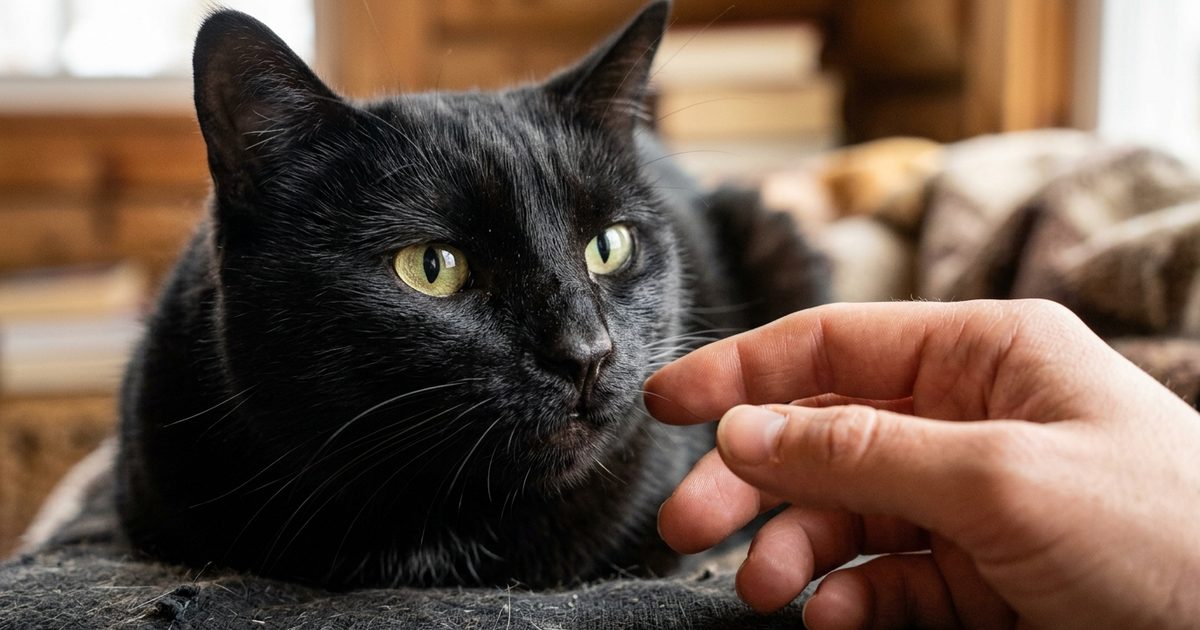
Cats distinguish their person from strangers through a layered set of cues, and scent does the heaviest lifting. A cat's sense of smell is many times more powerful than ours, and every human carries a unique scent signature — skin oils, soap, fabric, the other animals they live with. Cats also recognize their owner's voice specifically, often orienting toward it even among other humans speaking, and many learn the sound of familiar footsteps on the stairs or hallway. Vision helps up close, especially with eye contact and slow blinks, but it's the combination of scent + sound that lets a cat pick its person out of a room.
The proof is in the orienting behavior: ears swivel, the head lifts, the cat walks toward you rather than away, often with a tail held high or a trill of greeting. That sequence isn't random friendliness — it's the cat confirming "I know you" against a stored template. Recognizing and remembering a person is the foundation of what owners experience as their cat "understanding" them; you can read more about that broader cognition in how cats show affection and in our piece on what cats know.
Remembering kind and unkind handling
A cat doesn't just store a face — it stores how that face made it feel, which is why memory and emotion are so tightly linked in cats. Consistent gentleness — slow approaches, petting in preferred spots, calm tone, food paired with your presence — builds a trusting association that a cat can recall for years. Conversely, a single rough handling can create wariness that resurfaces every time the cat sees that person or someone who moves like them; we cover the full fear-memory mechanism below in Do Cats Remember Bad Experiences.
This is also why rescue cats and previously abused cats need so much patience. They aren't being difficult or ungrateful; they're carrying negative associations that were encoded under fear, and fear memories are among the strongest a cat forms. Overwriting them takes repetition and time — the cat has to accumulate enough safe experiences with you to tip the balance. The Cornell Feline Health Center and International Cat Care both emphasize that patient, predictable handling is the single most effective way to help a frightened cat rebuild trust.
Do cats miss you when you're gone?
Cats probably don't miss you in the narrative, story-shaped way humans miss each other — there's no evidence they rehearse memories of you the way we do. But they absolutely notice and remember the absence. Your departure changes their routine, removes your scent from the usual spots, and breaks the patterns they've encoded as "how the day goes." A cat may wait by the door at the time you usually come home, vocalize more, or shift its sleeping and eating — not out of pining, but because a familiar thread in its daily memory has gone missing.
The clearest evidence is the reunion. A cat that has registered your absence will often greet your return with the full recognition repertoire: head-butting, rubbing against your legs to re-mark you with its scent, vocalizing, and then visibly calming as the familiar pattern snaps back into place. That reunion behavior is remembered routine reasserting itself — and it's also the same bond that drives the following behavior many owners notice. When a longer or more disruptive absence seems to weigh on a cat, it's worth reading up on whether cats get depressed, because prolonged changes in routine can shade into genuine distress.
Curious what your cat would say about the people in its life? Get a MeowMind reading — upload a photo and hear what your cat recalls about a specific person, place, or moment that shaped them, in their own words.
Do Cats Remember Other Cats and Pets?
Yes — cats remember other cats and pets. They recall littermates, favored companions, mating partners, and territory rivals, often for years. They also remember household dogs and other animals through scent and behavioral history, distinguishing friend from foe by remembered association.
Cats are often described as solitary, but their social memory is surprisingly rich and long-lasting. A cat builds a mental register of the other animals in its world — who is safe, who is kin, who is a rival, who must be avoided — and updates it through ongoing scent and behavioral cues. The same associative machinery that handles people handles other cats and pets: what matters is whether past interactions were safe, threatening, or meaningful.
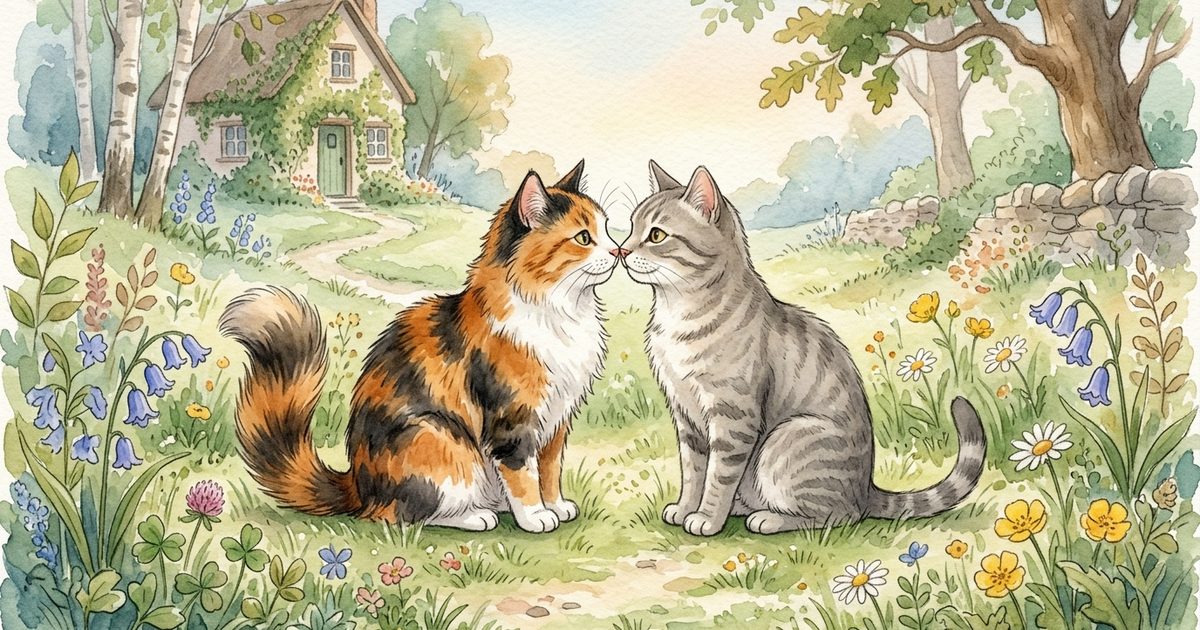
Littermates and companions
Kittens raised together form strong early bonds, and there are well-documented case reports of littermates — or cats raised together from kittenhood — recognizing each other after long separation, often through scent rather than sight. Bonded pairs are the clearest expression of this: two cats that groom each other, sleep curled together, and visibly distress when separated. When a long-time companion dies, the surviving cat often shows grief-like behavior — searching, vocalizing, changes in appetite, withdrawal — that points to a remembered absence, not just a changed routine. This emotional weight of memory is explored further in our article on whether cats get depressed.
Territory rivals and intruders
Outdoor and free-roaming cats remember specific rivals with striking persistence. It's common for neighborhood cats to fight the same opponent for years, recognizing that individual by scent marks, body size, and behavioral cues even across long gaps. Scent-marking — rubbing, scratching, spraying — functions as a kind of external memory: each mark carries information about who left it and when, and a cat reading those marks is recalling a known rival. This remembered history is the actual basis of most outdoor territorial conflict; the fights aren't random, they're the continuation of a remembered relationship.
Other household pets
Cats also remember and distinguish between the other animals in their own home — including dogs. A cat that has lived peacefully with one dog for years has built a stored association of "this animal is safe," and it generally treats a familiar household dog very differently from a strange one. That tolerance rests entirely on remembered interaction history, which is exactly why introductions of a new pet must be slow and gradual. When you introduce a new dog or cat, your resident cat isn't being jealous or stubborn — it's building a new memory of an unknown animal, and it needs repeated safe exposures to encode "this one is okay too." Rush the process and you risk encoding a negative association that can take months to undo.
Do Cats Remember Bad Experiences?
Yes — cats remember bad experiences, sometimes for life. A single frightening vet visit, loud noise, or rough handling can create a lasting negative association. This remembered fear is the basis of many phobias and is why gentle handling and predictability matter.
Negative memories tend to be the strongest ones a cat carries. The reason is simple biology: emotionally charged events — especially frightening ones — encode deeply, because for a prey animal, remembering danger is how you stay alive. A cat that recalls exactly where the scary sound came from, or which person handled it roughly, is a cat better equipped to avoid that threat next time. The trade-off is that this same survival wiring can turn a single bad moment into a fear that lingers for years, and even shapes how a cat relates to people and places long after the event itself.
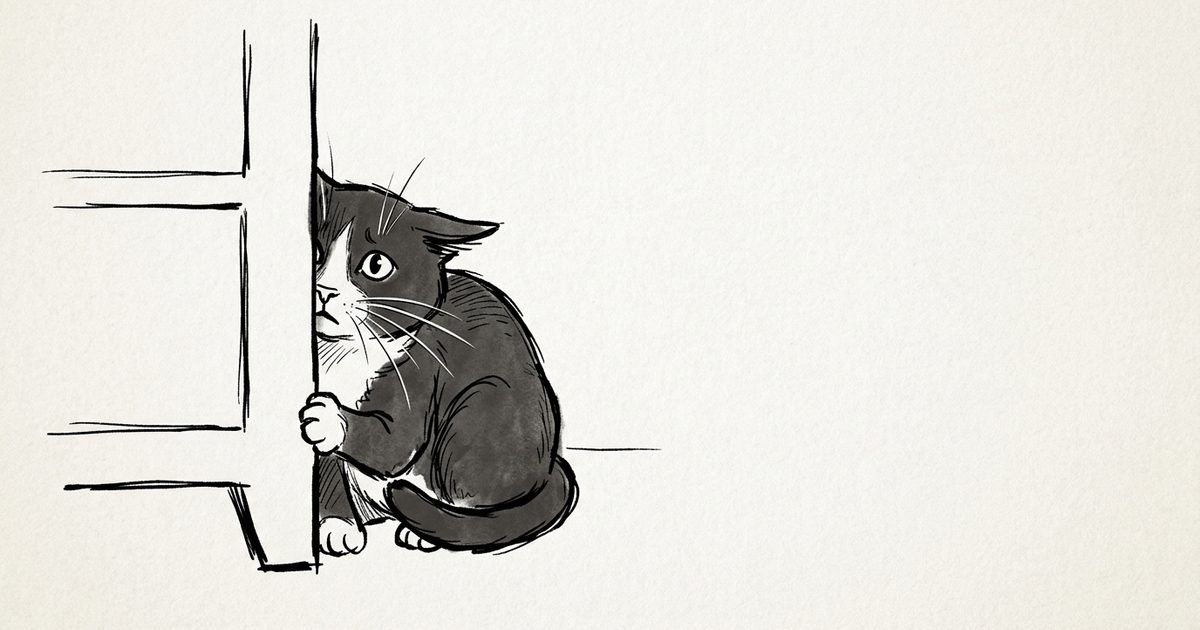
The vet visit association
If your cat vanishes the moment you pull the carrier out of the closet, that's memory at work. Cats learn to associate the carrier, the car ride, and the antiseptic scent of the clinic with the frightening experience that follows — the examination, the restraint, the unfamiliar hands. The memory triggers the fear response before anything bad has even happened this time. This is why Cornell Feline Health Center recommends leaving the carrier out as an everyday cozy spot: it breaks the "carrier equals vet" association by giving the memory a gentler context.
Abuse, loud noises, and trauma
Previously abused cats often generalize fear in ways that look baffling until you understand the mechanism. A cat handled roughly by a tall man may flinch from any tall man for years. A cat frightened by a slammed door may panic at any sharp, sudden sound. The cat isn't reacting to you specifically — it's reacting to a cue (a raised hand, a deep voice, a particular silhouette) that its memory has filed under "danger." This is associative learning, not spite or resentment. The fear is real, the trigger is remembered, and the response is protective.
Fear vs spite — what cats actually remember
This is the contested claim worth getting right: cats do not hold grudges in the spiteful human sense. They don't stew, plot revenge, or punish you days later for a perceived slight. What they do is remember a negative association and avoid the trigger that caused it. The mechanism is associative learning — the cat connects a cue to an outcome, and the strength of the feeling at encoding decides how long that link lasts. Fear memories, encoded under high arousal, are among the most durable a cat forms, which is why a single rough handling can produce wariness for years. The cat that hides after you scold it isn't sulking or planning retaliation — it's recalling a frightening event and responding to that memory with caution. Fear is a real feeling backed by a real memory, which is why understanding how cats experience emotion matters so much for interpreting this behavior. Conflating fear memory with spite is one of the most common — and most unhelpful — ways humans misread cats.
How to Build Positive Memories With Your Cat
Build positive memories through routine, gentle handling, food, play, and patience — especially with a rescue or previously frightened cat. Predictable routines let a cat encode safety; treats and affection build warm associations; patience lets a traumatized cat overwrite old fear memories with new safe ones.
The encouraging flip side of feline memory is that it works in both directions. Just as a single frightening event can leave a mark, repeated positive experiences can build a strong, lasting association of safety and trust. You're not erasing the old memory — you're layering new, warmer ones on top of it until the safe association becomes the dominant one. How you handle, feed, play with, and simply exist around your cat is, day by day, writing the record it will carry of you.
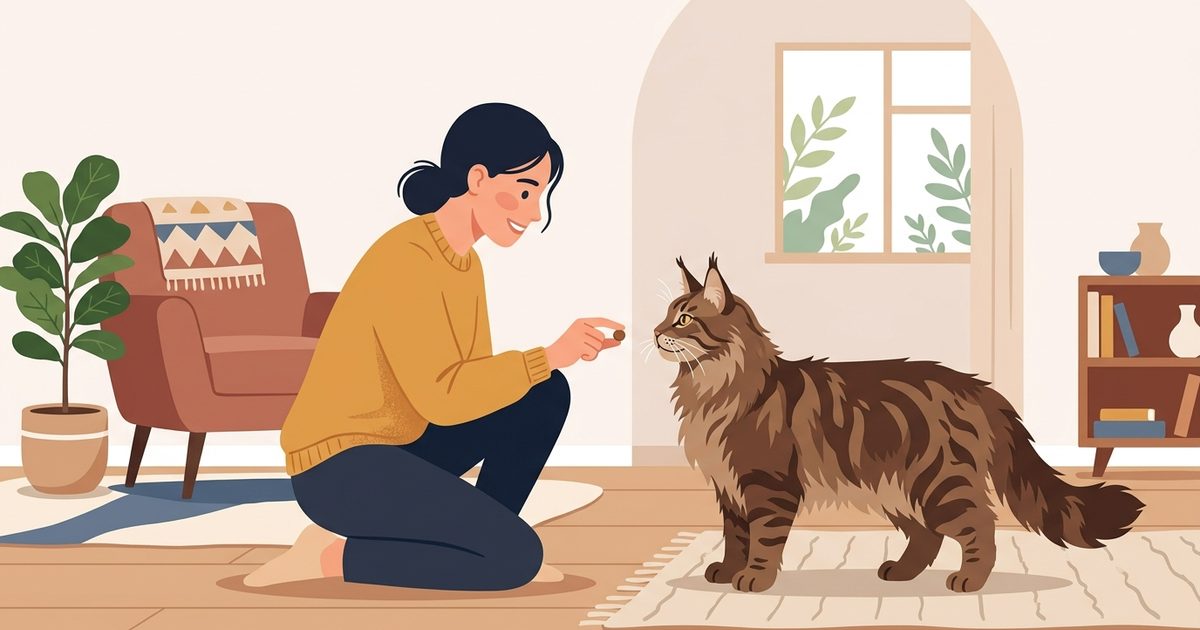
Routine builds safety
Cats thrive on predictability because a predictable world is a safe world. Feeding, play, and rest at consistent times let your cat encode "this always happens" — and a cat that can anticipate its day relaxes in a way a cat living in chaos never can. Routine is, quietly, one of the most powerful trust-building tools you have. International Cat Care emphasizes that environmental consistency is foundational to feline wellbeing.
Positive handling and rewards
Pair yourself with good things. Slow blinks back at your cat, gentle petting in the spots it actually enjoys (chin, cheeks, base of ears — not the belly), treats offered in your presence, a favorite toy that only comes out during your time together. Each of these teaches the same lesson: you equal good. Over weeks and months, that association encodes so deeply that the sound of your footsteps alone becomes a comfort cue. This is also the bond behind why your cat follows you from room to room.
Patience with rescue and traumatized cats
For a rescue or a previously frightened cat, the process is slower and that's normal. The technique is counter-conditioning: never force interaction, let the cat approach on its own terms, and consistently pair your presence with something it values — food, play, a calm voice. The cat builds a new memory of "this human is safe" one repeated, positive encounter at a time. Overwriting an old fear memory takes repetition, and for deeply traumatized cats that can mean weeks to months of patience before the shift is visible. This is the same principle behind reconnecting with a cat after an absence: trust is rebuilt through steady, predictable kindness, not grand gestures.
Curious What Your Cat Would Say?
Upload a photo and get a warm, personalized reading from your cat's perspective.
Start Your Free ReadingCat Memory at a Glance — Summary
| Question | Short answer |
|---|---|
| Do cats have good memory? | Yes — strong short- and long-term memory |
| How long is a cat's memory? | Working memory minutes, long-term years |
| Do cats remember people? | Yes — by face, voice, and scent |
| Do cats remember other cats? | Yes — companions and rivals |
| Do cats remember bad experiences? | Yes — sometimes for life |
| How do you build positive memories? | Routine, gentleness, patience |
Frequently Asked Questions
Do cats remember their owners after years apart?
Yes — case reports describe cats recognizing their owners after long separations, mainly through scent and voice rather than sight alone. The bond built by routine and gentle handling can resurface clearly at a reunion, though kittens separated very early may not retain the association.
How long is a cat's short-term memory?
A cat's working memory holds small details for seconds to about a minute, while short-term recall stretches across hours to a few days for things like where food appeared and recent routine changes. Less important details fade quickly, keeping the mental map focused on what matters.
Do cats remember people who were mean to them?
Yes. Cats store how a person made them feel, so rough or frightening handling can create wariness that resurfaces for years. This is associative fear memory rather than spite — the cat recalls a negative event and avoids the cue that triggered it.
Do cats remember their siblings or mother?
Kittens raised together form strong early bonds and can recognize littermates after separation, mostly through scent. The mother-kitten link is similar, though kittens parted from their mother very early may not hold onto the association into adulthood.
Do cats remember other cats after being separated?
Often yes — bonded companions and even long-time territory rivals can be recalled after long gaps, again mainly through scent. Reunions may bring immediate recognition or, with shy cats, a slow re-introduction as they rebuild a familiar memory.
Do cats remember bad experiences like the vet?
Yes, and sometimes for life. A single frightening vet visit, loud noise, or rough handling can leave a lasting association that triggers fear before anything bad happens this time. Leaving the carrier out as a cozy everyday spot helps break the link.
Do cats remember places they used to live?
Yes — cats can orient confidently in a home they knew years earlier, recalling layouts, favorite spots, and safe hiding places. Long-term place memory is durable, which is one reason a move can unsettle a cat until it encodes a new mental map.
Can a cat's memory get worse as they age?
Yes, senior cats can show cognitive decline — disorientation, disrupted routines, or forgetting familiar routes — similar to age-related changes in other animals. Any sharp shift in a long-standing behavior is worth a vet check to rule out underlying issues.
Do cats hold grudges?
No — cats do not plot revenge or stew in resentment the way humans sometimes do. What looks like a grudge is usually a remembered negative association and avoidance of the trigger, which is fear memory, not spite.
Sources & References
You Might Also Like
Kitten Teething: Timeline, Symptoms & How to Help
Kitten teething runs from 3 to 7 months as baby teeth fall out. Learn the timeline, signs to watch for, and how to soothe a teething kitten safely.
15 min readWhen Do Cats Stop Growing? A Complete Timeline
When do cats stop growing? Most cats reach adult size by 12-18 months, but large breeds like Maine Coons keep growing until 3-4 years. Full timeline inside.
14 min readCan Cats Eat Cherries? Flesh, Pit & Toxicity Facts
Can cats eat cherries? Pitted flesh is safe in tiny amounts — but the pit, stem, and leaves are toxic (cyanide precursors). Learn what's safe and what isn't.
15 min read