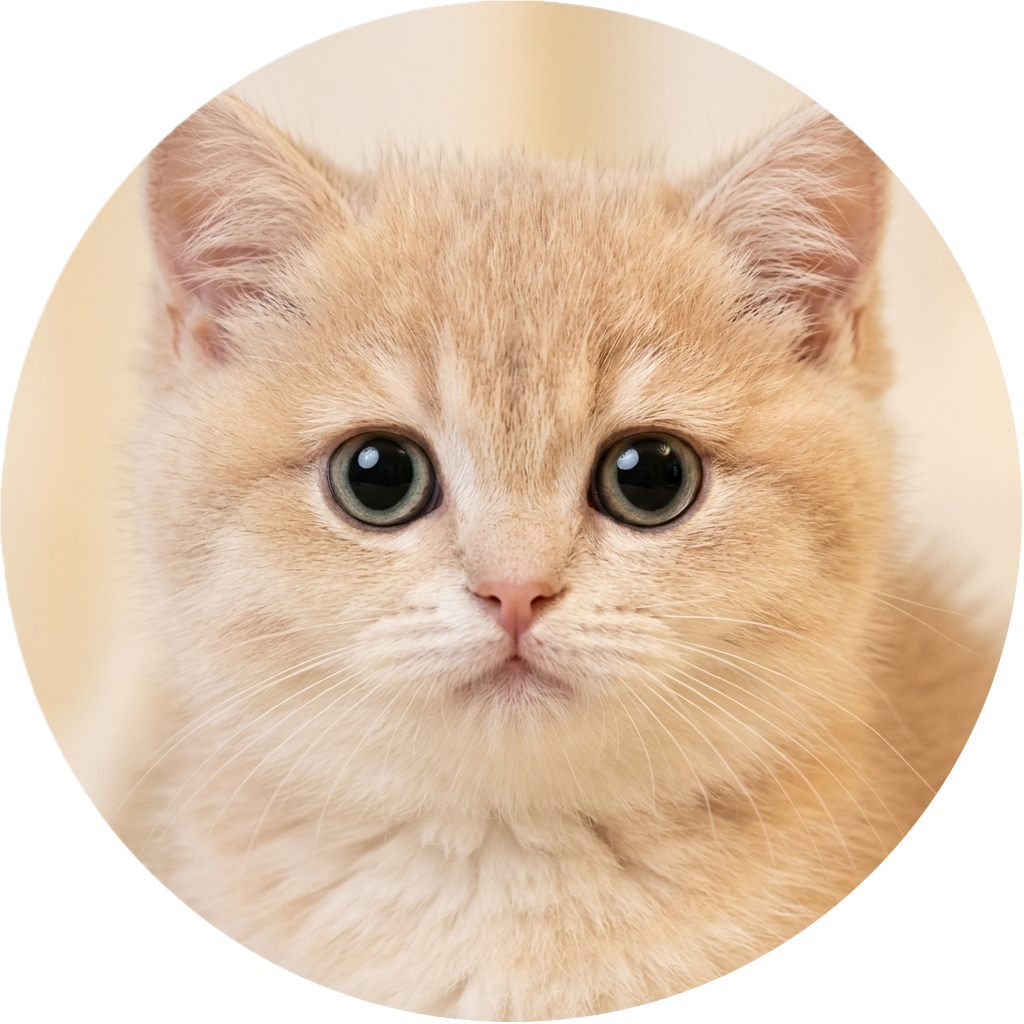
Why Do Cats Knead & Make Biscuits? The Science Explained
Cats knead and make biscuits — rhythmically pressing their paws in and out against soft surfaces — as a leftover nursing instinct from kittenhood. Adult cats knead to self-soothe, mark territory with scent glands in their paws, and show affection toward the people they trust most.
Key takeaways
- Kneading is a kittenhood nursing instinct that adult cats keep as a self-soothing and affection behavior.
- Cats have scent glands in their paw pads, so kneading also marks you, their bed, and their favorite blanket as "theirs."
- Kneading is normal and usually a compliment — but a sudden change in any behavior is worth a vet check.
Why Cats Knead — Quick Reference
| Reason | What it looks like | What it usually means |
|---|---|---|
| Kittenhood instinct | Rhythmic paw pressing, often purring | Comfort and contentment |
| Scent marking | Pressing on you, blankets, beds | "This is mine — and you're mine" |
| Nesting | Circling and kneading before lying down | Preparing a safe, comfortable rest spot |
| Affection | Kneading your lap, drooling, half-closed eyes | Deep trust and emotional bonding |
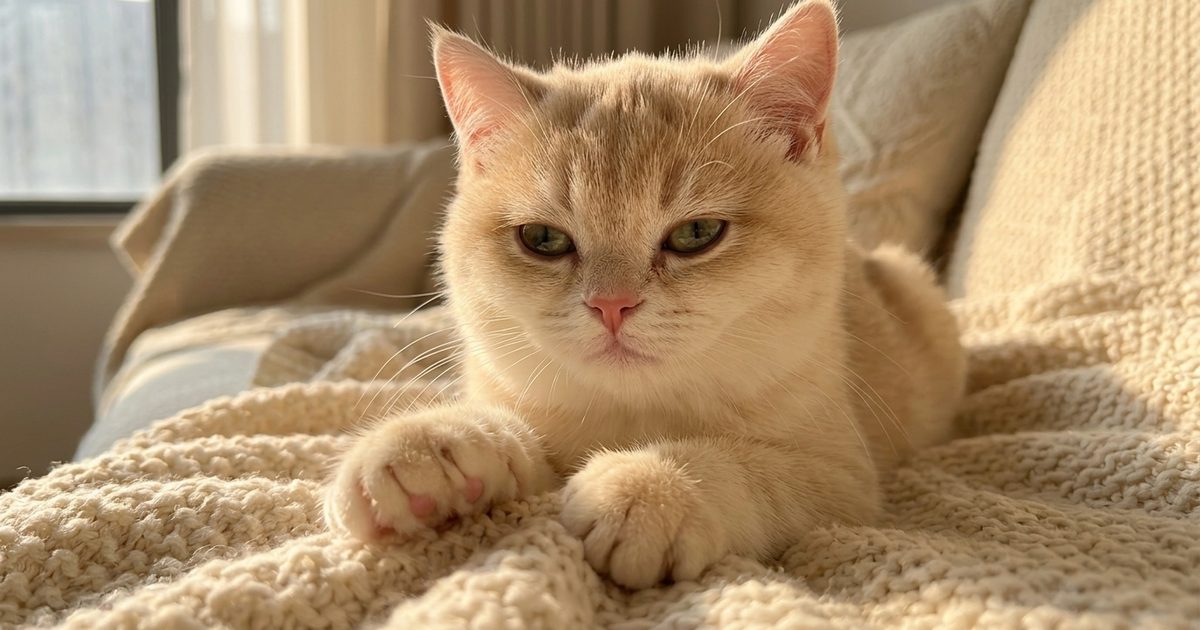
What Is Kneading (Making Biscuits)?
Kneading — sometimes called "making biscuits," "pummeling," or the "milk tread" — is the slow, rhythmic pressing of a cat's front paws, alternating left and right, against a soft surface. Cats usually extend and retract their claws slightly with each press, and many purr or drool while they do it. The motion looks like a baker working dough, which is where the nickname comes from.
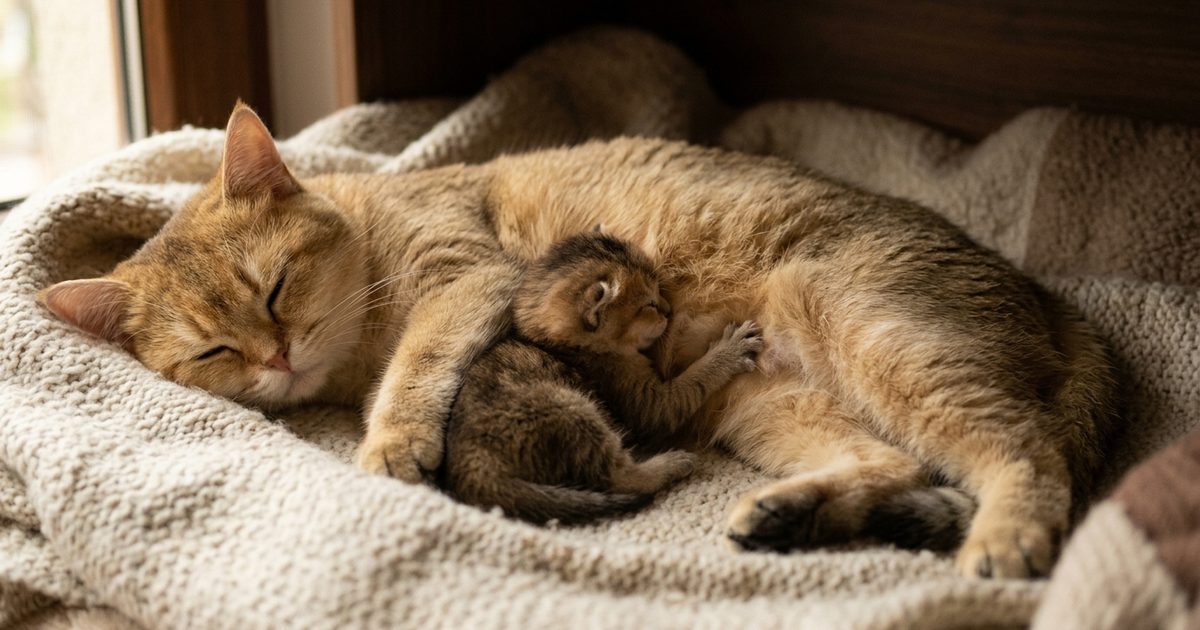
It's one of the first behaviors a kitten learns. Within hours of birth, kittens press their paws against their mother's belly to stimulate the flow of milk. That same motion — frozen into muscle memory — returns throughout a cat's life whenever it feels safe, comfortable, or emotionally attached.
Why Do Cats Knead? The Science Behind "Making Biscuits"
Cats knead for a blend of instinctive, chemical, and emotional reasons rooted in kittenhood: it began as a way to nurse, but in adults it doubles as scent-marking (paw pads contain scent glands) and self-soothing. The behavior is so deeply wired that even hand-reared cats who never nursed from a mother still knead — proof it's instinct, not just memory.
A leftover instinct from kittenhood
The original purpose was survival. Newborn kittens are blind and helpless, and kneading their mother's mammary glands triggers the milk let-down reflex. Feline behaviorists describe kneading as a classic "neonatal" behavior — one that persists into adulthood because it's paired with the deepest safety a cat ever feels. When your adult cat kneads, it is, in a very literal sense, replaying the sensation of being fed and protected. You can read more about feline behavioral development from the Cornell Feline Health Center, a leading authority on cat health and behavior.
Did you know? Even cats raised by humans from birth — who never nursed from a mother — still knead. That's strong evidence the behavior is hardwired instinct, not a habit your cat picked up by watching other cats.
Scent marking with their paws
Cats carry scent glands in their paw pads (as well as their cheeks, forehead, chin, and the base of the tail). Every time a cat kneads, it deposits pheromones onto the surface — your lap, a blanket, a dog bed, a favorite chair. This is the same chemical communication behind why cats rub against your legs or headbutt people they love. When your cat kneads you, it's essentially leaving a signature that says "this person is mine, and this place is safe." Other cats can read that signature; we can't smell it.
Self-soothing and preparing a bed
Wild ancestors of the domestic cat kneaded tall grass and foliage to flatten it into a soft, hidden resting spot. That nesting instinct survives in house cats: many knead and circle a few times before lying down, literally pressing the surface into a more comfortable shape. Kneading also releases comforting endorphins, which is why stressed or anxious cats sometimes knead to calm themselves — it's a self-soothing mechanism, not always a sign of happiness. International Cat Care notes that repetitive self-comfort behaviors are a normal part of how cats regulate emotion.
Why Do Cats Make Biscuits on You?
When a cat kneads your lap, your chest, or your arm, it is showing you the highest feline compliment: it treats you the way a kitten treats its mother. Cats only knead beings and places where they feel completely safe, because the motion leaves them relaxed and a little vulnerable. A cat on your lap, eyes half-closed, paws working slowly, purring — that cat has decided you are family.
This is also why kneading so often comes with purring, drooling, and that dreamy, unfocused stare. All three are pieces of the same kittenhood contentment response, replayed in adulthood toward someone the cat loves. If you've ever wondered what that ritual means, it's the closest thing a cat has to saying "I trust you with everything I am."
What Kneading Tells You About Your Bond
Of all the ways cats communicate, kneading is one of the most intimate — and one of the easiest to misread. A cat that kneads you is not "claiming territory" in a cold, possessive way. It's performing a behavior it reserves for the safest beings in its world, and you made that list.
Think about what that means in reverse. A cat that never kneads isn't necessarily unhappy — some cats just don't — but a cat that starts kneading you, especially after weeks or months of knowing you, has crossed a threshold. It has decided you are no longer a friendly human; you are home. People who study cat emotions point out that how cats show affection is often quiet and gradual, and kneading is one of its clearest signals. Paired with a slow blink or a purr, it's about as close to "I love you" as a cat gets.
Curious what your cat would say if she could put all of this into words? Get a MeowMind reading — upload a photo and hear it from her perspective.
Kneading in Kittens vs. Adult Cats
Every cat kneads, but the how and why shift with age. Kittens knead for a purely functional reason — to nurse. Adults knead for emotional and territorial reasons, and they do it far more selectively.
| Kittens | Adult cats | |
|---|---|---|
| Why | Stimulate milk flow while nursing | Comfort, scent-marking, affection, nesting |
| Who/what | Almost exclusively the mother | Trusted humans, blankets, beds, other pets |
| Frequency | Every feeding | Varies — daily in some cats, rare in others |
| Purring | Sometimes while nursing | Very often while kneading |
| Claws | In (kittens can't fully retract yet) | Often rhythmically extended and retracted |
Because the function changes, an adult cat's kneading is less about survival and more about meaning. When your grown cat climbs into your lap and starts making biscuits, it's choosing to revisit the safest feeling it knows — with you as the source.
How do you tell whether your cat's kneading is affection or self-soothing? Look at the rest of the body. Relaxed ears facing forward, a soft gaze or slow blink, a still or gently swaying tail, and a loose posture all point to contentment — the cat is enjoying the moment and enjoying you. Tense or flattened ears, a flicking or thrashing tail, wide-open eyes, or a rigid body suggest the cat is winding itself up, and kneading has shifted from pleasure into a way to burn off anxiety. Most of the time it's the former; the context tells you which.
Common Myths About Cat Kneading
Myth: Cats only knead when they're happy. Fact: Kneading usually means contentment, but cats also knead to self-soothe when they're mildly stressed or settling in. Context — ear position, tail, overall body language — tells you which. Read more about how cats communicate through body language.
Myth: If a cat kneads a lot, it was weaned too early. Fact: Some behaviorists believe early-weaned cats knead more intensely, but the evidence is limited, and many cats weaned at a perfectly normal age knead constantly. Heavy kneading alone isn't a reliable sign of early weaning — personality and breed play a bigger role.
Myth: Kneading means a female cat is in heat. Fact: Unspayed females can knead more during estrus, along with yowling and restlessness, but kneading on its own has nothing to do with being in heat. Neutered males and spayed females knead just as readily.
Myth: You should stop a cat from kneading to prevent bad habits. Fact: Kneading is a healthy, instinctive behavior. Stopping it — especially through punishment — damages trust. The right move is to manage it (trim claws, use a blanket), not suppress it.
When Kneading Might Signal a Problem
Kneading itself is almost never a medical problem — it's normal, healthy feline behavior. What's worth watching for is change. If a cat that has never kneaded suddenly starts obsessively, or a lifelong kneader stops entirely, that shift can reflect pain, stress, or an underlying health issue. Cats hide discomfort well, so any abrupt change in a habitual behavior is a reasonable reason to call your vet and ask.
A few specific things to notice: kneading that becomes frantic or is paired with restlessness, panting, or hiding can signal anxiety or pain. If your cat kneads and then aggressively suckles fabric (wool-sucking), that's a separate behavior sometimes linked to early weaning or compulsive disorders, and a vet or behaviorist can advise. The kneading isn't the problem — but it can be the clue.
How to Respond When Your Cat Kneads You
The goal isn't to stop kneading; it's to make it comfortable for both of you. Here's what to do based on the situation:
- If the claws hurt: keep your cat's claws trimmed (every 2–3 weeks), and place a thick blanket or folded towel on your lap as a buffer. You get the affection without the pinpricks.
- If your cat kneads a specific spot until it's threadbare: offer a dedicated soft blanket or bed in that location, and reward use of it. Redirect, don't punish.
- If your cat drools or suckles while kneading: it's harmless and usually a sign of bliss. Provide a soft blanket so she has something appropriate to knead and suckle.
- If kneading turns into nipping: some cats get overstimulated. Watch for a flicking tail or pinned-back ears, and gently set your cat down before the nip — see our guide on why cats bite for the full pattern.
- If your cat never kneads: that's fine. Not every cat does, and it doesn't mean she loves you less — she may simply show affection differently.
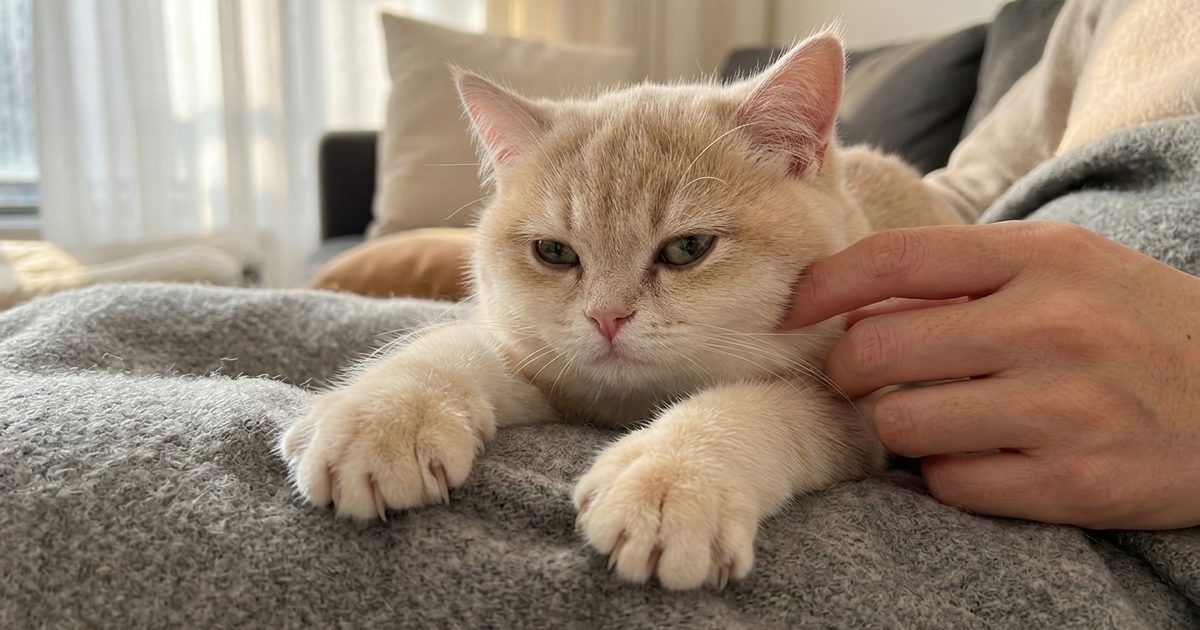
The simplest version: when your cat makes biscuits on you, you've been chosen. Trim the claws, grab a blanket, and enjoy one of the clearest signs of feline love there is.
Curious What Your Cat Would Say?
Upload a photo and get a warm, personalized reading from your cat's perspective.
Start Your Free ReadingKneading at a Glance — Summary
| Question | Short answer |
|---|---|
| What is kneading? | Rhythmic paw-pressing, a kittenhood nursing instinct |
| Why do cats knead? | Comfort, scent-marking, nesting, and affection |
| Why on me? | You're someone the cat trusts completely |
| Is it normal? | Yes — one of the healthiest, most natural cat behaviors |
| Should I stop it? | No; manage it (trim claws, use a blanket) |
| When to worry? | Only if a long-standing habit suddenly changes |
Frequently Asked Questions
Why do cats make biscuits on me?
Cats knead on you as a leftover nursing instinct turned into a sign of deep trust and affection. It means your cat feels completely safe with you, the same way a kitten feels safe with its mother.
Is kneading a sign that my cat is happy?
Usually yes — kneading most often signals contentment, relaxation, and bonding. But because cats also knead to self-soothe, it can occasionally appear when a cat is settling mild anxiety rather than expressing pure joy.
Why does my cat knead and drool?
Drooling while kneading is linked back to kittenhood: nursing kittens drool as they feed, and some adults replay that full contentment response when they knead a favorite person or blanket. It's harmless and usually a sign of bliss.
Why do cats knead blankets?
Blankets mimic the soft surfaces cats naturally knead to prepare a resting spot, mark with their paw scent glands, and self-soothe. Kneading a blanket before sleeping is the feline equivalent of fluffing a pillow.
Do all cats knead?
Most cats knead, but the habit varies widely — some cats knead daily and vigorously, others rarely or never. Cats that were weaned very early sometimes knead more intensely, though individual personality matters more than any single factor.
Should I let my cat knead me even if the claws hurt?
Yes, but protect yourself — keep your cat's claws trimmed and place a thick blanket or towel on your lap. Never punish kneading, as it's an affection behavior; instead, gently redirect your cat to a soft surface if it becomes painful.
Why does my cat knead before going to sleep?
Kneading before sleep is a nesting instinct — wild ancestors pressed down grass and foliage to make a safe, comfortable bed. Your cat is simply preparing the perfect sleeping spot, often while purring to self-soothe.
Why do cats knead and purr at the same time?
Purring and kneading usually run together because both are tied to early kittenhood comfort and nursing. When your cat does both, it's reliving one of the safest, most contented feelings it knows.
Was my cat weaned too early if she kneads a lot?
Not necessarily. Some behaviorists think early-weaned cats knead more intensely, but the evidence is limited and many perfectly well-weaned cats knead constantly. Heavy kneading alone isn't a reliable sign of early weaning.
Sources & References
You Might Also Like
Kitten Teething: Timeline, Symptoms & How to Help
Kitten teething runs from 3 to 7 months as baby teeth fall out. Learn the timeline, signs to watch for, and how to soothe a teething kitten safely.
15 min readWhen Do Cats Stop Growing? A Complete Timeline
When do cats stop growing? Most cats reach adult size by 12-18 months, but large breeds like Maine Coons keep growing until 3-4 years. Full timeline inside.
14 min readCan Cats Eat Cherries? Flesh, Pit & Toxicity Facts
Can cats eat cherries? Pitted flesh is safe in tiny amounts — but the pit, stem, and leaves are toxic (cyanide precursors). Learn what's safe and what isn't.
15 min readA message, in your cat's voice
Upload a photo, get a warm note written from your cat's perspective — just for fun. Plus 121 vet-cited articles, offline.