How Fast Can a Cat Run? Top Speed & Why They're Sprinters
If you've ever watched your cat explode across the living room and wondered how fast can a cat run, the honest answer is: fast enough to vanish before you finish the question. When people ask how fast can cats run, the cat top speed that gets quoted most often is around 30 miles per hour — quicker than the fastest human sprinter, though only in very short bursts. That burst is what this article is really about: the headline number, the body that makes it possible, and why your cat is built for a sprint rather than a marathon.
Key takeaways
- A fit domestic cat reaches about 30 mph (48 km/h) in a short sprint — faster than most humans over the first few dozen metres.
- Cats are built for explosive short bursts, not distance: a sprint lasts only a few seconds before the cat slows or stops.
- Top speed varies with breed, age, and condition — lean, muscular, prime-age cats are quickest, while kittens, seniors, and overweight cats run slower.
How Fast Can a Cat Run? — Quick Reference
| Animal | Top speed | Distance style |
|---|---|---|
| Domestic cat | ~30 mph (48 km/h) | Short explosive sprint |
| Usain Bolt (peak) | ~28 mph (45 km/h) | Human sprint, a few seconds |
| Greyhound | ~45 mph (72 km/h) | Sustained sprint, hundreds of metres |
| Cheetah | ~70 mph (112 km/h) | Specialist sprint, ~20–30 seconds |
| House dog (typical) | ~15–20 mph (24–32 km/h) | Varies — many can out-endure a cat |
How Fast Can a Cat Run? The Top Speed
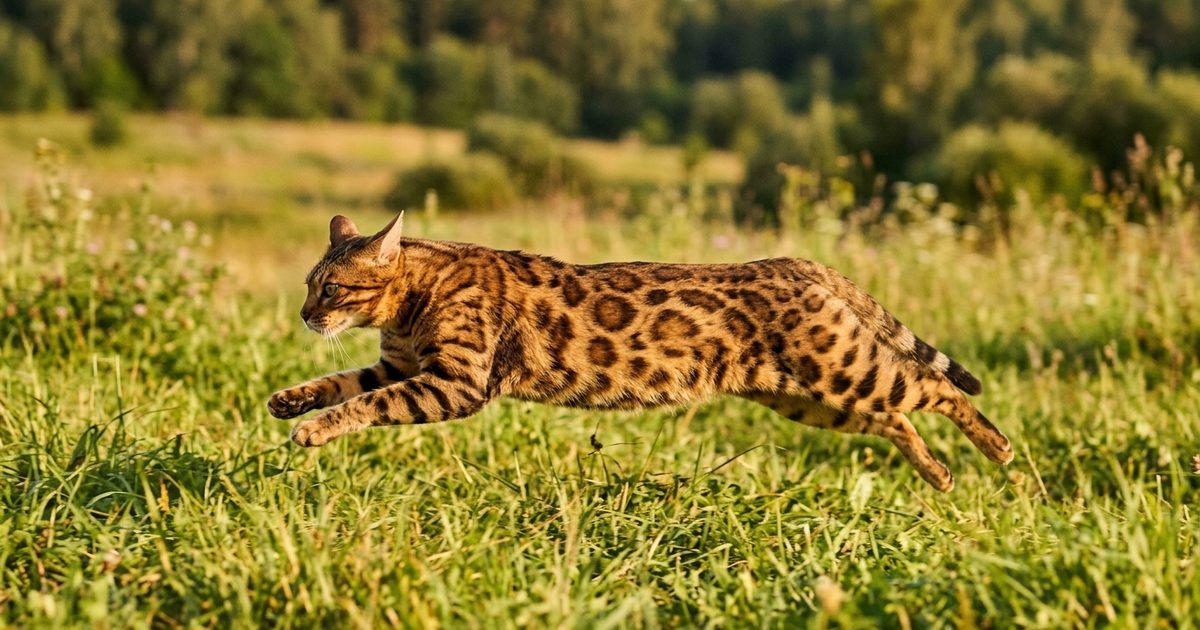
A healthy domestic cat runs about 30 mph (48 km/h) in a short sprint — fast enough to outrun most humans over the first few dozen metres, but only for a brief burst of a few seconds before the cat slows sharply and stops.
That single number does a lot of work in popular cat writing, so it's worth slowing down to look at where it comes from, what it really means, and how long your cat can actually sustain it. The figure isn't a lab-measured world record; it's a well-established estimate for a fit, motivated domestic cat in full flight — the kind of sprint you see when a cat bolts from a door left open or launches at a wand toy. The Cornell Feline Health Center, a leading authority on feline health and musculoskeletal function, is a good starting point for the biology underpinning that performance.
The headline number: ~30 mph
The most commonly cited top speed for a domestic cat is about 30 miles per hour, or roughly 48 km/h. You'll see the figure quoted as anywhere from 28 to 31 mph depending on the source, which is why it's safer to generalize as "about 30 mph" rather than treat any single decimal as exact — individual cats vary, and few of these numbers come from controlled measurement. What is consistent across sources is the order of magnitude: a fit house cat is genuinely faster, over a short distance, than the fastest human being who has ever lived. And the cat reaches that speed remarkably quickly — within just a few strides from a standing start, thanks to the explosive hind-limb drive we cover in the biomechanics breakdown below. International Cat Care notes that this rapid acceleration is a hallmark of the feline locomotor system.
How far, and for how long?
Here's the catch that matters most for owners: that ~30 mph is a peak, not a cruising pace. A typical flat-out sprint covers only about 30 to 60 metres and lasts a handful of seconds before the cat decelerates sharply or stops entirely. The reason is mechanical as well as metabolic: the cat's muscles are dominated by fast-twitch fibres that fire explosively but run on anaerobic fuel, which depletes in seconds and leaves nothing to sustain the pace. Cats also dissipate heat poorly compared with endurance-adapted animals, so a flat-out sprint generates a lot of it fast — the minor sweat through paw pads can't keep up. The practical result: a fit, motivated cat is largely spent after roughly 30 to 60 metres of top-speed running, after which it slows, stops, and rests. That burst-then-recover rhythm isn't a flaw; for an ambush predator, it's the whole point. Your cat is a pure sprinter, which is exactly why the next section on why cats are sprinters rather than marathoners is the natural follow-up to this number.
How Are Cats Built for Speed?
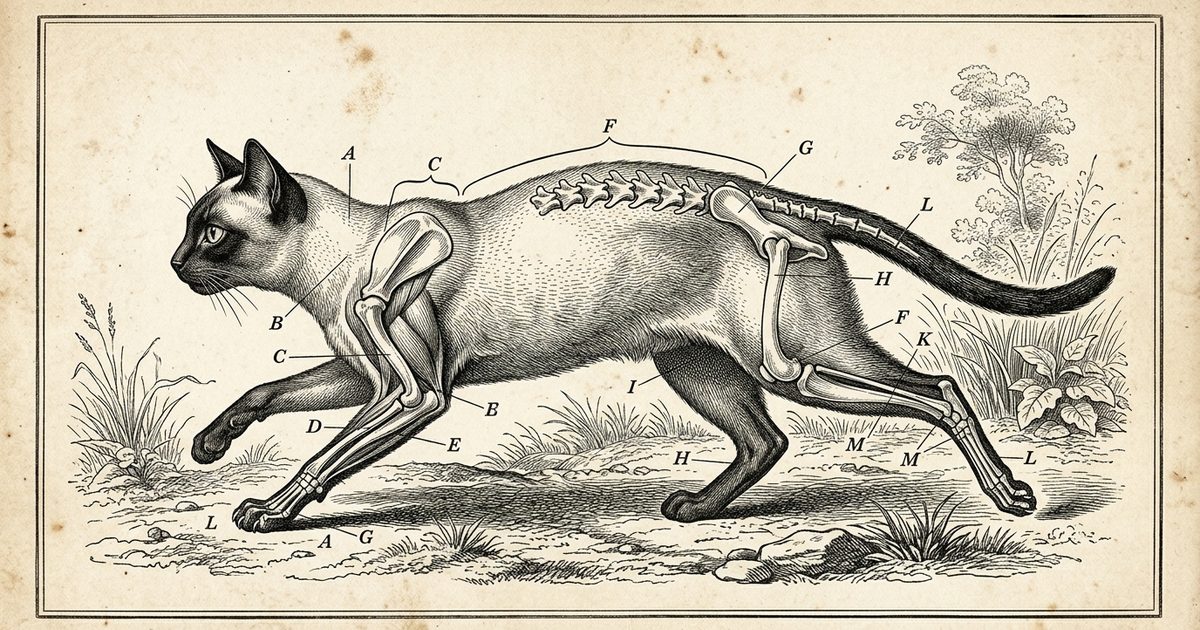
Cat speed comes from a flexible spine that flexes and extends each stride, digitigrade legs that lengthen leverage, and fast-twitch muscle fibres that fire explosively — together producing the rotary gallop, where all four feet leave the ground twice per stride.
When you watch a cat accelerate from a standstill to a full sprint in just a few strides, what you're really seeing is a body engineered around one job: explosive horizontal motion. A cat is not built like a distance runner — it's built like a small, furry missile. Every part of the locomotion system, from the spine down to the toes, is tuned for that single closing rush. We cover the broader structural picture in our guide to cat anatomy; here we'll focus tightly on the three mechanisms that make a cat fast.
A spine that acts like a spring
The cat's backbone is remarkably flexible — far more so than a human's, with roughly three times the spinal range of motion we have. That flexibility is doing real work during a sprint. As the hind legs push off, the spine extends, lengthening the stride and letting the hind feet land further forward. Then it flexes sharply, curling the body to bring the hind legs up and ready for the next push. The result is that distinctive "scrunched-and-stretched" stride shape you can see in a running cat: compressed like an accordion in one phase, pulled taut in the next. The spine is effectively storing and releasing elastic energy with each stride, adding reach and recoil a rigid back couldn't provide.
Digitigrade stance and powerful hind legs
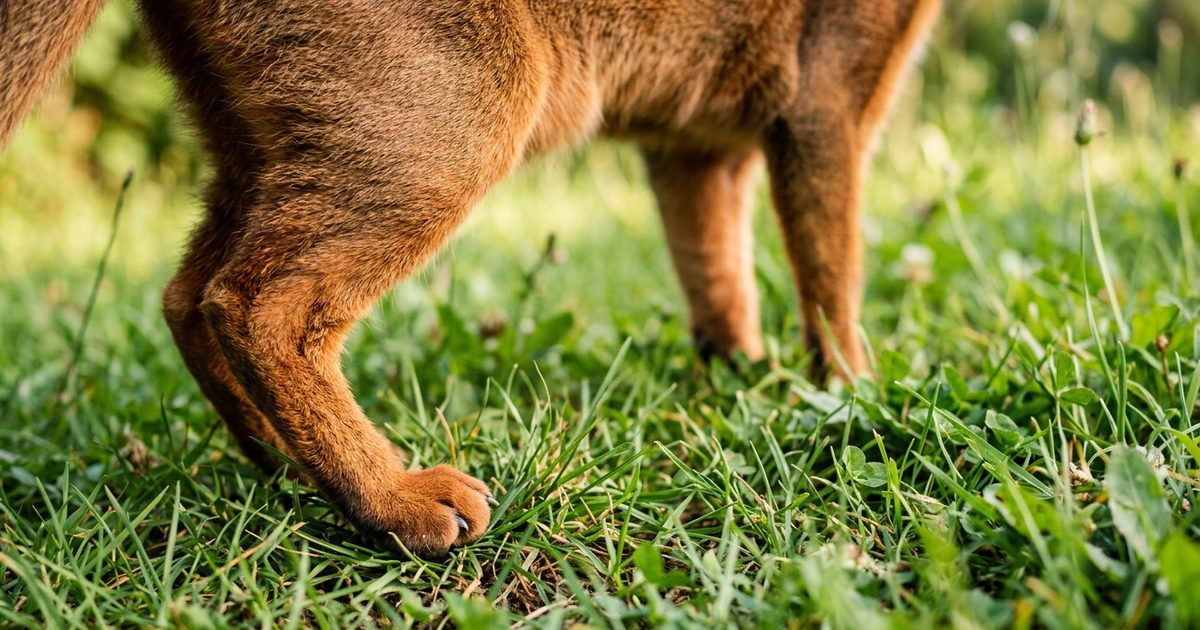
Cats walk on their toes, not on the flats of their feet — a stance called digitigrade. Humans are plantigrade (heel-to-toe); standing on the toes effectively lengthens the leg and adds leverage at the ankle, which translates directly into longer, more powerful strides. The hind limbs are the real engine. They're elongated and heavily muscled, and they drive nearly all of the propulsive thrust during a sprint. The forelegs do different work: they steer, absorb the shock of landing, and set up the next stride, but the push comes from behind. International Cat Care describes this digitigrade, hind-limb-driven design as central to how cats move — and you can feel it the moment a cat launches off your lap.
Fast-twitch muscle and the rotary gallop
Underneath the skin, a cat's muscles are dominated by fast-twitch fibres — the kind that contract rapidly and generate huge force, but fatigue quickly. This is the same muscle profile that powers sprinters across species, and it's why a cat's speed and a cat's stamina live in tension with each other, as the next section explains. Those fibres drive the fastest gait a cat uses: the rotary gallop. In a rotary gallop, the feet land in a circular sequence rather than a straight line, and during each stride all four paws leave the ground in two separate phases — once when the body is fully extended, and once when it's gathered up. It's the same gait cheetahs and greyhounds use at top speed. The Cornell Feline Health Center covers the feline musculoskeletal system in depth, and the take-away for speed is simple: the rotary gallop is the biomechanical peak, and the fast-twitch fibres are what fire it.
Why Are Cats Sprinters, Not Marathoners?
Cats are ambush predators, built for one explosive pounce rather than a long chase. Their fast-twitch muscles tire in seconds, they lack the endurance of a wolf or a human, and they overheat quickly — so a cat sprints, catches or misses, then rests.
All that speed comes with a hard limit: it doesn't last. A cat can hit its top pace, but only for a few seconds. Understanding why means looking at how cats hunt, because the same design that makes a cat blisteringly fast over ten metres is exactly what rules out a ten-kilometre run. The full burst-distance, anaerobic, and heat explanation lives in How far, and for how long? above — the short version is that fast-twitch muscles on anaerobic fuel deplete in seconds and cats dissipate heat poorly, leaving a fit cat spent after roughly 30 to 60 metres.
The ambush-hunter body plan
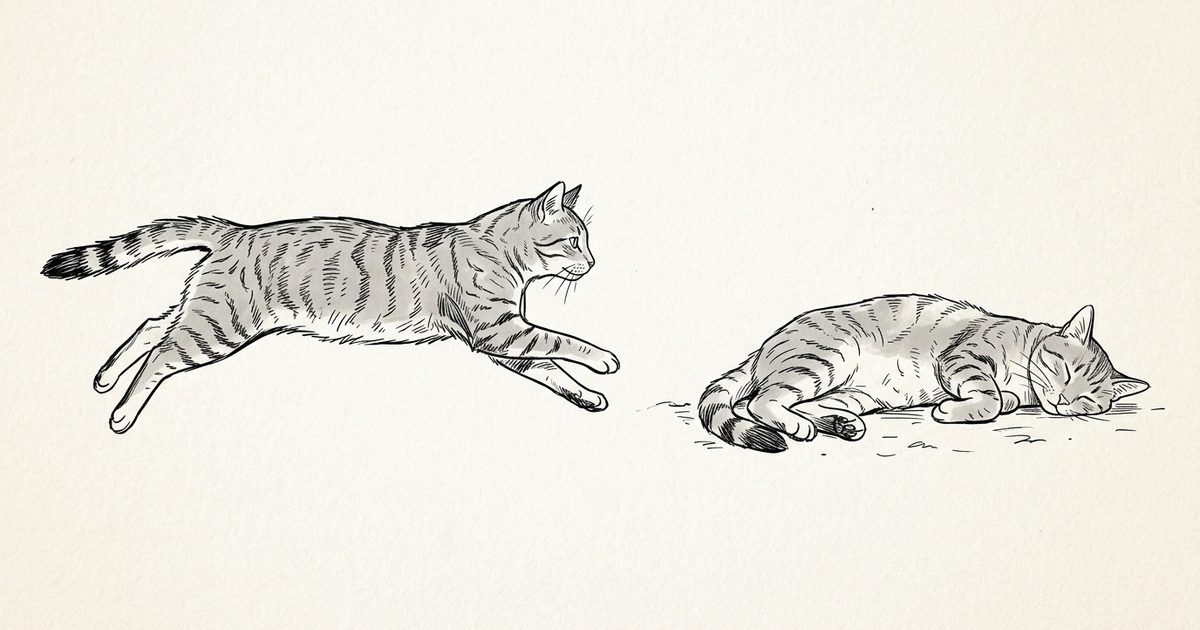
Domestic cats inherited their body plan from wild ancestors like the African wildcat, which hunted by stalking close and then exploding into a final pounce — not by chasing prey across open ground the way a wolf or a cheetah might. Stalk-and-pounce, not pursuit, is the ancestral strategy, and domestication didn't rewrite it. As we explore in are cats domesticated, house cats retain the physiology and the instincts of a solitary ambush predator almost wholesale. Speed, in that context, serves the closing burst — the last few metres between a concealed crouch and the prey — not the hunt as a whole. Everything before the sprint is patience; everything after is either a meal or a reset.
How Does a Cat's Speed Compare?
A domestic cat at top speed is faster than the fastest human — Usain Bolt peaked near 28 mph — and outsprints many dog breeds over a short distance. But a greyhound at 45 mph outruns a cat, and the cheetah reaches about 70 mph.
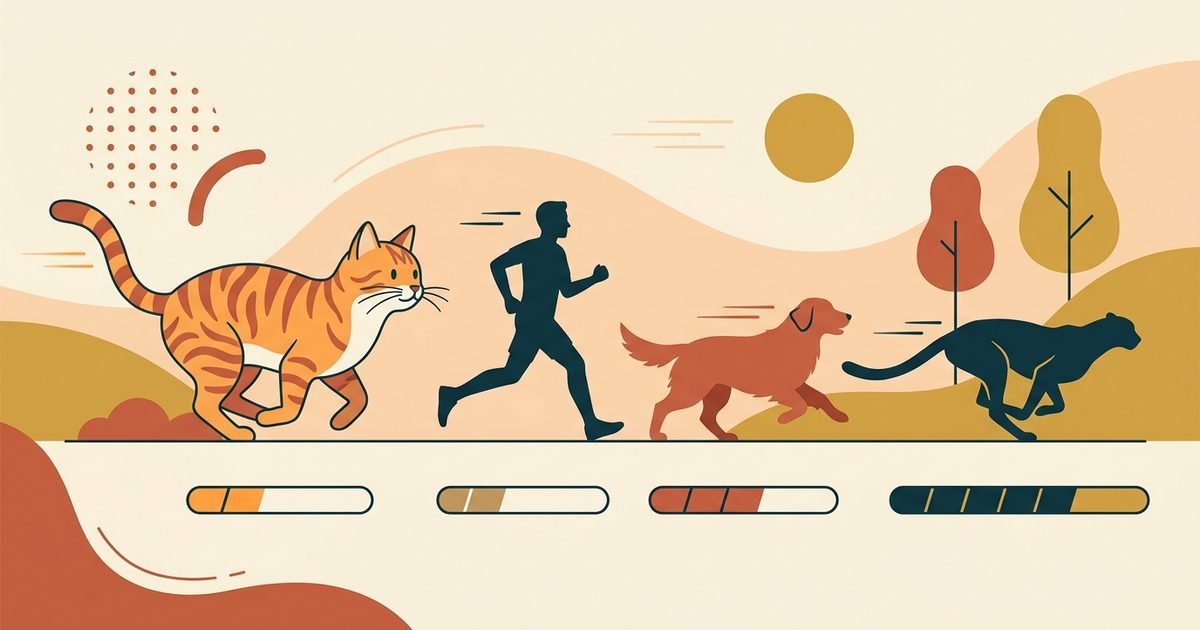
A cat's roughly 30 mph top speed only means something next to the animals and people around it. The honest answer is that your cat is remarkably quick in a burst — but it occupies a specific, narrow niche in the speed hierarchy, not the top of it.
Cat vs human
A fit domestic cat at full stretch runs about 30 mph (48 km/h). Usain Bolt, the fastest human ever measured, peaked near 28 mph (45 km/h) during his 100-metre world record — and Bolt is a once-in-a-generation outlier. The average fit adult human tops out around 15–20 mph. So yes, over the first 20–30 metres, before endurance and strategy come into play, a startled house cat will usually out-run a person. Beyond that brief window, the human pulls ahead.
Cat vs dog breeds
This is the comparison that gets oversimplified. The claim that "cats are faster than dogs" is only true over a short burst, and only against many breeds — not all of them. A greyhound runs around 45 mph, and several hunting and sighthound breeds are meaningfully faster than a cat in a straight sprint. Many companion breeds, though — the smaller, shorter-nosed, less athletic dogs — are slower than a cat over the first few dozen metres. Where dogs pull away decisively is endurance: working and herding types, especially, are built to keep going long after a cat has stopped and sat down. The fair summary is that a cat is faster than many dogs over a short burst, slower over distance, and slower than the specialist sprint breeds. For more on how a cat's body produces that burst, see our guide to how high cats can jump — the same hind-limb power drives both.
Where the cheetah fits
The cheetah, reaching about 70 mph (112 km/h), is in a category of its own. It shares the cat family but is a separate, specialist species built for exactly one job: the flat-out pursuit of prey on open ground. Everything about it — the elongated spine, the non-retractable traction claws, the oversized nasal passages for oxygen — is engineered for that single explosive chase. The domestic cat is a different animal in a different niche: an ambush hunter built for short, sharp rushes in cover. The cheetah is context here, not a comparison any owner will act on. The Cornell Feline Health Center is a reliable source for reading more about the feline musculoskeletal system across species.
What Makes One Cat Faster Than Another?
Cat speed varies with breed, age, body condition, and overall health. Lean, muscular, prime-age cats between roughly 2 and 7 years old are fastest, while kittens and seniors are slower; breeds like the Egyptian Mau, Abyssinian, Bengal, and Siamese are often cited as quick, athletic cats.
Not every cat runs at the same speed, and the variation is wider than most owners assume. Two healthy-looking cats can have meaningfully different top speeds based on breed, life stage, and condition.
Breed and body type
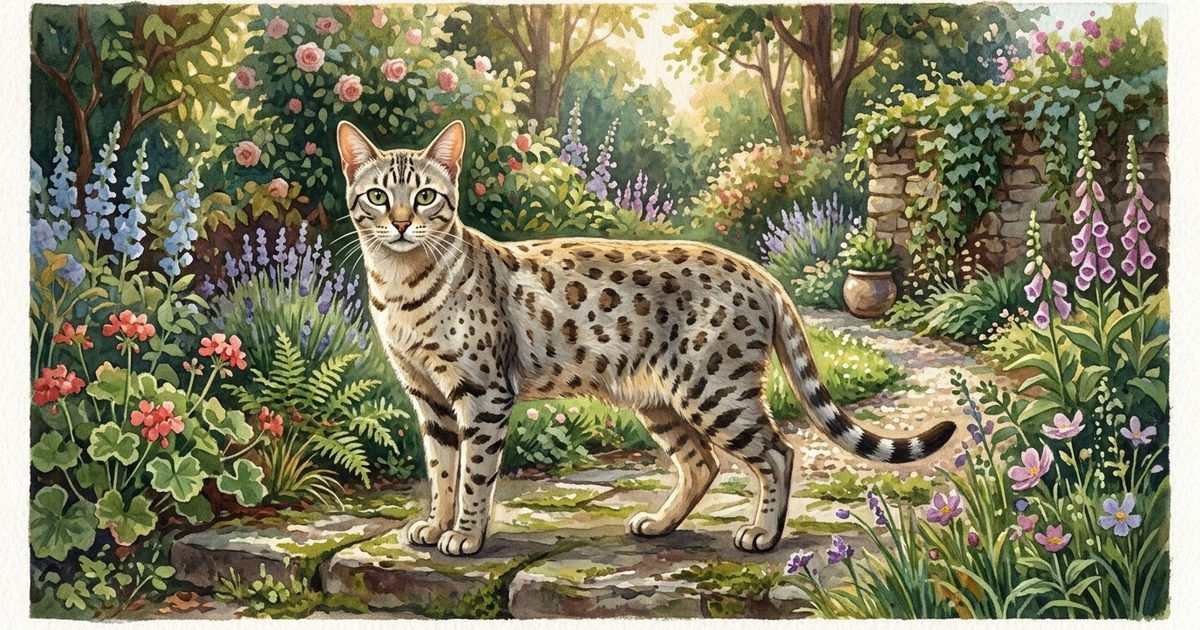
Some breeds are built leaner and more athletic than others, and that shows in how they move. The Egyptian Mau, Abyssinian, Bengal, Siamese, and Ocicat are all frequently noted as quick, agile cats — long-bodied, muscular, and naturally active. The Egyptian Mau in particular is often cited as the fastest domestic breed, with a top speed around 30 mph, but it's worth being honest about the evidence: that figure is largely owner-reported and Guinness-style rather than measured at scientific scale, so treat it as a widely repeated claim rather than a lab-verified number. A Bengal — wild-looking spotted and rosetted golden-brown coat, like a small leopard — gives you a good visual for the athletic body type that tends toward speed. If you want to recognise that confident, ready-to-move posture in your own cat, our guide to cat body language breaks down what an alert, athletic stance looks like.
Age, health, and body condition
Beyond breed, the biggest factors are age and physical condition. A cat's prime athletic years are roughly 2 to 7 years old — adult, fully muscled, and not yet slowing. Very young kittens are still coordinating their limbs, and senior cats lose muscle mass and joint mobility, so both groups run noticeably slower. Carrying extra weight is the single most common speed-killer in pet cats: obesity reduces acceleration and endurance and stresses the joints. Arthritis, heart disease, and dental disease can each quietly reduce a cat's willingness or ability to run. The thing worth watching for is change — if a cat that normally charges around suddenly slows down, avoids running, or seems reluctant to move, that's a reasonable reason for a vet check. Generalise the concern; let the vet do the diagnosing. International Cat Care is a good starting point for breed and condition information.
Can Your Cat Outrun You — or Its Prey?
Over the first few metres, yes — a startled or playful cat will usually out-accelerate a human, which is why catching a cat that does not want to be caught is so hard. In play and in the wild, that same burst speed powers the pounce.
A cat's top speed is not really about distance — it is about that first, explosive lunge. The muscles, spine, and digitigrade stance we walked through above are built to fire once, hard, and close a gap in a heartbeat. So the real-world question for an owner is not whether a cat can hold a sprint, but what that single burst is for. Two answers cover almost everything you will see at home: the great escape, and the pounce.
The great escape
Every cat owner knows the moment — a door opens, a pan clatters, the carrier comes out, and the cat simply vanishes. That is a flight response firing before the cat has even thought about it, paired with the burst acceleration a cat is built for. From a standstill, a healthy cat can reach close to top speed within a few strides, which is why your hand closes on empty air more often than on fur.
The right response is the counterintuitive one: do not chase. Pursuing a fleeing cat reinforces the fear and usually sends it further away. Give the cat a dark, quiet place to settle, let the adrenaline drain, and read the body language before you approach — flattened ears, a low tight body, and dilated pupils all say the cat is still in flight mode. Our guide to cat body language breaks down the stress postures in detail.
The pounce in your living room
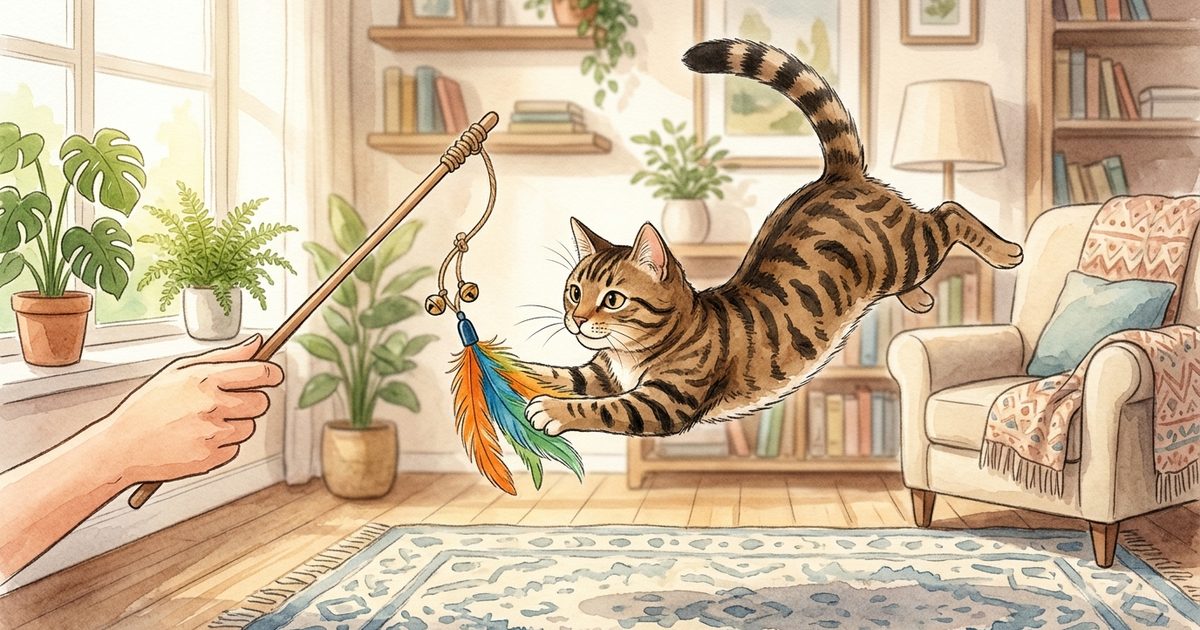
The other place you see that burst speed is play. When your cat flattens, locks eye on a wand toy, chatters at a laser dot, then explodes across the floor — that sequence is the same stalk-sprint-pounce the wild hunt is built from, down to the biomechanics. The forelegs steer, the hind legs drive, the spine extends on the strike. Nothing about it is "just playing"; it is a deep hunting instinct working exactly as it evolved to.
This is why enrichment that lets a cat actually run and pounce matters so much. A short, intense play session — the sprint, the catch, the satisfaction — meets a need that a sleeping cat on a sunny windowsill never touches. If your cat chatters or chirps at birds or toys before the rush, that is the prey-excitement vocalization kicking in; we explore it in why do cats chirp. And because the same hind-limb power that drives the horizontal sprint also launches the vertical strike, the leap onto a countertop is the other half of the same story — covered in how high can cats jump.
Cat Speed at a Glance — Summary
| Question | Short answer |
|---|---|
| What is a cat's top speed? | About 30 mph (48 km/h), in a short burst |
| How is a cat built for speed? | Flexible spine, digitigrade legs, fast-twitch muscle, and the rotary gallop |
| Why only short distance? | It is an ambush predator — anaerobic burst, rapid fatigue, poor heat dissipation |
| How does it compare to a human? | Faster than Usain Bolt over the first ~20–30 m before endurance matters |
| How does it compare to a dog? | Faster than many dogs in a sprint, slower over distance, and slower than greyhounds (~45 mph) |
| Which breed is fastest? | The Egyptian Mau is most often cited as the fastest domestic breed |
Curious What Your Cat Would Say?
Upload a photo and get a warm, personalized reading from your cat's perspective.
Start Your Free ReadingFrequently Asked Questions
How fast can a house cat run in miles per hour?
A healthy, fit domestic cat can run at about 30 miles per hour (48 km/h) over a short sprint. Sources vary slightly between 28 and 31 mph, so it is safest to generalize as roughly 30 mph rather than treat any single decimal as exact.
Can a cat outrun a human?
Yes, but only briefly. Over the first 20 to 30 metres, a startled or motivated cat will usually out-accelerate a person. Beyond that short burst, the human pulls ahead, because the cat fatigues quickly while an endurance-adapted human keeps going.
Can a cat outrun a dog?
Over a short sprint, a cat is faster than many companion dog breeds, but not all of them. Greyhounds run around 45 mph and several hunting breeds are quicker than a cat in a straight sprint, and most dogs win comfortably once endurance becomes the deciding factor.
Why can't cats run fast for long distances?
Cats are ambush predators built for one explosive pounce, not a long chase. Their fast-twitch muscles run on anaerobic fuel that depletes in seconds, and they dissipate heat poorly, so a fit cat is largely spent after roughly 30 to 60 metres of top-speed running.
Which breed of cat is the fastest?
The Egyptian Mau is most often cited as the fastest domestic breed, with a top speed around 30 mph. That figure is largely owner-reported and Guinness-style rather than measured at scientific scale, so treat it as a widely repeated claim rather than a lab-verified number.
How fast can a kitten run compared to an adult cat?
Kittens are noticeably slower than healthy adult cats because they are still coordinating their limbs and building muscle. A cat's prime athletic years fall roughly between 2 and 7 years old, when the body is fully muscled and not yet slowing.
Why does my cat suddenly sprint around the house?
Those sudden bursts, often called the zoomies, are a healthy expression of the same stalk-sprint-pounce sequence wild cats use to hunt. Short, intense play sessions let a cat release pent-up energy and satisfy a deep instinct that ordinary lounging never touches.
Does a fat or older cat run slower?
Usually yes. Carrying extra weight reduces acceleration, stresses the joints, and shortens endurance, and senior cats lose muscle mass and mobility. A cat that normally charges around but suddenly slows down or avoids running is worth a vet check to rule out an underlying issue.
Sources & References
You Might Also Like
Kitten Teething: Timeline, Symptoms & How to Help
Kitten teething runs from 3 to 7 months as baby teeth fall out. Learn the timeline, signs to watch for, and how to soothe a teething kitten safely.
15 min readWhen Do Cats Stop Growing? A Complete Timeline
When do cats stop growing? Most cats reach adult size by 12-18 months, but large breeds like Maine Coons keep growing until 3-4 years. Full timeline inside.
14 min readCan Cats Eat Cherries? Flesh, Pit & Toxicity Facts
Can cats eat cherries? Pitted flesh is safe in tiny amounts — but the pit, stem, and leaves are toxic (cyanide precursors). Learn what's safe and what isn't.
15 min read