Are Cats Nocturnal? The Truth About Their Sleep Schedule
So, are cats nocturnal? Not exactly — and if your cat treats 3am like prime hunting time, you're not imagining it. Wondering are house cats nocturnal misses the more accurate word: cats are crepuscular, hardwired to be most alive at dawn and dusk. That's why your cat sleep schedule feels upside-down compared to yours, with a burst of energy right when the light is low. It's ancient instinct, not attitude.
Key takeaways
- Cats are crepuscular, not nocturnal — their activity peaks at dawn and dusk, not the dead of night.
- Those two daily surges are hardwired from millions of years of hunting small rodents at twilight.
- You can't erase the instinct, but a consistent routine can shift the learned part of the pattern.
Cats Through the Day — Quick Reference
| Time of day | Typical cat activity | Why |
|---|---|---|
| Dawn (first light) | Active burst — prowling, playing, vocal | First crepuscular peak; prey is stirring |
| Midday | Long naps, light dozing, low energy | Conserving energy; too bright and warm to hunt |
| Dusk (last light) | Second active burst — hunting-style play | Second crepuscular peak; ideal low-light hunting window |
| Night | Mostly sleeping, with brief wakeful stints | Cooler and darker; cats nap rather than stay continuously active |
Are Cats Nocturnal? The Short Answer
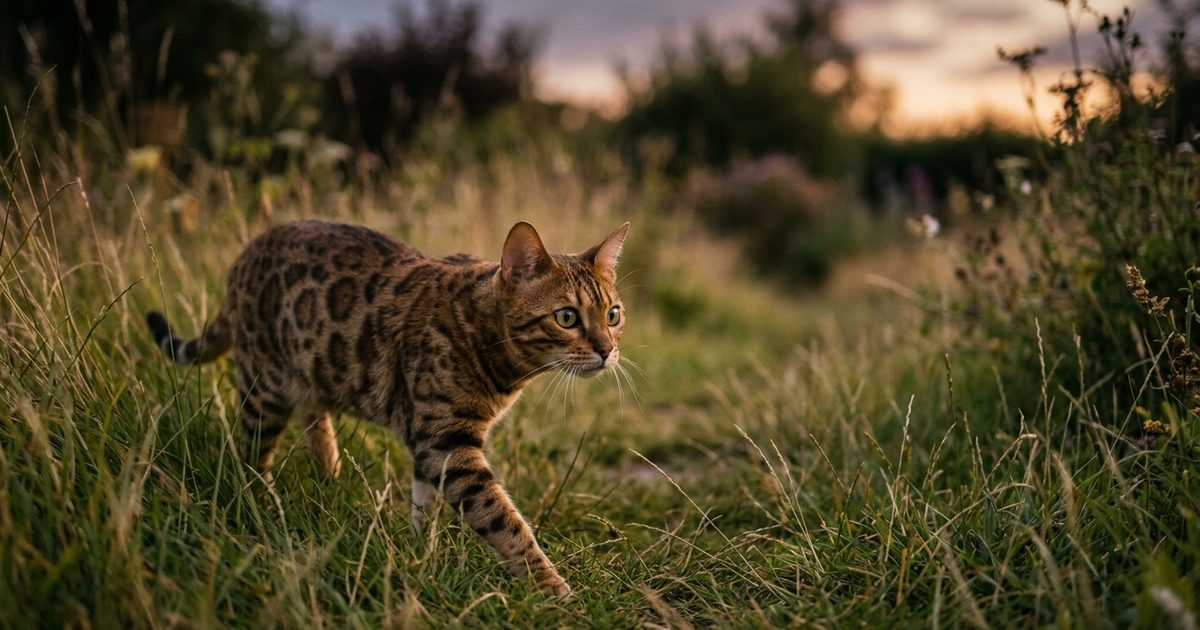
No — cats are not nocturnal. They are crepuscular, meaning they are most active at dawn and dusk. House cats evolved to hunt small rodents that move during twilight hours, so your cat's body clock naturally peaks at sunrise and sunset, not in the dead of night.
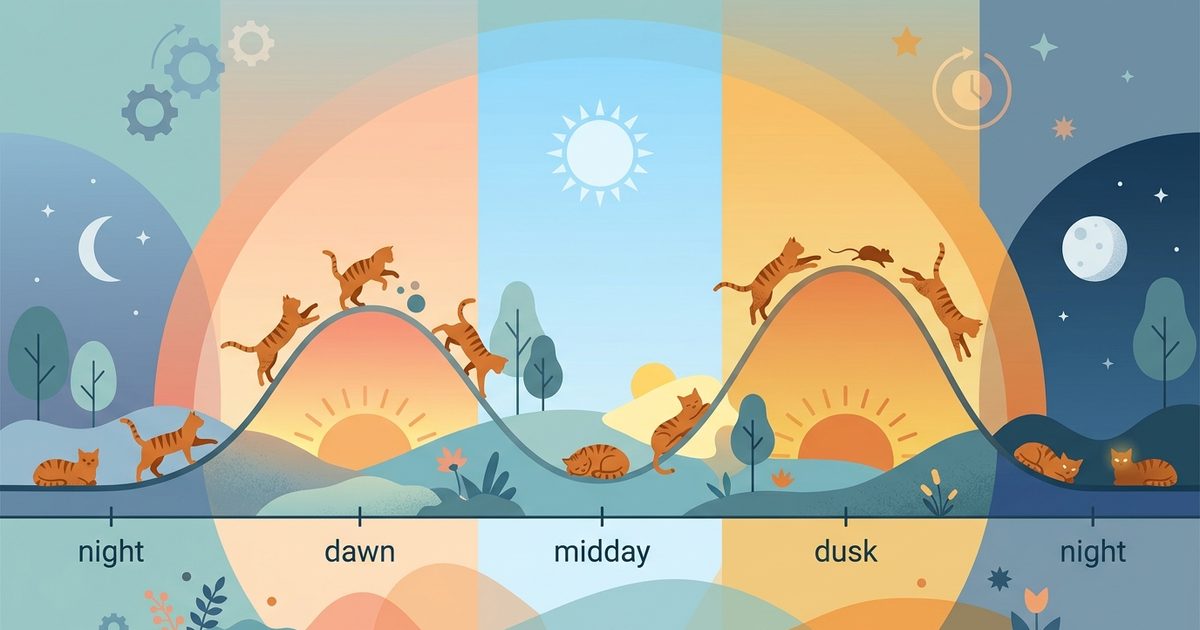
It's the most common misunderstanding owners have about their cat's sleep schedule. A cat tearing through the hallway at 4am looks nocturnal, and it's easy to see why the myth sticks. But if you map a cat's actual activity across a full 24 hours, the picture is different: two clear surges of energy, one as the sun comes up and another as it goes down, with long stretches of dozing in between. That's not the rhythm of a nocturnal hunter — it's the rhythm of a crepuscular one.
The distinction matters because it changes how you read your cat's behavior. A 3am wake-up call isn't proof your cat is "a night owl"; it's usually the dawn spike arriving a little early, or pent-up energy with nowhere else to go. We get into the why — and what to do about it — further down, in the section on why cats run around at night. For now, the headline is simple: when people ask whether are cats nocturnal, the honest answer is that they're built for the edges of the day.
Nocturnal vs crepuscular vs diurnal
Three words describe when an animal is awake. Diurnal means active during the day, like humans. Nocturnal means active through the night, like owls. Crepuscular means active at twilight — the dim hours around dawn and dusk. Domestic cats fall squarely into the crepuscular category, though it's a spectrum, not a switch. Individual cats vary: some lean a little more nocturnal, especially indoor cats whose environment reshapes the pattern, while a few seem almost diurnal when they sync to a human household. The baseline, though, is crepuscular.
What 'crepuscular' actually looks like
In practice, crepuscular means two daily activity peaks. Your cat wakes hungry and playful around first light, settles into a long midday nap, stirs again with a burst of energy as evening comes on, and then winds down for the night — not running a shift, but dozing lightly between patrols. The peaks are real but short; the hours between are filled with the lengthy naps cats are famous for. Sustained, all-night activity is unusual and usually a sign of boredom or a medical issue rather than a species trait.
Why Are Cats Crepuscular? The Science
Cats are crepuscular because their main wild prey — mice, voles, and small birds — are most active at dawn and dusk. Millions of years of hunting at twilight wired the cat body clock to peak then, conserving energy between peaks and avoiding the hottest midday hours.
The pattern isn't a quirk of house cats; it's an inheritance. Every part of the domestic cat's schedule was shaped by what its wild ancestors hunted, when that prey moved, and the physical costs of chasing it. Crepuscular timing is the evolutionary solution to a straightforward problem: be awake when the food is easiest to catch, and rest when it isn't.
Their prey set the schedule
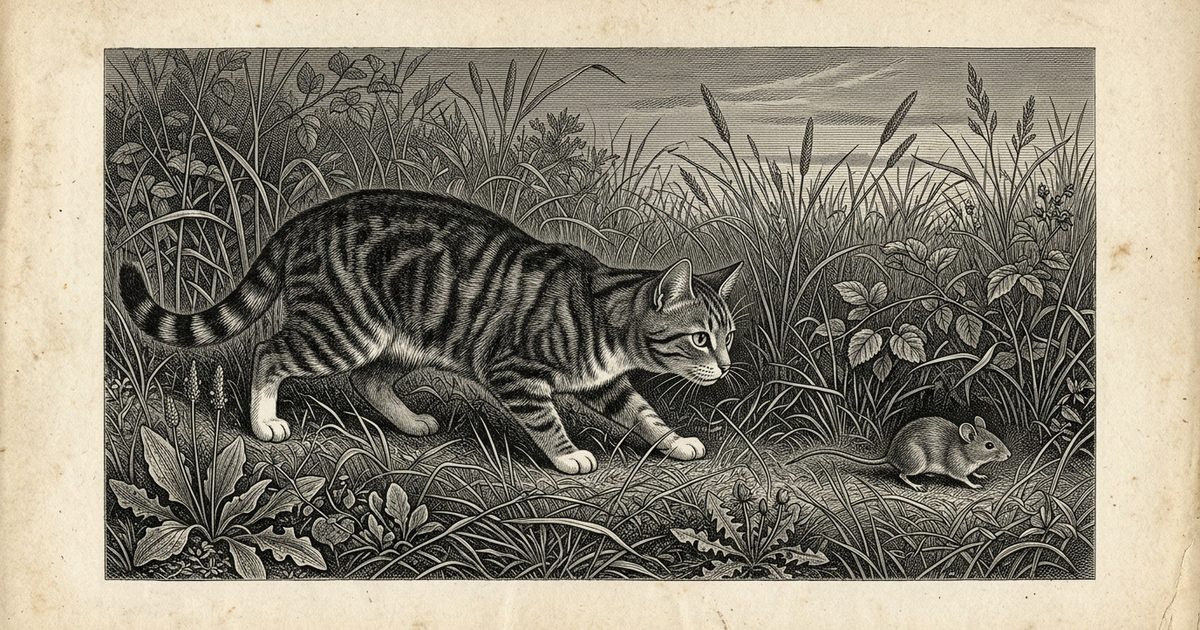
Cats are obligate carnivores and opportunistic ambush predators, and their wild diet was built on small mammals — mice, voles, shrews — plus the occasional small bird or insect. Crucially, those prey species are themselves crepuscular. Mice come out to forage at dawn and dusk, when the dim light hides them from hawks but is still bright enough to find seeds. So the cats that hunted them evolved to be awake at exactly the same hours. International Cat Care notes that this dawn-and-dusk activity pattern is deeply embedded in feline biology, reflecting the hunting ecology of the species. The cat's body clock didn't choose twilight; twilight was where the meals were.
Avoiding the heat and the competition
There were also good physical reasons to avoid the other hours. Midday is the hottest part of the day, and a cat hunting in full sun risks overheating during a sprint — cats cool themselves poorly compared to humans, so resting through the heat is energy-efficient. The deep of night, meanwhile, is genuinely dark; cats see well in low light but not in total darkness, so twilight offers the best window where their low-light vision gives them an edge without straining past its limits. Dawn and dusk are simply the hours where everything works.
Domestication didn't erase it
Cats have lived alongside humans for roughly 10,000 years, and that long partnership hasn't shifted the underlying rhythm. Studies of free-ranging domestic cats still find the same two activity peaks at dawn and dusk, and indoor cats — even those with no experience of hunting, regular meals, and artificial light — continue to show the same crepuscular surges. Domestication softened the edges of the pattern, but it didn't rewrite it. That's why your cat still wakes you at sunrise regardless of whether there's a mouse anywhere nearby: the clock is older than the house.
Curious what's going on in that dawn-active head of theirs? Get a MeowMind reading and hear it from your cat's point of view.
How Do Cats' Senses Fit a Dawn-and-Dusk Life?
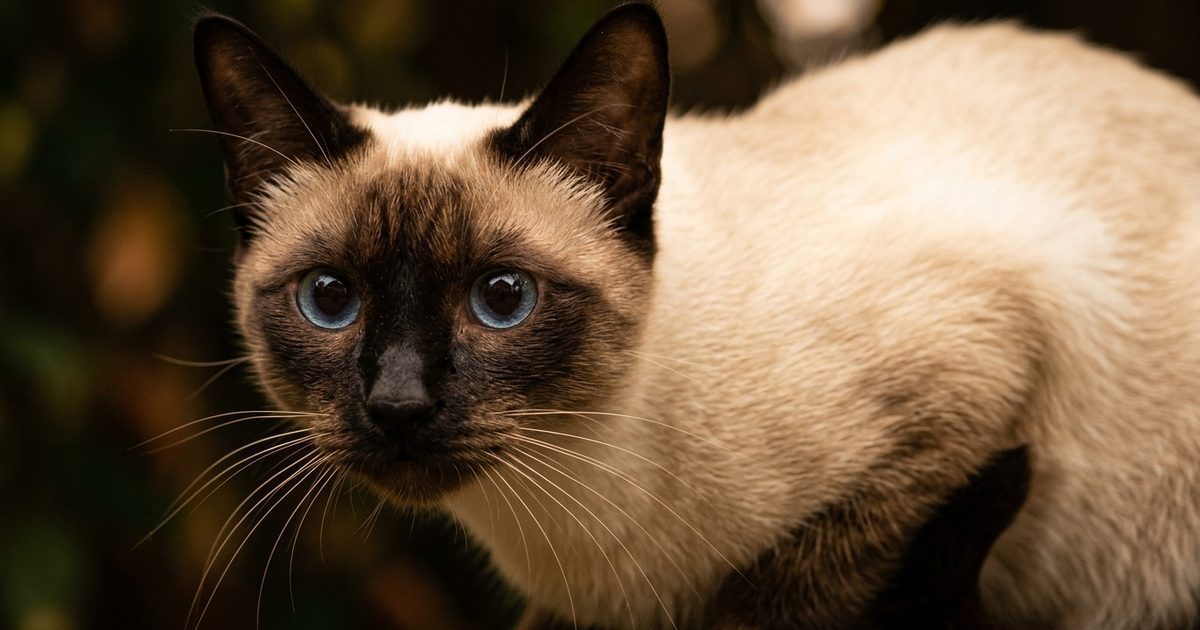
Cats are built for twilight: their eyes are packed with rod cells for low light, their ears swivel to catch the faint rustle of a mouse at dusk, and their whiskers feel air currents in the dark. Dawn and dusk are the windows where all of these senses peak together.
The crepuscular schedule isn't an accident of timing — it's the slot where a small predator's entire sensory toolkit works best at once. The same twilight that wakes up a mouse also switches on every system your cat uses to find it.
Low-light vision, not true night vision
A cat's retina carries roughly six to eight times more rod cells — the receptors that handle dim light — than yours does. Behind those rods sits the tapetum lucidum, a mirror-like layer that bounces the available light back through the retina for a second pass (it's also the glow you see when headlights catch your cat's eyes). This is genuine low-light vision, sharply tuned for the half-light of dawn and dusk. But it isn't magic: in true pitch darkness a cat is nearly as blind as we are. For the full breakdown of how the tapetum and rod density actually work, see our deep dive on whether cats can see in the dark.
Hearing tuned for twilight rustling
Dawn and dusk are when grass stirs, leaves settle, and small mammals begin to move — and a cat's ears are calibrated for exactly those sounds. Cats hear a wider high-frequency range than humans and most dogs, into the ultrasonic squeaks that rodents produce. Each ear can rotate independently, roughly 180 degrees, letting a cat pinpoint a rustle by sound alone and lock onto it before it ever sees the source. That's why a seemingly asleep cat's ear will flick toward a sound in another room — the hunting hardware is always on.
Whiskers and smell as backup
When light and sound falter, two more systems take over. A cat's whiskers (vibrissae) are deeply innervated touch organs that sense faint air currents — the displacement of air as a mouse moves nearby is enough to register. Scent, too, plays a larger role than people assume; a cat's olfaction is many times more sensitive than ours, useful for tracking trails and reading which animals have passed through an area. If you've wondered just how powerful that nose is, our piece on whether cats can smell covers the evidence. Together these backup senses make twilight the window where a cat is least blind.
Why Does My Cat Seem Nocturnal? The 3am Zoomies
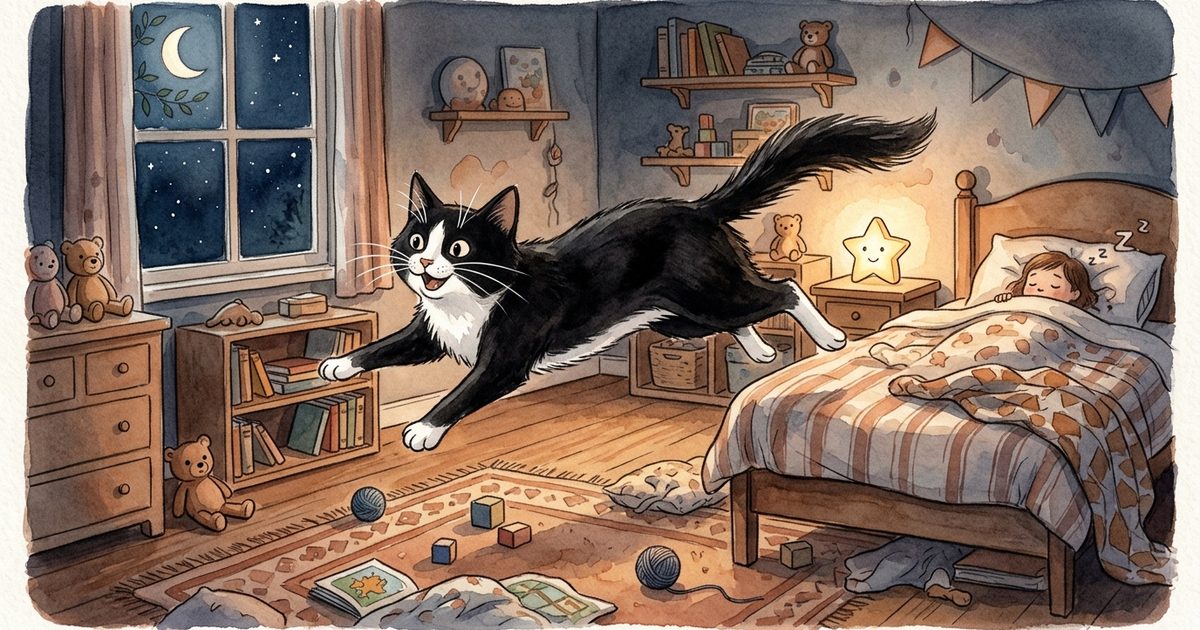
Your cat seems nocturnal because indoor life compresses their dawn energy into bursts — often at 3 or 4am. With no real hunting, that spike has nowhere to go but across your bed, and if you've ever fed or played with them then, you've taught them it works.
This is the part that confuses most owners. Your cat's body is crepuscular, tuned for dawn and dusk — but your day doesn't match it, and a closed apartment leaves that dawn spike with nowhere to land. The result reads, from a sleepy human's point of view, as "nocturnal."
The compressed indoor day
An outdoor cat's dawn peak is spent hunting — stalking, sprinting, climbing, then sleeping it off. An indoor cat has the same hormonal energy spike arrive at the same hour, but no prey, no territory to patrol, and often a home that's been still and dark since you went to bed. That pent-up drive has to go somewhere, and a dark hallway plus your sleeping body is the most interesting terrain available. This is also why indoor cats sleep so much during the day — they're conserving energy between peaks. For the baseline on just how long cats sleep and why, see why cats sleep so much; the quantity is normal, the timing is what collides with your sleep.
Accidental rewards: how 3am became the routine
Here's where it stops being biology and becomes learning. If your cat meows at 3am and you get up to feed them, open a door, or even play to tire them out, you've just handed them a reward for exactly that behavior. Cats are excellent at connecting an action to an outcome, and a single reliable payoff — food, attention, freedom — is enough to lock in a routine. The same learned-demand loop explains persistent night-yowling: it's not that your cat is nocturnal, it's that meowing at this hour has worked before. Our guide to why cats meow covers the night-yowling pattern in more detail. The uncomfortable truth is that most 3am routines are built, night by night, by a well-meaning human who just wanted to go back to sleep.
When it's more than zoomies
Most nighttime activity is normal energy with nowhere to go — but not all of it. A sudden change in a long-standing pattern deserves attention, especially in older cats. Discomfort from arthritis, the increased metabolism of hyperthyroidism, and feline cognitive dysfunction (a dementia-like decline in seniors) can all present as new night-waking, restlessness, or loud vocalizing after dark. The zoomies themselves aren't the diagnosis; the newness of the behavior is the signal. If your cat's nighttime habits have shifted noticeably, the right move is a vet visit rather than a behavior fix — Cornell Feline Health Center has reliable guidance on behavior change in cats and when it points to something medical.
Are Kittens and Senior Cats Nocturnal?
Kittens aren't nocturnal, but they have erratic, bursty energy around the clock because they're learning predatory skills and burning fast-growing fuel. Senior cats stay broadly crepuscular, but many shift toward night-waking as their sleep fragments with age and cognition changes.
A cat's relationship with the clock isn't fixed for life. Where your cat lands on the dawn-and-dusk curve depends heavily on age — and the two ends of the spectrum, kittens and seniors, are where owners most often wonder whether something has gone wrong. Usually it hasn't. The pattern is just being shaped, or reshaped, by biology.
Kittens: all-hours chaos
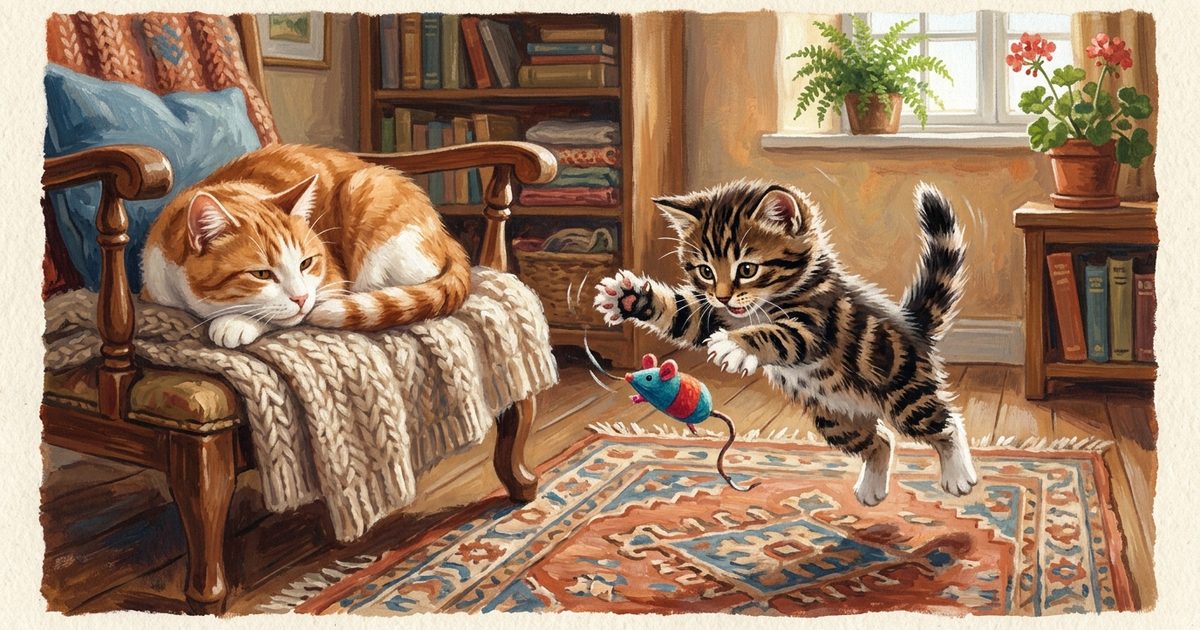
If you have a kitten, you already know: they don't have a schedule, they have explosions. A kitten will sleep dead to the world for two hours, then erupt into a full-speed ambush of your ankles at midnight, then crash again. This isn't a sleep disorder — it's development.
Kittens are growing at an extraordinary rate and learning the predatory skills they'd need in the wild: stalking, pouncing, timing a bite. Play is their hunting apprenticeship, and because their fuel demands are so high relative to their size, the bursts come fast, hard, and at any hour. Their crepuscular wiring is already forming, but it gets drowned out by the sheer volume of energy a growing body has to spend. As they mature — usually settling between one and two years — the chaos smooths into the more recognizable dawn-and-dusk rhythm of an adult cat.
Senior cats: fragmented sleep and night-waking
At the other end of life, the pattern can shift in a different direction. An older cat who once slept peacefully through the night may start waking at odd hours, pacing, or vocalizing in the dark. Some of this is simply normal aging — sleep becomes lighter and more fragmented in older cats, just as it does in older humans, so a senior may wake more often without anything being wrong.
But a new pattern of night-waking in a previously settled senior is worth paying attention to. It can reflect pain from arthritis, sensory decline (hearing or vision loss that disorients a cat after dark), or feline cognitive dysfunction — a syndrome analogous to dementia in older dogs and people, where disorientation and altered sleep-wake cycles are hallmark signs. The key signal is change: a senior who has never been a night-roamer suddenly becoming one. That's a vet-check moment, not a behavior to train away. For broader context on what to expect as your cat ages, see our guide on how long cats live and the life-stage changes that come with it.
How to Manage Your Cat's Nighttime Activity
You can shift a cat's schedule with routine: a hard play session followed by a meal right before your bedtime mimics a dusk hunt and sets them up to sleep through your night. Ignore 3am demands completely — any response teaches the wake-up to keep happening.
Here's the good news that often gets buried under the 3am frustration: a meaningful slice of your cat's nighttime behavior is learned, and learned behavior can be unlearned. The crepuscular baseline — those dawn and dusk energy peaks — is hardwired and won't be erased. But whether your cat channels that energy into a toy mouse at dusk or into your face at 3am is largely a matter of what you've taught them pays off.
The play-then-feed wind-down
The single most effective lever is a consistent bedtime ritual that mirrors a hunt. Give your cat 15 to 20 minutes of genuinely active, predatory play — chasing, pouncing, batting at a wand toy — right before your bedtime, then follow it immediately with a meal. This recreates the natural sequence cats are built for: hunt, eat, groom, sleep. By loading the hunt-eat phase into the end of your evening, you stack their deepest rest period against yours. For more on what that prey-driven play looks like — and the chirping that often comes with it — see our piece on why cats chirp.
Food puzzles and daytime enrichment
The other half of the equation is what happens while you're gone all day. A bored, under-stimulated cat who has slept away the daylight hours arrives at midnight with a full tank of energy and nothing to spend it on. Spreading some of your cat's daily calories across food puzzles and puzzle feeders gives their brain a workout during the day and prevents the genuinely hungry 3am wake-up. Daytime enrichment — window perches, solo-play toys, anything that breaks up the monotony — is the unglamorous foundation that makes nighttime calm possible.
Don't reward the wake-up
This is the rule owners find hardest and that matters most: when your cat wakes you at 3am, do nothing. No food, no play, no scooping them onto the bed, and ideally no eye contact or even a sigh — any response, even a frustrated one, is still a response, and a response tells the cat that 3am wake-ups work. Consistency is the entire game here. Be prepared for what behaviorists call an extinction burst: before the unwanted behavior dies, it often gets worse for a few nights as the cat tries harder to make the old routine pay off again. Push through it. Within a week or two of zero reinforcement, almost every cat learns that the wake-up no longer works and stops. For the vocal version of this same dynamic — the 3am yowl demanding attention — our guide on why cats meow walks through how learned demands form and fade.
Common Myths About Cats and Night
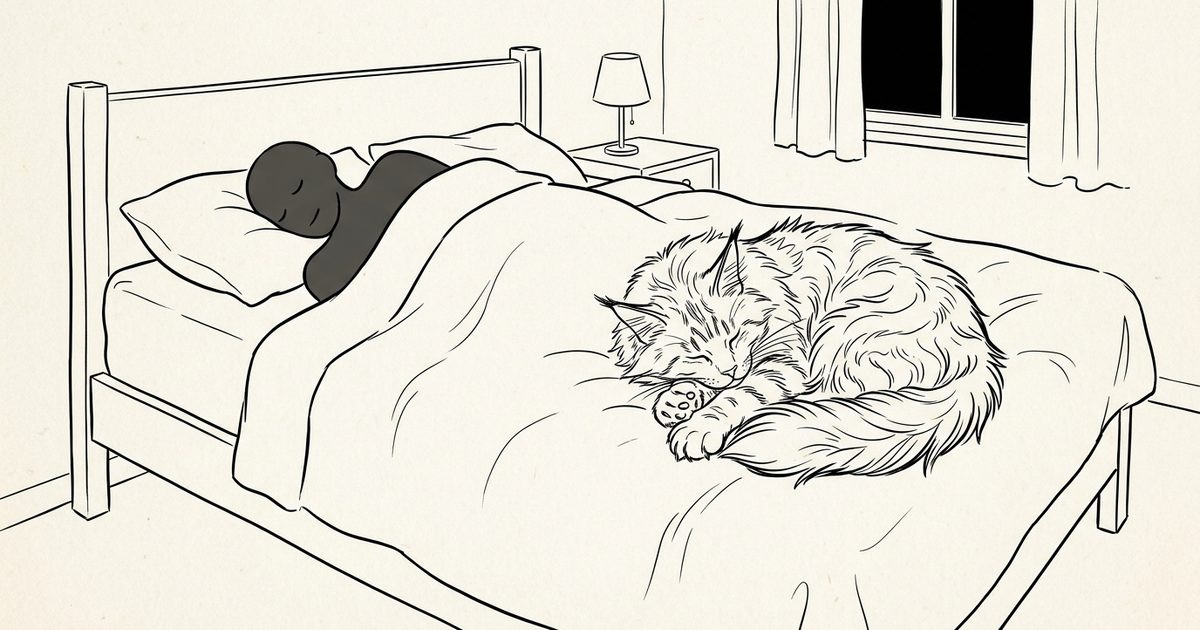
Cats are not active all night, they are not truly nocturnal, and you are not stuck with a 3am wake-up forever. A cat's schedule is partly hardwired and partly learned — the learned part is the part you can change.
Myth: Cats are nocturnal. Fact: Cats are crepuscular, meaning their body clock naturally peaks at dawn and dusk, not in the middle of the night. The "nocturnal" label is the common shorthand people reach for, but it misses the real pattern — two activity spikes wrapped around long naps, not a single all-night run.
Myth: Cats roam all night long. Fact: Even an outdoor cat's night is mostly sleep and short patrols, with the real bursts of energy clustered around sunrise and sunset. Sustained, nonstop activity through the dark hours is unusual and often points to under-stimulation rather than a "wild" nature.
Myth: You can't change a cat's sleep schedule. Fact: The crepuscular baseline is hardwired and won't be erased, but the learned part of the schedule — the 3am demand for food or play — shifts reliably with consistency. A play-then-feed wind-down and refusing to reward the wake-up are the levers most owners underestimate.
Myth: 3am zoomies mean something is wrong. Fact: Usually they are normal excess energy finding an outlet in a compressed indoor day, especially in young or active cats like a Bengal. But a sudden change in a long-standing pattern — new night-waking in a cat that never did it before, or a sharp increase in restless pacing — can signal pain, hyperthyroidism, or cognitive change and is worth a vet check. The steady nightly ritual is usually nothing to worry about; the abrupt shift is the one to act on.
Cats at Night — Quick Summary
| Question | Short answer |
|---|---|
| Are cats nocturnal? | No — cats are crepuscular, most active at dawn and dusk. |
| When are cats most active? | Around sunrise and sunset, with long naps in between. |
| Why is my cat wild at 3am? | Compressed indoor energy and learned rewards — the dawn spike has nowhere to go. |
| Can I change the schedule? | The learned part yes — routine play-then-feed and ignoring 3am demands shift it. |
| Are kittens nocturnal? | No, but their energy is bursty and erratic around the clock while they grow. |
| Do older cats wake at night? | Many do as sleep fragments with age — a new pattern warrants a vet check. |
Curious What Your Cat Would Say?
Upload a photo and get a warm, personalized reading from your cat's perspective.
Start Your Free ReadingFrequently Asked Questions
Are cats nocturnal or crepuscular?
Cats are crepuscular, not nocturnal. Their body clock naturally peaks at dawn and dusk, shaped by millions of years of hunting small rodents at twilight. The 'nocturnal' label is common shorthand, but cats are built for the edges of the day, not the middle of the night.
Why is my cat so active at night?
An indoor cat's dawn energy spike has nowhere to go but across your apartment, and if you've ever fed or played at that hour, you've taught the wake-up to keep happening. Compressed indoor life plus a learned reward is the usual cause, not a truly nocturnal nature.
What time of day are cats most active?
Cats are most active around sunrise and sunset, with long naps filling the hours in between. These two crepuscular peaks are short and sharp; sustained activity through the whole night is unusual and usually a sign of boredom or a medical issue.
How do I stop my cat from waking me at 3am?
Run a hard 15-20 minute play session followed by a meal right before your bedtime, then refuse to respond to 3am demands entirely — no food, no play, no eye contact. Expect a brief extinction burst where it gets worse before it fades, then hold the line.
Do indoor cats become more nocturnal?
Indoor cats stay crepuscular at their core, but their activity can look more nocturnal because the dawn peak has no hunting to absorb it. Boredom and an unvarying human schedule push that energy into late-night bursts that read as nocturnal even when they aren't.
Are kittens nocturnal?
No — kittens are crepuscular like adults, but their energy is bursty and erratic around the clock while they grow and practice predatory skills. As they mature, usually between one and two years, the chaos settles into the recognizable dawn-and-dusk rhythm.
Why do older cats stay awake at night?
Many senior cats wake more at night because sleep fragments and lightens with age. A new pattern of night-waking in a previously settled older cat can also reflect pain, sensory decline, or feline cognitive dysfunction, so it's worth a vet check rather than a behavior fix.
Can you change a cat's sleep schedule?
The hardwired crepuscular baseline can't be erased, but the learned part — like a 3am food demand — shifts reliably with consistency. A play-then-feed wind-down and refusing to reward wake-ups are the levers most owners underestimate.
Sources & References
You Might Also Like
Why Do Cats Sleep So Much? What's Normal and What's Not
Cats sleep 12 to 16 hours a day because they evolved as ambush predators. Learn what's normal, how age changes sleep, and when extra rest needs a vet visit.
21 min readKitten Teething: Timeline, Symptoms & How to Help
Kitten teething runs from 3 to 7 months as baby teeth fall out. Learn the timeline, signs to watch for, and how to soothe a teething kitten safely.
15 min readWhen Do Cats Stop Growing? A Complete Timeline
When do cats stop growing? Most cats reach adult size by 12-18 months, but large breeds like Maine Coons keep growing until 3-4 years. Full timeline inside.
14 min readA message, in your cat's voice
Upload a photo, get a warm note written from your cat's perspective — just for fun. Plus 121 vet-cited articles, offline.