Why Do Cats Sleep So Much? What's Normal and What's Not
Why Do Cats Sleep So Much? What's Normal and What's Not
Cats sleep a lot — adults typically 12 to 16 hours a day, and kittens and seniors even more. If you've ever wondered exactly why do cats sleep so much, the number can look enormous next to a human's eight hours, but for this species it is completely normal. Cats are short-burst hunters, evolved to rest between brief, intense bursts of energy. Sleep is how they recharge, digest their protein-rich carnivore diet, and grow steadily. Cats are polyphasic sleepers, which means these naps are spread across day and night rather than taken in one long block the way humans sleep. As they age, these patterns shift naturally — kittens sleep the most, and seniors sleep more but wake more easily.
Key takeaways
- Cats sleeping 12 to 16 hours (up to 20 for kittens and seniors) is normal, rooted in their high-energy hunting strategy and protein-rich diet.
- Cats don't sleep all at once; they are polyphasic sleepers who break rest into many short naps across the full day and night.
- A sudden increase in sleep, especially with hiding, appetite loss, or dullness while awake, is different from a healthy nap and means a vet visit is needed.
Cat sleep at a glance
| Life stage | Average sleep per 24 hours | What to note |
|---|---|---|
| Kitten | 18–20 hours | Essential for growth and nervous-system development |
| Adult cat | 12–16 hours | Steady routine, tied to feeding and play times |
| Senior cat | 14–18 hours | Longer but lighter sleep, often more fragmented |
| Sick cat | Outside normal range | Dullness, hiding, or reduced appetite while awake |
How Much Do Cats Sleep?
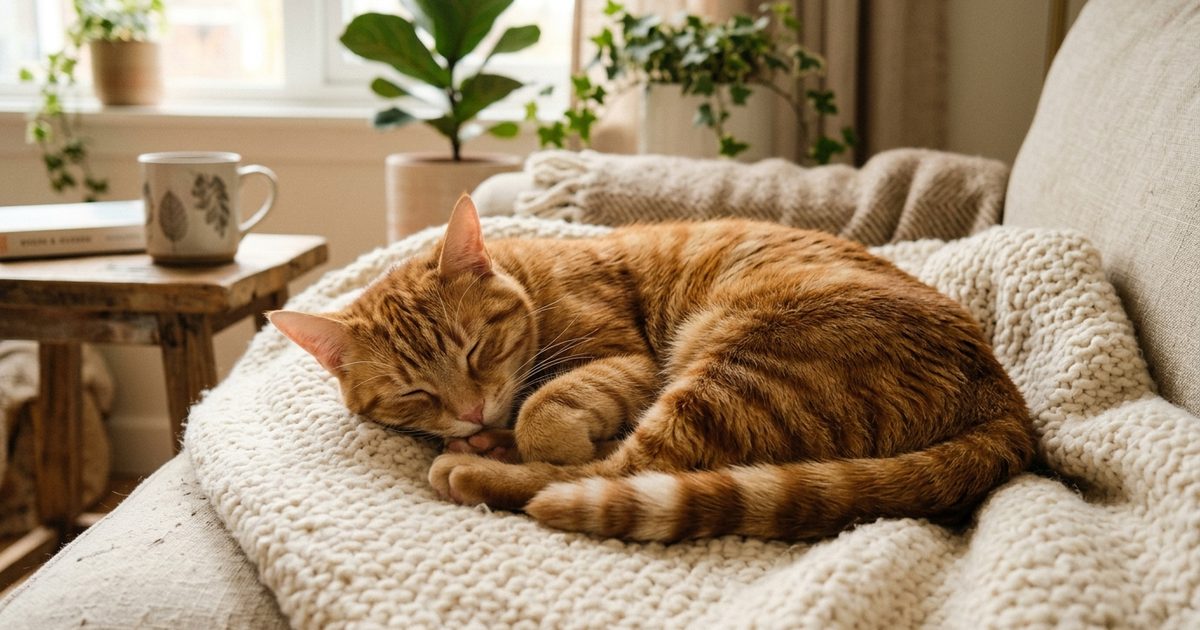
Adult cats sleep about 12 to 16 hours a day, and some cats — especially kittens and seniors — can sleep up to 20 hours in 24. Cats are polyphasic sleepers, so this happens in many short naps spread across day and night rather than one long block.
If you've ever caught yourself wondering whether your cat is sleeping her life away, the honest answer is: she's sleeping roughly the right amount for a cat. The question "how much do cats sleep per day" surprises most owners the first time they look it up, because the number looks enormous next to a human's eight hours. But cats run on a completely different schedule than we do, and the way they spread those hours around matters as much as the total.
The 12-to-16-hour baseline
A healthy adult cat lands somewhere around 12 to 16 hours of sleep in a 24-hour cycle. That's the working baseline most veterinarians point to, and there's real individual variation inside it — personality, breed tendencies, and environment all nudge the number up or down. An active, curious cat may sit closer to 12, while a laid-back one may push toward 16 without anything being wrong.
Environment plays a quietly large role. Indoor cats often sleep more than outdoor or working farm cats simply because there's less to do — fewer things to stalk, climb, or patrol. A cat with a window to watch, a puzzle feeder, and regular play may clock fewer hours than a cat staring at the same four walls. So when you ask how much should cats sleep, the honest answer is "her normal," and that normal is shaped by how enriched her day is. You can read more about feline behavior and health from the Cornell Feline Health Center.
Polyphasic, not one long sleep
Here's the part that throws people: cats don't sleep the way we do. Humans are monophasic sleepers — one long block at night, awake through the day. Cats are polyphasic, meaning they cycle through many short sleep bouts instead. A typical cat nap runs anywhere from 15 minutes to around two hours, and a cat will string together dozens of these across a full day, with awake stretches for hunting, eating, grooming, and exploring in between.
This fits a hunter's schedule perfectly. A wild cat doesn't know when the next mouse will appear, so she dozes in a ready state, wakes for a burst of activity, then drops back into rest. Your house cat inherited that rhythm — even though her "hunt" is now a feather wand at 7pm. The shape of her day still looks like stalk, sprint, eat, groom, crash, repeat. It's worth noting too that where and how cats sleep on you often reflects these short cycles — a quick nap on your lap before she's up again.
Up to 20 hours for kittens and seniors
The upper end of the range — 18 to 20 hours — belongs to kittens and senior cats. A growing kitten can sleep nearly the entire day away, and that's not a sign of anything wrong. Sleep is when kittens build muscle, wire their nervous system, and process the avalanche of new things they encountered while awake. Older cats drift back toward long hours too, often with lighter and more broken rest. We come back to exactly why age reshapes sleep — and when more sleep deserves a closer look — in the sections on how age changes sleep and the warning signs below.
Why Do Cats Sleep So Much?
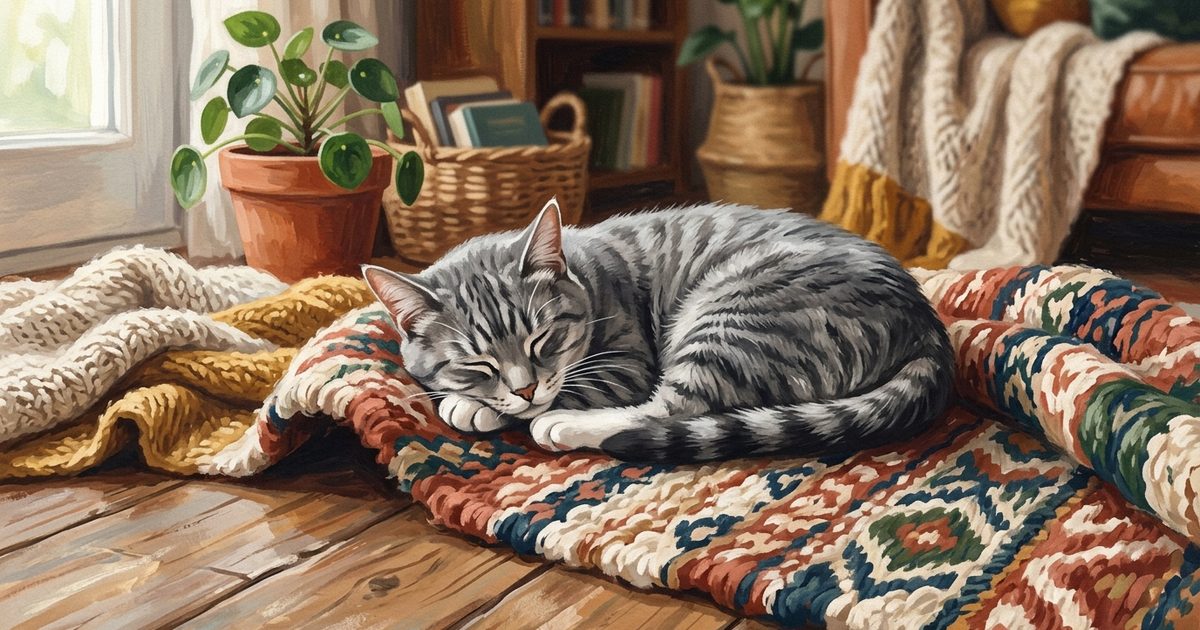
Cats sleep so much because they evolved as ambush predators — short bursts of intense hunting use enormous energy, so cats conserve it by resting between hunts. Their obligate-carnivore diet, high in protein and fat, also requires long rest periods to digest.
So why do cats sleep so much? It's the question at the heart of this whole article, and the answer isn't laziness — it's biology. Cats are built around a particular kind of hunting, fueled by a particular kind of food, and both of those things make long rest not just normal but necessary. Three forces do most of the work here: the energy economics of an ambush predator, the slow digestion of a meat diet, and, for many modern house cats, plain boredom.
Ambush predator energy economics
Cats are ambush predators, not endurance hunters. Their whole strategy is to stalk, wait, then explode into a short, all-out sprint and pounce. That burst — the stalk-sprint-pounce sequence — burns an enormous amount of energy in a few seconds, far more per minute than a steady jog. A cat can't keep it up for long, and in the wild she wouldn't need to: one good catch refuels her, and the hours in between are best spent resting.
The domestic cat's wild ancestor, the African wildcat, routinely rested 16 hours or more between hunts. Domestication changed almost everything about a cat's life — food bowls, warm houses, no predators — but it didn't change the hardware. Your house cat still carries the metabolism, the muscles, and the rest-drive of a predator built for short intense effort followed by long recovery. The fact that her "prey" is now kibble doesn't switch that system off. International Cat Care describes this resting pattern as a normal, species-typical rhythm rather than a sign of an inactive animal.
The obligate-carnivore digestion factor
The second piece is diet. Cats are obligate carnivores — their bodies are built to run on animal protein and fat, not on the carbohydrates that fuel humans and dogs. A high-protein, meat-based diet is energy-dense, but it's also slow and metabolically expensive to break down. Processing all that protein and fat is real work for the liver and kidneys, and the body does that work most efficiently at rest.
This is part of why cats tend to sleep deeply after a meal: resting aids digestion and protein turnover. It's also why the question of what cats eat and the question of how cats sleep are more connected than they look. A cat's strict-carnivore physiology is tuned around cycles of hunt, feast, and rest — not constant grazing. When your cat eats a big meal and then disappears for a three-hour nap, she's not being lazy; her body is doing exactly what it evolved to do.
Wonder what runs through her mind between those long naps? Get a MeowMind reading — upload a photo and hear her describe her dreamy little world in her own voice.
Boredom in modern indoor cats
The third force is the most modern one, and it's worth being honest about. A wild cat's day is structured by the need to hunt — stalk, search, fail, stalk again. An indoor cat's day, if no one fills it, is structured by the absence of all that. With no hunting required and a full food bowl, idle hours have to be filled with something, and for most cats that something is sleep.
This is normal, and it isn't by itself a problem — a cat who sleeps her usual hours and plays happily when awake is doing fine. But it's the reason enrichment matters so much for indoor cats. Without play, puzzle feeders, climbing space, and things to watch, a cat's idle hours can stretch into genuine under-stimulation, and that's when you start to see the link between too little activity and problem behaviors. Bored cats don't always sleep more out of sadness, but a bored cat with too much unstructured time is a cat who benefits enormously from a daily play session — see our guidance on play and aggression for how that shows up. Excess sleep alone isn't a depression diagnosis, but it's one of the first things to look at when an indoor cat seems flat.
How the Cat Sleep Cycle Works
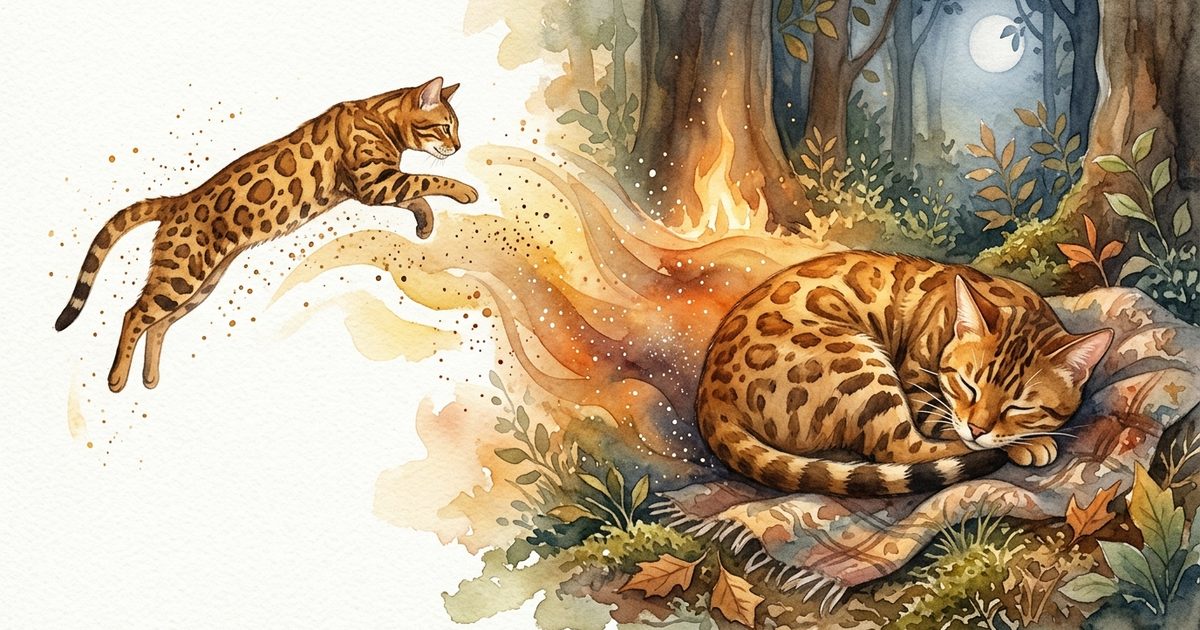
A cat's sleep alternates between light dozing and short bursts of deep REM sleep. Roughly three quarters of a cat's sleep is light, so she can wake instantly — which is why cats often seem half-asleep and ready to spring up at any sound.
If you've ever watched your cat nap and noticed she's awake before the treat bag even finishes crinkling, the sleep cycle explains it. Cats don't drop into one long, oblivious sleep the way we do. They cycle through stages, and most of those stages are engineered for fast awakening — a design that makes perfect sense for a small predator.
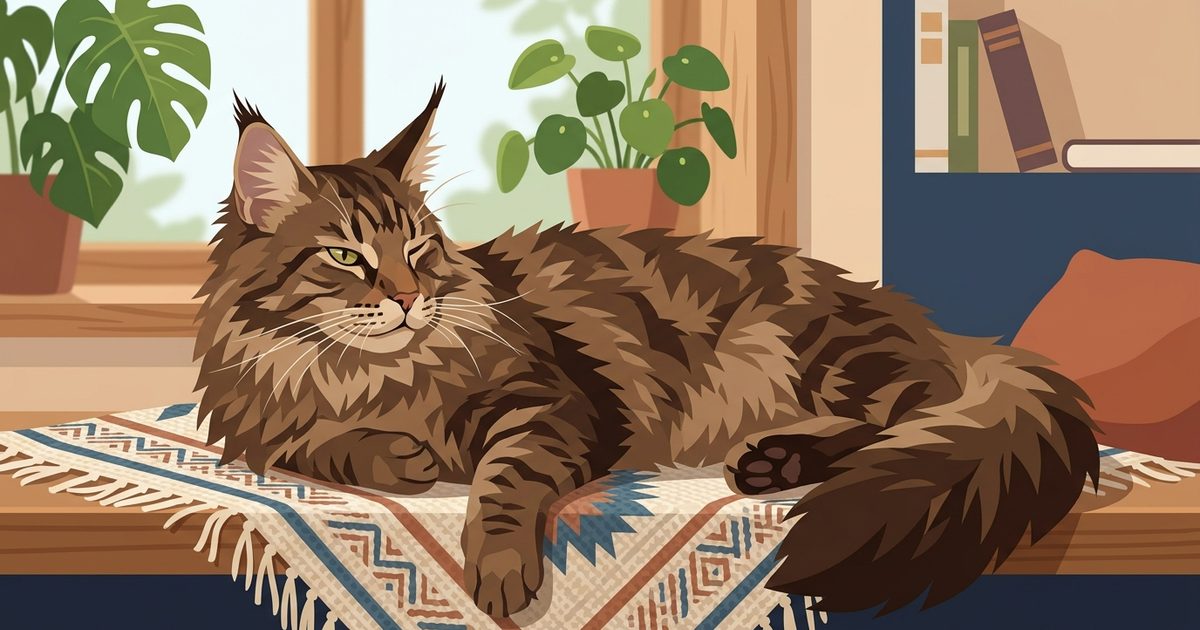
Light dozing (slow-wave sleep)
The dominant stage of a cat's sleep is light, slow-wave dozing — and it accounts for roughly three quarters of her total rest. In this stage your cat looks asleep, and she is, but only loosely. Her ears still swivel toward sounds, her muscles stay primed, and she can go from fully relaxed to upright in well under a second. This is the classic "cat nap": eyes narrowed or shut, body curled but not heavy, every sense still tuned to the room. The fridge door, a footsteps pattern, a dog collar jingling — any of these can flip her from dozing to alert before you've finished crossing the kitchen. The Cornell Feline Health Center notes that this vigilant light sleep is one reason cats can rest so much without becoming truly vulnerable.
Deep REM sleep
The remaining portion is deep REM sleep — the stage associated with dreaming. Here your cat's body relaxes more fully, and you may see the telltale signs: paws twitching, whiskers flicking, mouth making small chewing or suckling movements, the occasional full-body jerk. These are the moments owners love to film, certain their cat is chasing something in a dream. REM is real for cats, and it matters for processing and nervous-system health, but it comes in short blocks rather than the long stretches humans experience. For the dreaming content itself — what those twitching paws might actually be about — we go deep in our separate article on whether cats dream, so we won't re-derive it here.
Why cats wake up ready to run
The whole architecture tilts toward light sleep, and that's not an accident — it's a predator survival trait. A small hunter that drops into long, deep, near-motionless REM blocks the way humans do would be an easy meal for something bigger. So cats evolved to keep most of their rest in the quickly-interruptible stage, taking REM only in small, bounded doses. That's also why a cat can seem profoundly asleep one moment and be sprinting down the hallway the next. The hardware is built for it. Her chosen sleep position often reflects the same logic — a loaf or curled shape that protects the belly while leaving the legs coiled to launch.
Are Cats Nocturnal?
Cats are not truly nocturnal — they are crepuscular, meaning most active at dawn and dusk. This schedule matches the activity of their natural prey like mice and birds, and it's why your cat has bursts of energy around sunrise and early evening.
It's one of the most common misreads of cat behavior: a cat tearing around at 4 am must be nocturnal. She isn't. The label that actually fits is crepuscular, and understanding it changes how you interpret those dawn serenades and evening zoomies.
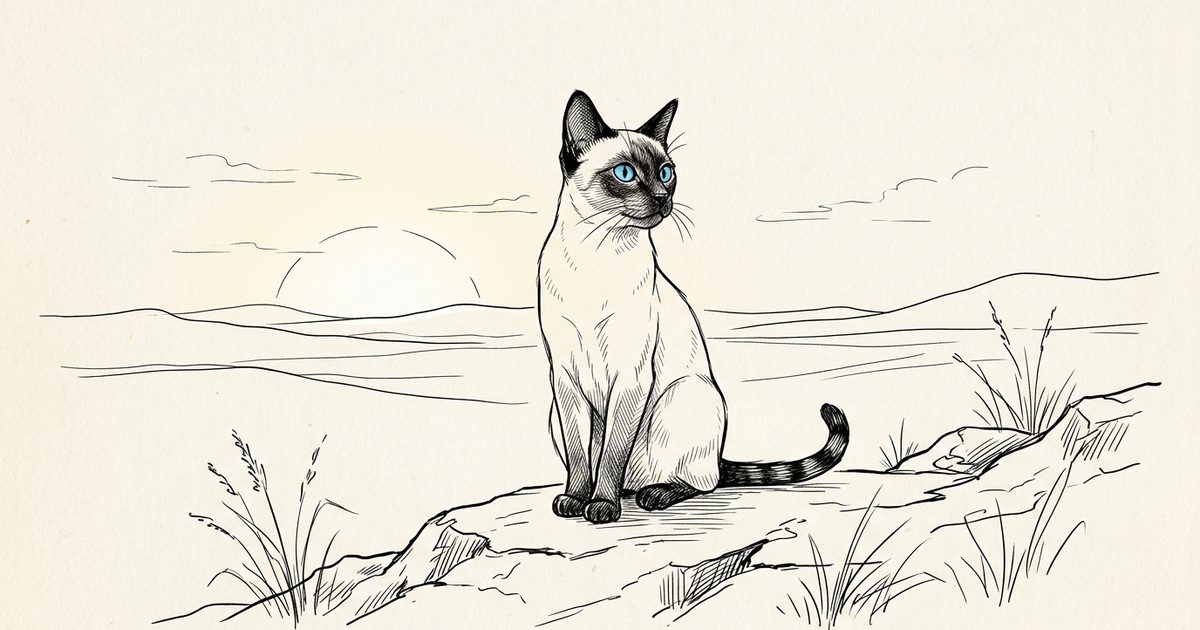
Crepuscular, not nocturnal
Crepuscular animals are most active during the twilight hours — dawn and dusk. For the wild ancestors of domestic cats, these were the best hunting windows: low light gave them cover, and their prey (mice, small birds, insects) was itself most active at those times. Evolution wired the preference in, and domestication hasn't erased it. So when your indoor cat explodes into a case of the 3 am zoomies or starts his evening rampage around sunset, he isn't malfunctioning — he's running ancestral software on modern hardware. The International Cat Care information on feline activity patterns places this dawn/dusk peak at the core of normal cat behavior. We cover the full nocturnal-versus-crepuscular distinction, including how it interacts with human households, in our dedicated article on whether cats are nocturnal.
Why your cat wakes you at dawn
The dawn activity peak is the single most common sleep complaint from cat owners, and it has a clear cause: your cat's internal clock says move, hunt, eat right around the time your alarm is still an hour away. When that drive meets a closed bedroom door, you get the pawing, the meowing, the paper-bag rustling aimed squarely at waking you up. The most effective response isn't to argue with biology but to redirect it: a solid play session followed by a meal right before your bedtime shifts her biggest "hunt and feast" cycle to late evening, buying you a quieter morning. And when the demand meows still come, ignoring them matters — every time you get up and feed her, you teach her that 5 am screaming works.
Indoor light and routine reshape the rhythm
Artificial lighting, central heating, and a fixed feeding schedule do soften the wild crepuscular pattern — an indoor cat's activity curve is often blurrier and more spread out than a barn cat's. But it rarely disappears entirely. Even cats who have never seen a sunrise still tend to ramp up around dawn and dusk, because the rhythm is hormonal and light-mediated, not learned. You can shift the edges of it; you can't delete it. The practical takeaway is to work with the curve — schedule play and meals near her natural peaks — rather than against it.
How Age Changes How Much Cats Sleep
Kittens sleep the most — up to 20 hours — because sleep is when they grow and wire their nervous system. Adult cats settle into 12 to 16 hours, and seniors usually sleep more again, with lighter and more fragmented rest.
Did you know? A cat sleeps somewhere between a third and half of her entire life, and each life stage — playful kitten, steady adult, and lighter-sleeping senior — carries its own distinct sleep rhythm shaped by growth, daily routine, and the slow changes of aging.
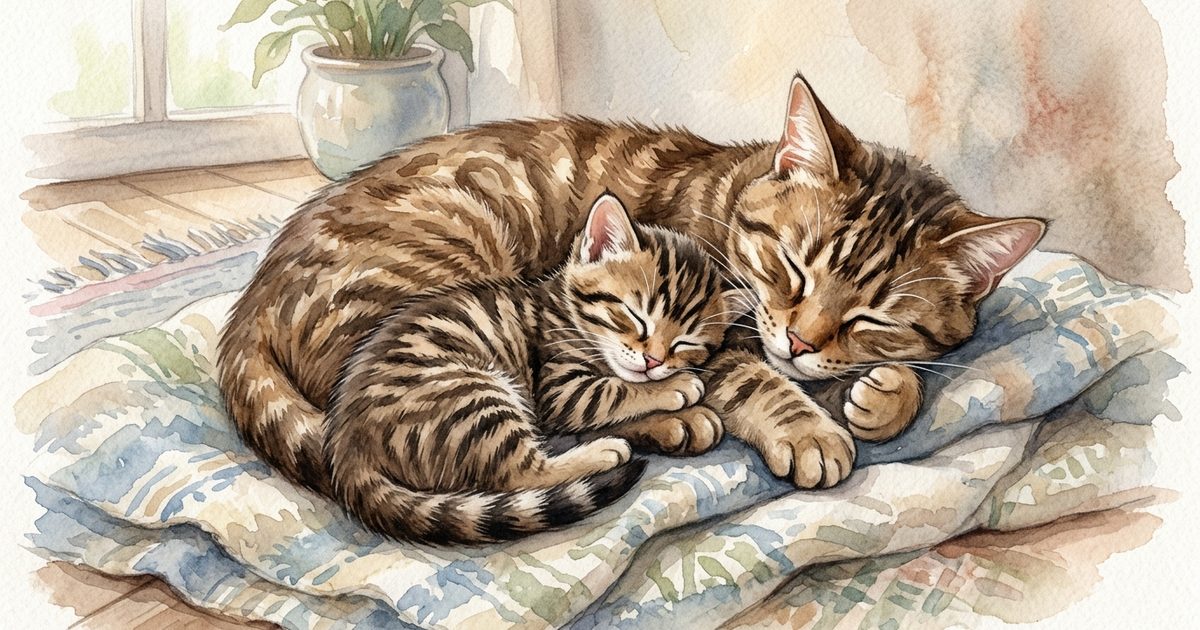
Kittens: sleeping to grow
A kitten needs up to 20 hours of sleep, which can sound excessive, but those naps hold critical work: growth hormone is released during deep sleep, and her rapidly developing nervous system uses the downtime to wire new connections between neurons. If you've ever wondered why your kitten sleeps so much, this is the biological answer — sleep is quite literally her job right now.
A kitten's daily rhythm follows a strict and predictable loop: wake, eat, play hard in short frantic bursts of pouncing, then crash suddenly into sleep. This wake-eat-play-crash cycle repeats all day, and each nap leaves her a little bigger, a little more coordinated, and a little better at reading the world around her. There's no benefit to keeping a kitten awake, and doing so can even slow that development.
Adult cats: a steady 12 to 16 hours
Around one year of age, a cat's chaotic growth-phase sleep settles into a predictable pattern. A healthy adult cat sleeps somewhere in the 12 to 16 hour range each day, depending on personality, activity level, and lifestyle. Those hours are mostly arranged around two things: meals and play. She takes long, relaxed naps before and after each of these core activities.
An indoor cat without enough stimulation may fill idle time with sleep, so enrichment and regular play keep the routine healthy and prevent boredom from drifting into anxiety. Paired with her preferred sleep position, this routine usually stays remarkably stable year after year.
Senior cats: more sleep, but lighter
As a cat ages, sleep time climbs again, sometimes approaching kitten levels, but the nature of it is different. A senior cat's sleep is often lighter and more fragmented. Stiff joints make certain postures uncomfortable; reduced hearing and vision make her easier to startle; and a portion of cats begin to show signs of cognitive decline, becoming disoriented in familiar spaces.
That's why changes in a senior cat's sleep deserve close attention — not every shift is "just aging." Mapping the change against the stages of cat lifespan helps separate normal aging from warning signs, which we cover in the section that follows.
When Should You Worry About Your Cat Sleeping Too Much?
Worry when sleep suddenly increases and comes with hiding, appetite loss, weight loss, poor grooming, or dullness while awake — that pattern is lethargy, not rest. Because cats hide illness well, a prompt vet visit is the right next step rather than waiting to see.
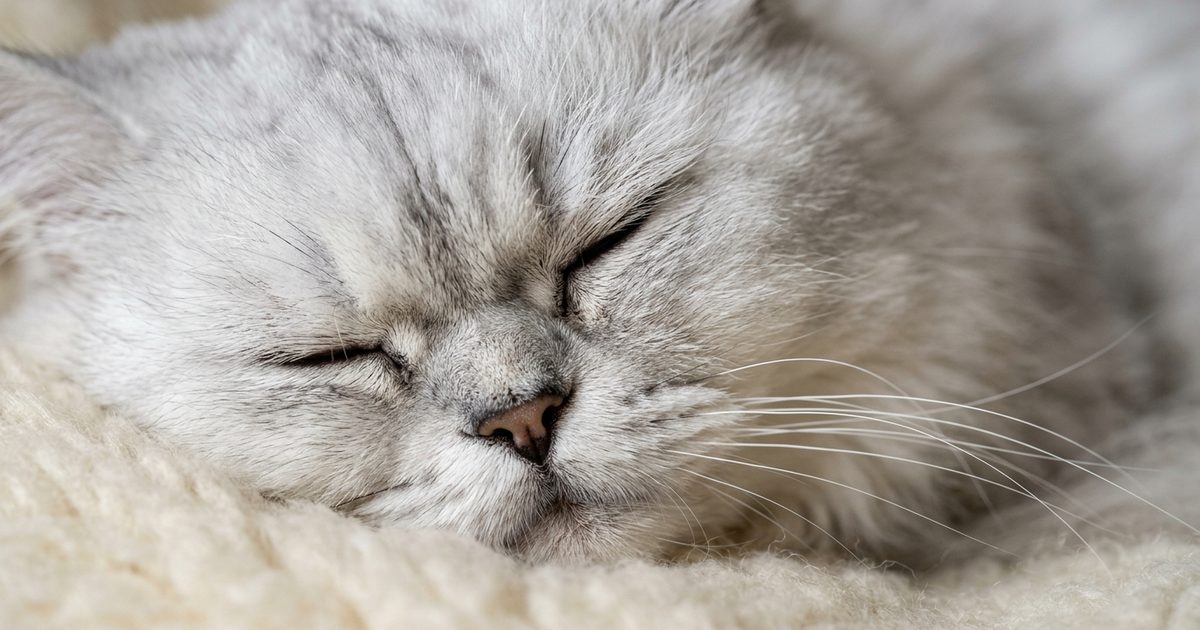
The difference between normal sleep and lethargy
The key is what your cat looks like when she's awake. A healthy, well-rested cat wakes up bright: eyes clear, responsive, willing to play, and curious about her surroundings. An unwell cat is dull even when awake — glassy-eyed, slumped in posture, or uninterested in interaction. That's the sleep-versus-lethargy distinction: rest prepares for wakeful vitality, while lethargy is its loss. Mood also offers clues; if withdrawal comes alongside a shift in sleep patterns, it's worth exploring whether she's feeling depressed or enduring chronic pain.
Warning sign patterns
A single symptom rarely tells the story, but when several warning signs appear together, it's time to book a visit. Patterns worth watching include:
- A sudden change in sleep hours — clearly more or less, within just a few days
- Hiding in new places — curled up in a secluded corner she wouldn't normally use
- Reduced appetite or weight loss — especially when they happen together
- Stopping grooming — coat greasy, matted, or lacking its usual care
When these signs appear in pairs, act promptly, because cats are skilled at hiding illness and behavioral change is often the only early signal. The Cornell Feline Health Center lists a sudden shift in activity or behavior as an important reason to seek veterinary care.
Senior cat sleep changes that need checking
For senior cats, an increase in sleep paired with specific symptoms can point to treatable conditions. If your older cat is clearly sleeping more and shows night-time vocalization, spatial disorientation, or begins eliminating outside the litter box, have your vet assess her for cognitive dysfunction or hyperthyroidism. Both are common in senior cats and both have real treatment options. International Cat Care notes that changes in sleep, vocalization, and toileting habits are all early warning signs of a health problem in cats. An accurate diagnosis requires a veterinarian.
When there's nothing to worry about
If your cat keeps a steady routine, eats and grooms normally, and plays normally while awake, then her sleep is healthy — however large the number looks to a human. Cats simply need a lot of sleep.
Common Myths About Cat Sleep
Cats are not lazy — their long sleep is built to fuel hunting, not driven by inertia. A sleeping cat isn't always a happy one either, since excessive sleep can signal illness, and cats are crepuscular rather than truly nocturnal.
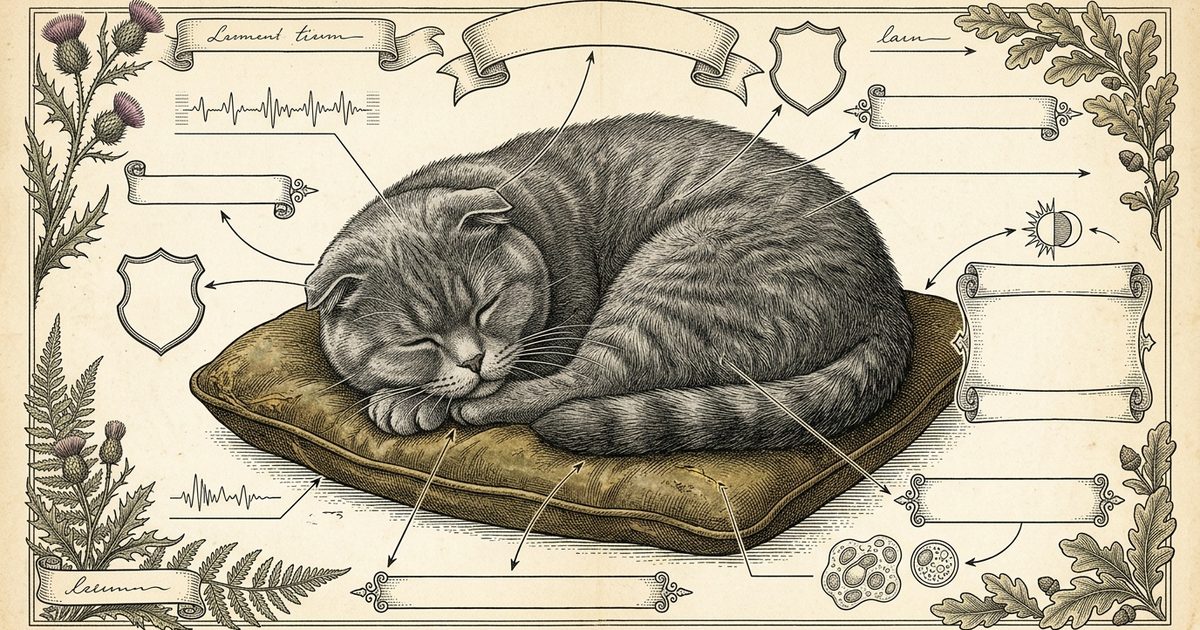
Myth: Cats are lazy. Truth: From the perspective of a human's 8-hour sleep, 12 to 16 hours can look excessive, but it's a species adaptation, not inertia. Cats evolved as ambush predators that need long rest between short, intense hunting bursts. Even a well-fed modern pet cat still carries that hunting blueprint.
Myth: A sleeping cat is a happy cat. Truth: A happy cat does sleep well, but equating hours of sleep directly with happiness is inaccurate. Excessive sleep alongside dullness while awake can mean your cat is unwell. Watch her behavior when awake, not just the hours she sleeps.
Myth: Cats are nocturnal. Truth: Cats are crepuscular (most active at dawn and dusk), not truly nocturnal. This explains why your cat is full of energy at dawn and during the famous "3 am burst." For the full discussion, see our article on whether cats are nocturnal.
Myth: Cats dream all night the way we do. Truth: Cats do experience REM sleep and dream, but it's only a small share of their total sleep. The rest is mostly light sleep that keeps them alert and ready. For a deeper look at what cats might dream about, see our article on whether cats dream.
Cat Sleep at a Glance — Summary
| Question | Short answer |
|---|---|
| How much do adult cats usually sleep? | 12 to 16 hours per 24, spread across many naps |
| Why do they sleep so much? | To conserve energy between hunting bursts and to digest a high-protein diet |
| How much sleep do kittens need? | Up to 20 hours — sleep drives growth and nervous-system development |
| Are cats nocturnal? | No, they are crepuscular — most active at dawn and dusk |
| Do senior cats sleep more? | Yes, usually lighter and more fragmented |
| Can more sleep be a warning sign? | Yes, if it comes with dullness, hiding, or appetite loss |
| When should I contact a vet? | When habits change suddenly, or when several warning signs appear together |
Curious What Your Cat Would Say?
Upload a photo and get a warm, personalized reading from your cat's perspective.
Start Your Free ReadingFrequently Asked Questions
Why do cats sleep so much?
Cats sleep 12 to 16 hours a day because they evolved as ambush predators, built for short bursts of intense hunting followed by long recovery. Their high-protein carnivore diet also takes real energy to digest, so long rest between meals is normal and healthy rather than a sign of laziness.
How much do cats sleep per day?
A healthy adult cat sleeps about 12 to 16 hours in 24, spread across many short naps rather than one long block. Kittens and senior cats can sleep up to 20 hours, since kittens need it for growth and older cats tend to rest in lighter, more broken stretches.
Are cats nocturnal or crepuscular?
Cats are crepuscular, not truly nocturnal, meaning they are most active at dawn and dusk. This pattern matches when their natural prey — mice, small birds, and insects — is also most active, which is why your cat has energy bursts around sunrise and early evening.
Why does my cat sleep so much during the day?
Daytime sleep is normal for a cat because she is a polyphasic sleeper who rests in many short naps around the clock. If your indoor cat sleeps more than her usual hours, the most common cause is under-stimulation, so adding daily play and puzzle feeders often helps.
Is it normal for a kitten to sleep 20 hours a day?
Yes. Kittens sleep up to 20 hours a day because growth hormone is released during deep sleep and their developing nervous system uses rest to wire new connections. As long as she wakes bright, playful, and hungry between naps, the long hours are healthy.
Why does my senior cat sleep more and more lightly?
Older cats naturally sleep more, often in lighter and more fragmented stretches, as their senses dull and joints stiffen. If the change comes with night crying, disorientation, or accidents outside the litter box, ask your vet to check for cognitive decline or thyroid issues.
When should I worry about my cat sleeping too much?
Worry when sleep suddenly increases and comes with hiding, appetite loss, weight loss, poor grooming, or dullness while awake. That pattern is lethargy, not rest, and since cats hide illness well, a vet visit is the right next step.
Do cats dream when they sleep?
Yes, cats experience REM sleep and dream, shown by twitching paws, flicking whiskers, and small chewing motions. However, REM is only a small share of their total sleep, since most of a cat's rest is light dozing that lets her wake instantly.
Should I wake my cat up if she is sleeping a lot?
Usually no. If your cat keeps a steady routine, eats and grooms normally, and plays when awake, her sleep is healthy even if it looks like a lot to you. Only interrupt it if she is missing meals or showing signs of illness.
Sources & References
You Might Also Like
Are Cats Nocturnal? The Truth About Their Sleep Schedule
Are cats nocturnal? Not exactly — cats are crepuscular, most active at dawn and dusk. Here's why your cat goes wild at 3am and how to manage nighttime activity.
18 min readKitten Teething: Timeline, Symptoms & How to Help
Kitten teething runs from 3 to 7 months as baby teeth fall out. Learn the timeline, signs to watch for, and how to soothe a teething kitten safely.
15 min readWhen Do Cats Stop Growing? A Complete Timeline
When do cats stop growing? Most cats reach adult size by 12-18 months, but large breeds like Maine Coons keep growing until 3-4 years. Full timeline inside.
14 min readA message, in your cat's voice
Upload a photo, get a warm note written from your cat's perspective — just for fun. Plus 121 vet-cited articles, offline.