
Do Cats Dream? What Happens When Cats Sleep
So, do cats dream? Yes — and almost certainly every time they slip into deep sleep. Those twitching paws, fluttering whiskers, and tiny sleeping murmurs aren't random; your cat is physically acting out a dream. Decades of sleep research show cats enter REM sleep with brain patterns remarkably close to ours, replaying fragments of their day — a pounce, a play session, a moment with you. In this article we'll walk through the evidence that cats really do dream, what they're likely dreaming about, how their sleep cycles work, whether they can have bad dreams, and why kittens seem to dream even more than adults.
Key takeaways
- Cats do dream — research shows they enter REM sleep with brain activity similar to humans, and they act dreams out through twitching paws and whiskers.
- Cats dream about their real lives: hunting, playing, exploring, and interacting with you.
- Kittens dream more than adults because they spend more time in REM sleep, which helps their developing brains wire up.
- Twitching and soft vocalizations in sleep are normal; violent thrashing, seizures, or panic on waking may warrant a vet check.
How Cats Dream — Quick Reference
| Sleep stage | What's happening | Do they dream? |
|---|---|---|
| Light sleep | Drifting, ears swiveling, easily roused | Probably not yet — too shallow |
| Deep NREM | Body still, breathing slow and steady | Unlikely — this is restorative rest |
| REM sleep | Paws paddling, whiskers and ears twitching, eyes moving under closed lids | Yes — this is when dreams happen |
| Micro-awakenings | Brief rousing, shifting position, then back under | No — too short and fragmented |
| Kitten sleep | Dramatic twitching, paddling, soft squeaks | Yes — and more often than adults |
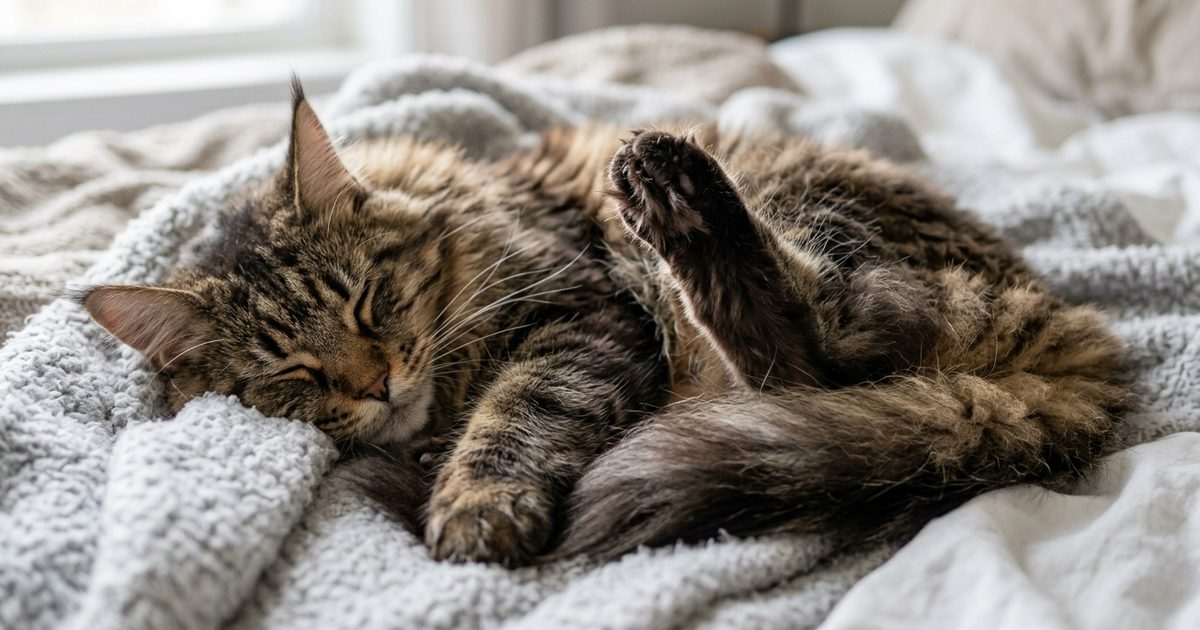
Do Cats Dream?
Yes — cats dream. Research shows cats enter REM sleep with brain activity strikingly similar to ours, and they dream about everyday feline experiences: hunting, playing, exploring. Those twitching paws and fluttering whiskers are your cat physically acting out a dream in real time.
If you've ever watched your cat asleep and noticed its paws paddling, whiskers flickering, or mouth making tiny chewing motions, you were almost certainly watching a dream unfold. The question "do cats dream" isn't really debated among scientists anymore — the evidence that they do is strong, consistent, and decades old. Here's what we actually know.
The scientific evidence
The clearest proof comes from a classic line of research pioneered by the French neuroscientist Michel Jouvet in the 1950s and 60s. Jouvet and his colleagues were studying sleep in cats and discovered something remarkable: during a specific sleep phase, the cats' brains showed intense activity — but a natural sleep mechanism that normally paralyzes the body during this phase could be disrupted. When that mechanism was temporarily disabled, the sleeping cats stood up, stalked invisible prey, pounced, and groomed — all while their brains remained in a sleep state. In other words, they were physically acting out their dreams.
That body of research, conducted and refined over many years, remains a cornerstone of how we understand why cats sleep and what happens inside their brains while they do. You can read more about feline sleep and neurology from the Cornell Feline Health Center, one of the leading authorities on cat health, and from International Cat Care, which covers feline behavior and welfare in depth.
REM sleep in cats
Cats cycle through the same broad sleep stages that we do, including REM (rapid eye movement) sleep — the phase most strongly associated with dreaming in humans. During REM, a cat's brain lights up with activity that closely mirrors the waking brain, even though the body is held in a near-paralyzed state by a protective mechanism (the one Jouvet's research interrupted). Cats enter REM repeatedly throughout a sleep session, typically in short bursts, which is why you'll see a sleeping cat go still and then suddenly start twitching a few minutes in.
This cycling between light sleep, deep sleep, and REM is a normal, healthy pattern — and it's the reason cats sleep so much overall. A cat consolidates memory and processes its day across many small REM cycles rather than one long block.
What the twitching means
The twitching you see — paws paddling, whiskers trembling, ears swiveling, eyes darting under closed lids — is your cat's body releasing tiny fragments of the movements it would make if it weren't held still by sleep paralysis. A paw that paddles is often a paw that, in the dream, is reaching for prey. A mouth that opens and closes is often a mouth catching or eating something. These are the physical echoes of the dream playing out inside your cat's brain.
Sometimes the movements come with soft sounds — little chirps, trills, or murmurs — that can resemble the chattering and chirping cats make at birds when they're awake. That's not a coincidence: the same hunting excitement that produces a chirp in waking life can surface, quietly, inside a dream.
Do all cats dream?
As far as researchers can tell, yes — all cats dream. So the question "can cats dream" applies to every breed and individual. REM sleep and the brain activity associated with it aren't unique to domestic cats; they've been documented across mammals generally, from dogs to rats to primates. There's no reason to believe any individual cat is an exception. A cat that never seems to twitch is most likely just sleeping lightly when you happen to be watching, or dreaming in a phase where the movements are too subtle to notice. The dreaming itself is almost certainly happening regardless.
What Do Cats Dream About?
Cats dream about their real, everyday lives — hunting prey, playing, exploring, and interacting with you and other animals. Brain research suggests dreams replay the day's experiences and help consolidate memories, so your cat's dreams are built entirely from its daily feline world.
Hunting and Play
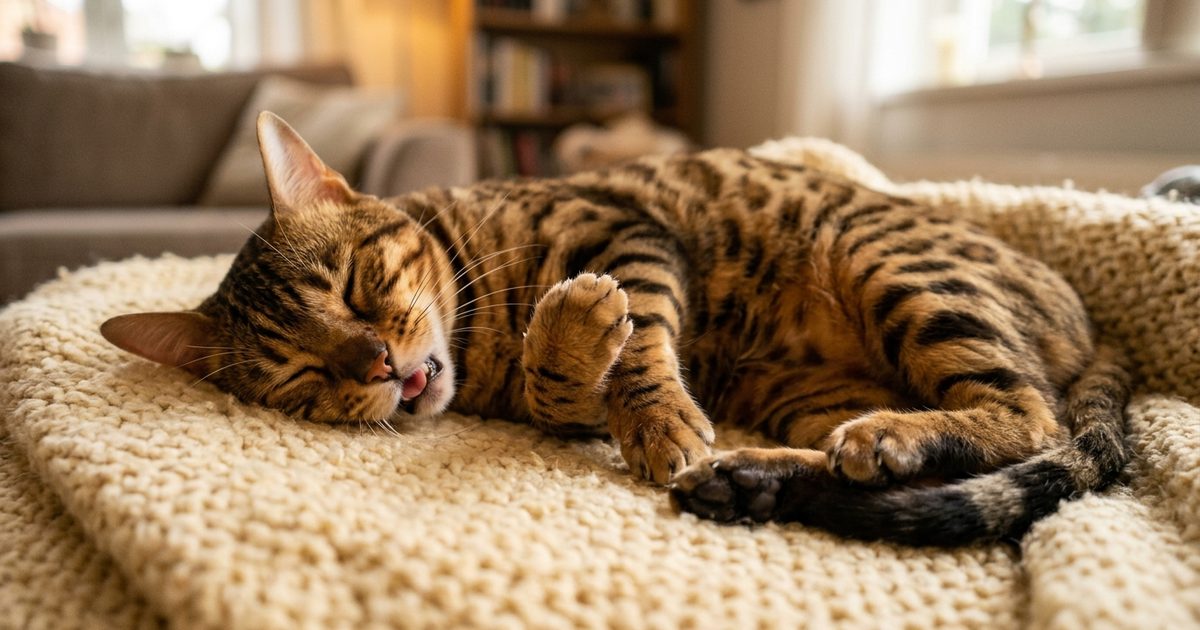
If you've watched your sleeping cat's paws paddle and mouth twitch, you've likely been watching a hunting dream. The classic sleep research on cats found that during REM sleep, animals physically acted out the movements they make while awake — stalking, pouncing, and biting at imaginary prey. So when your cat's legs paddle in the air or its jaw works silently, it's probably chasing a dream mouse or dream bird. Play and hunting share the same wiring in cats, so the toys your cat chased and the bugs it stalked that afternoon tend to show up, replayed, that night.
You and Daily Life
Your cat's dreams aren't limited to prey. Because sleep helps the brain sort and store the day's experiences, anything that mattered to your cat can return in a dream — a meal, a sunbeam nap, a visit from another pet, and very likely interactions with you. The reassurance, play, and quiet companionship you offer are part of your cat's daily world, and the brain tends to replay what it lived through. Cats show affection in subtle, gradual ways, and the bond you build during waking hours is woven into the same memory system that dreams draw from. So yes — there's a good chance you appear in your cat's dreams, even if neither of you can confirm exactly how.
Curious what your cat would say about all this if she could put it into words? Get a MeowMind reading — upload a photo and hear what's really on her mind tonight.
Can Cats Have Bad Dreams or Nightmares?
Cats can almost certainly have distressing dreams. Their brains process fear and memory much like ours do, so a cat with a difficult past may relive frightening experiences. Sudden distressed twitching, crying out, or waking panicked can be a bad dream — comfort your cat calmly without startling them.
Do cats have nightmares?
We can't ask a cat what it dreamed about, so we can never confirm nightmares the way we can confirm dreaming itself. But the brain evidence points in that direction. During REM sleep, the same systems that let a cat replay a happy hunt also let it replay a frightening one — memory consolidation is not selective about emotion. If your cat had a scary encounter with a dog last week, fragments of that memory can surface again at night.
This is especially relevant for rescue cats or any cat with a rough history. Animals that have experienced neglect, trauma, or chronic stress carry those experiences forward, and sleep appears to be one of the ways the brain works through them. A cat that suddenly paddles its paws frantically, flattens its ears, cries out, or wakes with a jolt and bolts under the bed may be surfacing something frightening. The Cornell Feline Health Center notes that sudden behavioral changes, including those tied to sleep, are always worth mentioning to your veterinarian.
The key distinction is frequency and intensity. An occasional distressed twitch is likely just a vivid dream — the feline equivalent of a human mumbling through a bad night. But if the episodes happen often, look violent, or leave your cat disoriented and fearful after waking, that crosses from "bad dream" into something worth investigating with a vet, since it can overlap with neurological issues rather than ordinary REM sleep.
If you suspect your cat is having a bad dream, the best response is a gentle one. Speak softly, and if you touch your cat, do it lightly and slowly — never shake or startle a cat out of deep sleep, because a disoriented cat can scratch or bite before it fully wakes. Most of the time your cat will settle, sigh, and drift back into calmer sleep on its own.
How Do You Know If Your Cat Is Dreaming?
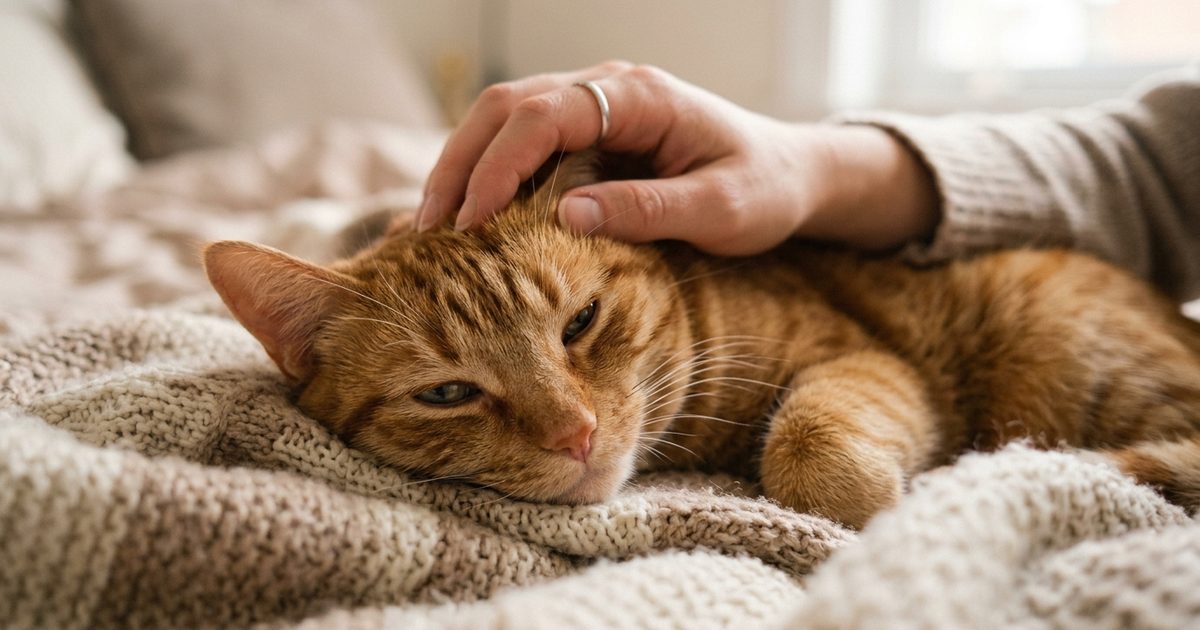
You can tell your cat is dreaming by the signs of REM sleep: paws paddling, whiskers and ears twitching, eyes moving under closed lids, and soft vocalizations. These happen during deep sleep and are your cat physically acting out whatever it's experiencing in the dream.
The signs of a dreaming cat
When your cat slips into REM sleep, its body starts putting on a small, silent show. The classic signs are easy to spot once you know them: paws paddling or twitching as if running or batting at something, whiskers fluttering, ears swiveling or flicking, and the eyes darting back and forth under closed lids — the "rapid eye movements" that give REM its name. Some cats also make soft sounds: tiny chirps, mumbles, or murmurs that never appear when they're awake.
None of this means your cat is uncomfortable. It's the opposite. During REM, the brain is highly active, but a natural sleep mechanism temporarily keeps the large muscles still — so only small movements leak through. That paddling paw is the ghost of a pounce your cat's body is too relaxed to fully perform. The same reflex that drives why cats chirp at birds shows up here in miniature. If you've read about why cats sleep so much, this twitching phase is part of the deepest, most restorative stretch of the cycle.
Should you wake a dreaming cat?
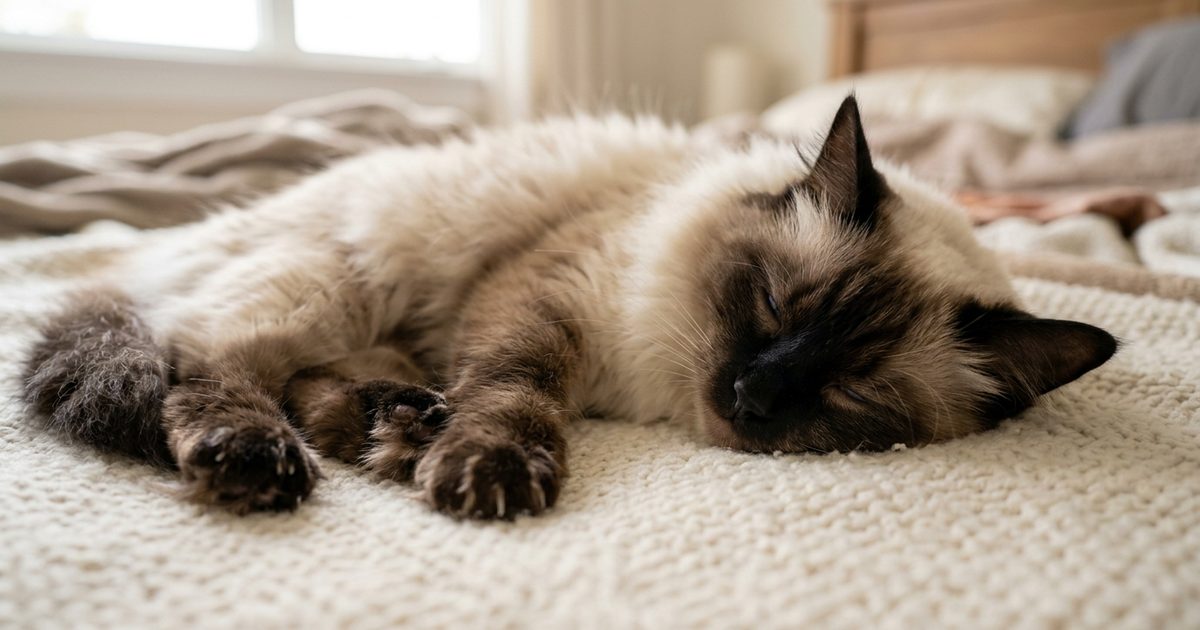
No — let them sleep. Waking a cat mid-dream is like jostling someone out of their own deep sleep: it's disorienting for them and, more practically, it can startle your cat badly enough to earn you an accidental scratch. A dreaming cat is briefly unsure where it is, and a sudden touch can feel like a threat.
If the dream seems to be turning distressing — whimpering, tense thrashing — resist the urge to shake your cat awake. Instead, wait. Most distressed dreams pass on their own within seconds. If you feel you must intervene, speak your cat's name softly from a distance first; a calm voice often brings it out of the dream gently, without the jolt of a physical touch. The same gentle approach applies if your cat tends to sleep on you — shift slowly rather than startling awake beneath a dreaming cat.
Do Kittens Dream More Than Adult Cats?
Yes — kittens appear to dream even more than adult cats. They spend a larger share of their sleep in REM, the dreaming stage, which is thought to help their rapidly developing brains form new connections. That's why kittens twitch and paddle so dramatically — it's a healthy brain at work.
If you've ever watched a kitten sleep, you've probably seen the show: tiny paws paddling furiously, ears flicking, mouth opening as if mid-pounce. It looks dramatic because it is. Newborn and young kittens devote a much bigger portion of their sleep to REM than adult cats do. The same pattern shows up across mammals — infants of many species spend more time in REM sleep, and researchers believe this extra dream-sleep supports early brain development, helping neural circuits wire up and consolidate the flood of new experiences a young animal takes in each day.
So when your kitten's legs start running in place or her tail whips around during a nap, that's not discomfort — it's a sign of an active, maturing nervous system. The proportion of REM sleep gradually decreases as a cat grows, which is why adults tend to twitch more gently and less often. A sleeping kitten is essentially rehearsing her world — the hunting, pouncing, and exploring she does awake — and wiring those lessons into her brain while she rests. It's the same reason very young kittens sleep so much to begin with; rest and development are tightly linked, and dreaming is part of the engine.
Curious what's going on inside that busy little dreaming head? Get a MeowMind reading — upload a photo and hear it from your kitten's perspective.
What Does It Mean If You Dream About a Cat?
If you dream about a cat, that is your dream, not the cat's. Searches for "cat in the dream" point to human dream symbolism, a separate topic from feline dreaming. Across cultures, cats in dreams variously suggest independence, intuition, or mystery — but dream meaning is subjective interpretation, not science.
This question trips people up because the wording is so similar. "Do cats dream?" asks what is happening inside a sleeping cat's brain. "What does it mean if you dream about a cat?" asks what a cat represents in your own dreaming mind. Those are two completely different fields — one is neuroscience, the other is symbolism and folklore.
When a cat appears in your dream, you are the one doing the dreaming. The cat is an image your mind has constructed, and what it "means" is a matter of interpretation rather than something that can be measured. Traditions from dream symbolism to cultural folklore have assigned cats a wide range of associations — independence, intuition, mystery, femininity, hidden knowledge — and these vary so much across cultures and individuals that there is no single settled answer.
A few common threads do show up. A calm, friendly cat is often read as a symbol of comfort or trusting your instincts; an aggressive or fearful cat can be linked to tension you are avoiding while awake. But treat these as loose starting points, not fixed rules. Modern psychology tends to view dream imagery as personal — the meaning of a cat in your dream depends far more on your own associations with cats than on any universal dictionary definition.
The key disambiguation: your cat twitching and paddling in its sleep is a real feline brain at work (we cover that throughout this article). A cat in your dream is your own mind doing its nightly housekeeping. One is biology, the other is symbolism — and science only has solid answers for the first.
When Sleep Behavior Might Signal a Problem
Twitching and paddling in sleep are perfectly normal, but violent thrashing, seizures, or a cat that wakes distressed and disoriented may point to a neurological issue. Sudden, extreme, or repetitive movements — or a clear change from your cat's usual sleep — are worth a vet check.
Most of the sleep movement you'll see is healthy REM activity, the same acting-out of dreams we covered earlier. But sleep behavior can occasionally signal something more serious, and knowing the difference matters. The key distinction is pattern and intensity: gentle, intermittent twitching that fits your cat's normal sleep is one thing; a dramatic change or movement that looks uncontrolled is another.
Normal dreaming vs. concerning movement
Dream twitching tends to be soft, brief, and rhythmic — a paw paddling, whiskers fluttering, an ear flicking, maybe a quiet chirp. Your cat usually settles back into sleep on its own, and when it wakes it acts like itself. The Cornell Feline Health Center notes that most sleep movements in cats are benign and reflect normal brain activity during rest.
Signs that move beyond dreaming include whole-body stiffening, violent or prolonged thrashing, paddling that doesn't stop when you speak your cat's name, loss of bladder or bowel control, or a cat that seems dazed, uncoordinated, or unresponsive for more than a few seconds after waking. These can point to a seizure rather than a dream — and a seizure isn't sleep behavior at all, but abnormal electrical activity in the brain. International Cat Care has useful guidance on distinguishing seizures from other movement.
When to call your vet
A single odd episode during sleep is often nothing, but a vet visit is warranted if you see any of the following:
- Movements that are sudden, violent, or far more intense than your cat's normal sleep twitching.
- Episodes that repeat, lengthen, or start happening in waking hours too.
- Confusion, stiffness, or collapse during or after the event.
- Any change in your cat's normal behavior, appetite, or coordination.
If you're unsure whether what you saw was a dream or something else, film the next episode on your phone — a short video gives your vet exactly the evidence it needs to judge. And if your cat has a known history of anxiety or stress, mention that too, since tension can sometimes bleed into unsettled sleep. The rule of thumb: trust your sense of what's normal for your cat, and let a professional weigh in whenever sleep behavior crosses a line you can't explain.
Common Myths About Cats Dreaming
Some of the most common beliefs about cats dreaming simply don't hold up against what we know about feline sleep. Here are the ones worth correcting.
Myth: Cats don't really dream — they just twitch in their sleep. Fact: Cats do dream. Decades of research, including the classic studies by Michel Jouvet, show that cats enter REM sleep with brain activity closely resembling a dreaming human's, and they physically act out the dream — stalking, pouncing, paddling their paws. That's not random twitching; it's a cat running the dream through its body. You can read more about feline sleep and neurology from the Cornell Feline Health Center.
Myth: If your cat twitches in its sleep, it must be uncomfortable or having a nightmare. Fact: Sleep twitching — paws paddling, whiskers fluttering, ears flicking — is normal REM behavior and usually means the cat is acting out an ordinary dream about hunting or playing. It's the same mechanism behind why cats chirp and vocalize when stimulated. Twitching alone isn't a sign of distress; context matters. Gentle, rhythmic movements are healthy. Only violent thrashing, stiffening, or a cat that wakes disoriented warrants a vet check.
Myth: Cats dream in symbols and color, the way humans do. Fact: We genuinely don't know what a dream feels like to a cat. The research tells us cats replay real experiences — chasing, exploring, interacting with you — but the subjective experience, whether it includes color or abstract imagery, is impossible to confirm. Anyone who claims cats dream in a particular symbolic "language" is guessing. What's well-supported is that a cat's dreams are built from its daily feline world, which is why a cat that hunts and plays a lot tends to twitch more vividly in its sleep.
The pattern across all three: the observable science (REM sleep, brain activity, physical acting-out) is solid; the subjective details are where speculation creeps in. International Cat Care is a good source for separating normal feline sleep behavior from things that genuinely need a veterinarian's attention.
Cats and Dreams at a Glance — Summary
Cats dream much like we do — their brains cycle through REM sleep, replaying the day's hunting, play, and social moments, and acting them out through twitching paws and whiskers. Kittens dream more, bad dreams are possible, and most nighttime movements are perfectly healthy.
You've now seen the full picture: the science, the signs, the rare times sleep behavior warrants a call to the vet. Here's the whole question of whether cats dream, compressed into a single reference you can come back to.
| Question | Short answer |
|---|---|
| Do cats dream? | Yes — cats enter REM sleep and dream, just like humans and most mammals |
| What do cats dream about? | Their daily lives — hunting, playing, exploring, and interactions with you |
| How can I tell my cat is dreaming? | Paws paddling, whiskers and ears twitching, eyes moving under closed lids, soft sounds |
| Should I wake a dreaming cat? | No — let them sleep; startling a cat mid-dream risks a scratch and interrupts rest |
| Can cats have nightmares? | Likely yes — their brains process fear and memory like ours, but we can't confirm the feeling |
| Do kittens dream more? | Yes — kittens spend more time in REM, which helps their developing brains wire up |
| Is sleep twitching normal? | Yes — mild twitching and paddling are normal REM acting-out, not discomfort |
| When is sleep behavior a concern? | Violent thrashing, seizures, or a cat that wakes disoriented and distressed — see a vet |
| What if I dream about a cat? | That's your dream, not the cat's — a separate topic about human dream symbolism |
If your cat is twitching softly through an afternoon nap, paws paddling at something only she can see, the best thing you can do is smile and let her be. She's almost certainly off chasing something wonderful — and that quiet, dreaming trust is one of the clearest signs you've given her a good life.
Curious What Your Cat Would Say?
Upload a photo and get a warm, personalized reading from your cat's perspective.
Start Your Free ReadingFrequently Asked Questions
Do cats dream?
Yes — cats dream. They enter REM sleep with brain activity similar to ours and physically act dreams out through twitching paws and whiskers. Decades of research, including classic studies by Michel Jouvet, confirm this across cats and mammals generally.
What do cats dream about?
Cats dream about their real, everyday lives: hunting prey, playing, exploring their environment, and interacting with you. Sleep helps the brain replay and store the day's experiences, so dreams are built entirely from a cat's daily feline world.
How do you know if your cat is dreaming?
Watch for REM signs: paws paddling, whiskers and ears twitching, eyes darting under closed lids, and soft chirps or murmurs. These movements happen during deep sleep and are your cat physically acting out whatever it's experiencing in the dream.
Can cats have bad dreams or nightmares?
Almost certainly yes, though we can't confirm the feeling. Cat brains process fear and memory much like ours, so a cat with a difficult past may relive frightening experiences. Sudden distressed twitching or waking panicked can be a bad dream — comfort calmly.
Do kittens dream more than adult cats?
Yes — kittens spend a larger share of sleep in REM, the dreaming stage, which is thought to help their rapidly developing brains form new connections. That's why kittens twitch and paddle so dramatically, and why adults tend to dream more gently and less often.
Should you wake a dreaming cat?
No — let them sleep. Waking a cat mid-dream is disorienting and a sudden touch can startle your cat badly enough to earn you an accidental scratch. If a dream seems distressing, speak your cat's name softly rather than shaking it awake.
Why do cats twitch in their sleep?
Twitching is normal REM behavior. During REM, the brain is highly active but a protective mechanism keeps the large muscles still, so only small fragments of the dream's movements leak through. A paddling paw is the ghost of a pounce your cat is too relaxed to perform.
Why is my cat crying in its sleep?
Soft cries, chirps, or murmurs during sleep are usually part of a dream — the same hunting excitement that makes a cat chirp at birds when awake can surface quietly in REM. Occasional sounds are normal; loud, panicked crying that repeats may be worth a vet check.
Sources & References
You Might Also Like
Kitten Teething: Timeline, Symptoms & How to Help
Kitten teething runs from 3 to 7 months as baby teeth fall out. Learn the timeline, signs to watch for, and how to soothe a teething kitten safely.
15 min readWhen Do Cats Stop Growing? A Complete Timeline
When do cats stop growing? Most cats reach adult size by 12-18 months, but large breeds like Maine Coons keep growing until 3-4 years. Full timeline inside.
14 min readCan Cats Eat Cherries? Flesh, Pit & Toxicity Facts
Can cats eat cherries? Pitted flesh is safe in tiny amounts — but the pit, stem, and leaves are toxic (cyanide precursors). Learn what's safe and what isn't.
15 min read