
Can Cats Eat Avocado? Persin, the Pit, and What to Do
If you're wondering can cats eat avocado, the honest answer is no — not recommended. A small lick of the flesh usually only causes mild stomach upset, but whether is avocado bad for cats is the wrong question to stop at: the real worry is persin in cats plus the pit, the skin, the leaves, and the very high fat. Compared to truly deadly foods like chocolate or grapes, avocado sits lower on the danger scale for felines — yet none of it belongs in your cat's bowl, and one part, the pit, can become a genuine emergency.
Key takeaways
- Avocado flesh is mildly toxic to cats — the persin it contains can trigger vomiting and diarrhea, so even a "safe-looking" green bite isn't actually safe.
- The pit, skin, and leaves carry far more toxin than the flesh, and the pit is also a serious choking and intestinal blockage hazard on its own.
- A tiny taste of plain flesh often causes only mild GI upset, but a swallowed pit, a large amount, or any guacamole means you should call your vet right away.
Avocado and Cats — Quick Reference
| Avocado part | Persin level | Risk to cats |
|---|---|---|
| The pit | High | Toxic, plus choking and gut blockage — an emergency if swallowed |
| The skin / peel | High | Toxic; can cause vomiting, diarrhea, and discomfort if chewed |
| The leaves | Highest | Very toxic — keep cats away from the plant entirely |
| The flesh | Low (but not zero) | Mildly toxic and very high in fat; can upset the stomach or trigger pancreatitis |
| Guacamole / avocado-based dip | Low-to-high (varies) | Avocado plus onion, garlic, and salt — the add-ins are often the worse danger |
Can Cats Eat Avocado? The Short Answer
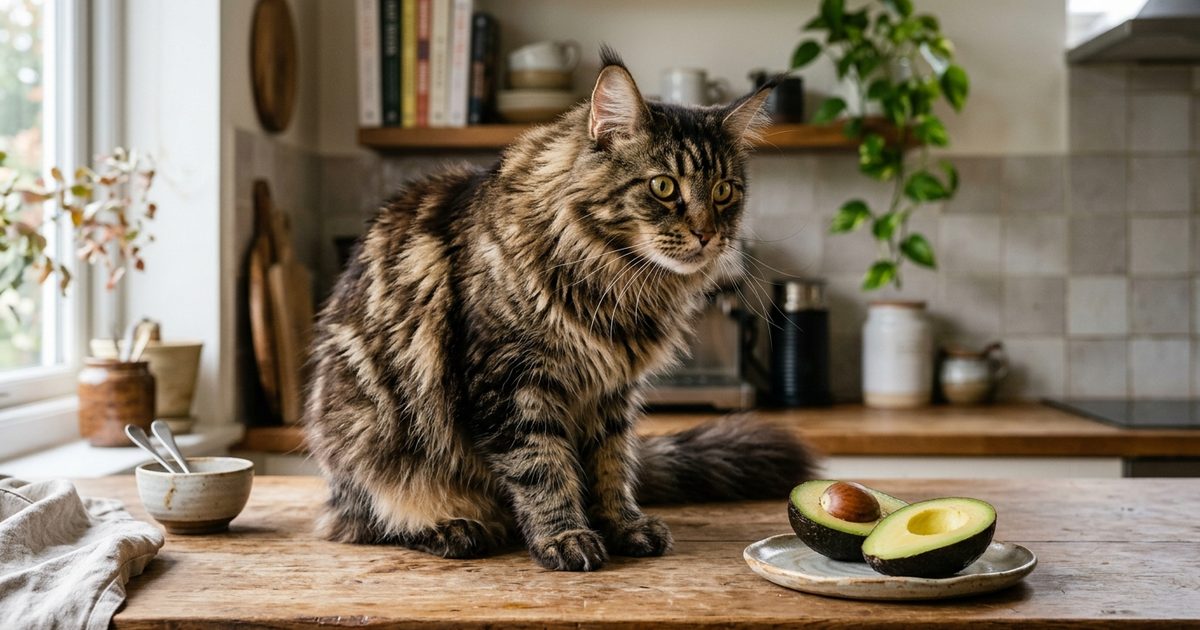
Cats should not eat avocado. The flesh is only mildly toxic — persin can cause vomiting and diarrhea — but the pit, skin, and leaves carry far more toxin. The bigger dangers are the pit itself, which can choke or block the gut, and the high fat, which can trigger pancreatitis.
The one-sentence verdict
No — avocado is not recommended for cats. That said, it's worth being honest about what kind of "no" this is. A small lick of the flesh is unlikely to be a life-or-death emergency the way a nibble of a lily or a square of dark chocolate can be. But "not acutely deadly" and "safe" are not the same thing. The flesh is genuinely mildly toxic, and the pit, skin, and leaves carry a much heavier dose of the same toxin — plus the pit is a serious physical hazard on its own. There is no good nutritional reason to share avocado with your cat, and several good reasons not to.
Mild toxin, not a death sentence
The reason a small bite of avocado flesh rarely sends a cat to the emergency clinic is that the toxin it contains — persin — is comparatively mild for felines. This is a real, well-documented contrast with foods that are genuinely deadly to cats. Chocolate carries theobromine and caffeine, which attack the nervous system and heart with no safe threshold. Grapes and raisins can trigger acute kidney failure through a mechanism veterinarians still don't fully understand. Avocado flesh sits in a different, gentler category — it typically causes stomach upset rather than organ failure. Honest framing matters here: a lick of flesh is not poison, but it is also not a treat.
Is any part of an avocado safe?
No part of an avocado is recommended for your cat. The flesh is mildly toxic and very high in fat. The pit, skin, and leaves are more toxic, and the pit doubles as a choking and intestinal-blockage risk. Guacamole is worse than plain avocado, not better — most recipes mix in onion and garlic, which are separately and more seriously toxic to cats (see our guide to garlic and cats), along with heavy salt. There is no carve-out here: less dangerous is not the same as safe.

Why Is Avocado Toxic to Cats? The Persin Problem
Avocado's toxin is persin, a fungicidal compound the fruit produces naturally. It is concentrated in the pit, skin, and leaves, with much less in the flesh. Even the flesh holds enough persin to cause vomiting and diarrhea in cats, and the dose is unpredictable.
What persin is
Persin is a natural fungicidal toxin produced by the avocado tree (Persea americana). It is part of the plant's own defense chemistry — the tree synthesizes it to fend off fungal infections and insect pests, and the compound persists throughout the fruit, the skin, the pit, and the leaves. The ASPCA Animal Poison Control Center lists persin as the toxic principle in avocado and notes that its potency varies dramatically across animal species. For cats, the concern is less the lethal dose (which is high) and more the gastrointestinal irritation that even small amounts can produce.
Where persin concentrates
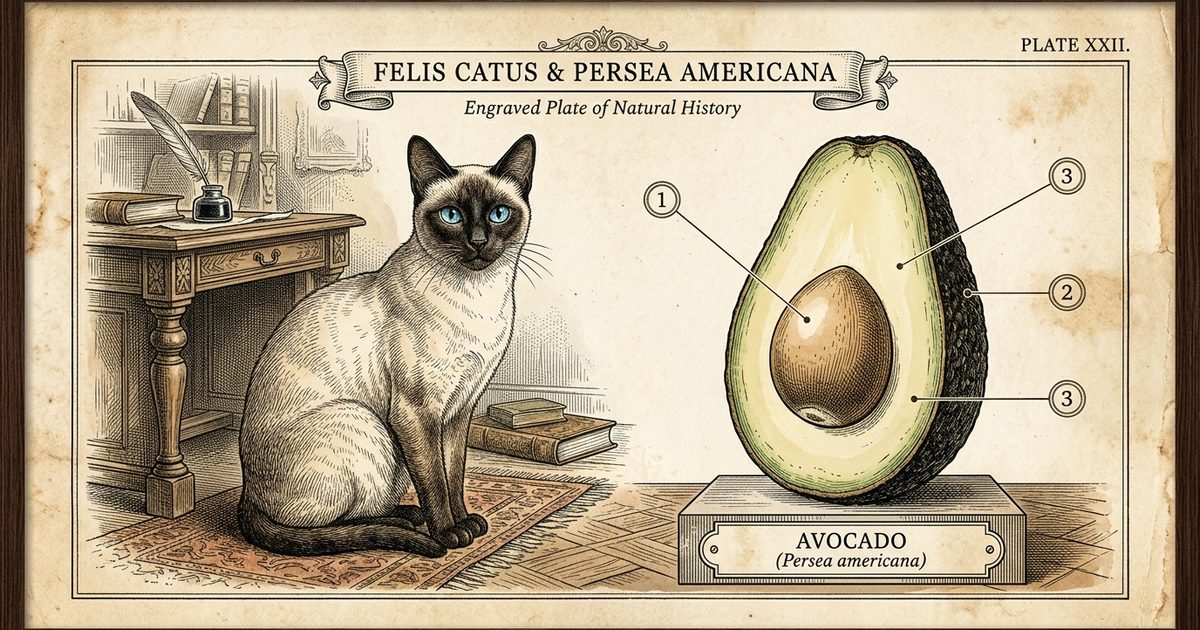
Persin is not evenly distributed through the avocado. It follows a clear gradient: the leaves carry the highest concentration, followed by the skin and peel, then the pit, with the flesh holding the least. This is why a cat that merely licks a bit of flesh is in a very different situation from one that chews on the pit or the peel — the toxin load is several times higher in those parts. The pit is doubly dangerous because of its size and slipperiness, which we cover in detail below in the section on the real dangers of avocado.
How persin affects a cat's body
In cats, persin primarily irritates the gastrointestinal tract. The typical signs are vomiting, diarrhea, drooling, and abdominal discomfort, usually within a few hours of ingestion. At higher exposures — a large amount of flesh, or the more concentrated skin and pit — persin can begin to affect the heart muscle and respiration, though cats are comparatively resistant to these systemic effects. The Cornell Feline Health Center includes avocado among common household foods that can cause gastrointestinal upset in cats. Because the persin dose in any given fruit is unpredictable, it's impossible to promise that "just a bite" will be symptom-free — which is why the recommendation is simply to avoid it.
Avocado oil and cooked avocado
Avocado oil is highly refined and contains negligible persin — but it is pure fat, with no nutritional benefit for a cat, and it can add to the pancreatitis risk that high-fat foods already carry. Cooking does not reliably destroy persin, so baked or cooked avocado is not a workaround. Neither form is recommended.
Why Is Avocado Less Deadly to Cats Than to Birds and Horses?
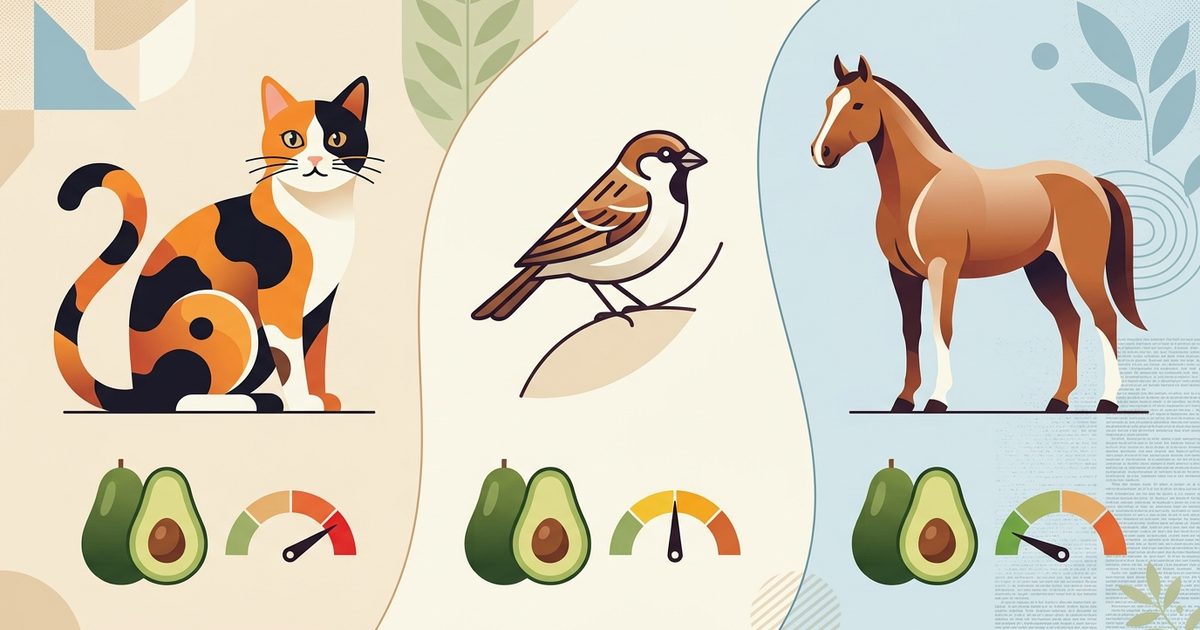
Persin is lethal to birds, horses, rabbits, and many rodents, yet cats are comparatively resistant and usually show only mild stomach upset. That still does not make avocado safe — it only explains why a small bite rarely causes severe poisoning in a cat.
The species-resistance gap
Persin's lethality is not uniform — it depends dramatically on the species consuming it. In birds, especially parrots and canaries, even small exposures can cause respiratory distress, heart failure, and death within hours. Horses are similarly vulnerable, with persin linked to mastitis and fatal cardiac damage after ingestion of avocado leaves or fruit. Cats and dogs, by contrast, sit on the resistant end of the spectrum, typically experiencing only gastrointestinal irritation rather than systemic collapse. This is a real physiological difference in how each species metabolizes the toxin, not a myth, and it's why veterinary toxicology references list avocado as dangerous to some animals but only mildly toxic to others. You can read the full species-sensitivity range from the Cornell Feline Health Center, which covers common household toxins and their relative risks to cats.
Resistant does not mean safe
Relative resistance is a common-sense category, not a green light. A resistant cat still produces the same vomiting, diarrhea, drooling, and abdominal discomfort that persin triggers in any mammal — the symptoms just rarely escalate to organ failure. The pit and the high fat content add two completely independent dangers on top of that mild toxicity, which is why "can cats eat avocado" still answers to no. This is the honest middle ground that corrects two equally wrong claims at once. The "avocado is a superfood for cats" framing is human marketing — persin is a fungicidal toxin and avocado has no feline nutritional need. But the opposite extreme, "avocado will kill your cat," is also inaccurate, because it conflates cats with the highly sensitive species and ignores the resistance gap entirely. The truth is uncomfortable precisely because it's nuanced: less deadly is not the same as safe.
Why the rumor that "flesh is fine" spreads
The species-resistance fact is true, which makes it easy to oversimplify online into "avocado is safe for cats." What gets dropped, every time, is the still-toxic nuance — the flesh carries less persin than the pit, skin, or leaves, so a small bite is far less dangerous than chewing the pit, but it still causes genuine gastrointestinal upset. It's the classic half-truth problem: a real biological detail (cats are resistant) gets stripped of its qualifying context (resistant is not immune) and becomes a clean, shareable, incorrect verdict. If you've seen a confident social media post declaring avocado harmless to cats, that flattening is almost always the source. The Cornell Feline Health Center's guide to common feline toxins is a more reliable reference point than a viral clip, and it does not list avocado as a safe food.
What Are the REAL Dangers of Avocado to Cats?
The persin in the flesh is the mild part. The real dangers are the pit — a choking hazard and an intestinal blockage that can require surgery — and the very high fat, which can trigger pancreatitis, a painful and sometimes life-threatening inflammation of the pancreas.
The pit: choking and blockage
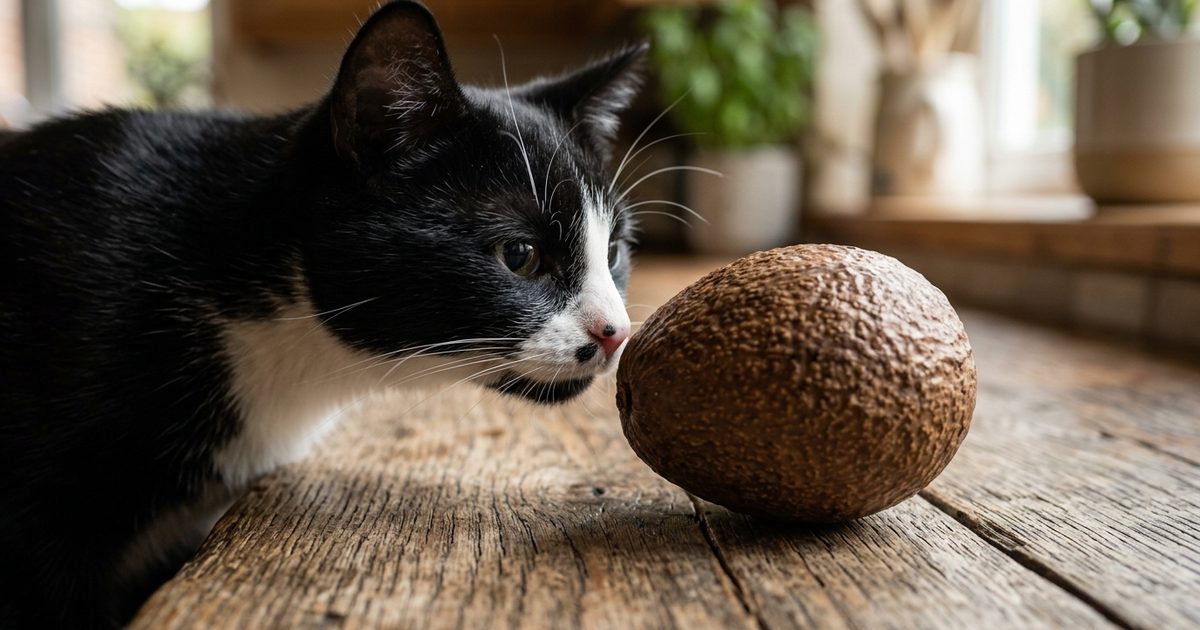
The avocado pit is the single most serious risk the fruit poses to a cat, and it has nothing to do with persin. It's a large, smooth, hard sphere — almost exactly the wrong shape and size for a curious cat that bats one off a counter and mouths it. If swallowed, the pit can lodge in the throat and cause choking, or travel into the intestinal tract and create a complete obstruction. In the worst case it can even perforate the gut wall. The warning signs of a blockage are unmistakable once you know them: repeated or projectile vomiting, lethargy, refusal to eat, a painful or swollen belly, and straining to defecate with no stool produced. These develop over hours to a day, and they are a veterinary emergency — not a "wait and see" situation. Blockages frequently require imaging to locate and surgery to remove, and delaying treatment sharply worsens the outcome. A cat that has accessed a whole avocado should be assumed to have accessed the pit, and the pit should be accounted for immediately.
High fat and pancreatitis
Even setting the pit aside, avocado is one of the fattiest fruits you can offer a cat — and a sudden high-fat meal is a well-recognized trigger for pancreatitis, an inflammation of the pancreas. Pancreatitis in cats presents as persistent vomiting, a hunched posture from belly pain, lethargy, fever, and a refusal to eat. It can run mild and self-resolving or it can become life-threatening, and the serious form often needs hospitalization, IV fluids, and supportive care. Because the signs overlap heavily with ordinary gastrointestinal upset, pancreatitis is easy to miss at home until it has progressed — which is why any cat that has eaten a meaningful amount of avocado and then starts vomiting repeatedly deserves a vet visit rather than watchful waiting. For the symptom itself and how to triage it at home before you call, our guide to cat vomiting walks through the red flags in detail. The takeaway is that the fat load is an independent hazard from the toxin: a cat could avoid persin's worst effects and still end up in the clinic from a high-fat meal.
Guacamole and seasoned avocado
Most guacamole is not just mashed avocado — it's avocado plus onion, garlic, lime, salt, and often chili or other seasonings. Several of those add-ins are substantially more dangerous to a cat than the avocado base. Onion and garlic, whether fresh, powdered, or cooked into a dip, damage a cat's red blood cells and can cause Heinz body anemia, a serious and sometimes delayed condition — see our deep dive on whether cats can eat garlic for the full mechanism. Salt adds a sodium load that a small cat's kidneys are not built to clear efficiently, raising the risk of sodium ion poisoning at surprisingly modest amounts. So a spoonful of guacamole is genuinely more hazardous than a slice of plain avocado, not because the avocado got worse but because the recipe did. The honest framing cuts both ways: the avocado base is the mild part of the dish, and the add-ins are usually the part that sends a cat to the vet.
What Are the Symptoms If a Cat Eats Avocado?
From the flesh, expect vomiting, diarrhea, drooling, and mild belly discomfort within a few hours. If the pit was swallowed, watch for repeated vomiting, lethargy, refusing food, or straining without stool — these are blockage signs and a veterinary emergency.
From the flesh (mild)
When the culprit is a small bite of plain avocado flesh, the symptoms are usually gastrointestinal and fairly mild: vomiting, diarrhea, drooling (a classic nausea sign in cats), reduced appetite, and some abdominal tenderness. These tend to appear within a few hours and most often resolve on their own within a day.
The triage angle that actually matters is dehydration. Even "mild" vomiting and diarrhea can drain a small cat or kitten quickly, because their fluid margin is so thin — so the watchword is fluids, not the mechanism. For the full picture on causes, red flags, and home care, see our guides on cat vomiting and cat diarrhea; avocado flesh is one trigger among many, and the triage steps are the same.
If the pit was swallowed (emergency)
A whole or partial avocado pit changes the situation entirely: the danger is mechanical as much as toxic, and the blockage signs — repeated or projectile vomiting, lethargy, refusing food, a painful or swollen belly, and straining to defecate with little or no stool — are exactly the ones already listed under the pit's physical dangers above. What's new here is timing: these signs usually develop over several hours to a day, and they point to an obstruction that won't resolve on its own. Blockages often require imaging (x-ray or ultrasound) and sometimes surgery to remove. Do not wait to "see if it passes" — an obstructed gut can become life-threatening within a day or two. Cornell's Feline Health Center is a reliable reference for feline emergency signs if you want to confirm what you're seeing.

Pancreatitis signs
The third pattern to recognize is pancreatitis — inflammation of the pancreas that can follow a high-fat meal like avocado. Its signs overlap with simple stomach upset but tend to be more persistent and severe: ongoing vomiting that won't settle, a hunched posture from belly pain, marked lethargy, sometimes a fever, and a flat refusal to eat. Pancreatitis can develop within hours or take a day or two to declare itself, so the onset varies — generalize rather than expect a fixed timeline.
Pancreatitis can range from mild to life-threatening, and it usually needs veterinary diagnosis (bloodwork and sometimes ultrasound) and supportive care. If your cat's vomiting doesn't ease after the first few bouts, read the triage guidance in our cat vomiting article and call your vet rather than waiting it out.
What Should I Do If My Cat Ate Avocado?
If it was a small amount of flesh, watch for vomiting or diarrhea for the next 12 hours and offer water. If the pit was swallowed, a large amount was eaten, or symptoms are severe or persistent, call your vet immediately — do not wait, and do not try to induce vomiting at home.
Small taste of flesh
If your cat had a small lick or single bite of plain avocado flesh, home monitoring is usually reasonable. For the next 12 hours, keep an eye on three things: appetite, energy level, and the litter box. Offer fresh water, since even mild vomiting or diarrhea can drain fluids. Most cats with a tiny taste do fine and show nothing worse than a single upset stomach.
Call your vet if any of these apply: the vomiting or diarrhea is repeated rather than a one-off, your cat seems lethargic or refuses food, or the cat in question is a kitten — kittens dehydrate far faster than adults and have a much smaller safety margin.
Pit swallowed or large amount — call the vet
This is the situation where you act, not watch. If the avocado pit is missing and you can't find it, if a large amount was eaten (especially if skin, pit fragments, or guacamole were involved — remember guacamole often adds garlic and onion, which are toxic on their own), or if you're seeing any blockage or pancreatitis signs, call your veterinarian or an animal poison line right now.
Two real, 24/7 resources worth having on hand:
- Pet Poison Helpline — staffed by veterinary toxicologists for toxin and ingestion emergencies.
- ASPCA Animal Poison Control Center (aspca.org/pet-care/animal-poison-control) — a long-running poison line for pets.
When you call, have the details ready: roughly how much avocado, which parts (flesh, skin, pit, or a dip), and when it happened. The International Cat Care guidance on urgent signs in cats is a useful cross-check if you're unsure how urgent your situation is.

What NOT to do
A few home "remedies" can make things worse, so steer clear of them:
- Do not induce vomiting unless a vet tells you to. If a pit is in the stomach, bringing it back up can lodge it in the throat or esophagus — the opposite of help.
- Do not give milk, oil, or salt. None of them bind or neutralize persin, and oil can actually worsen pancreatitis risk without moving a blockage.
- Do not wait to "see if it passes" once blockage signs appear. A gut obstruction is time-sensitive; the right move is a phone call, not a wait.
The short version: a small taste of flesh is a watch-and-wait situation, but a swallowed pit, a large amount, or persistent severe symptoms all mean one thing — call your vet now.
Avocado and Cats at a Glance — Summary
| Question | Short answer |
|---|---|
| Can cats eat avocado? | No — the flesh is mildly toxic (persin), and the pit and high fat are the real dangers |
| Is the flesh toxic? | Mildly — persin in the flesh can cause vomiting, diarrhea, and belly discomfort |
| Is the pit dangerous? | Yes — it is a choking hazard and can cause an intestinal blockage that may need surgery |
| Why is avocado less deadly to cats than birds? | Cats are comparatively resistant to persin, while birds and horses can die from small exposures |
| What are the symptoms? | Vomiting, diarrhea, drooling, and lethargy; blockage signs if the pit was swallowed |
| What to do if a small amount is eaten? | Monitor appetite, energy, and litter box for 12 hours; call the vet if vomiting or diarrhea repeats |
| What to do if the pit is swallowed? | Call your vet or a pet poison helpline immediately — do not wait, and do not induce vomiting at home |
| What to give instead? | A cat-safe treat made for felines — plain cooked meat or a commercial cat treat, not human foods |
Curious What Your Cat Would Say?
Upload a photo and get a warm, personalized reading from your cat's perspective.
Start Your Free ReadingFrequently Asked Questions
Can cats eat a little bit of avocado?
Not recommended. A tiny lick of plain flesh usually only causes mild stomach upset, because cats are relatively resistant to persin — but the flesh is still mildly toxic and very high in fat. There's no good reason to share it, and a larger amount is riskier.
Is avocado toxic to cats?
Mildly, yes. The toxin is persin, a natural fungicidal compound concentrated in the pit, skin, and leaves, with much less in the flesh. In cats it typically causes vomiting, diarrhea, and belly discomfort rather than the severe effects seen in birds or horses.
Is the avocado pit dangerous to cats?
It's the single most serious avocado risk to a cat. The large, smooth pit can cause choking, lodge in the throat or gut to create a blockage, or even perforate the intestines. A swallowed pit is a veterinary emergency, not a wait-and-see situation.
Why is avocado deadly to birds but not cats?
Persin's lethality varies sharply by species. Birds (especially parrots) and horses can die from small exposures, while cats and dogs are comparatively resistant and usually show only gastrointestinal upset. Resistant is not immune, though — the toxin still affects them.
What happens if a cat eats avocado?
From the flesh, expect vomiting, diarrhea, drooling, and mild belly discomfort within a few hours, usually self-limiting. If the pit was swallowed, watch for repeated vomiting, lethargy, refusing food, or straining without stool — those are blockage signs and an emergency.
What should I do if my cat ate avocado?
A small taste of plain flesh means watch appetite, energy, and the litter box for 12 hours and offer water. But a swallowed pit, a large amount, skin or guacamole, or persistent severe symptoms all mean call your vet or a poison helpline right now — don't wait.
Can cats eat guacamole?
No. Guacamole is actually more dangerous than plain avocado because most recipes add onion and garlic, which damage a cat's red blood cells, plus heavy salt. The avocado base is the mild part; the add-ins are usually what sends a cat to the vet.
Is avocado oil safe for cats?
Avocado oil is highly refined and contains negligible persin, but it's pure fat with no nutritional benefit for a cat and can add pancreatitis risk. Oil safety doesn't transfer to the whole fruit, and cooking doesn't reliably destroy persin either.
Sources & References
You Might Also Like
Kitten Teething: Timeline, Symptoms & How to Help
Kitten teething runs from 3 to 7 months as baby teeth fall out. Learn the timeline, signs to watch for, and how to soothe a teething kitten safely.
15 min readWhen Do Cats Stop Growing? A Complete Timeline
When do cats stop growing? Most cats reach adult size by 12-18 months, but large breeds like Maine Coons keep growing until 3-4 years. Full timeline inside.
14 min readCan Cats Eat Cherries? Flesh, Pit & Toxicity Facts
Can cats eat cherries? Pitted flesh is safe in tiny amounts — but the pit, stem, and leaves are toxic (cyanide precursors). Learn what's safe and what isn't.
15 min read