
Can Cats Eat Eggs? Safety, Benefits, and How to Serve Them
Yes — cats can eat eggs, as long as they are fully cooked and served plain. Eggs are a complete protein source that most cats digest well, and they make a nutritious occasional treat when they replace no more than about 10% of your cat's daily calories.
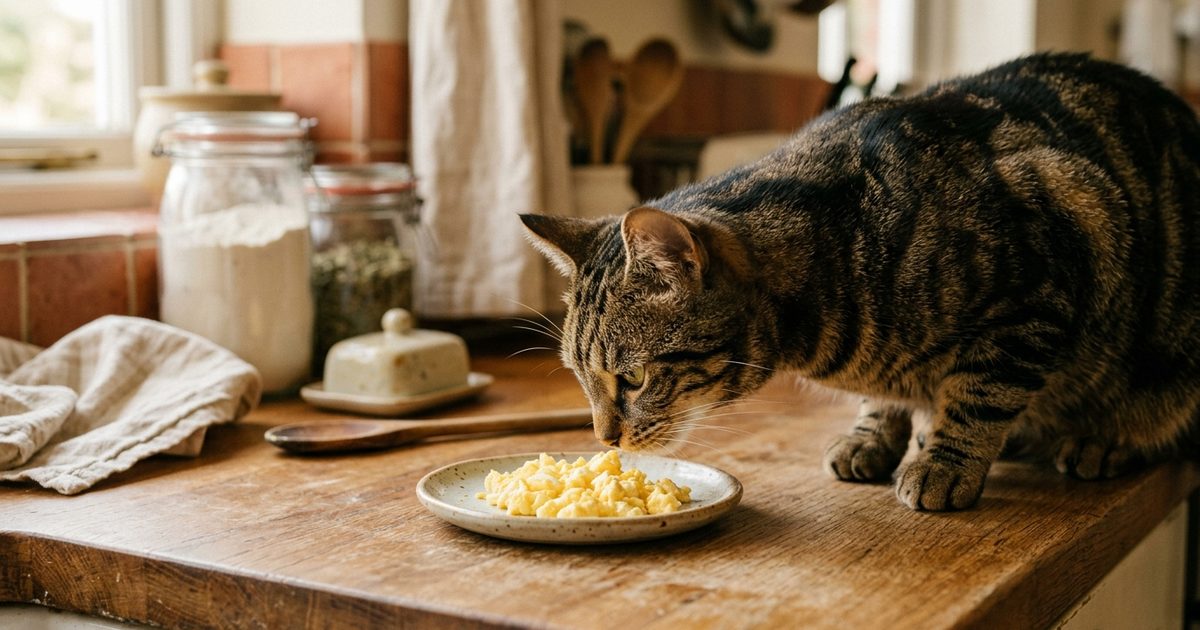
If you've ever cracked an egg for breakfast and felt a pair of eyes on you, you've asked the obvious question: can cats eat eggs? The short answer is yes — and specifically, can cats eat cooked eggs is the right question to ask, because cooked, plain egg is the only safe way to share it. Raw egg carries real risks we'll get into shortly, but a fully cooked egg, given in small amounts, is a wholesome, protein-rich tidbit that fits neatly into a cat's obligate-carnivore diet. Think of it as an occasional bonus, not a second breakfast.
Key takeaways
- Cooked and plain only. Fully cooked egg with no salt, butter, oil, or seasoning is the one safe form — scrambled without fat, boiled, or poached all work.
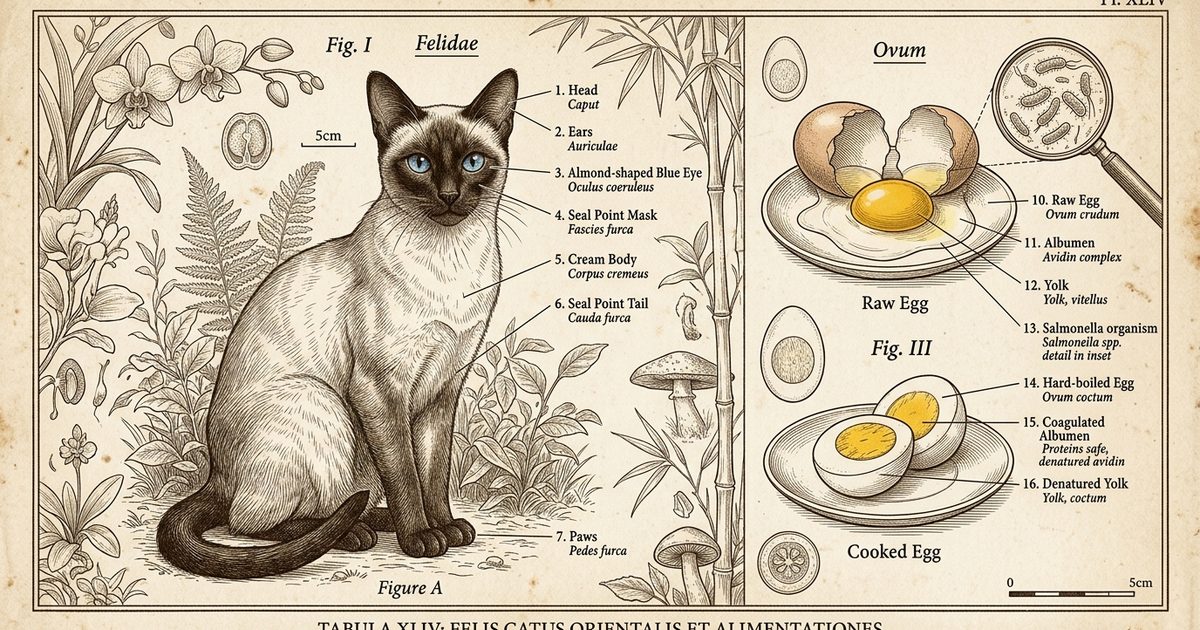
- Raw eggs are dangerous. Raw egg white contains avidin, which blocks biotin absorption, and raw eggs can carry Salmonella and E. coli. Always cook eggs through.
- A treat, not a staple. Egg should make up no more than about 10% of your cat's daily calories — roughly a tablespoon, a few times a week at most.
Eggs for Cats — Quick Reference
| Egg form | Safe for cats? | Notes |
|---|---|---|
| Cooked plain (boiled, poached, dry-scrambled) | Yes | The only recommended form; fully cooked, no seasoning |
| Raw | No | Avidin blocks biotin; Salmonella and E. coli risk |
| Scrambled with butter | No | Butter adds fat and often salt; too rich for cats |
| Boiled (plain) | Yes | Easy to chop small; ideal serving format |
| Fried | No | Oil, crispy edges, and added fat make it unsafe |
Can Cats Eat Eggs?
Yes — cats can eat eggs, as long as they are fully cooked and served plain. Eggs are a complete protein source that most cats digest well, and they make a nutritious occasional treat when they replace no more than about 10% of your cat's daily calories.
The short answer
Cooked, plain eggs are safe for cats and easy on most feline digestive systems. A little boiled or scrambled egg now and then — with nothing added — gives your cat a small, high-quality protein boost without the risks that come with raw egg. The key word is occasional: eggs are a treat, not a meal, and they should never crowd out your cat's nutritionally complete commercial food. If you've ever wondered whether eggs belong anywhere near a cat's bowl, the verdict is straightforward — cooked yes, raw no, and always in moderation.
Why eggs are cat-appropriate
Eggs are animal protein, and cats are obligate carnivores — their entire digestive system is built around extracting nutrients from prey. Unlike plant-based foods, which a cat's short gut is poorly equipped to process, egg protein is exactly the kind of nutrient their body is designed to use. Eggs are also what nutritionists call a "complete" protein, meaning they contain all the essential amino acids a cat needs in usable proportions. That doesn't make eggs a substitute for formulated cat food, which balances taurine and other micronutrients precisely, but it does explain why a small amount of cooked egg sits well with most cats where a piece of bread or fruit would not. For the bigger picture of how eggs fit into a feline diet, see what cats eat overall.

Can Cats Eat Raw Eggs?
No — raw eggs are not safe for cats. Raw egg white contains avidin, which blocks the absorption of biotin (a B vitamin your cat needs), and raw eggs carry Salmonella and E. coli risk. Always cook eggs fully before feeding them to your cat.
The avidin-biotin problem
Raw egg white contains a protein called avidin, which binds tightly to biotin — also known as vitamin B7 — and stops your cat's body from absorbing it. Biotin is essential for healthy skin, a glossy coat, and normal cell function. If a cat eats enough raw egg white over time, biotin can become depleted, and the signs show up on the outside: dry, flaky skin, a dull or thinning coat, and sometimes hair loss. Heat deactivates avidin, which is why cooking solves the problem entirely — a fully cooked egg white poses no biotin risk at all. The danger is specific to raw white, which is one reason the raw-vs-cooked distinction matters so much with eggs and far less with other protein treats like cooked chicken.
Bacterial risk
Raw eggs can also carry Salmonella and E. coli, and cats are not as resistant to foodborne bacteria as people sometimes assume. A cat that eats contaminated raw egg may develop vomiting, diarrhea, or lethargy — or it may show no symptoms at all while still shedding the bacteria in its feces. That last point matters in a household: an asymptomatic cat can pass Salmonella to humans, particularly children, elderly family members, or anyone with a weakened immune system. The Cornell Feline Health Center is explicit that raw foods are a recognized source of bacterial risk for cats and the people living with them.
What about the yolk alone?
A common follow-up is whether the yolk is safe on its own, since avidin lives mainly in the white. The answer is partial: a raw yolk avoids the avidin-biotin problem, but it still carries the same Salmonella and E. coli risk as any other raw egg. So if you're searching on can cats eat egg yolks, the safe form is a fully cooked yolk — mashed or chopped small — which keeps the nutrient value (B vitamins, linoleic acid, a little vitamin A) while removing both the bacterial and the avidin concerns. Cooked yolk, in moderation, is the version worth offering.
Are Eggs Good for Cats?
Cooked eggs are genuinely nutritious for cats. They provide complete, highly digestible protein, essential amino acids, and naturally occurring B vitamins including B12 and riboflavin. The yolk also supplies small amounts of vitamin A and linoleic acid that support skin and coat health.
The value of an egg sits in what it packs into a small, easily digested package. For an obligate carnivore — an animal built to run on animal protein, not plants — eggs are one of the most biologically appropriate "human foods" you can share. They're nutrient-dense without being foreign to the feline gut, and most cats process cooked egg far more easily than they do dairy or starches. That said, eggs are a complement to a complete commercial diet, never a replacement for it — a point worth holding onto, because no single food can balance a cat's needs on its own.
Protein and amino acids
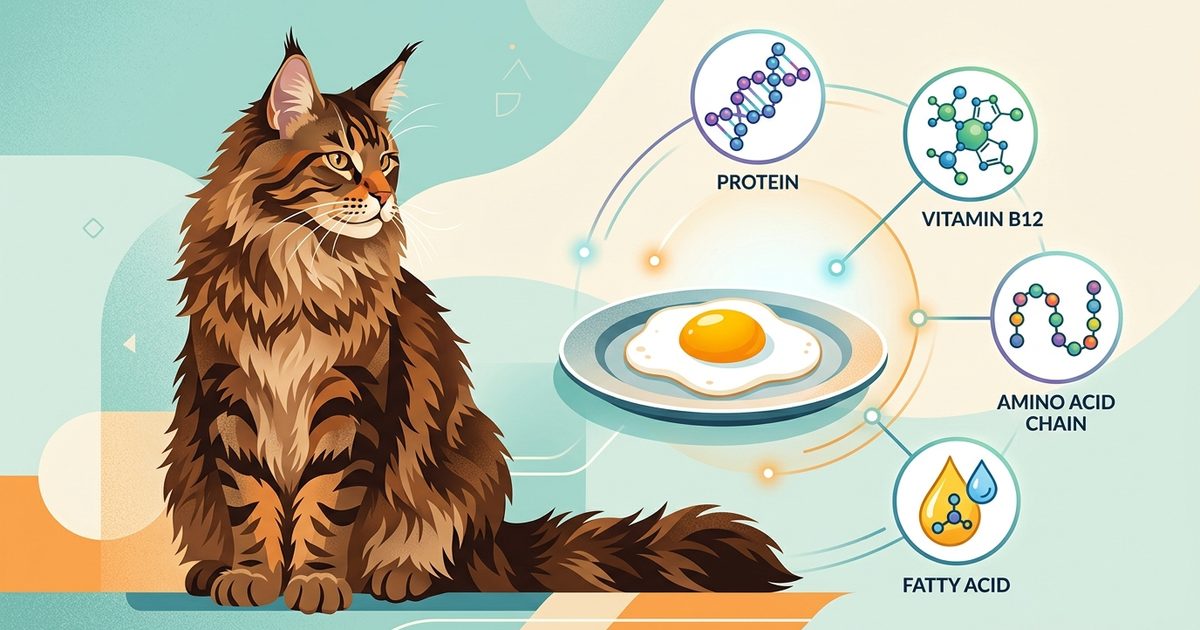
Eggs are often used as the reference standard for protein quality, and for good reason: they contain all the essential amino acids a cat's body cannot make on its own, in ratios close to what muscle tissue needs. Cooked egg protein is highly digestible for most cats, which is partly why a little egg sits well even in sensitive stomachs. This complements rather than replaces a complete commercial cat food — think of egg as a high-quality protein accent on top of a diet that's already nutritionally balanced, the kind of context we describe in our guide to what cats eat.
Vitamins and fatty acids
The yolk carries much of the egg's micronutrient value. It's a natural source of vitamin B12 and riboflavin, both involved in energy metabolism, along with small amounts of vitamin A and linoleic acid — a fatty acid linked to skin barrier function and coat condition. These aren't huge doses, and an egg won't restructure a cat's health on its own, but they help explain why the occasional cooked egg is a sensible treat rather than empty calories. The Cornell Feline Health Center is a reliable starting point for understanding how treats fit into a complete feline diet.
How Should I Serve Eggs to My Cat?
Serve eggs fully cooked and plain — boiled, scrambled without any oil, or poached — with no salt, butter, oil, onion, garlic, or seasoning. Cool the egg, cut or mash it into bite-sized pieces, and offer it as a small treat, never as a meal replacement.
How you prepare an egg matters as much as whether you offer it at all. The safest egg is a plainly cooked one — nothing added, nothing fried, nothing seasoned. That keeps the egg both safe (heat kills bacteria and deactivates the avidin in raw white) and well-tolerated (no excess fat or sodium to upset a cat's digestion). A little care here is the difference between a treat your cat enjoys and one that causes avoidable trouble.

Preparation rules
Cook the egg through — no runny yolk, no soft center. That's not fussiness: thorough cooking is what neutralizes both the bacterial risk and the avidin-biotin problem that makes raw eggs unsafe. Use no added fat, no salt, and no seasoning of any kind. Butter and oil turn a light treat into a fat load that can trigger digestive upset or pancreatitis in sensitive cats, and salt adds sodium a cat's kidneys don't need. Most critically, never season with onion or garlic — both are genuinely toxic to cats, damaging red blood cells even in small amounts. We cover the mechanism in detail in our article on whether cats can eat onion, and the same warning applies to garlic.
Serving format
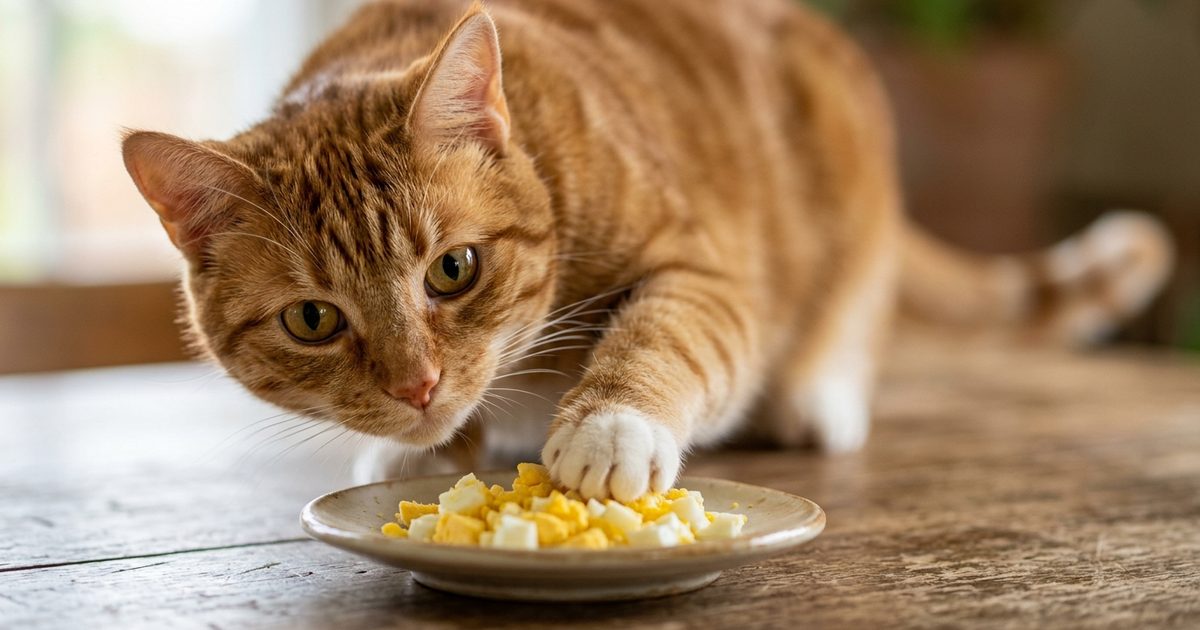
The format is simple. Hard-boil an egg and chop it into small, pea-sized pieces; or scramble it plain in a dry non-stick pan with nothing added; or mash just the cooked yolk and use it as a topper over your cat's regular food. Small pieces matter — cats don't chew thoroughly, and large chunks can be gulped. Let the egg cool fully before offering it.
What about eggshells?
Eggshells are calcium-rich, and you'll sometimes see them recommended as a natural supplement. In practice they're a choking and fragmentation hazard, and sharp shell fragments can irritate the mouth or digestive tract. If you ever considered shells, they should only be ground to a very fine powder and cleared with a vet first — and for most cats they're simply unnecessary. A complete commercial diet already supplies the calcium your cat needs, so there's no real reason to add shells.
How Much Egg Can a Cat Eat?
Eggs are a treat, not a dietary staple. A healthy adult cat can have roughly one tablespoon of cooked egg a few times a week at most, which should make up no more than about 10% of total daily calories. Kittens and cats with health conditions need a vet's guidance first.
The reason a hard number matters is that a cat is small. An average adult cat eats around 200–250 calories a day, and a single large egg packs about 70–80 calories on its own — a meaningful chunk of that daily budget before you've counted any of the complete nutrition her regular food provides. So when people ask can cats eat eggs as if one whole egg were a reasonable snack, the honest answer is: not in one sitting.
The 10% treat rule
Veterinarians generally cap treats and extras at roughly 10% of a cat's total daily calories — the other 90% should come from a complete, balanced cat food. For a cat eating about 200 calories a day, that 10% ceiling is only around 20 treat-calories, which is roughly one tablespoon of cooked egg. A whole egg blows past that limit several times over, crowding out the nutrients her staple food is designed to deliver. International Cat Care makes the same point plainly: extras are titbits, not a food group.
Frequency and portion size
Think of egg as an occasional thing — a teaspoon to a tablespoon of plain cooked egg, offered a couple of times a week at most, not every day. Small breeds, senior cats, and any cat carrying extra weight should get less than that, or skip it entirely if your vet advises. If your cat already gets other rich extras, an egg treat may simply be one too many — it's the same fat-density logic behind why we're cautious about whether cats can eat cheese as a regular snack.
What Are the Risks of Feeding Eggs to Cats?
The main risks are food allergy, weight gain from the fat and calorie content, and digestive upset if eggs are introduced too fast. Cats with kidney disease, pancreatitis, or known sensitivities should not get eggs without a vet's OK, and any new food warrants a small test portion first.
Cooked eggs are safe for most cats, but "safe" is not the same as "risk-free for every cat." The risks below are real but modest when you keep portions small and introduce the food gently — the problems almost always show up when eggs are fed too much, too often, or to a cat whose health already needs careful management.
Allergy and intolerance
Egg allergy in cats is uncommon but not unheard of — the trigger is the protein itself, usually in the white. Signs to watch for are itchy skin, repeated scratching or over-grooming, ear inflammation, or mild gastrointestinal upset like vomiting or loose stools within a day of eating it. The safe approach is to start with a tiny piece — a quarter-teaspoon — and wait 24 hours before offering more. If anything looks off, stop and talk to your vet. Cornell Feline Health Center is a good reference when you're unsure whether a reaction warrants a visit.
Obesity and fat load
Most of an egg's calories sit in the yolk, which is naturally fatty — fine in small amounts, but a problem when it becomes routine. For a cat already carrying extra weight, frequent fatty treats quietly push daily calories higher and make weight management harder. This is the same reason we treat cheese and other fat-dense people-food as occasional-only. If your cat is overweight or has been diagnosed with pancreatitis, hold off on egg treats entirely until your vet confirms they fit her plan — the fat load is the part most likely to do quiet harm.
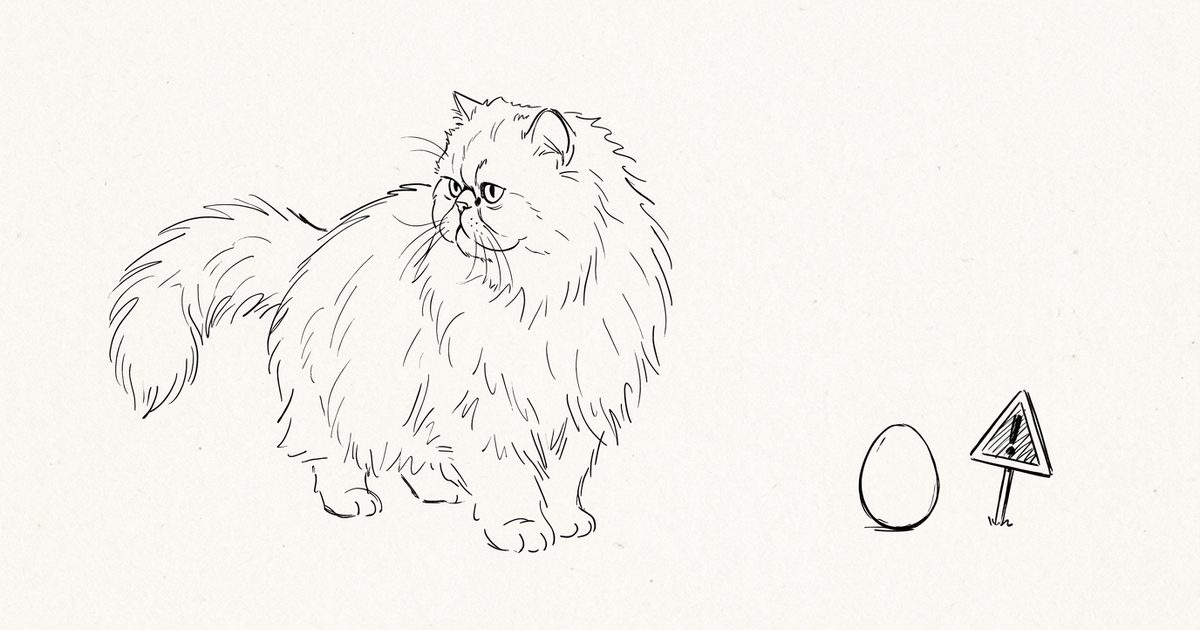
Eggs for Cats at a Glance — Summary
| Question | Short answer |
|---|---|
| Can cats eat eggs? | Yes — fully cooked, plain eggs are safe and nutritious as an occasional treat (≤10% of daily calories). |
| Can cats eat raw eggs? | No — raw whites contain avidin (blocks biotin) and raw eggs carry Salmonella and E. coli risk. |
| Can cats eat cooked eggs? | Yes — boiled, scrambled without oil, or poached, with no salt, butter, or seasoning, is the safe form. |
| Can cats eat egg yolks? | Yes, when cooked — the yolk is nutrient-dense (B vitamins, vitamin A, linoleic acid) but high in fat, so keep portions tiny. |
| How much egg can a cat eat? | About one tablespoon of cooked egg, a few times a week at most — a treat, never a meal replacement. |
| What are the main risks? | Food allergy, weight gain from fat and calories, and digestive upset if eggs are introduced too quickly. |
The short version: cooked, plain, and in small amounts. Skip raw eggs entirely, keep seasoning out of the pan, and treat eggs as a complement to a complete commercial diet — not a substitute for it. When in doubt about your own cat's health, weight, or sensitivities, a quick word with your vet is always the right first step.
Curious What Your Cat Would Say?
Upload a photo and get a warm, personalized reading from your cat's perspective.
Start Your Free ReadingFrequently Asked Questions
Can cats eat cooked eggs?
Yes — fully cooked, plain eggs are safe and nutritious for cats. Boiled, poached, or scrambled without any oil, butter, salt, or seasoning all work, as long as the egg is cooked through and served in small amounts as an occasional treat.
Can cats eat raw eggs?
No. Raw egg white contains avidin, which blocks biotin absorption and can dull your cat's coat over time, and raw eggs also carry Salmonella and E. coli risk. Always cook eggs fully before offering any to your cat.
Can cats eat egg yolks?
Yes, but only when cooked. The yolk is nutrient-dense, with B vitamins, vitamin A, and linoleic acid that support skin and coat, but it's also high in fat — so keep portions tiny and never offer raw yolk due to bacterial risk.
How much egg can I give my cat?
About one tablespoon of plain cooked egg, a few times a week at most. Treats should make up no more than roughly 10% of your cat's daily calories, and a whole egg far exceeds that budget for an average adult cat.
Can kittens eat eggs?
Only with a vet's guidance. Kittens have sensitive, developing digestive systems and strict nutritional needs, so any new food — including a tiny piece of cooked egg — should be cleared by your vet first and introduced in minuscule portions.
Can cats eat scrambled eggs?
Yes, as long as they're scrambled plain in a dry pan with no butter, oil, salt, onion, garlic, or seasoning. Most scrambled eggs people eat are made with fat and salt, which makes them unsafe — so cook a separate plain portion for your cat.
Are eggs good for a cat's coat?
They can help in small ways. Cooked egg yolk contains linoleic acid, vitamin A, and B vitamins linked to skin barrier function and coat condition, but eggs are a complement to a complete diet, not a coat supplement on their own.
What happens if a cat eats too much egg?
Overfeeding can cause digestive upset like vomiting or diarrhea, and the fat and calories in yolk can contribute to weight gain over time. If your cat has pancreatitis or kidney issues, excess fat can be more serious — always keep portions small.
Sources & References
You Might Also Like
Kitten Teething: Timeline, Symptoms & How to Help
Kitten teething runs from 3 to 7 months as baby teeth fall out. Learn the timeline, signs to watch for, and how to soothe a teething kitten safely.
15 min readWhen Do Cats Stop Growing? A Complete Timeline
When do cats stop growing? Most cats reach adult size by 12-18 months, but large breeds like Maine Coons keep growing until 3-4 years. Full timeline inside.
14 min readCan Cats Eat Cherries? Flesh, Pit & Toxicity Facts
Can cats eat cherries? Pitted flesh is safe in tiny amounts — but the pit, stem, and leaves are toxic (cyanide precursors). Learn what's safe and what isn't.
15 min read